When you take a stroll through any beautiful garden, heritage house, or well-designed outdoor space, the chances are high that you will come across something that is silently doing its job and grabbing your attention, i.e., sandstone steps. They may not be loud or boastful, but their natural beauty, color, and longevity make them impossible to ignore.
Throughout history, people have trusted sandstone as one of the best building materials. From ancient forts to modern villas, it has proven its worth not only in terms of appearance but also durability. Moreover, it combines strength with natural beauty effortlessly.
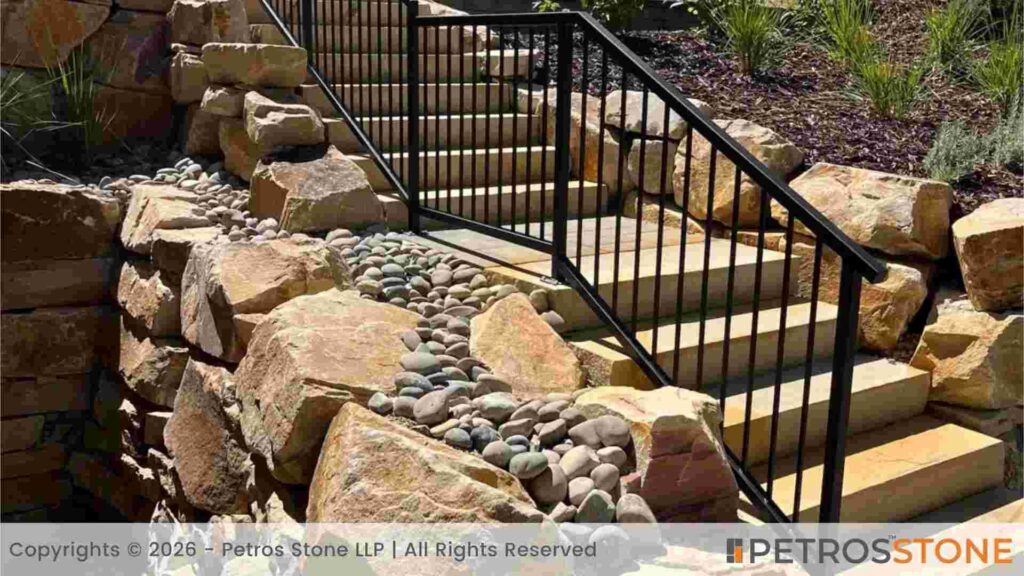
Sandstone Steps – Pros vs Cons
| Pros | Cons |
|---|---|
| Natural Beauty – Unique colors, textures, and patterns formed naturally over time | Porosity – Water absorption (typically 1–6% as per ASTM C97) can lead to staining if not sealed |
| Slip Resistance – Textured surface provides good grip for outdoor use | Maintenance Needs – Requires periodic sealing and cleaning |
| Durability – Good strength (55–140 MPa as per ASTM C170 ) | Color Fading – Some varieties may fade under prolonged UV exposure |
| Versatility – Suitable for paving, cladding, flooring, and landscaping | Sensitivity to Acids – Calcite-based stones can get etched by acidic cleaners |
| Easy to Work With – Medium density (2.2–2.6 g/cm³) allows easier cutting and shaping |
In this article, we explore sandstone steps in a practical and easy-to-understand way, covering their types, properties, pricing, and real-world performance. We also look at how to choose the right quality, understand finishes, and follow proper installation practices for long-lasting results.
- What is Sandstone?
- Types & Colors of Sandstone for Steps
- More Options For Sandstone Steps
- Indian Sandstone Price Guide (USD per sq. ft.)
- Shapes and Designs of Sandstone Steps
- Check Out Sandstone Steps Average Prices
- Standard Size & Thickness of Sandstone Steps
- Pros and Cons of Sandstone Steps
- Pros vs Cons
- Other Uses and Applications of Sandstone
- Sandstone Finishes Explained
- Sandstone vs Granite vs Marble Steps
- How to Maintain Sandstone Steps
- Where to Buy Sandstone For Steps?
- FAQs
- Key Takeaways
What is Sandstone?
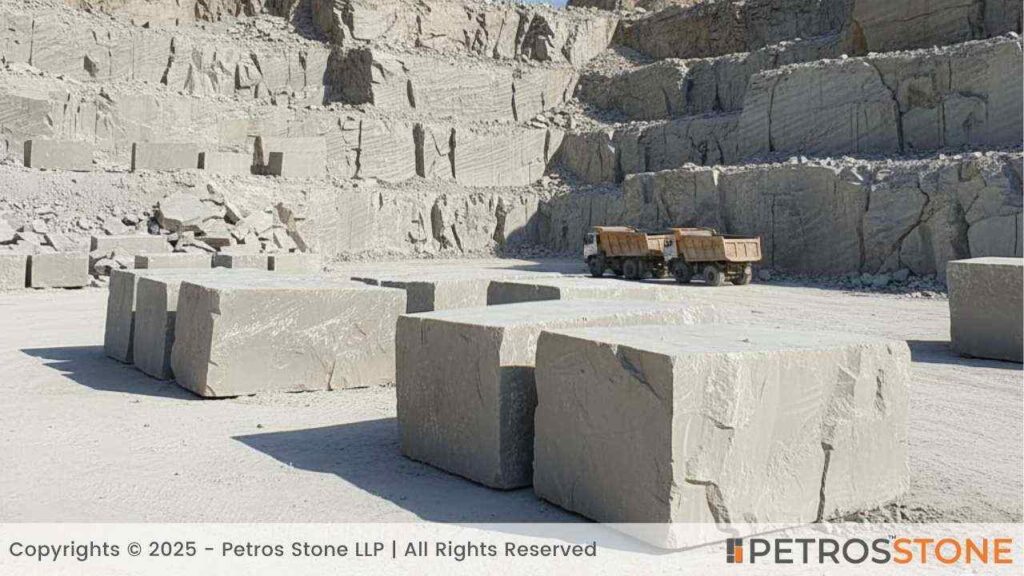
Sandstone is a natural stone formed over millions of years when layers of sand are compressed and cemented together. In simple terms, sandstone is sand that has turned into stone.
These particles are mostly composed of quartz, one of the hardest minerals. Because of this, sandstone can withstand weathering, regular use, and long-term exposure without degrading easily.
What truly sets sandstone apart is its unique appearance. It is extremely rare to find two identical pieces. Each slab has its own combination of colors, textures, and patterns formed naturally over time. You can find shades of grey, yellow, red, brown, and more, which adds to its appeal.
Types & Colors of Sandstone for Steps
One of the biggest reasons people choose sandstone for their exterior is because of its variety. India, especially Rajasthan, is known for producing some of the finest sandstone in the world.
Rainbow Sandstone
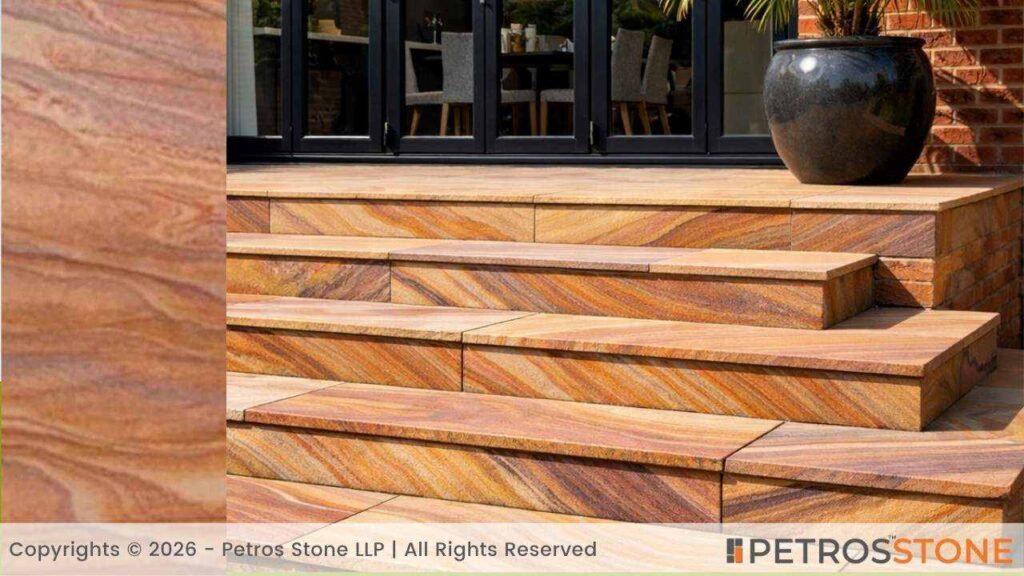
This sandstone has a natural look and a smooth texture. You will find it in cream, pink, and brown shades. All these slabs have different designs, which make it even more beautiful. You can use it for both indoor and outdoor purposes, depending on whether you want to make a bold statement or not. It costs about 2.5 to 4 USD/sq. ft.
Agra Red Sandstone
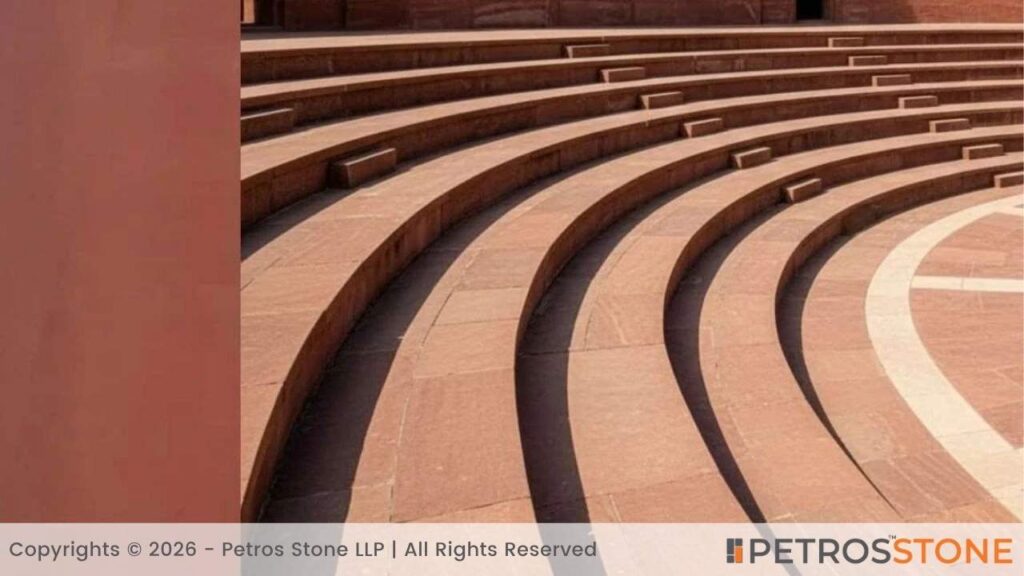
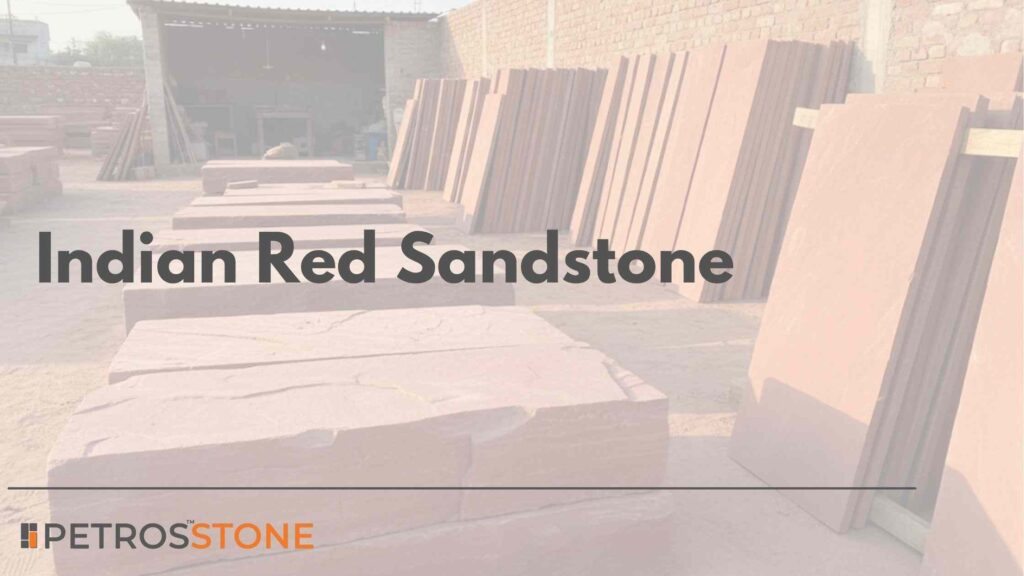
Agra Red is recognized by its terracotta appearance, which gives a strong look to a place. It is the same stone you see in historical buildings, too. It is a great choice as it gives a timeless look too. It is quite hard and thus can be used outdoors as well. It costs around 2 – 3.5 USD per sq. ft.
Kandla Grey Sandstone
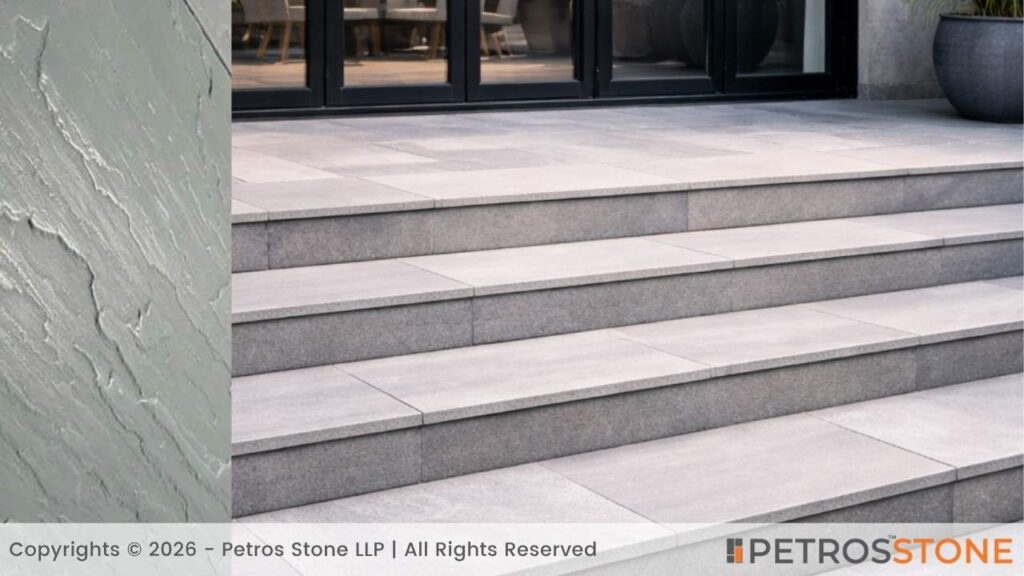
Kandla Grey is simple and coordinates easily with any design. It has a soft grey appearance and is highly popular in modern homes, especially for patios and walkways. If you prefer a subtle and balanced look, this is a reliable option. It costs around 2.5 – 4 USD per sq. ft.
Mint Sandstone
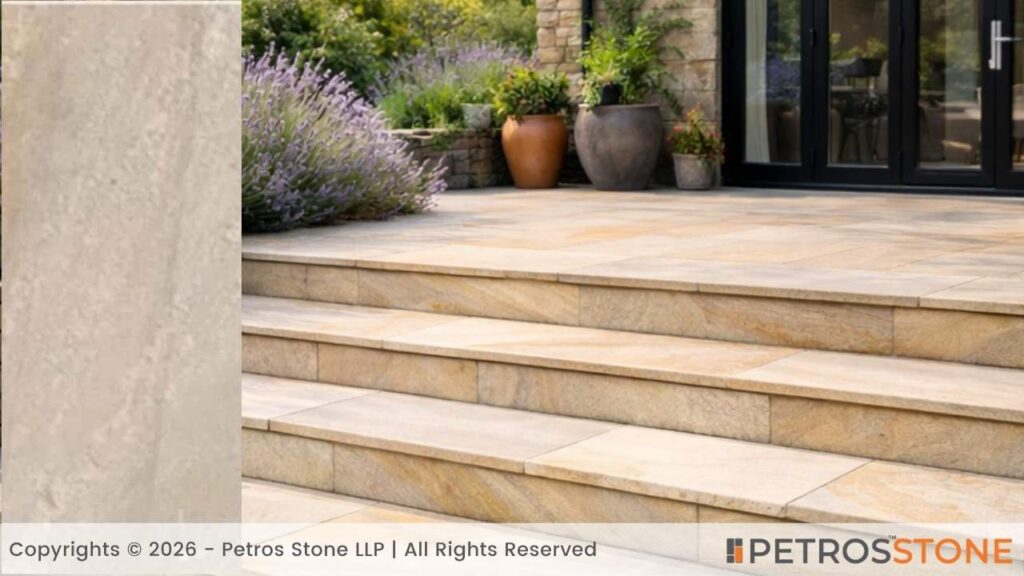
Mint sandstone has a cool and soothing appearance with light green and beige tones. It blends well with outdoor spaces and gardens. Often used for garden pathways, pool areas, and patios, it typically costs between $2.5 and $4 per sq. ft.
Teakwood Sandstone
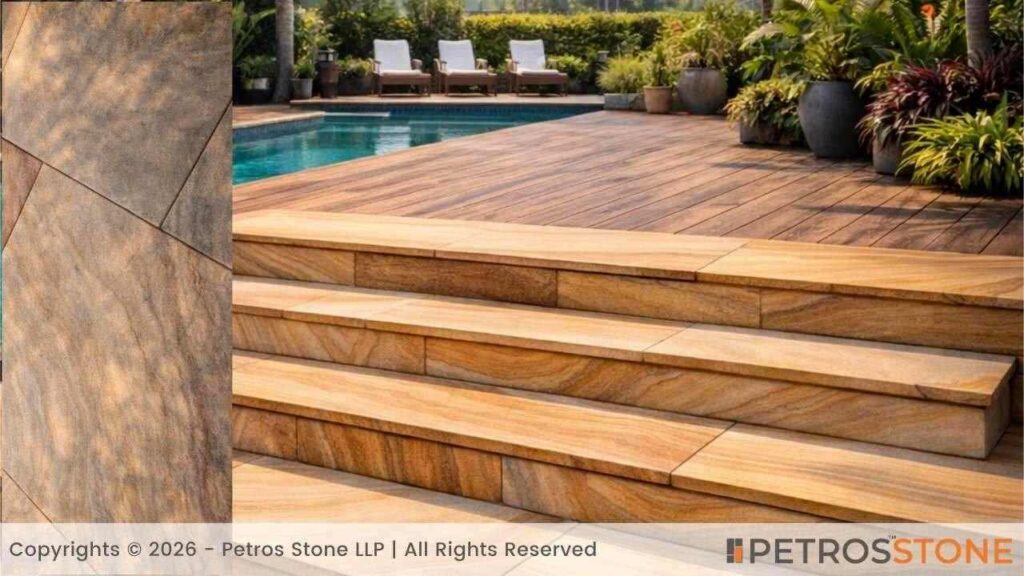
Teakwood sandstone is popular because it closely resembles natural wood. The grain pattern gives a wood-like appearance while offering the durability of stone. This makes it a preferred choice for flooring and steps. The price generally ranges between $3 and $4.5 per sq. ft.
Fossil Mint Sandstone
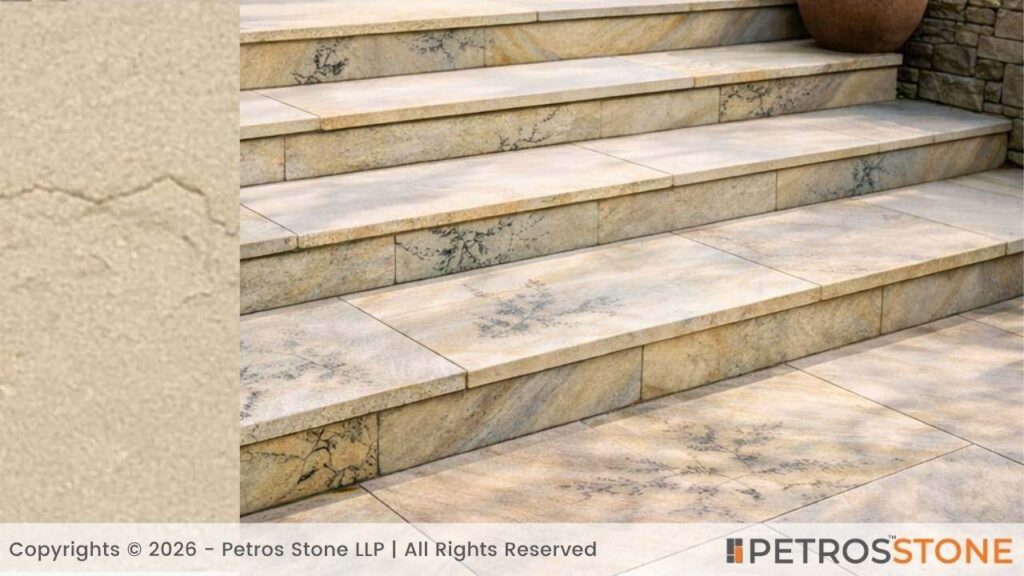
Fossil Mint stands out due to the presence of natural fossil patterns on its surface. These unique markings give each slab a distinct appearance. It is available in light beige tones and is best suited for outdoor use. Prices typically range from $2.5 to $4.5 per sq. ft.
Raj Green Sandstone
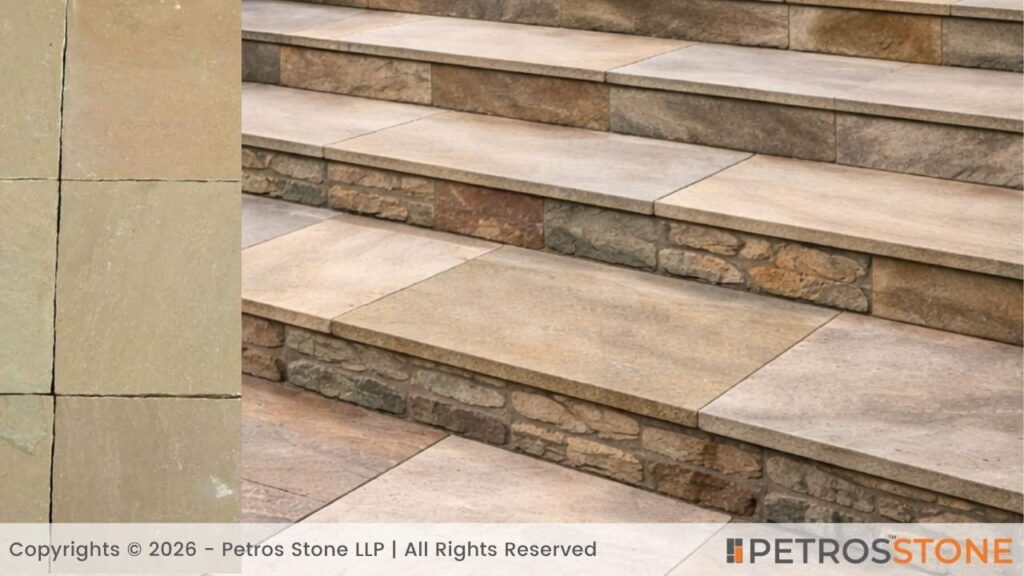
Raj Green Sandstone displays various shades of green, grey, and brown, giving it a natural feel. As such, many homeowners choose to use Raj Green Sandstone in their garden and outdoors because it complements the surrounding environment. This beautiful stone will typically cost between $2.50 – $4.00 per square foot.
More Options For Sandstone Steps
The list is not over yet; you will find a few additional options to use in your project.
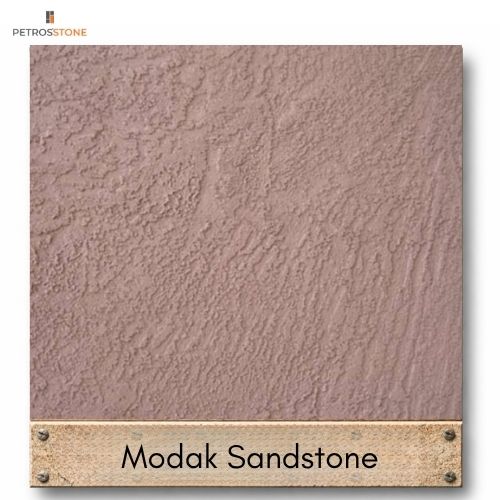
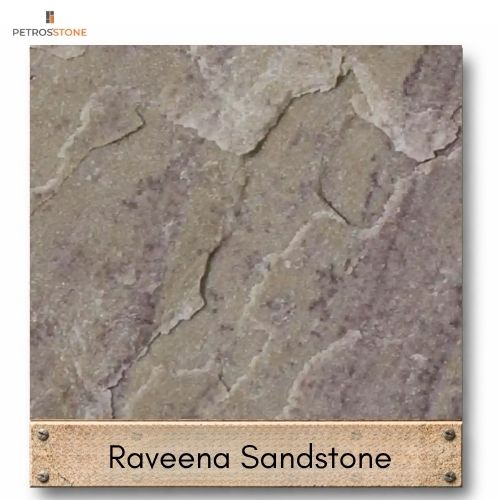
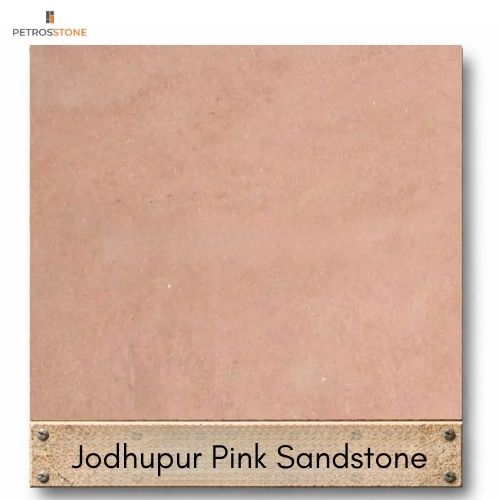
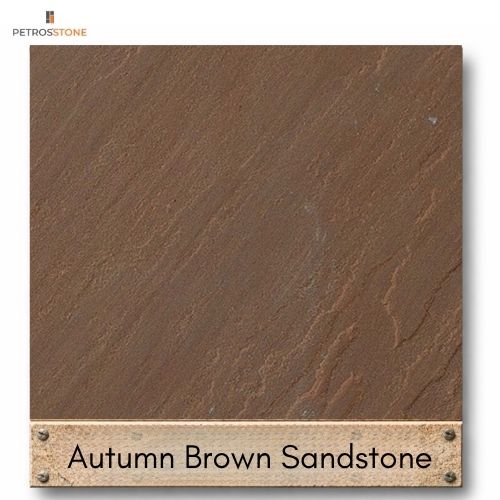
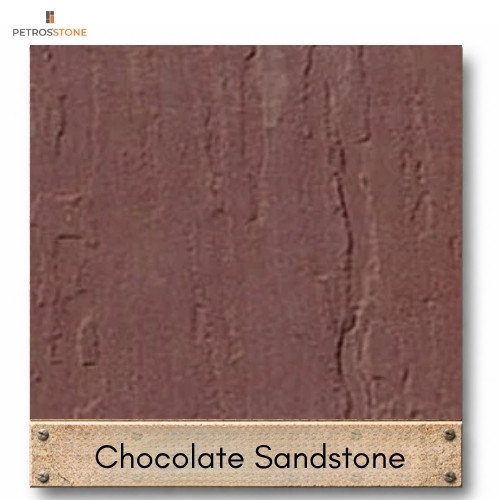
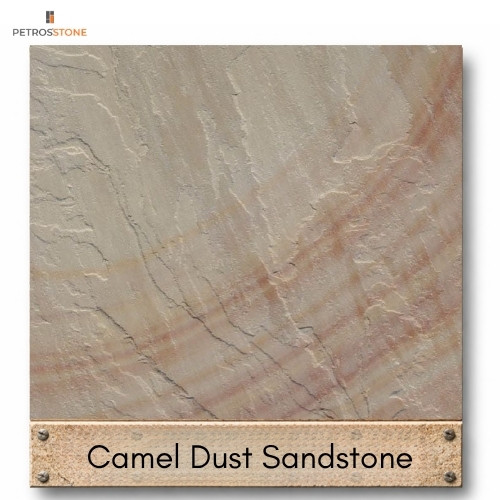
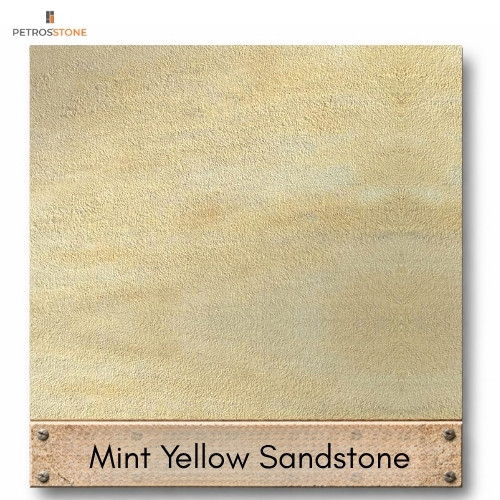
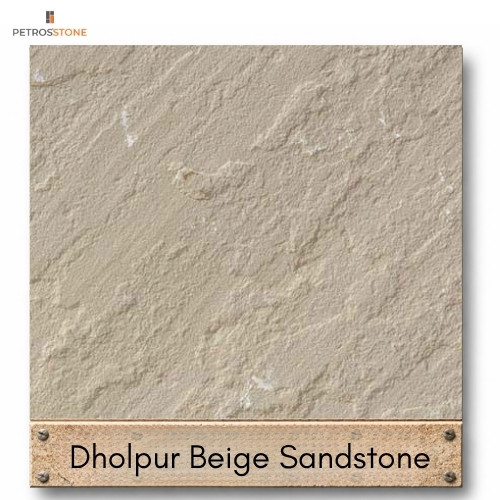
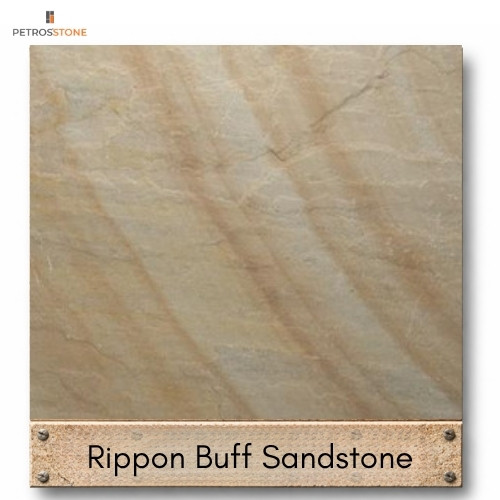
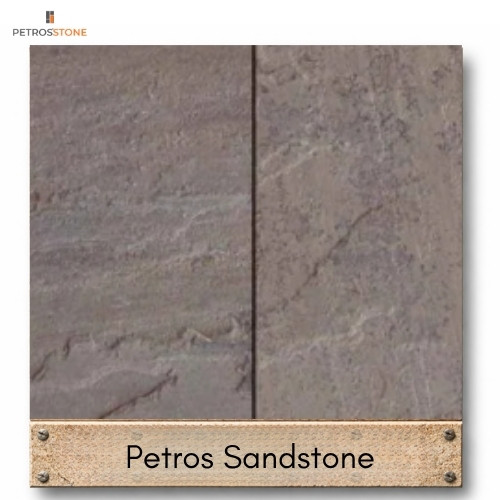
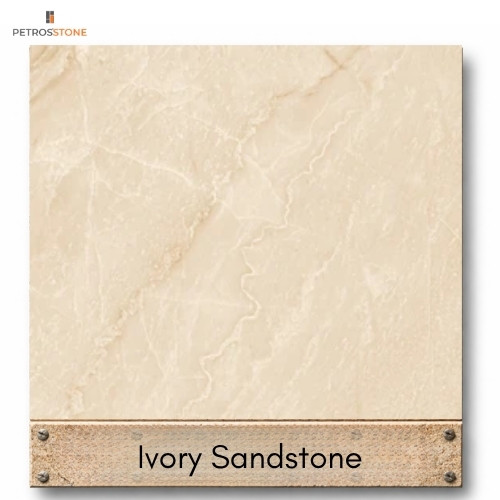
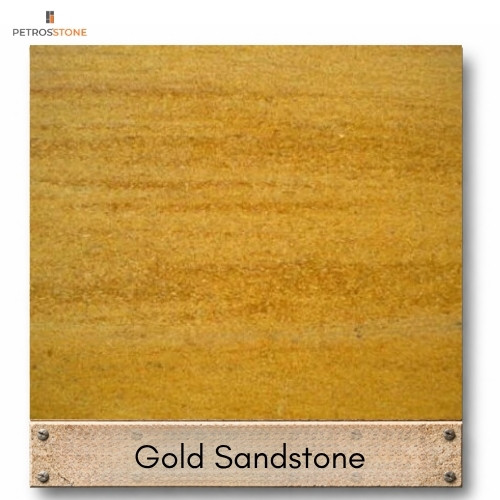
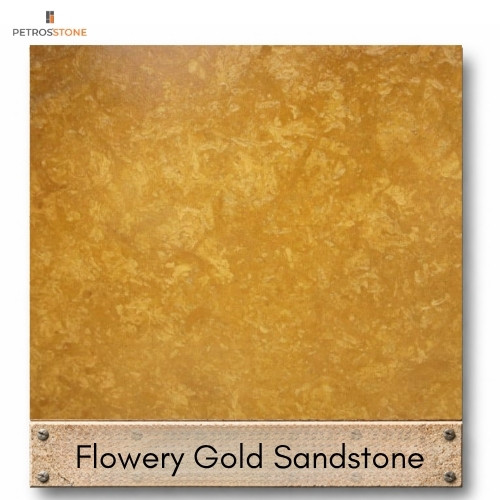
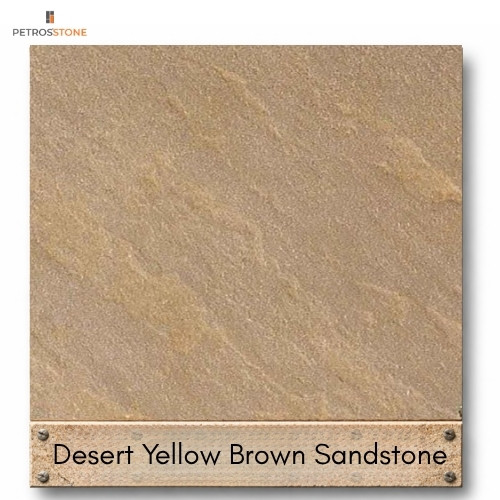
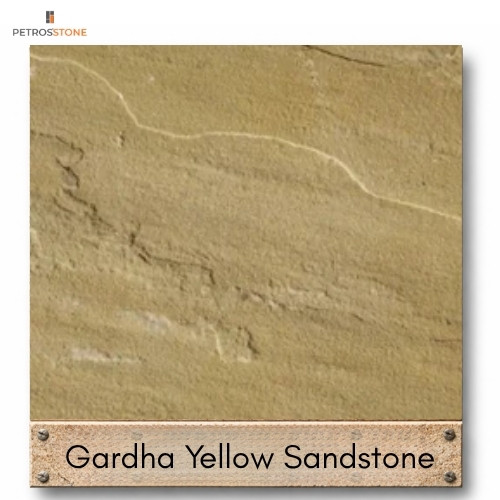
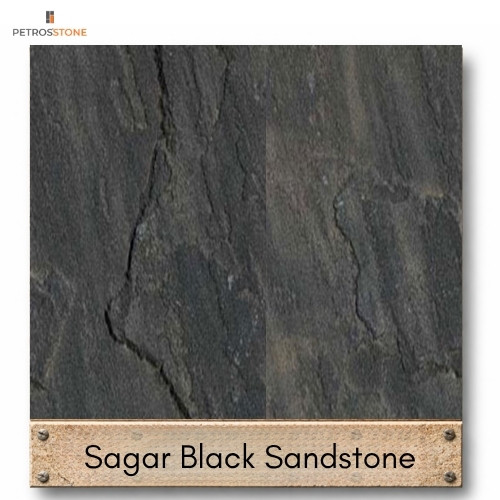
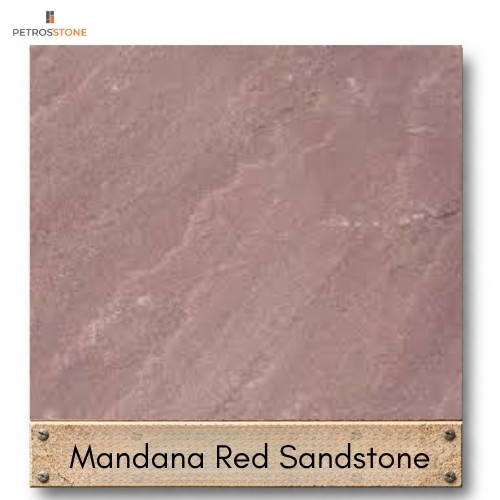
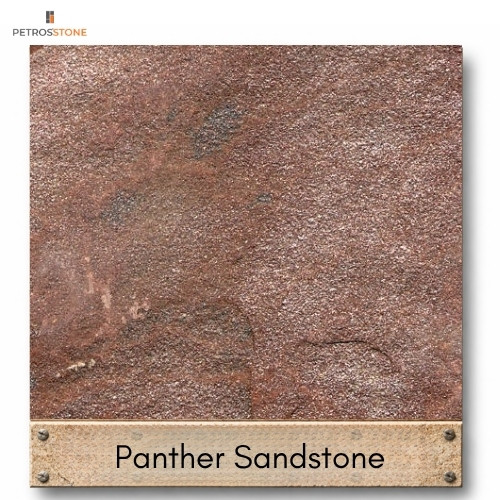
Indian Sandstone Price Guide (USD per sq. ft.)
| Sandstone Type | Color / Appearance | Price Range (USD / Sq. Ft.) |
|---|---|---|
| Modak Sandstone | Pink, orange, cream mix | $2 – $3 |
| Raveena Sandstone | Grey, rust, beige, pink mix | $2.5 – $4 |
| Jodhpur Pink | Pale to deep pink | $2 – $3.5 |
| Autumn Brown | Brown, buff, tan | $2 – $3 |
| Chocolate Sandstone | Dark brown | $2.5 – $4 |
| Camel Dust | Brown, tan, beige | $2 – $3.5 |
| Mint Yellow | Yellow with mint tones | $2.5 – $4 |
| Dholpur Beige | Soft beige | $2 – $3.5 |
| Rippon Buff | Orange, purple, yellow streaks | $2.5 – $4 |
| Petros Sandstone | Grey, brown, soft purple | $2.5 – $3.5 |
| Ivory Sandstone | Light grey to beige | $2 – $3.5 |
| Gold Sandstone | Golden tones | $3 – $4.5 |
| Flowery Gold | Bright golden with patterns | $3 – $4.5 |
| Desert Yellow Brown | Sandy brown & yellow | $2.5 – $4 |
| Gardha Yellow | Yellow-golden | $2.5 – $4 |
| Sagar Black | Deep black | $3 – $4.5 |
| Mandana Red | Red-brown | $2.5 – $4 |
| Panther Sandstone | Dark grey, black mix | $3 – $4.5 |
Shapes and Designs of Sandstone Steps
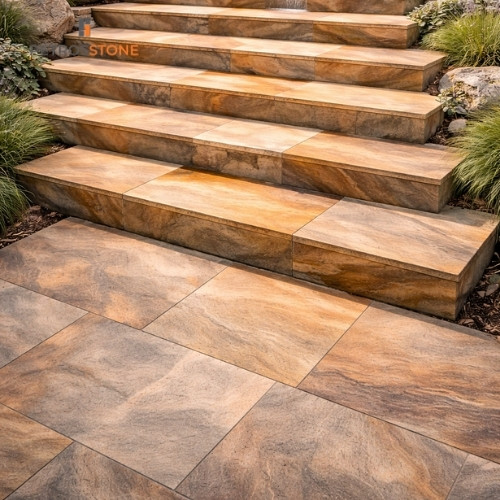
Sandstone steps are not limited to basic rectangular blocks. You can easily design them to match different architectural styles and landscapes.
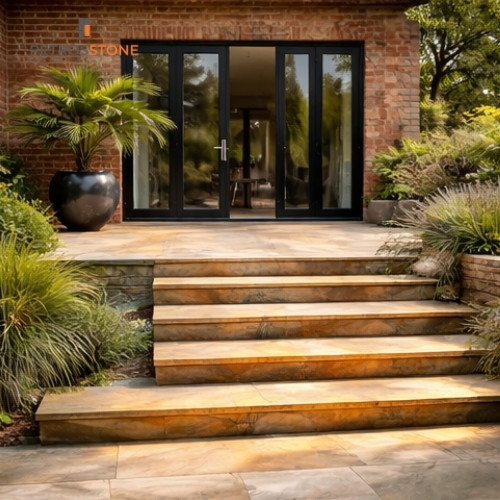
Straight Steps
These are the most common ones. They are clean and simple and will fit into any space. You can use them in modern homes and traditional homes.
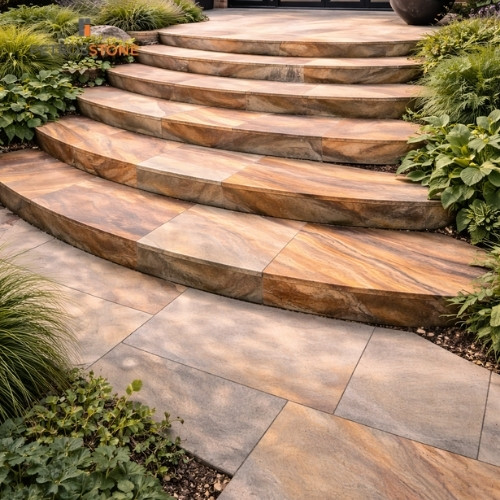
Curved Steps
If you are planning to use the steps in a garden or an outdoor space, curved steps are a good option. They will give a natural look to the space and make it look relaxing and inviting.
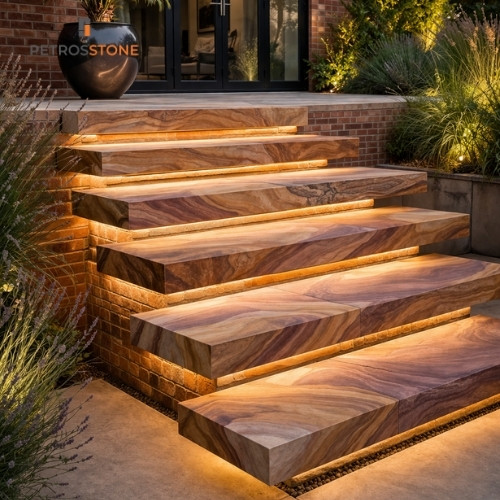
Floating Steps
Floating steps will give your space a modern and stylish look. You will mostly find them in modern homes and luxury homes.
Block Steps
If you are looking for something strong and bold, block steps are a good option. The blocks are thick and will give a strong look to your space.
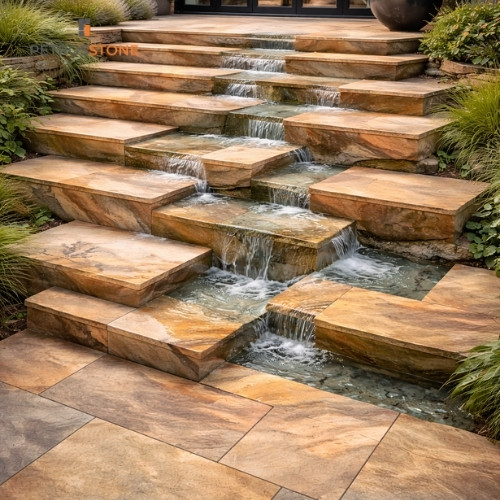
Custom Designs
One of the biggest advantages of sandstone is that it is easy to work with. It allows for custom sizes, shapes, and designs based on project requirements.
Check Out Sandstone Steps Average Prices

Sandstone steps offer excellent value for money compared to other natural stones. Prices vary depending on color, quality, thickness, and finish.
Sandstone typically ranges between $2.00 and $4.50 per sq. ft. Premium varieties such as Teakwood and Fossil Mint fall on the higher end, while standard options like Agra Red and Autumn Brown are more affordable.
Keep in mind, pricing also depends on:
- Thickness of the slab
- Level of finish
- Consistency of color and pattern
- Transportation and installation costs
Additionally, rare patterns or high-quality cuts can sometimes cost 20–40% more due to their visual appeal and durability.
Standard Size & Thickness of Sandstone Steps
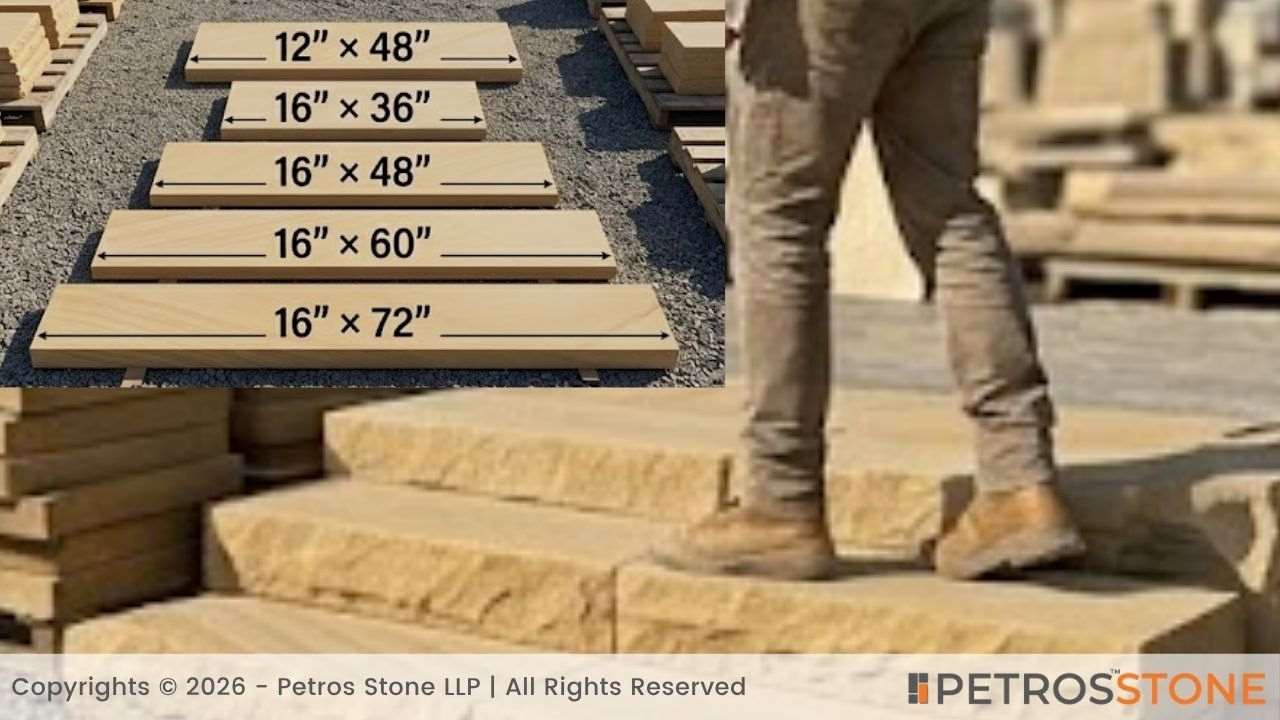
When we talk about natural materials like sandstone, thickness plays a key role in both durability and safety.
Typical sandstone step specifications include:
Standard Thickness – 30 mm to 50 mm (1.25”–2”) for step treads
Block steps – 100 mm to 150 mm (4”–6”)
Common Step Sizes:
- 12” × 48”
- 16” × 36”
- 16” × 48”
- 16” × 60”
- 16” × 72”
For heavy-duty use or high-traffic areas, thicker slabs are preferred. However, thickness alone doesn’t guarantee strength, the internal structure and quality of the stone matter just as much.
Pros and Cons of Sandstone Steps
Sandstone steps come with plenty of features and benefits. Along with them, people also notice some drawbacks that can be overcome when it is maintained properly.
Pros vs Cons
| Pros | Cons |
|---|---|
| Natural Beauty – Unique colors, textures, and patterns formed naturally over time | Porosity – Water absorption (typically 1–6% as per ASTM C97) can lead to staining if not sealed |
| Slip Resistance – Textured surface provides good grip for outdoor use | Maintenance Needs – Requires periodic sealing and cleaning |
| Durability – Good strength (55–140 MPa as per ASTM C170 ) | Color Fading – Some varieties may fade under prolonged UV exposure |
| Versatility – Suitable for paving, cladding, flooring, and landscaping | Sensitivity to Acids – Calcite-based stones can get etched by acidic cleaners |
| Easy to Work With – Medium density (2.2–2.6 g/cm³) allows easier cutting and shaping |
Other Uses and Applications of Sandstone
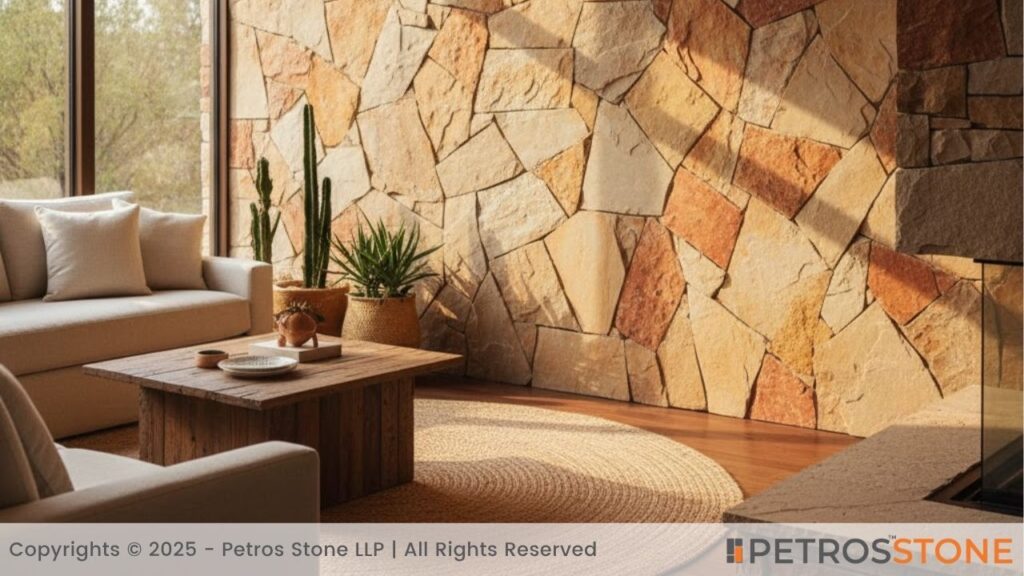
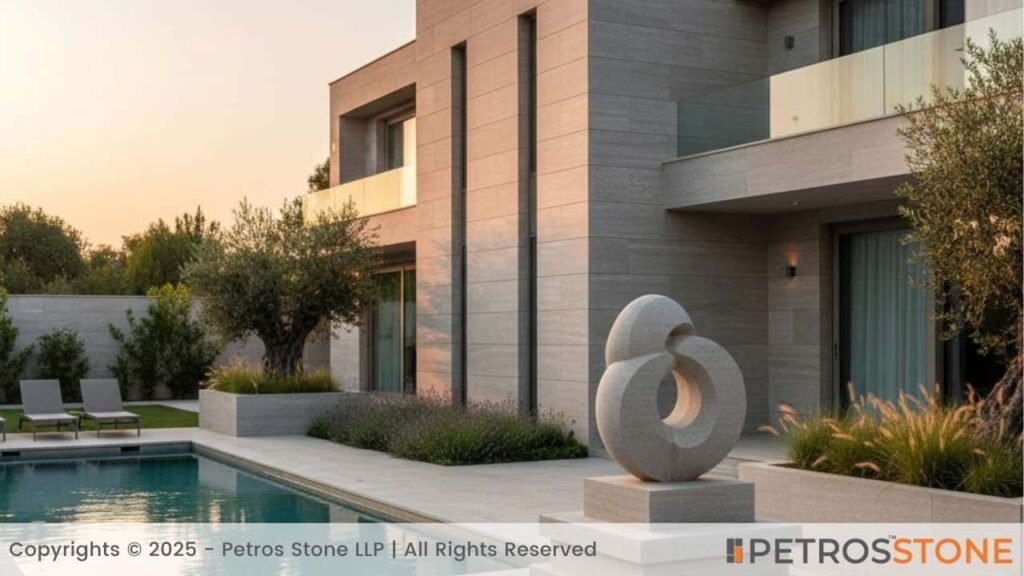
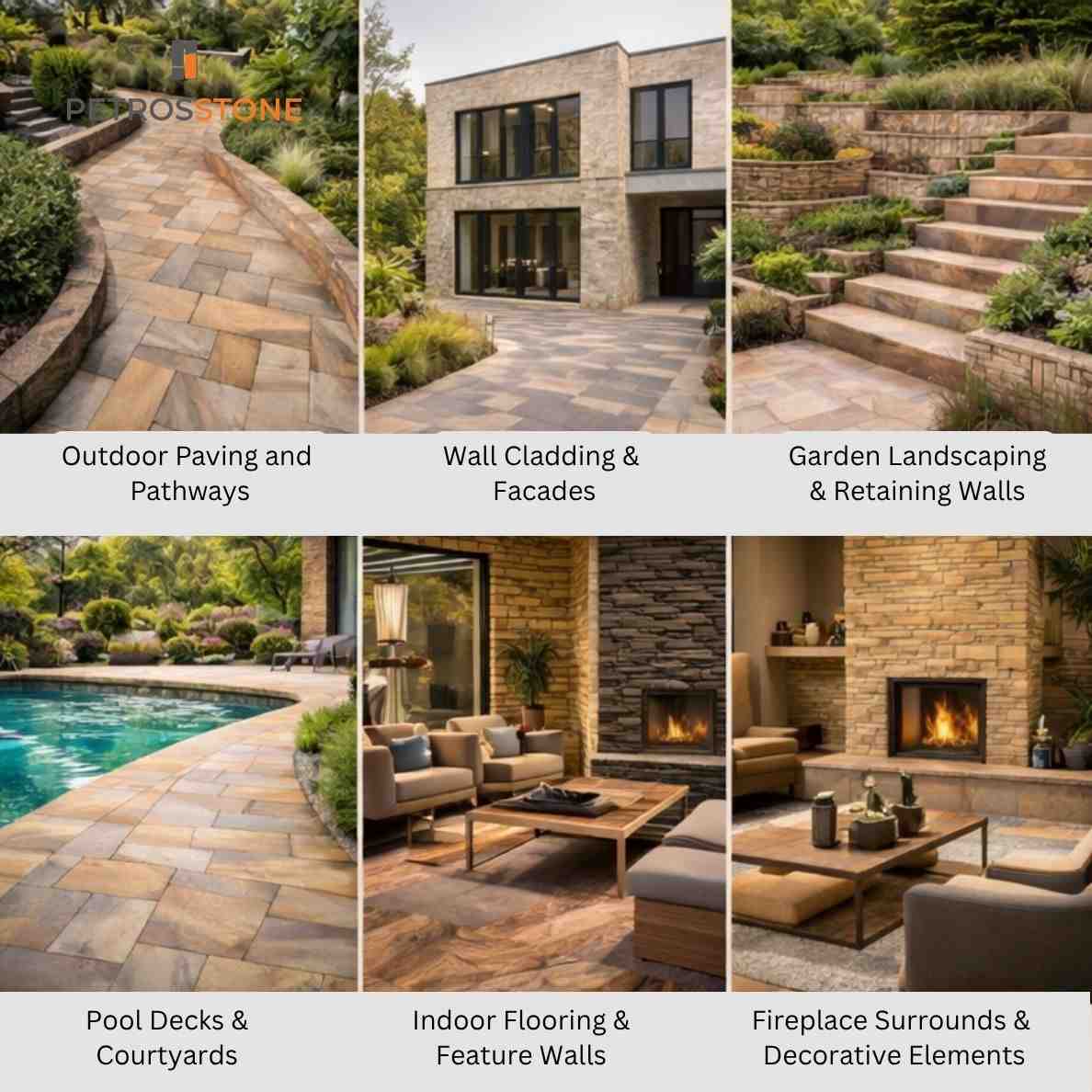
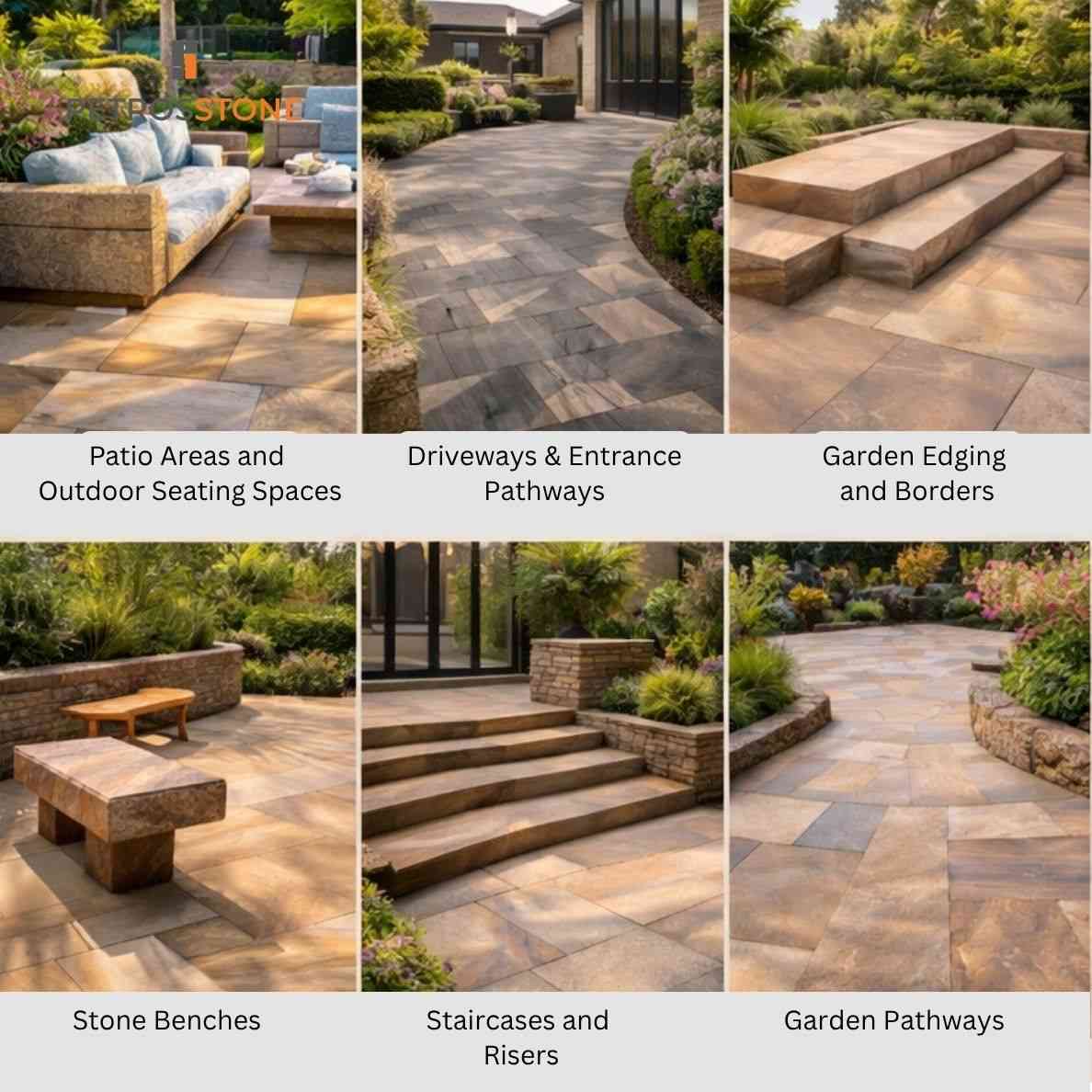
Sandstone is far more than just a step material. Its versatility makes it a favorite across various applications.
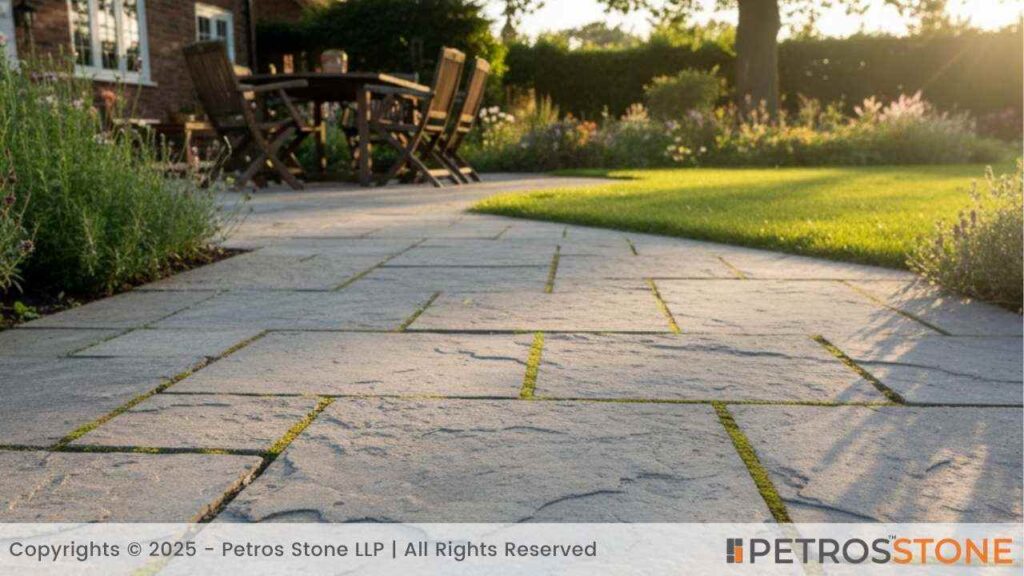
- Outdoor paving and pathways
- Wall cladding and facades
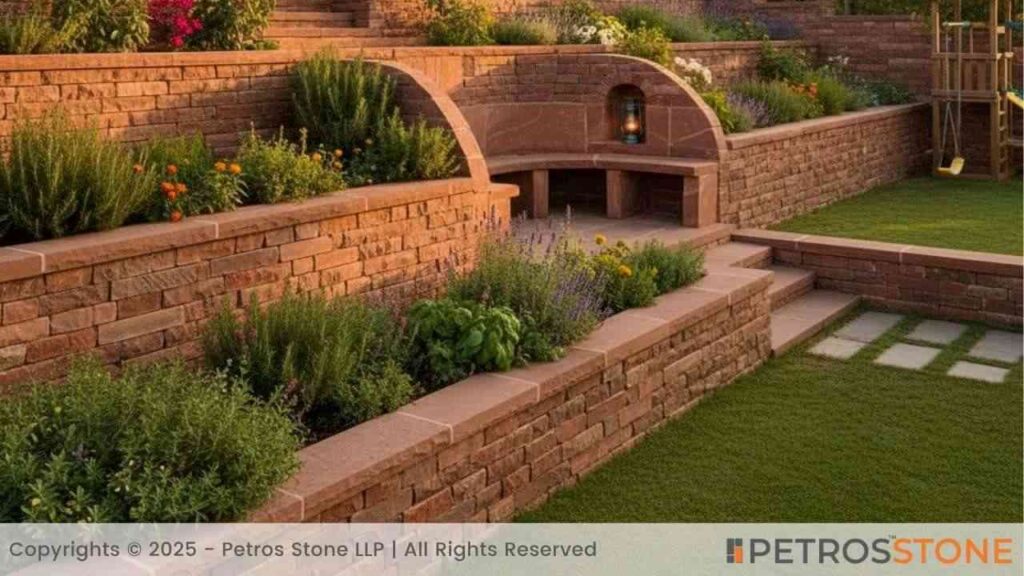
- Garden landscaping and retaining walls
- Pool decks and courtyards
- Indoor flooring and feature walls
- Fireplace surrounds and decorative elements
- Patio areas and outdoor seating spaces
- Driveways and entrance pathways
- Garden edging and borders
- Stone benches and some outdoor furniture
- Fountains and other water features
- Staircases and risers
- Pillars and columns
- Window sills and frames
- Boundary walls and fencing details
Sandstone Finishes Explained
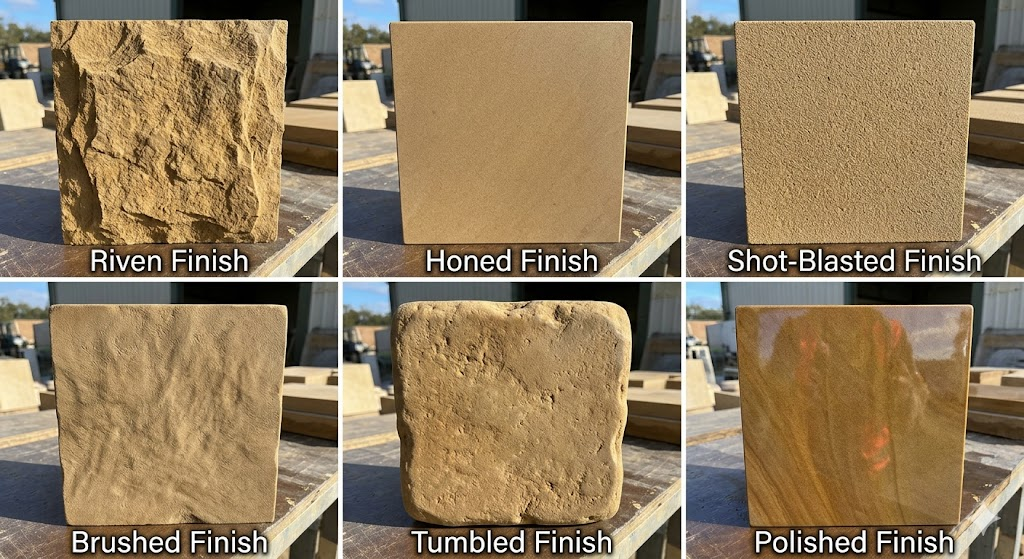
The finish of sandstone plays a big role in how it looks and feels when you touch. So, you will find the following options when buying the sandstone for steps:
Riven Finish – This is the natural state of the stone when it is split. The surface is not smooth; rather, it is a little rough. This is why the sandstone is used on the outside.
Honed Finish – In this type of finish, the surface is made smooth but not shiny. The surface is flat, and the look is simple. This is why people prefer this kind of finish.
Shot-Blasted Finish – In this type of finish, the surface is made rough so that it does not become slippery. This is why people prefer this type of finish.
Brushed Finish – In this type of finish, the surface is brushed lightly to make it smooth but not too smooth. The surface is neither too rough nor too smooth; rather, it is somewhere in between. The look is neat.
Tumbled Finish – In this type of finish, the edges are made to look as though they are worn out. The look is as though the stone is old.
Polished Finish – In this type of finish, the surface is smooth as well as shiny. This type of finish is not often used with sandstone, but the polished finish is used in the indoor decorative areas.
Sandstone vs Granite vs Marble Steps
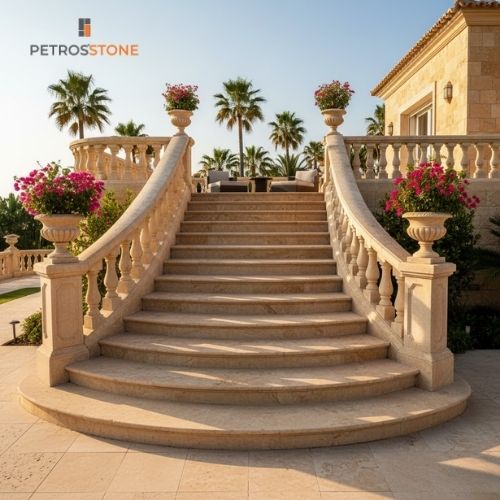
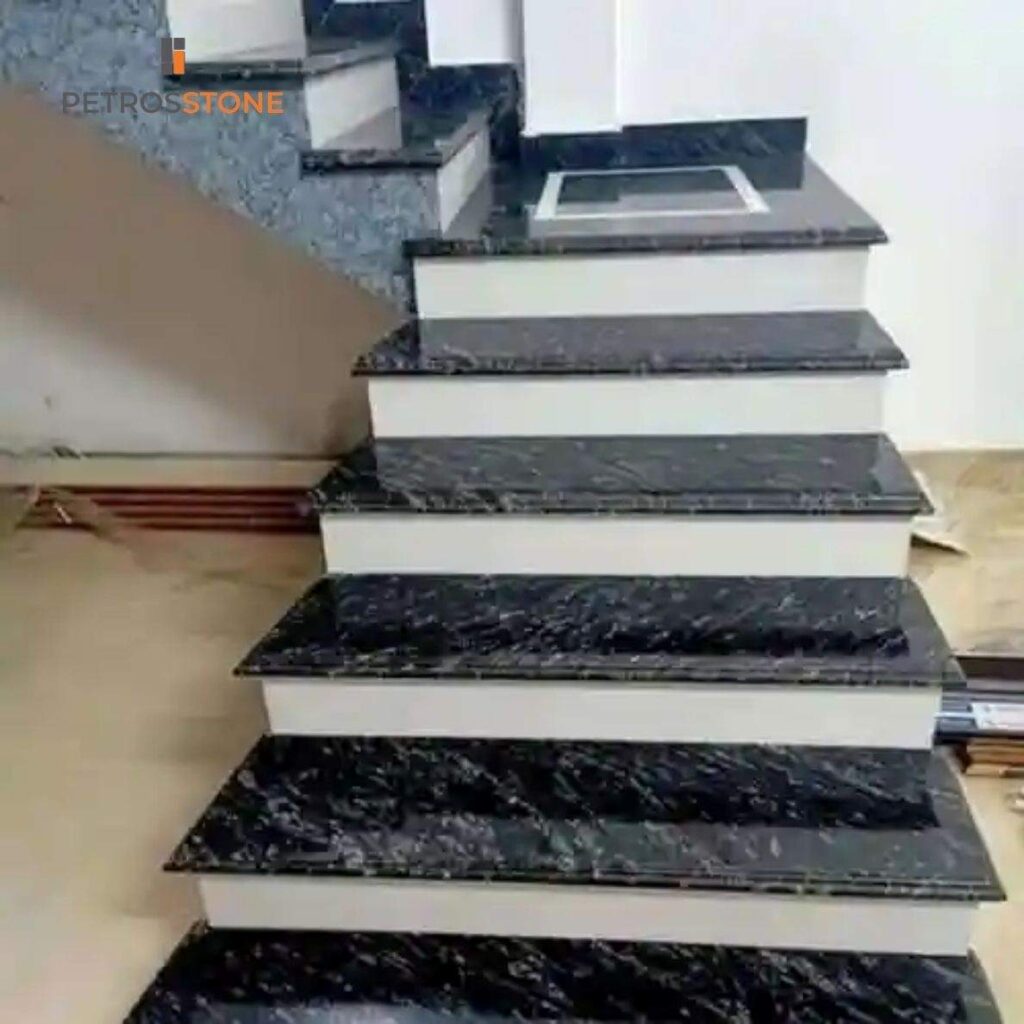
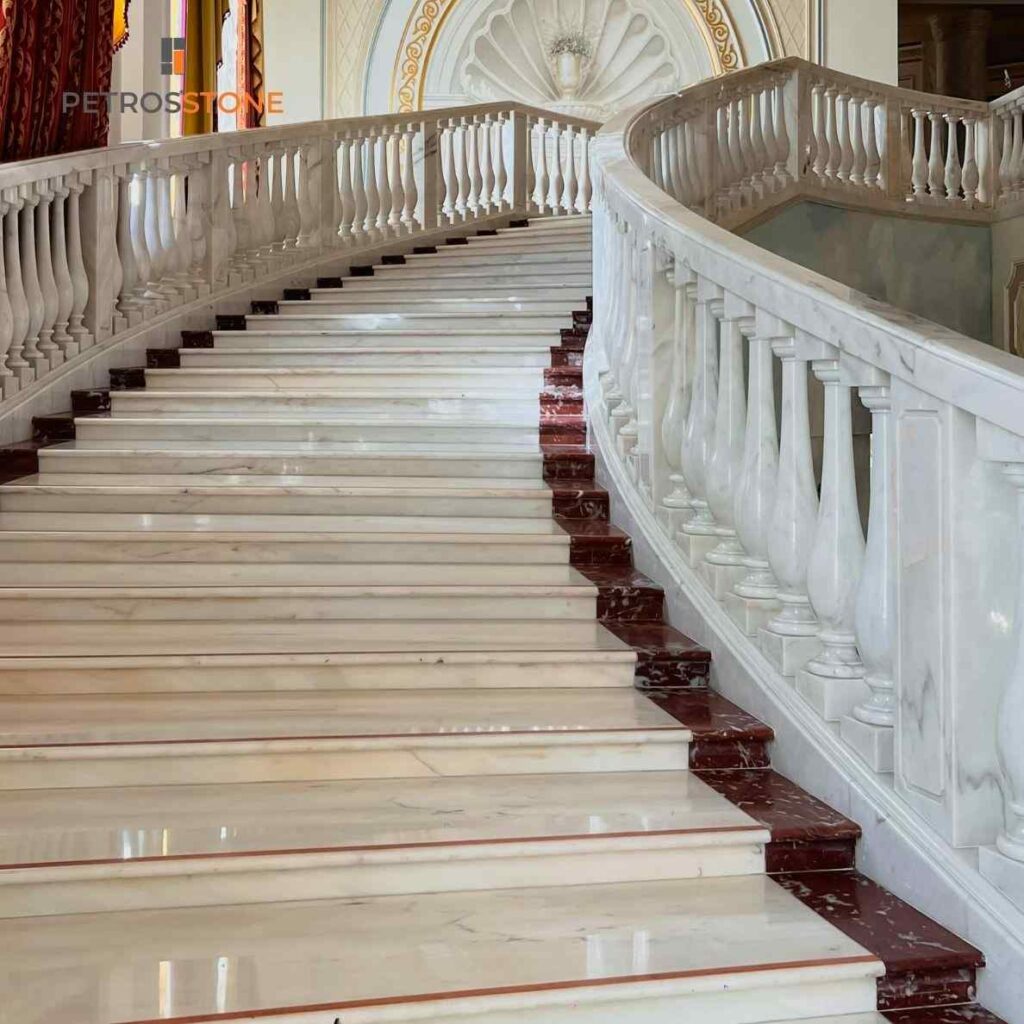
When you choose step materials, sandstone often gets compared to granite and marble. So, here is the table with a comparison, so you can easily pick the best one for you.
Table – Sandstone vs Granite vs Marble Steps
| Feature | Sandstone | Granite | Marble |
| Appearance | Natural, earthy tones; rustic and warm | Speckled or uniform colors; bold and striking | Smooth, elegant, and luxurious; classic veining |
| Texture & Grip | Naturally rough or textured, good grip for steps | Can be rough but polished granite may be slippery | Smooth surface; can be very slippery when wet |
| Durability | Moderately durable; resists weather reasonably well | Extremely strong and dense; highly durable | Softer than granite; prone to scratches and etching |
| Maintenance | Low to moderate; may need occasional sealing | Very low; easy to clean and maintain | High; requires regular cleaning and sealing to maintain shine |
| Outdoor Use | Excellent for outdoor steps, patios, and garden paths | Excellent for outdoor or indoor use and withstands heavy foot traffic | Best suited for indoor steps |
| Cost | Budget-friendly and gives good value for money | Higher cost, as it is a premium option | Expensive; luxury material |
| Customization | Easy to cut and shape; available in various finishes | Can be cut, but heavy and harder to work with | Can be shaped, but edges chip easily; needs skilled handling |
| Visual Variety | Wide range of earthy colors and textures | Wide range of colors, mainly darker tones | Elegant veining and subtle shades; mostly white, cream, grey, or black |
| Best Use Cases | Outdoor steps, garden pathways, patios | High-traffic steps, outdoor areas, and modern designs | Indoor staircases, decorative steps, luxury interiors |

How to Maintain Sandstone Steps
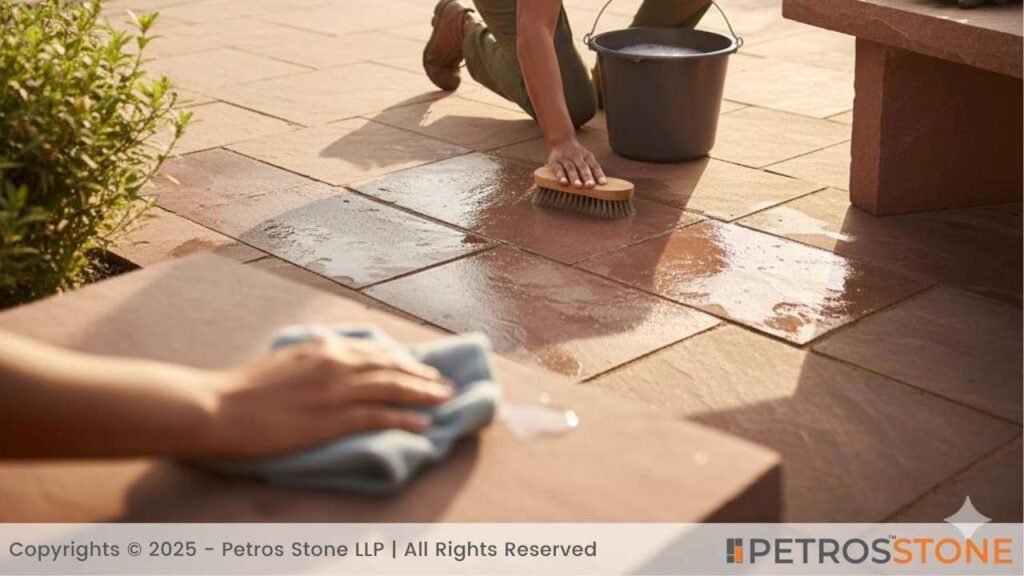
Maintaining sandstone is simple but requires consistency.
- Seal the surface periodically
- Clean regularly
- Avoid acidic cleaners
- Monitor water absorption
- Remove stains promptly
With proper care, sandstone steps can last for decades while maintaining their natural appearance..
Where to Buy Sandstone For Steps?
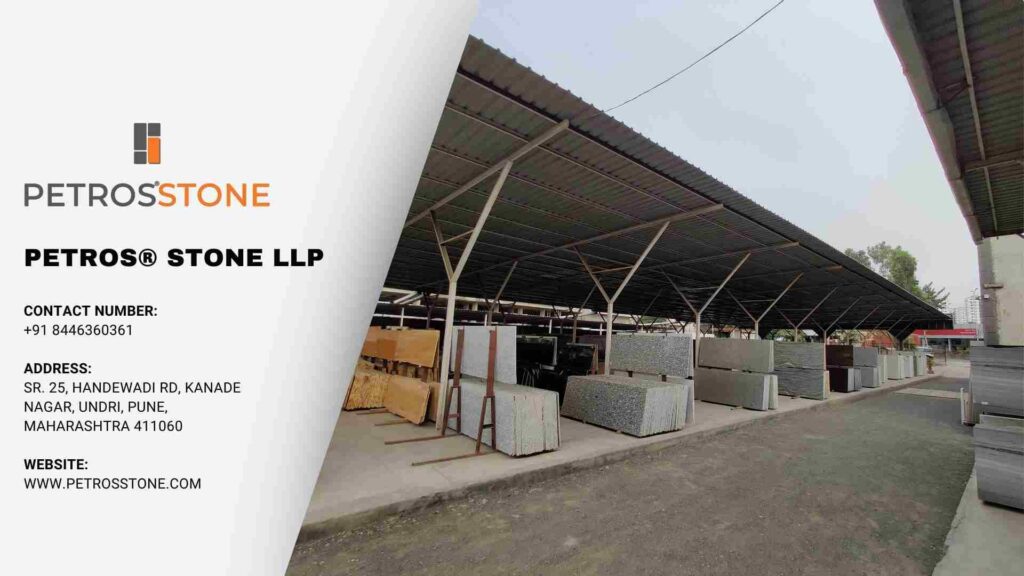
It is important to choose the right supplier when buying sandstone steps. You can source them from local suppliers, established factories, or international exporters. If local options are limited, importing from India or the USA is also possible.
Still not sure about where to buy the best sandstone steps? You can visit Petros® Stone and get your desired sandstone steps at reasonable prices.
FAQs
Q. Are sandstone steps good for outdoor use?
Yes, they are highly suitable due to their durability and natural slip resistance.
Q. Do sandstone steps require sealing?
Yes, sealing helps protect against moisture, stains, and weather damage.
Q. Is sandstone good for stairs?
Yes, its natural beauty and strength make it perfect for stairs.
Q. Are sandstone steps slippery?
No, especially when finished with a riven or textured surface.
Q. What are the steps in the formation of sandstone?
Sandstone forms when layers of sand are compressed and cemented together over millions of years.
Key Takeaways
- Sandstone is a durable and naturally beautiful material formed over millions of years.
- It is available in a wide range of colors, especially from Indian quarries.
- Sandstone steps are versatile and suitable for both indoor and outdoor use.
- With proper maintenance, they can last for decades.
- Sandstone offers a strong balance of cost, safety, and aesthetics compared to granite and marble.
Feel free to get in touch for a free consultation, quote, and get a detailed understanding from our experts here at Petros®. Visit www.petrosstone.com or call +91-8446360361 or WhatsApp

Hello!
I’m Varsha, with a deep interest in architecture and years of content writing experience, I explore how natural stones like granite and marble shape beautiful, functional spaces. At Petros® Stone, I share insights that help readers appreciate the design potential and timeless appeal of stone.

Brown Granite

White Galaxy Granite

Blue Bahia Granite

Silver Cloud Granite

Black Pearl Granite

Dallas White Granite