Calacatta marble is a family of white Italian marbles quarried in the Apuan Alps around Carrara, Massa, and Lucca. It is known for bright white backgrounds and bold veins in grey, gold, brown, and sometimes violet or green. Unlike Carrara marble, which usually has a greyer background and finer veins, Calacatta has stronger, more dramatic patterns. The name ‘Calacatta’ can refer to both specific quarry varieties and trade names, so quality and price can vary widely. To identify a variety, look at its background color, vein thickness and contrast, and quarry origin. Popular types include Calacatta Gold, Borghini, Vagli, Paonazzo, and Michelangelo, each suited to different applications such as countertops, floors, and feature walls.
Here is a comprehensive list of all authentic types of Calacatta marble with images:
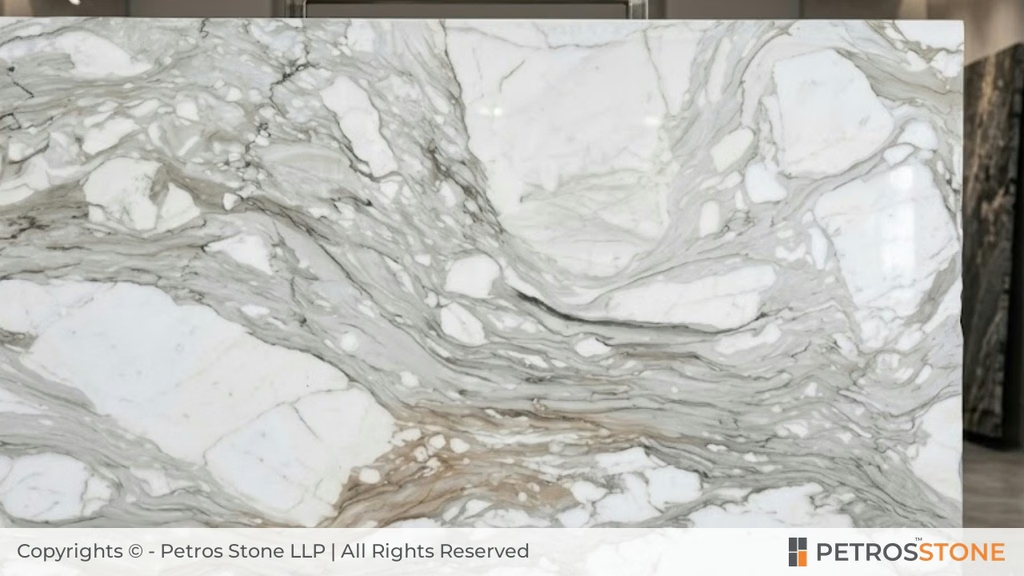
To gain a deeper understanding of these distinctions, Rishabh Jain, Director of International Business at Petros® Stone, spoke directly with Riccardo Tedeschi, Owner of TMC (Tecnica Marmo Carrara) based in Massa Carrara, Italy.

According to the expert:
“The Carrara region is home to several distinct Calacatta quarries, such as Crestola, Macchiavecchia, and Betogli. To understand a Calacatta slab’s authenticity and structural characteristics, you must always trace it back to its exact origin.”
“When a slab shows both a white ground and strong, wide veining, it is Calacatta territory, and the specific variety depends on vein color, clustering, and quarry.”— Riccardo Tedeschi
Owner of TMC – Tecnica Marmo Carrara in Massa Carrara, Italy
Audio Excerpts from Petros® Stone Director – International Business Rishabh Jain’s Discussion with TMC Quarry Owner Riccardo Tedeschi, Italy
In this article, we cover the main types of Calacatta marble, how to tell them apart by their veining, ground, and origin, how much they cost, and which varieties are best suited to countertops, flooring, walls, and other applications.
- What Makes a Marble ‘Calacatta’?
- 20+ Top Calacatta Marble Varieties
- 1. Calacatta Gold Marble
- 3. Calacatta Bettogli Marble
- 4. Calacatta Vagli Marble
- 5. Calacatta Viola Marble
- 6. Calacatta Viola Oro Marble
- 7. Calacatta Rosso Marble
- 8. Calacatta Paonazzo Marble
- 9. Calacatta Macchia Vecchia Marble
- 10. Calacatta Michelangelo Marble
- 11. Calacatta Monet Marble
- 12. Calacatta Monet Verde Marble
- 13. Calacatta Statuario Marble
- 14. Calacatta Green (Verde/Emerald) Marble
- 15. Calacatta Capraia Marble
- 16. Calacatta Crestola Marble
- 17. Calacatta Caldia Marble
- 18. Calacatta Belgia Marble
- 19. Calacatta Zebrino Marble
- 20. Calacatta Picasso Marble
- 21. Calacatta Extra Marble
- Which Calacatta Marble Is the Most Expensive?
- Which Calacatta Marble Is Best for Countertops?
- Which Calacatta Marble Is Best for Flooring?
- What Are the Standard Sizes and Thicknesses of Calacatta Marble?
- Which Calacatta Marble Should You Avoid?
- What Should You Check Before Buying Calacatta Marble?
- How to Choose Between the 20 Varieties
- FAQs
- Key Takeaways
What Makes a Marble ‘Calacatta’?
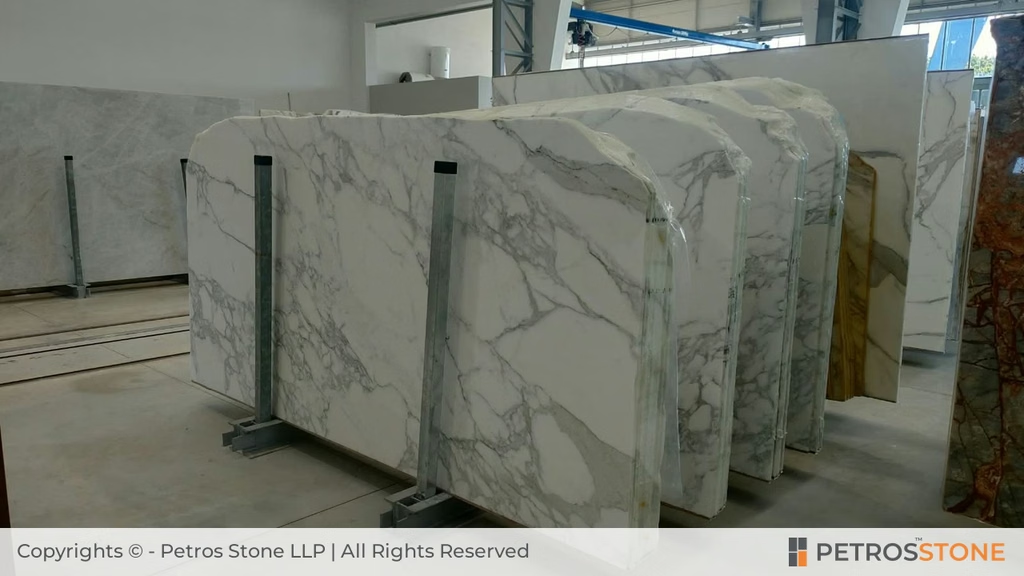
Three traits define the family: ground, vein scale, and rarity.
The ground is bright white, sometimes with a faint cream or warm cast, and much cleaner than the blue-grey base of common Carrara. The veins are thick, irregular, and high-contrast. They range from a few centimeters to bold ribbons that cross the whole slab, and they read as a deliberate pattern rather than background texture. Colors run from cool grey to gold, brown, and rust, with violet and green at the rare end.
Rarity drives the price. The Calacatta quarries produce far less commercial volume than the Carrara bianco quarries, and usable blocks with clean ground and balanced veining are scarce. Statuario, its closest cousin, has an even whiter, more uniform ground with fine, sparse grey veins. Calacatta trades that calm for drama. When a slab shows both a white ground and strong, wide veining, it is Calacatta territory, and the specific variety depends on vein color, clustering, and quarry.
This emphasis on origin and material character is also reflected in our conversation with architect Peter Ippolito, who discusses why understanding where a stone comes from is part of understanding the material itself.
20+ Top Calacatta Marble Varieties
1. Calacatta Gold Marble
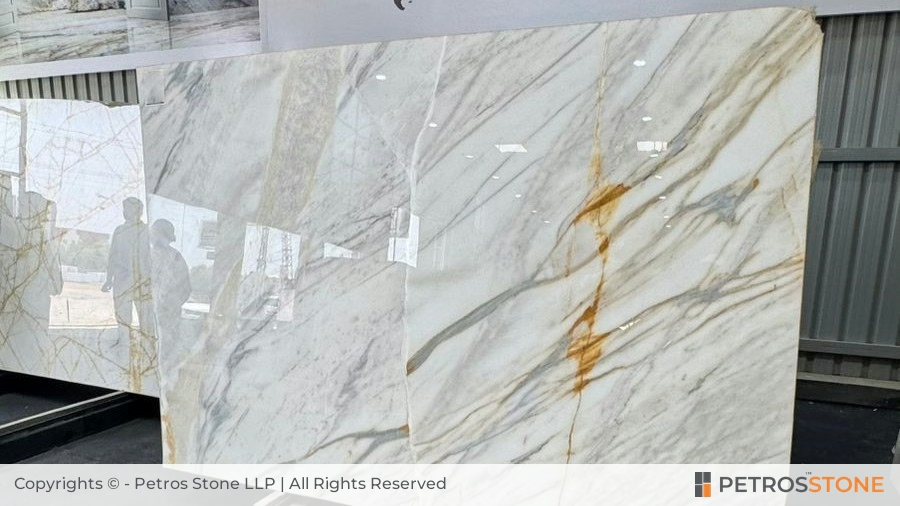
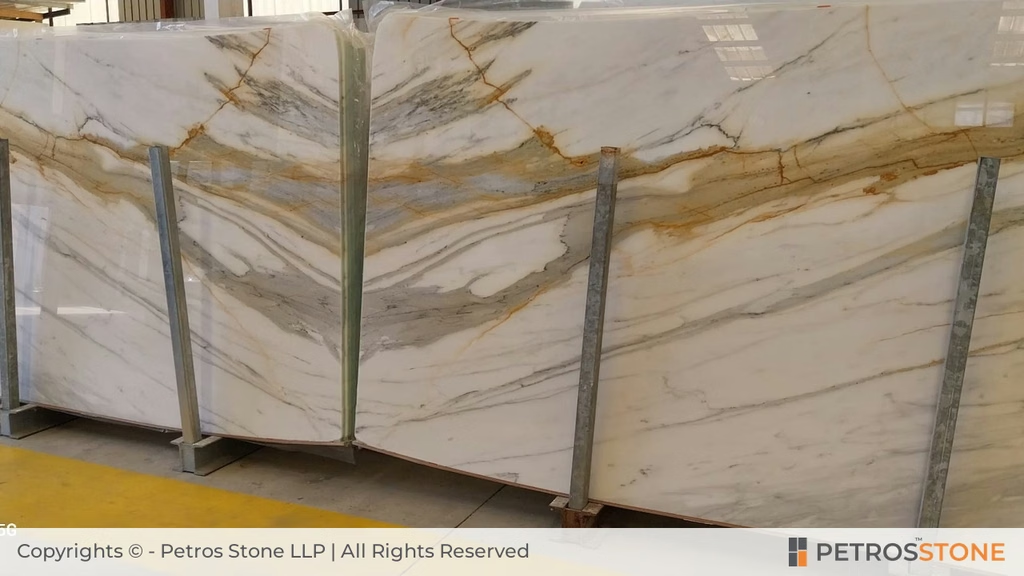
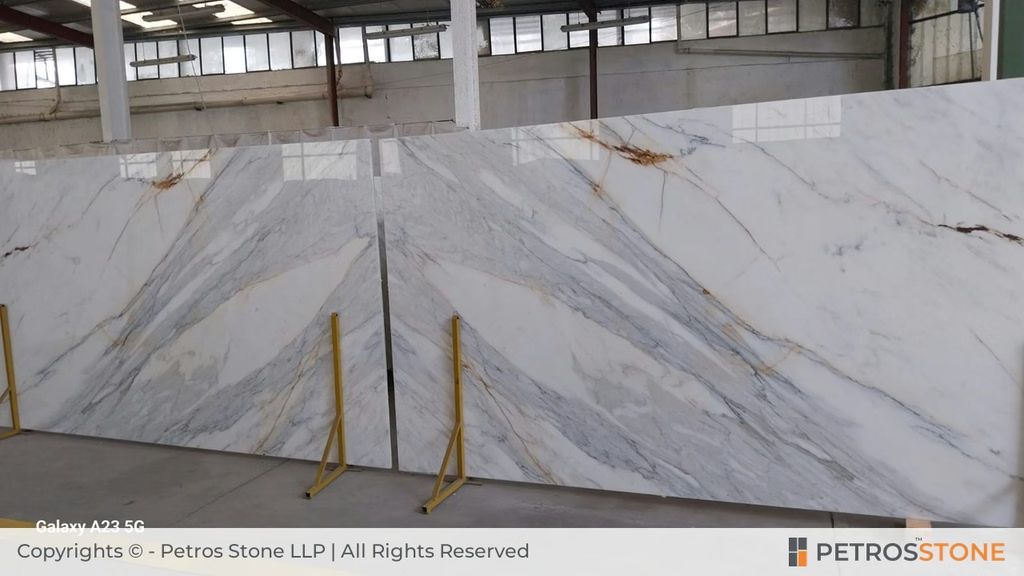
Quarry Origin
The benchmark Calacatta from the Carrara marble basins. “Gold” and the Italian “Oro” are widely used as generic trade labels, so the same name can cover stones from different quarries.
How to Spot
Warm white ground, broad grey veins with gold or beige edges, and moderate movement. It is most often confused with Calacatta Borghini, which has a whiter ground and darker, heavier veins.
Best Suited Applications
Kitchen islands, vanities, and bookmatched walls. Honed finishes hide the etching that acidic foods leave on polished surfaces.
Calacatta Gold Slab Price | USD/sq. ft.
| Price (approx.) | $15–$45 per sq. ft. |
|---|
2. Calacatta Borghini Marble
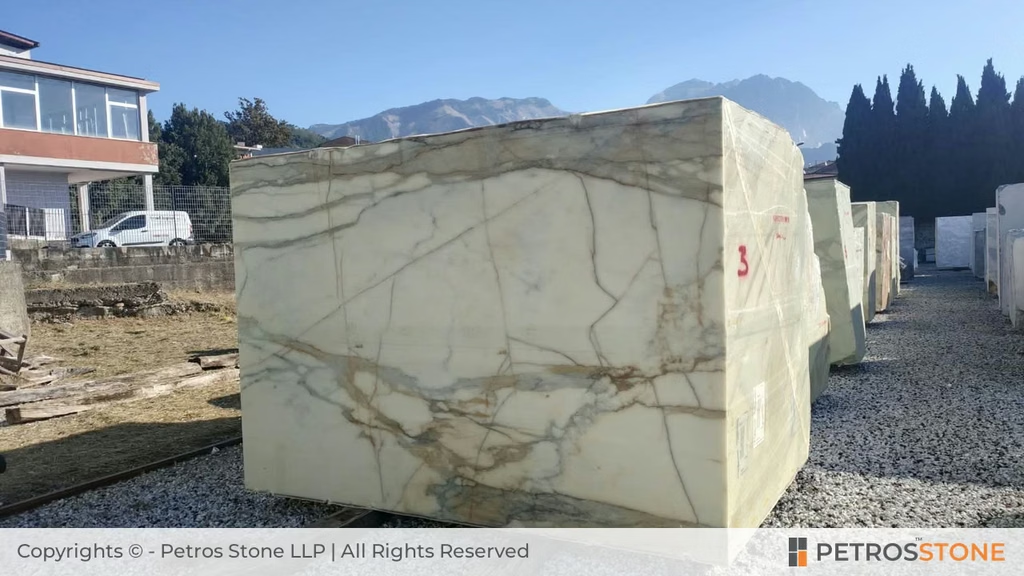
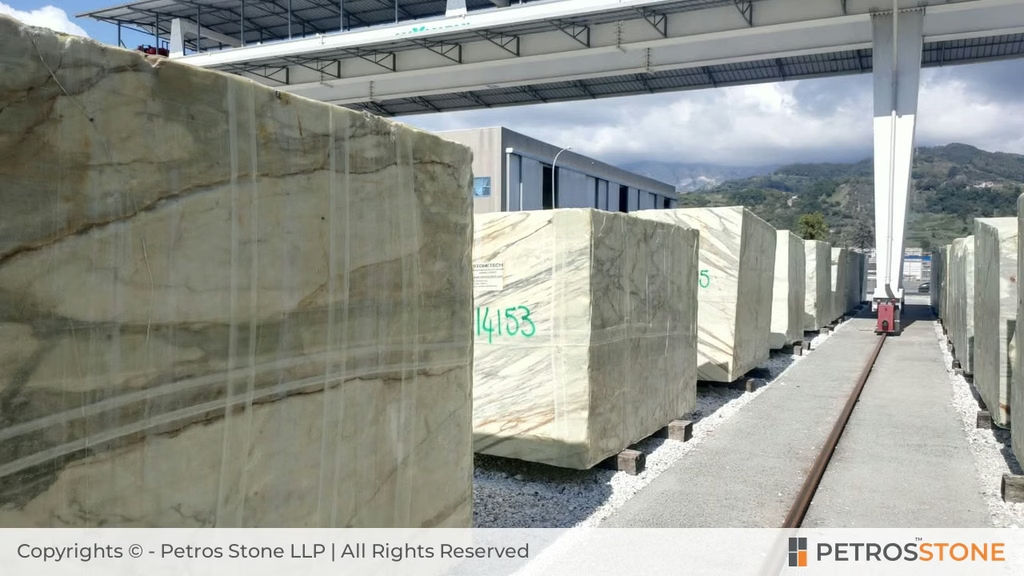
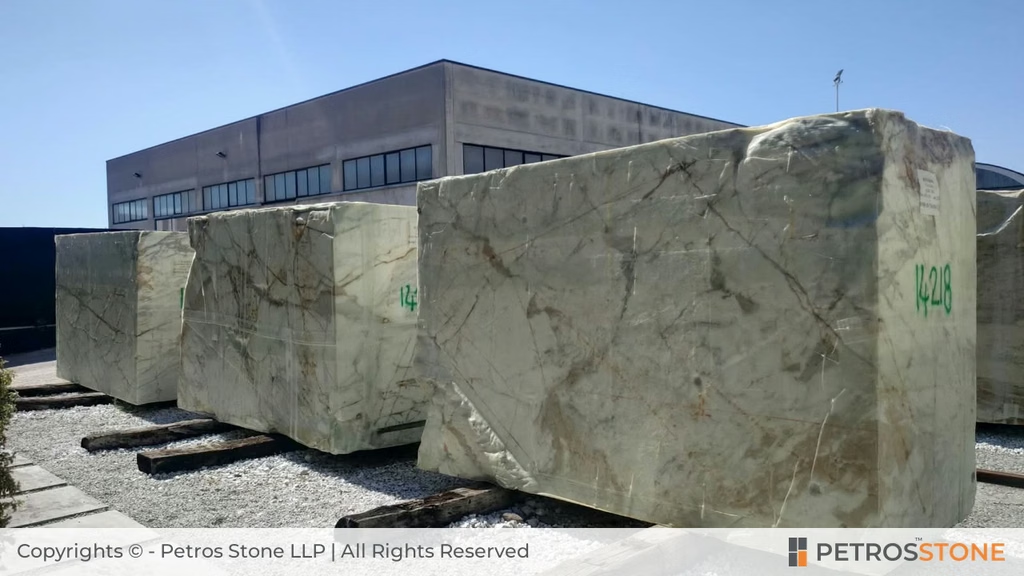
Quarry Origin
Named for the Borghini quarry in the Carrara area, and among the most sought-after Calacatta types.
How to Spot
An unusually bright ground with thick charcoal-to-brown veins and gold undertones, plus clean, wide corridors of white between veins. Buyers mistake it for Calacatta Gold when the veining is mid-toned.
Best Suited Applications
Statement islands and feature walls, where the bold veining needs a large surface. Its rarity makes it a poor fit for small offcut projects, since matching is difficult.
Calacatta Borghini Marble Slab Price | USD/sq. ft.
| Price (approx.) | $18–$50 per sq. ft. |
|---|
3. Calacatta Bettogli Marble
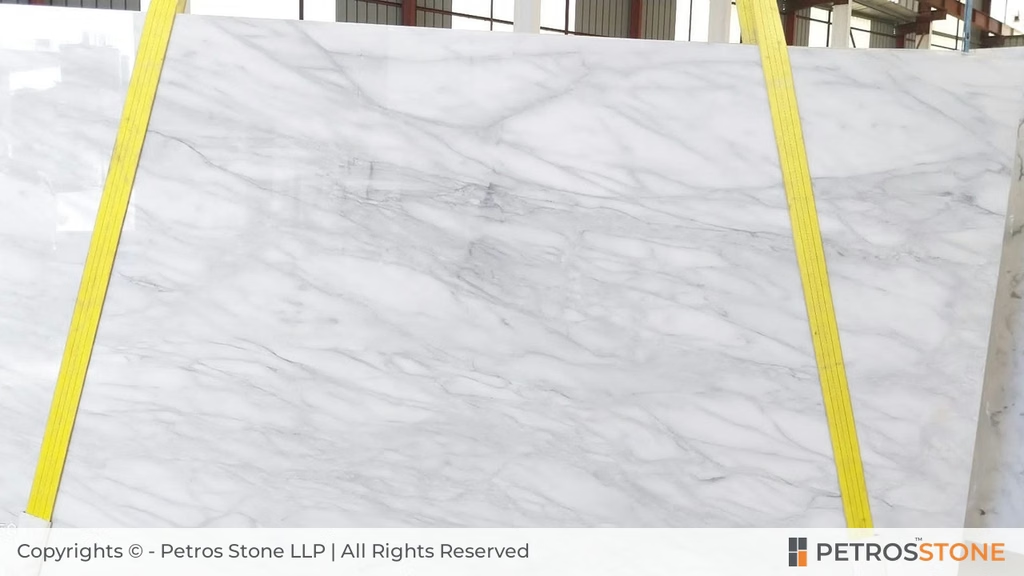
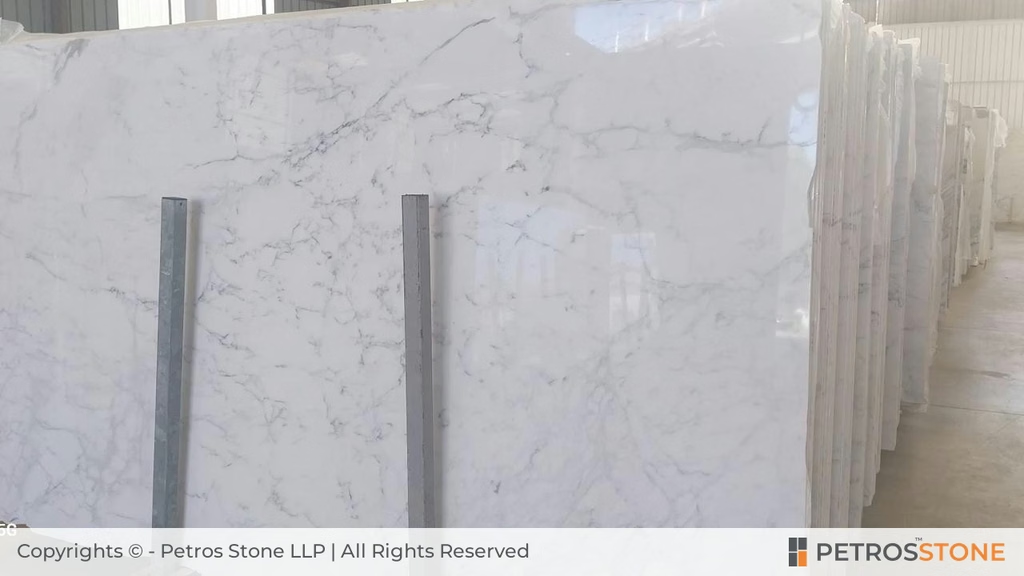
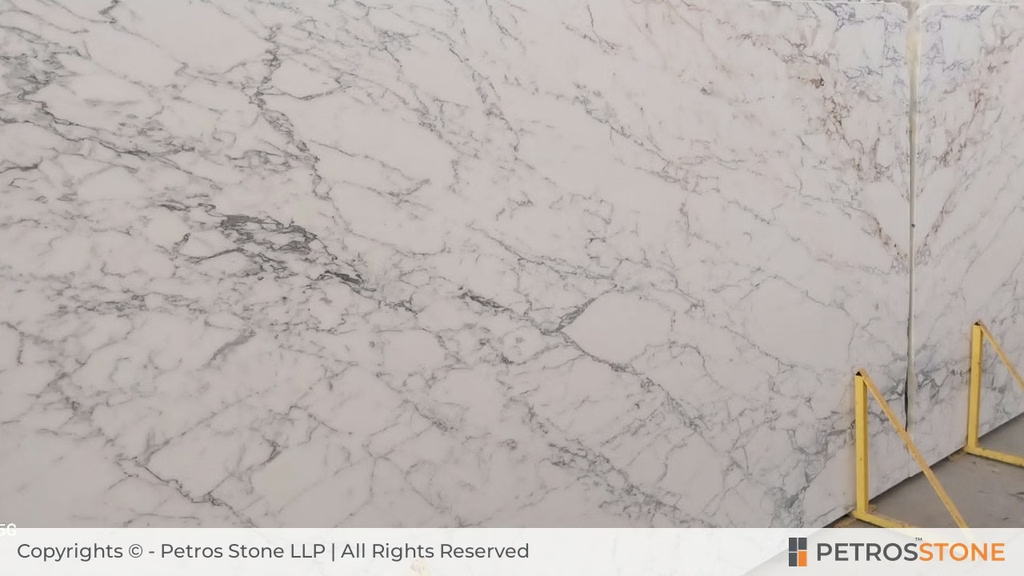
Quarry Origin
Associated with the Bettogli quarry area near Carrara.
How to Spot
Denser, more layered veining than Calacatta Gold, in cool grey with soft gold edges, on a bright ground. It is commonly confused with Calacatta Vagli, but Bettogli’s veining sits tighter and more evenly across the slab.
Best Suited Applications
Bathroom walls, vanity tops, and fireplace surrounds, where the layered veining rewards close viewing. Choose 3 cm for spans.
Calacatta Bettogli Marble Slab Price | USD/sq. ft.
| Price (approx.) | $18–$45 per sq. ft. |
|---|
4. Calacatta Vagli Marble
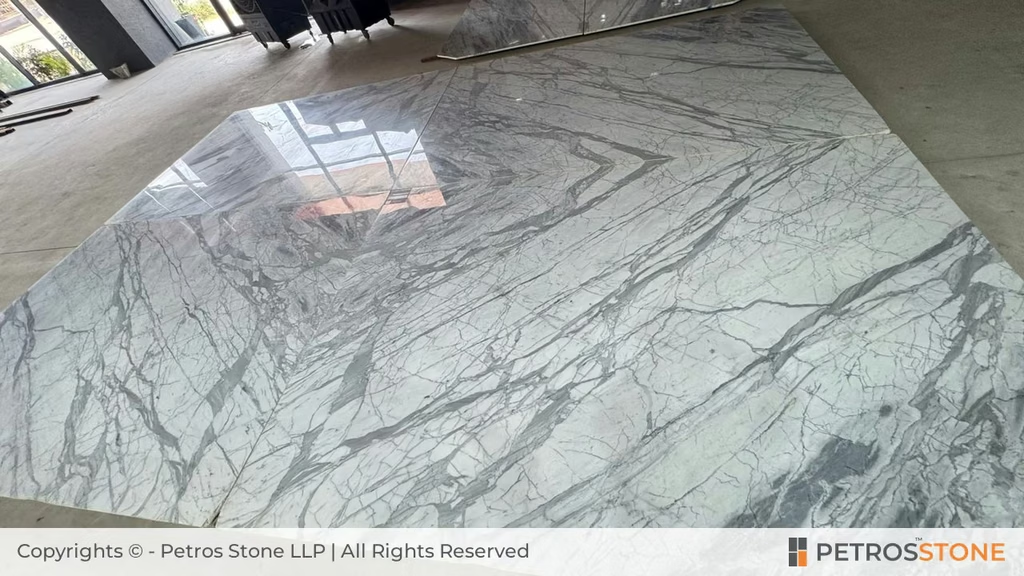
Quarry Origin
Quarried near Vagli in the Garfagnana area of Lucca province, not in the Carrara basins.
How to Spot
Thick grey and gold veins with occasional grey clouding, and a ground that is bright but sometimes slightly cooler than Borghini. It is often sold as a lower-cost alternative to Borghini.
Best Suited Applications
Kitchen countertops and floors, where its strong movement disguises wear. Inspect for veins that run along fissure lines.
Calacatta Vagli Marble Slab Price | USD/sq. ft.
| Price (approx.) | $12–$35 per sq. ft. |
|---|
5. Calacatta Viola Marble
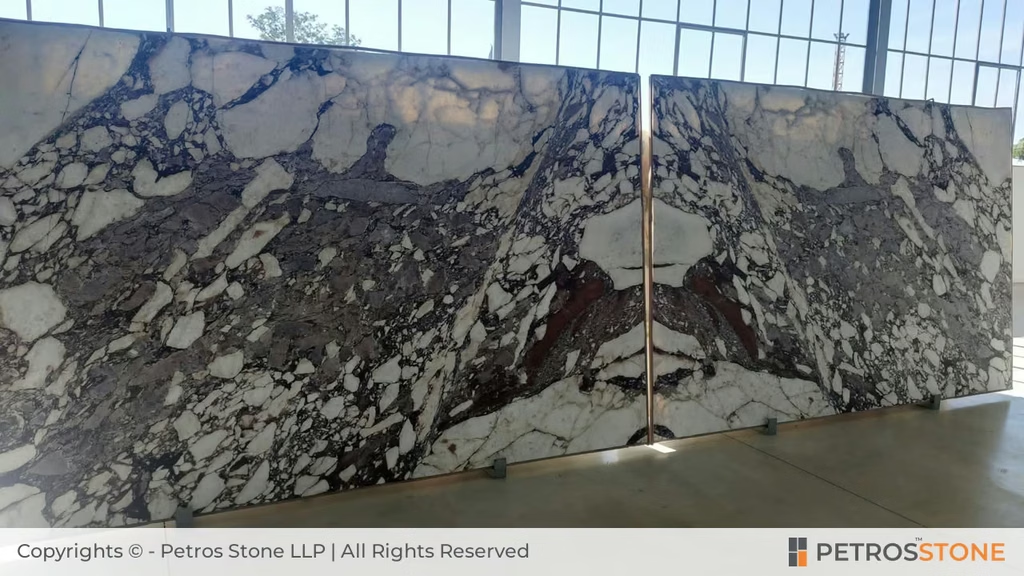
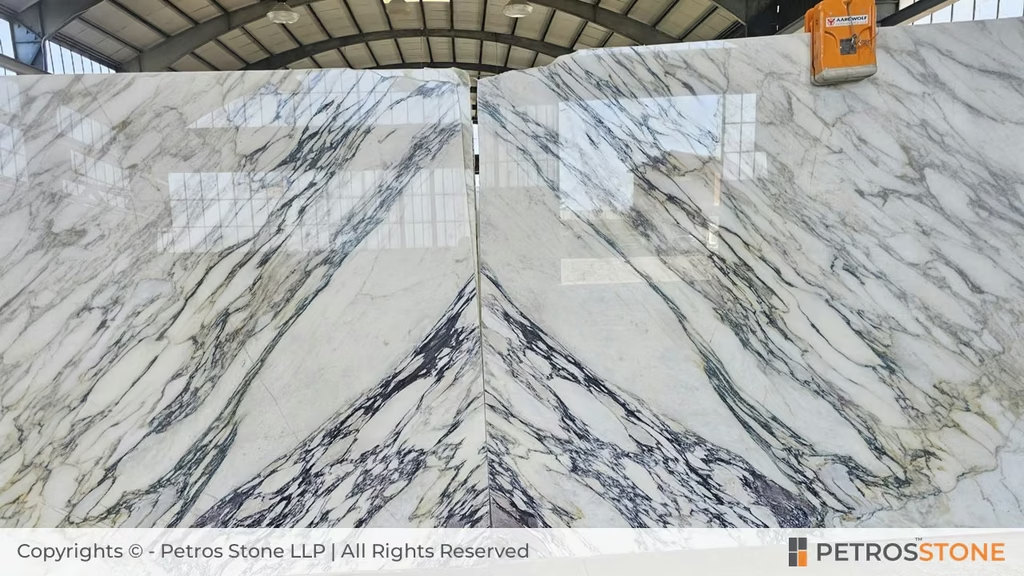
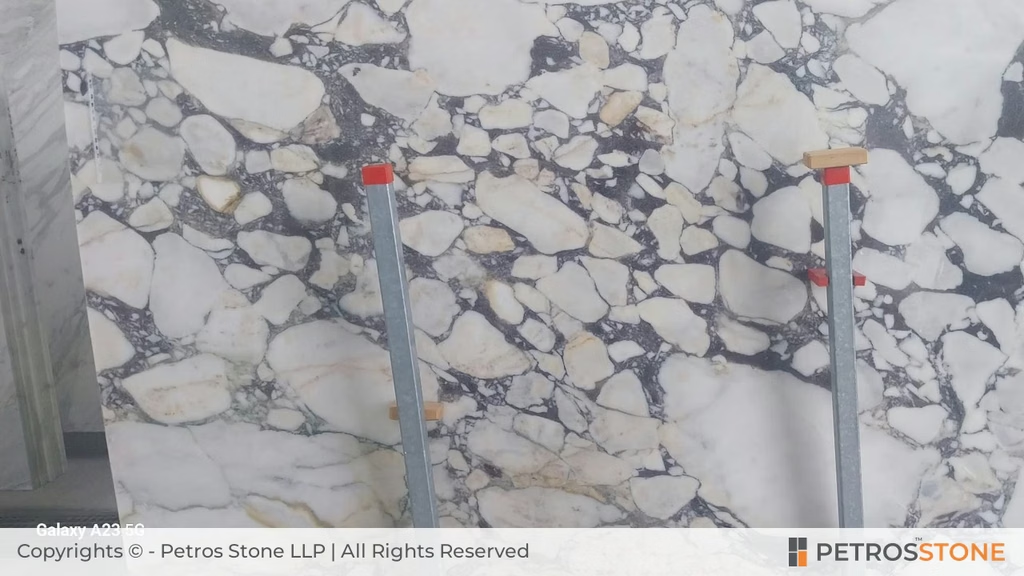
Quarry Origin
Apuan Alps; the exact quarry is often quoted differently by suppliers.
How to Spot
Violet, plum, and burgundy veins on a white ground with grey undertones, ranging from subtle mauve to deep purple. It is often confused with Paonazzo, which has a more consistently cream ground and a more diffuse purple.
Best Suited Applications
Feature walls, vanities, and bar fronts. Take care with lighting, because cool light drains the violet.
Calacatta Viola Marble Slab Price | USD/sq. ft.
| Price (approx.) | $18–$50 per sq. ft. |
|---|
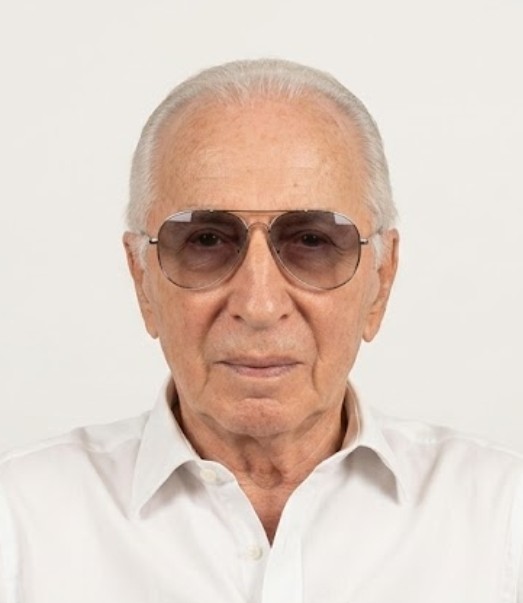
According to the expert:
“Authentic Calacatta Viola is quarried in Italy, with Turkey also producing a genuine violet-veined marble of its own under the same name. Spain, Portugal, and Iran, by contrast, mostly supply look-alike material, stone with a broadly similar white-background, purple-veined appearance sold commercially as ‘Calacatta Viola’ without coming from a verified Calacatta-type quarry.”
— Roberto Baratta, Owner, Manfredi Import Export, Italy
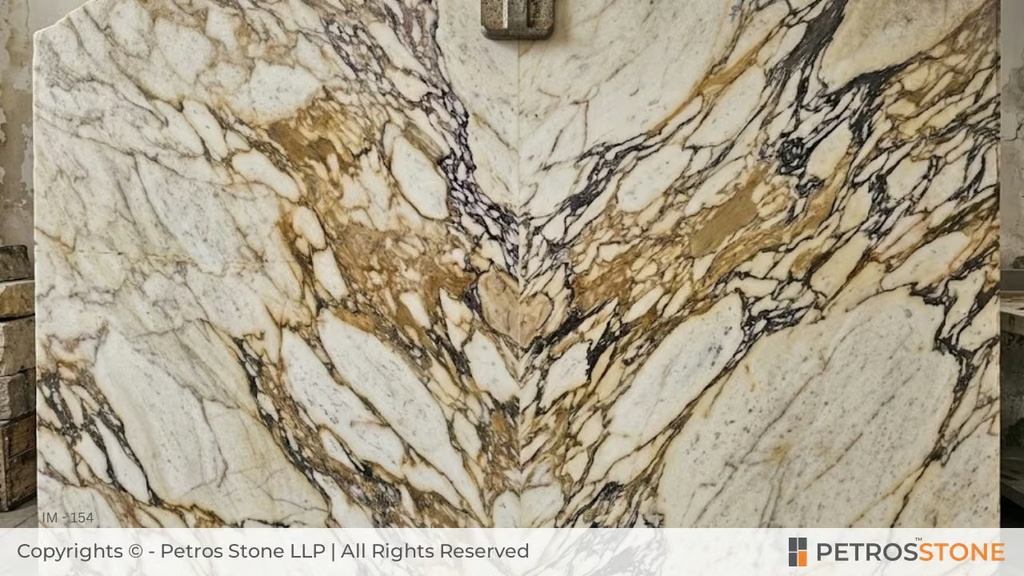
6. Calacatta Viola Oro Marble
Quarry Origin
Trade name for Viola-style stone with a stronger gold component; origin varies by supplier.
How to Spot
The Viola palette of violet and burgundy veins, plus visible gold and amber streaks, on a warmer ground. The gold is the tell that separates it from standard Viola.
Best Suited Applications
Bookmatched statement walls, powder rooms, and high-end hospitality lobbies. Test a sealed sample, since the color mix makes staining more visible.
Calacatta Viola Oro Marble Slab Price | USD/sq. ft.
| Price (approx.) | $20–$55 per sq. ft. |
|---|
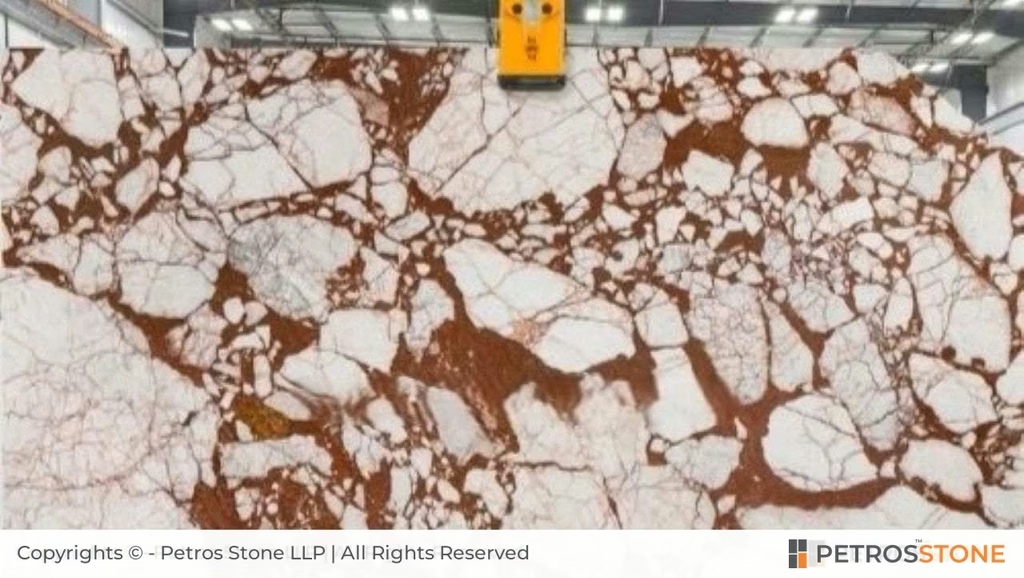
7. Calacatta Rosso Marble
Quarry Origin
Trade name; the reddish veining is sometimes attributed to particular Calacatta quarries, but sources vary.
How to Spot
Rust, terracotta, and reddish-brown veins on a white ground. It is commonly mixed up with Calacatta Gold when the gold reads as amber, so ask to see the slab under daylight.
Best Suited Applications
Accent walls, tabletops, and entry floors that suit a warm palette.
Calacatta Rosso Marble Slab Price | USD/sq. ft.
| Price (approx.) | $15–$40 per sq. ft. |
|---|
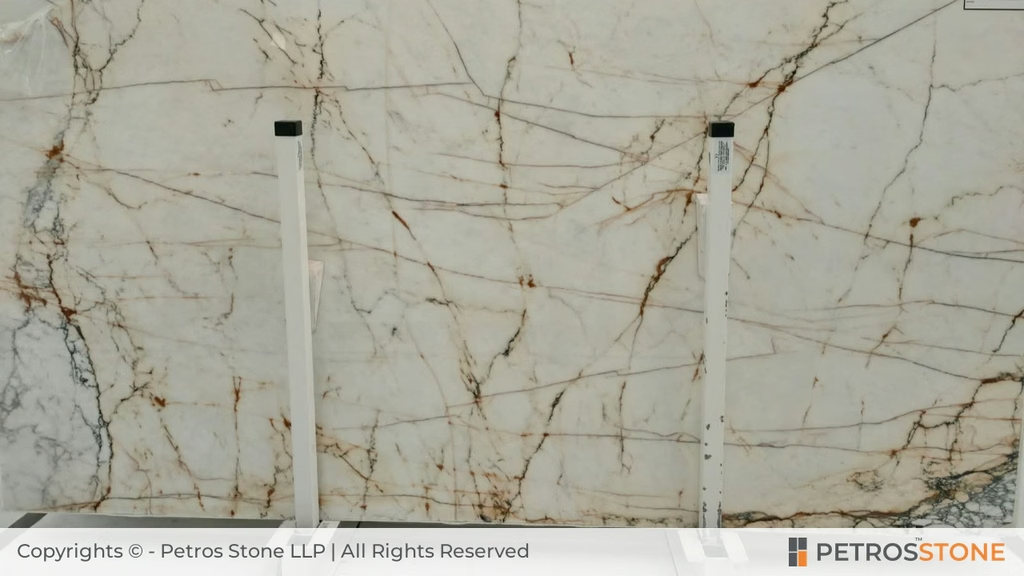
8. Calacatta Paonazzo Marble
Quarry Origin
Paonazzo (also Paonazzetto) is a historic Apuan marble known since antiquity; “Calacatta Paonazzo” is a commercial pairing. Treat it as a related stone, not a true Calacatta. [
How to Spot
Cream ground with diffuse violet and grey veining that looks more clouded than Viola’s sharp ribbons.
Best Suited Applications
Interior wall cladding and fireplace surrounds. Its softness suits low-traffic spaces better than kitchens.
Calacatta Paonazzo Marble Slab Price | USD/sq. ft.
| Price (approx.) | $20–$55 per sq. ft. |
|---|
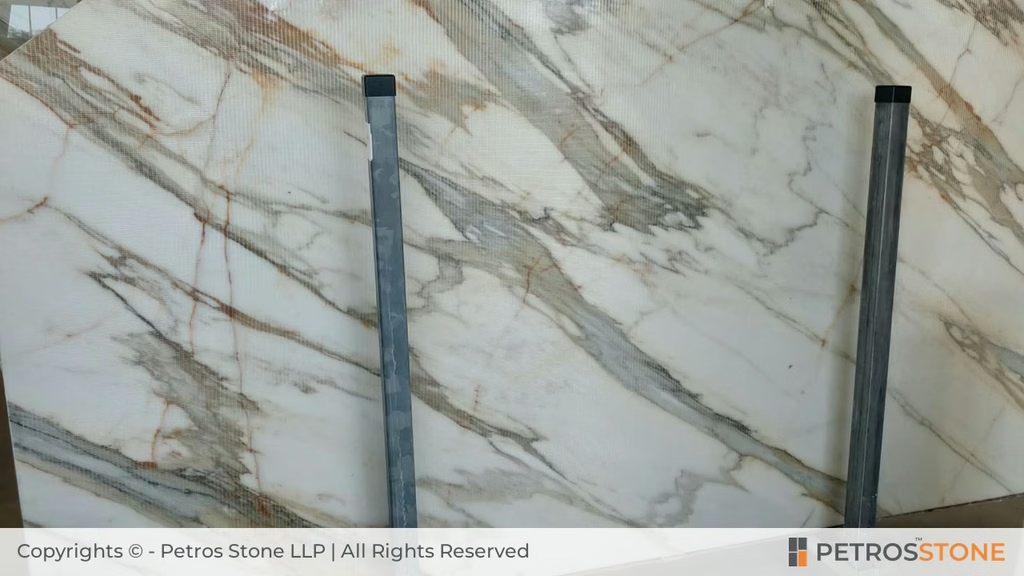
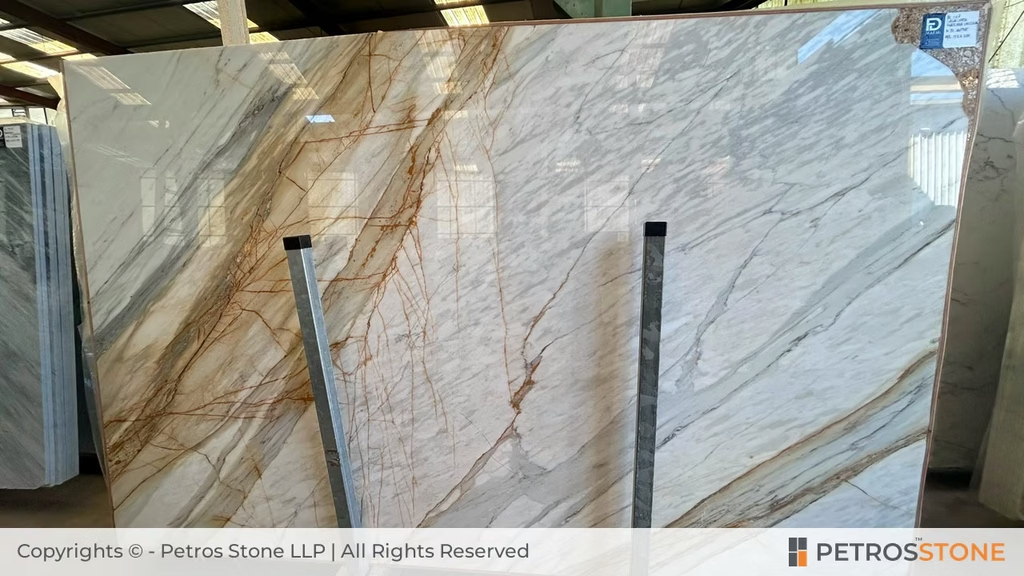
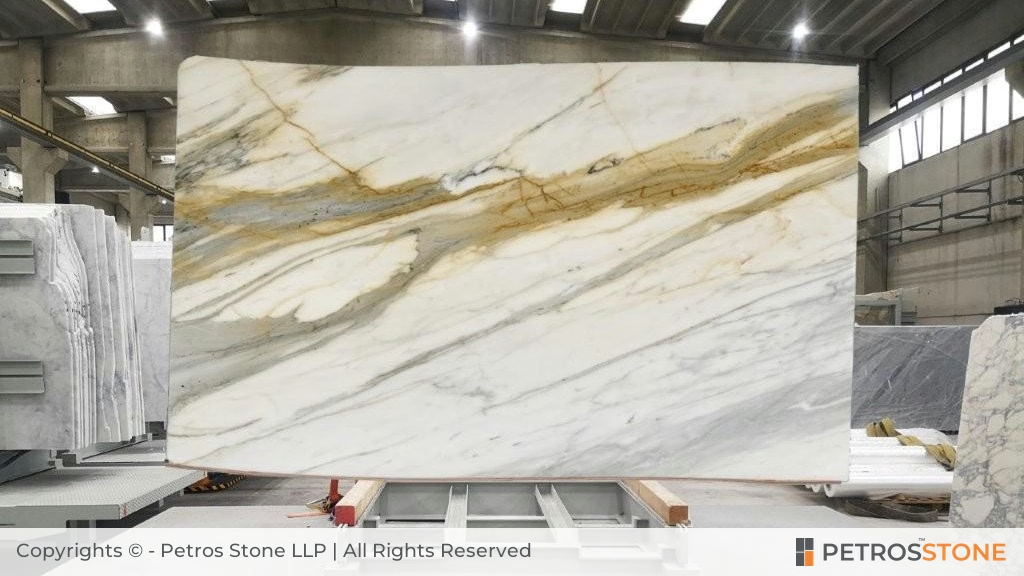
9. Calacatta Macchia Vecchia Marble
Quarry Origin
Carrara-area Calacatta; the name means ‘old stain’ in Italian.
How to Spot
Tightly clustered gold and grey veins, often in patches, on a warm creamy ground. The clustering separates it from Gold’s longer, sweeping lines.
Best Suited Applications
Kitchen countertops and shower walls where a busier pattern hides marks. It suits traditional interiors.
Calacatta Macchia Vecchia Marble Slab Price | USD/sq. ft.
| Price (approx.) | $18–$50 per sq. ft. |
|---|
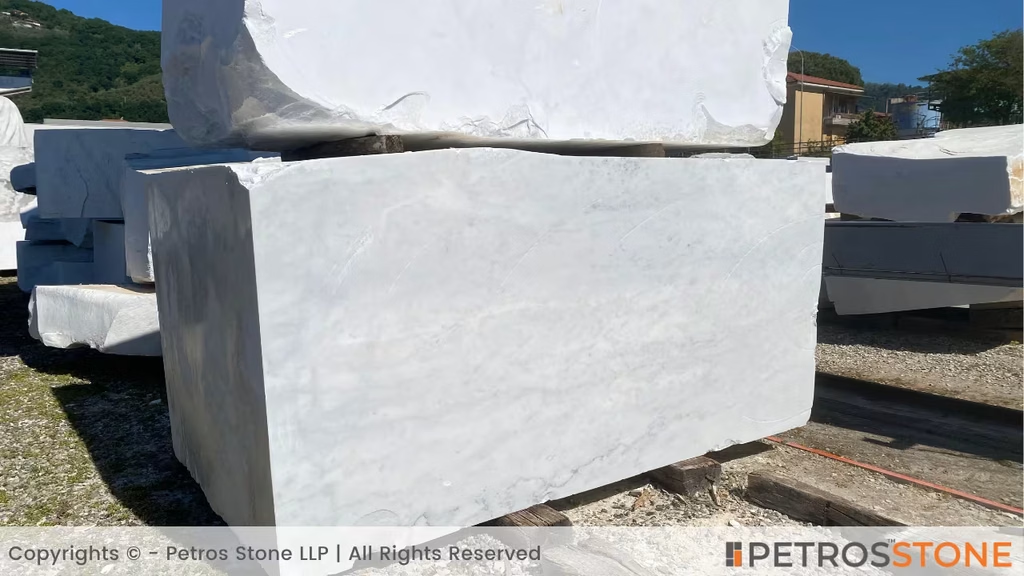
10. Calacatta Michelangelo Marble
Quarry Origin
Linked to the Michelangelo quarry area near Carrara. This is a stone name that some suppliers use loosely.
How to Spot
Very white ground with strong, dark veining and gold accents, with more open white space than Bettogli. Confused with Statuario when the veining is sparse.
Best Suited Applications
Islands, monolithic vanities, and floors in large open rooms.
Calacatta Michelangelo Marble Slab Price | USD/sq. ft.
| Price (approx.) | $20–$55 per sq. ft. |
|---|
11. Calacatta Monet Marble
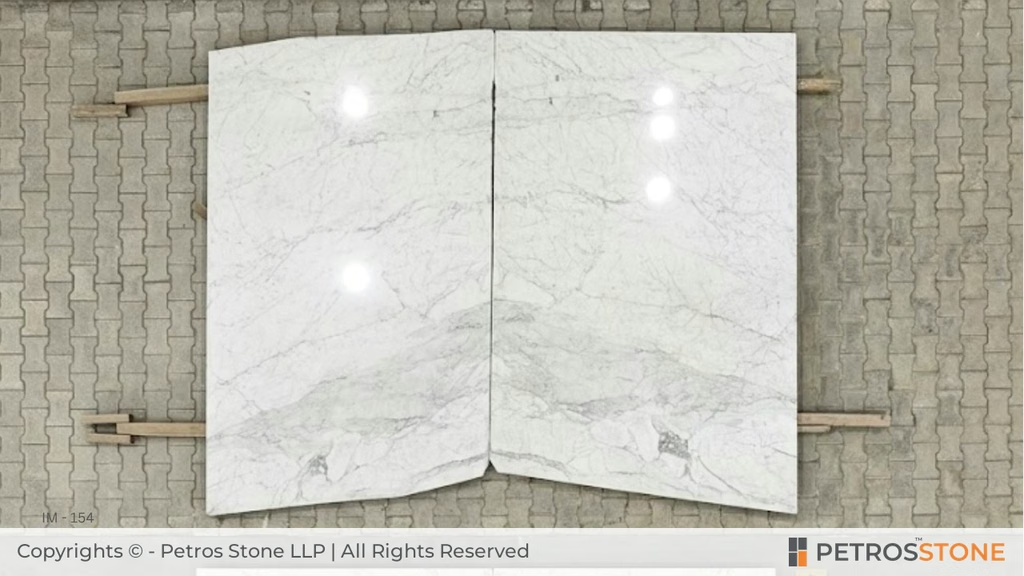
Quarry Origin
Trade name; sources vary by supplier.
How to Spot
Soft, blended grey and gold veins that look painted rather than sharply drawn, and a lighter contrast than Borghini.
Best Suited Applications
Bathroom floors, wall cladding, and kitchens where a calmer Calacatta look is preferred.
Calacatta Monet Marble Slab Price | USD/sq. ft.
| Price (approx.) | $20–$50 per sq. ft. |
|---|
12. Calacatta Monet Verde Marble
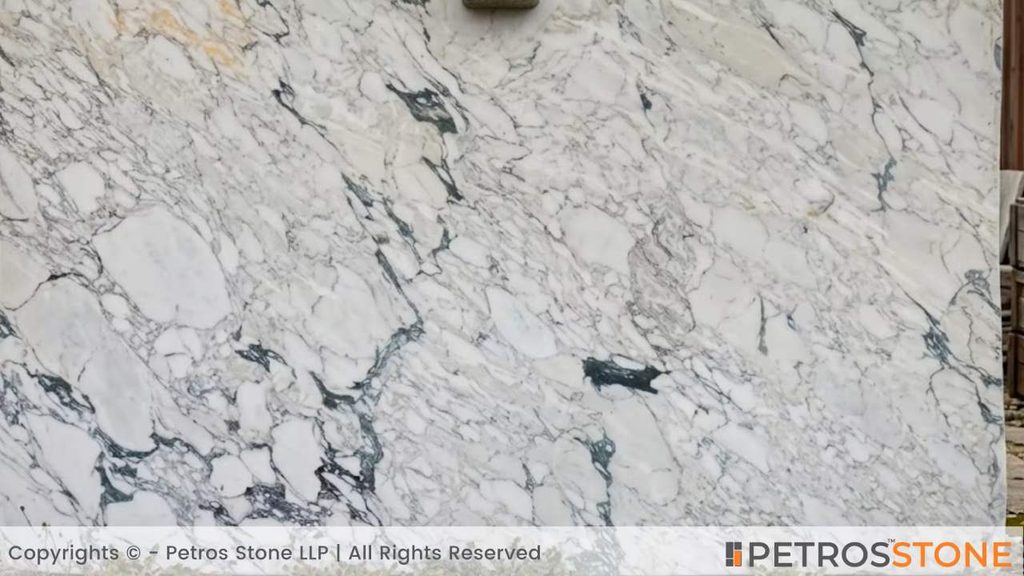
Quarry Origin
Trade name for a green-tinged Monet; not a distinct quarry designation, and sourcing varies
How to Spot
The Monet blended veining, with sage or pale green tones running through grey. Compare against a Monet sample to confirm the color is in the stone rather than in the lighting.
Best Suited Applications
Feature walls and vanities in spaces with natural light.
Calacatta Monet Verde Marble Slab Price | USD/sq. ft.
| Price (approx.) | $20–$50 per sq. ft. |
|---|
13. Calacatta Statuario Marble
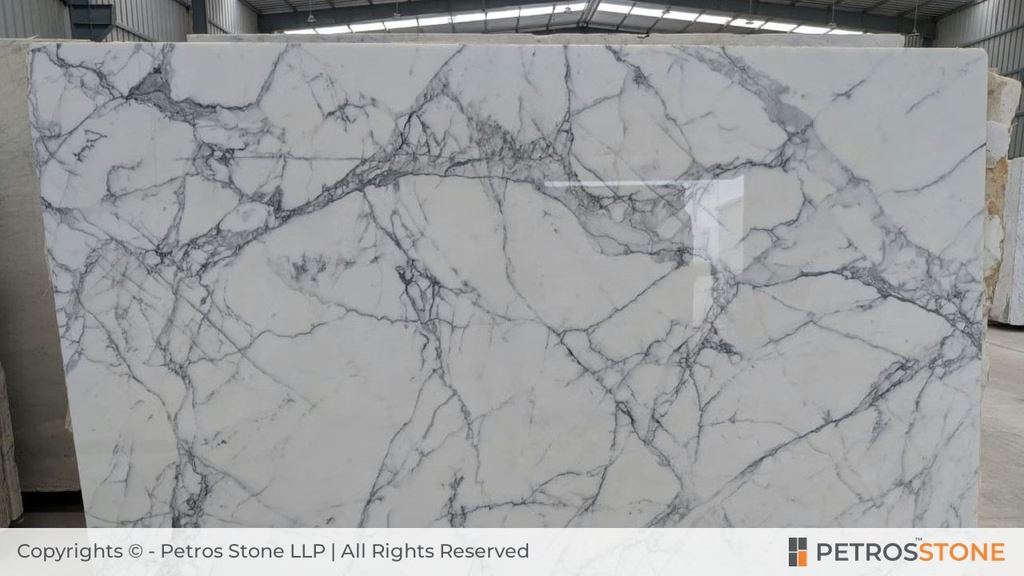
Quarry Origin
A hybrid label, not a single quarry. It usually describes stone with Statuario’s whiteness and Calacatta’s stronger veining. Treat it as a commercial description.
How to Spot
A very white, even ground with bolder veins than true Statuario but fewer than Calacatta Borghini. A supplier should be able to say which basin the block came from.
Best Suited Applications
Statement floors, bookmatched walls, and kitchens where a bright, clean palette is the goal.
Calacatta Statuario Marble Slab Price | USD/sq. ft.
| Price (approx.) | $18–$50 per sq. ft. |
|---|
14. Calacatta Green (Verde/Emerald) Marble
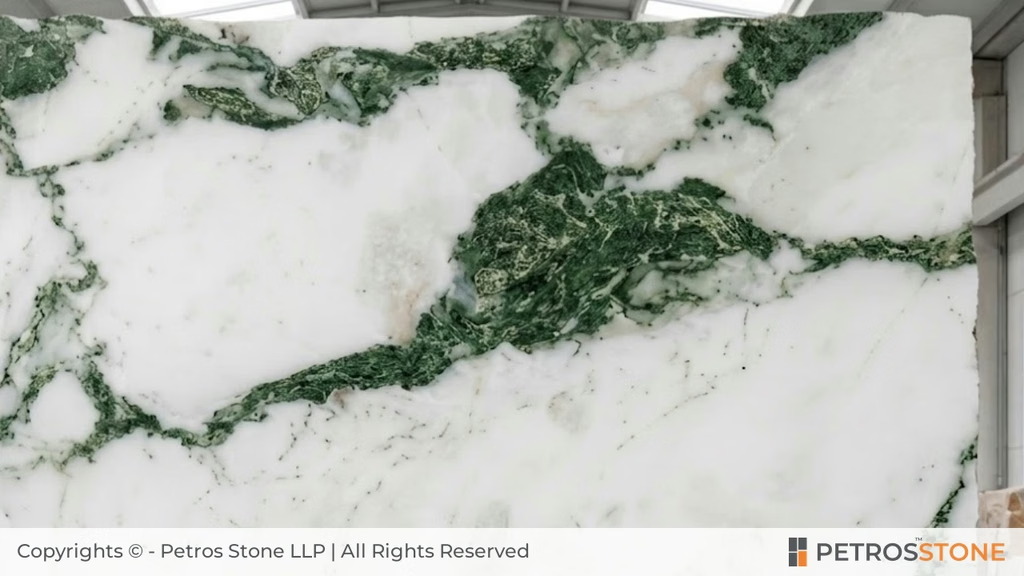
Quarry Origin
Not a single quarry stone. The name covers several green-veined marbles, and some may come from outside Italy. Ask for the block origin in writing.
How to Spot
White ground with green veins from pale sage to deep emerald. Some material sold under this label is not marble at all, so confirm the stone type.
Best Suited Applications
Feature walls, bar tops, and vanities. Test green-veined stones for staining before use in kitchens.
Calacatta Green Marble Slab Price | USD/sq. ft.
| Price (approx.) | $20–$55 per sq. ft. |
|---|
“Natural stone brings something of the natural world indoors. It can give a space a sense of calm, solidity, safety, and connection to the earth. It conveys timelessness and continuity. You are aware that the material existed long before we used it and will probably outlast us.”
– Ar. Menno Lam

15. Calacatta Capraia Marble
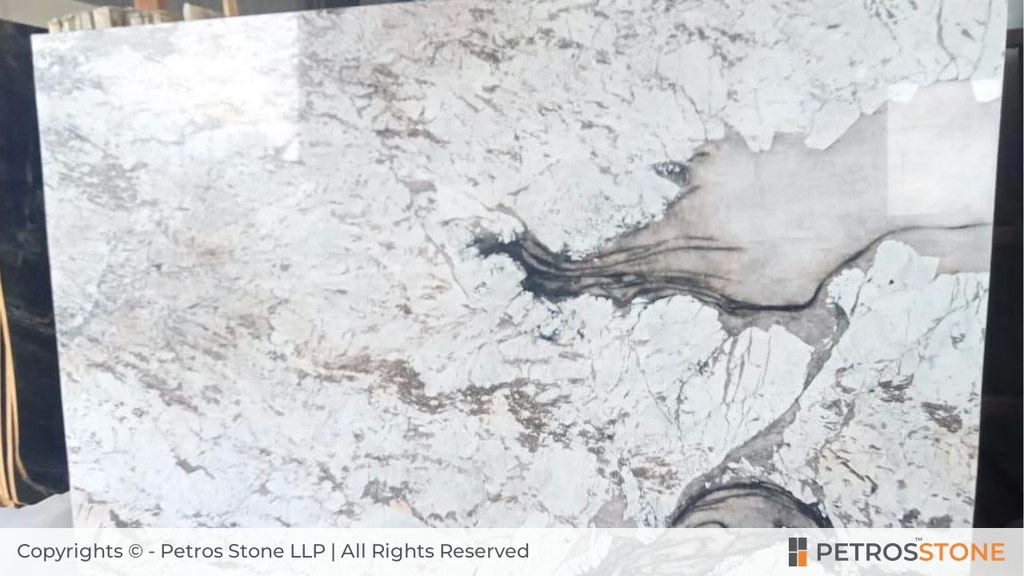
Quarry Origin
Trade name, with the supplier disputing the source.
How to Spot
White ground with moderate grey and beige veining and a more restrained pattern than Borghini.
Best Suited Applications
Flooring and countertops in mid-budget projects that want a Calacatta look without the premium.
Calacatta Capraia Marble Slab Price | USD/sq. ft.
| Price (approx.) | $15–$40 per sq. ft. |
|---|

16. Calacatta Crestola Marble
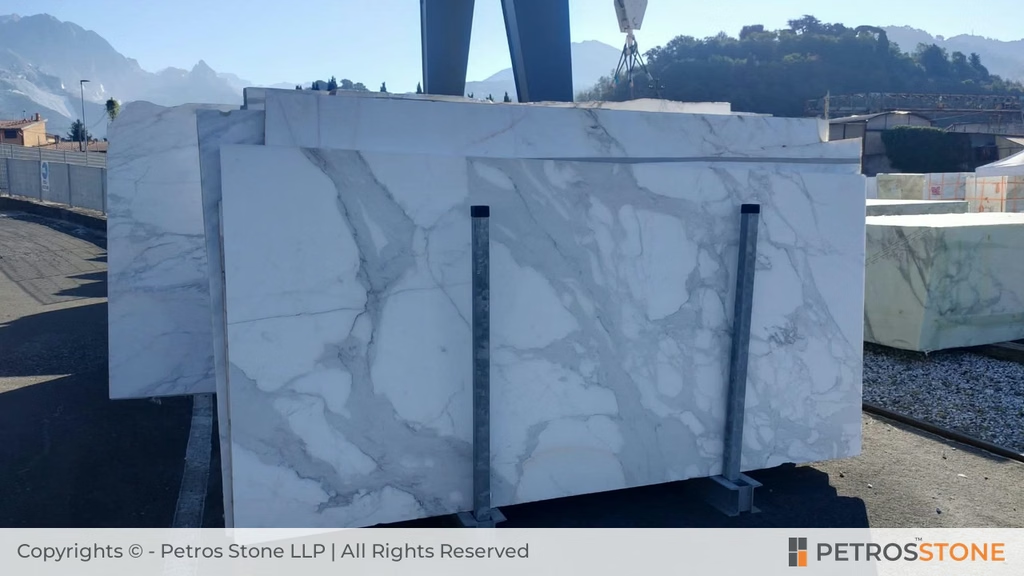
Quarry Origin
Named for a quarry area in the Carrara basins.
How to Spot
Irregular grey veins with beige clouding on a white ground, less sharp than Vagli.
Best Suited Applications
Kitchen counters and bathroom walls. A honed finish reduces visible wear.
Calacatta Crestola Marble Slab Price | USD/sq. ft.
| Price (approx.) | $15–$40 per sq. ft. |
|---|
17. Calacatta Caldia Marble
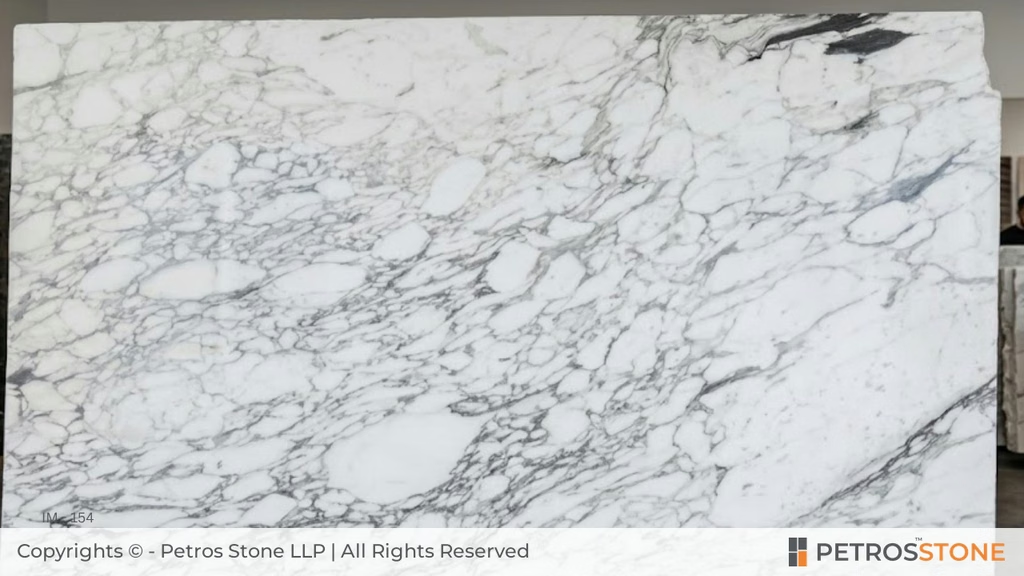
Quarry Origin
Named after a Carrara-area quarry, though supply and grading vary.
How to Spot
Grey and gold veins with light clouding and a slightly warmer ground than Borghini. It is often placed near Calacatta Gold in quality and price.
Best Suited Applications
Countertops, vanities, and wall cladding.
Calacatta Caldia Marble Slab Price | USD/sq. ft.
| Price (approx.) | $12–$35 per sq. ft. |
|---|
18. Calacatta Belgia Marble
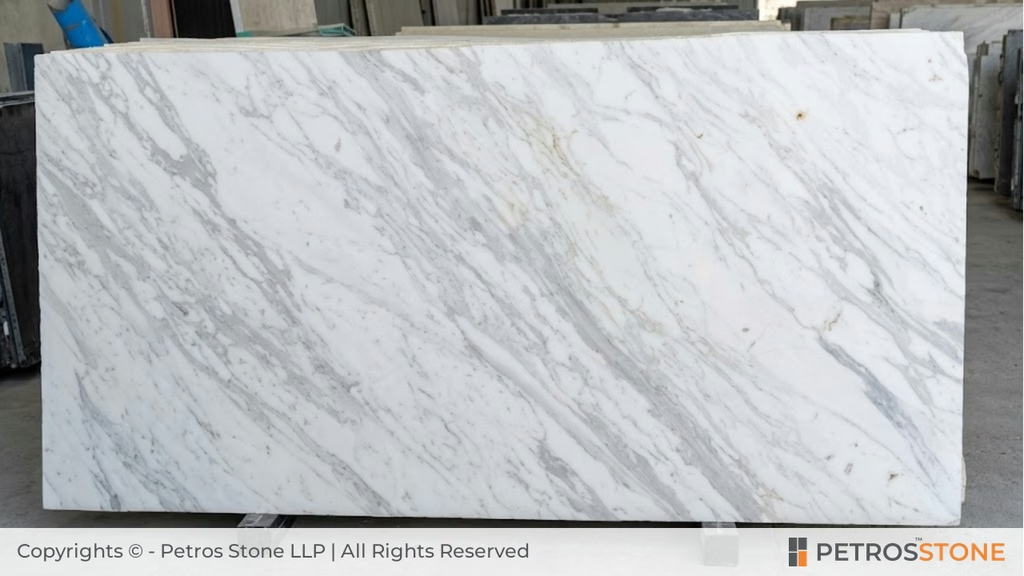
Quarry Origin
It is quarried from the Apuan Alps.
How to Spot
Soft grey veining on a white ground with less contrast and fewer gold notes. Its subtle look sometimes puts it closer to premium Carrara than to Borghini.
Best Suited Applications
Flooring, commercial interiors, and large surfaces where a quieter look is needed.
Calacatta Belgia Marble Slab Price | USD/sq. ft.
| Price (approx.) | $12–$35 per sq. ft. |
|---|
19. Calacatta Zebrino Marble
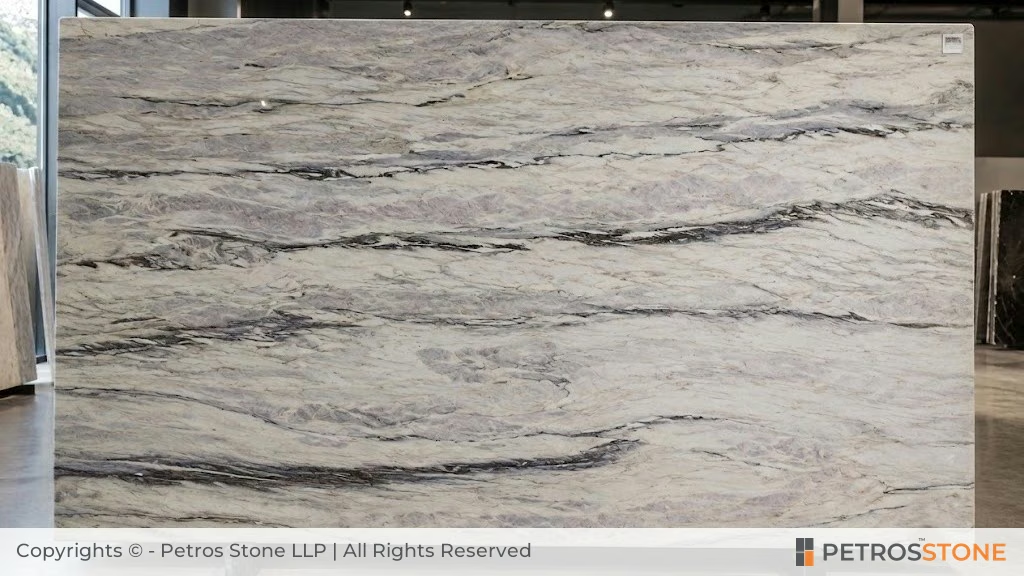
Quarry Origin
Trade name: ‘Zebrino’ refers to the striped look, and the source varies. It overlaps with other striped Apuan marbles.
How to Spot
Parallel grey bands or stripes on a white ground rather than the branching veins of Gold or Borghini. The stripes are the giveaway.
Best Suited Applications
Feature walls and vanities where linear patterning suits the design. Match slab orientation carefully at seams.
Calacatta Zebrino Marble Slab Price | USD/sq. ft.
| Price (approx.) | $12–$35 per sq. ft. |
|---|
20. Calacatta Picasso Marble
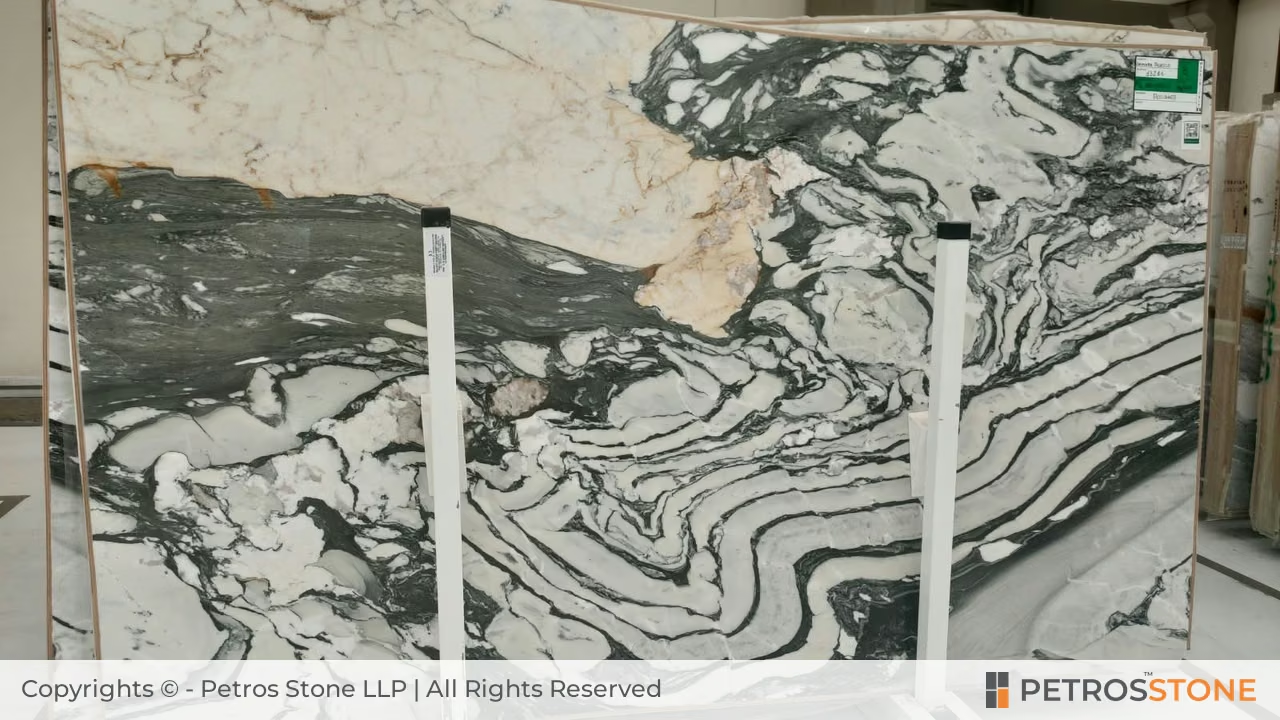
Quarry Origin
Associated with the Apuan marble district of Tuscany, Italy, and sold under the Calacatta Picasso commercial name. Confirm the exact quarry with the supplier or block documentation.
How to Spot
A white-to-cream ground with dramatic grey, charcoal, and black veins, often showing irregular, cloud-like movement. The strongest selections have high contrast and expressive veining across the slab.
Best Suited Applications
Feature walls, book-matched panels, statement islands, luxury bathrooms, and fireplace surrounds, where its dramatic movement can be displayed across a large surface. Slab selection is important for matching.
Calacatta Picasso Marble Slab Price | USD/sq. ft.
| Price (approx.) | $18–$50 per sq. ft. |
|---|
21. Calacatta Extra Marble
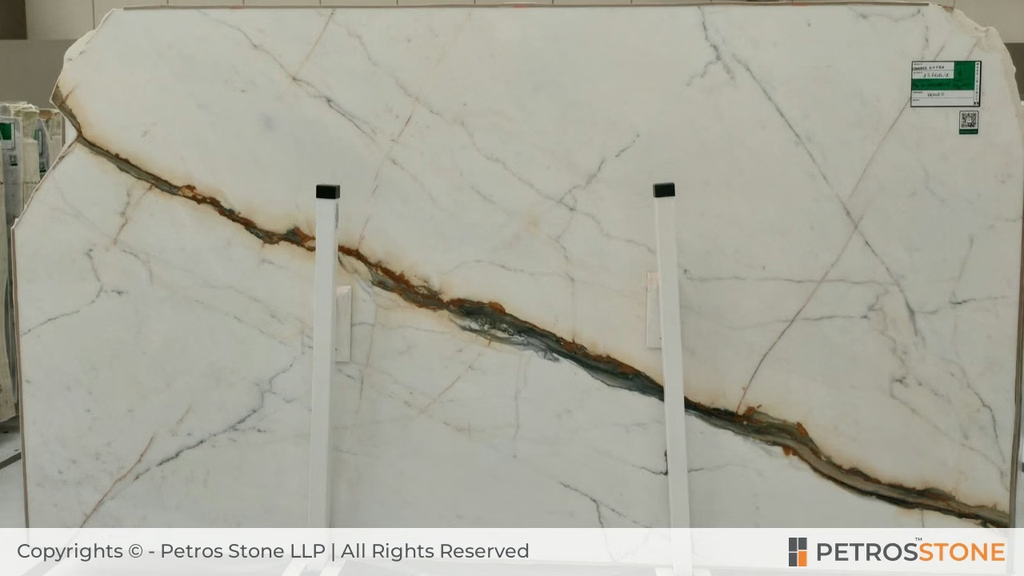
Quarry Origin
‘Extra’ is a commercial grade, not a quarry or a variety. It usually signals better quality within a lot.
How to Spot
Look for a clean white ground, well-defined veining, and few flaws. Because the label is a grade, ask what it is graded against.
Best Suited Applications
General residential use, from countertops to floors, provided the slab is inspected in person.
Calacatta Extra Marble Slab Price | USD/sq. ft.
| Price (approx.) | $18–$50 per sq. ft. |
|---|
Which Calacatta Marble Is the Most Expensive?
Calacatta Borghini is usually the most expensive established variety, followed by rare stones such as Calacatta Green and top-grade Michelangelo. Prices stay high because the quarries yield few clean, large blocks and demand for the bold veining is strong. A single block can vary widely, so two slabs with the same name can differ by hundreds of dollars per square meter.
Calacatta Marble Pricing – Some Varieties Cost More
| Calacatta Type | Why It Commands a Premium |
|---|---|
| Calacatta Borghini | Bright white ground with strong, dramatic veining; limited high-quality blocks |
| Calacatta Green | Rare green-and-white movement with limited consistent production |
| Calacatta Michelangelo | High-grade white marble with distinctive, sought-after veining |
| Calacatta Viola | Bold purple, burgundy, and gold veining with strong design appeal |
According to the expert:
“Different selections can come from the very same origin, so origin alone doesn’t guarantee a particular appearance. Buyers still need to look at the actual material on offer, not just the country it’s labeled with.”
— Roberto Baratta, Owner, Manfredi Import Export, Italy
Which Calacatta Marble Is Best for Countertops?
Calacatta Gold and Calacatta Vagli are the safest choices for countertops. Both have busy enough veining to hide small marks, and both are widely available in 2 cm and 3 cm slabs. Choose a honed finish to reduce visible etching. Delicate varieties such as Viola Oro or Paonazzo are better on vanities and walls.
Best Calacatta Marble for Countertops
| Calacatta Type | Countertop Suitability | Recommended Finish | Why Choose It |
|---|---|---|---|
| Calacatta Gold | High | Honed / Polished | Strong veining and broad availability |
| Calacatta Vagli | High | Honed / Polished | Durable-looking visual pattern and versatile design |
| Calacatta Viola | Moderate–High | Honed | Dramatic appearance for statement kitchens |
| Calacatta Michelangelo | Moderate–High | Honed / Polished | Premium appearance with distinctive movement |
| Calacatta Viola Oro | Moderate | Honed | Better suited where the visual effect is the priority |
According to the expert:
“Calacatta Gold and Calacatta Vagli are the safest choices for countertops. Both have busy enough veining to hide small marks, and both are widely available in 2 cm and 3 cm slabs.”
— Riccardo Tedeschi
Owner of TMC – Tecnica Marmo Carrara in Massa Carrara, Italy
Which Calacatta Marble Is Best for Flooring?
Calacatta Vagli, Crestola, and Belgia suit flooring best, because their veining reads as texture and hides wear. Use 2 cm slabs or tiles on well-supported subfloors, and avoid highly polished finishes in wet areas, where slip resistance matters. Save Borghini and Statuario for low-traffic feature floors, where the pattern is on display.
Best Calacatta Marble for Flooring
| Calacatta Type | Flooring Suitability | Best Use | Key Consideration |
|---|---|---|---|
| Calacatta Vagli | High | Residential floors and large-format areas | Veining adds visual movement |
| Crestola | High | Residential and hospitality floors | Select slabs with consistent structure |
| Belgia | High | Interior floors and feature areas | Verify commercial naming and quarry ori gin |
| Calacatta Gold | Moderate–High | Luxury residential flooring | Strong pattern can dominate large areas |
| Calacatta Borghini | Moderate | Feature floors | Premium material may be better reserved for focal areas |
| Calacatta Statuario | Moderate | Low-traffic luxury interiors | Protect from staining and abrasion |
According to the expert:
“Calacatta Vagli, Crestola, and Belgia suit flooring best, because their veining reads as texture and hides wear. Use 2 cm slabs or tiles on well-supported subfloors, and avoid highly polished finishes in wet areas…”— Riccardo Tedeschi
Owner of TMC – Tecnica Marmo Carrara in Massa Carrara, Italy
What Are the Standard Sizes and Thicknesses of Calacatta Marble?
Sizes vary by quarry, block, and supplier, and the rarest varieties often come in smaller slabs. Tiles are typically cut from the same blocks in standard formats such as 30 x 60 cm (12 x 24 in).
Standard Sizes and Thicknesses of Calacatta Marble
| Format | Typical Size / Thickness | Common Application |
|---|---|---|
| Large slab | 260–320 × 160–200 cm | Countertops, islands, walls |
| Standard slab thickness | 2 cm | Countertops, walls, fabrication |
| Heavy slab thickness | 3 cm | Countertops, islands, staircases |
| Common tile | 30 × 60 cm | Floors and walls |
| Large-format tile | Varies by supplier | Floors and feature walls |
Which Calacatta Marble Should You Avoid?
Avoid any slab whose variety name cannot be backed by a block number, a quarry statement, or written documentation. Labels like “Extra,” “Belgia,” and “Statuario” are often commercial terms, and some green-veined “Calacatta” is not marble at all. Also avoid heavily veined slabs with fissure lines running along the veins for high-stress uses such as long overhangs.
What Should You Check Before Buying Calacatta Marble?
Check the slab in person, under the light it will live in, and ask for the block number and written origin. Look for fissures, resin filling, color consistency across slabs for the same project, and thickness tolerance. Request a sealed sample if the stone will be used in a kitchen, and confirm that all slabs come from one block if you need a match.
A Simple Checklist for Buying Calacatta Marble
| Check | What to Inspect | Why It Matters |
|---|---|---|
| Quarry origin | Country, quarry, and block number | Establishes traceability |
| Slab selection | Background, veining and movement | Determines visual consistency |
| Fissures | Natural cracks, vein openings, and filled areas | Important for fabrication and structural applications |
| Resin treatment | Back/front resin and filled fissures | Helps distinguish natural appearance from treated surfaces |
| Thickness | Measure several points across the slab | Identifies cutting/calibration variation |
| Water absorption | Laboratory test result | Helps assess staining and moisture sensitivity |
| Compressive strength | Laboratory test result | Relevant to stone performance assessment |
| Project matching | Same block and sequential slab selection | Reduces variation between installed pieces |
| Lighting | Inspect under comparable project lighting | Vein color and translucency can change considerably |
| Sample approval | Approve an actual slab or representative sample | Prevents disputes over natural variation |
According to the expert:
“Check the slab in person, under the light it will live in, and ask for the block number and written origin. Look for fissures, resin filling, color consistency across slabs for the same project, and thickness tolerance.””— Riccardo Tedeschi
Owner of TMC – Tecnica Marmo Carrara in Massa Carrara, Italy
How to Choose Between the 20 Varieties
Match Your Color Palette & Atmosphere
Cool interiors with grey-and-white schemes suit Borghini, Vagli, and Bettogli. Warm schemes with wood, brass, or cream suit Gold, Macchia Vecchia, and Rosso. For color statements, Viola and Verde work best when the rest of the room stays quiet.
Consider Vein Movement
Sweeping, dramatic veining (Borghini, Michelangelo) works best on large planes and bookmatched walls. Denser, layered veining (Bettogli, Macchia Vecchia) suits smaller surfaces and busier rooms. Linear stones like Zebrino need careful seam placement.
Factor in Spatial Scale & Lighting
Large rooms can carry bold veining, while small rooms often look calmer with Monet, Belgia, or Capraia. Natural light shows the warm gold in Gold and Rosso, while cool LED light flattens Viola and Green, so test samples in the actual space.
Check Strength & Durability
All Calacatta is calcium-carbonate marble, so it etches and can stain. Denser, more consistent blocks such as Gold, Vagli, and Crestola tend to perform well, while heavily veined or clouded slabs can be more fragile. Use 3 cm for long spans and a honed finish where wear is expected.
Align with Rarity and Budget
Borghini, Michelangelo, and Green carry the highest premiums because supply is limited. Gold, Vagli, Crestola, and Monet offer the best balance of drama and price. Belgia, Zebrino, and Extra suit tighter budgets, provided you verify the slab in person.
FAQs
Is Calacatta more expensive than Carrara marble?
Yes. Calacatta typically costs two to five times more than standard Carrara because of its whiter ground, bolder veining, and limited quarry supply. Premium varieties like Borghini sit at the top of the range, while some entry-level Calacatta grades overlap with high-end Carrara.
Which Calacatta variety is the most durable?
Calacatta Gold and Calacatta Vagli are generally considered the most practical. All Calacatta is marble and will etch, but denser blocks with fewer fissures hold up better. Durability depends more on the individual block, finish, and sealing than on the name alone.
Can I mix two Calacatta varieties in the same room?
Yes, if the ground tone and vein color are compatible. Pairing Gold with Macchia Vecchia works well, while mixing warm Gold with a cool Vagli can clash. Always compare full slabs side by side under the room’s actual lighting before committing.
How do I know if a slab labeled “Calacatta” is actually Statuario or just Carrara?
Check the ground and the veins. Calacatta has a bright white ground with wide, high-contrast veins, Statuario has a very white ground with fine, sparse veins, and Carrara has a greyer ground with soft, feathery veins. Ask for a block number, view the actual slab, and get written documentation.
Is Calacatta Viola a passing trend or a lasting choice?
It is a lasting choice for the right project, though its color makes it more style-sensitive than white-and-grey Calacatta. It works best as a feature, such as a wall or vanity, where it can be changed less painfully than a whole-house floor.
How far in advance should I order Calacatta marble for a project?
Plan for at least 6-12 weeks, and longer for rare varieties or large matched projects. Stock slabs can ship faster, but for bookmatching or a single block, order early and reserve the slabs.
What’s the difference between Calacatta Gold and Calacatta Oro?
Usually none. “Oro” is Italian for gold, and the two names are often used interchangeably. Some suppliers use “Oro” for higher-grade stone, so compare the actual slabs and ask what the label means at that supplier.
Do all Calacatta varieties come from the same quarry?
No. They come from different quarries and basins in the Apuan Alps, and some are trade names covering stone from more than one source. That is why two slabs called “Calacatta” can look and cost so differently.
Is Calacatta marble suitable for outdoor use?
Limited. Calacatta can be used in sheltered exterior areas, but frost, acid rain, and strong sun can dull or damage the surface. For patios or exposed facades, consult the supplier and choose a denser variety with a honed or brushed finish.
Can Calacatta marble be repaired if it chips or stains?
Usually yes. Chips can be filled with color-matched resin, and etching can be re-honed or repolished by a stone professional. Stains are easier to treat when caught early, so seal the surface and clean spills quickly.
What’s the best way to verify a slab’s true variety before purchase?
Ask for the quarry or block number, view the actual slab in person, and request written documentation of origin. Compare against a reference sample of the named variety, and be cautious of vague labels or prices far below the market range.
Key Takeaways
- Calacatta is a family of quarry and trade names, not a single stone, so always verify the specific variety.
- The defining traits are a bright white ground and bold, high-contrast veining, which separate it from Carrara and Statuario.
- Calacatta Borghini is usually the most expensive established variety, while Gold, Vagli, and Crestola offer a strong balance of drama and value.
- Names like Extra, Belgia, Zebrino, and Statuario can be commercial descriptions, so ask for documentation.
- For kitchens, choose denser, busier stones like Gold or Vagli in a honed finish to hide etching.
- Standard slabs run about 260-320 cm long in 2 cm or 3 cm thicknesses, with variation by quarry and supplier.
- When choosing among the types of Calacatta marble, view the actual slab under the room’s lighting, and request a block number before you commit.

Tapas Koul leads editorial direction and content strategy at Petros® Stone. His work spans research, content development, and brand communication, with a focus on architecture, natural stone, and design. He is interested in the stories behind materials, projects, and industry developments, bringing together useful insights and information to help readers understand the subject beyond the surface.
Feel free to get in touch for a free consultation, quote, and get a detailed understanding from our experts here at Petros®. Visit www.petrosstone.com or call +91-8446360361 or WhatsApp

Brown Granite

White Galaxy Granite

Blue Bahia Granite

Silver Cloud Granite

Black Pearl Granite

Dallas White Granite