
Designing Places, Carrying Memory
In a design landscape increasingly dominated by fleeting trends and visual noise, the true value of architecture lies in its power to forge lasting emotional connections. Beyond striking silhouettes and decorative finishes, meaningful design is rooted in cultural resonance, material truth, and spaces that evolve alongside the human experience.
For Peter Ippolito, Co-Founder of the renowned multidisciplinary studio Ippolito Fleitz Group (IFG), interior architecture is never a static composition—it is a live narrative. Bridging identity, storytelling, and strategic spatial planning, his work across Europe and Asia demonstrates how thoughtful material research and deep cultural listening transform everyday spaces into memorable places.
Peter Ippolito | A Brief Profile
Peter Ippolito is a Dipl.-Ing. architect who co-founded the Ippolito Fleitz Group alongside Gunter Fleitz in 2002. His work focuses on creating innovative and unique interior designs, viewing interior architecture as a 360-degree discipline where intangible factors are semantically translated into physical space.
Throughout his career, Peter has championed an accessible, multi-sensory approach to spatial design, often incorporating experimental and artistic elements. His practice centers on creating atmospheres that foster welcome and well-being while carefully responding to human dimensions. Driven by continuous innovation, he approaches new projects as opportunities to leverage his experience to craft unprecedented spatial experiences. In recognition of their contributions to the discipline, Peter and Gunter became the first German interior designers to be inducted into the Interior Design Hall of Fame in New York in 2015.
In this conversation with Petros® Stone, Peter Ippolito reflects on his keynote Deep Skin, explaining why stone should carry time rather than display wealth, how curiosity drives international practice, and why the most sustainable places are simply the ones people refuse to leave behind.
Q – Your recent Deep Skin keynote explored how materials and surfaces shape the way people experience architecture. When working with natural stone, how do you ensure it becomes an integral part of a project’s identity rather than simply a luxury finish?
Natural stone has never interested me as a luxury material.
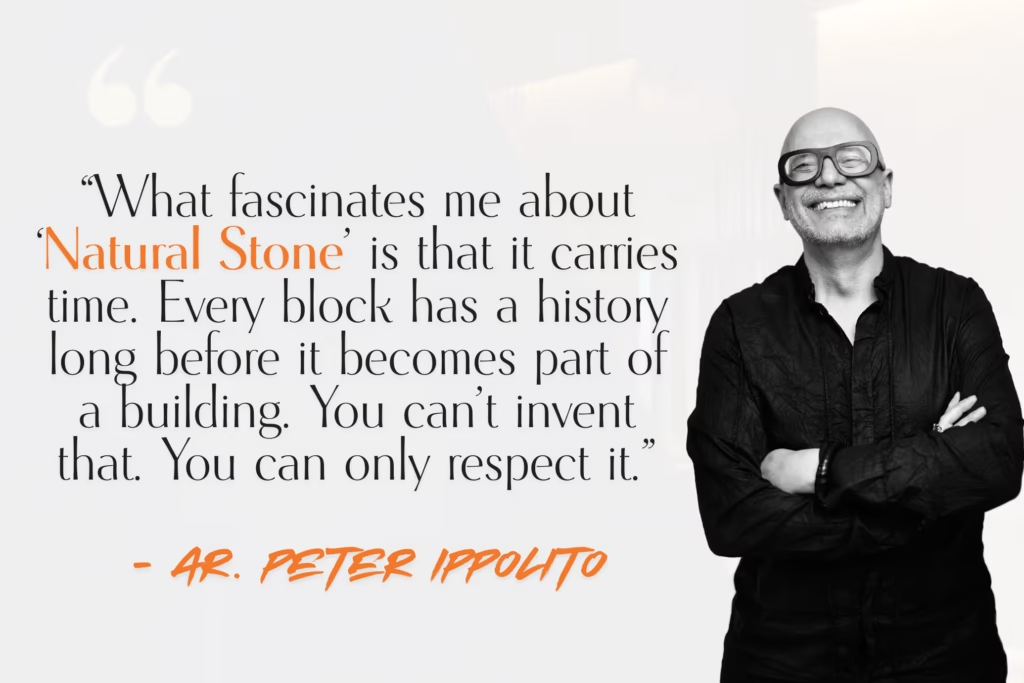
What fascinates me is that it carries time. Every block has a history long before it becomes part of a building. You can’t invent that. You can only respect it.
At IFG, we spend a surprising amount of time researching materials—not simply choosing them, but understanding where they come from, how they are produced, and how they will age. That’s where design begins.
Stone becomes meaningful when it belongs to a place, when it supports an atmosphere, when it helps people feel connected to their surroundings rather than impressed by them.
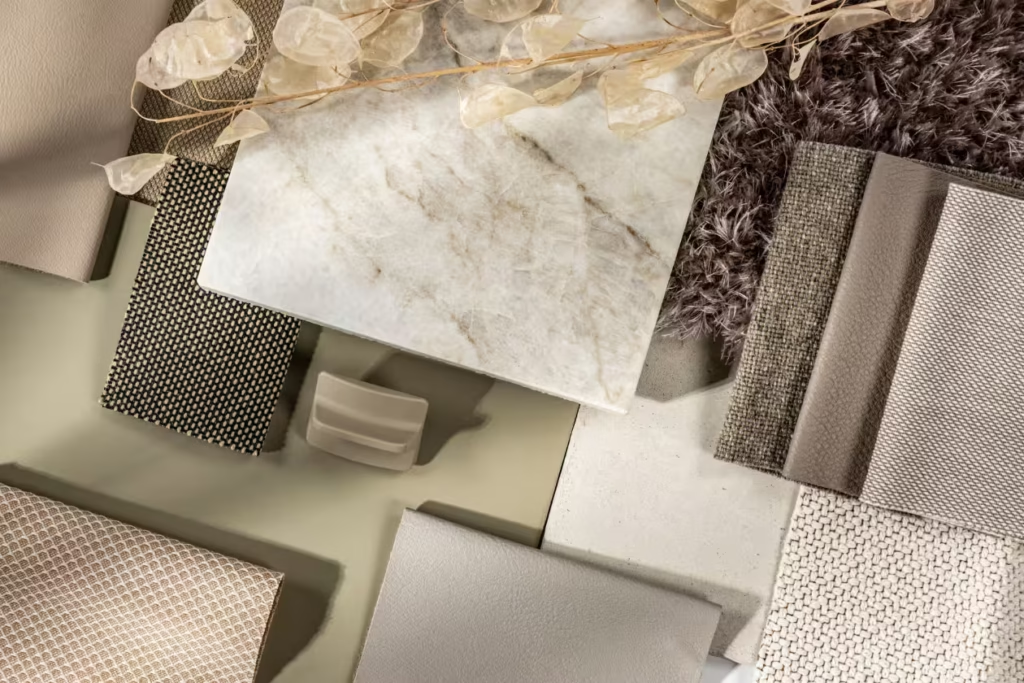
Photo : Brunner Group
People don’t build relationships with materials. They build relationships with places. Materials simply help those places carry memory.
Q – Every brand has its own culture and personality. During the early stages of a project, how do you uncover a client’s true identity and translate it into a space that people can immediately recognize and connect with?
Listening is probably the most underestimated design tool.
Not just listening to what clients say, but to what they hesitate to say. The moments of uncertainty are often far more revealing than the confident ones.
“Listening is probably the most underestimated design tool. Not just listening to what clients say, but to what they hesitate to say.”
– Peter Ippolito
I remember a client who had just sold his company and moved into a beautifully designed minimalist house. Everything was elegant. Everything was right. But it belonged to the person he had been, not the person he was becoming.
We didn’t redesign the architecture. We simply started talking about materials, colours, objects and memories. Gradually another interior emerged—one that reflected the next chapter of his life rather than the previous one.
Design isn’t about confirming identity.
It’s about creating the conditions for identity to evolve.
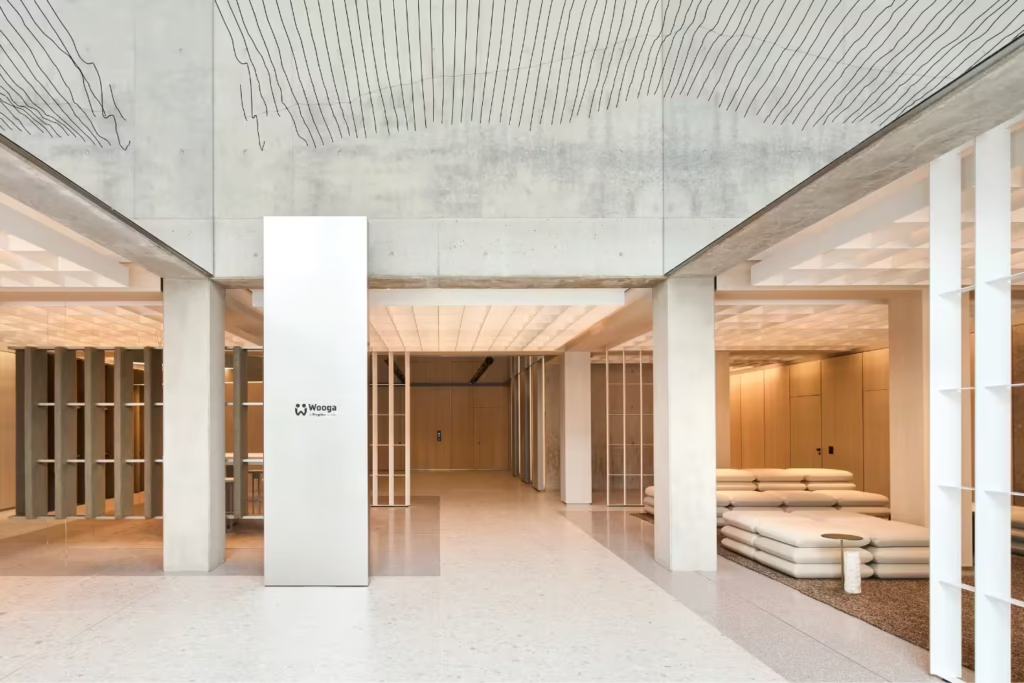
Photo: Philip Kottlorz
“Design isn’t about confirming identity. It’s about creating the conditions for identity to evolve.”
– Peter Ippolito
Q – You’ve designed award-winning workplaces, hospitality projects and retail environments across Europe and Asia. What lessons have you learned from designing in different cultures, and how has that influenced your approach to creating memorable spaces?
Working internationally hasn’t made me more certain.
It has made me more curious.
After more than twenty-five years of designing projects in China, I’ve learned that many things I once considered universal simply aren’t. Every culture has its own understanding of community, privacy, beauty, and success.
That’s exactly what makes international work so rewarding.
Architecture should never erase those differences. It should reveal them.
Every project teaches me something I didn’t know before. I hope that never changes.
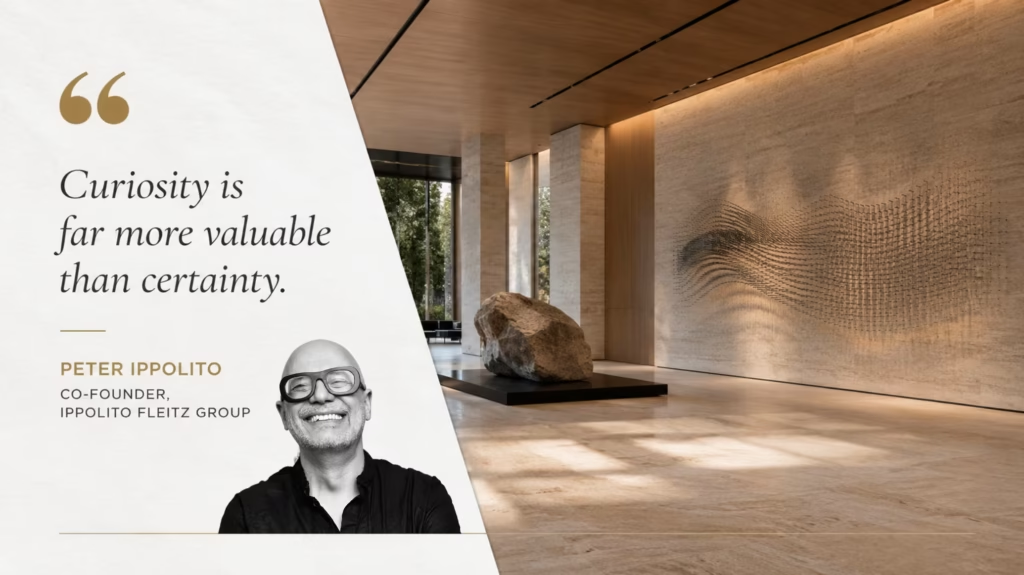
Curiosity is far more valuable than certainty.
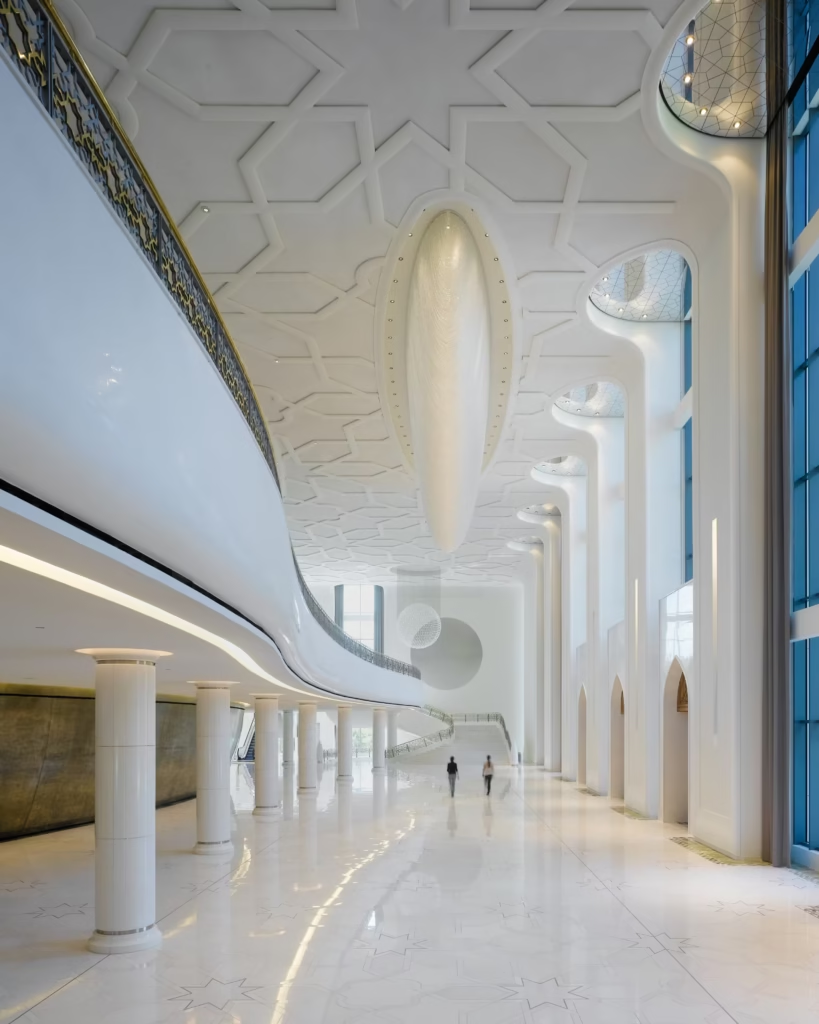
Photo: Zooey Braun
“Every project teaches me something I didn’t know before. I hope that never changes. those differences. It should reveal them.”
– Peter Ippolito
Q – Your projects often combine architecture, interior design, lighting, materials and storytelling into one seamless experience. How do you balance creativity with functionality so that a space remains both visually distinctive and practical for everyday use?
Functionality has never been the enemy of creativity. It’s the foundation of it.
If a space doesn’t work, no amount of beautiful materials or dramatic lighting will save it. But if functionality becomes the only ambition, architecture turns into engineering.
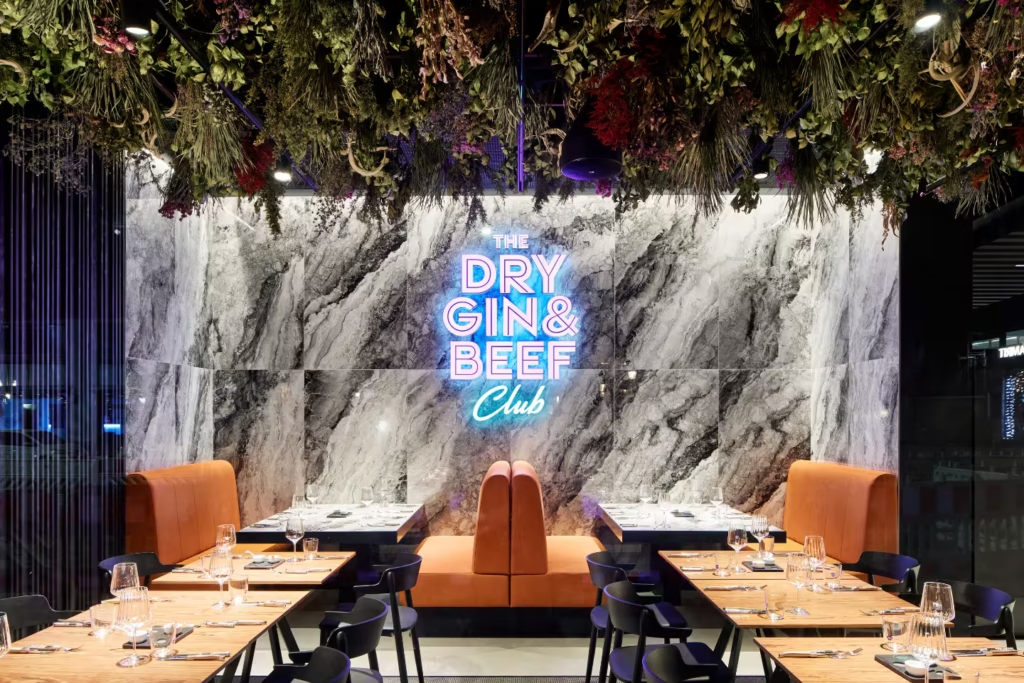
Photo: Philip Kottlorz
What interests me most are the moments that cannot be programmed. The unexpected conversation. The place where someone decides to stay a little longer. The corner that becomes everybody’s favourite without ever being designed as such.
We can’t design life.
But we can design the conditions that allow life to unfold.
That’s where architecture becomes memorable.
“We can’t design life. But we can design the conditions that allow life to unfold. That’s where architecture becomes memorable.”
– Peter Ippolito
Q – Sustainability is becoming an essential part of contemporary design, as seen in your recent work on circular materials and products. How do you incorporate sustainable thinking into high-end interiors without compromising quality, craftsmanship, or the overall user experience?
I sometimes feel that sustainability has become a technical discussion, when in fact it is first and foremost a cultural one.
The most sustainable place is the one people never want to replace.
The most sustainable places I know are not necessarily the ones with the most certificates. They are the ones people care about. The ones they repair, adapt and continue to use because they still feel relevant years later.
Of course, innovation matters. We’ve spent years rethinking material systems, manufacturing processes and colour strategies with partners such as Brunner. But technology alone will never make a project sustainable.
Relevance will.
If a place continues to matter, it has a future.

Photo: Philip Kottlorz
“People don’t build relationships with materials. They build relationships with places. Materials simply help those places carry memory.”
– Peter Ippolito
Q – Many of your interiors feature commissioned artwork and custom installations that feel like an integral part of the architecture. At what stage do artists become involved in your design process, and how do you ensure art and architecture complement one another rather than compete for attention?
Usually much earlier than people expect.
Art isn’t something we add to a completed interior. It’s often part of the very first conversation.
I’ve never liked the idea of architecture as a perfectly composed picture. The projects I enjoy most feel more like a dialogue. Between materials, light, objects, art—and ultimately the people who use the space.
The best places leave something unfinished.
They leave room for your own memories.
There are many places. Some you remember.
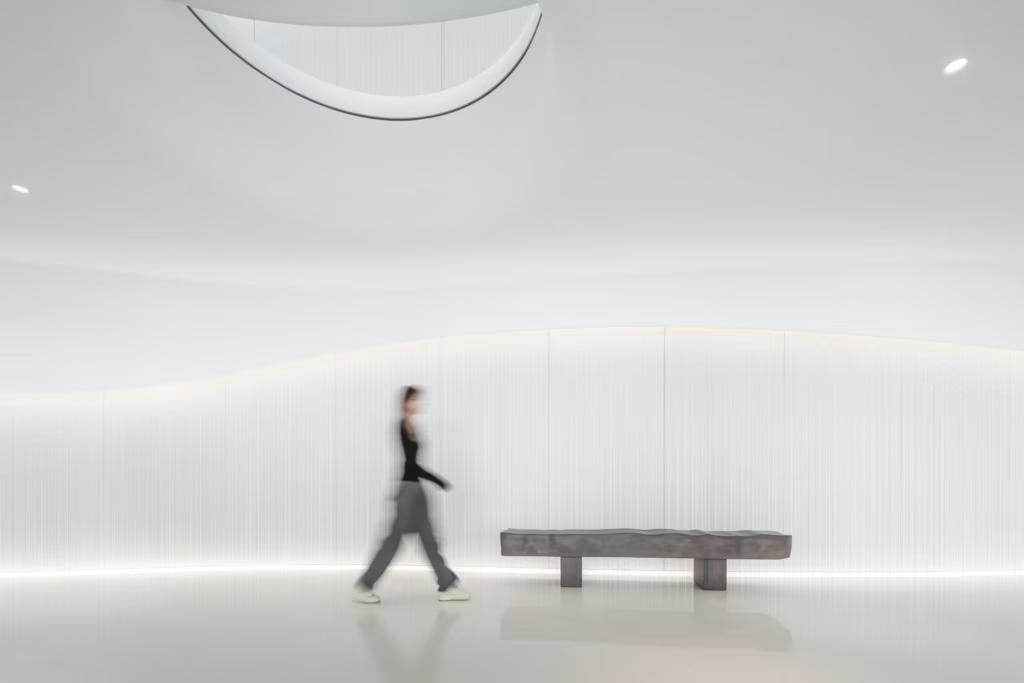
Photo: CreatAR Image
“The most sustainable place is the one people never want to replace.”
– Peter Ippolito
Q – You’ve built an internationally respected design practice over several decades. What advice would you give to young architects and interior designers who want to build a global career while developing a distinctive creative identity and staying true to their own design values?
People often ask what advice I’d give to young designers.
My first answer is always the same: do it. Everything else comes afterwards.
You don’t discover your voice by waiting. You discover it by working. By travelling. By making mistakes. By changing your mind. By collaborating with people who see the world differently.
Don’t spend too much time trying to become original. Stay curious instead. Curiosity has a much longer lifespan than style.
And finally, stay optimistic.
Not because the future will be easy, but because every project begins with the belief that tomorrow can become better than today.
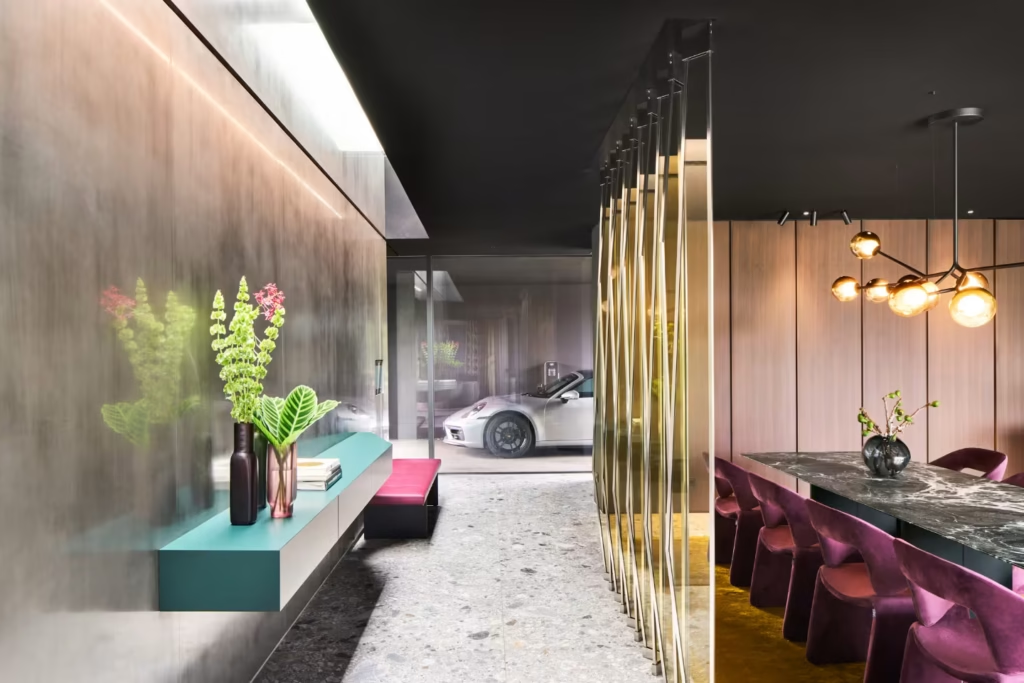
Photo: Philip Kottlorz
Key Takeaways from the Interview
- Meaningful architecture is created by understanding people, places, and materials together, with natural stone valued for the history and atmosphere it brings rather than as a symbol of luxury.
- The most successful spaces emerge through careful listening, where a client’s aspirations, memories, and evolving identity shape the design as much as functional requirements.
- Designing across different cultures reinforces the importance of curiosity, adaptability, and respecting local perspectives instead of relying on universal design assumptions.
- Lasting architecture balances functionality with storytelling, creating environments that encourage human interaction, memorable experiences, and emotional connections beyond aesthetics.
- Sustainability is ultimately about creating places people continue to value, repair, and return to—spaces whose relevance endures long after trends have passed.
