It depends on what you want your kitchen to do for you. Real Calacatta is worth it if you love natural stone, enjoy a surface that changes with use, and can live with a few marks. It is not worth it if you want a countertop that looks the same on day 1,000 as on day one. Here is the trade-off in plain terms. Real Calacatta is rare, beautiful, and one of a kind. It is also soft (about 3 on the Mohs scale), porous, and prone to etching. In the US, genuine Calacatta countertops typically cost around $80 to $200 per square foot installed, and premium varieties can go higher. A good sintered stone copy often costs less, shrugs off acid and heat, and lets you pick the exact pattern you want.
So the real question is not ‘real or fake?’ It is ‘which set of trade-offs can I live with for the next 15 years?’
In this article, we compare real Calacatta marble with its popular alternatives, looking at cost, appearance, durability, and everyday maintenance. We also share practical buying advice to help you choose a countertop that suits your kitchen, budget, and lifestyle.
Our Director of International Business at Petros® Stone LLP
Rishabh Jain explains:

(Director – International Business, Petros® Stone)
“Having worked with natural stone across luxury residential and hospitality projects, I believe genuine Calacatta marble is worth considering when the material itself is an important part of the design. No two slabs are exactly alike, and that natural variation is part of its appeal. But I always advise buyers to be realistic about maintenance. Marble will etch, it can stain, and it will develop signs of use over time. If you appreciate the character of natural stone and are willing to care for it, the real thing can be deeply rewarding.”
- What is Real Calacatta Marble?
- Types of Imitation Calacatta
- Why People Choose Imitation Calacatta
- Why Choose 'Real' Calacatta Marble
- What is it like to live with Calacatta every day?
- Who Should Buy Real Calacatta, and Who Should Skip it?
- What are the Best Real Marble Alternatives to Calacatta?
- How Do I Decide and Buy Without Regrets?
- FAQs
- Key Takeaways
What is Real Calacatta Marble?
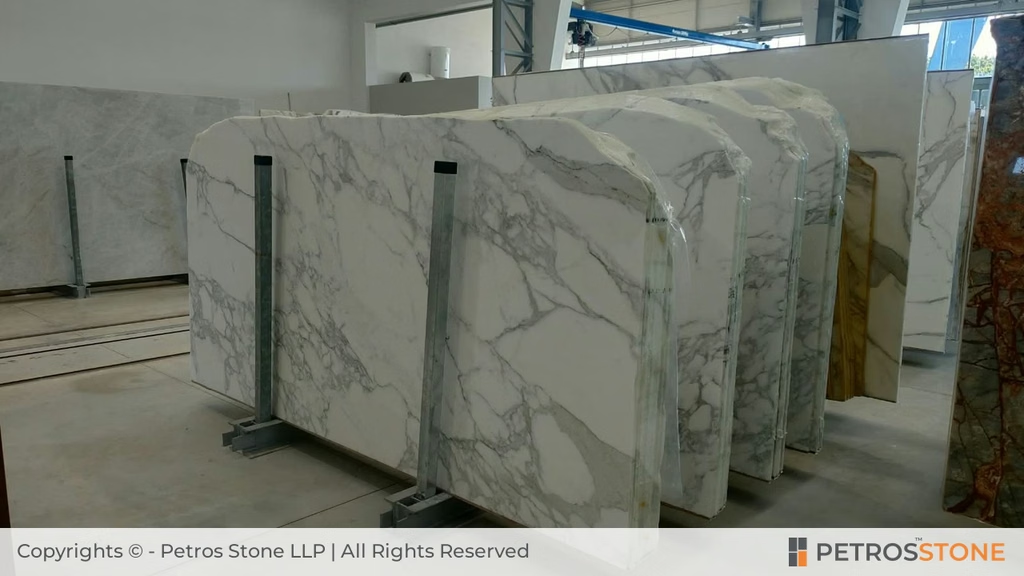
A quick note on terms. In this article, ‘real’ means natural marble, quarried from the earth. ‘Imitation’ means anything made to copy its look: engineered quartz, sintered stone, porcelain, laminate, and the like.
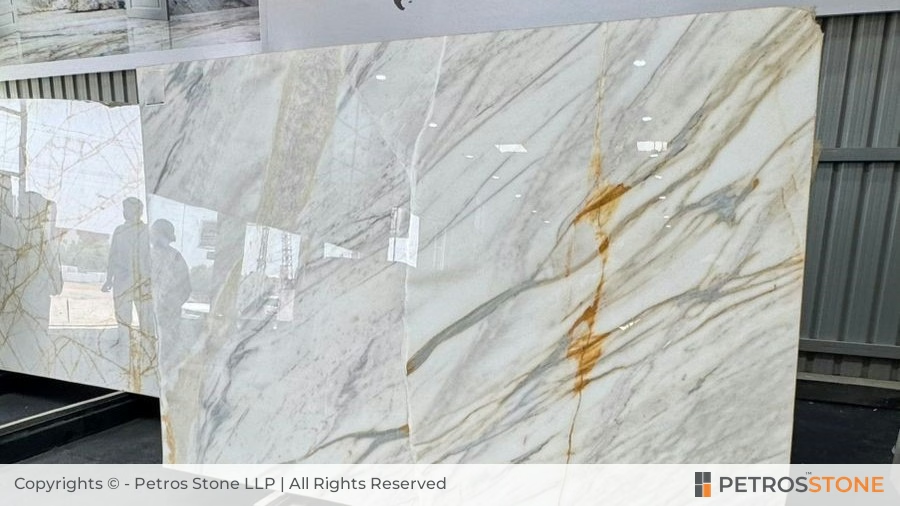
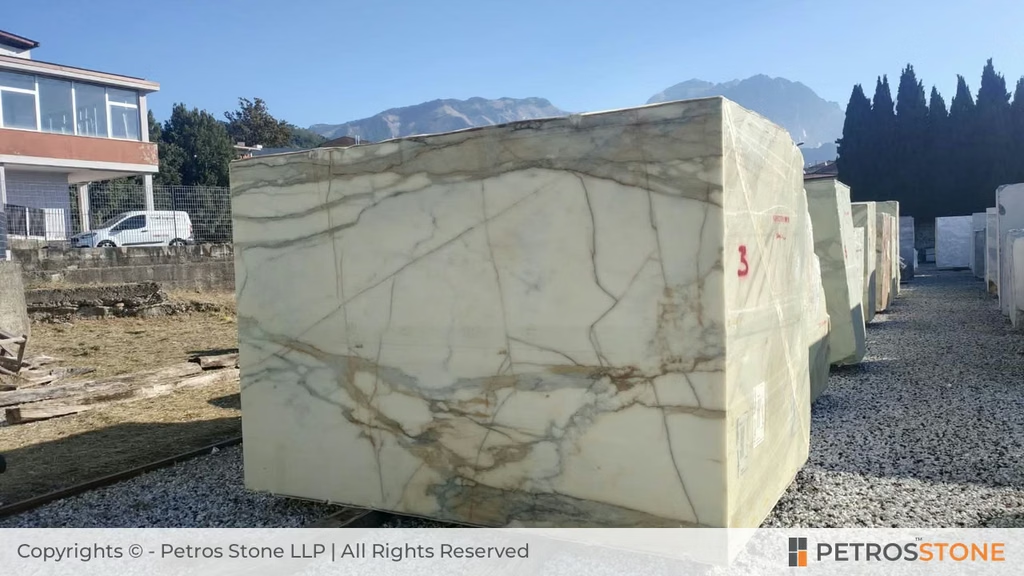
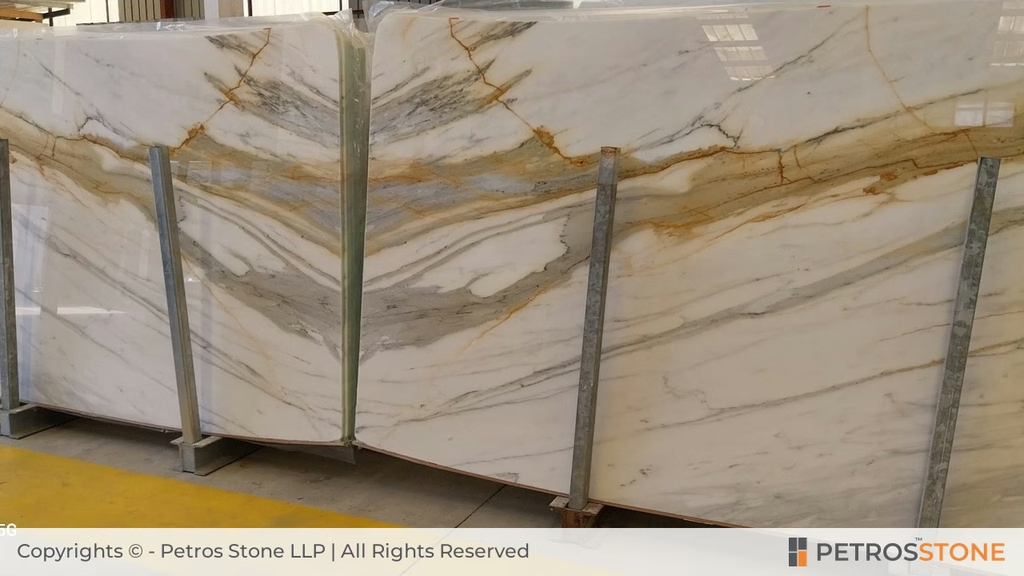
Calacatta is a family of white marbles from the Apuan Alps, near Carrara in Tuscany, Italy. It is defined by a bright white background and bold, thick veining in grey, gold, or brown. The deposits are limited and sit in specific zones higher in the mountains, which is why it is rarer and pricier than Carrara marble.
Within the family, you will meet several named varieties:
- Calacatta Gold: the most available variety, with warm gold veining.
- Calacatta Borghini: bolder, heavier veining and a higher price.
- Calacatta Oro: saturated gold veining on a warm white base.
- Calacatta Viola: the showpiece, with veining that shifts toward violet and mauve.
To explore the different varieties, veining patterns, and characteristics, read our comprehensive guide to the Types of Calacatta Marble.
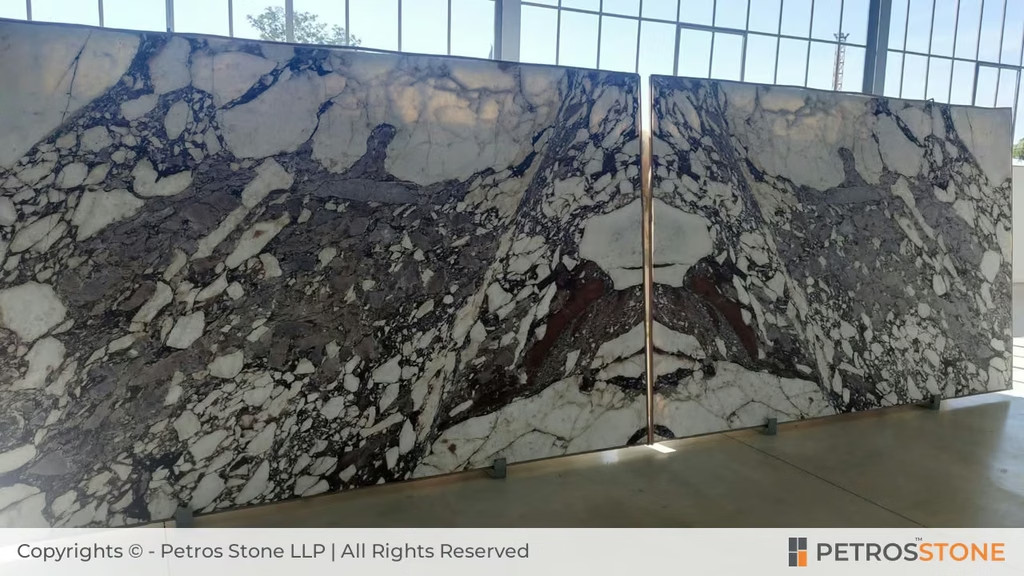
How is it different from Carrara and Statuario?
All three come from the same mountain region, so they look alike at first glance. The differences are in the background, the veining, and the rarity.
Table 1 – Calacatta vs Carrara vs Statuario
| Feature | Carrara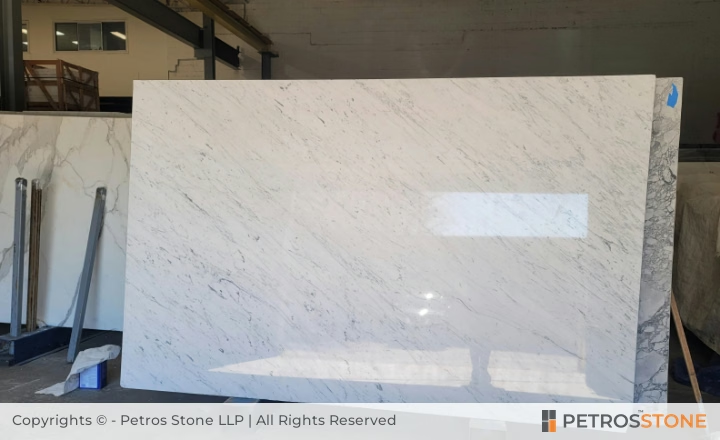 | Calacatta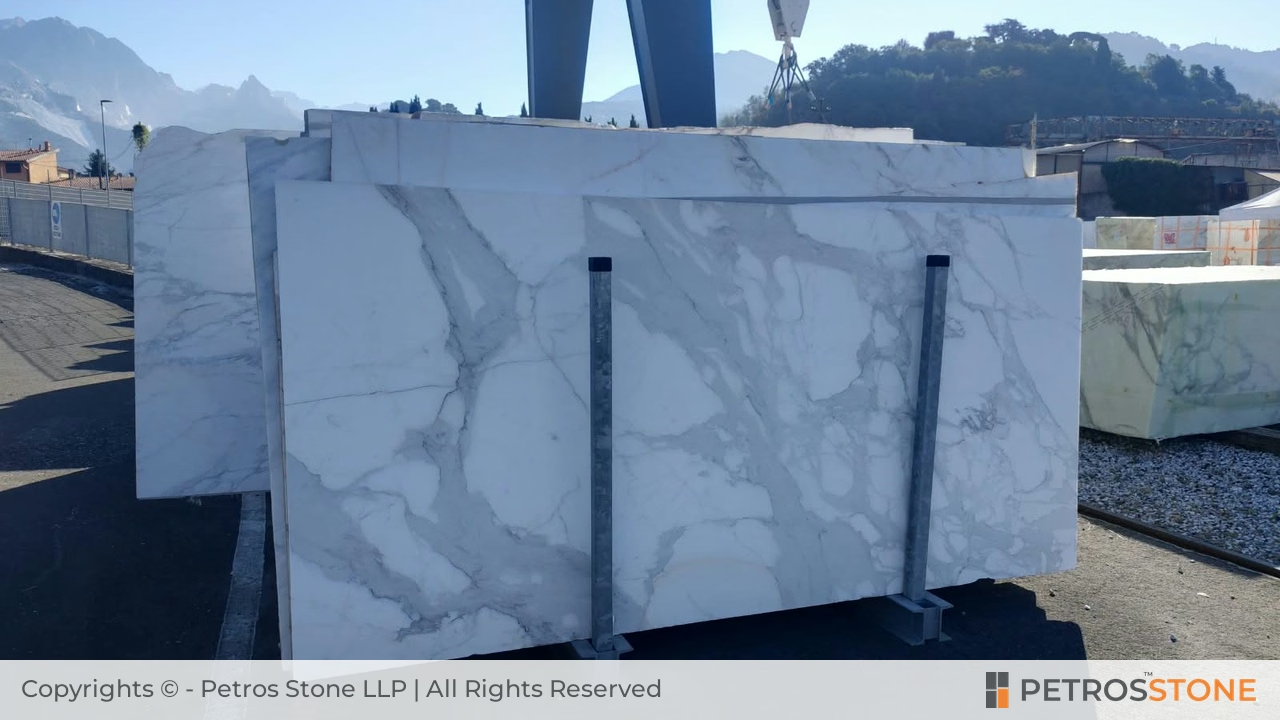 | Statuario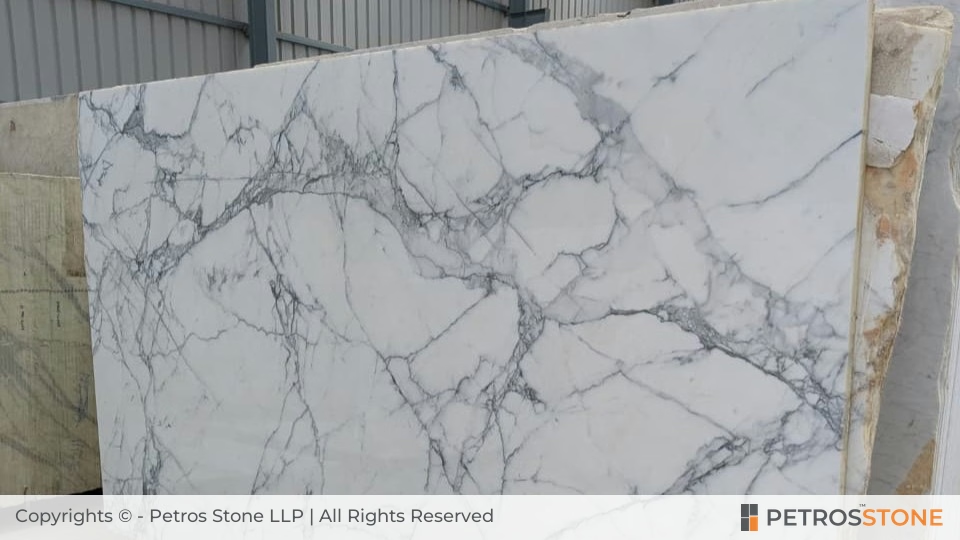 |
| Background | White to light or blue-grey | Bright, clean white | Bright white |
| Veining | Soft, feathery, light grey | Bold, thick and dramatic; gold, brown or grey | Crisp, defined grey; more linear |
| Overall look | Classic, a little rustic | Contemporary, editorial | Sculptural, formal |
| Rarity | Most common | Rarer | Rare; roughly 5% of what is quarried in the Carrara region |
| Typical slab price (US, per sq ft) | $15 to $40 | $50 to $100 | $80 to $150 |
| Typical installed price (US, per sq ft) | $40 to $100 | $100 to $180 | $150 to $250+ |
Price ranges vary by region, slab grade, and supplier. Treat them as a guide, not a quote.
Is everything labeled ‘Calacatta’ the real thing?
No. This is where many buyers get caught.
Strictly speaking, Calacatta comes only from the Apuan Alps in Italy. Stone sold under the same name from Turkey, China, or Brazil is, by that definition, a look-alike. Trade guides also warn that some suppliers apply the “Calacatta Gold” label loosely to lesser white marbles. And the name has spread beyond marble altogether: you will see “Calacatta quartz” and “Calacatta porcelain” everywhere.
A label is not proof. Before you pay, ask for the variety name, the country of origin, and the quarry or supplier, in writing. If a slab sold as ‘Calacatta Gold’ costs the same as Carrara, ask why.
Types of Imitation Calacatta
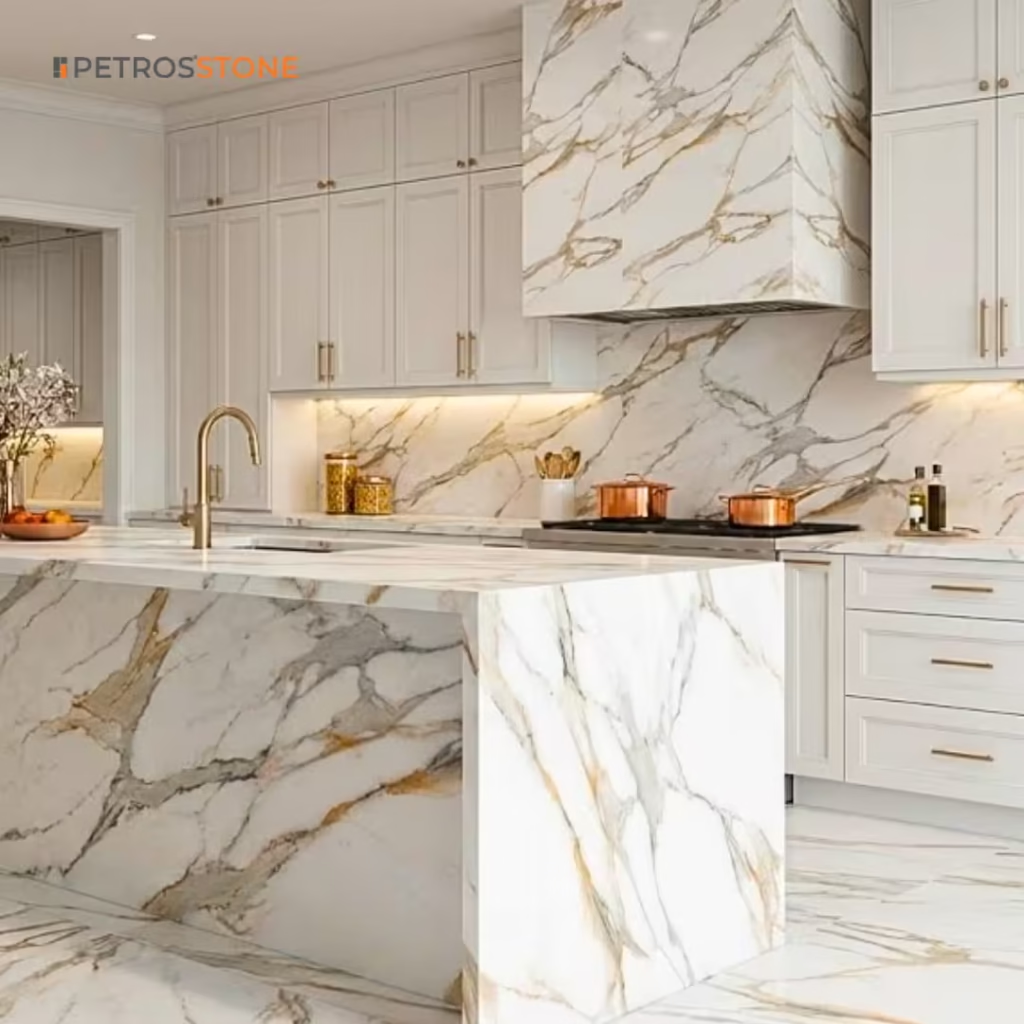
Not all copies are equal. Here is how they stack up, from best to worst.
Sintered Stone – The Best Copy
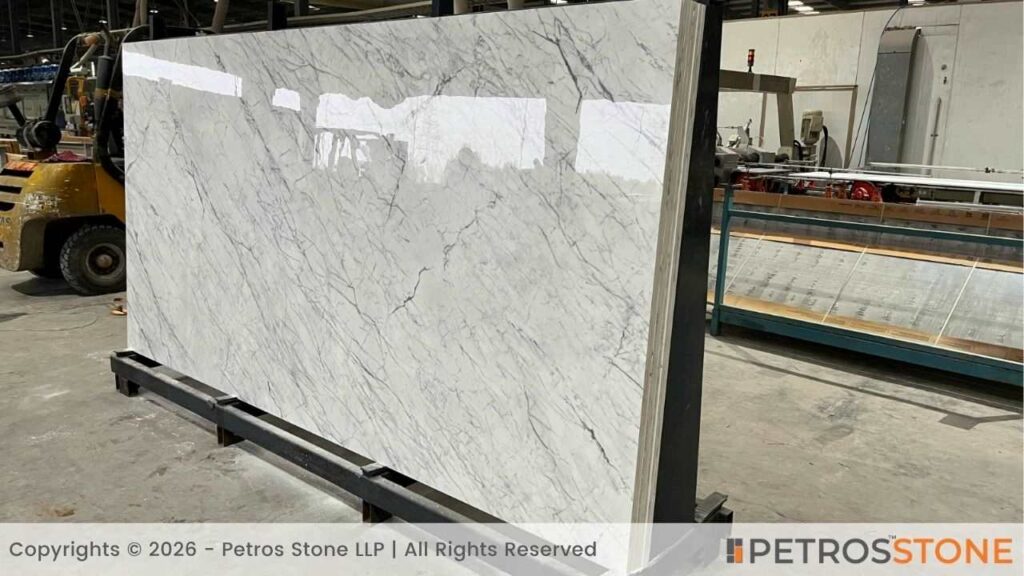
Sintered stone is made by compressing glass, quartz, and porcelain-type powders under extreme heat and pressure, with no resin. It currently leads the field for realism. From across the room, and often up close, the best sintered Calacatta looks are hard to tell from the real thing. It is also non-porous, resists acid, and tolerates heat better than marble or quartz.
It has real weak spots, though:
- Edges chip. A sharp knock from a pot or chair can chip a corner, and repairs are difficult and costly.
- The pattern is often surface-only. On most slabs, the print does not run through the body. Cut or mitered edges can show a plain core.
- Fabrication needs skill. Handling mistakes can crack a slab, so the fabricator matters as much as the material.
Sintered stone typically costs about $60 to $150 per square foot installed, depending on brand and region.
Engineered Quartz – A Fair Choice
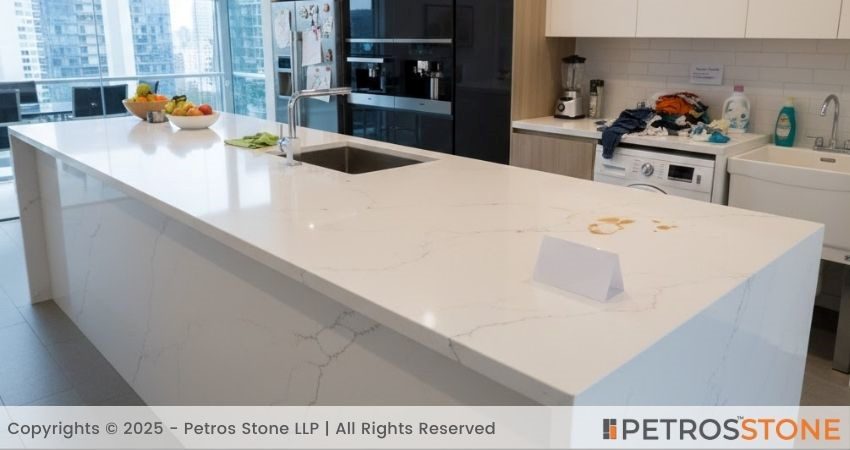
Engineered quartz is crushed stone bound with resin. It is tough, non-porous and widely available, and it is cheaper in many cases. But it was designed to evoke Calacatta, not replicate it. The veining tends to look repeated and less detailed than sintered stone, and the resin means it can be damaged by high heat. Typical installed prices run from about $50 to $120 per square foot, with premium lines going higher.
Other Faux Types – Skip them for Kitchens
Laminate, epoxy coatings, and thin veneers can copy the look for very little money (laminate can start near $10 per square foot). But they are not durable enough for a hard-working kitchen counter. They scratch, peel, or burn, and they rarely look convincing up close. If budget is tight, you will usually be better off with a cheaper real stone.
Why People Choose Imitation Calacatta
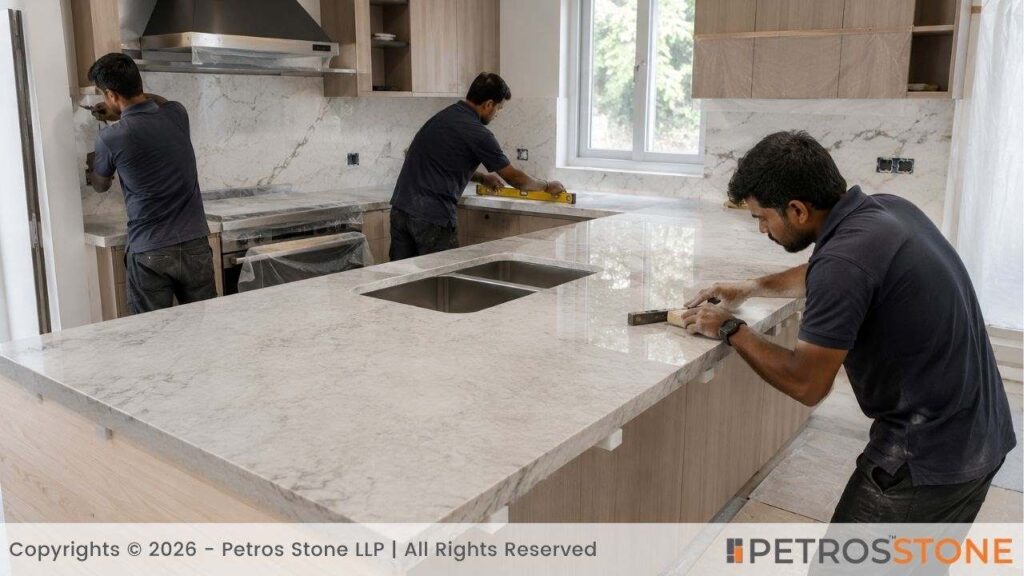
1. It is much cheaper
Here is a rough comparison for a typical 40-square-foot kitchen, using US installed prices:
| Surface | Installed price per sq ft | Approx. total for 40 sq ft |
| Real Calacatta (standard range) | $80 to $200 | $3,200 to $8,000 |
| Real Calacatta Gold | $150 to $250 | $6,000 to $10,000 |
| Real Calacatta Borghini / Viola | $200 to $350+ | $8,000 to $14,000+ |
| Sintered stone | $60 to $150 | $2,400 to $6,000+ |
| Engineered quartz | $50 to $120 | $2,000 to $4,800 |
Sources quote very different numbers, and the top end of every category overlaps. A premium quartz or sintered slab can cost as much as an entry-level Calacatta. Always get written quotes.
2. You can pick the best-looking pattern
Real Calacatta comes in many grades. Based on current US pricing, installed costs start around $150 per square foot for Calacatta Gold and climb to $350 or more for the rarest varieties, which is roughly two to three times higher. [LINK: our article on Calacatta grades and prices]
And the best patterns are the expensive ones. With natural stone, most buyers compromise somewhere: a vein that is too busy, a patch that is greyer than hoped, or a slab that does not quite match the one beside it.
With sintered stone, the pattern is designed. You can choose the exact look you want, with the best veining on every slab, for a fixed price.
3. It is easier to live with
Sintered stone and quartz do not etch, and they do not need sealing. A spilled glass of lemon juice, wine, or tomato sauce is a wipe-up, not a worry. Sintered stone also handles hot pans better than quartz.
4. It is consistent
If you need several slabs, or need to order more later, engineered material stays the same from slab to slab. Natural stone varies from block to block.
5. It suits busy homes
For a family kitchen, a rental, or a quick-sale property, “looks great and asks for nothing” is a strong selling point.
Why Choose ‘Real’ Calacatta Marble
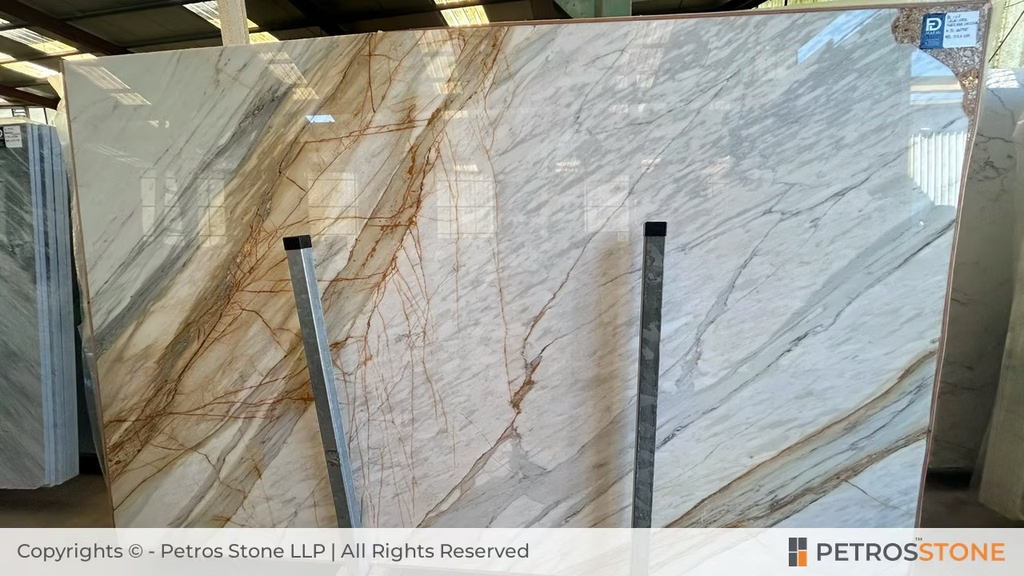
1. Natural variation is the whole point
Real marble’s biggest strength and biggest weakness are the same thing: it is never uniform. Every slab is different. No printed pattern can truly match the depth of veins that formed over millions of years.
2. It behaves like stone, because it is stone
Marble is slightly translucent, so light sinks in before it bounces back. That gives it a soft glow that printed surfaces struggle to reproduce. At first glance, a good copy can fool you. Over time, and under changing light, the difference shows. Many people in the stone trade can spot an imitation quickly.
3. A cheaper real stone can beat an expensive fake
Sometimes the smartest move is not a copy of Calacatta at all. A well-chosen real Carrara or similar white marble can cost less than a premium sintered slab, and it is the real thing. (See the alternatives section below.)
4. It can be repaired and refreshed
Scratches and etches on marble can often be honed out and repolished by a stone professional. A chipped sintered edge is much harder to fix invisibly.
5. It carries prestige
Marble counters are part of how many people picture luxury. Whether that adds resale value depends on your market and your buyers. There is no reliable, universal figure for it, so ask a local agent before counting on it.
What is it like to live with Calacatta every day?
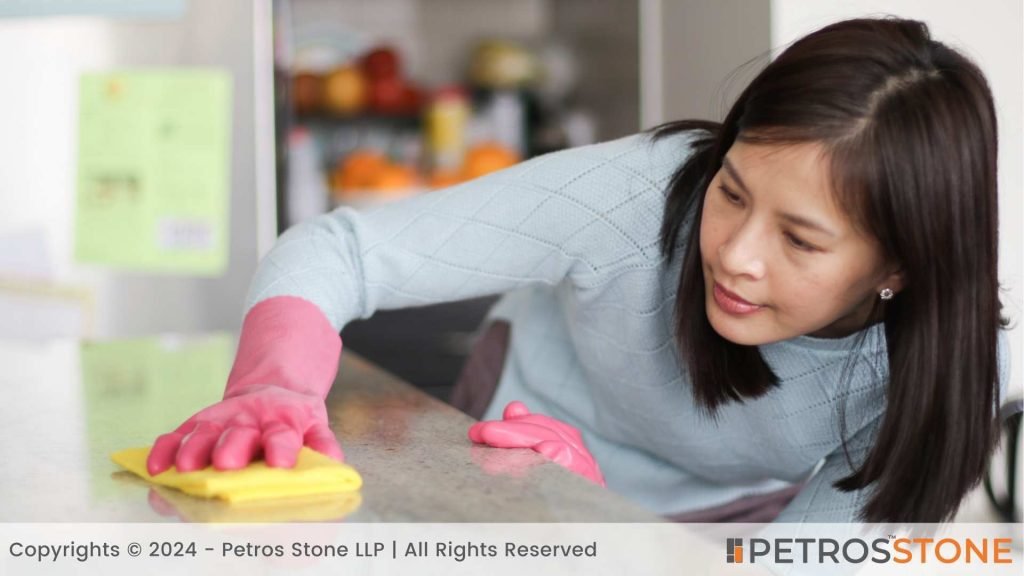
Be honest with yourself here. This is where most regrets begin.
What to expect from real marble
- Etching. Acids such as lemon juice, vinegar, wine, tomato, and many cleaners dissolve a thin layer of the surface. They leave dull, pale marks that wiping will not remove.
- Staining. Marble is porous. Oil, coffee, wine, and tea can soak in if left.
- Scratches. At about 3 on the Mohs scale, it is far softer than quartz or granite.
- Patina. Over the years, the surface develops a lived-in look. Some owners love this. Others hate it.
How hard is the upkeep?
Not hard, but it is steady:
- Wipe spills straight away. Blot rather than rub.
- Use pH-neutral stone cleaners only.
- Use trays, coasters and chopping boards.
- Apply a penetrating sealer when installed, and reseal as the product label and your fabricator advise. Sealing helps with stains but does not stop etching.
- Get light etches and scratches professionally honed when they bother you.
Heat is rarely the issue. A hot pot will not harm marble, though an oily one might leave a mark.
Which finish should you choose?
For real marble: honed (matte) is the safer choice for kitchens. It hides etching and light scratches much better than polished marble. Polished gives the most vivid veining, but shows every mark. Leathered finishes sit in between.
For sintered stone: a matte finish tends to hide scratches better, while polished shows off veining but can reveal wear more easily. For quartz: polished is the usual choice, and it shows marks least. Always keep hot pots on a trivet.
Who Should Buy Real Calacatta, and Who Should Skip it?
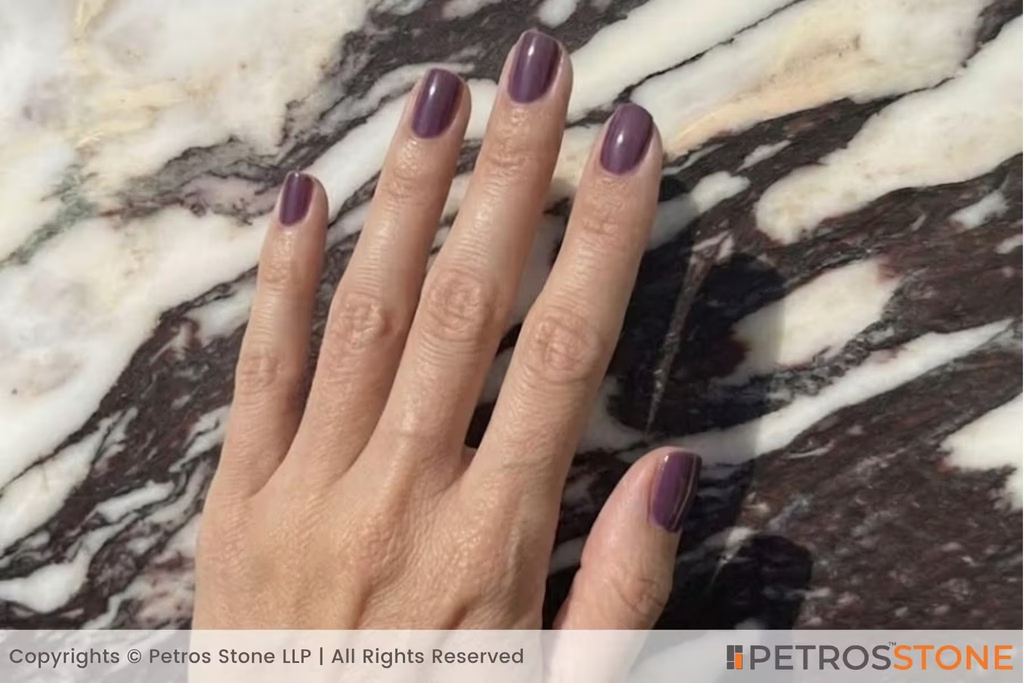
It may be worth it for you if:
- You love natural stone and its imperfections.
- You are happy to wipe spills quickly and use boards and trays.
- You cook less, or the counter is mostly for show, such as a bar or island.
- You plan to stay for years and see the patina as character.
- You want a unique surface that no one else has.
It may not be worth it if:
- You have young children, or you cook with lemon, tomato, and wine daily.
- You want a kitchen that looks new for decades.
- The price would stretch your budget or crowd out other upgrades.
- You are selling soon and do not need a statement stone.
- You would feel stressed every time someone puts down a glass.
What are the Best Real Marble Alternatives to Calacatta?
If you want real stone and the white-and-veined look, but not the Calacatta price, there are three good routes.
| Budget | Stone | The look | Approx. slab price (India market, US$/sq ft) | Typical US yard price (material, per sq ft) |
| About $3 to $5 | Indian Statuario-style white marble (e.g., Banswara, Ambaji types)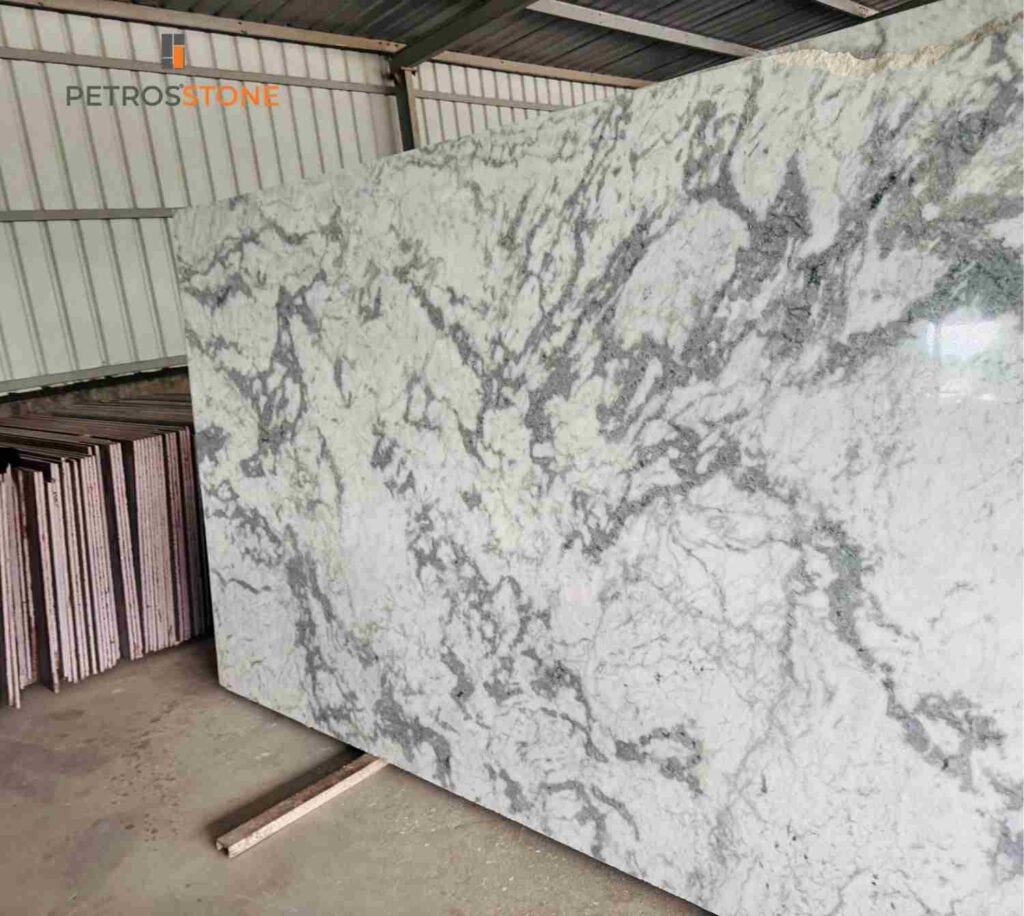 | White base with grey veining that echoes Italian Statuario | Roughly $2 to $5 | Varies; often imported to order |
| About $6 to $16 | Italian Carrara or Greek Volakas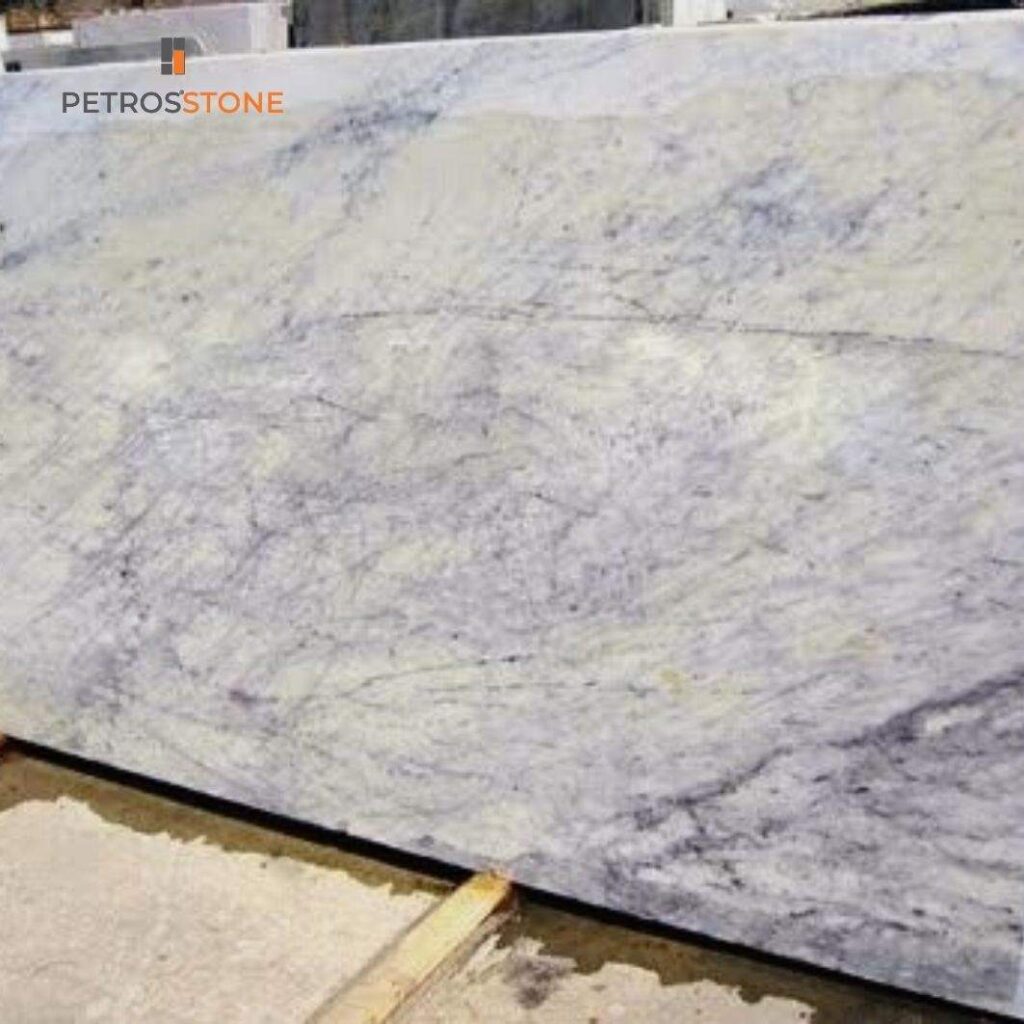 | Classic soft grey veining (Carrara) or crisp grey on bright white (Volakas) | Roughly $5 to $17 | Carrara around $15 to $40 |
| About $15 to $60 | Italian Statuario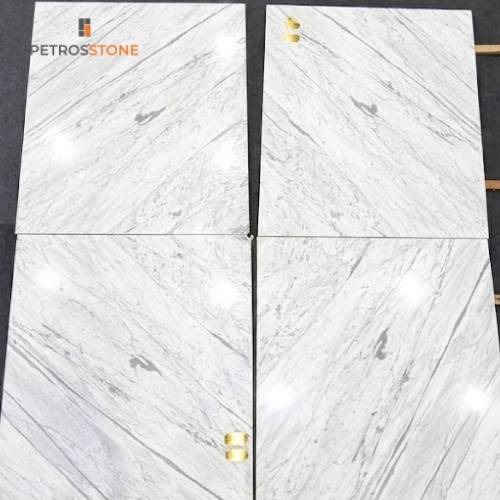 | Closest in feel to Calacatta, with bright white and bold, defined veining | Roughly $7 to $57 | Around $80 to $150 |
A few notes:
- Indian white marbles are not Calacatta, and they should be sold under their own names. But the better ones offer a bright white base and visible veining at a fraction of the cost. They are also a sensible way to get a big, white kitchen on a modest budget.
- Carrara is the ‘workhorse’: soft, classic, and widely available. It is the best-priced Italian marble, and it is a common pick for kitchen countertops.
- Statuario is the nearest cousin to Calacatta. It has a bright white background and strong veining, but it usually costs less than the top Calacatta grades.
- All of these etch in the same way Calacatta does, because they are all calcite marble. If etching is your main fear, look at a harder stone such as white quartzite, which can resemble Calacatta but resists etching far better.
How Do I Decide and Buy Without Regrets?
Step 1: Decide how you really use your kitchen
Write down how you cook, how many people use it, and how you feel about marks. If you wince at the thought of a ring from a glass, choose sintered stone or quartz. If you like a worn, lived-in look, choose real marble.
Step 2: Set the real budget
The slab is only one part. Fabrication, edges, cutouts, sealing, and installation add up. Ask every supplier for a written quote that lists material, fabrication, and installation separately.
Step 3: See the actual slab
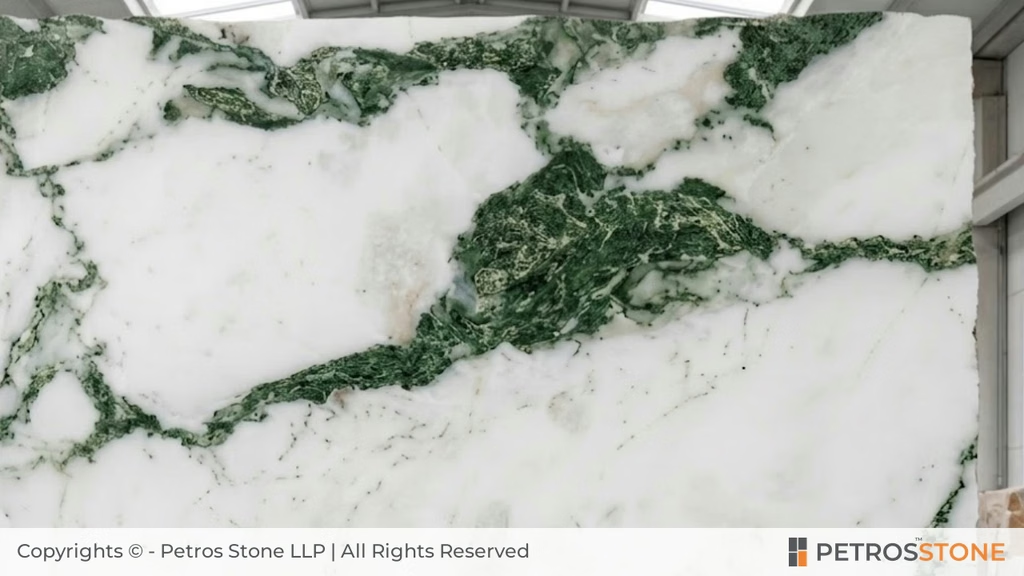
Never buy marble from a small sample alone. Calacatta varies a lot from slab to slab, so go to the yard and look at the full slab you will get.
How to Inspect Calacatta Slabs
- View it in daylight, or as close as the yard allows. Showroom lights can flatter or flatten the stone.
- Check for fissures and cracks. Run your eyes and fingers over the surface. Hairline cracks are especially risky near sink and cooktop cutouts, where the stone is weakest.
- Look at the back and edges for heavy resin filling or mesh. Some repair is normal for marble. A lot of it is not.
- Check colour and veining across the slab, and across all slabs if you need more than one. Make sure the veins are where you want them.
- Check thickness and make sure it matches your quote (2 cm or 3 cm).
- Look for chips on corners and edges.
- Ask for the origin and variety name in writing.
- Photograph the slab with its number, and ask the yard to reserve it for you.
Which Real Calacatta Slabs to Avoid
- Slabs with long fissures that cross narrow sections of your layout.
- Slabs sold without a clear variety name or origin.
- Slabs that are much cheaper than similar ones nearby, with no clear reason.
- Slabs with yellow or brown staining or dull, cloudy patches, unless you want that look.
- Slabs where the vein pattern is too strong or too weak for your taste. Do not settle.
- Slabs that look like Calacatta but are labeled otherwise, or the reverse. Stick to clear, honest labeling.
How Should I Choose a Slab?
- Decide the mood first: bold and dramatic, or calm and quiet.
- Pick the slab you love on its own, not the one the salesperson pushes.
- Picture where the seams, sink, and cooktop will fall, and ask your fabricator to lay out the cuts on the slab.
- For an island, ask about book-matching so the veins line up across seams or waterfall edges.
- Take a small offcut home. Leave it by the sink for a week and put a drop of lemon juice on it. If the resulting mark would bother you, choose a different material.
- Choose a fabricator with real stone experience, and ask to see their past work.
FAQs
Is Calacatta marble worth the money for a kitchen?
It is worth it if you value natural beauty and accept ongoing care and some wear. If you want a flawless, low-maintenance surface, a high-quality sintered stone gives a similar look for less hassle.
How much does real Calacatta marble cost per square foot?
In the US, genuine Calacatta countertops commonly cost around $80 to $200 per square foot installed. Premium varieties like Borghini and Viola can reach $300 or more. Prices vary widely by supplier and region.
Can you tell real Calacatta from sintered stone?
Often not at a glance. Experts usually can, because real marble has more depth, irregular veining, and a different feel under light. The best sintered copies are very convincing from a distance.
Does Calacatta marble stain and etch easily?
Yes. It is porous and soft, so oils and wine can stain it, and acids like lemon juice can etch it. Sealing helps with stains. A honed finish helps hide etching.
What is a good cheaper alternative to Calacatta?
Carrara is the usual budget pick, and Statuario sits close to Calacatta in looks. For a real-stone feel on a tight budget, some Indian white marbles with grey veining are also worth a look.
Is sintered stone better than real marble?
For durability and low upkeep, yes. For natural character and repairability, marble wins. Sintered stone’s main risks are chipped edges and tricky repairs.
Key Takeaways
- Real Calacatta is a rare Italian white marble with bold, thick veining. It costs more than Carrara and often as much as or more than Statuario.
- The “Calacatta” label is used loosely. Ask for origin and variety in writing.
- Sintered stone is the best imitation: realistic, heat- and acid-resistant, but prone to edge chips and costly repairs.
- Engineered quartz is a fair, affordable option, though less convincing and sensitive to heat. Laminate, epoxy, and veneers are not suitable for kitchens.
- Imitation wins on price, consistency, and ease. Real wins on depth, character, and repairability.
- Real marble etches, stains, and scratches. Honed finishes and good habits reduce the pain, but do not remove it.
- Always inspect the full slab in person, check for fissures, and get written quotes.
- If you love the look but fear the upkeep, a cheaper real marble, a quartzite, or a quality sintered slab may serve you better than Calacatta itself.

Tapas Koul leads editorial direction and content strategy at Petros® Stone. His work spans research, content development, and brand communication, with a focus on architecture, natural stone, and design. He is interested in the stories behind materials, projects, and industry developments, bringing together useful insights and information to help readers understand the subject beyond the surface.
Feel free to get in touch for a free consultation, quote, and get a detailed understanding from our experts here at Petros®. Visit www.petrosstone.com or call +91-8446360361 or WhatsApp

Brown Granite

White Galaxy Granite

Blue Bahia Granite

Silver Cloud Granite

Black Pearl Granite

Dallas White Granite