
Miks Bērzs | A Brief Profile
Miks Bērzs is a Latvian entrepreneur, designer, and real estate developer whose unconventional background in physiotherapy, music, and construction has shaped a highly practical approach to design. Beginning with small-scale property renovations, he developed a passion for understanding how thoughtful design and material selection can maximize both visual impact and long-term value.
Driven by curiosity and continuous learning, Miks has embraced innovative materials and construction methods, incorporating products such as sintered stone and flexible stone into contemporary residential projects. His work is guided by a belief that exceptional design emerges from experimentation, practicality, and a willingness to challenge conventional solutions.
In this conversation with Petros® Stone, Miks Bērzs reflects on the lessons that shaped his design philosophy, the relationship between human experience and the built environment, the role of emerging materials in contemporary residential projects, and why continuous learning remains central to his approach to design and development.
Q1. Your professional journey has been far from conventional. How have your experiences in physiotherapy, music, and entrepreneurship influenced the way you think about design and space?
Miks Bērzs: I’ve never approached design through the traditional route of architectural education, and I believe that has become one of my greatest strengths. Each chapter of my professional life has given me a different lens through which I understand space.
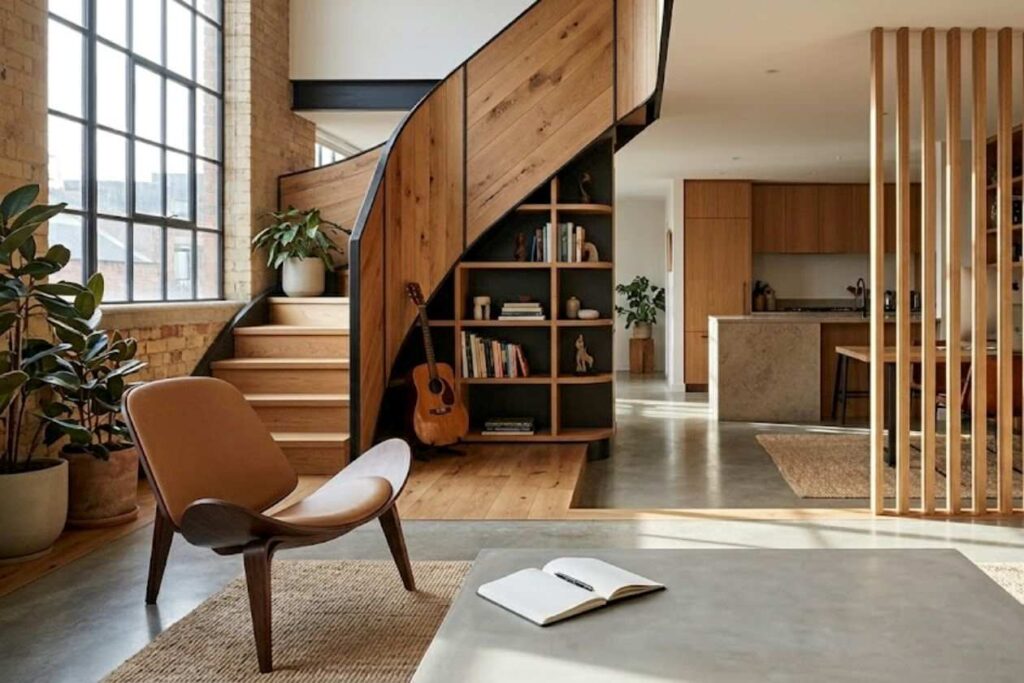
Physiotherapy taught me to observe how people interact with their surroundings on a very practical level. I spent years studying movement, posture, comfort, and the relationship between the human body and its environment. That experience fundamentally changed the way I evaluate interiors. Today, when I walk through a space, I instinctively think about circulation, ergonomics, accessibility, and how the environment influences wellbeing. Good design should feel effortless, and often that comes from understanding human behavior rather than focusing solely on aesthetics.
Music contributed something entirely different. It taught me about rhythm, harmony, contrast, and emotional impact. Just as a musical composition relies on pauses, tension, and balance, interior design requires moments of openness, intimacy, calmness, and excitement. The way materials transition, the way light enters a room, and the way spaces unfold can create an emotional response very similar to music.
Entrepreneurship introduced another layer. Running businesses taught me how to make decisions under uncertainty, manage resources, and focus on practical outcomes. Creativity is important, but it must also function within real-world constraints. Every project has limitations, whether financial, technical, or spatial. Entrepreneurship helped me see those limitations not as obstacles but as opportunities to find smarter solutions.
When these influences come together, design becomes much more than arranging materials or creating beautiful visuals. It becomes an exercise in understanding people, solving problems, and creating experiences that improve everyday life.
Q2. You often describe each project as a learning experience. Looking back, what were some of the most important lessons that transformed your approach to renovation and design?
Miks Bērzs: The most valuable lessons rarely came from successes. They came from mistakes, unexpected challenges, and projects that didn’t go exactly as planned.
My earliest renovations were relatively small, and budgets were extremely limited. At the time, every decision felt significant because there was very little room for error. Those projects taught me practical lessons that no textbook could provide. I learned how different materials behave over time, how construction details affect long-term performance, and how seemingly minor choices can have a major impact on the final result.
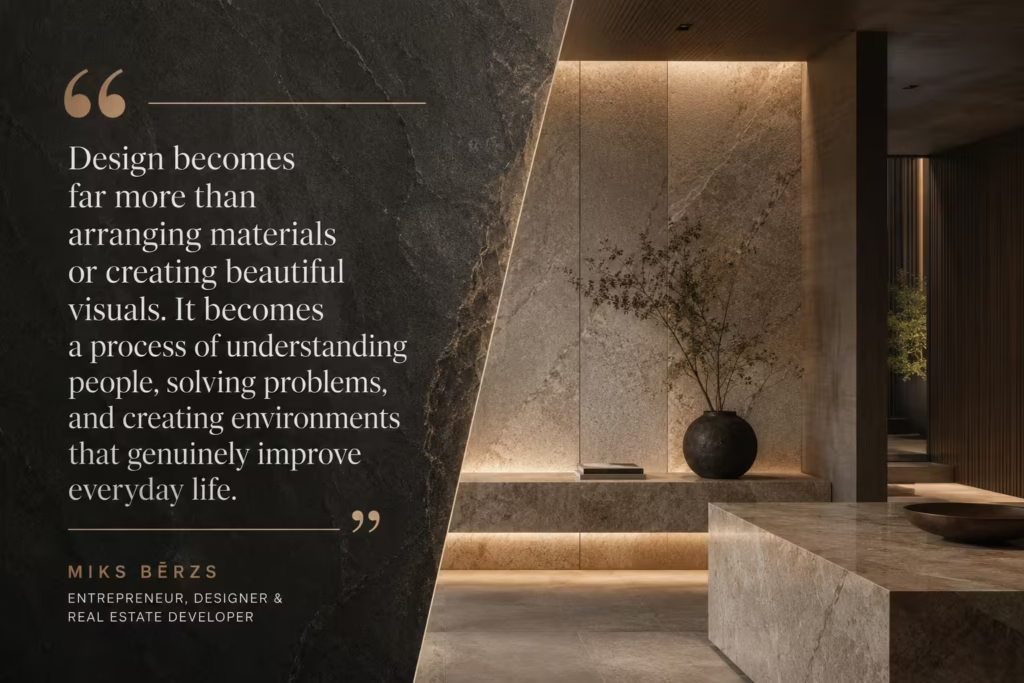
One of the most important realizations was understanding the difference between cost and value. Expensive materials do not automatically create great design. Conversely, modest materials can look exceptional when used thoughtfully. Over time, I became more interested in proportions, composition, lighting, craftsmanship, and detailing than simply selecting premium finishes.
Another lesson was the importance of patience. Renovation often reveals hidden conditions, unforeseen complications, and changing client needs. Early in my career I viewed these situations as problems. Today I see them as part of the creative process. Flexibility and adaptability are often just as important as having a strong initial vision.
Perhaps the biggest lesson has been learning to continuously remain a student. Every project introduces new technologies, materials, construction methods, and human experiences. The moment you think you know everything is the moment you stop growing as a designer.
Q3. Many designers begin with a vision and then consider the budget. Your process seems to start with both simultaneously. How do you balance design ambition with financial realities?
Miks Bērzs: For me, budget has never been something separate from design. It has always been one of the design tools.
This perspective developed naturally because my earliest projects simply didn’t have unlimited resources. Instead of asking what could be designed without constraints, I learned to ask where investments would create the greatest impact. That mindset has remained with me regardless of project scale.
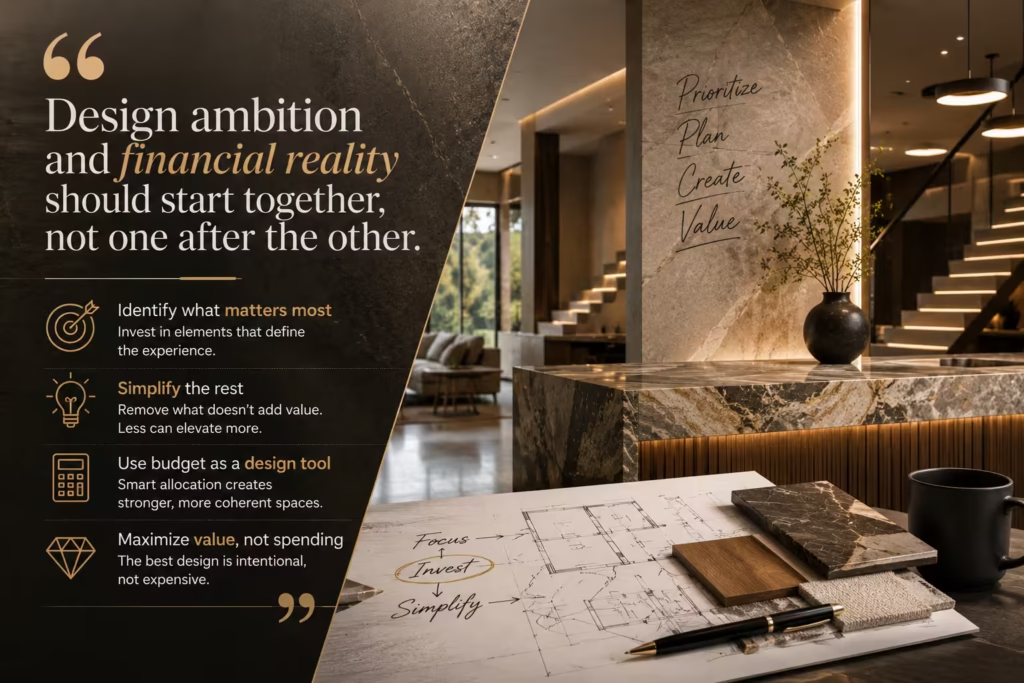
I believe successful design comes from prioritization. Every space has a few key elements that define the overall experience. It might be natural stone in a central area, a carefully designed staircase, custom lighting, or a single architectural gesture. Once those priorities are identified, other elements can often be simplified without reducing overall quality.
Clients are often surprised when I recommend spending less in certain areas. Sometimes removing complexity creates a stronger and more elegant result. Design is not about adding more features, materials, or details. It is about making deliberate decisions that support the overall vision.
Ultimately, the goal is not to maximize spending. The goal is to maximize value. When design ambition and financial reality work together from the beginning, projects become more coherent, more achievable, and often more successful.
Q4. You mentioned that a year ago you were unfamiliar with materials like sintered stone, yet today they play a major role in your projects. What sparked that interest?
Miks Bērzs: Curiosity has always been one of my strongest motivations. I constantly explore new products, construction technologies, and design innovations because I believe the industry evolves through experimentation.
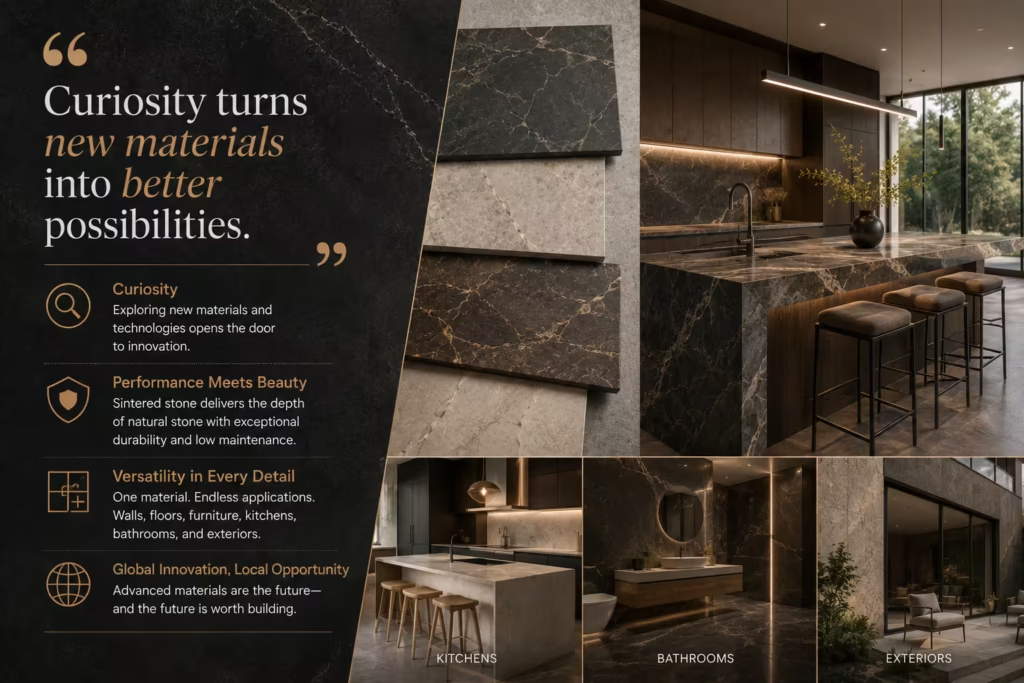
When I first encountered sintered stone, I was immediately intrigued by the combination of aesthetics and performance. Here was a material capable of achieving the visual depth of natural stone while offering exceptional durability, low maintenance requirements, and remarkable versatility.
Initially, I approached it with healthy skepticism. I wanted to understand not only its marketing claims but also its practical applications. The more I researched and tested it, the more opportunities I discovered. It could be used across walls, floors, furniture, kitchens, bathrooms, and even exterior applications while maintaining visual consistency throughout a project.
What surprised me most was how relatively unknown it remained within my local market. In many international projects, advanced materials had already become common practice, yet locally they were still rarely specified. That gap made the material even more interesting to explore.
Today, my interest extends beyond sintered stone itself. What excites me is the broader trend toward materials that combine beauty, performance, sustainability, and technical innovation. I believe those developments will continue transforming residential design over the coming years.
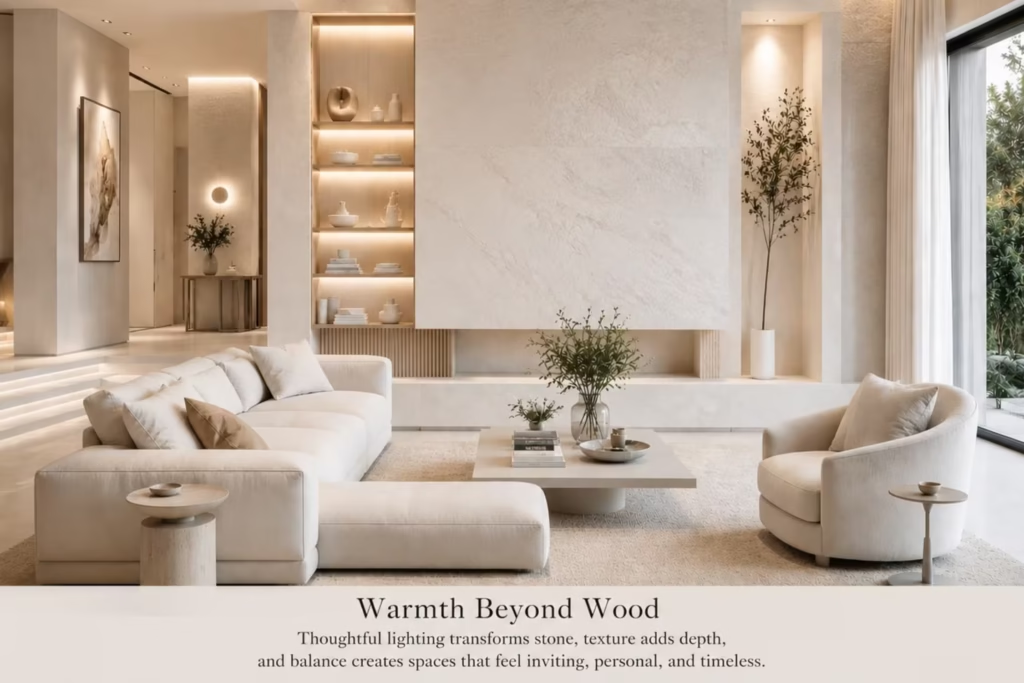
Q5. Earlier projects relied heavily on wood, while recent interiors feature extensive use of stone. How did you ensure those spaces remained warm and inviting?
Miks Bērzs: This transition challenged many of my assumptions about materials and atmosphere.
Wood naturally provides visual warmth because people instinctively associate it with nature, comfort, and familiarity. Stone, on the other hand, is often perceived as more formal, monumental, or even cold. The challenge was discovering how to use stone extensively without losing the emotional comfort that makes a home feel inviting.
I quickly realized that warmth does not come from a single material. It emerges from the relationship between multiple design elements. Lighting became especially important. Carefully positioned warm lighting can completely transform how stone surfaces are perceived throughout the day.
Texture also plays a critical role. Combining polished surfaces with tactile finishes creates visual depth and prevents interiors from feeling sterile. Furniture, textiles, artwork, and carefully selected details help soften architectural elements and introduce a more human scale.
I also became increasingly aware of the importance of contrast. Strong materials require moments of restraint. Open spaces benefit from intimate corners. Large surfaces need smaller details that invite closer interaction.
Ultimately, I learned that successful interiors are not defined by whether they use wood, stone, or any particular material. They are defined by balance. When balance is achieved, even the most architectural spaces can feel comfortable, welcoming, and deeply personal.
Q6. Many architects in your region are still unfamiliar with some of the materials you’re using. Do you enjoy exploring unconventional solutions?
Miks Bērzs: Very much so. In many ways, exploration is one of the most rewarding aspects of design.
I have always been fascinated by the idea that innovation often occurs at the intersection of different disciplines. Some of the most interesting solutions emerge when concepts from one industry are applied to another. That’s why I spend significant time researching not only architecture and interiors but also manufacturing, engineering, technology, and product development.
International projects are another important source of inspiration. Different regions often adopt materials and construction techniques at different speeds. By observing developments abroad, it becomes possible to identify ideas that may eventually have value locally.
Of course, innovation should never exist solely for the sake of being different. Any unconventional solution must ultimately improve functionality, durability, efficiency, or user experience. Otherwise, it becomes a novelty rather than meaningful design.
For me, curiosity remains one of the most important professional qualities. The willingness to question assumptions and explore unfamiliar territory often leads to the most valuable discoveries.
Q7. After years of experimentation with materials and renovation strategies, what excites you most about the future of residential design?
Miks Bērzs: What excites me most is the convergence of technology, material innovation, and a growing awareness of how our environments affect our lives.
Today’s designers have access to an extraordinary range of materials and construction methods that simply didn’t exist a decade ago. These innovations allow us to create spaces that are more durable, more sustainable, and more adaptable than ever before.
At the same time, homeowners themselves are changing. People are becoming increasingly thoughtful about the environments they choose to live in. Instead of focusing solely on size or appearance, many are prioritizing comfort, functionality, longevity, and overall quality of life.
I believe the future of residential design will place greater emphasis on meaningful living experiences. Homes will become more personalized, more efficient, and more closely aligned with individual lifestyles. Technology will support those goals, but it won’t replace thoughtful design.
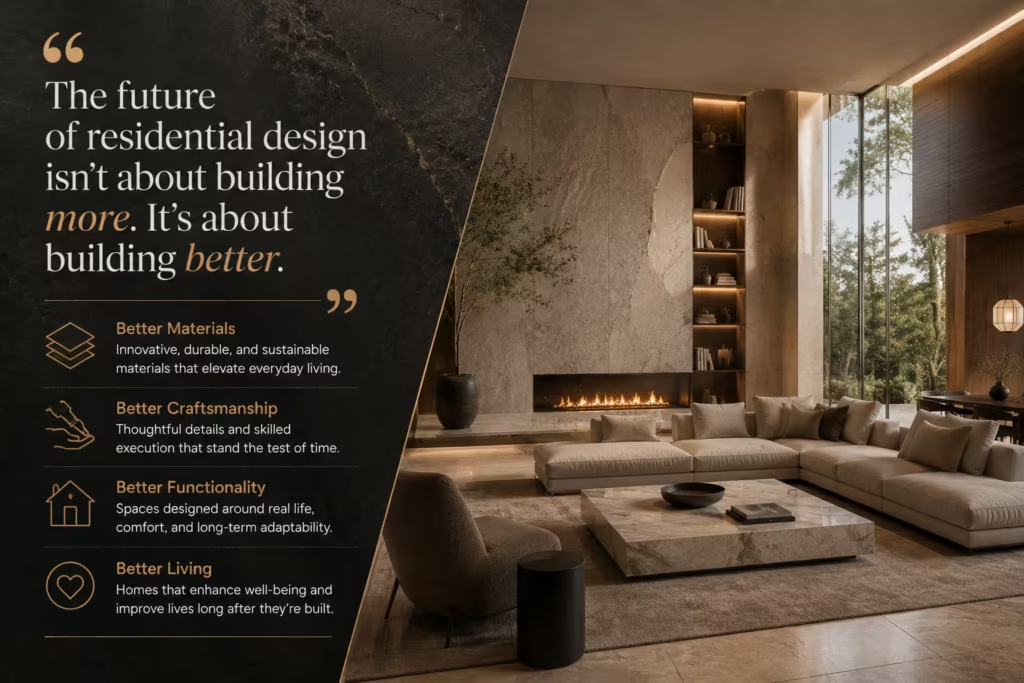
Ultimately, I don’t think the future is about building more. It’s about building better. Better materials, better craftsmanship, better functionality, and spaces that continue to improve people’s lives long after construction is complete. That’s a future I find incredibly exciting to be part of.
Key Takeaways from the Interview
- Design begins with understanding people. Miks’s background in physiotherapy taught him that successful spaces are shaped by human movement, comfort, wellbeing, and everyday experience—not aesthetics alone.
- Constraints can drive better design. Rather than viewing budgets and limitations as obstacles, Miks treats them as creative tools that help prioritize what delivers the greatest value and impact.
- Curiosity fuels innovation. His willingness to explore emerging materials such as sintered stone and new construction methods has become a defining part of his approach to residential design.
- Great interiors are built on balance. Whether working with wood, stone, light, or texture, Miks believes that warmth and character come from the thoughtful relationship between elements rather than any single material.
If you found this conversation with Miks Bērzs’ insightful, you may also enjoy our latest thought-leadership article exploring the evolving relationship between technology and design. Much like architecture itself, innovation is most powerful when it enhances human experience rather than replacing it.
Read more about how AI is shaping the future of global architecture — and how designers are balancing technological advancement with creativity, wellbeing, and the needs of the people who inhabit the spaces they create.
