
As artificial intelligence continues reshaping creative industries, architecture finds itself at a unique crossroads between automation and authorship. Few professionals articulate this transition with the same balance of technical clarity and architectural sensitivity as Ivan Makogon.
With a strong focus on AI-assisted visualization, BIM-integrated workflows, atmospheric rendering, and interactive spatial experiences, Ivan has emerged as a thoughtful voice exploring how technology can enhance architectural processes without compromising design integrity. His work reflects a deep understanding of both computational systems and the emotional, cultural, and material dimensions that define meaningful architecture.
In this conversation with Petros® Stone, Ivan shares his perspective on AI-driven workflows, adaptive architecture, visualization systems, and the future relationship between technology, atmosphere, and built space.
Ivan Makogon | A Brief Profile
Ivan Makogon is an architect and digital creator based in Tbilisi, Georgia, with over 14 years of experience designing spaces. What makes him stand out is how he blends traditional architecture with advanced AI tools. Instead of using artificial intelligence just to make quick, pretty pictures, Ivan builds custom AI systems to handle the boring, repetitive parts of running a studio, like paperwork and organization, so designers can focus on actual creativity.
He is incredibly passionate about how people experience spaces, even creating a video-game-style desktop tool that lets clients literally “walk” through their future homes before they are built. Ivan is a true forward-thinker who believes the future of architecture lies in the perfect mix of human imagination and smart technology.
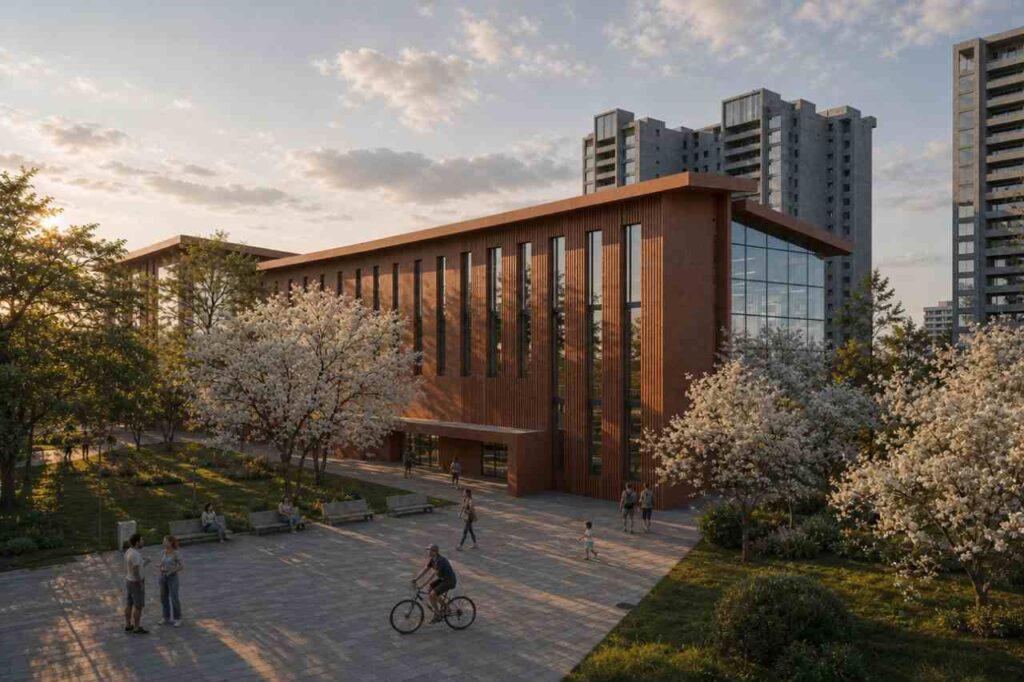
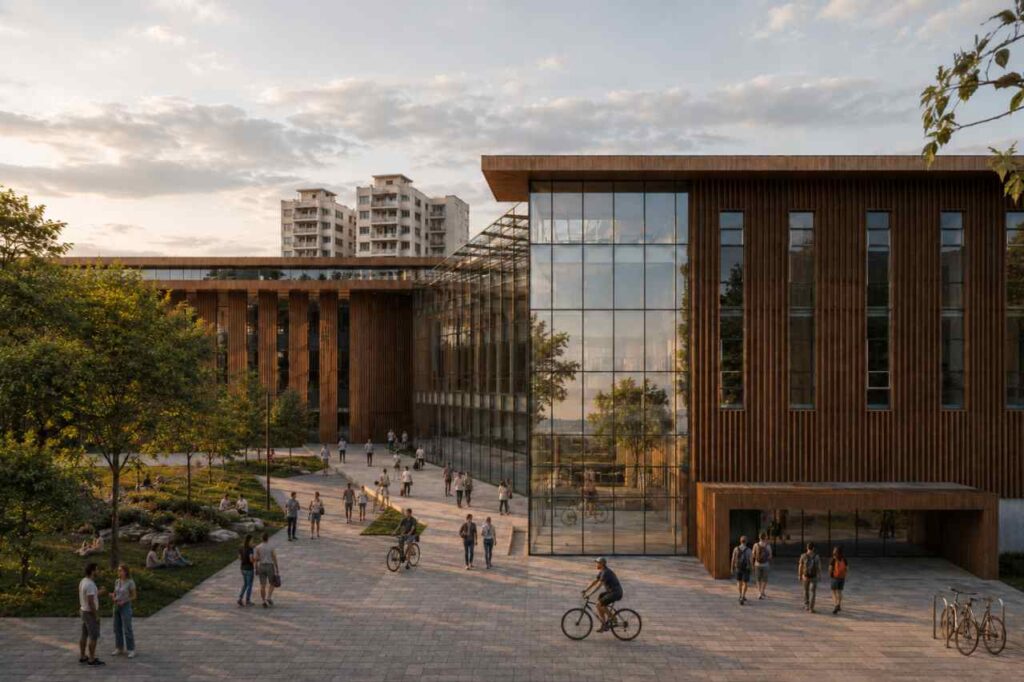
Warm Materiality in an Urban Landscape – Generative AI in Use (shared by Ivan Makogon)
Q: How do you foresee AI integrating into the day-to-day operations of architecture studios over the next five years?
Ivan – I strongly believe, AI won’t enter architecture studios through the dramatic replacement of architects with automated rendering engines. Instead, it will master the operational layer, automating routine, high-friction tasks like documentation, specifications, compliance checks, and cross-disciplinary coordination.
In five years, a well-run studio will leverage dedicated AI agents tethered directly to the BIM model. These systems will autonomously handle clash detection, generate façade variants based on a brief, and prepare tender documentation. So, the architect remains the definitive decision-maker who establishes the criteria. The technology accelerates iteration; it does not eliminate taste, intent, or ultimate responsibility.
Q: With AI accelerating the design process, what core aspects of architecture must remain strictly human-led?
Ivan – I believe the parts of architecture that must remain human-led are everything tied to responsibility and judgment. An algorithm cannot sign legal documents, carry liability for structural safety, or build trust during a client negotiation.
Beyond that, composition, light, proportion, and atmosphere are deeply cultural — not purely algorithmic problems. AI can generate hundreds of spatial options quickly, but only a designer who understands climate, budget, heritage, and construction realities can determine what truly works.
And then there’s the construction site itself. AI cannot walk a site and explain to a foreman why a complex joint must be executed one specific way over another. That level of understanding still depends on human experience and communication.
“AI can generate a hundred spatial options in seconds, only a human designer who understands context – climate, budget, heritage, and construction nuances can determine which option actually works.”
Q: How are tools like AI shifting the balance between functional data and emotional narrative in architectural communication?
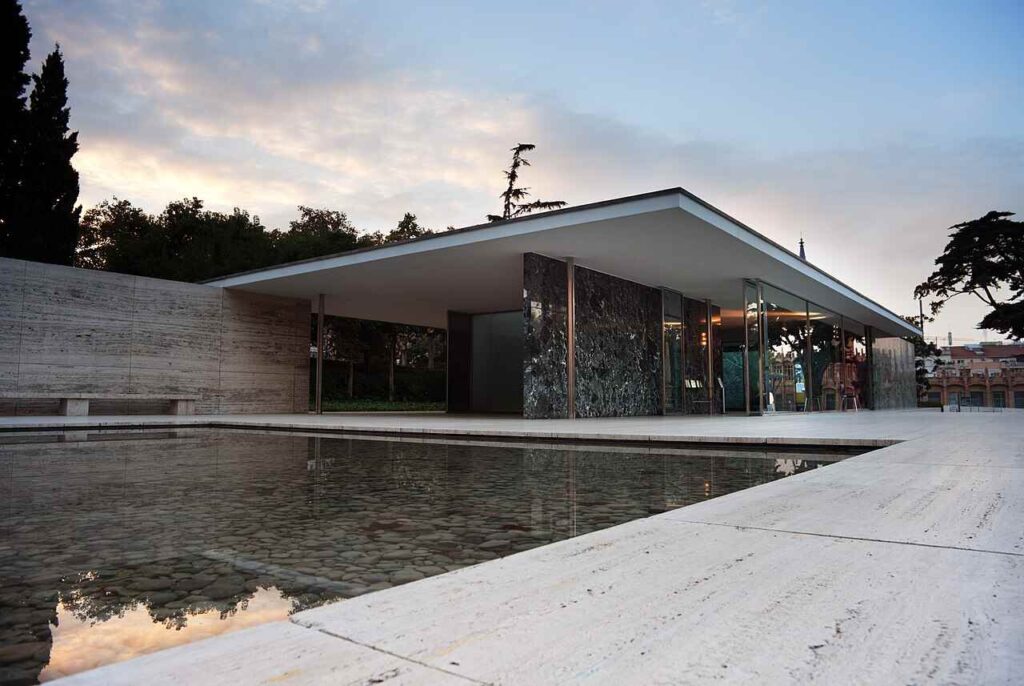
Ivan – I think narrative and atmosphere have always been at the heart of great architecture; AI hasn’t suddenly invented that. If anything, it’s correcting a kind of periodic blindness the industry developed over time. Architects have always shaped emotion through space, light, material, and movement. The Pantheon, for example, is remembered less for its structural system and more for the experience of light and the almost spiritual presence it creates. Similarly, the Barcelona Pavilion isn’t really about the floor plan alone — it’s about the way space unfolds around the human body. That, to me, is narrative embedded directly into geometry.
The problem started when modern architectural communication became overly dependent on dry diagrams and technical explanations, almost outsourcing atmosphere to decorators or visual stylists. What AI has done is expose how important emotional connection actually is. Tools like Midjourney and KREA suddenly allowed architects to communicate a raw “sense of space” very quickly, and clients immediately responded to that. Today, atmosphere is no longer optional in presentations — it has become an expectation.
But honestly, there’s also a danger in that. A lot of AI-generated imagery looks emotionally convincing on the surface while lacking any real architectural depth underneath. Beautiful lighting, cinematic fog, or hyper-detailed textures don’t automatically create atmosphere. Real architectural atmosphere comes from alignment — concept, structure, material, program, proportion, and light all working together cohesively. When those layers are in sync, the space feels authentic. When they aren’t, it simply becomes expensive decoration disguised as architecture.
That’s why I personally treat AI visualization more as a rapid prototyping tool than final communication. Things like cinemagraphs, fog, rain, depth of field, or changing daylight conditions are useful because they help us quickly test how a space might emotionally perform across different situations and human interactions. In many ways, architects have always tried to predict how spaces would feel — AI just allows us to test those emotional conditions much faster than before.
AI-generated imagery frequently delivers superficial mood rather than a true architectural narrative. Beautiful lighting and hyper-detailed textures do not automatically equal atmosphere. Genuine architectural atmosphere emerges from a rigorous alignment between concept, structure, light, material, and program.
– Ivan Makogon
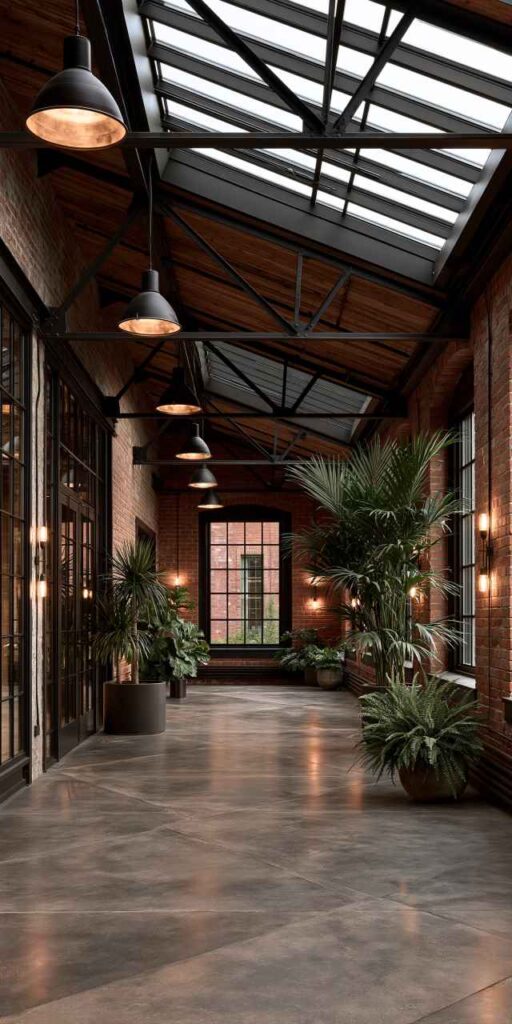
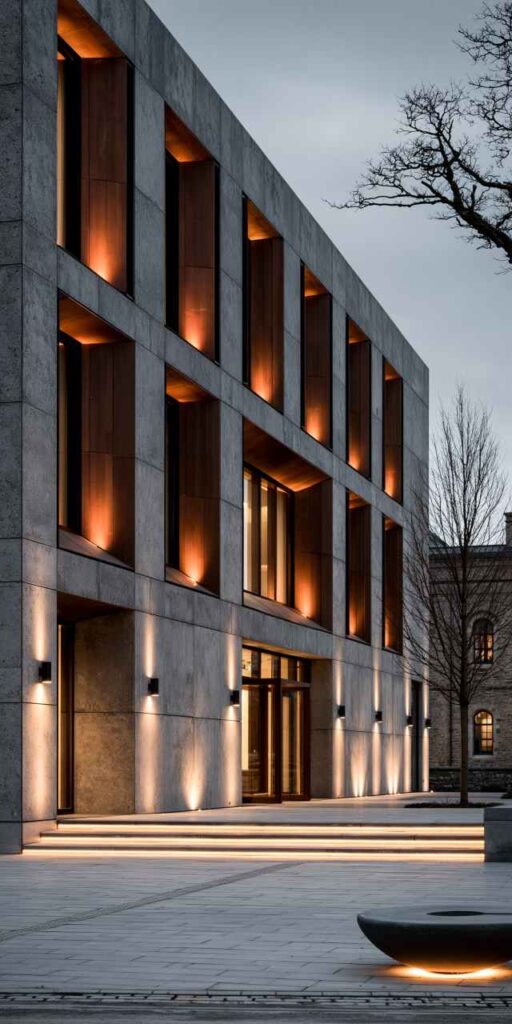
Light, Texture, and Architectural Precision – Image courtesy Ivan Makogon
Q: What distinguishes a genuinely productive AI workflow from a fractured collection of individual digital tools?
Ivan – I think the real difference comes down to systematic structure and orchestration. A fractured workflow depends on disconnected tasks — using Midjourney for isolated images or ChatGPT for standalone text without any shared logic between them.
A mature workflow works very differently. It operates around a single source of truth — whether that’s a BIM model, Obsidian, or an internal knowledge base — feeding specialized AI systems with clearly defined roles. Those systems then produce cohesive outputs, whether documentation, visualizations, or client reports.
In fragmented workflows, you constantly rebuild prompts from scratch for every render. In a structured system, prompts are automatically generated from existing model parameters and material libraries, with the final output feeding directly back into the project ecosystem.
Q: As a studio known for utilizing rich, natural elements, what are the current limitations of AI in rendering materials like natural stone, and how do you overcome them?
Ivan – The primary flaw in contemporary AI renders is that textures look entirely ‘too perfect.’ Natural stone is not a repetitive pattern; it is defined by micro-cracks, heterogeneous mineral inclusions, and irregular reflections dictated by the stone’s internal geological structure. Most AI models generate an averaged, overly synthesized surface—hyper-smooth with a uniform gloss.
“Natural stone is not a repetitive pattern, it is defined by micro-cracks, heterogeneous mineral inclusions, and irregular reflections dictated by the stone’s internal geological structure. Most AI models generate an averaged, overly synthesized surface, hyper-smooth with a uniform gloss.”
To convey true realism, you have to execute on three distinct fronts:
To achieve believable material realism, especially with natural stone, I think three things become extremely important.
First is input control. The material map has to be driven by a precise reference image with proper roughness and displacement controls, rather than relying only on a vague text prompt.
Second is macro-variation. Veining and patterns cannot feel repetitive, because the human eye immediately recognizes when a surface looks synthetic.
And third is physical lighting. You need physically accurate lighting environments — HDRI combined with correct sunlight models — otherwise premium natural materials start looking artificial or plastic-like very quickly.
Right now, the most reliable workflow is still hybrid: using AI for fast ideation and composition, while depending on traditional rendering engines like Corona or V-Ray for predictable material finishes. Pure AI still struggles with consistent reflections and real material depth.
Q: Looking forward, what excites you most about the intersection of architecture, AI, and interactive environments?
Ivan – For me, the most compelling frontier isn’t generating static imagery; it’s the evolution of living spaces. I’m especially fascinated by architecture that responds dynamically to its occupants — adaptive lighting, responsive facades, and spaces that can shift their geometry based on real-time usage.
In that context, AI stops being just a visualization engine and starts becoming an environmental control layer — taking inputs from sensors, analyzing behavior, and translating that into spatial and environmental changes.
I also think the industry still underestimates interactivity as a core architectural quality. We talk constantly about “smart buildings,” but in reality that often just means basic HVAC or lighting automation. True adaptive architecture — where the space itself becomes an intuitive interface — is where AI and architecture genuinely intersect. Everything else is just a render.
Q: Where can people learn more about you or get in touch with you?
Ivan – People can connect with me and follow my work through my LinkedIn profile, where I regularly share insights on AI workflows, architectural visualization, and emerging design technologies.
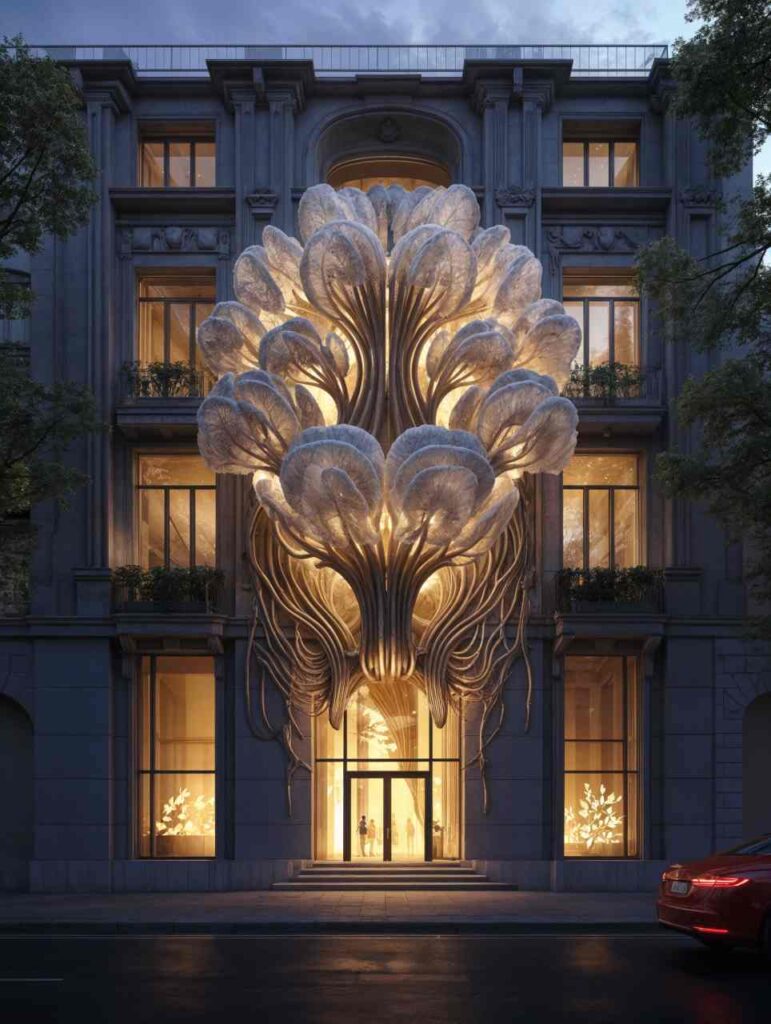
An Entrance Designed as an Experience – Image courtesy Ivan Makogon
Key Takeaways from the Interview
Ivan Makogon believes AI will transform architecture by automating operational workflows, while human architects continue leading creative and contextual decision-making. He emphasizes that atmosphere, proportion, materiality, and construction understanding remain deeply human aspects of design. The conversation also highlights how emotional storytelling and immersive visualization are becoming central to architectural communication. Ivan further notes that realistic natural stone rendering still depends heavily on controlled workflows, physical lighting, and traditional rendering engines to achieve true material depth and authenticity.
