
As architecture increasingly balances technological innovation with human-centered design, few architects have explored this relationship as thoughtfully as Michiel Hofman. As co-founder of the renowned Dutch design practice HofmanDujardin, Hofman has spent decades creating spaces that prioritize wellbeing, intuition, material authenticity, and emotional connection.
Through the studio’s philosophy of Shaping Intuition®, Hofman and his team seek to transform human needs into meaningful spatial experiences, carefully considering light, materiality, proportions, acoustics, and the relationship between people and their surroundings. From luxury residences and workplaces to hospitality environments, their projects consistently demonstrate how architecture can remain both timeless and deeply personal.
In this conversation with Petros® Stone, Michiel Hofman shares his insights on natural materials, craftsmanship, large-format stone applications, timeless design, sustainability, and the evolving relationship between technology and human wellbeing in contemporary architecture.
Michiel Hofman | A Brief Profile
Michiel Hofman is the co-founder and creative force behind the internationally acclaimed architecture and design studio HofmanDujardin, based in Amsterdam, Netherlands. Together with co-founder Barbara Dujardin, he has helped shape a design philosophy known as Shaping Intuition®, an approach that places human wellbeing, emotional connection, and intuitive spatial experiences at the center of architecture.
Over the past two decades, Michiel has led the design of award-winning residential, workplace, hospitality, and mixed-use projects across Europe and internationally. His work is recognized for balancing minimalism with warmth, combining carefully crafted material palettes, natural light, and thoughtful detailing to create spaces that feel both refined and deeply human.
Under his leadership, HofmanDujardin has developed a multidisciplinary practice spanning architecture, interiors, and product design, ensuring that every project maintains a consistent vision from the urban scale to the smallest interior detail. Michiel continues to advocate for timeless architecture, authentic materials, and sustainable design approaches that prioritize longevity, adaptability, and human wellbeing over short-lived trends.
Q: HofmanDujardin’s philosophy of “Shaping Intuition®” focuses strongly on human wellbeing, clarity, and emotional connection within spaces. How do you translate these intuitive and emotional ideas into actual architectural decisions during the design process?
Michiel Hofman – Architecture always begins with people. Before we think about style or form, we try to understand what a space should do for the people who live, work, meet, or relax there.
With Shaping Intuition®, we translate human needs into spatial qualities. We look for the right balance between spaciousness, groundedness, expression, and connection. These are not abstract ideas for us. They become very concrete through decisions about light, routing, proportions, views, acoustics, materiality, furniture, and the way one space flows into another.
A successful space should feel natural. People should intuitively understand where to go, where to gather, where to retreat, and where to feel inspired.
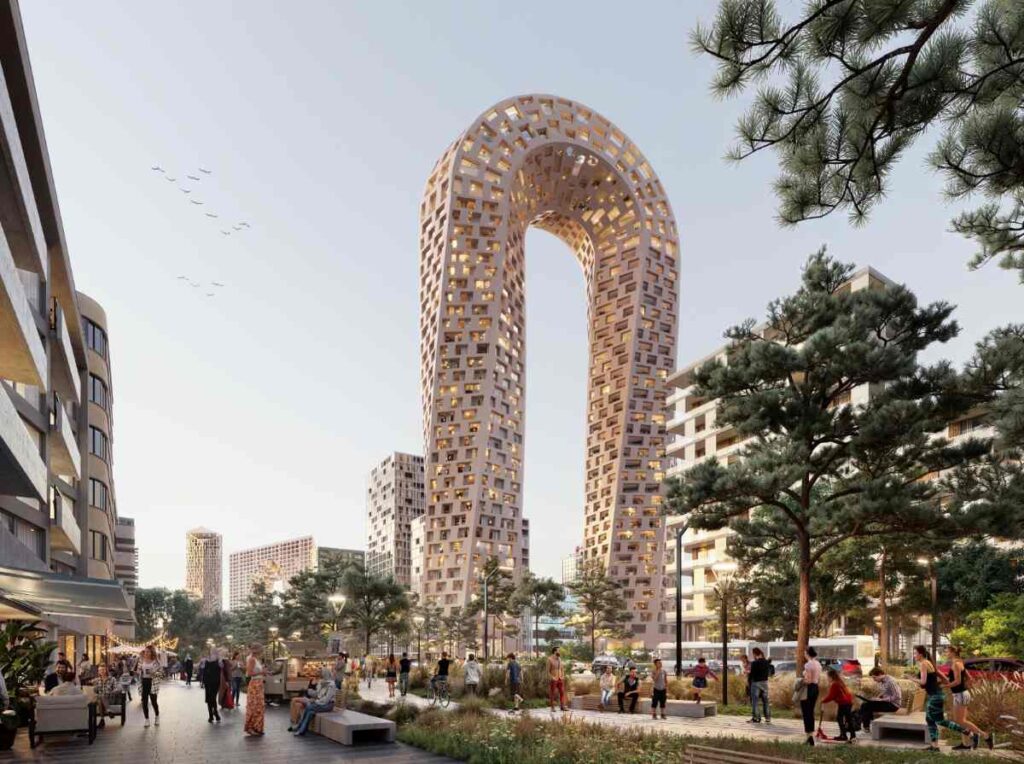
Engineering an iconic, sculptural arch for modern urban living.
Architecture always begins with people. Before we think about style or form, we try to understand what a space should do for the people who live, work, meet, or relax there.
– Michiel Hofman
Q: Across many of your residential and workplace projects, there is a strong sense of calmness, openness, and material warmth. How important is material selection in creating these emotional and sensory experiences within architecture?
Michiel Hofman – Material selection is essential. Materials are often the first physical contact between a person and a building. They influence how a space sounds, how it reflects light, how it feels to the hand, and how it ages over time.
We do not see materials as decoration. They are part of the emotional structure of a project. A warm wood surface, a calm stone floor, a soft textile, or a carefully filtered daylight condition can completely change the way people feel in a space.
The right material palette creates calmness without becoming neutral. It gives depth, tactility, and character.
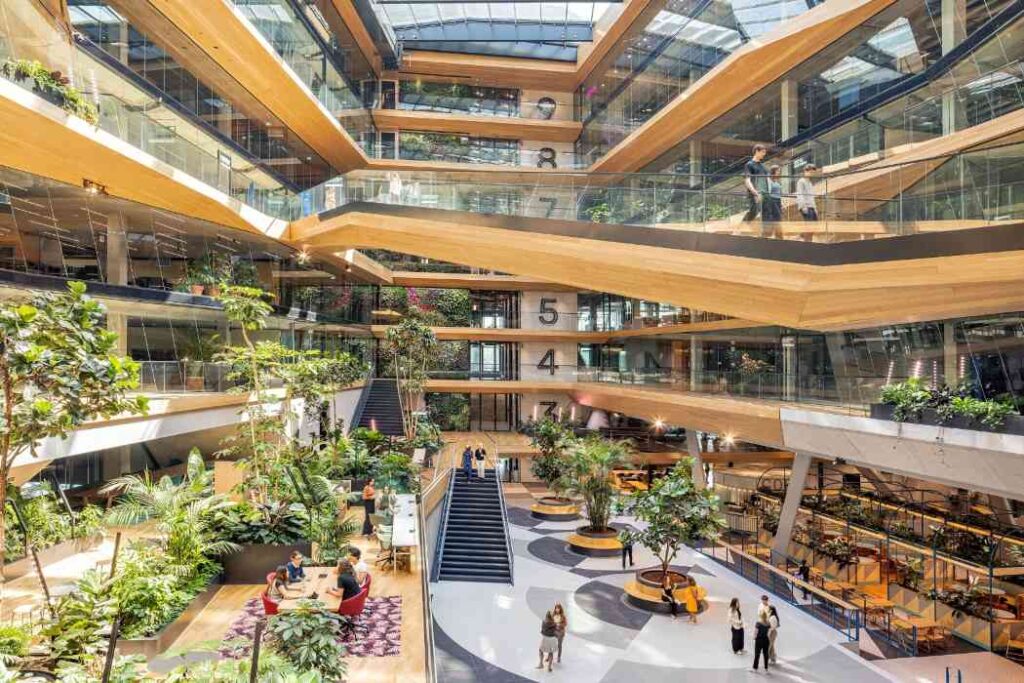
Fusing warm timber, light, and natural greenery across multi-level workspaces.
Q: Your projects often balance minimalism with warmth and tactile richness. In your view, what differentiates timeless architecture from spaces that simply follow contemporary trends?
Michiel Hofman – Timeless architecture is not about being neutral or silent. It is about clarity, proportion, quality, and a strong relationship with human needs.
Trends often begin with an image. Timeless spaces begin with experience. They are clear in their structure, generous in their proportions, precise in their details, and authentic in their use of materials.
A timeless space is one that can absorb life. It should remain relevant when furniture changes, when technology changes, and when the people using it change. It should still feel good many years later.
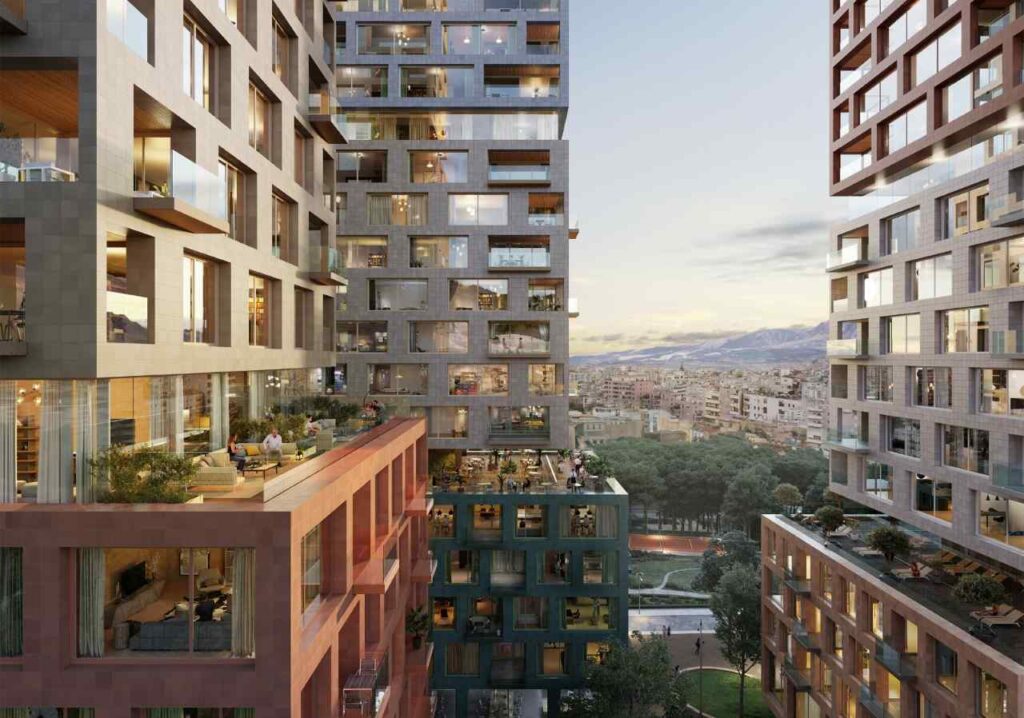
Dynamic residential facades looking out over the city.
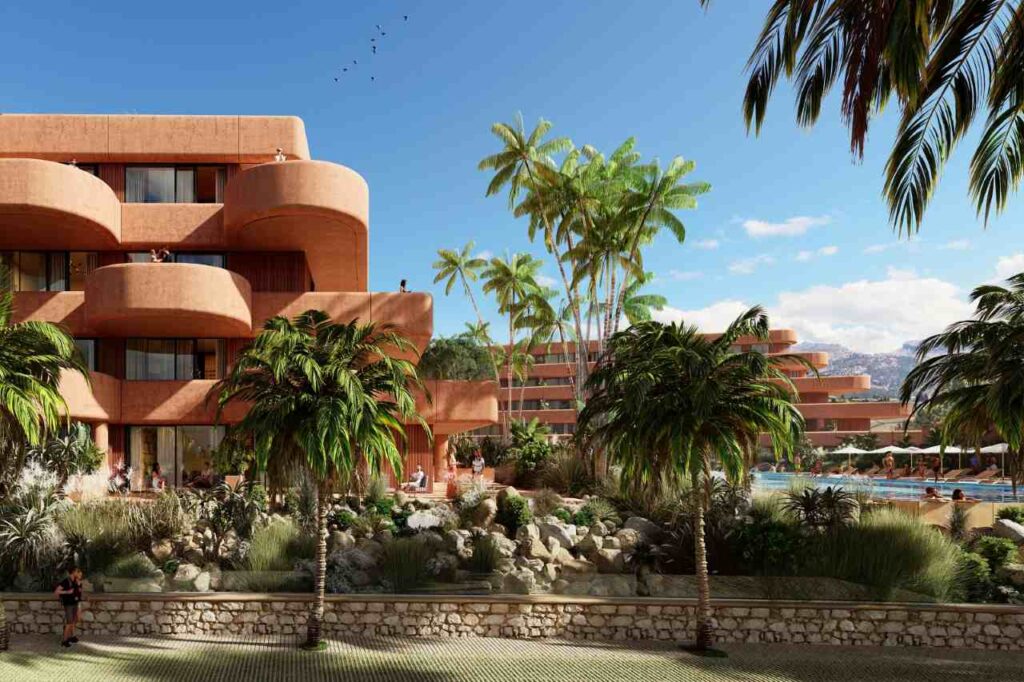
Coastal resort architecture crafted for leisure.
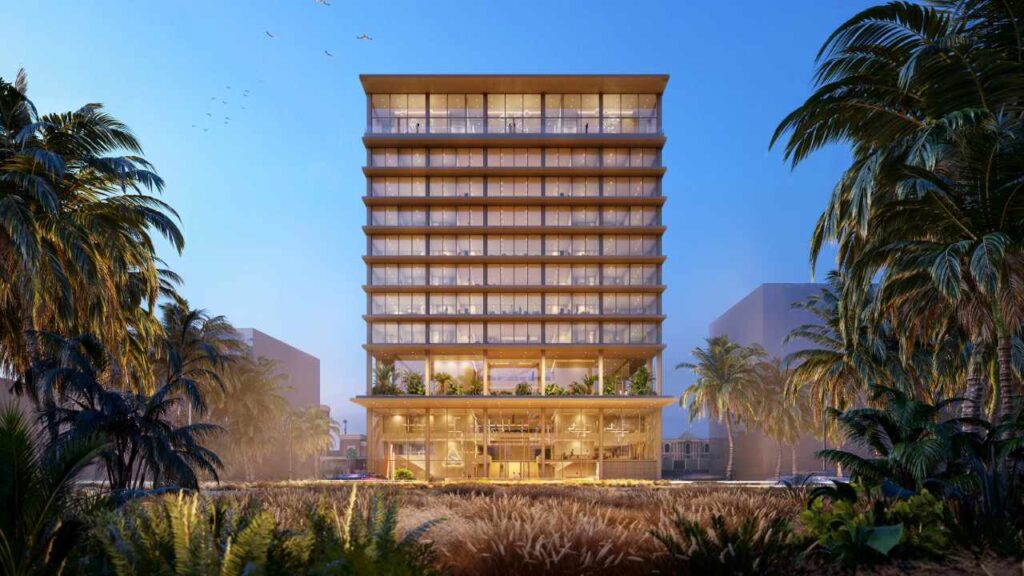
A timeless glass-fronted corporate landmark rising amidst palm canopies.
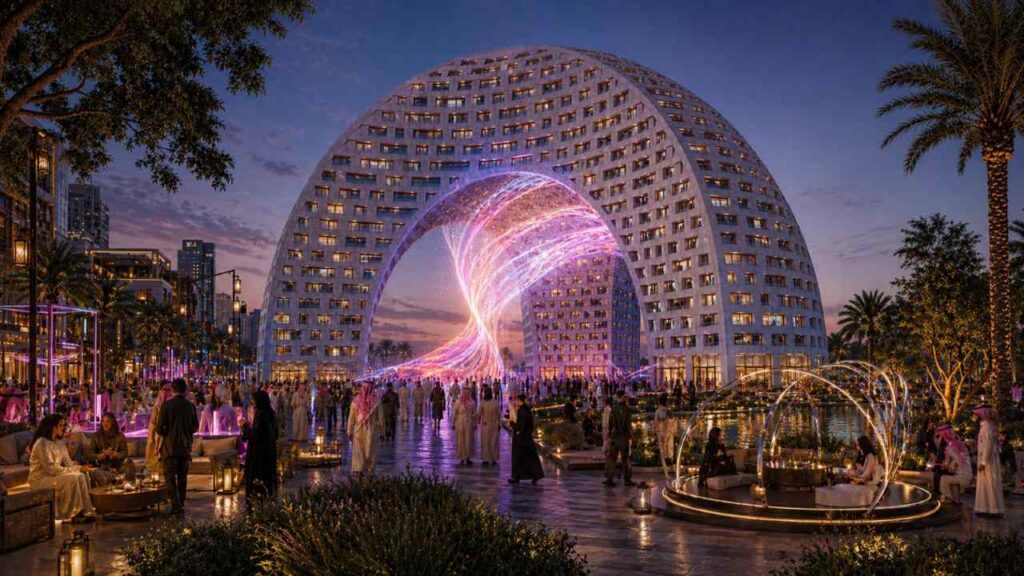
Where futuristic geometry frames vibrant public plazas.
Timeless architecture is not about being neutral or silent. It is about clarity, proportion, quality, and a strong relationship with human needs.
– Michiel Hofman
Q: Natural materials frequently appear throughout your work, whether through wood, stone, textures, or natural light. What role do authentic materials play in helping architecture feel more grounded and human-centered?
Michiel Hofman – Authentic materials bring reality into architecture. They have weight, texture, temperature, grain, and sometimes imperfection. These qualities help people feel connected to a space.
Natural materials also connect us to time. Wood changes, stone carries geological depth, fabrics soften, and daylight moves throughout the day. This gives architecture a living quality.
When materials are honest and carefully detailed, they create groundedness. They make spaces feel calm, human, and close to nature.
Natural materials also connect us to time. Wood changes, stone carries geological depth, fabrics soften, and daylight moves throughout the day. This gives architecture a living quality.
– Michiel Hofman
Q: In high-end residential and hospitality architecture, natural stone is often used not only structurally but also emotionally to create atmosphere and permanence. How do you approach selecting stone textures, finishes, or colors to influence the feeling of a space?
Michiel Hofman – We always start with atmosphere. The first question is not which stone is beautiful, but what the space should feel like.
A honed surface can feel calm and tactile. A polished surface can bring reflection, depth, and a more ceremonial character. A rougher texture can create strength and natural expression. Warm tones often create intimacy, while cooler tones can support clarity and serenity.
We also look carefully at light. Stone changes completely depending on daylight, artificial light, shadow, and the materials around it. The selection is therefore always part of a larger composition.
Q: Have you worked with natural stone materials in architectural or interior projects? From your perspective, what makes designing and detailing with stone different compared to other architectural finishes?
Michiel Hofman – Yes, we have worked with natural stone in different interior and architectural applications, especially in residential and hospitality-related spaces.
Designing with stone is different because stone has its own logic. It has weight, direction, veining, tolerances, and natural variation. You cannot treat it simply as a surface or a graphic pattern.
Each slab is unique, and therefore the detailing must respect the material. Joints, edges, corners, supports, thickness, transitions, and maintenance all become part of the design. Stone is most beautiful when its natural character and technical reality are both understood.
Q: Many architects admire natural stone aesthetically, but technical execution can often become challenging. What are some important considerations architects should keep in mind while specifying marble, granite, or large-format stone applications?
Michiel Hofman – The first consideration is suitability. Not every stone is suitable for every use. One has to consider porosity, hardness, staining, slip resistance, acid sensitivity, water exposure, maintenance, and structural support.
For large-format applications, coordination is extremely important. The substructure, fixing method, transport, tolerances, movement joints, edge details, and installation sequence all need to be considered early.
We also believe mock-ups and dry-lays are very valuable. With natural stone, the visual result depends on veining, direction, bookmatching, and the relationship between slabs. These decisions should not be left until the end.
Q: Large-format natural stone applications have become increasingly popular in contemporary architecture. From your experience, what are the biggest design or execution challenges when integrating large stone surfaces seamlessly into minimalist spaces?
Michiel Hofman – In minimalist spaces, every line becomes important. A joint, an edge, a small misalignment, or an unresolved corner is immediately visible.
The biggest challenge is to make technical complexity disappear. Large stone surfaces require precise coordination of structure, fixing, services, doors, panels, lighting, drainage, and transitions to other materials.
There is also a practical challenge: handling, transport, weight, breakage risk, and installation tolerances. The design may look simple, but the execution requires a high level of craftsmanship and preparation.
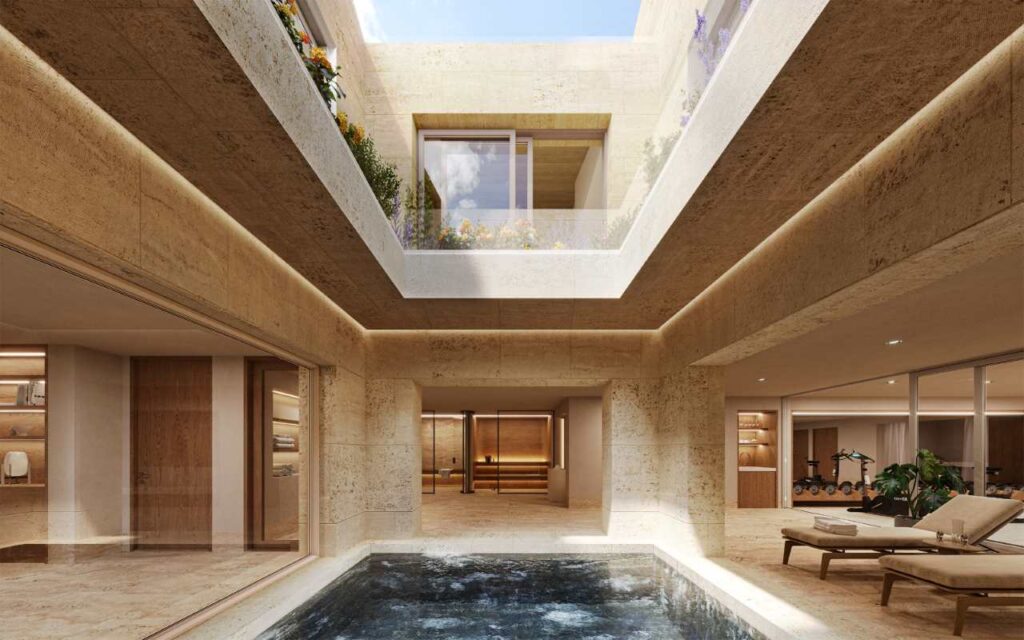
Pure stone cladding surrounding a secluded indoor pool courtyard.
Q: Your studio works across architecture, interiors, and product design simultaneously. How does this multidisciplinary approach help maintain consistency between concept, detailing, and final execution?
Michiel Hofman – For us, architecture, interior design, and product design are deeply connected. The same idea should be present at every scale.
Architecture creates the spatial structure. Interior design brings intimacy, atmosphere, and use. Product design touches the body directly. When these disciplines are developed together, the concept remains consistent from the overall volume to the smallest detail.
This multidisciplinary way of working helps us create environments that feel complete. Nothing is isolated. Space, material, furniture, lighting, and detail all support the same experience.
Q: In luxury residential architecture today, clients increasingly seek spaces that feel both refined and emotionally comfortable. How do you approach balancing sophistication with warmth and livability?
Michiel Hofman – We believe true luxury is not about display. It is about comfort, quality, calmness, and personal attention.
A refined home should also be a place where people can live naturally. We create this balance through clear spatial layouts, generous proportions, warm materials, good daylight, acoustic comfort, and personal details that reflect the life of the client.
Sophistication should never make a space feel distant. The best homes are elegant and easy at the same time.
Q: Contemporary architecture often relies heavily on visualization and rendering technologies. In your opinion, how important is technical detailing and construction knowledge in ensuring that a project is executed as originally envisioned?
Michiel Hofman – Visualizations are useful because they help communicate atmosphere and ambition. But architecture becomes real through detailing.
Technical knowledge is essential. A project is only as strong as the connection between concept and execution. Details determine shadow lines, material transitions, durability, touch, maintenance, and the final feeling of quality.
A good detail does not call attention to itself. It simply makes the space feel natural, clear, and well made.
Q: Looking at current architectural trends globally, are you seeing a renewed appreciation for natural, long-lasting materials and craftsmanship in modern projects?
Michiel Hofman – Yes, we see a strong renewed appreciation for materials that are real, durable, and carefully crafted.
Perhaps because our lives have become increasingly digital and fast, people are searching for physical depth and authenticity. Natural materials offer this. They can be touched, repaired, maintained, and understood.
Craftsmanship also brings human presence into a project. It makes architecture less anonymous and more connected to place, time, and people.
Q: Sustainability today goes beyond energy performance alone. Do you believe material longevity and timeless design are equally important aspects of sustainable architecture?
Michiel Hofman – Absolutely. Sustainability is not only about technical performance. It is also about creating buildings and interiors that remain valuable, useful, and loved over time.
When a space is well made and emotionally durable, people are less likely to replace it. Longevity, adaptability, and timelessness are therefore important sustainable qualities.
A building that works well, feels good, and can evolve with its users has a much longer life. That is a very important form of sustainability.
Q: With growing interest in authentic and long-lasting materials, do you think natural stone is evolving beyond being a luxury material into something more architectural and experiential in modern design practice?
Michiel Hofman – Yes, when used with intelligence, natural stone can be much more than a luxury finish.
Stone can create atmosphere, permanence, ritual, and connection to nature. It can define a threshold, anchor a room, shape a bathroom, structure a kitchen, or bring quiet strength to a public space.
The challenge is to use stone for meaning, not only for status. When it supports the spatial experience, it becomes truly architectural.
Q: Many young architects focus heavily on software, visualization, and digital tools. What skills or mindset do you believe are equally essential for architects who want to create architecture that truly lasts?
Michiel Hofman – Digital tools are important, but they are only tools. Lasting architecture requires curiosity, patience, observation, and empathy.
Young architects should learn to understand people, proportions, materials, construction, light, and context. They should spend time on building sites, speak with craftsmen, study how materials age, and observe how people actually use spaces.
The ability to simplify is also essential. Good architecture often comes from reducing complexity until the right clarity appears.
Young architects should learn to understand people, proportions, materials, construction, light, and context. They should spend time on building sites, speak with craftsmen, study how materials age, and observe how people actually use spaces.
– Michiel Hofman
Q: Your projects often create a strong connection between interior and exterior environments. How do materials, textures, and transitions contribute to achieving this sense of continuity?
Michiel Hofman – The connection between inside and outside is created through many subtle decisions. It can be a continuous floor level, a view line, a façade opening, a material that continues from interior to exterior, or a color palette that responds to the landscape.
Materials and textures help guide the body and the eye. They can make an exterior space feel like an extension of the interior, and they can bring natural qualities into the home or workplace.
A good transition should feel effortless. You should not experience a hard separation, but a natural sequence of spaces.
Q: Which recent HofmanDujardin project challenged your team the most creatively or technically, and what did that experience teach you?
Michiel Hofman – A recent project that brought many of these themes together is Fundis House in Gouda.
It was creatively and technically challenging because it combines landscape, architecture, interior design, restaurant design, and workplace design into one coherent environment. The wooden structure, the flexible workplace concept, the shared spaces, and the connection to greenery all had to work together.
The project taught us again that complexity can be resolved through clear principles. When the rhythm of the structure, the technical systems, the interior, the lighting, and the furniture all support the same idea, the result can feel calm and natural.
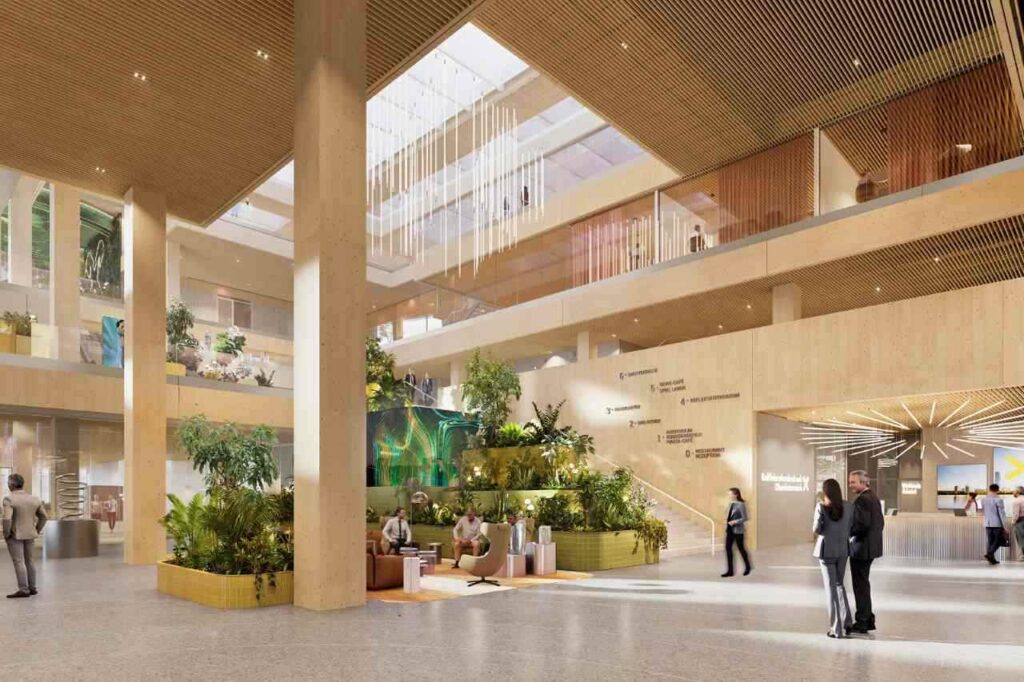
Creating expansive, naturally lit corporate lobbies.
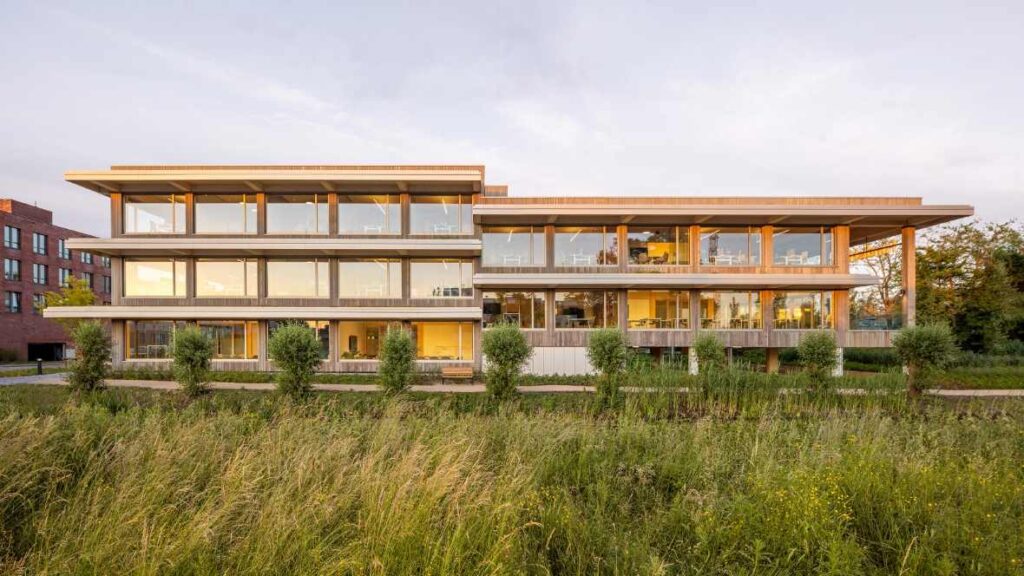
Linear design framing natural horizons.
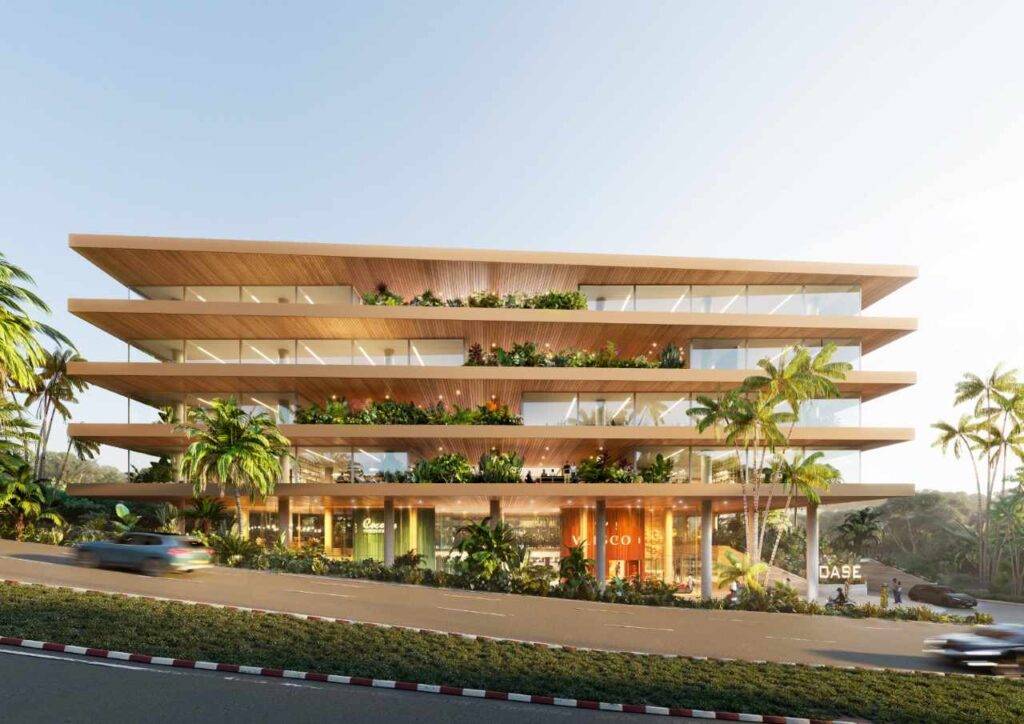
Bringing tropical vitality to premium office spaces.
Q: Looking ahead, how do you see architecture evolving over the next decade in terms of human wellbeing, materiality, and the relationship between technology and design?
Michiel Hofman – We believe architecture will become even more focused on human wellbeing. Light, air, acoustics, nature, material comfort, flexibility, and emotional connection will become increasingly important.
At the same time, materiality will become more conscious. We expect more attention to biobased materials, reuse, circular detailing, local resources, and long-lasting craftsmanship.
Technology will certainly play a larger role, but it should support the design process rather than dominate it. Data, artificial intelligence, prefabrication, and visualization can help us make better decisions. But the core task remains very human: to create places that work well and feel good.
Key Takeaways from the Interview
- Architecture should prioritize human wellbeing by translating emotional and functional needs into intuitive spatial experiences.
- Natural materials such as stone and wood create deeper emotional connections through texture, authenticity, and sensory richness.
- Timeless architecture is achieved through clarity, proportion, quality, and adaptability rather than following design trends.
- Successful natural stone applications require careful attention to material behavior, detailing, coordination, and craftsmanship.
- Technology should support architecture, but human wellbeing, sustainability, and meaningful experiences must remain the primary focus.
