Thinking of designing a new kitchen or bathroom?
You’ve come across granite and quartzite as top choices for tough high-quality natural surfaces. Both materials last long, but the rising popularity of quartzite lies in its sturdiness and stylish look. With a score of about 7 on the Mohs scale, quartzite’s scratch resistance is on par with granite (6–7) and far better than marble (3–4). Unlike marble, quartzite doesn’t have calcium carbonate, so it performs better when exposed to acids.

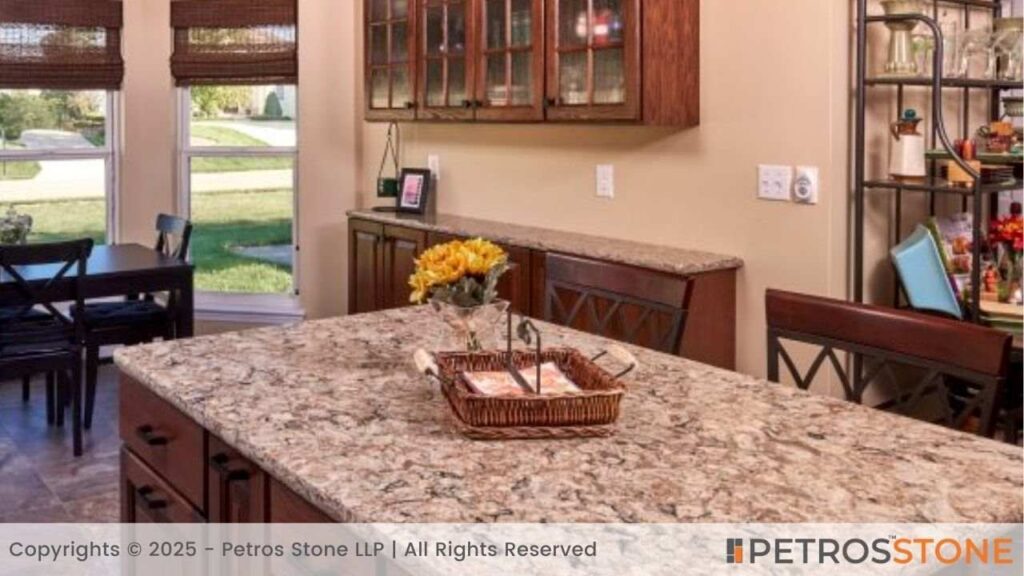
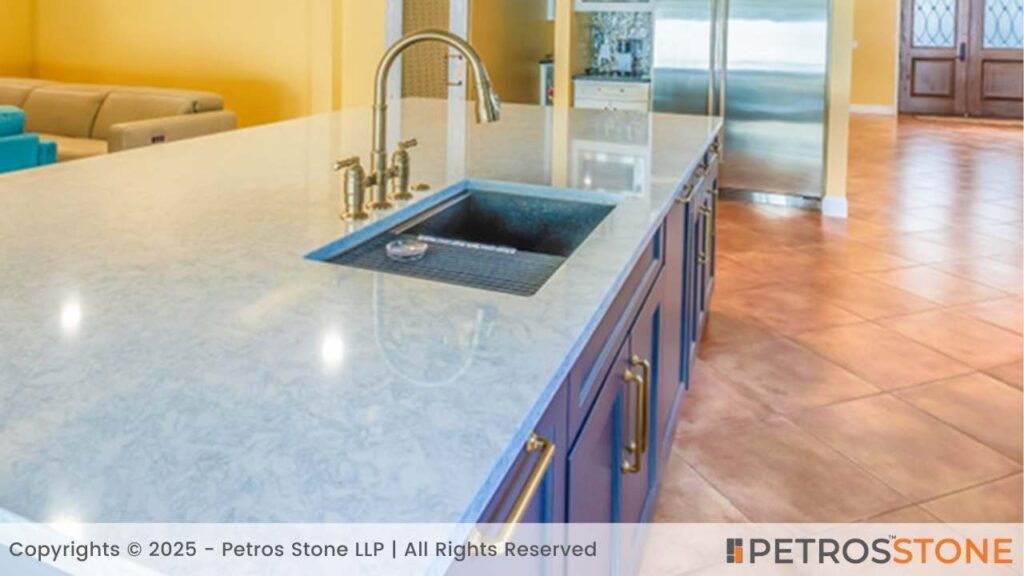
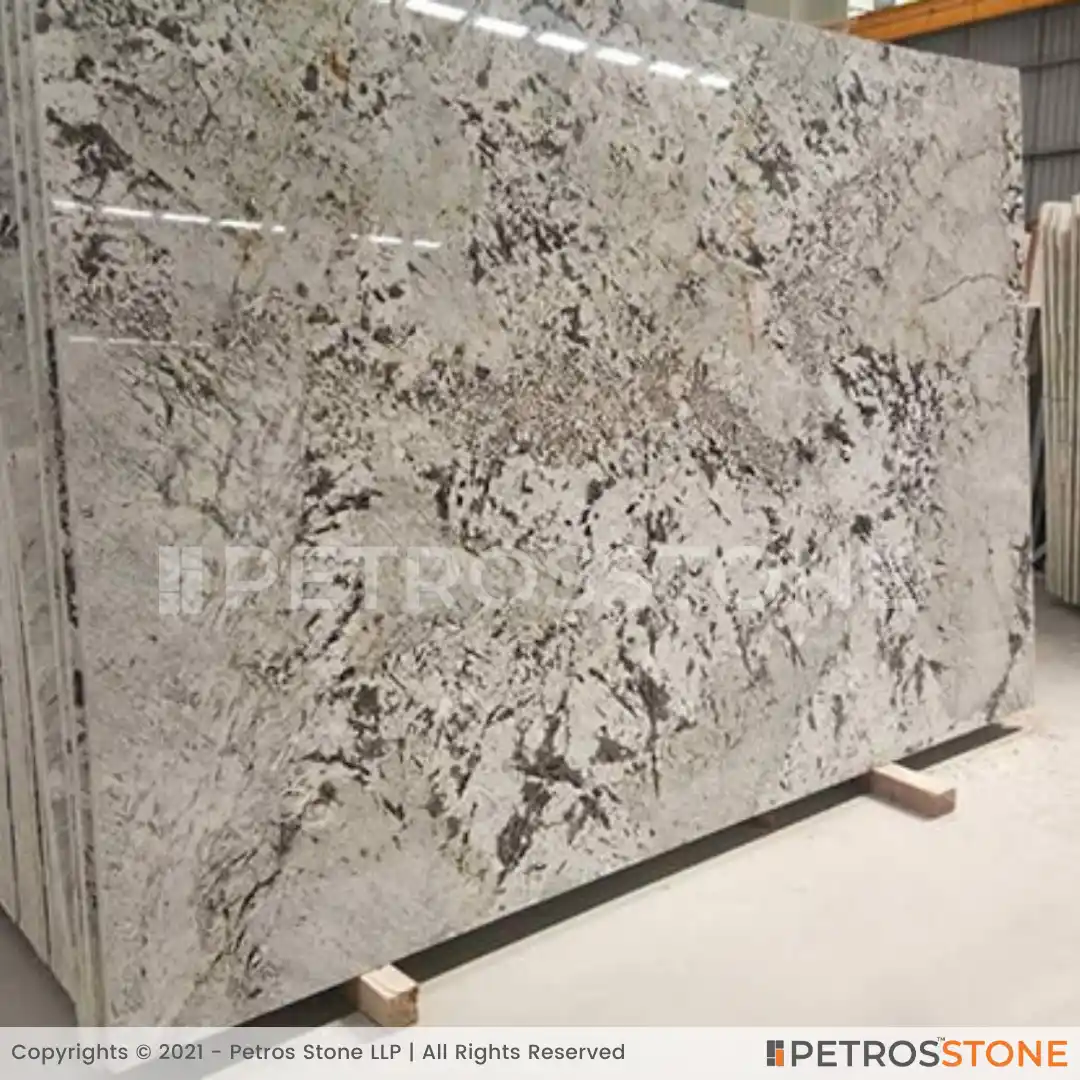
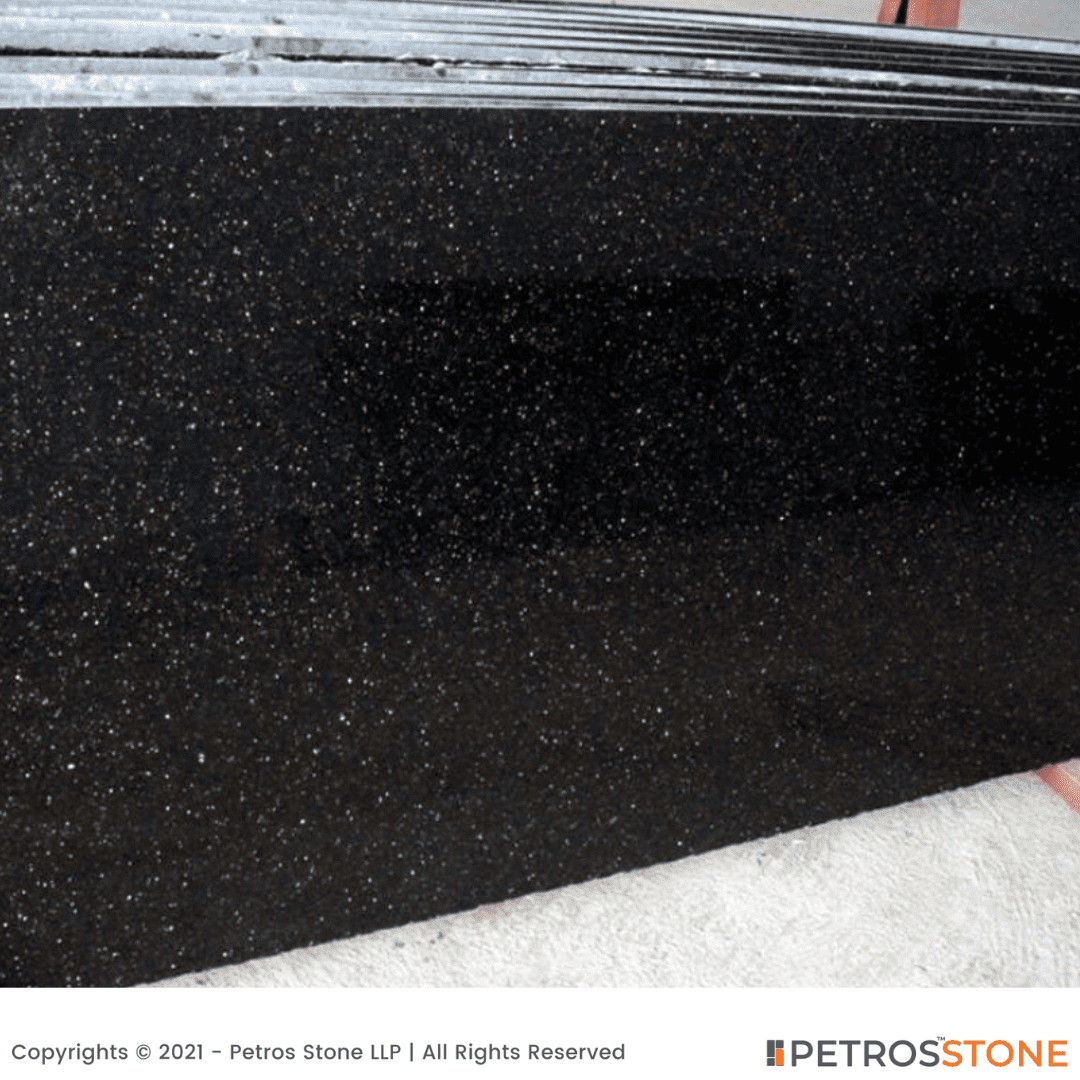
Granite though durable often has a grainy texture, while quartzite combines the elegant veining of marble with added durability. That unique mix of charm and toughness is why many people in modern homes are choosing quartzite today.
Dealers are pushing it, designers are excited about it, and homeowners are confused:
Is quartzite better than granite? Is it just fancy marble? Is it worth the extra money?
In this article, we will walk you through all of this. We break down the real differences between granite and quartzite so you can choose the right natural stone with confidence. We compare durability, hardness, heat and stain resistance, maintenance, design appeal, cost, and real-life performance in kitchens, bathrooms, and outdoor spaces. Most importantly, we help you understand when granite is the smarter practical choice and when quartzite is worth the upgrade for aesthetics and impact.
Key Differences Between Granite and Quartzite
This is where your decision really takes shape.
Durability and Hardness
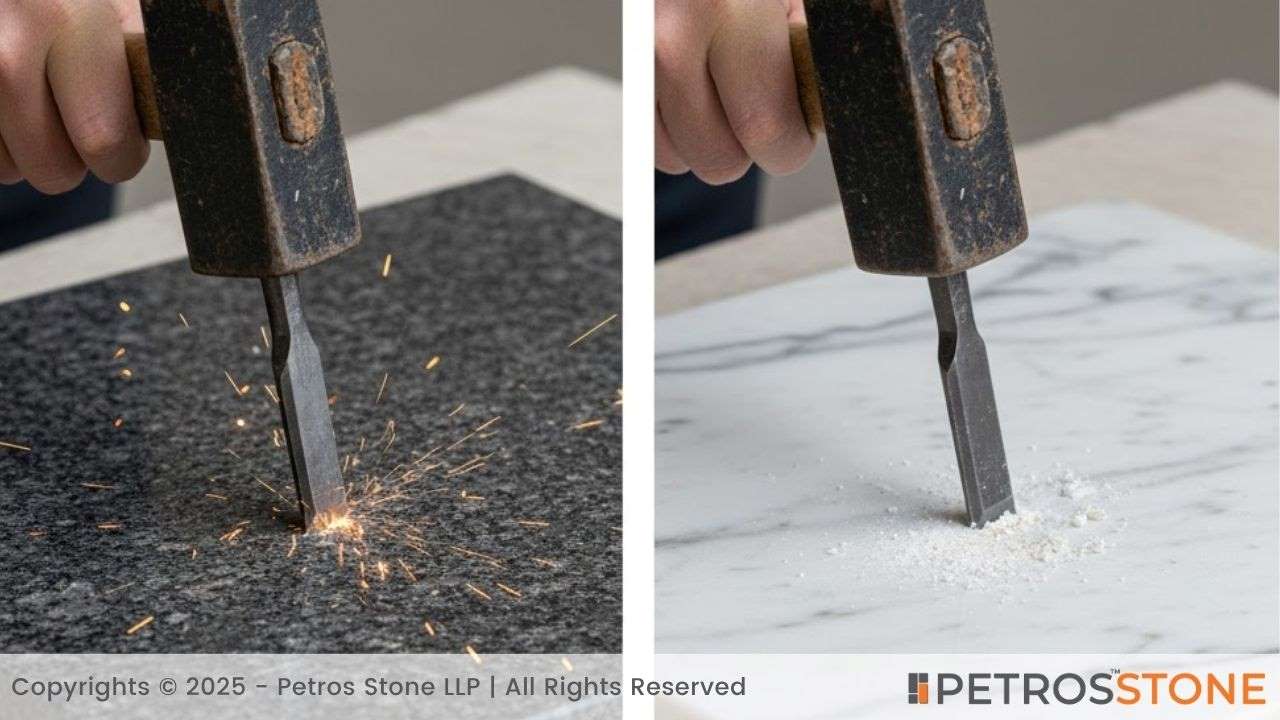
Both materials are hard enough for kitchen and bathroom use. But quartzite generally edges ahead in terms of pure hardness.
- Granite – usually around 6 – 7 on Mohs hardness
- Quartzite – often 7 (sometimes a bit harder in practice)
What this means in real life:
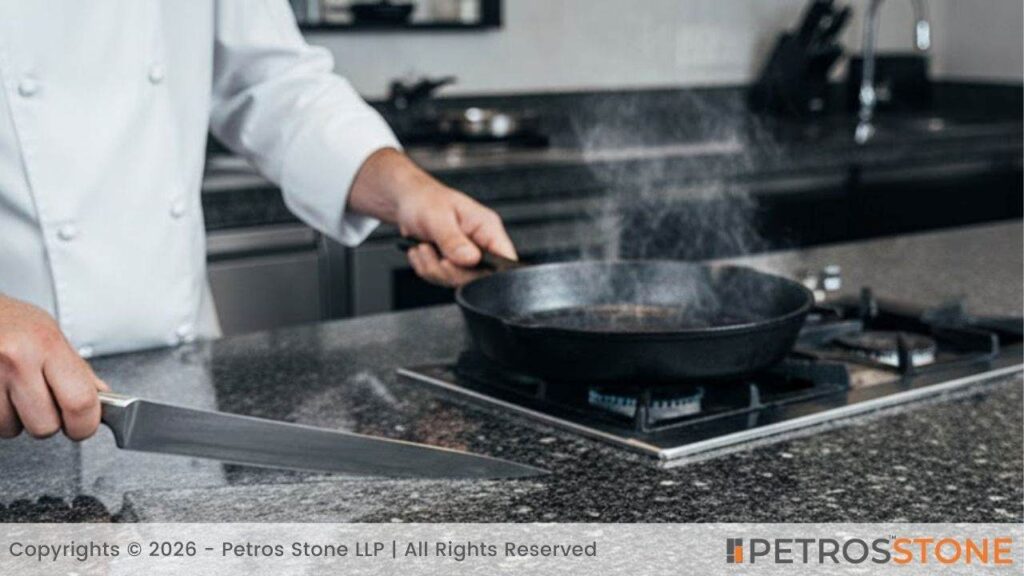
- Cutting directly on either surface is not recommended – you will damage your knives more than the stone.
- Dragging heavy utensils or rough metal objects is less likely to scratch quartzite compared to softer stones.
- Properly processed quartzite, especially resin-impregnated and mass-treated, can behave almost like a “super granite” in terms of surface strength.
However, there’s one issue. Quartzite often has natural fissures and internal tension lines. Earlier, this made it tricky to process. It needed high-end machinery and resin impregnation technology to make it stable as slabs.
Now, with modern resin-impregnation and automatic polishing machines, the kind Italian companies like Breton or Pedrini produce, those fissures can be sealed and reinforced. This has made quartzite a much more reliable product than it used to be.
Granite, on the other hand, is typically more straightforward to process and has fewer hidden fissure issues in comparison.
Heat and Stain Resistance
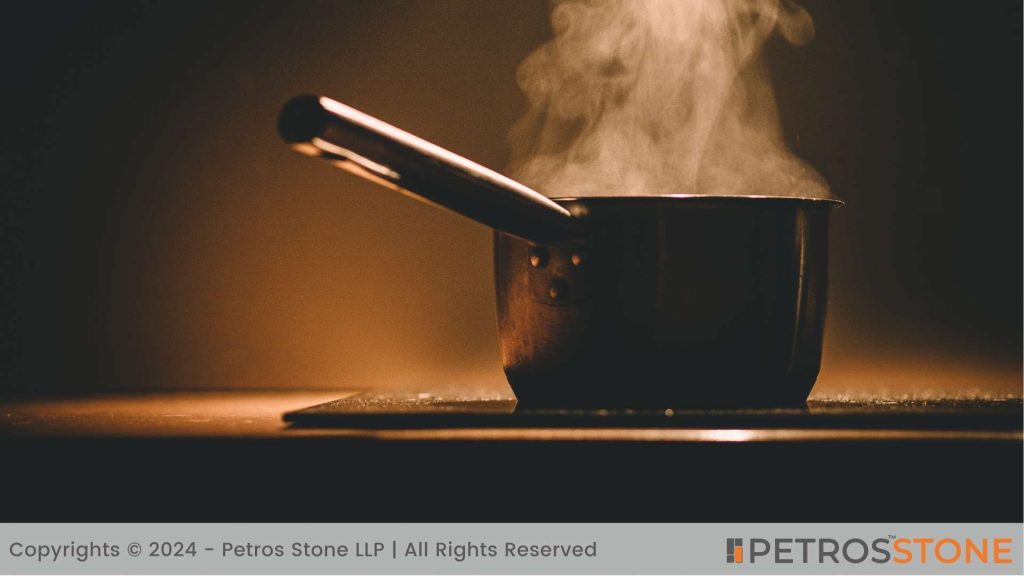
Both granite and quartzite handle heat well in normal residential use. Both are formed under heat and pressure, so thermal resistance is part of their nature.
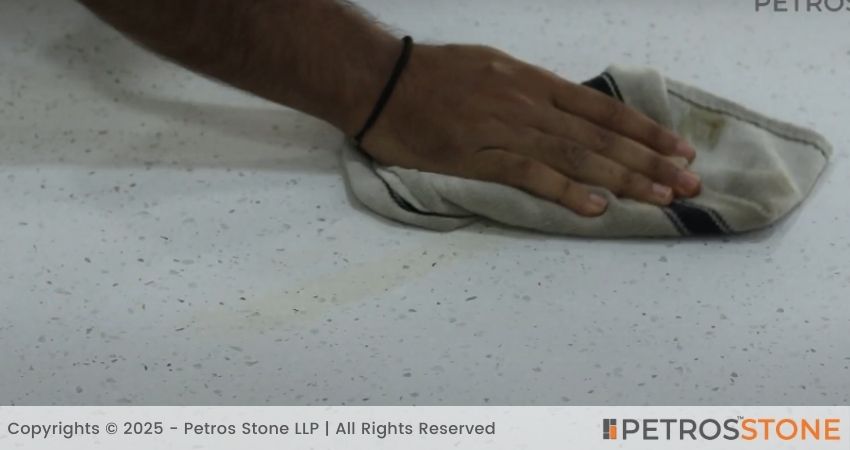
Stain behaviour is where composition matters:
- Neither is as porous and fragile as marble.
- Quartzite has no calcium carbonate, so it doesn’t react with acids the way marble does.
- Granite is also quite resistant but can have varying porosity based on type.
In practice:
- A dense, dark granite can be very forgiving.
- Quartzite, if well sealed and resin-treated, can be both stain resistant and chemically stable.
Neither one is truly “stain-proof” if abused, but both are far better than marble.
Maintenance and Sealing Requirements
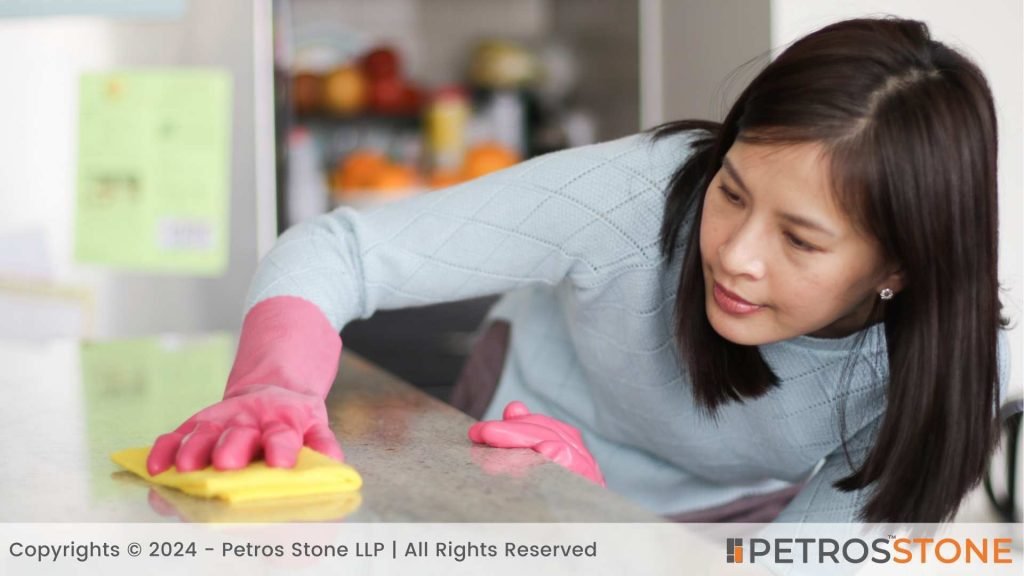
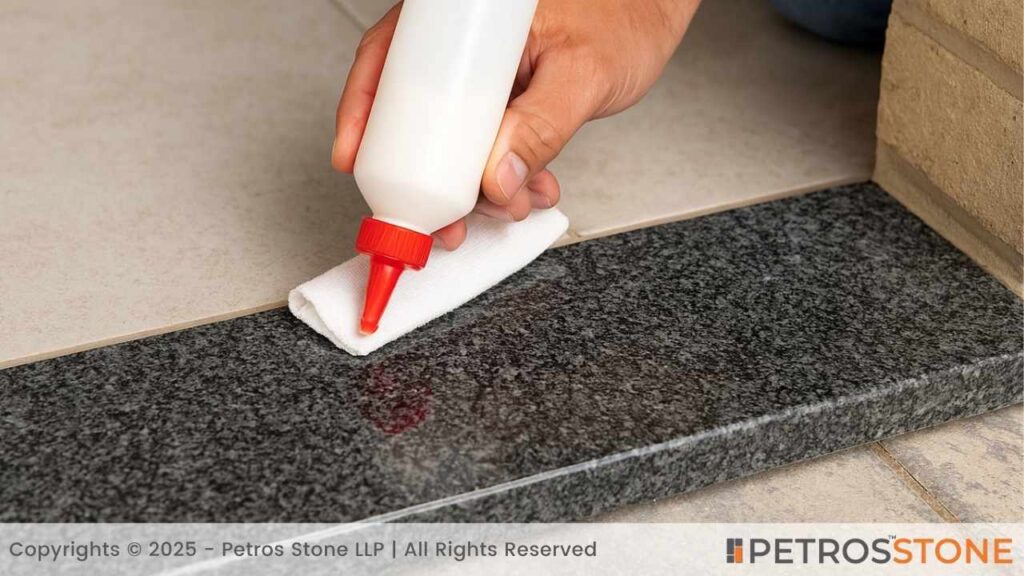
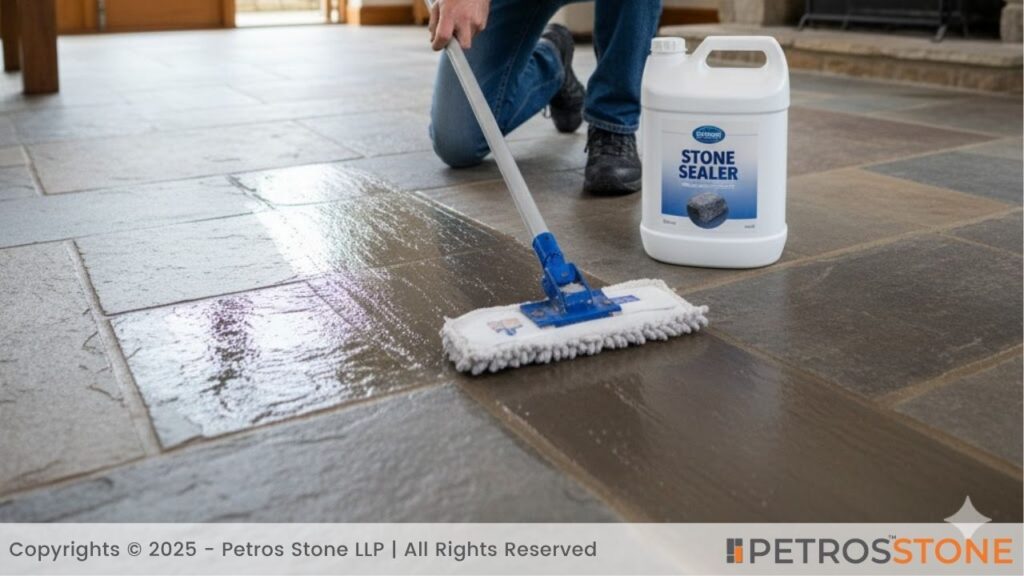
Both stones are natural and benefit from some level of sealing, especially if you’re using them in:
- Busy kitchens
- Wet bathrooms
- High-use counters
However, the day-to-day maintenance is broadly similar:
- Wipe with mild soap and water
- Avoid harsh acids and bleach-heavy cleaners
- Clean spills reasonably quickly
The difference lies more in how forgiving the material is when you forget.
A well-chosen, dense granite can live almost “maintenance-free” in many Indian homes. Quartzite, if properly processed and sealed at the factory level, can also be very stable.
The main takeaway: don’t buy either purely on the name. Buy based on density, finish quality, and fabrication.
Aesthetic and Design Options
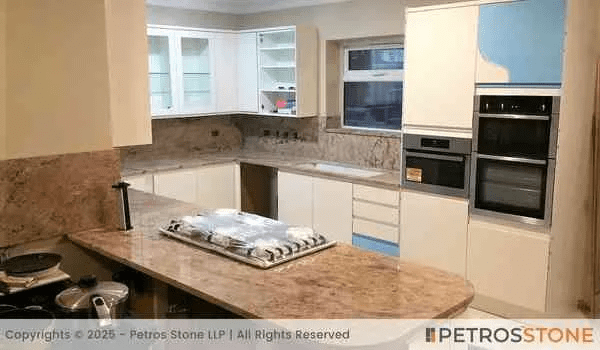
This is where quartzite really starts flexing.
Granite:
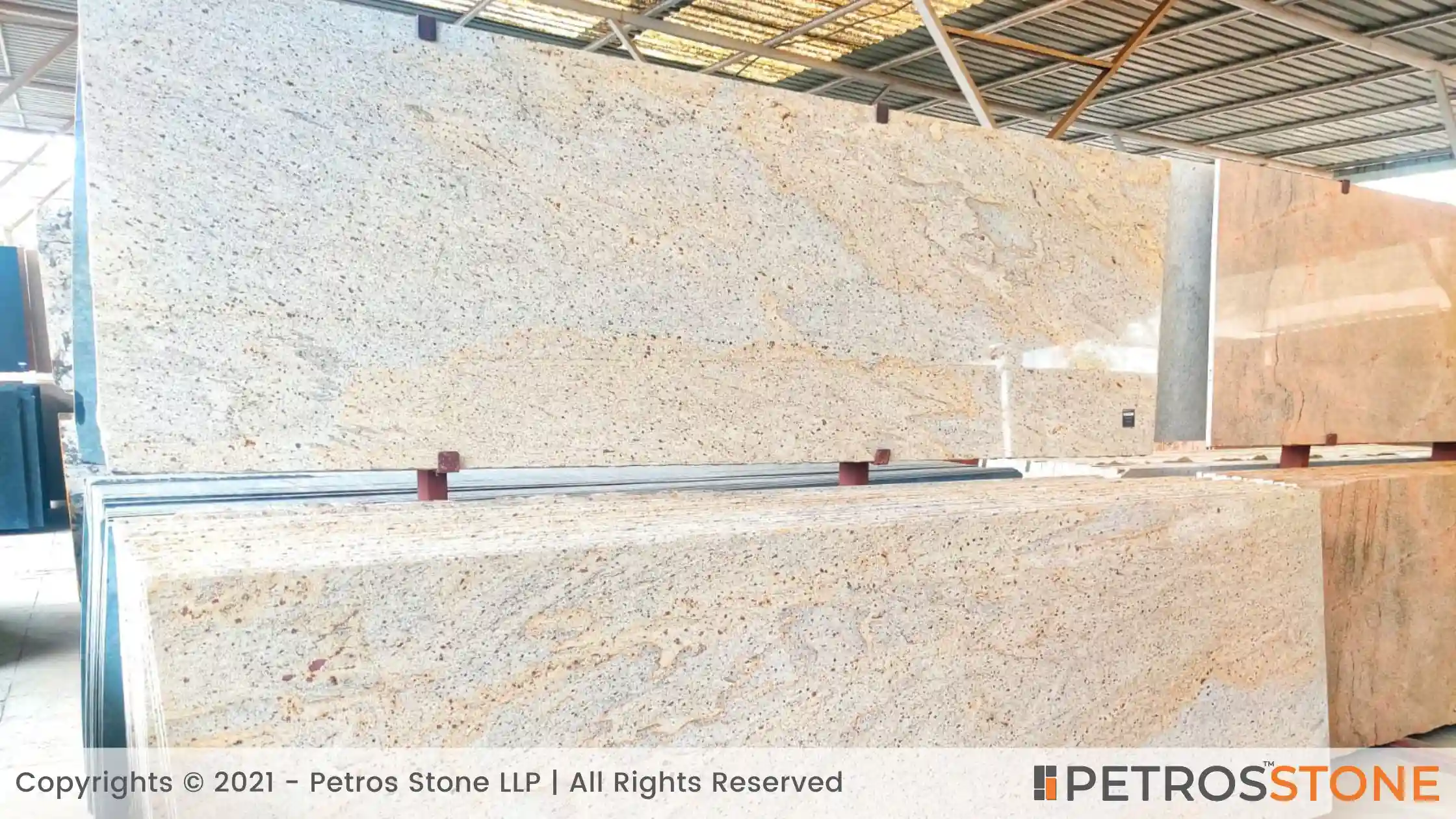
- Grainy, speckled look
- Visible crystals and flecks
- Some streaky or wavy patterns exist, but:
- You’ll still see black dots or crystalline structure
- The base is rarely a clean, smooth “canvas”
- You’ll still see black dots or crystalline structure
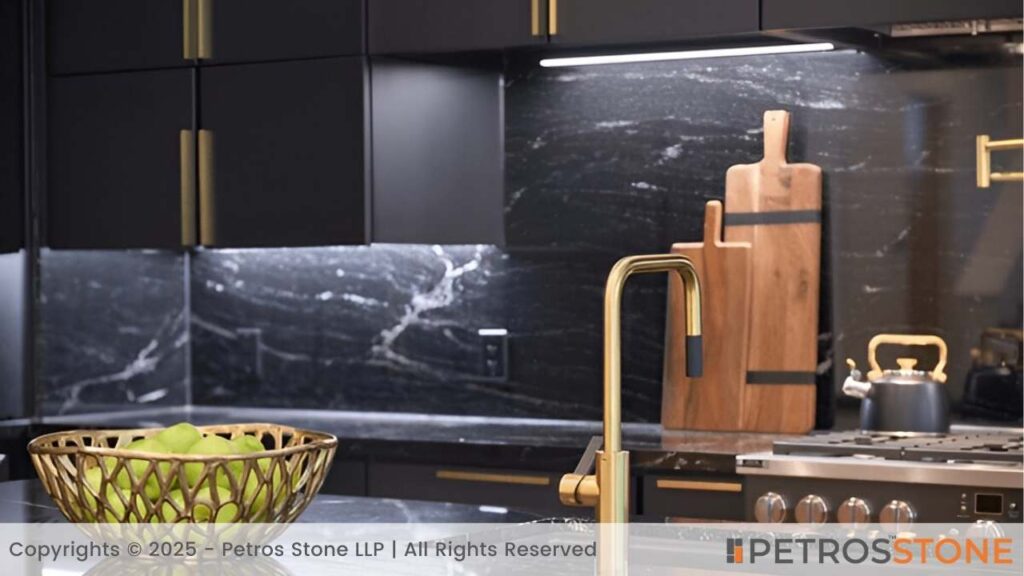
Quartzite:
- Cleaner base colours
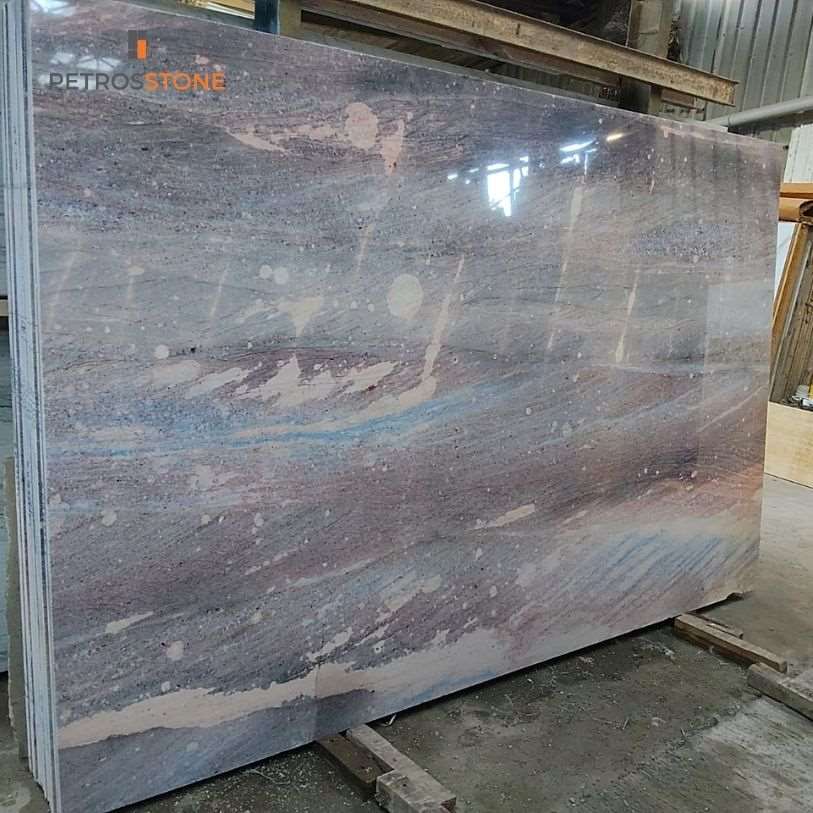
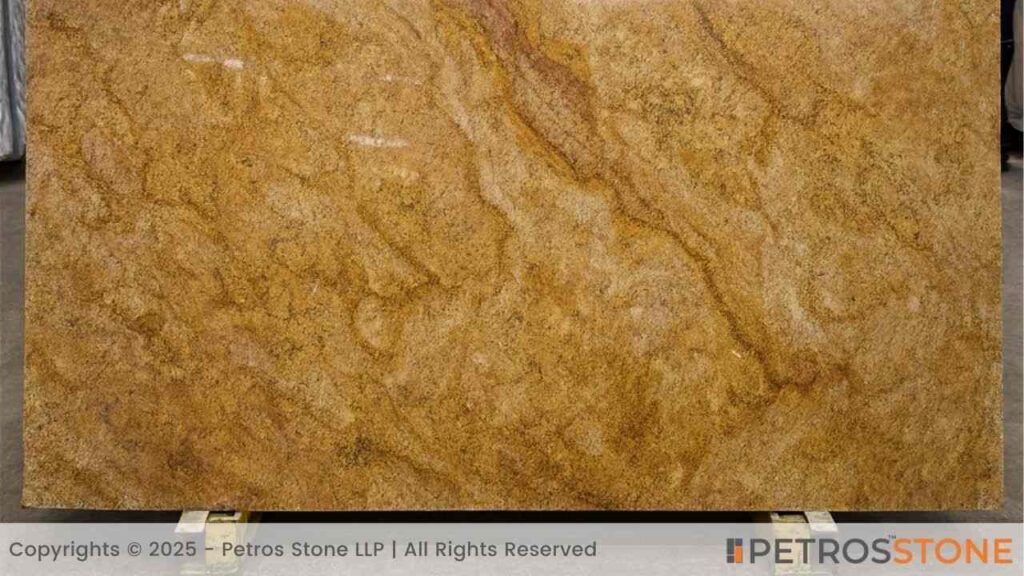
- Marble-like veins and flowing streaks
- Fewer grainy dots; more “painted” or “brushed” appearance
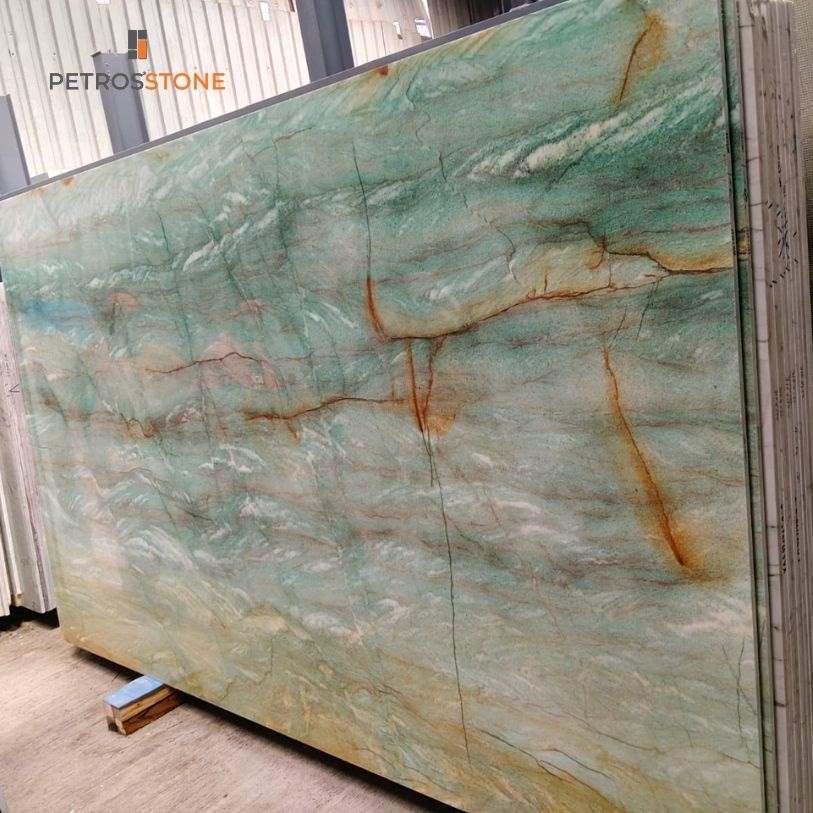
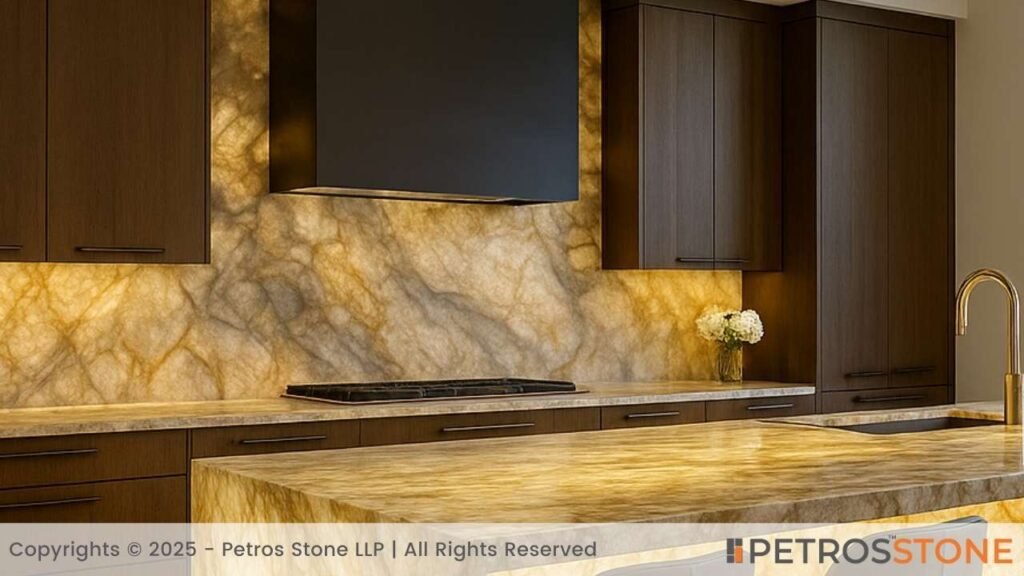
- In some varieties (like certain Brazilian quartzites or “Patagonia” types), partial translucency that lets light pass through
That last bit is important. Some quartzites, especially crystalline ones, can be backlit to create a glow similar to onyx, which is traditionally a much more expensive and fragile stone.
Onyx-level drama, with granite-level strength, at a price lower than onyx – that’s a huge aesthetic and value advantage for quartzite in premium projects.
Granite simply doesn’t offer translucency. It can look rich, but it will never have that “lit from within” effect.
Cost Comparison
Prices change depending on country, quarry, thickness, and brand, but we can talk in relative terms.
- Standard granites: generally more affordable and widely available
- Quartzites: often priced higher, especially imported Brazilian ones, but Indian quartzites are now bringing down costs for buyers while copying the look of high-end Brazilian slabs
Factors Influencing Costs
- Origin (Indian vs Brazilian vs other)
- Thickness (2 cm vs 3 cm)
- Pattern uniqueness (bookmatching, dramatic veining)
- Level of resin impregnation and processing tech
- Brand, quarry, and logistics
Quartzite’s value sweet spot is often Indian quartzite that mimics the look of Brazilian stones at significantly lower prices.
Why is Quartzite gaining popularity?
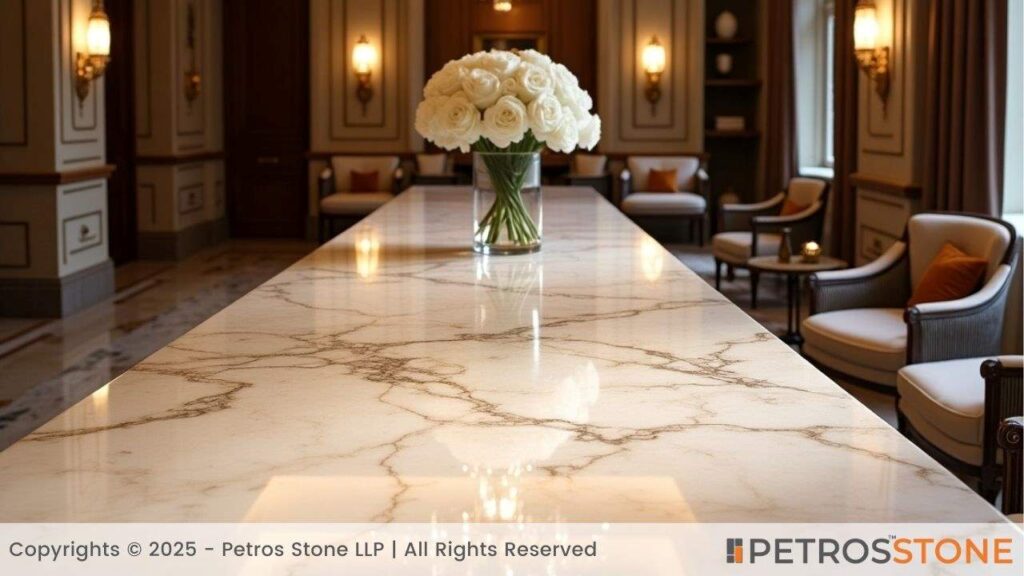
If granite is the workhorse, quartzite is the newer, good-looking version that’s grabbing attention.
Quartzite starts its life as sandstone, a sedimentary rock made mainly of sand grains. Over millions of years, under heat and pressure, that sandstone gets transformed (metamorphosed) into quartzite.
Composition
Again, keeping this simple:
- Quartzite is composed mostly of quartz that has fused together.
- It is very hard: about 7 on the Mohs hardness scale.
- That makes quartzite:
- Extremely hard and scratch resistant
- Structurally strong when processed correctly
- Extremely hard and scratch resistant
What makes quartzite really interesting for buyers is this: it often has marble-like streaks and flowing veins, but without the calcium carbonate that makes marble soft and porous.
So in a sense, quartzite sits between granite and marble on the look-feel spectrum:
- Hardness & strength: closer to granite (sometimes even harder)
- Aesthetic: closer to marble – clean base, beautiful streaks, fewer grainy dots
This combination is a big reason why quartzite is becoming popular.
Applications and Best Uses
Both granite and quartzite are versatile, but your choice might differ depending on where you plan to use them.
Countertops and Kitchen Surfaces
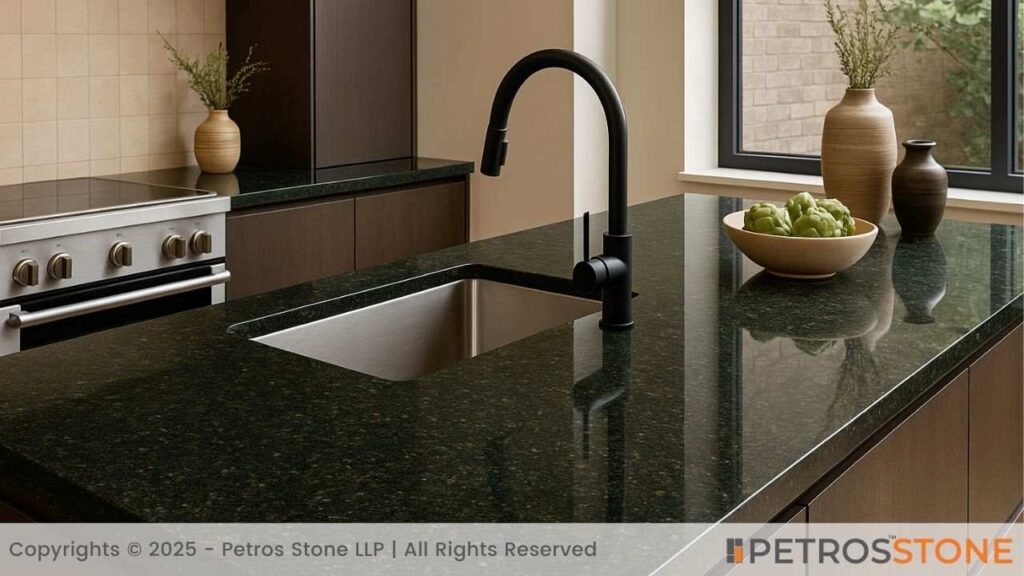
- Granite:
- Great for heavy Indian cooking
- Affordable, robust, less fussy
- Many patterns, but not always “wow” from a marble-lover’s view
- Great for heavy Indian cooking
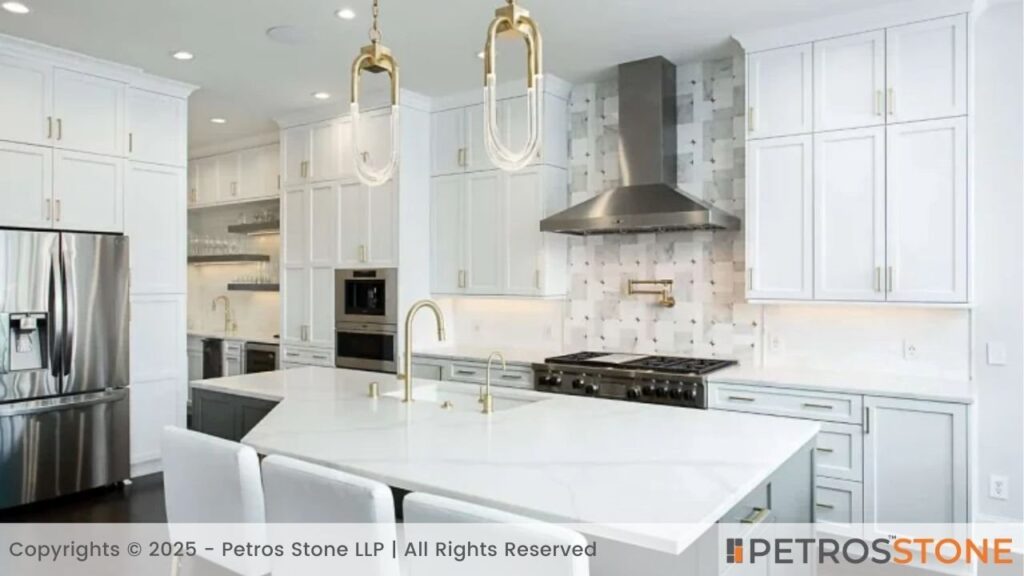
- Quartzite:
- Ideal for high-end kitchens where aesthetics matter a lot
- Combines hardness with marble-like looks
- Great for islands, show-kitchens, and spaces that must photograph well
- Ideal for high-end kitchens where aesthetics matter a lot
If you’re doing a straight, functional modular kitchen, granite is often enough. If you’re designing a “centre-piece” kitchen, quartzite starts to make sense.
Flooring and Wall Cladding
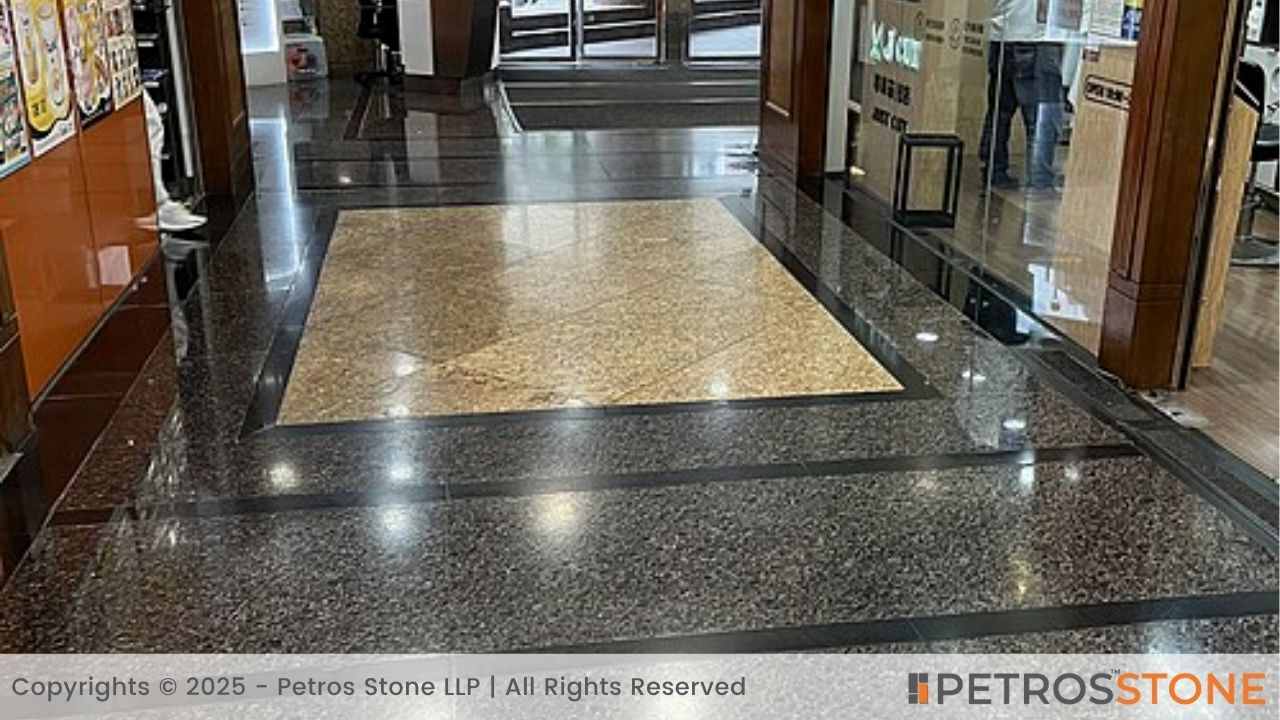
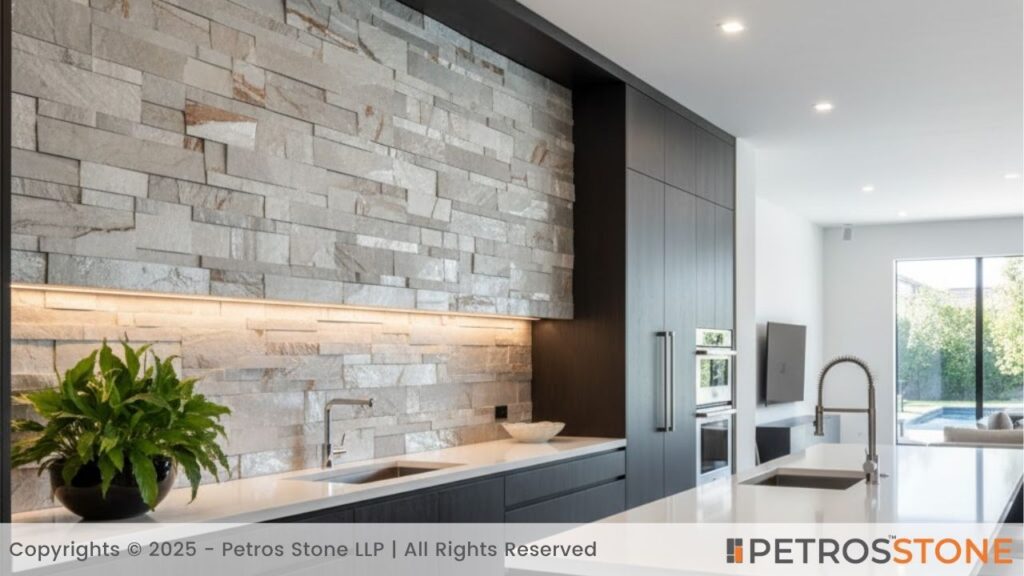
For floors:
- Granite is tried and tested.
- Quartzite can be stunning in feature areas, lobbies, or large public spaces where design is a focus.
For walls and cladding:
- Quartzite’s veining and translucency can create dramatic feature walls and backlit panels.
- Granite is more subtle and is usually chosen when you want durability with a quieter look.
Outdoor and High-Traffic Areas
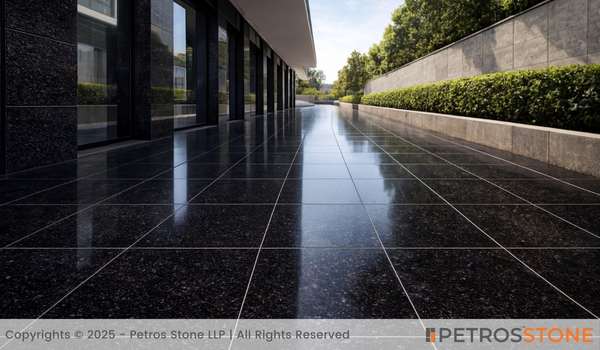
Quartzite and granite both can be used outdoors, depending on finish and climate, but:
- Granite is a safer, more “standard” choice for outdoor heavy-traffic zones.
- Quartzite can be used in select applications if the stone is tested and rated appropriately.
Always check slip resistance and finish when using either outdoors.
Pros and Cons
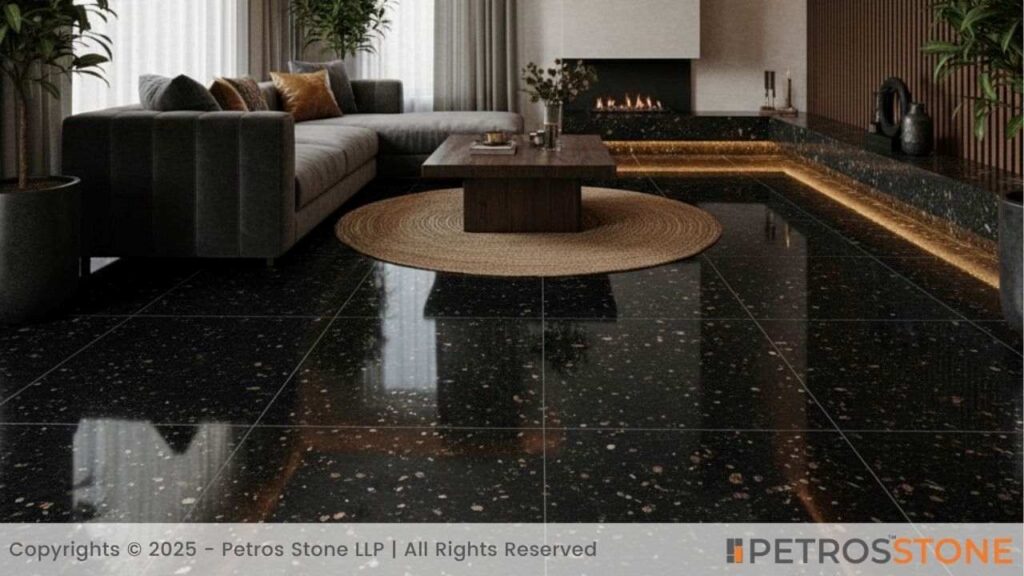
Pros of Granite
- Widely available and understood in the market
- Strong, durable, and heat resistant
- More affordable than most quartzites
- Easier to fabricate with standard Indian machinery
- Many colours and patterns, including classic blacks and browns
Cons of Granite
- Grainy look may not satisfy marble-lovers
- Fewer options with clean white bases and bold streaks
- No translucency; cannot be backlit
- Quality varies widely across quarries and suppliers
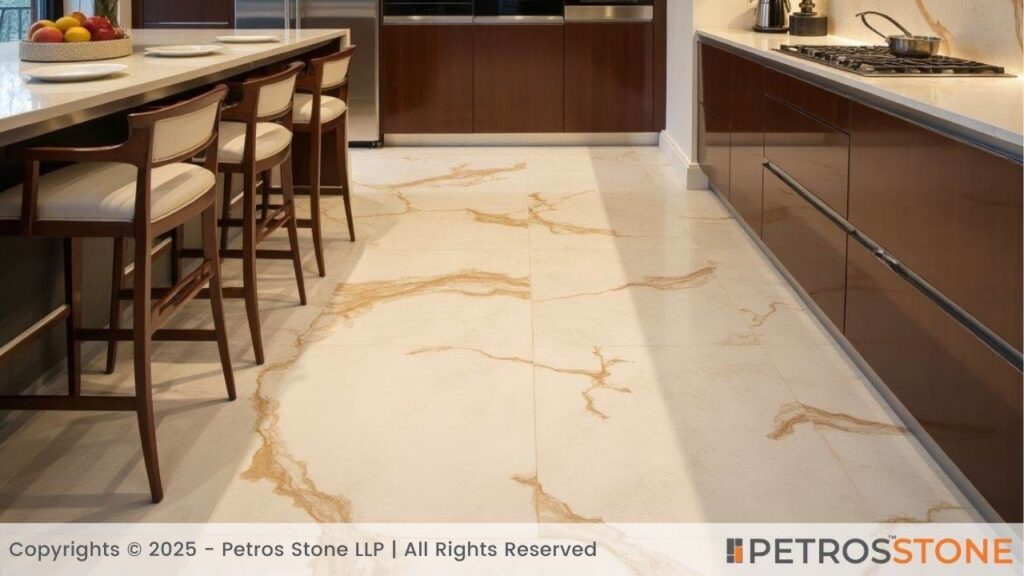
Pros of Quartzite
- Very hard and scratch resistant (Mohs ~7)
- Marble-like aesthetics with safer performance
- Clean base colours and flowing veins
- Some varieties are translucent and can be backlit
- Offers an “onyx-like” look at a much lower price, especially Indian quartzite
- With resin impregnation and modern polishing, fissures can be stabilized
Cons of Quartzite
- Historically harder to process; still needs good technology and fabricators
- Bad processing or poor resin impregnation can lead to issues later
- Often more expensive than granite (though Indian quartzite is improving this)
- Not as non-porous as some dense granites; still needs proper sealing and care
- Market confusion – some materials sold as “quartzite” may not be true quartzite
Real-Life Considerations for Buyers
On paper, everything can sound perfect. At the shop counter, it is very easy to get lost in names.
Here are a few practical, industry-level checks to help you.
How to Tell Granite, Marble, and Quartzite Apart (Basic Buyer Checklist)
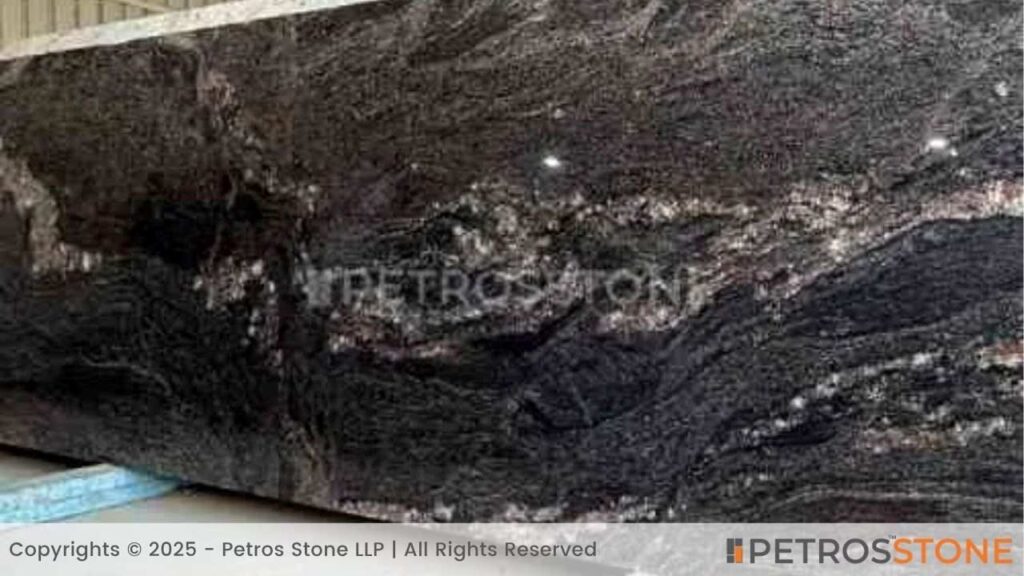
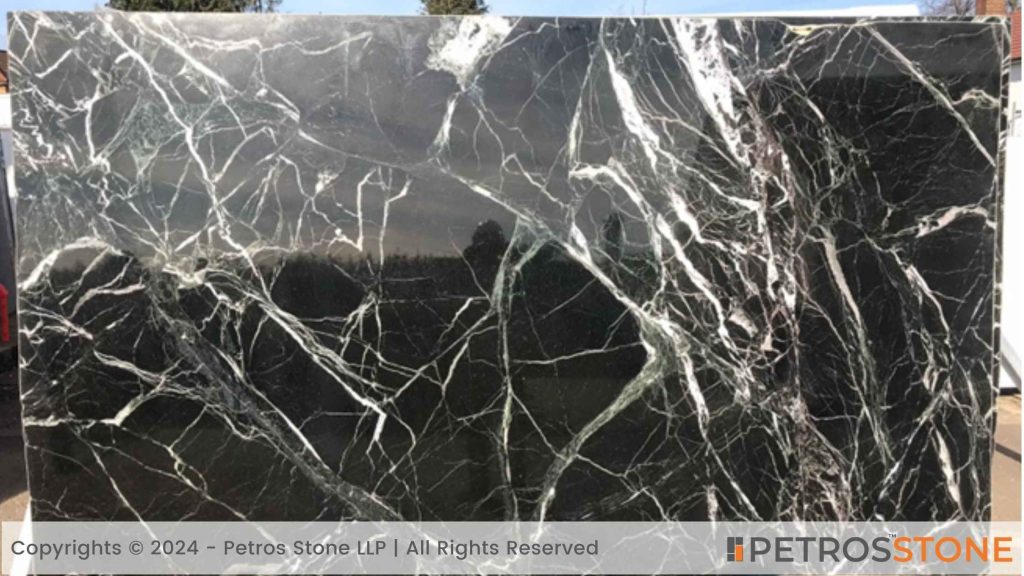
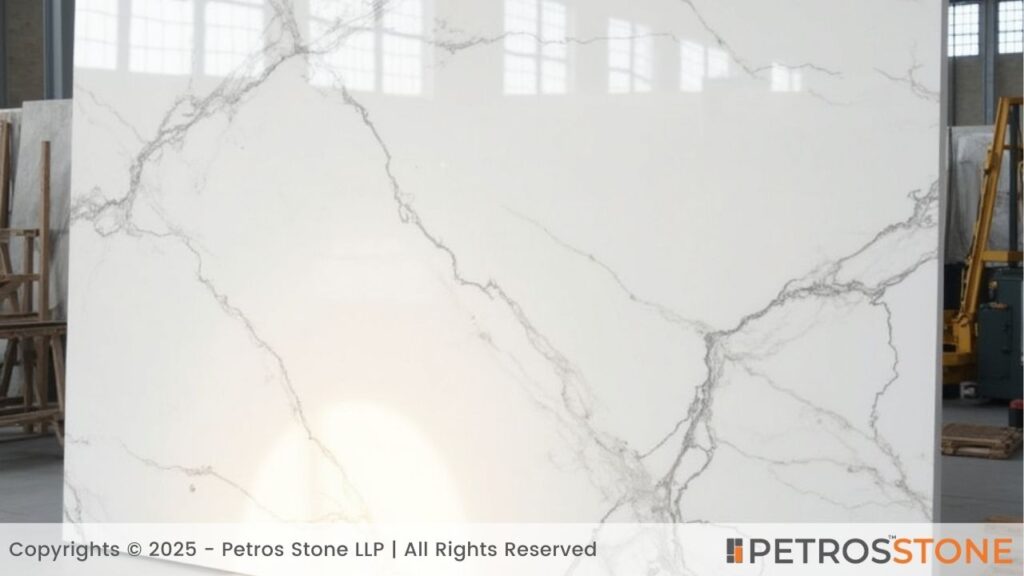
1. Look at the pattern:
- Granite – speckled, grainy, with visible crystals.
- Marble – smooth, often with cloudy backgrounds and flowing veins.
- Quartzite – visually sits between the two – cleaner base than granite, more vein-like than speckled, often bolder streaks.
2. Check the thickness:
- Marble is often sold as 2 cm slabs.
- Granite for countertops is usually 3 cm.
- Quartzite is also generally available in 3 cm thickness for counter use.
3. Flip the slab and see the back:
- Granite usually does not have a net or mesh backing – it’s inherently strong.
- Marble and quartzite often have netting or fibre backing because they need added support due to internal veins and fissures.
4. Check for translucency:
- Granite – basically non-translucent. Shine is only surface reflection.
- Marble – some translucency in thinner sections.
- Quartzite – certain types (crystalline/Brazilian/“Patagonia” style) can show noticeable translucency, especially when backlit.
5. Ask for documentation or test reports:
Serious suppliers may have certificates showing whether a material is tested as granite, marble, quartzite, or something else. In a market full of mislabeling, this matters.
Environmental Impact and Sustainability
Neither granite nor quartzite is ‘perfectly green’ – both are quarried, cut, and transported using energy and heavy machinery.
However:
- Both are natural, long-lasting materials.
- A stone counter that lasts 20 – 30 years has a lower lifecycle footprint than surfaces that need replacing every 5 – 7 years.
- Local or Indian stones reduce transport footprint compared to distant imports.
If sustainability matters to you, focus less on the granite vs quartzite label and more on:
- Durability (so you don’t replace often)
- Responsible sourcing (reputed quarries and suppliers)
- Efficient transport and fabrication
How to Choose the Right One for Your Project
This is how you can go about choosing the right one for your needs:-
Choose granite if:
- You want a reliable, proven surface for heavy daily use
- Budget is mid-range and you want maximum durability per dollar
- You are okay with a more ‘grainy’, stone-like look
- You want fewer worries about fabrication complexity
Choose quartzite if:
- Aesthetics are a big priority – you love marble-like veins but don’t want marble’s weakness
- You are designing a show kitchen, feature wall, or statement island
- You are willing to pay more for a visually striking material
- You have access to a fabricator who has experience with quartzite and uses proper resin-impregnated slabs and good polishing tech
- You are interested in features like backlighting and a semi-onyx look at a more sensible price
In reality, many projects use both:
- Granite in secondary, heavy-use areas
- Quartzite in feature areas or visible surfaces that define the look of the home
FAQs
Q. Is quartzite always better than granite?
No. Quartzite can be harder and more beautiful, but granite is often more cost-effective and easier to process. “Better” depends on your priorities – looks, budget, and application.
Q. Does quartzite need sealing?
Yes. It’s less porous than marble, but it is still a natural stone. Proper sealing improves stain resistance and makes daily cleaning easier.
Q. Can I use both granite and quartzite in the same home?
Absolutely. Many designers do. For example: quartzite for the island, granite for the utility or secondary counters.
Q. How do I know if what I’m buying is really quartzite?
Look at pattern, thickness, backing, translucency, and ask for any lab reports or certifications available. When in doubt, buy from a supplier known for natural stones, not just a generic trader.
Q. Is quartzite just a type of marble?
No. Quartzite is not marble. Marble is calcium-based and much softer. Quartzite is quartz-based and much harder. They can look similar, but their performance is very different.
Key Takeaways & Recommendations
Granite and quartzite are not to be placed against each other. They are different tools in the same toolbox. Granite is your dependable, proven solution – strong, widely available, easier to process, and cost-effective. Quartzite is the more aesthetic version, beautiful, hard, often sitting visually between marble and granite, with bonus features like translucency in certain varieties.
Quartzite’s surge in popularity is not random. It offers:
- Hardness and durability at levels comparable to or better than many granites
- Marble-level aesthetics without marble’s fragile, calcium-based structure
- In some cases, onyx-like translucency without onyx-level cost and fragility
Just remember: the name alone is not enough. You must look at:
- The exact stone, not just ‘granite’ or ‘quartzite’ as a category
- How it has been processed – especially resin impregnation for quartzite
- Who is fabricating and installing it
If you want a simple rule of thumb, for pure function and value, start with granite. For design-led spaces where looks matter just as much as performance, shortlist good quartzites – especially well-processed Indian ones that copy Brazilian aesthetics at a lower cost.
Feel free to get in touch for a free consultation, quote, and get a detailed understanding from our experts here at Petros®. Visit www.petrosstone.com or call +91-8446360361 or WhatsApp

Hi, I’m Shivangi,
With years of experience in the architecture and design space, I write to bridge the gap between material knowledge and practical application. At Petros® Stone, I create content that highlights the beauty, function, and impact of natural stones, helping homeowners and professionals make confident design decisions.
Explore my LinkedIn profile to learn more about my work!

Brown Granite

White Galaxy Granite

Blue Bahia Granite

Silver Cloud Granite

Black Pearl Granite

Dallas White Granite