
Architectural visualization is often judged on realism — how convincingly a render can simulate a photograph. For Marco, a visualization artist whose work spans automotive, cultural, and residential architecture, realism is only the surface. The deeper discipline, he argues, is narrative: using light, composition, mood, and context to make an image speak about a project rather than depict it.
That approach has taken on new urgency as AI tools have compressed workflows that once took weeks into hours. In this conversation, Marco reflects on why storytelling has to be learned rather than assumed, how architectural competitions demand a different visual language than client work, and why he treats AI as a companion to fundamentals rather than a replacement for them.
Marco Livorno | A Brief Profile
Marco Livorno is an architect and visualization artist whose work bridges architectural rendering, cinematography, product design, and gaming. His portfolio spans automotive visualization, public infrastructure such as libraries, and large-scale residential and hospitality architecture.
Central to his practice is the idea that an architectural image is never neutral — it always exists in dialogue with its surroundings, whether that’s a natural landscape, a city context, or the emotional register a client or competition brief demands. This conviction shapes how he approaches lighting, composition, and mood across very different project types.
Marco has also worked extensively within architectural competitions, a field he describes as requiring a more expressive, emotionally driven visual language than typical client deliverables. More recently, his workflow has evolved to incorporate AI tools — not as a shortcut to a final image, but as an exploratory and iterative aid layered on top of traditional fundamentals.
In this conversation with Petros® Stone, Marco Livorno discusses how storytelling functions as a learnable skill, what separates competition-stage visualization from client work, how he uses AI without letting it replace craft, and how lighting choices, from caustic reflections borrowed from cinema to the shape of a rooftop echoing a mountain range, become tools for narrative.
‘STORYTELLING IN ARCHITECTURAL VISUALIZATION’ | Rishabh Jain, Director – International Business, Petros® Stone in Conversation with Marco Livorno
Q.
Storytelling is something a lot of visualization work overlooks in favor of realism. How do you maintain narrative throughout your work?
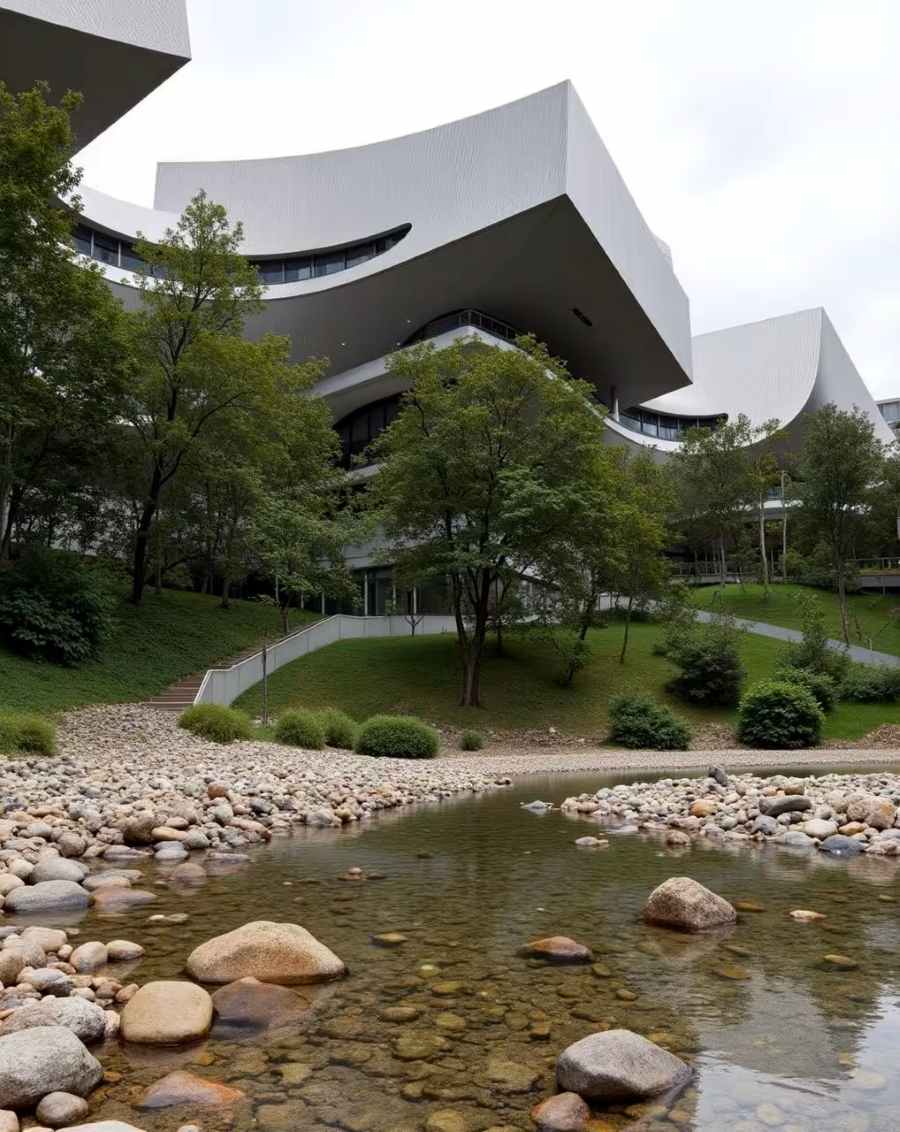
What I always try to push is the narration. Especially in my personal work, an image is never just an image — it always needs to speak about a project, about the environment, about the many factors present in our world, from the lighting to the shape of the nature that surrounds the architecture.
Architecture is always in the middle of a context, whether natural or urban. Even if you wanted to omit that relationship, it exists. So it becomes your job — and your challenge — to use the elements already present to build a dialogue and make the best out of what you have.
(Photo Credit – Marco Livorno)
“Architecture is always in the middle of a context which is natural or is in a city setting. So even if you don’t want to, this kind of relationship exists. Therefore, architecture always finds itself speaking with the surroundings.”
– Marco Livorno
Q.
Does this storytelling instinct come naturally, or is it something you had to develop deliberately?
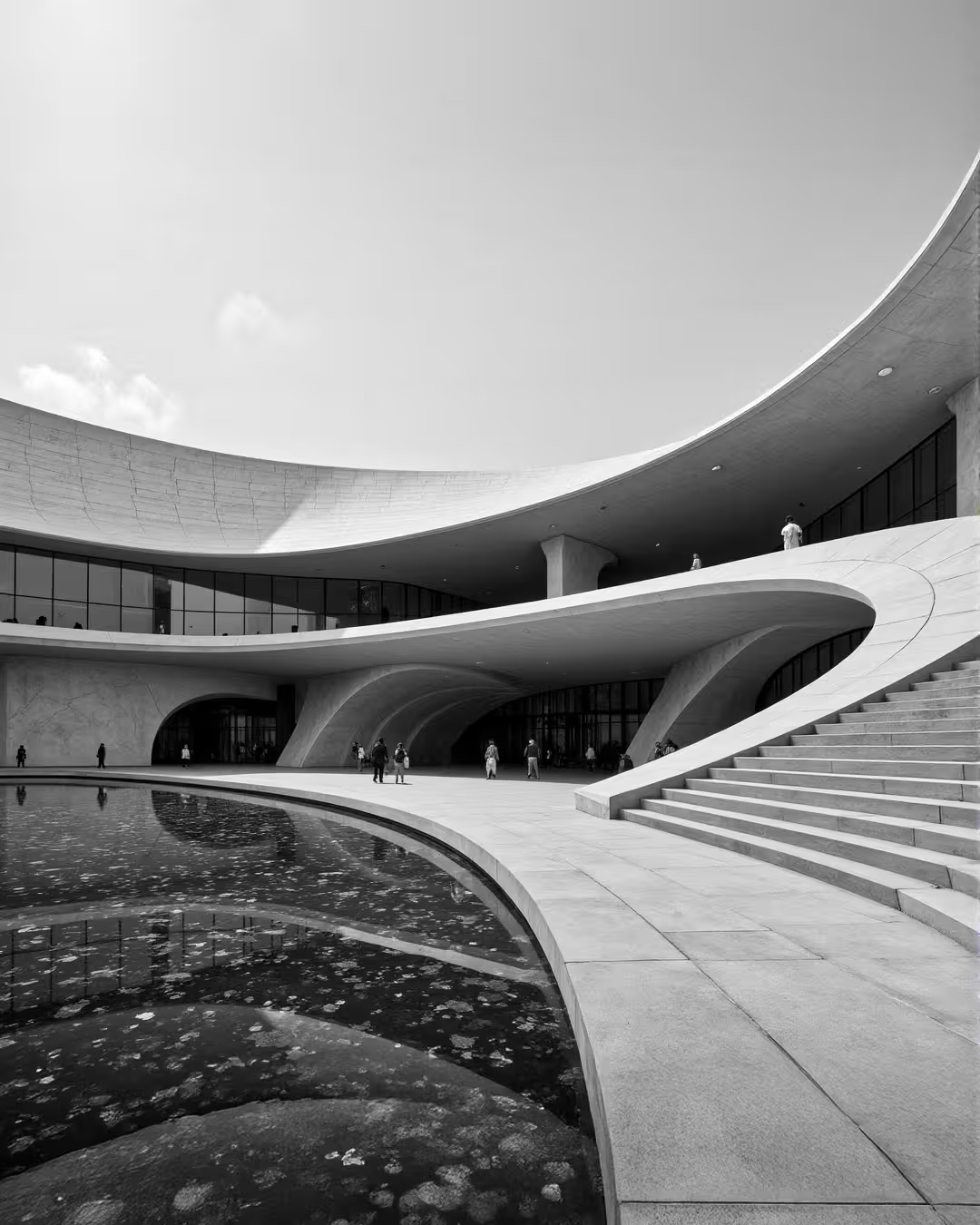
It doesn’t come naturally — I wish it did. It’s always research. A certain type of study behind the work helps a great deal. Rendering as a field is attached to architecture, but it also borrows from cinematography, gaming, and user experience. Architecture itself is very broad — it’s not just aesthetic, not just about people using a space, not just about its relationship with its surroundings. It’s many things coming together, so when it comes to representing it, you have to be careful.
There’s also the question of context: whether you’re working for a client or for a competition changes the visual language entirely — whether you need to be detail-oriented or whether you can take conceptual freedom.
(Photo Credit – Marco Livorno)
Q.
You mentioned competitions have a different visual language. What does competitive visualization actually involve?
Competitions involve proposing an architecture — often at a conceptual stage — that has to compete against other studios. To be picked, you need to represent it in the best way possible. Behind that simple description is a lot: concepting, plans, functionality, and correctly representing a brief.
Competition-stage images tend to be more expressive and emotional because they need to convince the client or organizing body. The image usually takes up significant space on the competition boards — it’s the first thing people see, and ideally you should understand the whole project just by looking at it.
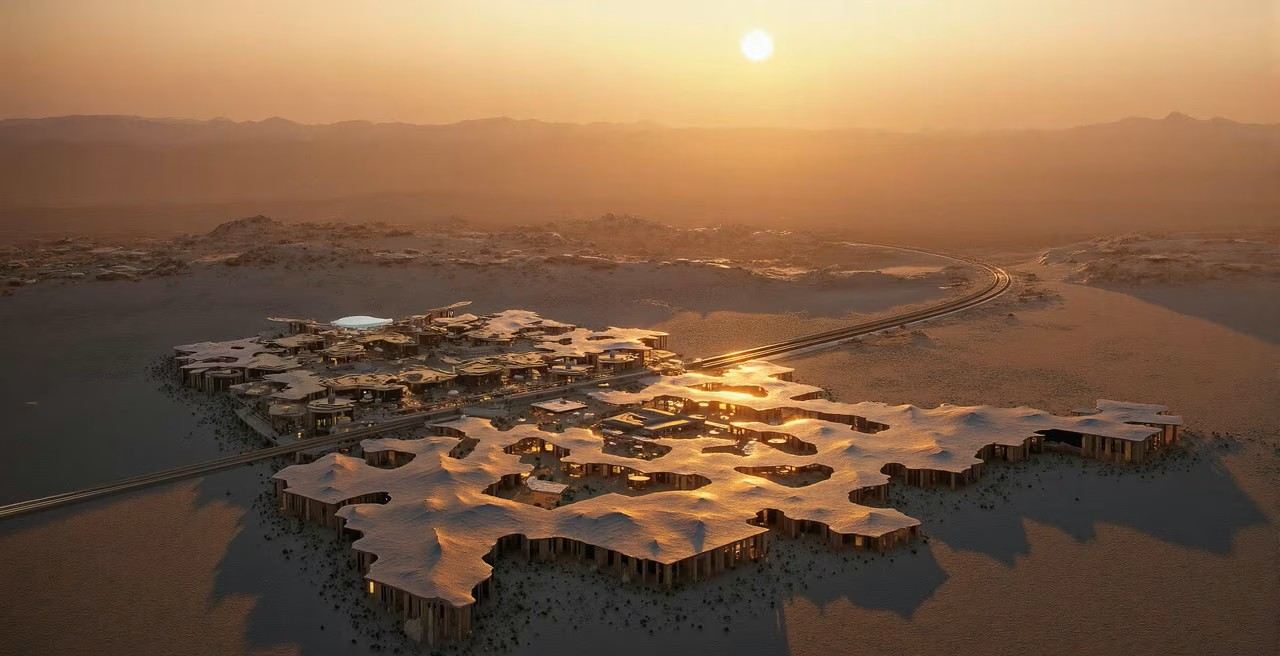
Typically you use multiple images to tell different parts of the story: an aerial view speaks to the relationship with the city and the landscape, while a dusk or sunset view might reveal how light refracts through glass, or the mood the architecture takes on at a specific time of day.
(Photo Credit – Marco Livorno)
“Every image in a competition for architecture needs to tell a story. You need to use composition, light, and so on to tell a story.”
– Marco Livorno
Q.
How has AI changed the trajectory for people entering this field, and what would you advise them?
It has changed drastically, though the pace had already been accelerating for a decade before AI arrived. You never finish learning in this field — there’s always something new to grasp, whether that’s evolving styles, client expectations, or the kind of professional role you want to occupy.
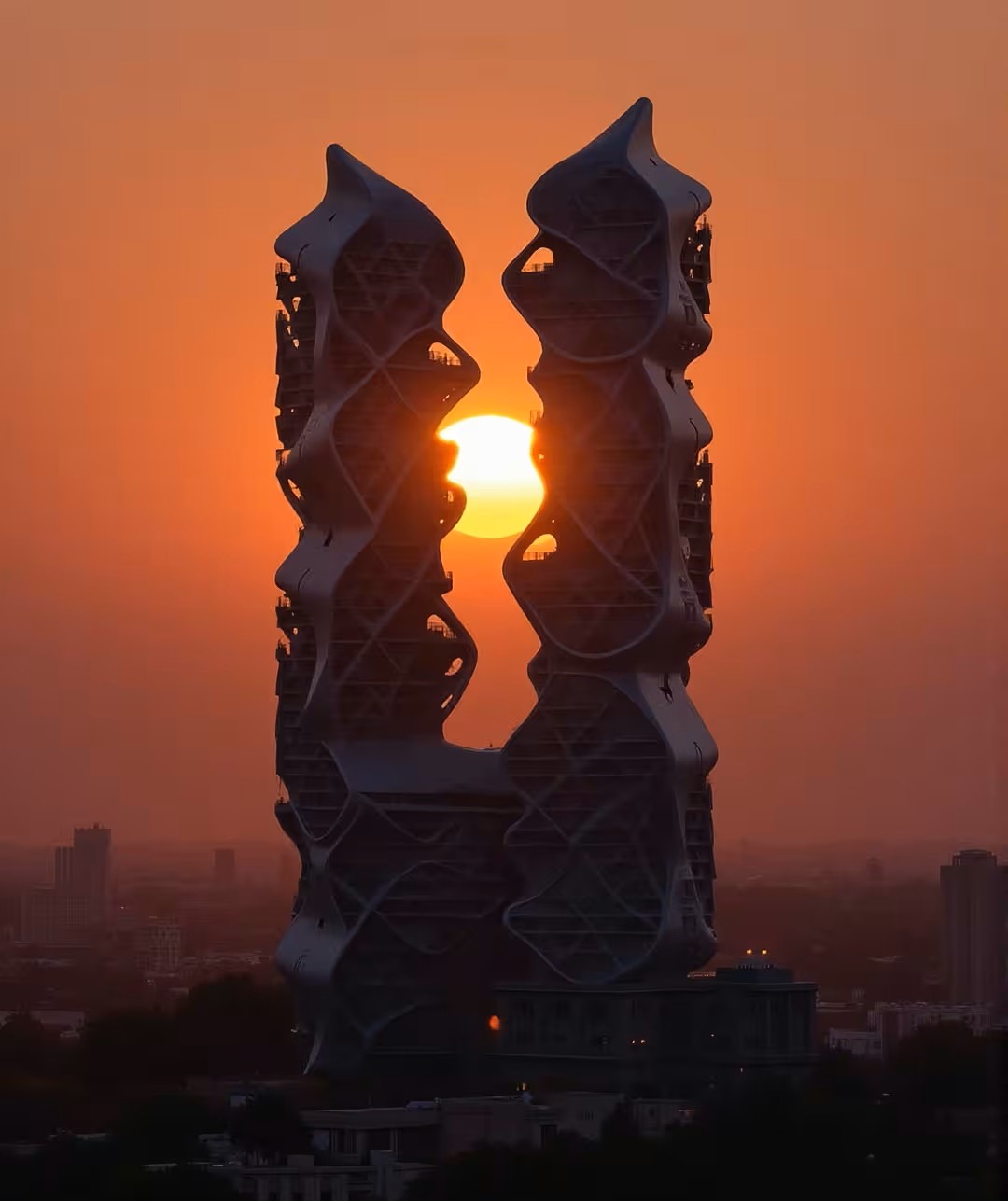
Strong fundamentals matter enormously. Without them, unless you’re naturally talented, you can’t tell why something works or doesn’t. Why does a painting by a famous author or an image from a top studio impress you instantly? Why do you sense something is wrong before you can even articulate what it is? That instinct only comes from fundamentals — understanding weight, subject, light, and value in an image.
People can tell when AI was used without real craft behind it. That’s part of why there’s a backlash — people call it “slop.” I use AI myself, but rarely, if ever, do I deliver a fully AI-generated image. I treat it as a learning and testing tool: useful at the start of a project when you want to explore five or six moods quickly, but dangerous as a substitute for foundational skill.
(Photo Credit – Marco Livorno)
Q.
Outside of architecture and visualization directly, what do you draw inspiration from?
I like getting inspired by many different fields — cinematography, gaming, product design. Sometimes a tool built specifically for product design, if used correctly, transforms your own workflow in ways a typical architectural tool wouldn’t.
I also want to be clear I’m not just “stuck in the past” insisting fundamentals are everything. It’s important to stay hungry and keep learning — whatever’s related to AI that you can grasp and research, you should. New tools and workflows constantly surface insights a normal process wouldn’t give you. The ideal is having a foot in both worlds: fundamentals and the future.
(Photo Credit – Marco Livorno)
Q.
You mentioned techniques like flipping an image to catch flaws. How does that translate into an AI-era workflow?
Your brain narrows its perception the longer you stare at a screen. Flipping the image is revealing — you suddenly see what you couldn’t before. Taking a walk, having a coffee, working on something else, and coming back also helps.
With AI, there’s an equivalent: image-to-image workflows, where you feed in your sketch or base image and let the AI suggest options. You start picking apart the parts you like — a piece of greenery you hadn’t considered, for instance — and implementing them. But this only works well when you already know fundamentals, because that’s what lets you use the right keywords and stay in control of the result rather than simply accepting whatever the AI produces.
(Photo Credit – Marco Livorno)
“I think the reason why everybody hates on AI is because they just think it’s using fancy keywords and it’s just going to work. But no — you need always to be in control.”
– Marco Livorno
Q.
Can you walk through how you’ve used light specifically to tell a story in your work?
them?
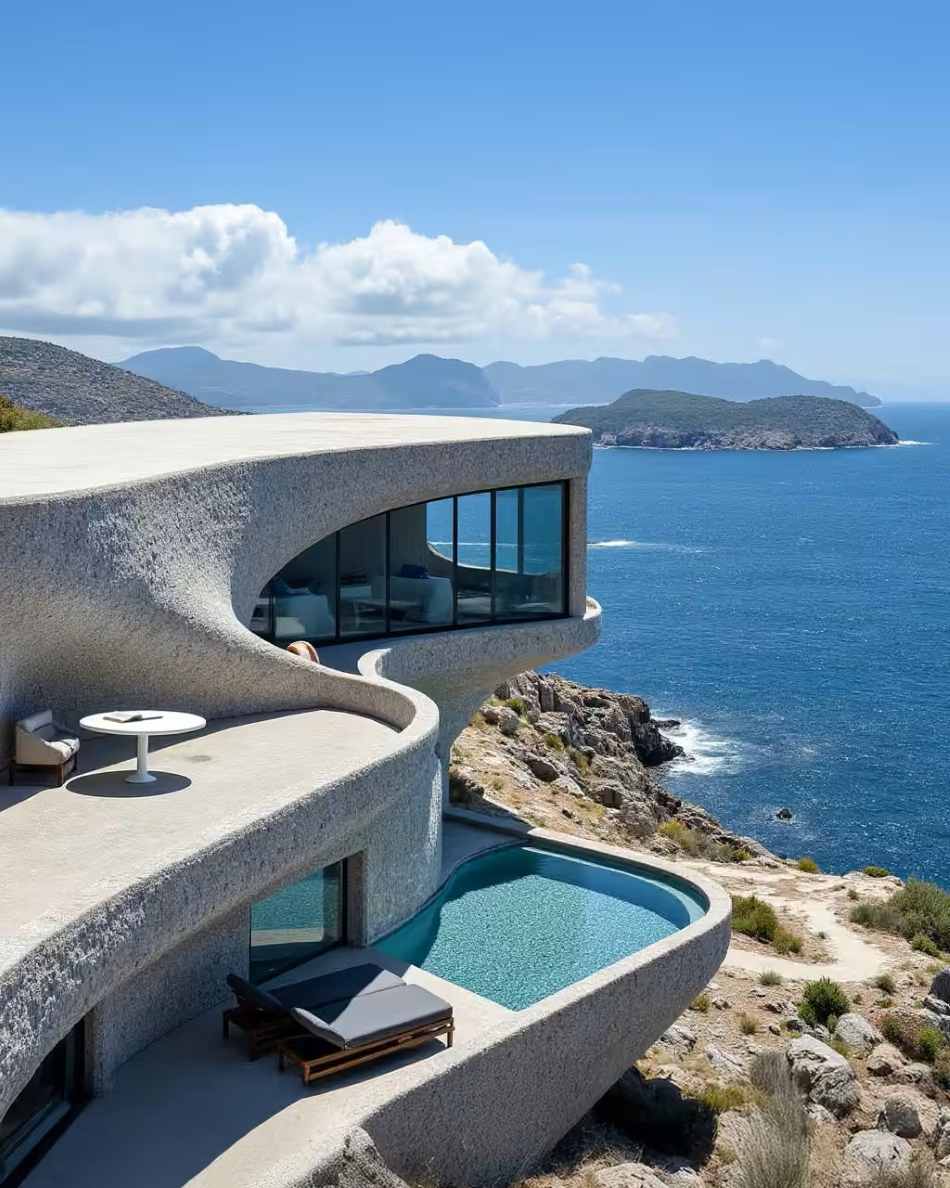
One project draws on a scene from the latest Blade Runner film — an interior setting with caustic light pouring in. I applied that idea to a house with a rooftop swimming pool, partly glazed, so the water’s caustic light patterns fall across the seating area below, making it feel as though you’re dining in the middle of the ocean.
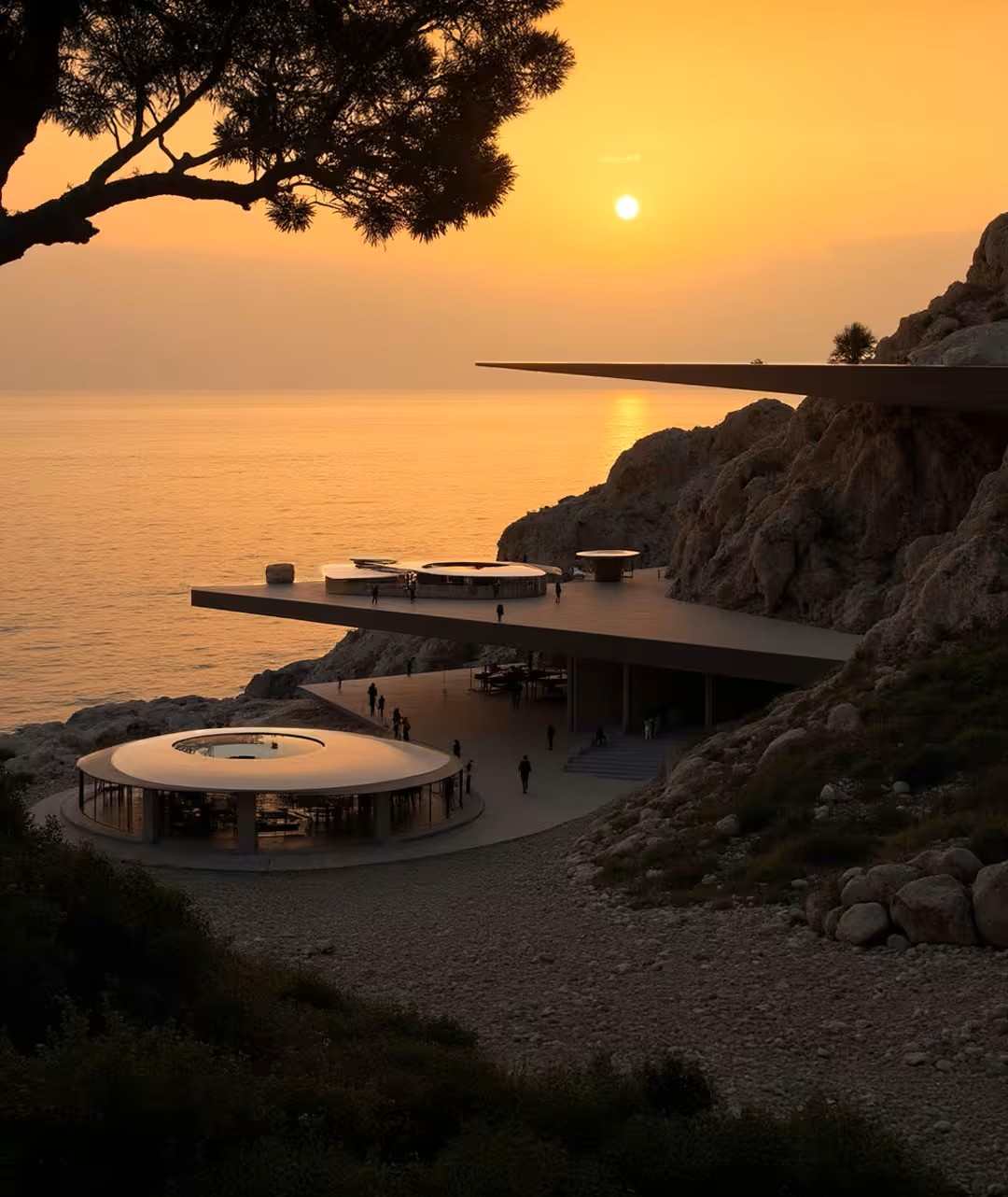
In another project, the house is built across stacking planes rather than one flat level, echoing a mountain that’s “going down” beside it — creating resting spaces and different framed views over the landscape at each level, rather than the single, planar language of a more conventional design.
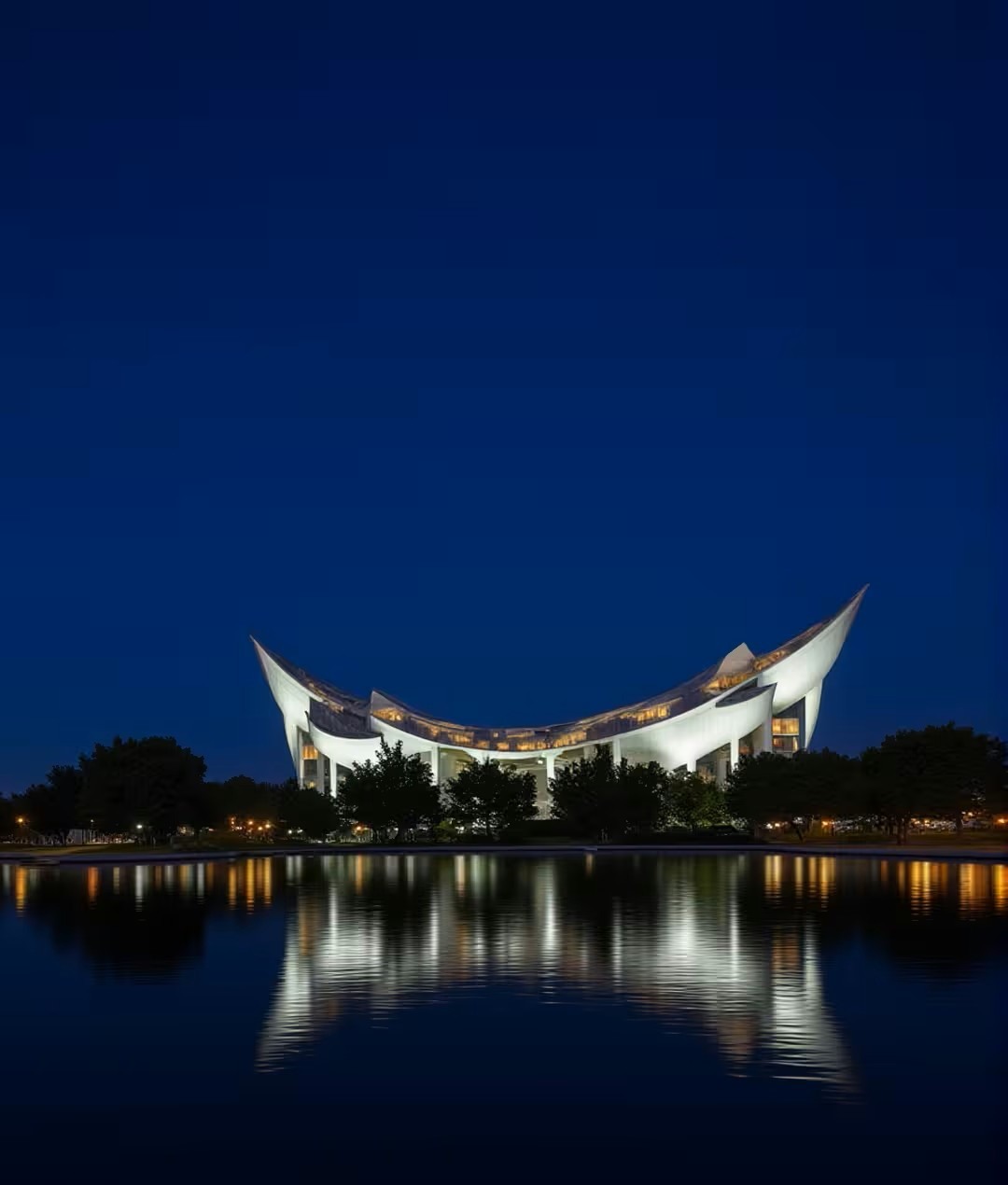
In another, pointy architectural edges are answered by a pointed moon shape in the sky — the architecture and its celestial backdrop calling to each other. And another uses fog and a moodier, less conventional light to provoke a specific emotional register rather than a straightforward sunny render — an approach borrowed directly from photography’s habit of catching a fleeting, atmospheric moment.
(Photo Credit – Marco Livorno)
“It’s also this way of narrating — perhaps to test out different kinds of moods… I got inspired from photography. Whenever you make a picture, catching a movement.”
– Marco Livorno
Q.
How much does geography and climate shape which lighting or mood choices work for a given design?
A great deal. An image built around warm sunlight and tropical palms wouldn’t work in a Scandinavian setting — that kind of light and material language belongs to somewhere like Saudi Arabia, near a beach, in a tropical environment. Knowing which elements you can draw on, and which ones will actually reinforce the narrative rather than contradict it, is essential.

(Photo Credit – Marco Livorno)
“It’s difficult for you to understand how to improve it [without fundamentals]… So it’s very much dangerous to just go directly with it [AI].”
– Marco Livorno
Q.
Is there a project that pushed your visual language somewhere genuinely new for you
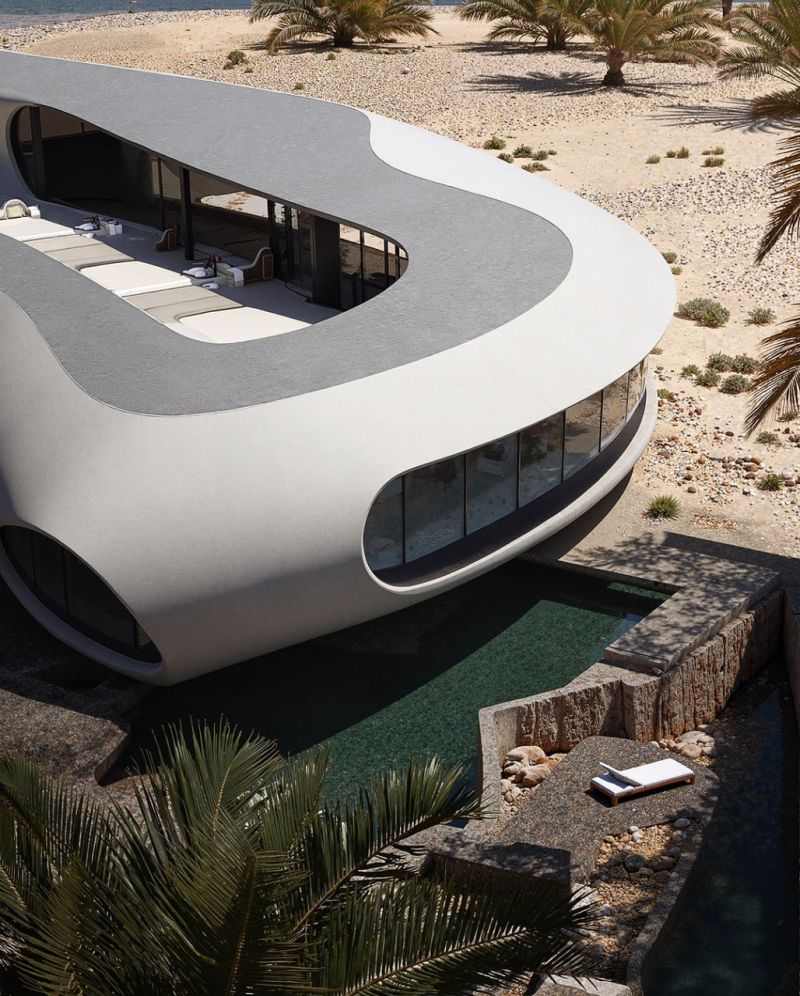
Yes — one drawing influenced by car design, a field I worked in previously. Mixing media and disciplines, taking the best of different sectors and combining them, is one of the more interesting exercises available to you. It stops you from only doing what you’re used to doing every day, and pushes you to experiment while still taking inspiration from the best studios in the field.
(Photo Credit – Marco Livorno)
Key Takeaways from the Interview
- Storytelling in visualization isn’t instinctive — Marco treats it as a discipline built on fundamentals (light, composition, weight, value) that has to be studied and practiced, not assumed.
- Competition-stage visualization demands a more expressive, emotionally driven visual language than client work, since a single image often has to communicate an entire project’s concept at a glance.
- Marco uses AI as an exploratory companion — testing moods and options early in a project — but rarely delivers a fully AI-generated final image, arguing that fundamentals are what let you actually control and refine AI output rather than simply accept it.
- Classic techniques like flipping an image to catch flaws translate directly into AI-era workflows, particularly image-to-image tools that surface options a designer might not have considered.
- Cross-disciplinary inspiration — from cinematography, product design, gaming, and even automotive design — repeatedly shows up in his lighting and narrative choices, from Blade Runner-inspired caustics to mountain-echoing rooflines.
