
Where Design Meets the Way We Live and Work
Interior design is often judged by what a space looks like. For Sorcha Drakeford, the more important question is what that space makes possible.
As the Founder and Creative Director of Design@Studio17, Drakeford brings an unusual perspective to interior design. Before establishing the Manchester-based studio, she spent almost three decades in hospitality, working across senior operational leadership, strategy, innovation, and new concept development. That experience continues to shape how she approaches design today: not as an exercise in aesthetics alone, but as a way of understanding how people move, work, relax, interact, and ultimately experience a space.
Her studio works across residential and commercial interiors, with projects guided by the intended purpose of the space, natural light, the client’s lifestyle, and a commitment to creating interiors that feel timeless, comfortable, and considered. For commercial projects in particular, Design@Studio17 looks beyond appearance to understand operational efficiency, visitor experience, employee wellbeing, and return on investment.
Sustainability is another constant. Rather than treating it as a separate layer added to a design, Drakeford considers longevity, material choices, suppliers, artisans, waste, and the eventual life of a space as part of the design process itself.
At the heart of the studio’s approach is a simple belief: the details matter because they shape the experience.
Sorcha Drakeford | A Brief Profile
Sorcha Drakeford is the Founder and Creative Director of Design@Studio17, an interior design studio based in Manchester and working across the UK and internationally. Her career began in hospitality, where she spent nearly 30 years in senior operational leadership, strategy, innovation, and new concept development.
Her transition into design grew from years of seeing spaces from the operator’s perspective. Working within hospitality gave her first-hand experience of how layouts, kitchens, circulation, technology, and customer environments influence both business performance and the people using them. After developing successful pub and bedroom concepts, she returned to formal education, studying Interior Design at King’s College London to complement her operational experience with technical design expertise.
Today, Design@Studio17 describes its work as creating timeless, sustainable designs for residential and commercial interiors. The studio deliberately avoids a fixed in-house aesthetic, instead allowing the client, the space, its purpose, and natural light to shape each project.
For Drakeford, this flexibility does not mean a lack of identity. Across different projects, a common thread remains: calm, comfort, understated elegance, natural elements, functionality, and careful attention to the details that can transform how a space feels and performs.
In this conversation with Petros® Stone, Sorcha Drakeford reflects on the unlikely relationship between hospitality operations and interior design, why natural stone remains important to her approach, how commercial design can influence profitability, and why sustainability must extend beyond the materials themselves to the longevity of the spaces we create.
Q.
You spent nearly 30 years in hospitality before founding Design@Studio17. How has that experience shaped the way you approach interior design today?
Looking back, I can see all the micro-moments that eventually led me to make the pivot, but it was only after launching Design@Studio17 that I realised how much my hospitality career had shaped my approach to interior design.
As an operator, I experienced first-hand the impact of a poorly planned kitchen on service efficiency, or a bad floor layout on team morale and visitor comfort. I also went through numerous refurbishments during my operational career, so I experienced design from the receiving end—some experiences were excellent, and others less so.
That taught me the importance of collaboration. Truly great design is a team effort, and everyone needs to work together to get the right outcome for the client. In my more senior roles in strategy and innovation, I worked closely with stakeholders at every level to understand how decisions affected teams on the ground and whether they would create meaningful, long-term results.
I understand all the different cogs—the systems and technology, ways of working, business processes, visitor experience and design—and, more importantly, how they work together. That means an investment can go beyond aesthetics and genuinely contribute to a client’s success.
That thinking naturally carries into residential design too. Five-star reviews may not be the goal in a home, but seamless flow and good functionality can certainly reduce stress and enhance wellbeing.
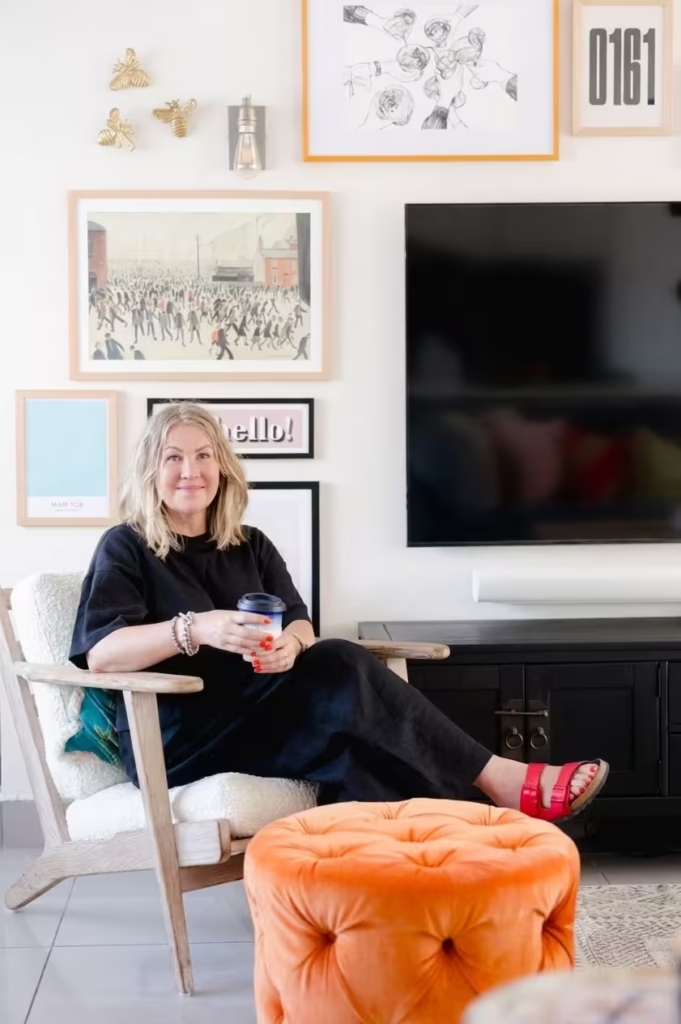
“Truly great design is a team effort, and everyone needs to work together to get the right outcome for the client.”
– Sorcha Drakeford
Q.
Design@Studio17 doesn’t follow a fixed design style. How do you create spaces that feel distinctive while remaining true to each client?
I am always inspired first by the space and its intended purpose. That becomes the foundation of every design, but getting to know my clients is equally important—how they live, what they like, how they want to feel in their space, and how their needs might evolve.
I ask lots of open questions, and our onboarding process helps me understand what will suit their personality as well as enhance the way they live.
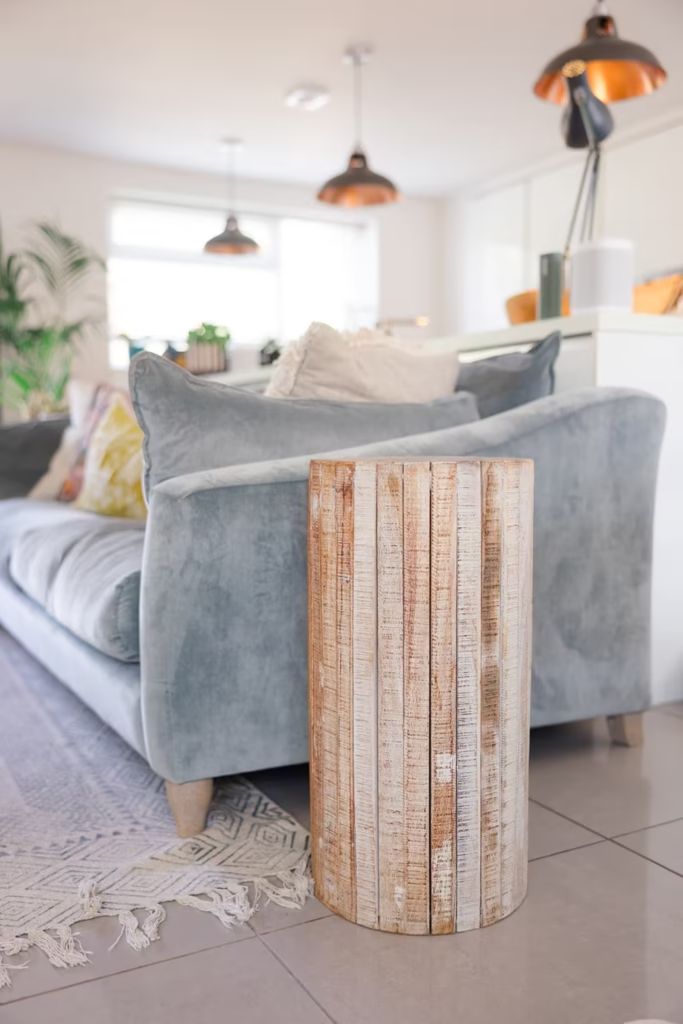
While I don’t have a signature style, there is probably a common thread across my work. The spaces tend to be timeless, comfortable, and welcoming, and to feel lived-in, with plenty of natural elements to support well-being.
Not having a signature look gives me the freedom to be creative. Every project can therefore become genuinely personal rather than simply being another version of the same aesthetic.
Q.
Natural materials feature strongly in your approach. What is it about natural stone that continues to appeal to you?
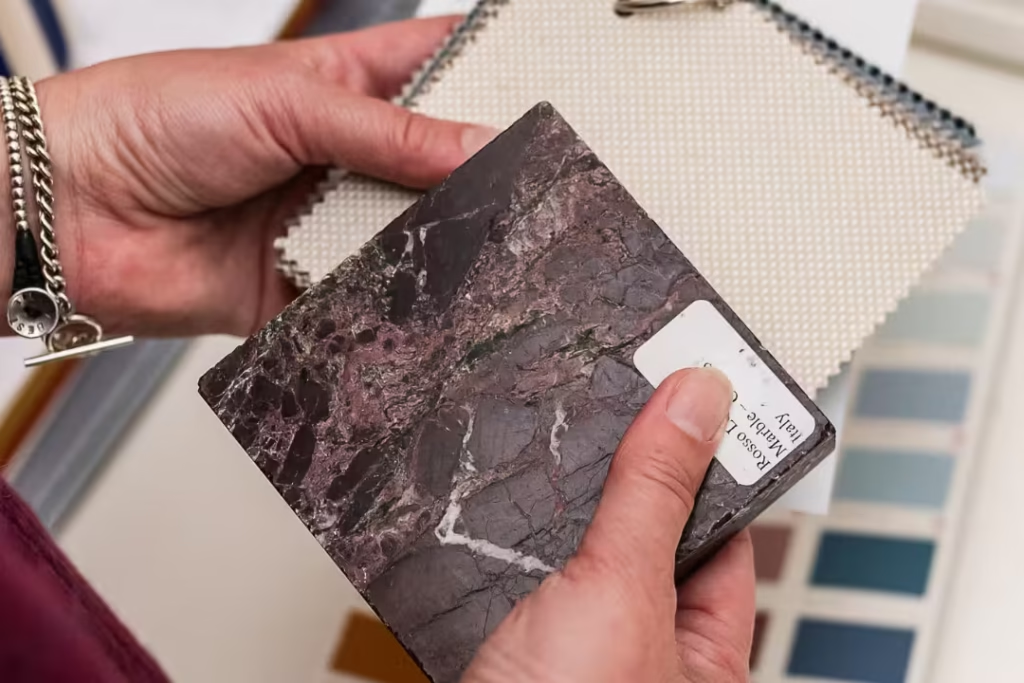
There are so many reasons. Because it is a natural material, every piece has variations and character that bring a sense of quiet luxury, depth and warmth to a space. I also find it incredibly calming.
I recently had a young girl doing work experience with me, and we spent a lot of time talking about sustainability, biophilic design and their impact not only on the planet but also on our wellbeing. We went sourcing together and visited a local showroom filled with natural stone. After a while, she turned to me and said, “I really can feel it; it is so calm in here.”
I completely understood what she meant. Personally, I can feel the difference underfoot. When you have a tile that looks like stone but is made from plastic, you really notice the difference. You simply don’t get the same tactile quality from natural stone.
Of course, natural stone can also be a more sustainable choice, provided you select the right stone for the application, prioritise durability, work with experts who can cut and install it properly, and create a design that is built to stand the test of time.
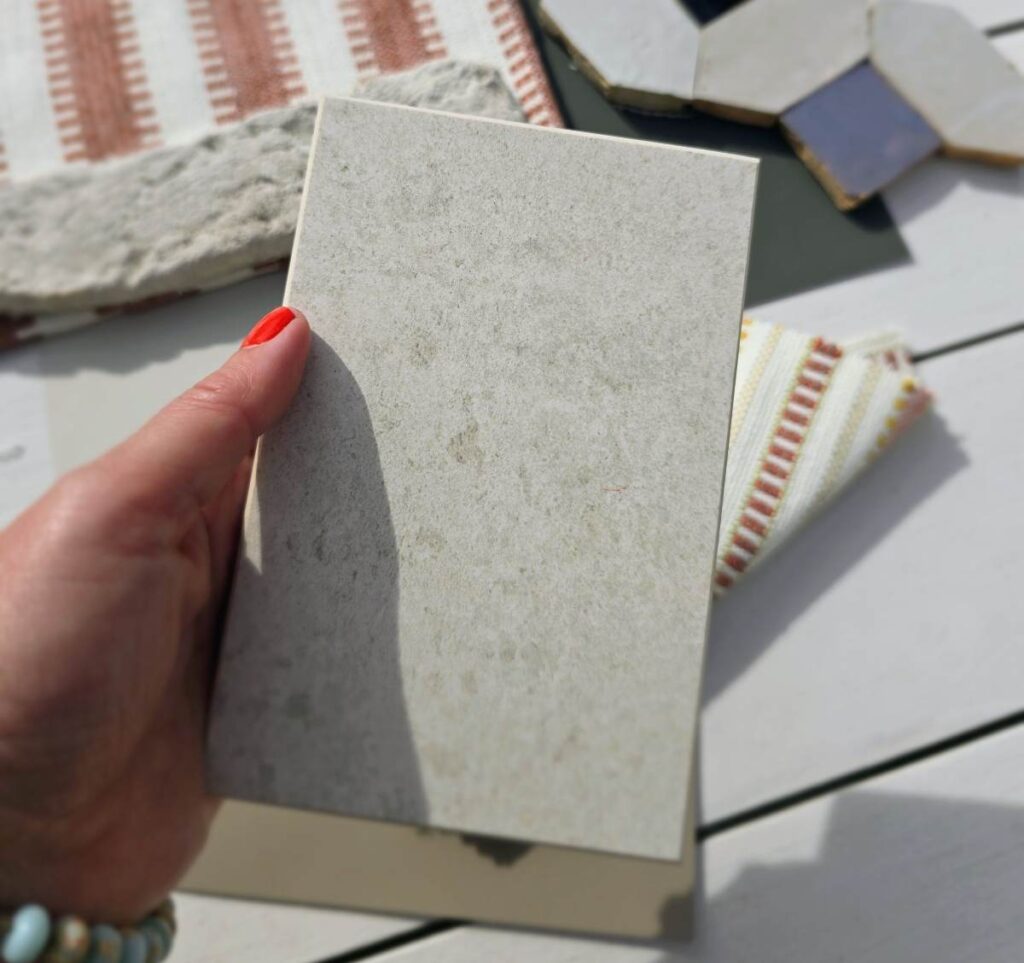
“You really can feel the difference with natural stone, it brings a sense of calm that simply can’t be replicated.”
– Sorcha Drakeford
Q.
Your commercial projects have to work as well as they look. How do you balance design ambition with the operational realities of hotels and restaurants?
My experience across different areas of hospitality has given me a unique understanding of the science behind design and how important it is to get that balance right for both operators and visitors.
Great design should enable the team to deliver an outstanding experience while also creating the right environment for the visitor. I work on the mood board and layouts together, so I don’t become too attached to an aesthetic direction before I know it can actually work operationally.
I look at every project from several perspectives: How will it feel to work here? How will it contribute to the visitor experience? And, importantly, how will it affect sales and profitability?
Labour is one of the highest variable costs in hospitality, so I also consider how many man-hours a space will require to operate. You don’t want staff constantly restocking shelves or operating dumb waiters in the middle of service. It affects the experience and requires additional people to deliver the operation.
Ultimately, those design decisions have a direct financial impact on my client.
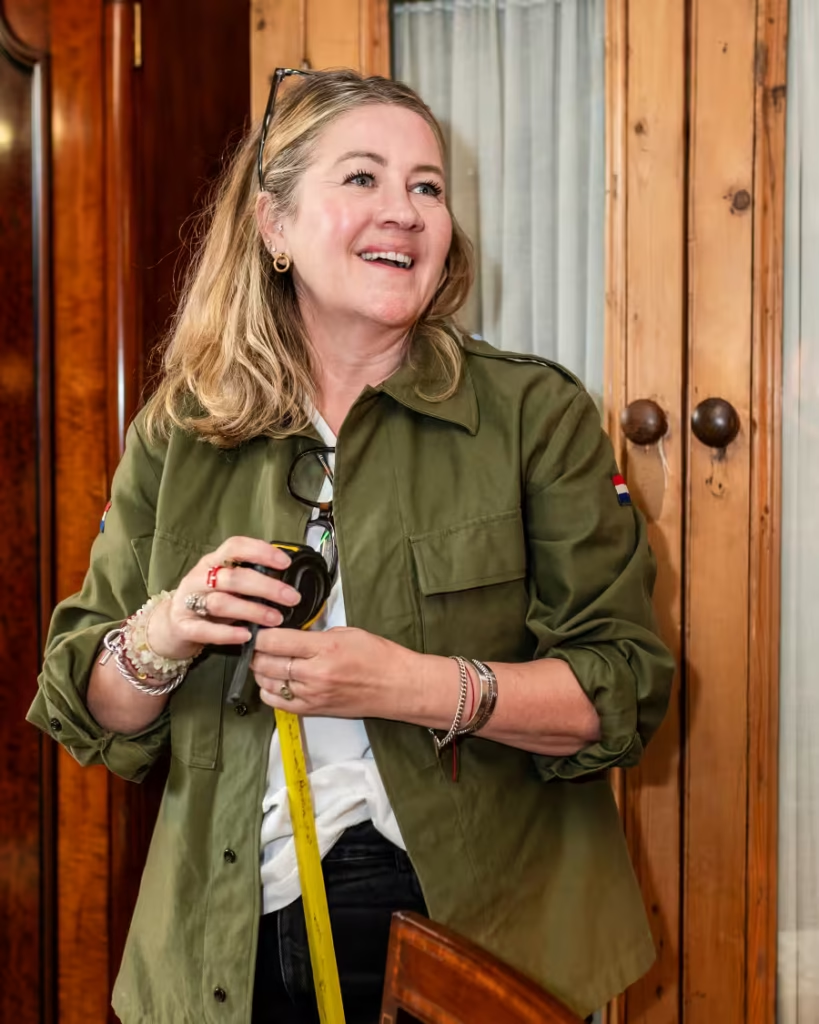
“Great design should enable the team to deliver an outstanding experience while also creating the right environment for the visitor.”
– Sorcha Drakeford
Q.
Sustainability can sometimes conflict with a client’s existing preferences or decisions. How do you navigate that tension without compromising the wider design?
It can be difficult. I recently worked with a client who had hired me after the builder had already been appointed. By that point, they were too far into the project for me to change the flooring decision, although I certainly tried.
I always explain the benefits, longevity, long-term cost, and environmental impact of different choices. Sadly, I wasn’t successful on that occasion, but we were able to make more sustainable decisions throughout the rest of the space. We are also working with several artisans and craftspeople.
For example, we have a gorgeous transformer-style pantry being made from reclaimed wood. When it isn’t in use, it looks like a vintage dresser, but at mealtimes it functions as a breakfast bar and pantry.
There are more and more fantastic materials and products available now, so choosing sustainable options doesn’t have to mean compromising on style. I am sure that progress will continue.
In kitchens and bathrooms, I also encourage clients to adopt more sustainable cleaning and personal hygiene products to reduce single-use plastic. They are products I use myself, so I know there is no compromise on quality.
Q.
You’re currently working on a Pilates studio, a new project type for your team. How do you approach a brief when you haven’t designed that type of space before?
I fully immerse myself in research and gain personal experience wherever possible. I have done yoga, Pilates, and similar activities myself, and, much like hospitality, these spaces need to feel welcoming and effortless.
The experience should begin before someone even enters the class. New visitors should feel relaxed, and every potential source of friction should be removed, no matter how small.
Every detail matters: lighting, music, colour palettes, layout and storage.
I remember being a member of a gym that spent millions on a renovation. On first appearance, it looked fantastic, but the experience was frustrating. The changing rooms were poorly laid out, there wasn’t enough space to get changed, and a tap was far too large for the sink, meaning the floor was constantly wet and slippery. The wet-floor signs became an obstacle course. The experience before and after a workout was unnecessarily frustrating—probably not what the designer or client intended. A few small changes could have made a huge difference.
I approach the Pilates studio in the same way I would any commercial development. I experience it as a visitor would and conduct competitor analysis to understand how we can create a genuine point of difference rather than simply blend into the market. I also look closely at competitor feedback because there is a lot to learn from what visitors are saying.
My client needs a return on their investment, so we consider the entire journey—from discovering the studio online and booking a class through to the post-workout experience. I want us to exceed both the client’s expectations and those of their visitors. I genuinely care about our impact on their success.
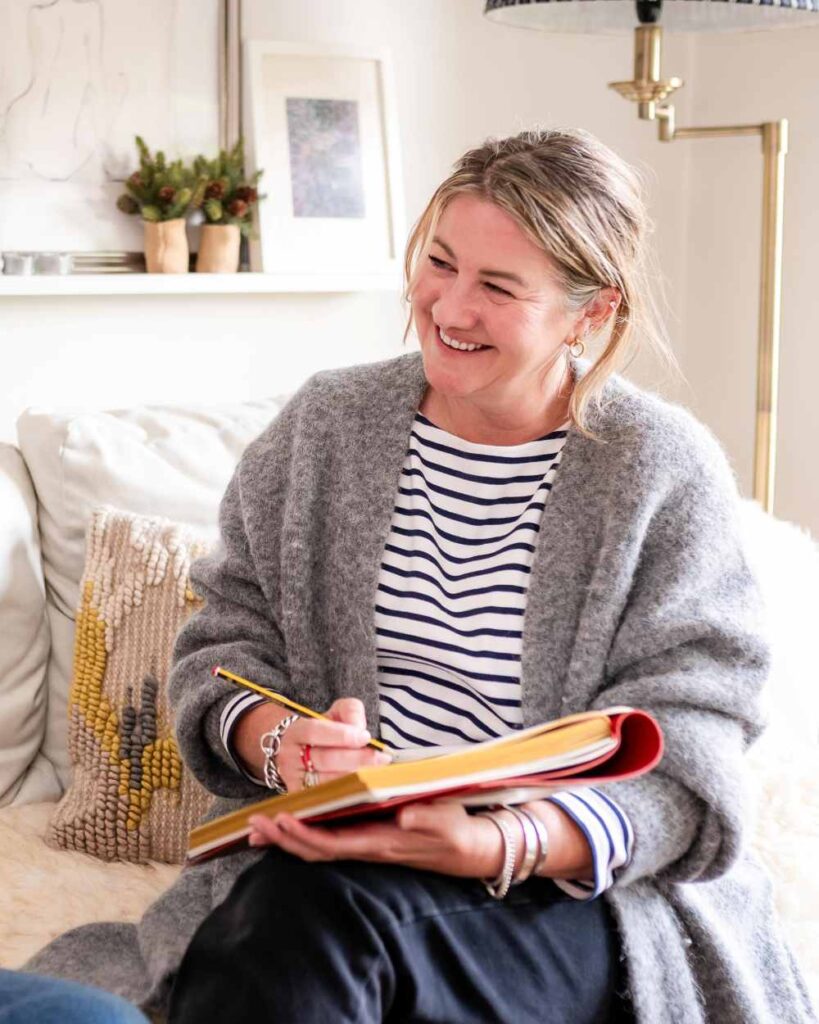
“Every detail matters: lighting, music, color palettes, layout and storage.”
– Sorcha Drakeford
Q.
As a trustee of The Sorcha Children Foundation, your work extends well beyond interiors. How has that experience influenced the way you approach business, leadership and the people you choose to work with?
Those children are a huge motivation for me. I have always believed that it is largely luck that has meant I get to sleep safely at night, receive a free education, and have access to free healthcare.
That belief has certainly influenced the way I do business. I want to leave a legacy for the foundation by helping make it self-sufficient, so that we can support not only these children but future orphans long after my lifetime.
It has also influenced who I choose to work with. I prefer local suppliers and small businesses over large corporations, and it is important to me to work with companies that share my values around sustainability and business ethics.
In the West, we are sadly obsessed with the idea of “it will do for now.” When things become so cheap that they are effectively disposable, you can often be sure that someone somewhere wasn’t looked after or paid fairly in the process.

Q.
Design@Studio17 has grown considerably in its first few years. What has changed most in the way you work, and what are you looking forward to next?
It definitely feels like I haven’t stood still for even a minute. We have grown both our team and our services during the first few years, while the digital landscape seems to change constantly, so you have to keep learning.
We regularly review our processes and the client experience to make sure they remain as seamless as possible. That’s certainly a hangover from my hospitality days!
I’m also constantly looking for new sustainable materials, artisans and craftspeople to add to my portfolio. Bespoke design means I can’t—and won’t—cut and paste from one project to another.
Last Christmas, I launched our Christmas design services. I curated Christmas tree packages after a client contacted me because she felt her existing decorations would look terrible in her new lounge. We reused what we could and donated the rest rather than sending it to landfill. We will be doing it again this year.
We only offer the service to a small number of clients. Keeping it bespoke means we can minimise waste, and we only use sustainable materials.
We are also currently developing something that will be ready to launch in September. It brings together many of my passions, and I am very excited about it. I have plenty of other ideas for the future too.
Standing still is definitely not an option.

“I have plenty of ideas for the future, and standing still is definitely not an option.”
– Sorcha Drakeford
Key Takeaways from the Interview
- Design should go beyond aesthetics to improve functionality, user experience, operational efficiency, and client outcomes.
- A successful interior should respond to the client’s personality, lifestyle, and needs rather than impose a fixed signature style.
- Natural materials such as stone can add depth, warmth, character, tactile quality, and a sense of calm to interiors.
- Small details in layout, lighting, storage, circulation, and fixtures can have a major impact on how people experience a space.
- Sustainability can be integrated through durable materials, reclaimed elements, local artisans, and thoughtful choices without compromising design quality.
- Continuous research, personal experience, client feedback, and experimentation are essential to creating better spaces and keeping design practice evolving.
