
Natural stone is valued for its beauty, durability, and timeless appeal. However, delivering exceptional luxury projects requires far more than selecting the right material. It demands technical expertise, quality control, careful planning, and close collaboration between architects, fabricators, installers, and clients.
As projects become more sophisticated, clients increasingly seek trusted partners who can manage every stage—from material selection and fabrication to installation and long-term performance. Few professionals understand this evolution better than Angelo Croci. With more than four decades of experience spanning architecture, project management, luxury stone sourcing, and consultancy, he brings a unique perspective on transforming architectural vision into successful stone project.
Angelo Croci | A Brief Profile
Angelo Croci is an Italian stone consultant and architect with more than forty years of experience in the premium natural stone industry. A graduate of Politecnico di Milano, he built his career by combining architectural education with extensive practical expertise in stone production, international project management, and luxury material consulting.
Throughout his professional journey, Angelo has worked closely with architects, designers, developers, and contractors on prestigious residential and commercial projects requiring bespoke natural stone solutions. His decade as Sales Director at Budri Italian Marble Inlay Atelier further strengthened his reputation for delivering highly customized stone applications where craftsmanship, technical precision, and project coordination are equally important.
Today, as an independent stone consultant, he continues advising clients on material selection, quality assurance, production planning, and successful project execution, helping bridge the gap between architectural vision and manufacturing reality.
In this conversation with Petros® Stone, Stone Consultant & Architect Angelo Croci discusses how luxury stone procurement has evolved, why successful projects begin with informed material selection, how technology is expanding fabrication possibilities, and why thoughtful collaboration remains the foundation of exceptional stone architecture.
Q – Having worked in the premium natural stone industry for many years, what are the biggest changes you’ve seen in how luxury residential and commercial projects source natural stone today?
Over the years, I have seen a significant change in the way luxury residential and commercial projects approach natural stone sourcing. In the past, many clients were primarily focused on purchasing quality blocks or slabs at the best possible price. Today, especially in the luxury segment, that mindset has evolved considerably.
Clients are now looking for professional companies that can offer a complete service rather than simply supplying stone. They expect a partner who can manage the entire process—from material selection and production planning to quality control, logistics, installation support, and problem-solving throughout the project.
In my experience, the value of a stone supplier is no longer measured only by the quality of the material. It is measured by the ability to guarantee consistent quality, respect project timelines, and provide the technical experience needed to resolve unexpected challenges that inevitably arise during production or installation.
Luxury projects have become far more demanding, and I believe this has elevated the role of experienced stone professionals. Today, clients are investing not only in beautiful materials but also in reliability, expertise, and the confidence that their project will be delivered successfully from beginning to end.
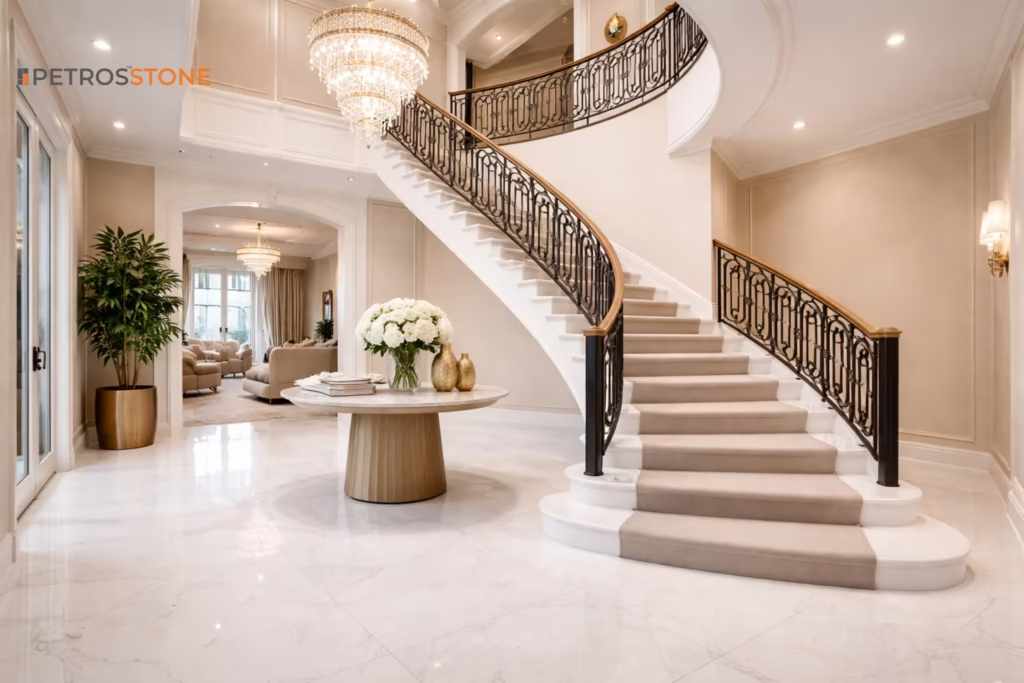
“Today, luxury clients expect complete project support, not simply premium stone.”
– Ar. Angelo Croci
Q – Luxury stone projects often involve close collaboration with architects and designers. From your experience, what helps ensure a smooth transition from a designer’s vision to successful execution in production and installation?
In my opinion, successful collaboration begins with having skilled and experienced people involved from the very beginning of the project. Architects and designers often have ambitious ideas, but transforming those ideas into reality requires technical knowledge of natural stone, its characteristics, and the manufacturing process.
One of the most important responsibilities of a stone specialist is helping identify the most suitable material for each specific application. Every project is different, and selecting the right stone is not simply about appearance. It also involves understanding how the material will perform during fabrication, installation, and throughout its service life.
I always believe that our role extends well beyond supplying stone. We should support the project from the initial material selection through production, installation, and even long-term maintenance. When everyone works together and shares technical knowledge throughout the process, it becomes much easier to preserve the designer’s original vision while ensuring the project is practical, durable, and successfully executed.
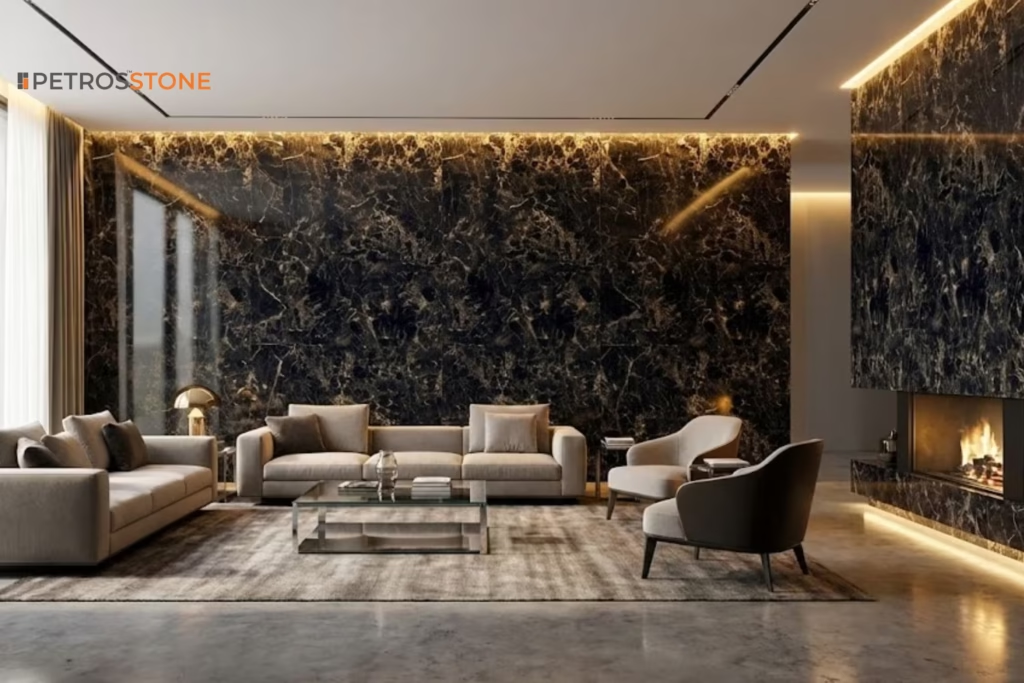
“Our responsibility begins with stone selection and continues long after installation.”
– Ar. Angelo Croci
Q – When specifying rare or highly variable natural stones, what are the most important steps project teams should take during material selection and sourcing to avoid delays, quality issues, or unexpected costs?
Whenever I work with rare or highly variable natural stones, the first thing I consider is material availability. Before any production begins, it is essential to confirm that the required quantity of stone is available from the same source or production lot. This helps maintain consistency throughout the project while reducing the risk of delays later.
Quality control is equally important. Every natural stone behaves differently, and understanding how a particular material responds to different surface finishes and fabrication processes is essential. Evaluating these factors early allows potential problems to be identified before cutting and finishing begin.
Another important consideration is production planning. I always try to ensure that the dimensions of the finished pieces are compatible with the size of the available rough blocks or slabs. Good planning improves material yield, reduces unnecessary waste, and helps avoid additional costs during production.
In my experience, careful preparation at the beginning of a project is one of the best ways to avoid technical problems and budget surprises later.
Q – How have technologies such as CNC machining, water-jet cutting, and resin treatment expanded the possibilities of natural stone in modern architecture and interior design?
Without any doubt, modern technologies have transformed what we can achieve with natural stone. Equipment such as CNC machining, water-jet cutting, and advanced processing techniques allow us to produce increasingly precise and sophisticated architectural elements that would have been extremely difficult to manufacture years ago.
These technologies help us achieve much higher levels of accuracy while improving the overall quality of the finished product. Architects and designers now have greater freedom to develop customized details, complex geometries, and highly refined designs without compromising production quality.
However, I also believe that technology should always support experience rather than replace it. Even with the most advanced machinery, achieving excellent results still depends on skilled professionals who understand the material and know how to apply the appropriate manufacturing techniques.
For me, technology has become an important tool that allows craftsmanship and engineering to work together, delivering the best possible final result for the client.
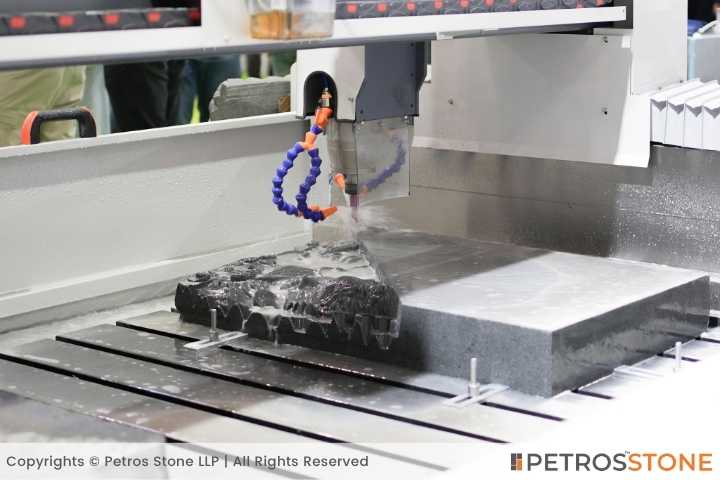
“Technology enhances craftsmanship, but experience remains essential.”
– Ar. Angelo Croci
Q – As an independent consultant, how do you work with developers and architects to balance design ambitions, technical feasibility, and project budgets without compromising quality?
For me, achieving the highest possible quality is always the main objective. Every client has specific expectations, and my responsibility is to help transform those expectations into practical and achievable solutions.
I work closely with architects, developers, and clients throughout the project, offering technical suggestions whenever necessary. Sometimes this means recommending different materials, adjusting production methods, or proposing alternative solutions that preserve the design intent while improving feasibility or controlling costs.
I believe collaboration is the key. When everyone involved shares knowledge and discusses challenges openly, it becomes much easier to find solutions that satisfy both the creative vision and the technical requirements of the project.
Quality should never be compromised. Instead, experience allows us to make informed decisions that help achieve the desired result in the most efficient and reliable way possible.
Q – Sustainability has become a major priority in architecture. How can the natural stone industry better meet the growing demand for responsible sourcing, environmental transparency, and long-term performance?
Sustainability has become one of the most important topics in our industry, and I believe natural stone already offers many advantages because it is a durable and long-lasting material. However, we still have an important responsibility to use it wisely.
One of the best ways to improve sustainability is by educating clients about the correct use of natural stone. Choosing the right material for the right application and planning production carefully can significantly reduce unnecessary waste throughout the project.
I also believe that better planning, responsible sourcing, and efficient production all contribute to making projects more sustainable. Every square metre of stone that is used effectively represents a valuable natural resource that has been respected.
For me, sustainability is not only about protecting the environment. It is also about ensuring that natural materials are used intelligently so they continue delivering value for many decades after installation.
Q – Which natural stone materials, finishes, or design trends do you believe will see the strongest global demand over the next five to ten years, and why?
From what I see today, one of the strongest trends is the growing appreciation for natural surfaces. More and more architects and designers are moving away from highly polished finishes and looking instead for textures that express the authentic character of the stone.
We are increasingly recommending finishes such as brushed, flamed, and ribbed surfaces with geometric patterns. These finishes create a more natural appearance while adding texture, depth, and personality to architectural spaces.
I believe this trend reflects a broader shift in design philosophy. Clients want materials that feel genuine and timeless rather than overly processed. Natural finishes allow the unique characteristics of each stone to remain visible while creating spaces that feel warm, elegant, and connected to nature.
In my opinion, this appreciation for authenticity will continue growing over the coming years, making natural finishes an increasingly important part of contemporary architecture and interior design.
“I believe the future belongs to natural surfaces that celebrate the true character of stone.”
– Ar. Angelo Croci
Key Takeaways from the Interview
- Luxury clients increasingly expect comprehensive project support rather than simply purchasing premium stone materials.
- Successful natural stone projects depend on close collaboration between architects, consultants, fabricators, and installers from the earliest design stages.
- Material availability, quality control, and efficient production planning are essential for avoiding delays and unexpected costs.
- Advanced fabrication technologies continue expanding architectural possibilities while improving production quality and precision.
- Technical expertise helps balance ambitious design concepts with practical construction realities without sacrificing quality.
- Sustainability begins with responsible material selection, efficient planning, and minimizing waste throughout the project lifecycle.
- Current design trends increasingly favour natural textures and finishes that highlight the authentic beauty of stone over highly polished surfaces.
