
Where Architecture, Experience, and Business Meet
Hospitality design is rarely just about creating a beautiful interior. For Alex Rashkovskyi, Founder and Creative Director at WOW Project, the strongest projects emerge when architecture, guest experience, operational realities, and business objectives are considered together.
As one of the founders of WOW Project, Rashkovskyi has helped build a studio with more than 15 years of experience and over 200+ projects across 12 countries. The studio works extensively across restaurants, cafés, bars, retail, hospitality, fitness, and commercial environments, with a stated focus on combining aesthetics with functionality.
Projects such as BEERTEKA, RENÉ, CHIN-CHIN, MIYA, and KASPIYKA demonstrate the studio’s interest in creating hospitality environments with a strong identity while responding to their individual cultural and commercial contexts.
Rashkovskyi’s approach is particularly relevant to today’s hospitality industry, where design increasingly has to do more than attract attention. A successful space must support operations, create memorable experiences, respond to its location, and give people a reason to return.
Alex Rashkovskyi | A Brief Profile
Alex Rashkovskyi is a founder and senior creative leader at WOW Project, the Ukrainian architecture and design studio he co-founded with Sergiy Sarana.
WOW Project’s portfolio spans 12 countries, with more than 85 completed projects and over 15 years of experience across architecture, design, and construction.
The studio has developed a particularly strong reputation in restaurant and hospitality design, working across projects ranging from cafés and restaurants to bars, retail, fitness, and larger commercial environments.
Rashkovskyi’s recent work and public commentary reveal an approach centred on concept development, client collaboration, functionality, and the relationship between design and business. His projects include BEERTEKA, a working brewery restaurant in Odesa, and RENÉ, a contemporary interpretation of the chalet restaurant in the Ukrainian Carpathians.
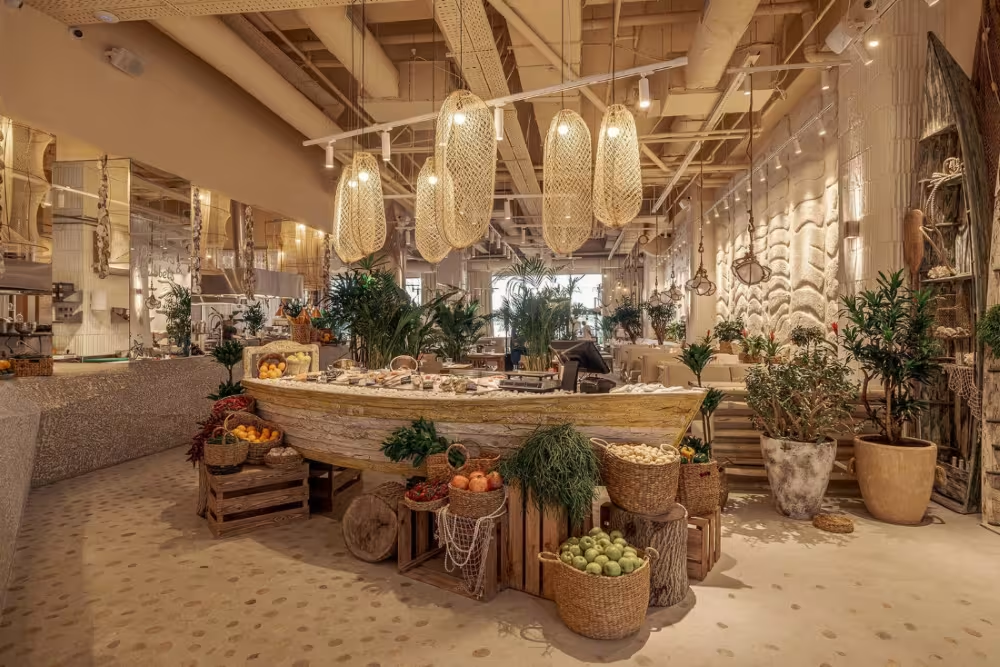
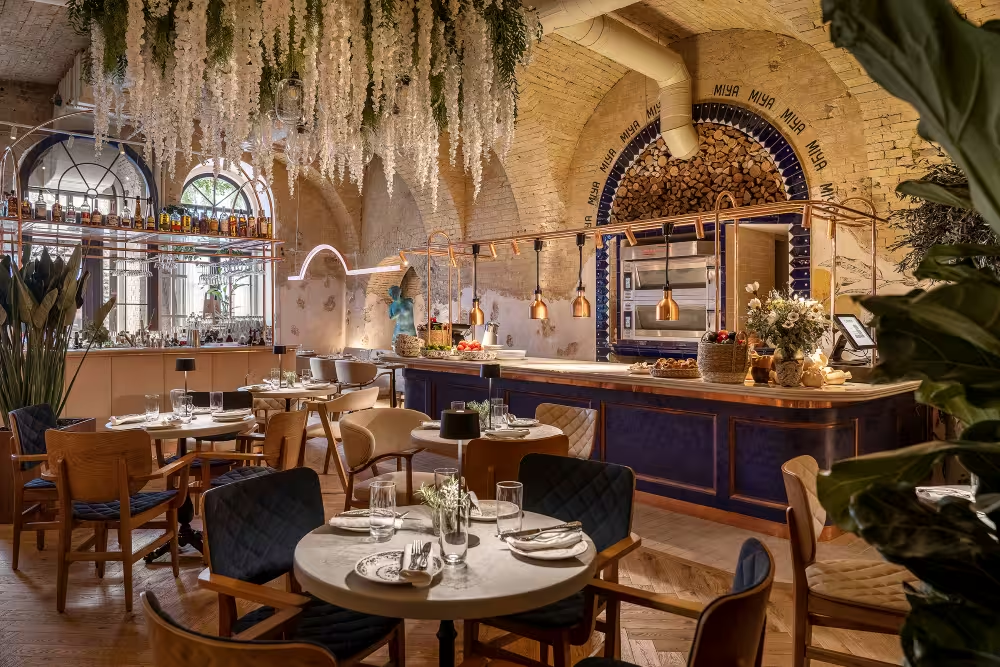
In this conversation with Petros® Stone, Alex Rashkovskyi reflects on the realities behind hospitality design, the role of natural materials, designing for commercial performance, working with courageous clients, and how technology and AI are changing the creative process.
Q.
You often describe hospitality design as a balance between experience, functionality, and commercial performance. When developing a complex venue such as BEERTEKA, how do you map the guest journey from arrival to departure while ensuring operational efficiency behind the scenes?
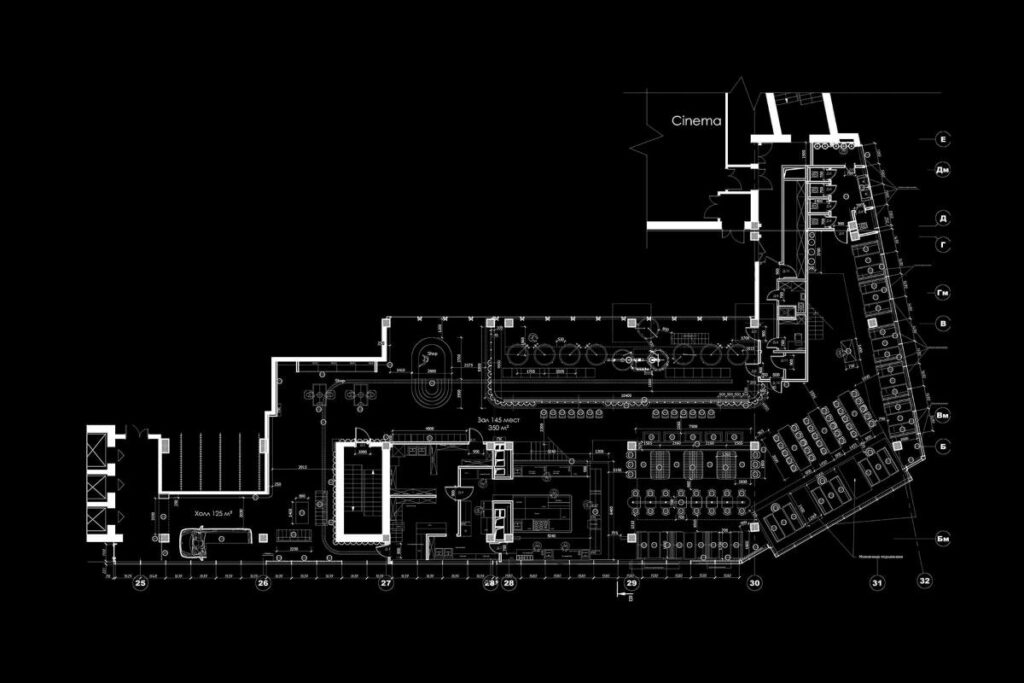
For us, planning a large hospitality project always starts with understanding the guest: who they are, why they come, and what different scenarios the space needs to accommodate.
Someone might come alone and sit at the bar; a couple might come for a date; others may have a business meeting for two or four people; while another group might be celebrating a birthday or hosting a larger event. We try to anticipate these different scenarios from the very beginning and translate them into zoning, different seating typologies, circulation, and flexible solutions — for example, tables that can work individually or be combined for larger groups.
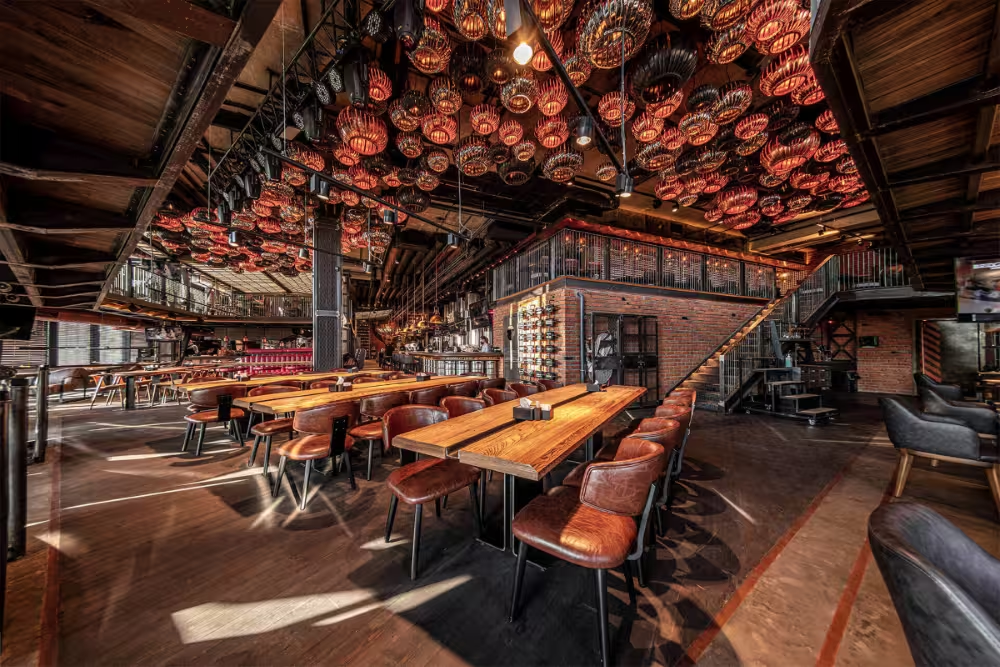
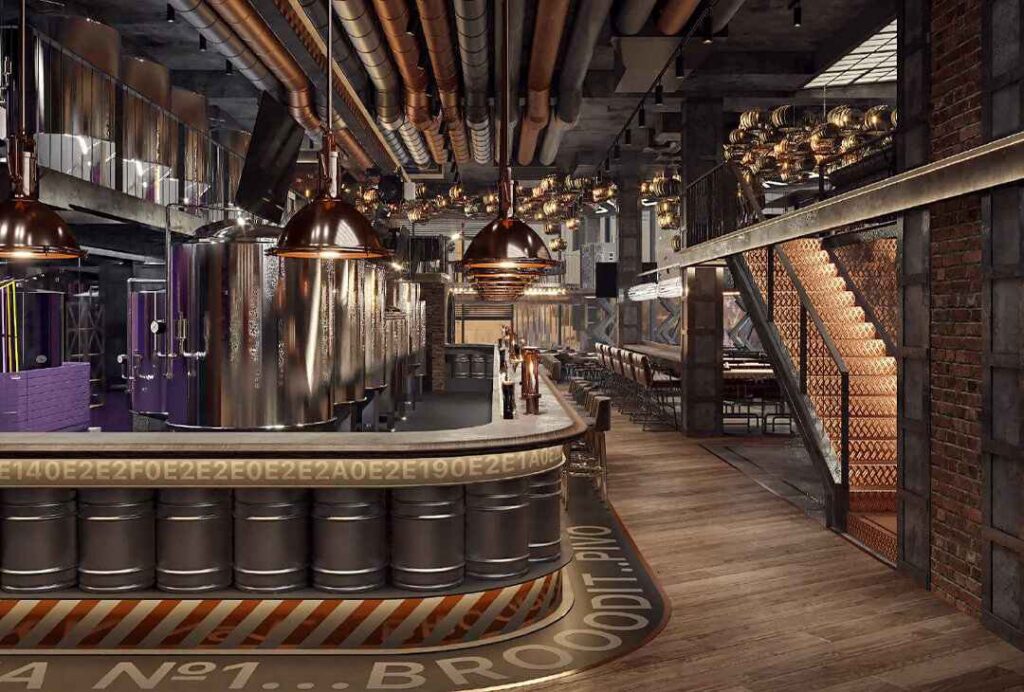
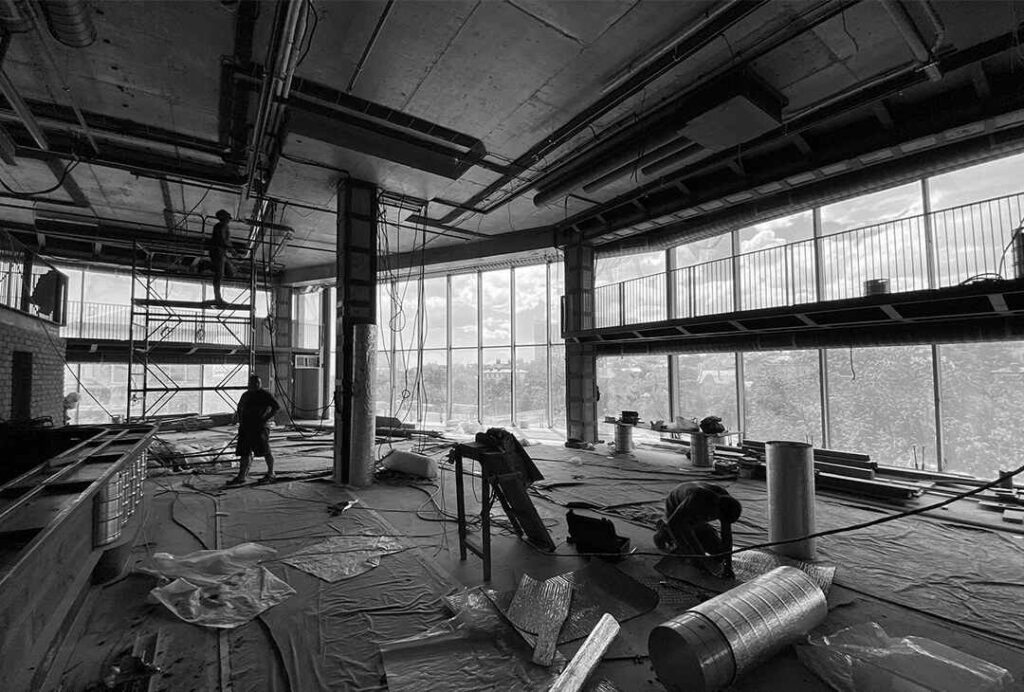
BEERTEKA was particularly interesting because the guest journey there is quite complex. The restaurant is located on the third floor of a shopping center, and guests can arrive in several different ways: from the street through the main lobby, directly from the parking area via another elevator, or from within the shopping center itself. All of these routes had to feel intuitive and natural and ultimately lead into one coherent restaurant experience.
At the same time, there is another journey that the guest should barely notice — the operational one. BEERTEKA includes a working brewery, so we also had to consider staff circulation, deliveries, the supply of raw materials for beer production, logistics, and service routes.
For us, good planning happens when these two worlds — the guest experience and the operational process — work simultaneously without interfering with each other. We first develop these scenarios and then repeatedly test them on the plan until the space feels intuitive for the guest and efficient for the people working there
(photo credit – WOW Project)
“Good planning happens when these two worlds, the guest experience and the operational process work simultaneously without interfering with each other.”
– Alex Rashkovskyi
Q.
In the RENÉ restaurant project, your team reinterpreted the traditional chalet aesthetic in a contemporary way rather than relying on familiar clichés. When modernizing a traditional design language, how do you decide which materials, textures, and architectural elements should be preserved, reimagined, or removed entirely?
(photo credit – WOW Project)
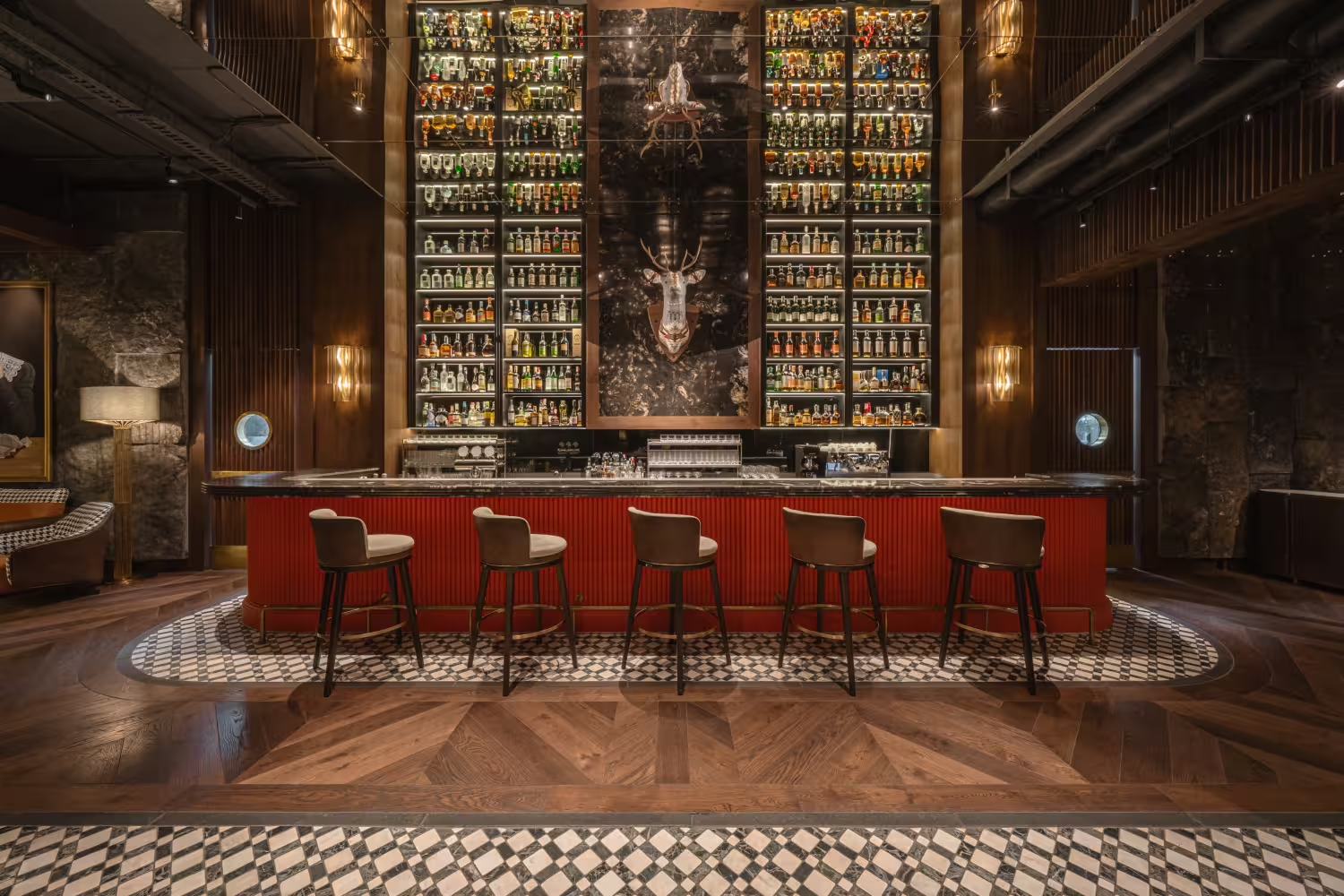
With RENÉ, our intention was never to recreate a traditional chalet literally. The restaurant is located within a building with contemporary architecture, so introducing a completely traditional Alpine interior would have felt too theatrical and disconnected from its architectural context.
Instead, we tried to understand what makes the chalet aesthetic authentic and reinterpret those qualities in a contemporary language.
Materials played an important role in this approach. In general, we prefer to use natural materials wherever possible. If the concept calls for wood, we would rather use real wood than an imitation. If it calls for stone, our first choice is natural stone rather than a material printed to look like stone.
Of course, hospitality interiors also need to be practical. Sometimes modern technology allows us to use a natural material in a more durable form. Engineered wood flooring is a good example: we still have a genuine wood surface, but its construction makes it significantly more stable and better suited to intensive use.
With stone, we ask a similar question: how will this material age? Will wear and natural patina make it more beautiful over time, or will the conditions eventually damage its appearance? Based on that, we decide whether natural stone is appropriate or whether a technically more resistant alternative makes more sense.
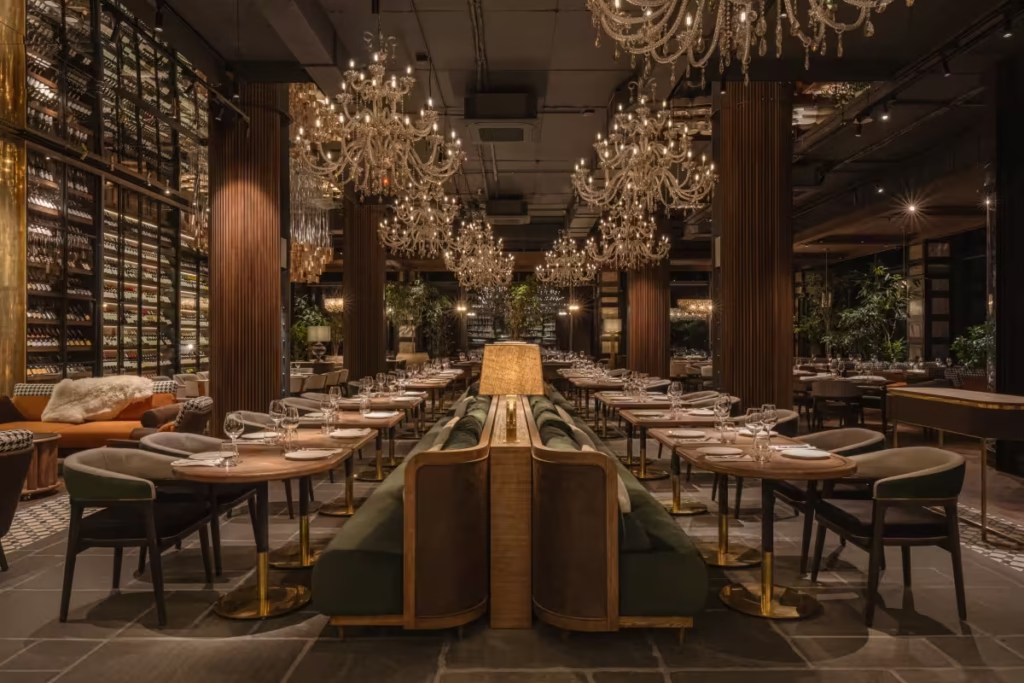
In RENÉ, natural stone and marble became an important part of the concept. It was certainly a more expensive solution, but both we and the client understood that replacing them with porcelain imitations would change the character of the interior.
For us, material selection is ultimately not only about appearance. It is about authenticity, how a material ages, its relationship to the architecture and the region, and, most importantly, whether it supports the story behind the concept.
(photo credit – WOW Project)
“In RENÉ, natural stone and marble became an important part of the concept. It was certainly a more expensive solution, but both we and the client understood that replacing them with porcelain imitations would change the character of the interior.”
– Alex Rashkovskyi
Q.
You have spoken about the importance of courageous clients who are willing to embrace new ideas and challenge conventional solutions. How do you build trust with investors, restaurateurs, and business owners during the early concept development stage, especially when proposing bold creative directions?
(photo credit – WOW Project)
This has actually become easier for us over the years. Today, clients often come to us specifically with complex projects because they need an experienced team capable of doing more than simply creating a beautiful interior. They expect us to propose unconventional solutions, understand the business behind the project, and look at the challenge from a broader perspective. So a certain level of boldness and creativity is already expected from us.
At the same time, a bold solution does not necessarily mean something visually loud or provocative. Sometimes the final interior can appear quite restrained, while the boldest decision in the entire project remains almost invisible to the guest.
For example, during the design process we may realize that the main entrance should be moved to another side of the building, that the functional zoning needs to be completely reconsidered, or that we need to intervene in the original architecture because it will make the space work better from both an ergonomic and a business perspective.
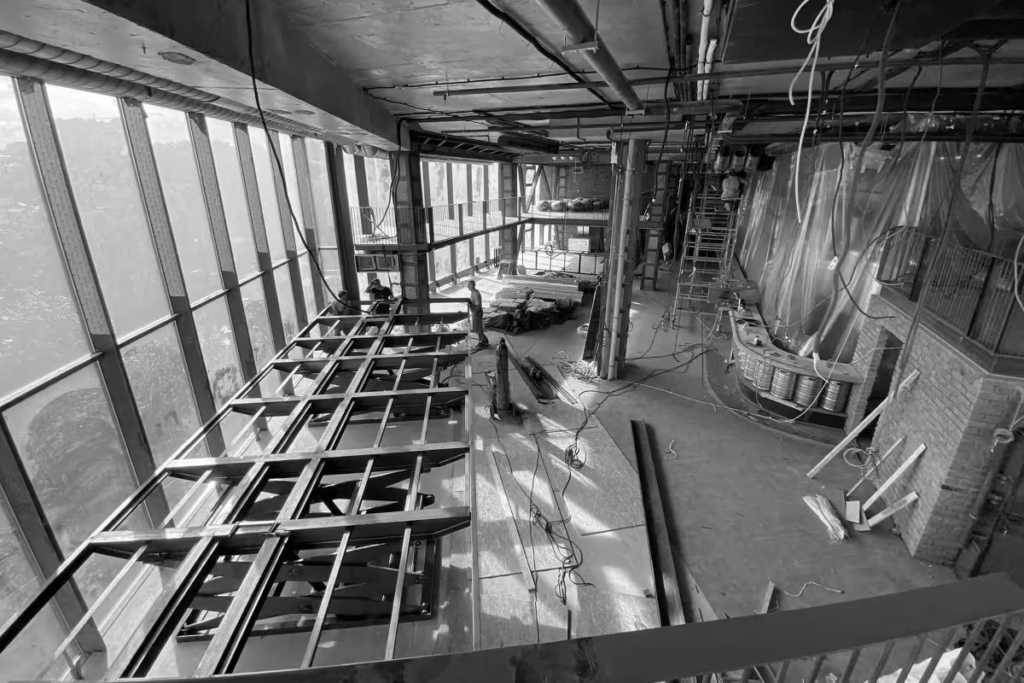
BEERTEKA is a good example. We became involved while the building was still under construction, which allowed us to influence not only the interior but also some of the architectural decisions. The concept required us to work with the building structure and introduce additional levels and mezzanines in order to use the volume more efficiently and achieve the number of seats required by the business model. And placing a fully operational brewery on the third floor of a shopping center was already a fairly bold decision from an engineering and organizational point of view. In fact, on this project I would say that sometimes the client was even bolder than we were — which made the collaboration especially interesting.
Of course, decisions are not always easy. Sometimes we have to argue our position, defend an idea, debate with the client, and remind them why they approached us in the first place. An unconventional functional, architectural, or aesthetic decision can often become exactly what distinguishes a project from its competitors.
During our first meetings, we always explain one important thing: we are not a studio that simply produces visualizations and drawings, and we are not selling furniture or finishing materials. Our job is to create successful projects.
For us, a successful project does not necessarily mean an interior that wins a design award or appears on the cover of a magazine. It is much more important that people come after it opens, return, enjoy spending time there, that the business performs well, and that the space remains relevant and successful for many years.
Real trust appears when the client understands that a bold proposal is not driven by a designer’s desire to do something unusual simply for the sake of effect, but by experience and a genuine intention to make the project more successful.
Q.
Material selection often plays a major role in shaping a hospitality brand’s identity. When evaluating materials for restaurants, hotels, and commercial spaces, how do you balance visual impact, durability, maintenance requirements, and the overall story the brand wants to tell?
(photo credit – WOW Project)
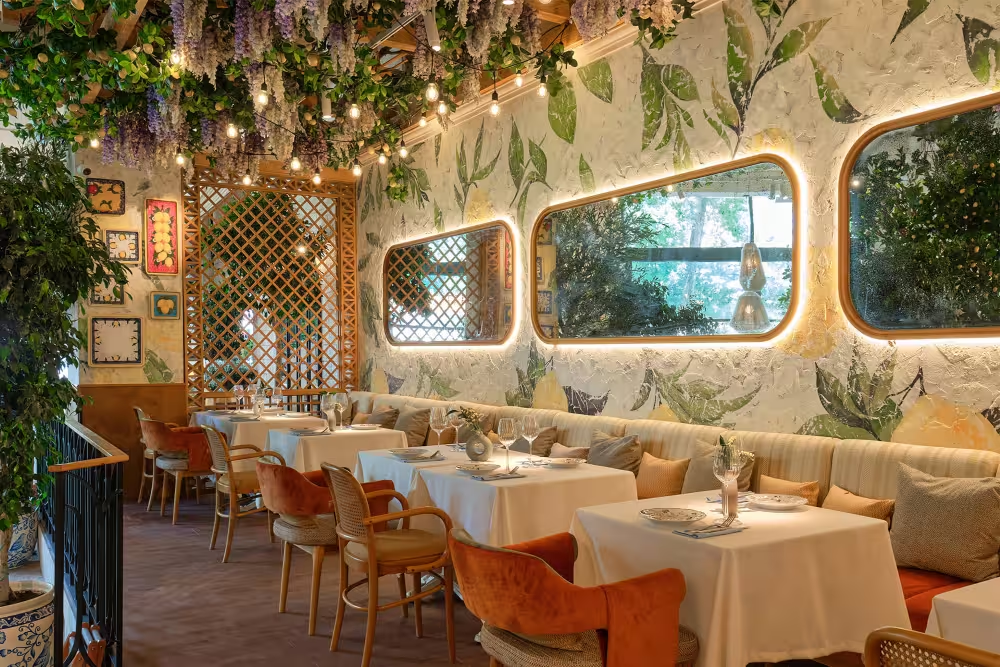
Material selection plays a very important role for us and begins at a very early stage of the project, during the first look & feel presentations and concept development. This is when we define the main material palette that should communicate the character and idea of the future space.
Then the project moves into reality, where we inevitably have to find a balance between the original concept, budget, implementation schedule, durability, and operational requirements.
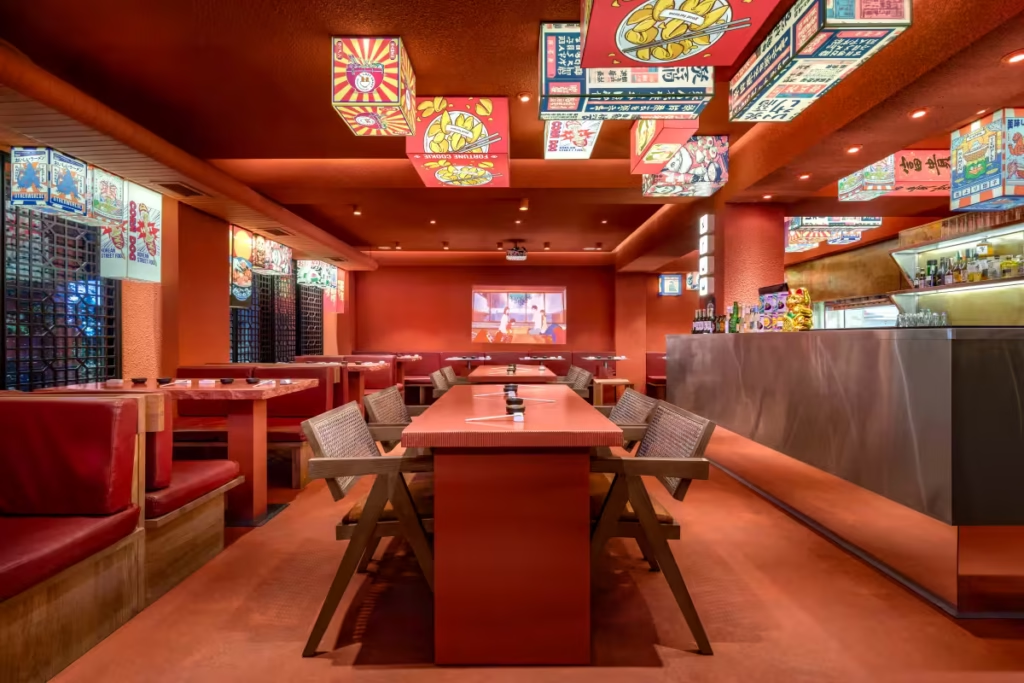
For us, it is important to understand exactly what role a material plays in a particular location. If it works primarily as a visual element and people have little or no tactile interaction with it, we can sometimes compromise. For example, we might use high-quality porcelain with the appearance of natural stone or veneered panels instead of solid timber.
But in places where people interact directly with a surface — touching it, sitting next to it, seeing it from very close range — its authenticity and tactile qualities become especially important to us. In these areas, we try not to compromise and prefer genuine stone, wood, metal, and other natural materials.
So our goal is not to use only expensive or exclusively natural materials throughout an interior. It is much more important to understand where a material genuinely shapes the experience and perceived quality of the space, and where a reasonable substitution can be made without losing the overall idea of the project.
(photo credit – WOW Project)
“It is much more important to understand where a material genuinely shapes the experience and perceived quality of the space, and where a reasonable substitution can be made without losing the overall idea of the project.
– Alex Rashkovskyi
Q.
Many of your projects are designed to encourage social interaction and create memorable experiences. What design strategies do you use to foster a sense of connection, comfort, and community within hospitality environments of different scales?
(photo credit – WOW Project)
There is no universal solution. It depends on the concept of the restaurant, its location, the restaurateur’s vision, and, above all, the guest profile and the intended scenario of how the space will be used.
For example, if we are designing a restaurant in the business district of a major city and expect many guests to come for business meetings, we need to provide comfortable distances between tables, good acoustics, and a certain level of privacy. People can see and feel the presence of other guests without necessarily hearing the conversations at the next table.
A lively Greek restaurant is a completely different scenario. The concept itself may be built around an emotional and energetic atmosphere. Seating can be denser, people can sit closer together, and the space needs to allow for a moment when a performance begins, music gets louder, people start dancing — perhaps even breaking plates as part of the tradition. In this type of venue, interaction between guests becomes part of the experience itself.
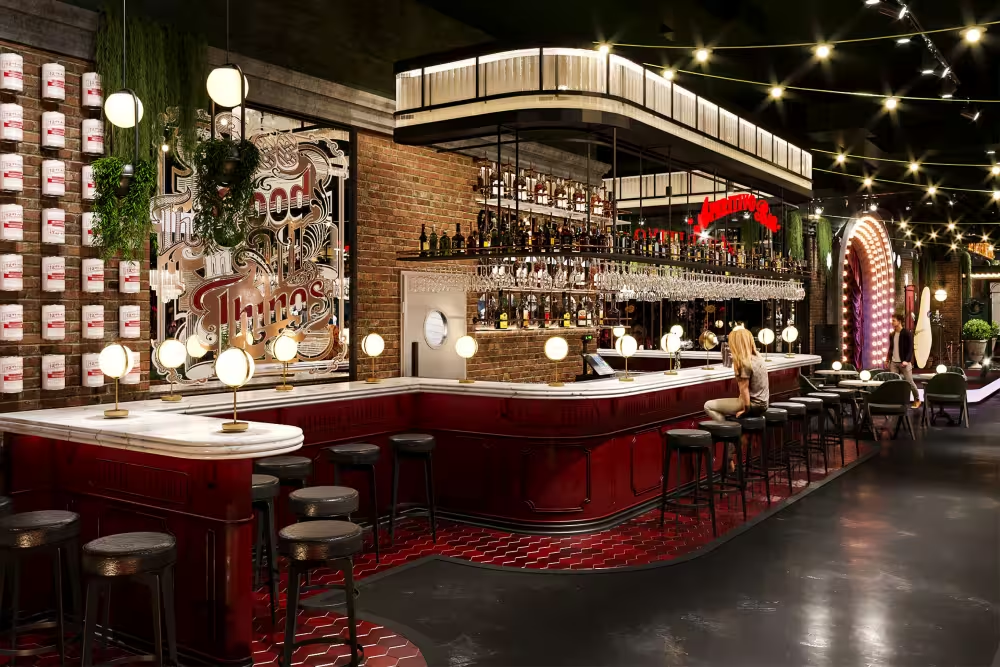
That is why, at an early stage of concept development, we discuss how social the space should be and where interaction between people should happen. Should there be a bar where guests can sit together? An open kitchen with counter seating? Communal tables where different groups can share one large table? Shared lounge seating, a dance floor, or other spaces that naturally bring people together?
Distances between tables, seating orientation, lighting, and acoustics also influence this. Sometimes even a small change in furniture placement can either encourage interaction or, on the contrary, give guests the privacy they need.
So our task is not simply to “bring people together.” First, we need to understand what kind of interaction feels natural for a particular project and then use planning and design to create the conditions in which it can happen organically.
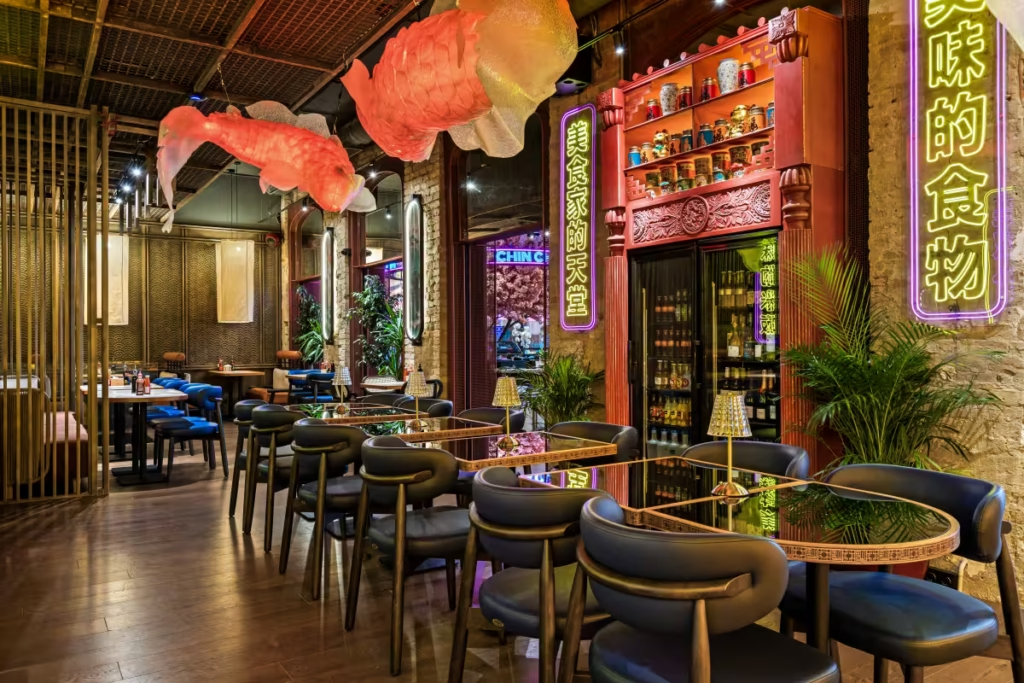
(photo credit – WOW Project)
“Our task is not simply to ‘bring people together.’ First, we need to understand what kind of interaction feels natural for a particular project and then use planning and design to create the conditions in which it can happen organically.”
– Alex Rashkovskyi
Q.
Hospitality venues must withstand heavy daily use while maintaining a premium appearance over time. When specifying finishes and materials for high-traffic areas, what technical and operational factors are most critical to your decision-making process?
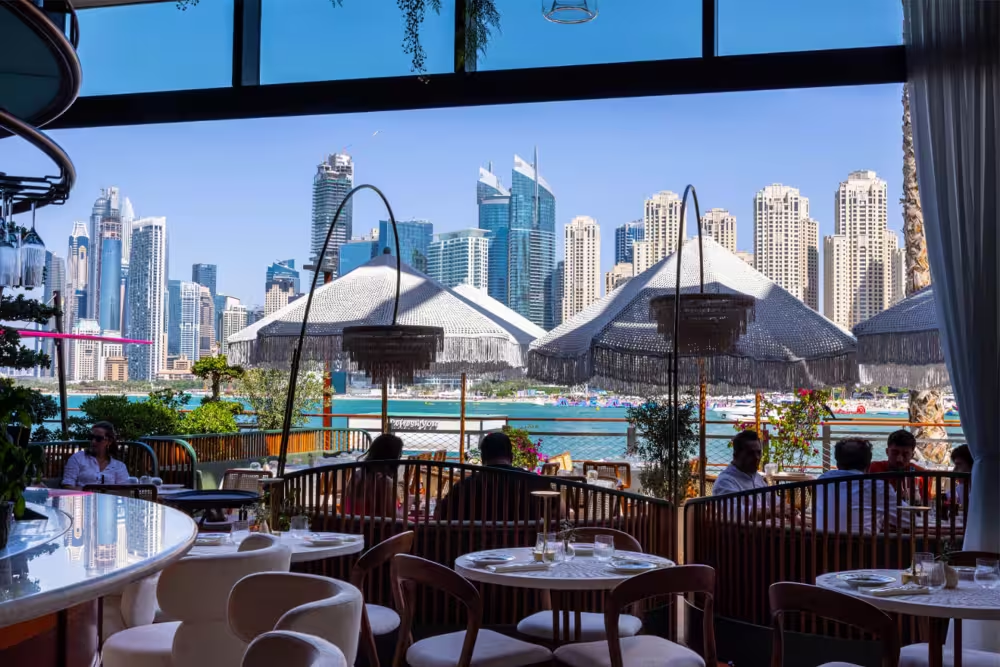
(photo credit – WOW Project)
Every material has specific technical characteristics: wear resistance, slip resistance, fire performance, resistance to fading, moisture, mechanical loads, and so on. In many public spaces, these parameters are regulated by building codes and standards, so in those cases material selection is not simply a matter of preference but a technical requirement.
Once those essential requirements are met, another question becomes very important to us: how will the material age, and does the way it ages suit the concept of the space?
Wear does not necessarily mean that an interior becomes worse. In a good pub or a traditional Italian restaurant, worn timber, stone showing traces of use, or furniture that has already been restored several times can actually add character. It can create a sense of trust — as though the place has existed for many years, people have been coming there for decades, and it has developed its own history. In some projects, we deliberately use aged materials or finishes to remove the feeling of absolute newness.
For us, premium does not necessarily mean perfect gloss or an absence of signs of age. A natural material that develops a beautiful patina can sometimes look far more convincing and valuable after ten years than an artificial material after only two years of use.
But there is obviously another side to this. If you enter a hotel room where the furniture is unstable, the fabrics are worn out, and everything looks tired, this is no longer perceived as patina or history — it simply becomes a negative experience. So everything depends on context.
In hospitality projects, we pay particular attention to furniture and fabrics, flooring, and surfaces that are in constant tactile contact with guests. They need to withstand intensive daily use and also be practical to maintain, repair, or restore.
And, of course, there are areas where compromise is simply not possible: fire safety, required slip and wear-resistance classifications, environmental standards, and the overall safety of materials.
So for us, the main question is not whether a material will wear — almost everything does — but whether it will do so safely, functionally, and beautifully.
Q.
Natural stone is often used to create a strong visual identity in hospitality spaces. When selecting stone for a project, what factors influence your choice, and how do you decide between a polished, refined look and a more natural, textured finish?
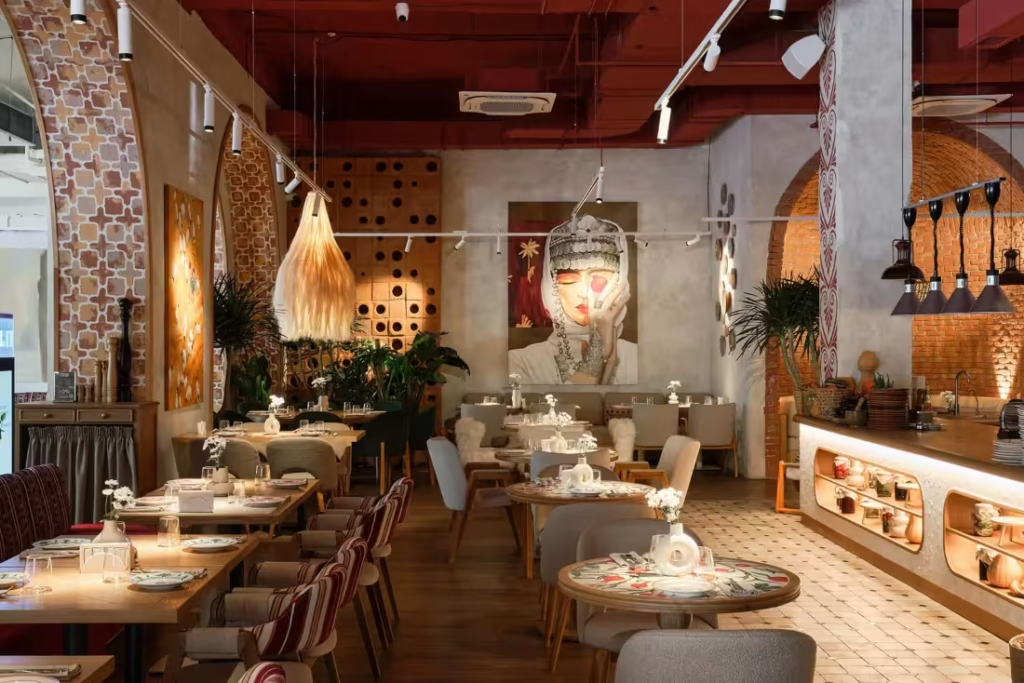
(photo credit – WOW Project)
Natural stone can certainly become one of the key elements of a space’s visual identity. At the same time, in our projects we relatively rarely use perfectly polished surfaces. We are generally more interested in natural, matte, and textured finishes that reveal more of the character of the material itself.
The selection naturally starts with visual qualities — color, veining, structure, and how well the stone fits the overall concept. But then there are many practical considerations: availability, required quantity, the cost of the material itself, lead times, fabrication costs, and the availability of skilled specialists who can work with it properly.
The format in which we intend to use the stone is also very important. If we need a large continuous slab with a particular pattern, the selection becomes much more complicated. We need to find specific blocks or batches with the right dimensions, quality, and quantity.
If, on the other hand, we intend to cut the stone into smaller formats or create a more complex textured surface — using split or bush-hammered stone, for example, or creating a floor from different types and shades of marble — the original slab size becomes less critical. In that case, the quality of fabrication and the craftsmanship of the people working with the material become much more important.
In general, we like to think of stone as more than simply a beautiful finishing surface. We are interested in the material itself and in different ways of revealing its qualities: cutting it, ageing it, giving it a rougher texture, emphasizing its natural irregularities, or combining several different stones within one surface.
So, when choosing between a polished finish and a more natural texture, we tend to prefer the latter. It gives the stone greater depth and character and allows you to feel more strongly that you are looking at a genuine natural material.
“We like to think of stone as more than simply a beautiful finishing surface. We are interested in the material itself and in different ways of revealing its qualities: cutting it, ageing it, giving it a rougher texture, emphasizing its natural irregularities, or combining several different stones within one surface.
– Alex Rashkovskyi
Q.
You have described Artificial Intelligence as a valuable tool for exploration and efficiency during the design process. Where do you see AI creating the greatest value today, and which aspects of design do you believe will continue to rely primarily on human intuition, empathy, and experience?
(photo credit – WOW Project)
As of today, AI has not replaced a single person on my team. I cannot speak for other professions or design studios, but for us, artificial intelligence remains exactly that — a tool. A very powerful one, but still a tool.
The greatest value I see today is in accelerating processes. Analyzing information, searching and structuring data, developing briefs, working with large volumes of documents, translating information into different languages — the speed at which we can handle these tasks has changed dramatically.
The same is happening on the visual side. In the past, creating presentations, look & feel boards, collages, and various conceptual images involved a great deal of manual work and required proficiency in a whole range of programs — Photoshop, CorelDRAW, Adobe products, and other tools. Today, some of these tasks can be completed much faster: creating a collage, changing a material in a visualization, recoloring a piece of furniture, removing or adding an element, or testing different atmospheres for a space.
But it is important to understand that AI does not design the project for you. For example, to produce one conceptual image that I genuinely want to include in a presentation using Midjourney or another generative tool, I may spend several days working through hundreds — sometimes 800 or 1,000 — generations.
So the human remains essential. I still need to understand what I want to create, what idea I want to communicate to the client, what emotion the space should evoke, and why a particular decision is being made. AI can help me explore or visualize that idea faster, but it does not define the goal for me.
AI is particularly useful for routine operations. Something that might previously have taken a designer several hours or even an entire day can sometimes now be done in 10–15 minutes. Across a large project, that becomes significant and, in our experience, can shorten the overall design process by several weeks.
How far this will go in the future is difficult to predict. The technology is developing extremely quickly, and we try to actively explore it and integrate it into our work. For now, we see AI in much the same way as we once saw new software for design and visualization: another professional tool that expands our capabilities rather than replacing the designer.
At least today, human intuition, empathy, professional experience, and the ability to understand both the client and the future guest remain parts of the design process that cannot simply be handed over to an algorithm.
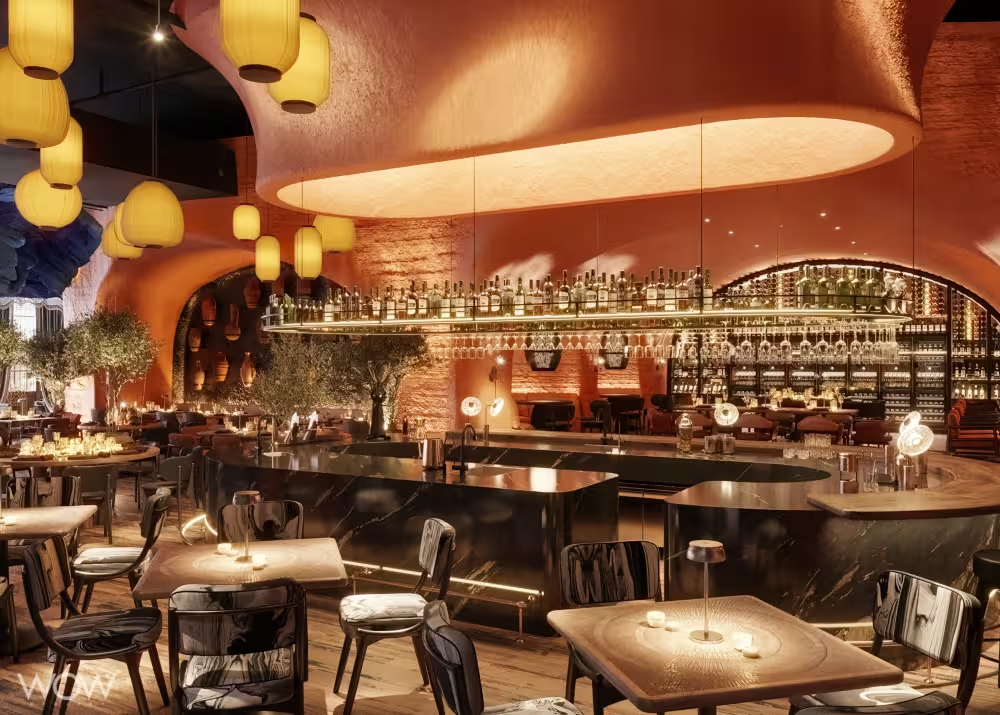
(photo credit – WOW Project)
“AI can help me explore or visualize that idea faster, but it does not define the goal for me.”
– Alex Rashkovskyi
Q.
As WOW Project continues to work across multiple countries and cultural contexts, how do you adapt your design process to local traditions, customer behaviors, and market expectations while maintaining a consistent creative philosophy?
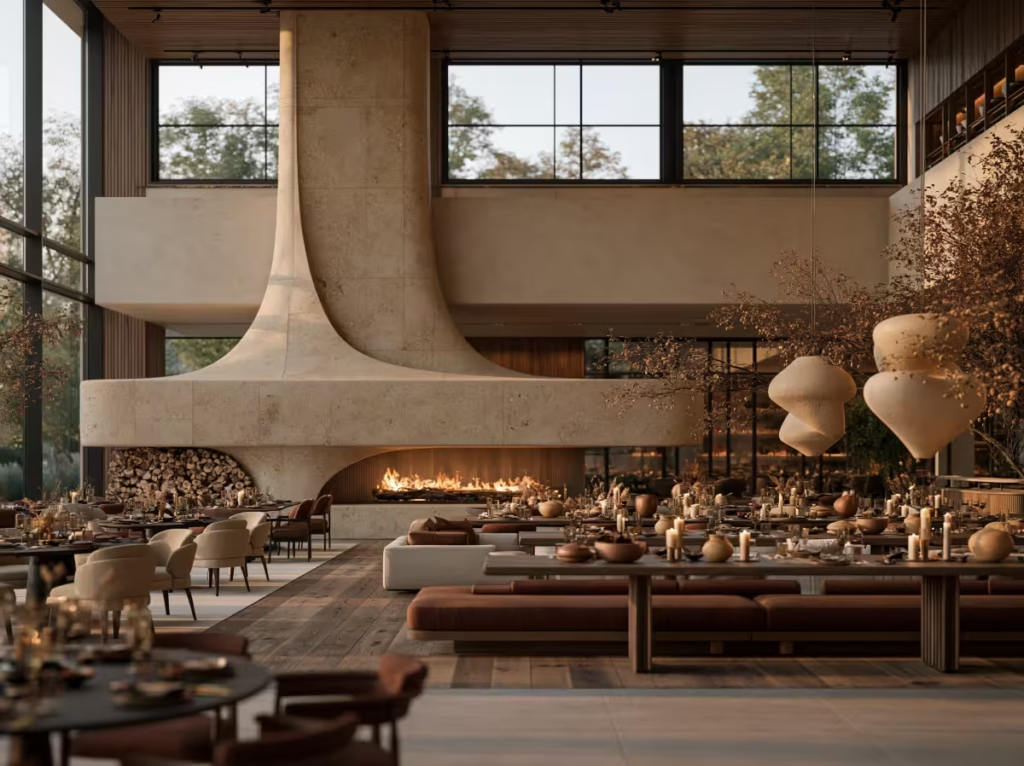
(photo credit: WOW Project)
The design process itself does not change significantly from country to country. Over the years, we have developed a logical and consistent methodology: we begin by defining the brief and studying the initial conditions, then develop the concept, and only after that move into the detailed design stage. In that sense, the professional logic of architecture and design is quite universal.
But having a consistent process does not mean that we design the same spaces in different countries. On the contrary, the context of every project is extremely important to us. We study the location, its surroundings, the local market, and the habits and expectations of future guests. Something that works perfectly in one city or country will not necessarily be perceived in the same way somewhere else.
At the same time, a successful hospitality project cannot be created by an architect or designer alone. The interior is only one part of it. The wider team must be involved from the concept stage: the restaurateur, executive chef, bar manager, marketing team, and other specialists. Each understands a different part of the business, and our role is to bring that knowledge together into one coherent space and one complete guest experience.
One interesting aspect of our work is that a significant part of our international portfolio has grown through long-term relationships with clients. We may work with the same company or restaurateur while creating projects for them in different countries. This gives us an advantage: we already understand the client’s business and values, but each time we still need to adapt them to a new location and a new market.
Of course, cultural differences exist not only in relation to the future guest but also in the working process itself — communication, decision-making, attitudes toward schedules, budgets, and design. We have to adapt to these differences as well.
At the same time, what we try to maintain is not a specific visual “WOW Project style” that has to be repeated from one project to another, but a consistent approach to design: understanding the business, the context, and the people for whom the space is being created, and then finding the right solution for that particular project.
That is probably the creative philosophy we try to maintain at WOW Project: not transferring the same design from one country to another, but maintaining the same level of thinking and approach to design.
“What we try to maintain is not a specific visual ‘WOW Project style’ that has to be repeated from one project to another, but a consistent approach to design: understanding the business, the context, and the people for whom the space is being created.”
– Alex Rashkovskyi
Q.
Looking ahead, what shifts do you believe will have the greatest impact on hospitality design over the next decade, and how is WOW Project preparing for those changes?
(photo credit – WOW Project)
I think the most significant changes over the next ten years will be connected less with the emergence of a new design style and more with changes in the hospitality industry itself.
We are already seeing staff shortages in many countries. I think more and more routine processes will become automated: reservations, ordering, payment, parts of service, logistics, kitchen management, and other operational processes. Wherever technology can be introduced without compromising the guest experience, businesses will gradually adopt it.
And this creates an interesting paradox: the more technology surrounds us, the more important the human side of physical spaces becomes.
People can order food at home, work remotely, shop online, and access an enormous amount of entertainment without leaving their homes. So, when someone does decide to go to a restaurant, bar, or hotel, increasingly they are looking for more than simply a product or service. They want an experience that cannot be reproduced through a screen.
That is why I believe atmosphere, social interaction, emotion, and a strong brand identity will become even more important in hospitality. Social media reinforces this as well: venues need to be recognizable, have their own character, and create experiences that people genuinely want to share.
In terms of visual trends, I do not think one dominant style will define the next decade. Even today, we see minimalist spaces, highly decorative interiors, traditional approaches, and constant reinterpretations of previous decades existing simultaneously. We have already seen another strong wave of interest in mid-century design and the aesthetics of the 1960s and 70s, while references to the 1980s and 90s are becoming increasingly visible. Perhaps soon we will even start looking back at the 2000s with nostalgia.
But trends are never the starting point for us. We start with the business concept, the location, the audience, and the restaurateur’s vision.
So, I would not say that WOW Project is ‘preparing’ for the future in any special way. Our task is both simpler and more difficult: to keep observing, traveling, studying new technologies and materials, understanding changes in people’s behavior, and, most importantly, to keep designing. When you are actively working on real projects across different markets, you are not preparing for change — you are already part of it.
And perhaps the most important thing for our industry is that people continue to want to leave their homes, meet each other, go to restaurants, travel, and stay in hotels. As long as people continue to need real human interaction and new experiences, there will always be a role for hospitality design.
“The more technology surrounds us, the more important the human side of physical spaces becomes.”
– Alex Rashkovskyi
Key Takeaways from the Interview
- Great hospitality design balances experience and operations, ensuring guest journeys and behind-the-scenes workflows function seamlessly together.
- Materiality goes beyond aesthetics — authenticity, durability, aging, context, and the story a material communicates all influence the final choice.
- Bold design is about making projects work better, not simply creating visually provocative spaces or chasing awards.
- AI is a powerful design tool, not a replacement for designers, accelerating research, visualization, and routine processes while human judgment remains essential.
- The future of hospitality will be more human, with atmosphere, social interaction, emotion, and memorable experiences becoming increasingly important as technology becomes more pervasive.
