Headstones sing silent tales. They quietly share stories of love, loss, faith, and memory, and although simple in form, they stand as a lasting connection between the living and the departed.
Throughout history, civilizations developed unique ways to commemorate their loved ones. While some cultures created tall sculptures, others relied on religious symbols, and many engraved words they hoped would endure through time. Consequently, the way a community shapes its headstones reveals how it views life, death, and the afterlife.
10 Best Headstone Designs
| Headstone Design | Origin & Background | Distinctive Features | Symbolism / Modern Adaptation |
|---|---|---|---|
1. Irish Celtic Cross Headstones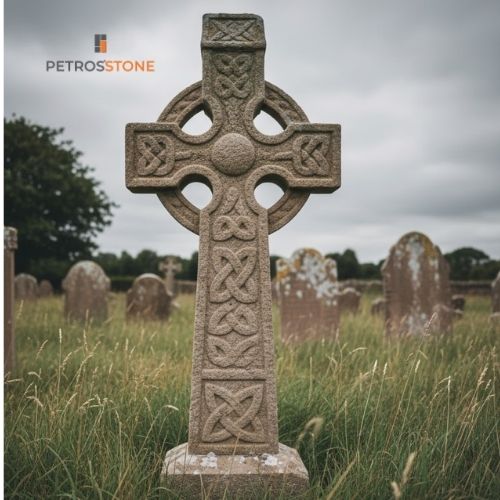 | Emerged in 9th-century Ireland blending Christian and Celtic beliefs; early examples found in Clonmacnoise and Monasterboice. | Circular halo, knotwork, spirals, biblical carvings; limestone or granite. | Represents eternity, faith, and heritage; widely chosen by families worldwide today. |
2. Jewish Headstone Designs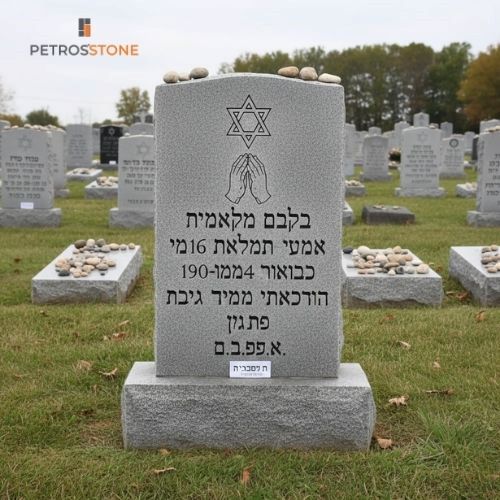 | Matzevot prioritize simplicity and equality; inscriptions reflect spiritual identity and prayers. | Hebrew inscriptions, Star of David, candlesticks, priestly hands; matte granite/limestone. | Stones placed on graves symbolize enduring memory; tradition rooted in ancient customs. |
3. Chinese Ancestral Headstones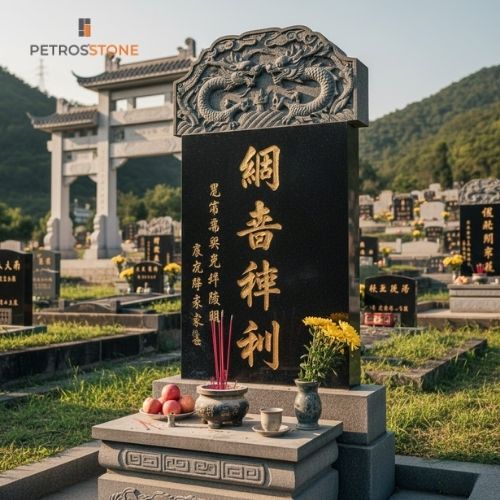 | Honor ancestors with inscriptions reflecting lineage and virtues; Feng Shui influences orientation. | Colorful red/gold inscriptions, protective animals, offering tables. | Maintains fortune, respect, and ancestral connection; simplified designs common in cities. |
4. Italian Mausoleum & Vertical Headstones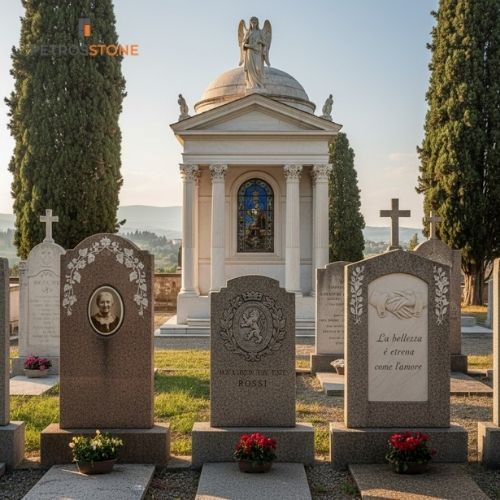 | Italian cemeteries resemble open-air museums; marble mausoleums with angels and stained glass. | Carved marble saints, family crests, ceramic portraits, vine motifs. | Emphasizes beauty, faith, and eternal love; “La bellezza è eterna come l’amore.” |
5. Ukrainian Decorated Headstones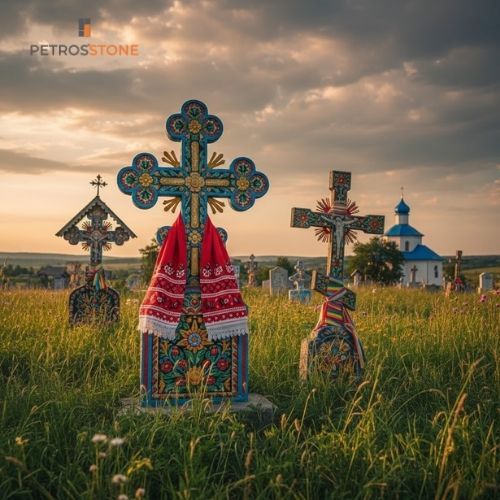 | Combine Orthodox Christian icons with folk art; wooden crosses often painted or embroidered. | Triple-bar cross, floral motifs, sun/wheat/bird carvings, bright colors. | Symbolize rebirth, joy, and the soul’s eternal journey into nature. |
6. Scandinavian Wooden & Carved Headstones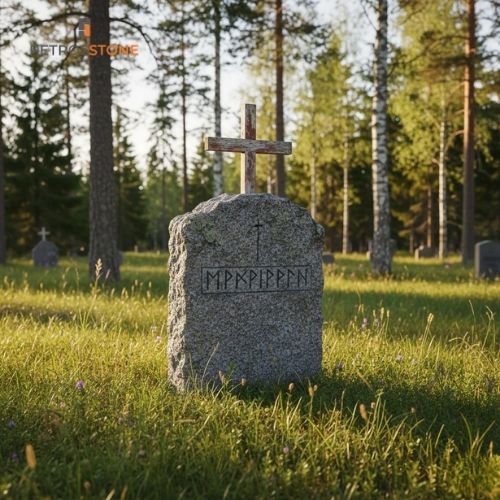 | Rooted in Viking runestones and later Christian wooden crosses; minimalist, nature-integrated designs. | Granite/fieldstone, minimal text, natural placement near trees. | Reflect purity, peace, and harmony with nature. |
7. Islamic Headstone Designs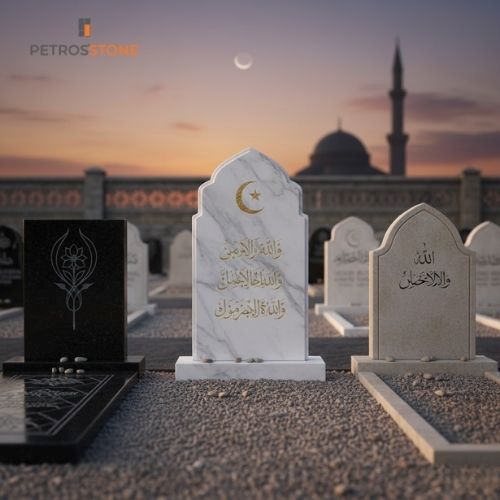 | Emphasize modesty and spirituality; inscriptions face Mecca; no figurative imagery. | Arabic calligraphy, Quranic verses, geometric and floral patterns. | Symbolize mercy of Allah, divine guidance, and hope for paradise. |
8. Japanese Shinto & Buddhist Memorials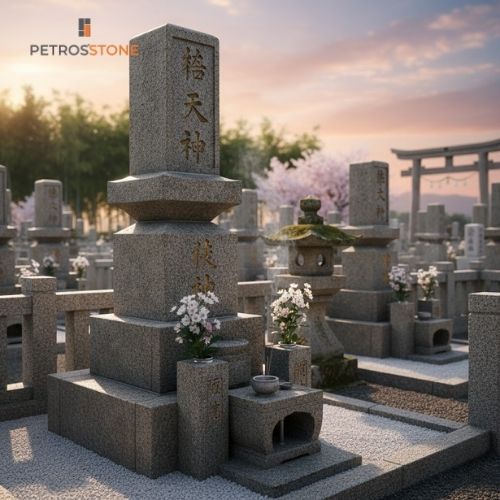 | Haka headstones follow layered structures representing heaven, earth, and humanity. | Multi-layered granite pillars, vertical inscriptions, spaces for offerings. | Express harmony, continuity, ancestor honor (especially during Obon). |
9. American Contemporary Custom Headstones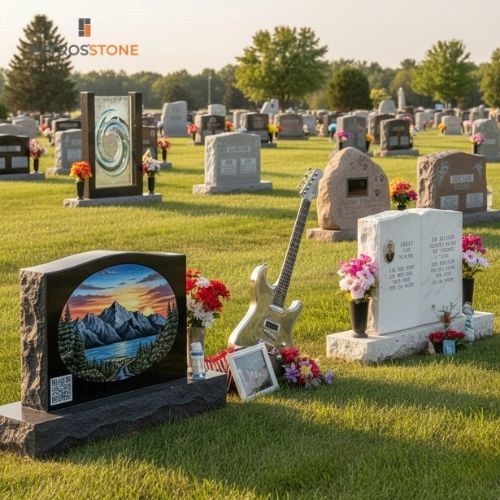 | Strong focus on personal expression; modern technology enables high customization. | Laser-etched portraits, custom shapes, QR codes, varied materials. | Celebrate individuality, legacy, and modern storytelling. |
10. Indian Traditional & Modern Headstones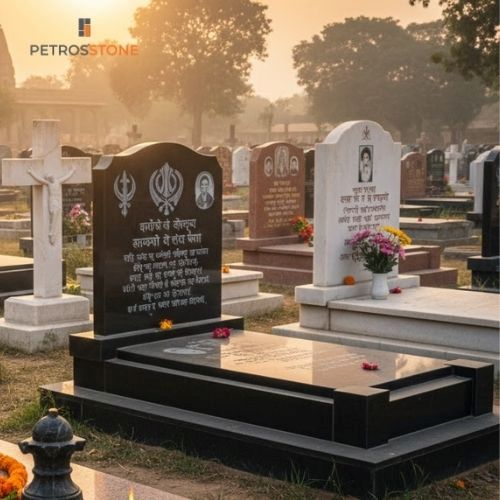 | Reflect India’s cultural and religious diversity—Hindu, Muslim, Christian motifs. | Om symbols, lotus, Quranic verses, marble crosses; local granite and marble. | Merge tradition with modern laser-etched designs and polished finishes. |
In this article, we will focus on the 10 most outstanding headstone designs worldwide, exploring how art, culture, and religion intertwine to create these enduring reminders.
History and Evolution of Headstone Designs
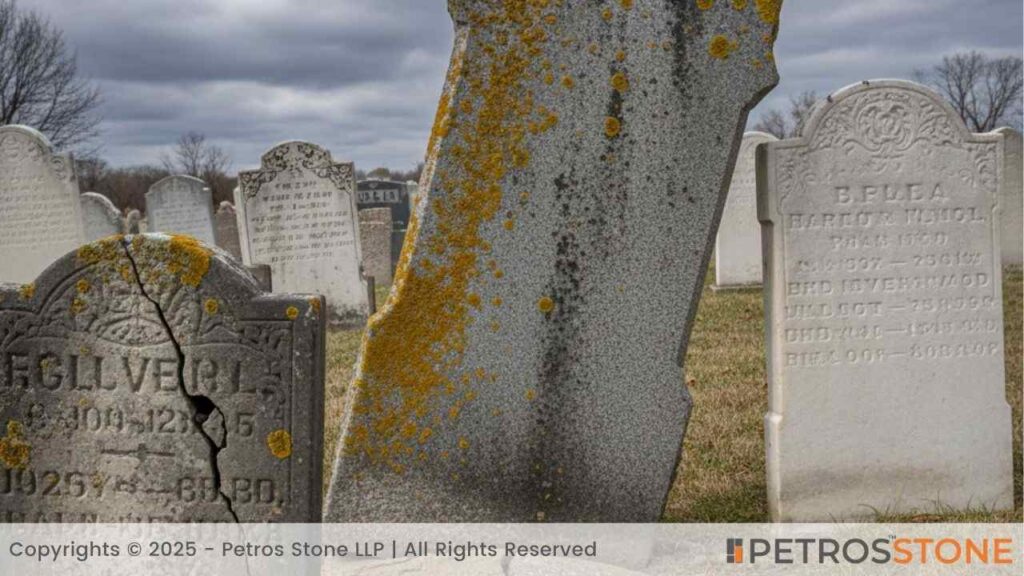
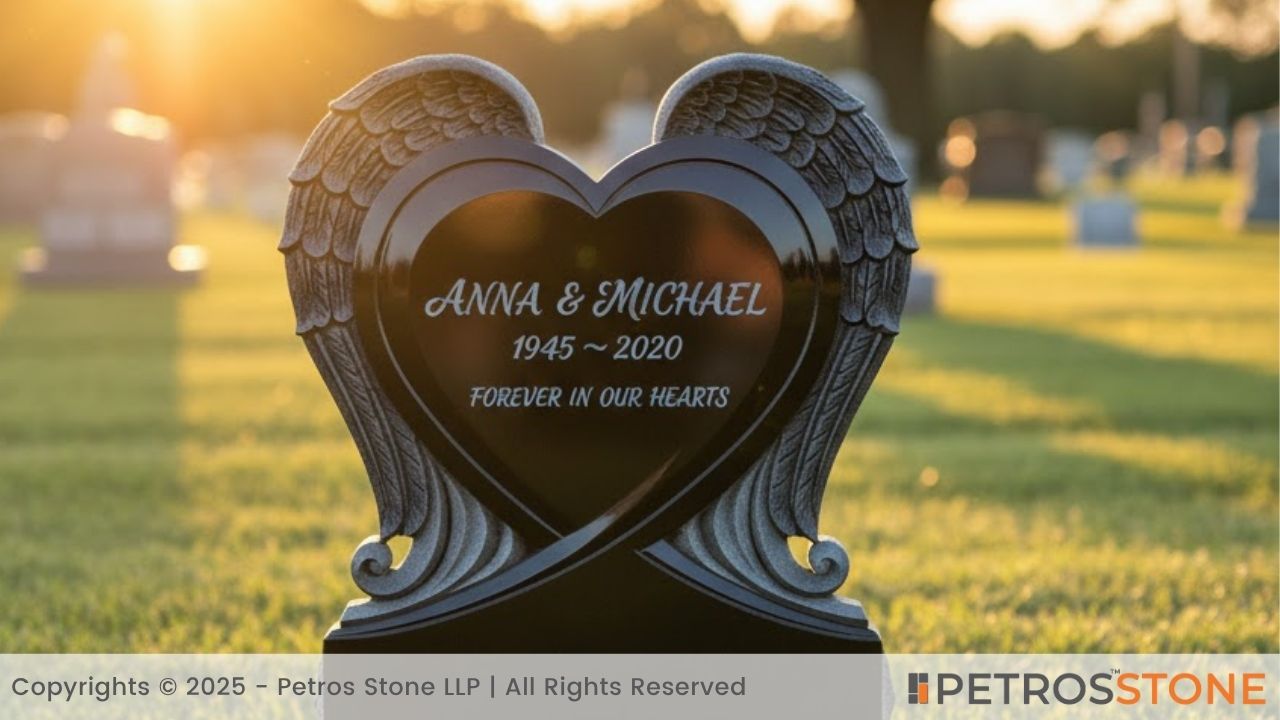
The history of headstones dates back thousands of years. To protect the body and indicate respect, early humans used to leave heaps of stones around the graves. These crude symbols eventually transformed into carved stones, and they were used as a method of recalling names, dates, and virtues.
Grand stone structures, such as the pyramids, were erected in ancient Egypt in commemoration of pharaohs and were painted in hieroglyphics explaining their life and their travel to the underworld. In the same way, the Greek and the Roman societies evolved carved stone monuments and stelae with carved figures, wreaths, and poetic epitaphs.
In Europe, the Medieval era transformed the way headstones were designed through Christianity. Pagan symbols were substituted by simple crosses, and by the 12th century, church graveyards contained upright slabs with religious carvings. The Renaissance era heralded the artistry- angels, cherubs, and surreal sculptural reliefs became popular.
By the Victorian era, mourning was an extremely emotional practice. Gravestones were made out of white marble and decorated with flowers, scrolls, and elaborately inscribed with sorrow and worship.
In the contemporary world, headstones could be mass-produced, using industrial tools with the addition of new materials such as granite and bronze, yet including personal touches. A combination of recovery, religion, and creativity has made the design of headstones a very interesting experience nowadays.
Evolution of Headstone Designs – A Brief Overview
| Era | Common Designs | Materials Used | Cultural Influence |
| Ancient | Stone mounds, hieroglyphic slabs | Sandstone, limestone | Egypt, Greece, Rome |
| Medieval | Crosses, simple symbols | Stone, limestone | Christian Europe |
| Renaissance | Sculptures, angels | Marble | Italian art influence |
| Victorian | Ornate carvings, poetry | Marble, granite | Emotional expression |
| Modern | Custom and minimalist styles | Granite, bronze, glass | Personal identity |
Why Headstone Designs Differ Across Cultures
To understand why headstone styles vary so widely, it helps to look at how art, belief, and local materials influence each region. Civilizations shaped their memorials based on available stone, spiritual traditions, and societal values. Moreover, as cultures evolved, their headstones also transformed—moving from simple markers to elaborate works of carved memory.
Key Elements of Headstone Design
Headstones blend three main design elements: materials, symbols, and shape or finish. These elements reflect cultural values and practical considerations.
1. Materials
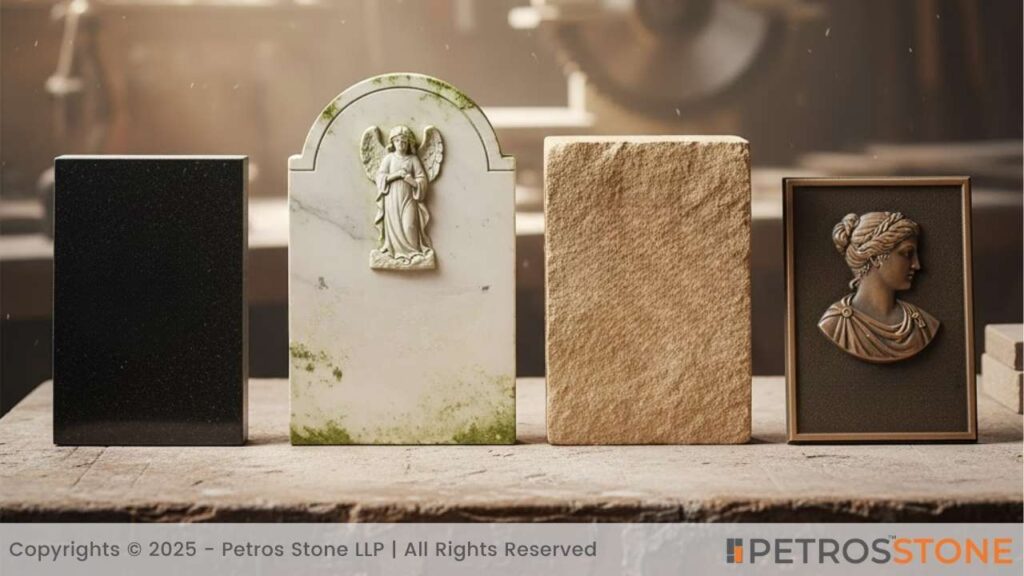
A headstone is made of a material that influences its durability, texture, and tone. Stone has always represented strength and belief. But the choice of the material is also affected by cultural and environmental aspects.
Table – Headstone Materials
| Material | Common Regions | Advantages | Limitations |
| Granite | Global | Hard, weather-resistant, allows detailed engraving | Expensive |
| Marble | Europe, India | Elegant, smooth, easily sculpted | Prone to erosion |
| Limestone | UK, Ireland | Traditional, soft color | Wears down over time |
| Bronze | USA, Italy | Long-lasting, minimal maintenance | Costly |
| Wood | Scandinavia, rural areas | Natural, warm texture | Decays quickly |
| Sandstone | Asia, Middle East | Easy to carve, historical | Erodes with the weather |
Eco-friendly memorials have also been done using glass, stainless steel, and even recycled materials, a practice that is inherited in modern times.

2. Symbols and Their Meanings
Symbols act as visual poetry. They speak where words fall short. Religious or natural, each of them has an emotional depth.
Table – Headstones Symbols and Their Meanings
| Symbol | Meaning | Cultural Use |
| Cross | Faith, salvation | Christian world |
| Star of David | Connection to God | Jewish graves |
| Crescent Moon | Spiritual guidance | Islamic culture |
| Lotus | Purity, rebirth | Indian and Asian traditions |
| Angel | Messenger, protection | Europe, America |
| Tree of Life | Growth, immortality | Universal |
| Bird/Dove | Peace, soul’s freedom | Global |
| Flame | Spirit or eternal life | Many religions |
| Butterfly | Transformation | Modern symbolism |
These symbols are transformed into the artistic style of each culture, including the Celtic spirals, the Islamic geometry, or the Japanese minimalism.
3. Shapes and Finishes
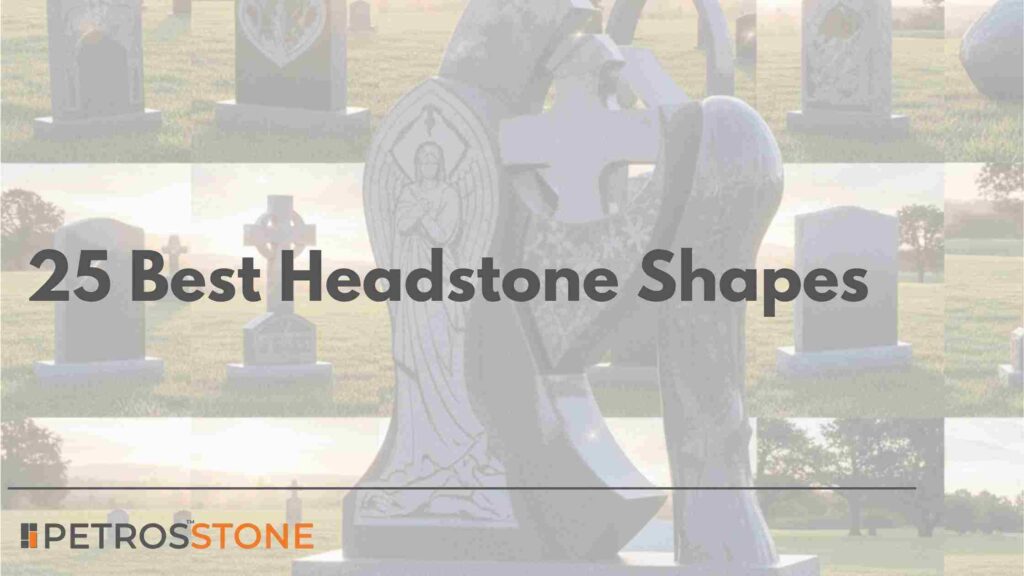
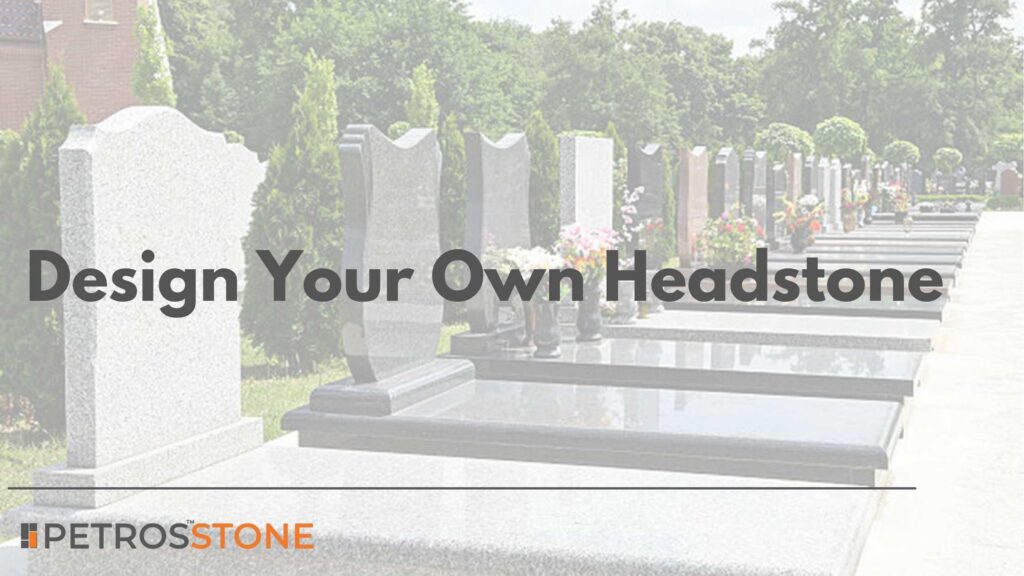
A headstone has a story by itself. Vertical stones connote power and elevation, whereas slabs lying horizontally represent rest and calmness.
Table – Headstones Shapes & Finishes
| Type | Description | Common Regions |
| Upright headstone | Classic, rectangular design | Worldwide |
| Flat marker | Lies flush with the ground | USA, modern cemeteries |
| Obelisk | Tall column symbolizing eternity | Egypt, USA |
| Cross-shaped | Religious symbol | Europe, India |
| Plaque or tablet | Minimalist memorial | Modern graves |
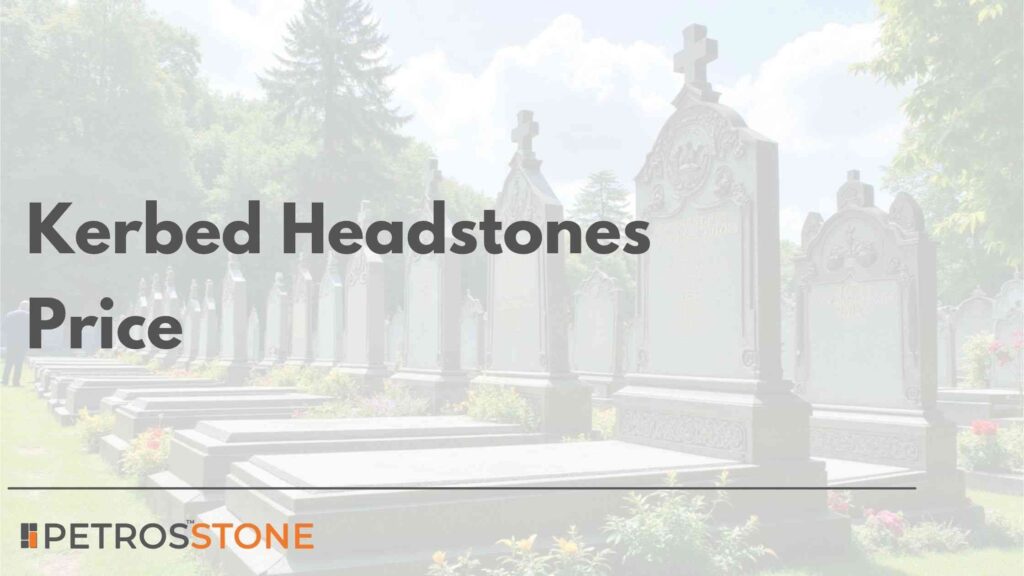
| Kerbed memorial | Encloses the full grave area | UK, Italy |
| Mausoleum | Family tomb or crypt | Mediterranean regions |
These are polished, sandblasted, or natural finishes that are intended to add durability as well as beauty.
The 10 Best Headstone Designs from Around the World
1. Irish Celtic Cross Headstones
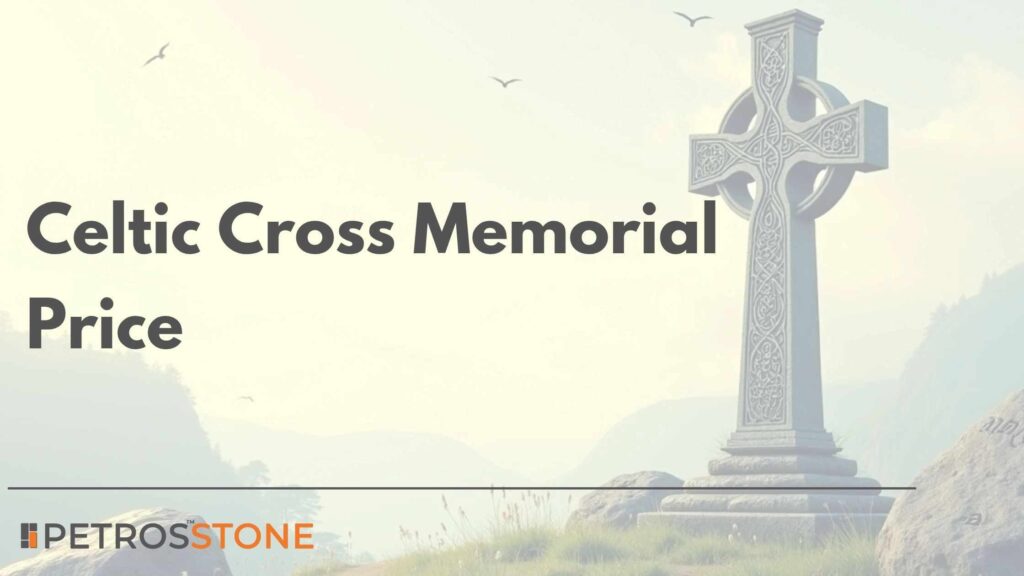
The Celtic Cross is among the best-known grave markers in the world. It arose in Ireland circa the 9th century, and it was a mixture of Christian and traditional Celtic beliefs. The ring around the cross is a symbol of the eternity of God and the sun, which was a strong Celtic symbol.
The tall stone crosses may be examined in early examples at Clonmacnoise and Monasterboice, carved with much knotwork, spirals, and biblical themes. These styles impacted the art in the churches of Britain and Europe.
Distinctive Features:
Circular halo connecting the arms of the cross
Interwoven designs that represent immortality.
Carvings of saints or scriptures.
Use of limestone or granite
Modern Adaptation:
Although it is not an Irish emblem, the Celtic cross is a highly sought-after emblem today among non-Irish families around the world, and it represents faith, heritage, and unity.
2. Jewish Headstone Designs
Jewish tradition lays stress on simplicity, equality, and respect towards the dead. The headstones known as matzevot are usually small and erect slabs composed of natural stone. It is not aimed at glorification but the retention of myth.
Personal and spiritual identity is depicted through symbols of the Star of David or candlesticks (women) or hands in blessing (priests). Often, the inscription ends with the Hebrew term May his/her soul be bound up in the bond of eternal life.
Distinctive Features:
Prayers and Hebrew inscriptions.
Absence of lifelike images
Matte finish granite or limestone.
Cultural Significance:
According to the Jewish religion, placing tiny stones on a grave symbolizes that the memory can live on, not to drop like flowers, a practice that goes back to the old tradition.
3. Chinese Ancestral Headstones
Honouring ancestors in China is a pious responsibility. The Chinese calligraphy on headstones is determined by family lineage and virtues and is usually inscribed on a polished stone. The inscriptions are supplemented with red and gold paint, which represents fortune and respect.
Other common features of many graves include protective symbols (dragon, lion, or phoenix) and an offering table during some festivals, such as Qingming (Tomb-Sweeping Day).
The orientation of the grave follows the principles of Feng Shui, which is facing south by natural harmony.
Distinctive Features:
Colorful inscriptions
Family structure and virtues are listed on the rock.
Giving of food, flowers, and incense.
Modern Adaptation:
In cemeteries, complex forms are not prevalent in urban settings, and traditional symbolism captures the heart of the matter.
4. Italian Mausoleum and Vertical Headstones
Italian cemeteries have the appearance of open-air museums. All the way down to Florence and Milan, there are marble mausoleums where the family has a sanctuary, and there are columns and angels and stained glass.
Portraits of Italian vertical headstones are frequently made with ceramics, and this started in the 19th century. These images bring the monument to a more human level and remindance becomes highly intimate.
Distinctive Features:
Carved marble angels and saints.
Engraved family crests and names
Floral and vine motifs
Symbolism:
Beauty reflects faith. The spirit of these designs is best expressed in the Italian saying “La bellezza è eterna come l’amore” (Beauty is eternal like love).
5. Ukrainian Decorated Headstones
The headstones in Ukraine combine Orthodox Christianity and folk art. Three-bar crosses symbolize the crucifixion, and floral carvings and painted motifs make them lively.
Wooden crosses painted with ribbons or embroidery (named rushnyk) are demonstrated in rural settings. The bright blue, red, and yellow colors are used to signify happiness and the everlasting soul.
Distinctive Features:
Folk motives and embroidery designs.
Orthodox triple cross
Sun, wheat, and birds carvings.
Symbolism:
These tombs represent the idea of Ukraine, which supposes that death is not a final stop but a new birth into light and nature.
6. Scandinavian Wooden Cross and Carved Headstones
Scandinavian headstones can be seen as displaying a nature-based minimalist style. The Viking burials. In very early times, Vikings were burying the heroic and their ancestors on rune stones on which inscriptions were cut. Wooden crosses, which were usually painted and carved by hand, were introduced by the later Christian influence.
This simplicity and elegance are continued in modern Scandinavian memorials. They are frequently placed against a tree and meadow setting and blend with the landscape.
Distinctive Features:
Granite or fieldstone monuments.
Minimal text and design
Blending with the natural environment.
Symbolism:
Nature and eternity are connected; simplicity is a demonstration of purity and peace.
7. Islamic Headstone Designs
The Islamic tradition of the burial is focused on modesty, equality, and spirituality. The Quranic verses printed on the headstone in Arabic writing are a sign of guidance that is stronger. There is no figurative art; instead, geometric or flowering patterns are used.
There are regional variations of design, such as domed tops found in Turkey, plain slabs found in India, and arched stones found in the Middle East, all of which were facing Mecca.
Distinctive Features:
Arabic inscriptions
Crescent and star motifs
Minimal ornamentation
Symbolism:
All the design details refer to the belief in the mercy of Allah and the anticipation of paradise.
8. Japanese Shinto and Buddhist Style Memorials
Japanese shrines are elegant and spiritual. The normal type of headstone (haka) is a tall pillar of granite with a base of several layers, symbolizing heaven, earth, and the human race.
Family names are written through engraving at the vertical position, and offerings such as incense, water, and flowers are undertaken on a regular basis. Obon is a festival celebrated during which ancestors are honored to show the souls coming back.
Distinctive Features:
Multi-layered stone design
Collective and not personal emphasis.
Sacrifice and clearing up.
Symbolism:
The Japanese memorial culture consists of harmony, continuity, and gratitude.
9. American Contemporary Custom Headstones
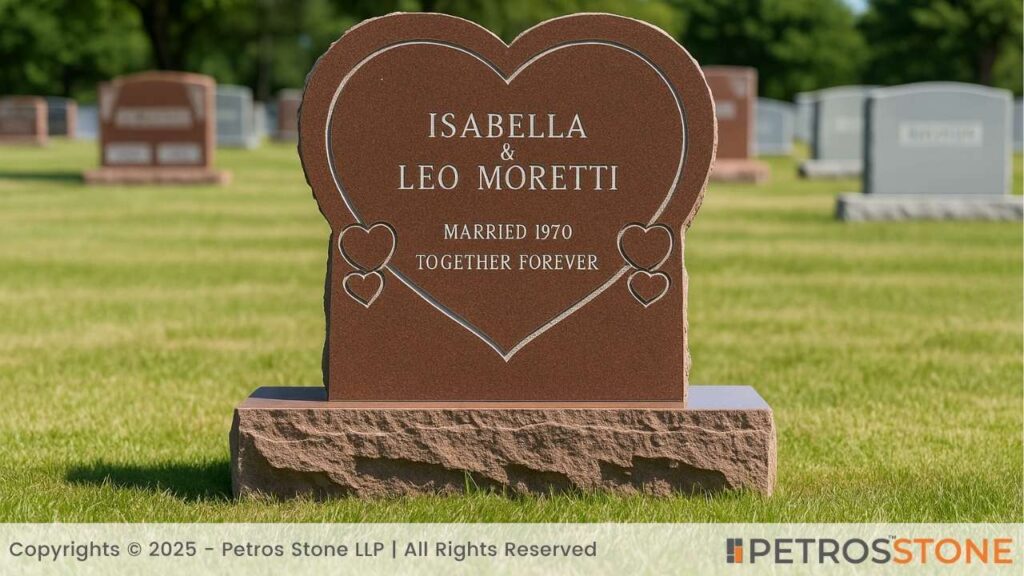
Freedom of expression in the United States is what characterizes headstone design. Since the usual crosses, modernized sculptures have been modeled by families bearing their life stories.
New technology enables a portrait, scenery, or a favorite quote to be laser etched. It is becoming popular to use QR codes that lead to digital memorial pages. There are families who select shapes as a guitar, heart, or book.
Distinctive Features:
Customized messages and art.
Various materials and colors.
Stop grieving and see the bright side of life.
Symbolism:
Extremeness and heritage, every boulder inscribed by history.
10. Indian Traditional and Modern Headstones
The designs of the headstones in India are as diverse as the religious and cultural background of India.
Hindu cemeteries, referred to as Samadhis have Om signs, lotus patterns, or the Shivalinga to represent rebirth. Sikhs have their religious signs. The Christian graves have marble crosses, and the Muslim tombs have Quranic verses and domed heads.
The choice of other regional stones, such as black granite of Tamil Nadu or white marble of Rajasthan, is due to durability and beauty.
Distinctive Features:
A combination of several religious signs.
Utilization of local motifs and resources.
Profoundly spiritual texts.
Modern Trends:
The cemeteries in the cities now have contemporary designs engraved by laser and polished surfaces without loss of the holiness.

Comparative Analysis of Global Headstone Design Trends
The styles of headstones across the globe tell more than they are a work; they reflect how the society views life, death, and commemoration. Every area expresses grief through its own unique style of art, affected by religion, geography, and emotion.
In order to observe this diversity more directly, consider a world cemetery of ideas: there are various corners that speak to us with various philosophies of memory.
Table – Comparative Analysis of Global Headstone Design Trends
| Region | Design Personality | Artistic Focus | Emotional Expression | Modern Adaptation |
| Ireland | Spiritual and intricate | Celtic cross, knotwork | Faith woven into stone | Reinterpreted in minimalist granite crosses worldwide |
| Israel | Modest and thoughtful | Plain slabs with Hebrew text | Memory through words, not form | Use of laser etching for precise inscriptions |
| China | Majestic and ancestral | Tall tablets, gold-red carvings | Respect for lineage and prosperity | Modernized with polished stone and symbolic color use |
| Italy | Dramatic and artistic | Sculpted angels, marble reliefs | Emotional devotion and beauty | Ceramic portraits and 3D laser art |
| Ukraine | Joyful and folkloric | Floral carvings, painted motifs | Celebration of life and heritage | Use of bright enamel and metalwork |
| Scandinavia | Minimalist and natural | Granite, wood, simple lines | Peace in simplicity | Eco-friendly stone and recycled wood |
| Middle East | Sacred and scriptural | Arabic calligraphy, crescents | Serenity through divine words | Polished marble with geometric laser engraving |
| Japan | Harmonious and meditative | Vertical granite pillars | Tranquility and family continuity | Zen-inspired modern memorials |
| USA | Personal and expressive | Custom shapes, photo etching | Celebration of individuality | QR-coded digital legacies |
| India | Spiritual and diverse | Om, lotus, cross, crescent | Union of body, soul, and faith | Laser-cut multi-faith headstones |
Design Stories Across Borders
- The stone of Europe talks about sculpture. Italy and Ireland make mourning into divine art- their patternings are theatricalities in marble and granite. Every angel, vine, or spiral is a poetic line in stone.
- Asia writes memory in language. China and Japan focus on inscriptions, lineage, and ritual, demonstrating that remembering is an intergenerational conversation.
- The Middle East and India transform religion into geometry and calligraphy- each curve and line is a prayer verse.
- Scandinavia and the USA are both antithetical but contemporary: one is minimalist and tied to nature, the other to the expressive and the personalized; both notions denote how innerness has reconfigured remembrance in the 21st century.
Patterns of Global Expression
| Theme | How It Appears in Design | Examples |
| Faith | Religious symbols, sacred scripts | Crosses, crescents, Om, Star of David |
| Nature | Organic materials, plant motifs | Scandinavian stones, Ukrainian flowers |
| Artistry | Sculpture and ornamentation | Italian and Victorian memorials |
| Simplicity | Unpolished stones, natural finishes | Jewish and Scandinavian graves |
| Personal Identity | Custom shapes, photographs | American memorials |
| Ancestral Ties | Multi-generational engravings | Chinese and Japanese family headstones |
Symbolism in Headstone Designs
Headstone symbols serve as an intermediary between the visible and the invisible. Eternal truths of human existence are written in stone or in calligraphy.
Table – Symbols used in Headstone Designs
| Symbol | Meaning | Use in Cultures |
| Anchor | Hope, faith, and stability — a reminder that love stays steady through life’s storms. | Christian graves, coastal Europe, and modern seaside memorials. |
| Wings | The soul taking flight — freedom from pain and return to the heavens. | Victorian Europe, U.S., and Latin American memorials. |
| Flame | Eternal life and divine light — a spark that never goes out. | Judaism, Christianity, and modern remembrance stones. |
| Circle | Infinity and unity — life never truly ends; it just changes form. | Celtic crosses, Buddhist mandalas, and modern minimalist designs. |
| Lotus | Rising pure from mud — the triumph of the soul over hardship. | India, Japan, and modern multicultural memorials. |
| Sun & Moon | Balance of light and dark — life and death in perfect rhythm. | Ancient Egypt to modern eco-friendly memorials. |
| Water Waves | Cleansing, renewal, and peace — like memories that keep flowing. | Contemporary Western headstones and garden memorials. |
Symbolism guarantees that each stone will be not only a record, but a message of love and continuity.
Innovative Trends in Headstone Designs
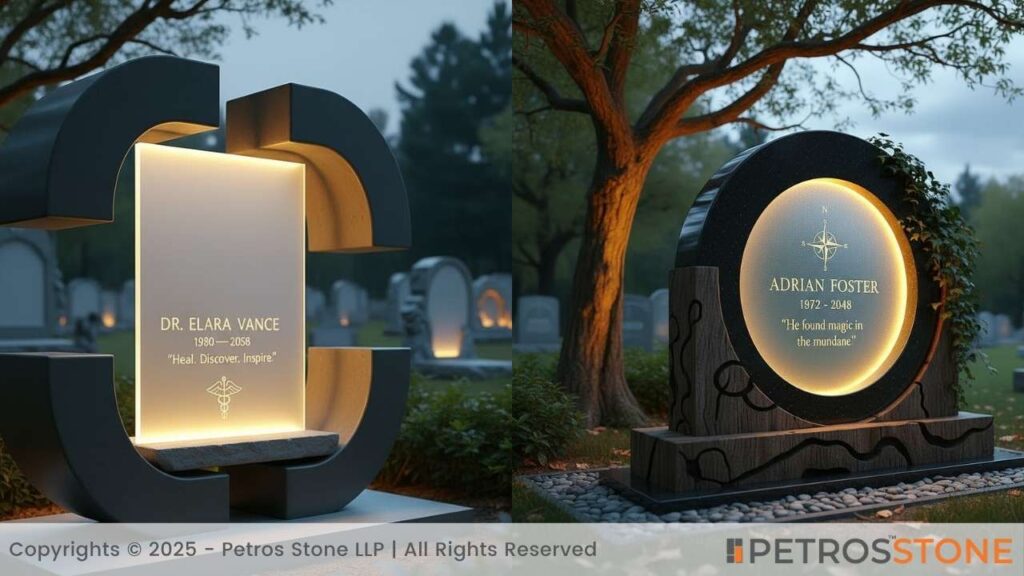
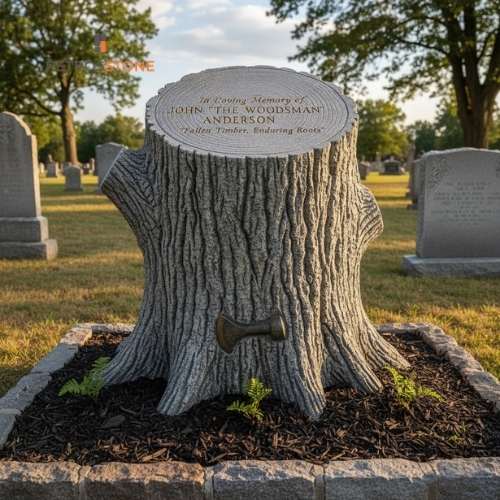
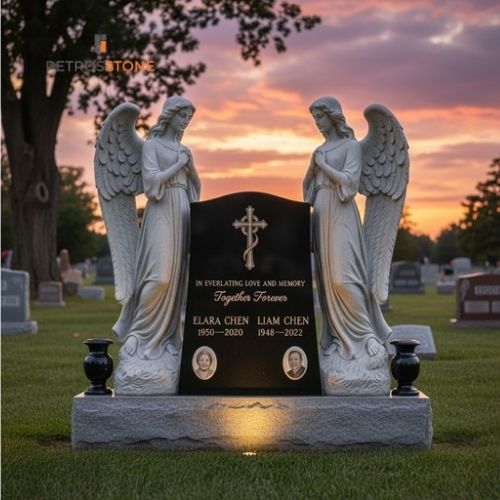
The 21st century has brought out unprecedented creativity in the design of memorials. Technology, environment, and feeling meet in new ways:
- Eco-Friendly Memorials- The recycled glass or biodegradable stones cut and used minimize environmental effects.
- Tree Memorials- As part of an attempt to combine the idea of remembrance and renewal, families plant trees, as opposed to headstones.
- Digital Tributes- QR codes result in online portraits with video, messages, and photos.
- Light and Sound Integration- The grave is given the living aspect of Solar-powered lights or Music sensors.
- Artistic Expression- the abstract sculptures or glass monuments give freedom to individuality and creativity.
- Cultural Fusion Designs- Multicultural families tend to blend motives, e.g., Celtic knots and lotus carvings.
These inventions demonstrate the way in which memory may be old and new, divine and individual.
Environmental and Sustainable Headstone Practices
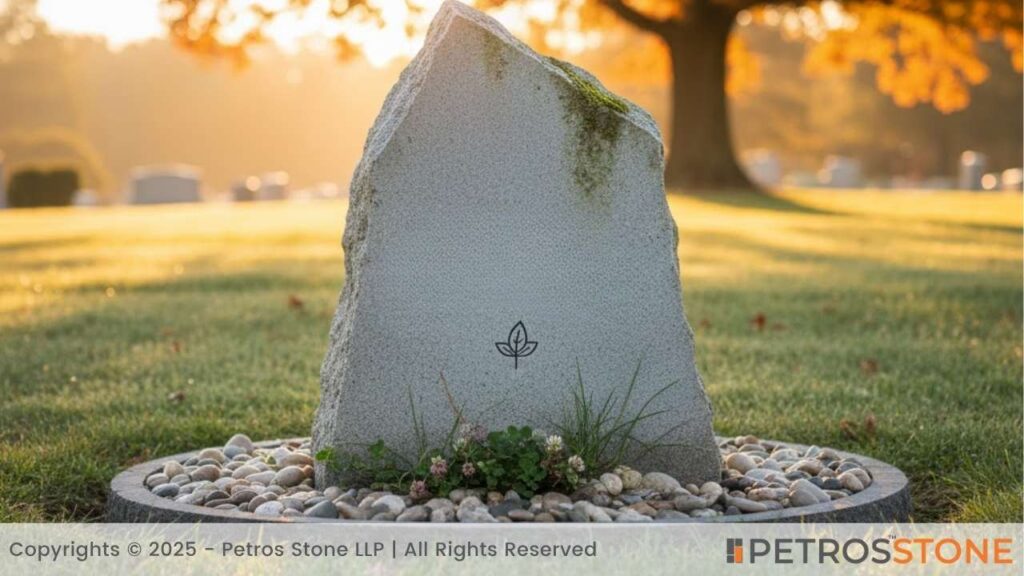
Even the traditions of remembering the environment are changing as people become more attentive to the environment. The thing is, there are lots of environmentally friendly and friendly headstones that celebrate the life of a person and the Earth today.
These are some of the major trends that transform sustainable remembrance:
1. Working with Natural and Local Materials
- Stones obtained locally help to minimize pollution from long-distance transport.
- The reused wood, clay, or river rocks have a natural earthly appearance.
- All the pieces harmonize with the landscape.
2. Biodegradable Memorial Markers
- Constructed of natural clay, sand, or degradable eco-resin.
- Others contain flower or tree seeds, which will flower with time.
- Representing going back to nature and the rejuvenation of life.
3. Living Memorials
- A tree or a plant itself takes the place of stone and becomes a living symbol of remembrance.
- Memorial forests and green cemeteries are increasingly becoming popular.
- Local ecology is supported by the choice of native species in families.
4. Low-Impact Designs: Minimalist
- Heavy monuments are being substituted by flat stones, pebbles engraved, and recycled metal plaques.
- Designs are concerned with simplicity and harmony with the natural environment.
- The message: remembrance need not leave a heavy footprint.
5. Online and Electronic Headstones
- QR codes can be linked to online memorials, rather than lengthy grave inscriptions.
- Families are able to post stories, pictures, or tributes on the internet.
- Minimizes the size of engravings required to preserve memories and does this virtually.
Table – Environmental and Sustainable Headstone Practices
| Type of Practice | Material/Method | Environmental Benefit | Symbolic Meaning |
| Natural Stone | Locally quarried or recycled stone | Reduces transport emissions | Connection to the earth |
| Biodegradable Marker | Clay, sand, or resin | Returns to soil naturally | Life cycle and renewal |
| Living Memorial | Trees or flowering plants | Promotes reforestation | Growth and continuity |
| Minimalist Design | Flat stones or recycled metal | Less resource use | Balance and simplicity |
| Digital Memorial | QR code with online tribute | Paperless, minimal engraving | Memory preserved in new form |
Summary
Headstones are not just sculpted rocks; they serve as permanent symbols of love, memory, and faith. For centuries across continents, people have used them to convey feelings that words can never fully express. From the rudimentary drawings of the ancient people to the elaborate sculptures we have in our cemeteries, each is a reflection of what the culture had of life, death, and the afterlife.
The Celtic crosses of Ireland narrate about faith, unending unity, and the pagodas in Japan are elegant with a sense of precision and respect for ancestors. These memorials, be it the marble angels of Italy or symbolic carvings of India, are an art and a form of worship. A particular culture shapes the design through its most valued causes and spiritual meanings.
In spite of their variations, however, all headstones are alike in one task, and that is, to honour and to remember. They help bridge generations, and they provide a reflection and continuation point that links the living and their ancestors. Silent witnesses of human love and loss are the headstones.
Digital engravings, eco-friendly memorials, and custom-made art actively transform how we preserve memories. The material and forms might vary, and the emotion remains the same.
Finally, headstones make us remember that memory knows no boundaries. They turn sorrow into happiness and make sure no life, however short, passes without making an impact on the world.

Feel free to get in touch for a free consultation, quote, and get a detailed understanding from our experts here at Petros®. Visit www.petrosstone.com or call +91-8446360361 or WhatsApp

Hello!
I’m Dr Mridali, a content writer with a background in dentistry and a passion for turning complex topics into clear, engaging stories. From healthcare to architecture, I create blogs that inform, educate, and connect with readers. With every piece, I aim to blend accuracy with creativity to make information truly valuable.

Brown Granite

White Galaxy Granite

Blue Bahia Granite

Silver Cloud Granite

Black Pearl Granite

Dallas White Granite