Communities preserve the living by honoring the memory of those who have passed. A headstone is more than a carved creation of stone; it is a silent conversation between memory and time. It tells succeeding generations who the person was, what their life meant, and how they lived. From a simple headstone of the Christian graveyard, the mausoleum of a saint, or the memorial plate rustling in the public garden, everyone has one common sentiment – reverence. An appropriate headstone is a symbol of permanence. It gives material things and those closest and dearest physical space to visit, ponder, and attain peace.
For many families, this is the last gift they can give, the one that remains after words or ceremonies have lost their meaning.
At heart, choosing a headstone is an act of love. It is a question of beauty being placed in proper places with the right meaning and durability with dignity.
A Step-by-Step Checklist for Choosing the Right Headstone
- Clarify purpose — decide what the headstone should express (love, faith, peace, achievement) and whether it’s for a single, companion, or family plot.
- Check cemetery rules — confirm size, height, material, finish, and placement limits.
- Choose material — weigh durability vs. appearance: granite (durable), marble (elegant), bronze (timeless), sandstone/limestone/ slate (rustic).
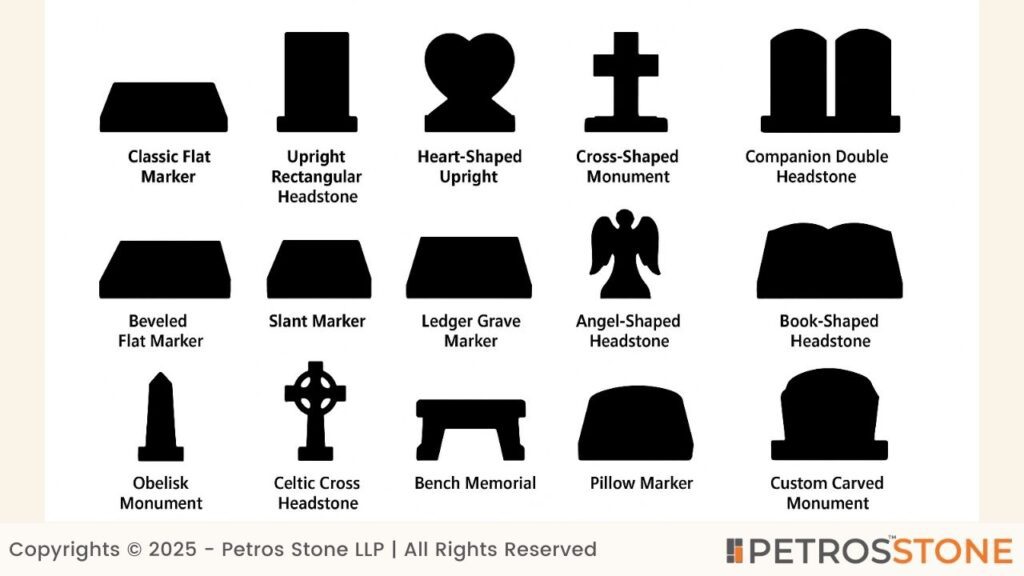
- Select shape & size — pick upright, flat, slant, or custom silhouette based on plot space and style.
- Pick surface finish — polished (easy to clean), honed/matte (subtle), or rustic/rock-pitched (traditional); consider climate.
- Decide lettering & engraving — choose inscription, font, and method (laser etch for detail, hand carving for warmth); consider inlay or paint infill.
- Set a budget — include material, engraving, installation, permits, and maintenance; request itemized quotes.
- Approve a scaled proof — review a digital or drawn layout; verify spelling, dates, proportions, and placement.
- Plan installation & care — confirm installer, foundation, and a maintenance schedule (cleaning, resealing, inspections).
Typical Headstone Cost Components and Price Range
| Cost Component | Description | Typical Price Range |
| Material | Granite is the most durable and affordable long-term option. Marble, especially Makrana or Italian is costlier but elegant. Bronze and custom plaques are premium choices. | Granite $169–$676 Marble $451–$902+ Bronze $902–$1,352 |
| Design Complexity | Simple rectangular stones with plain lettering are budget-friendly. Sculptures, inlays, portraits, or elaborate carvings add cost. | Varies — $56–$451 extra |
| Installation & Labour | Includes foundation, transport, alignment, and secure placement. Costs rise in cities due to labour rates. | $56–$169 |
| Location | Urban cemeteries in larger cities charge more than those in smaller towns because of labour and land constraints. | Cost difference up to 20–30% |
| Maintenance | Regular cleaning and sealing extend life. Cemeteries may charge for upkeep services. | $5–$23 per year (approx.) |
| Insurance / Long-term Care | Some urban families opt for memorial insurance or service contracts that cover cleaning and small repairs. | $23–$56 per year (optional) |
In this article, we explore the art and meaning of choosing the right headstone, how it connects love, memory, and craftsmanship. We guide you through the process of selecting a design that reflects dignity and permanence, while understanding the emotional and cultural value each memorial carries. From material selection to costing, we provide a clear, step-by-step checklist to help you navigate each stage of choosing the perfect headstone.
- Typical Headstone Cost Components and Price Range
- Types of Headstones and Memorials
- Slant and Bevel Markers
- Choosing the Right Material
- How to Choose the Right Headstone — A Step-by-Step Checklist
- Design and Customization Options
- Budgeting and Cost Factors
- Typical Headstone Cost Components and Price Range
- Where to Buy a Headstone
- Care and Upkeep
- Summary
- FAQs
- Key Takeaways
Types of Headstones and Memorials

There are different headstone styles for different ends — some are humble and simple, others are grandiose and expressive of the past.
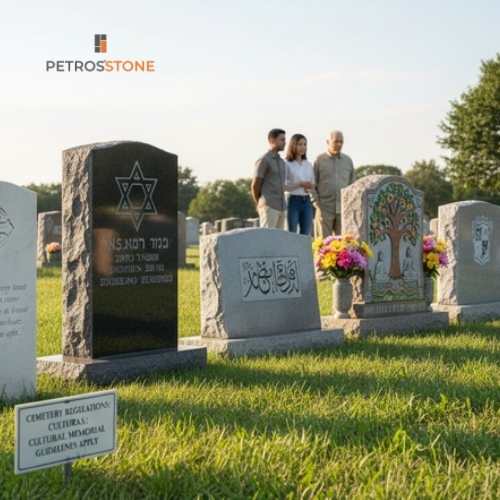
In many places, the burial customs differ among faiths. The designs are adopted by families according to their religious customs, the amount of land available and climate conditions.
Flat and Lawn-Level Headstones
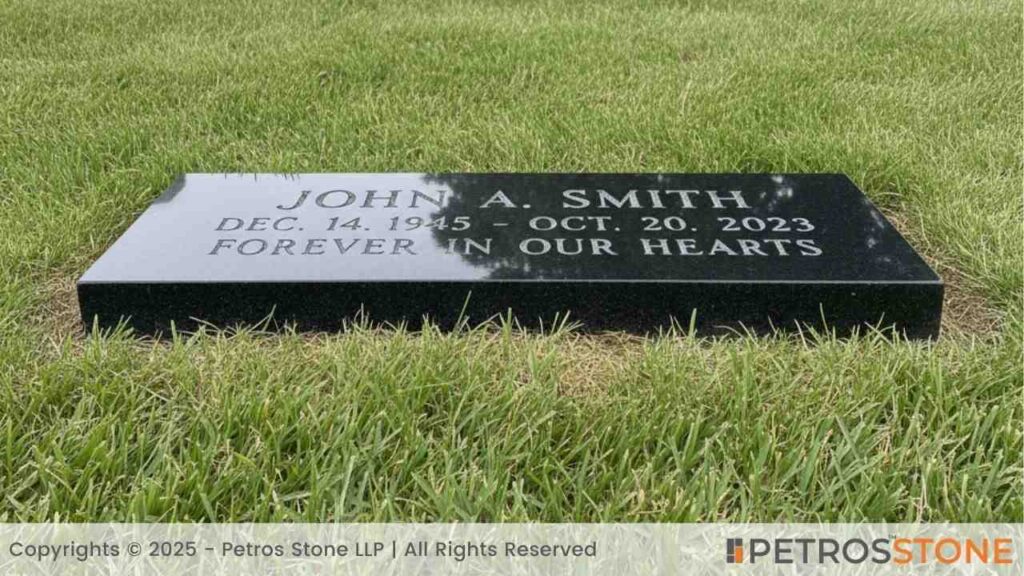
These are flat with the ground and provide a neat and simple attitude to maintenance. They are generally used in many cemeteries and allow for some personal treatment in the way of engravings or small carvings for family use.
Upright Monuments
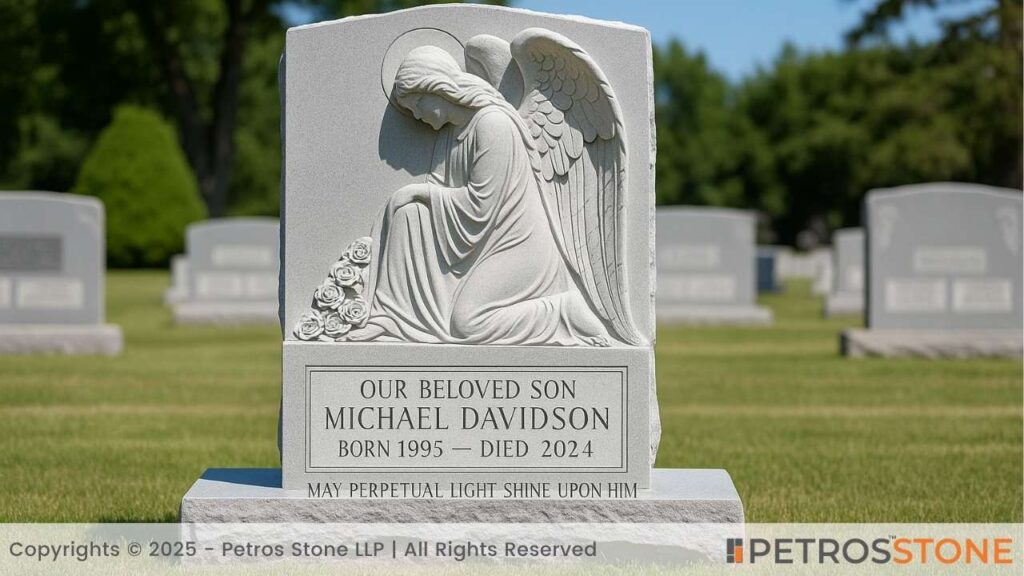
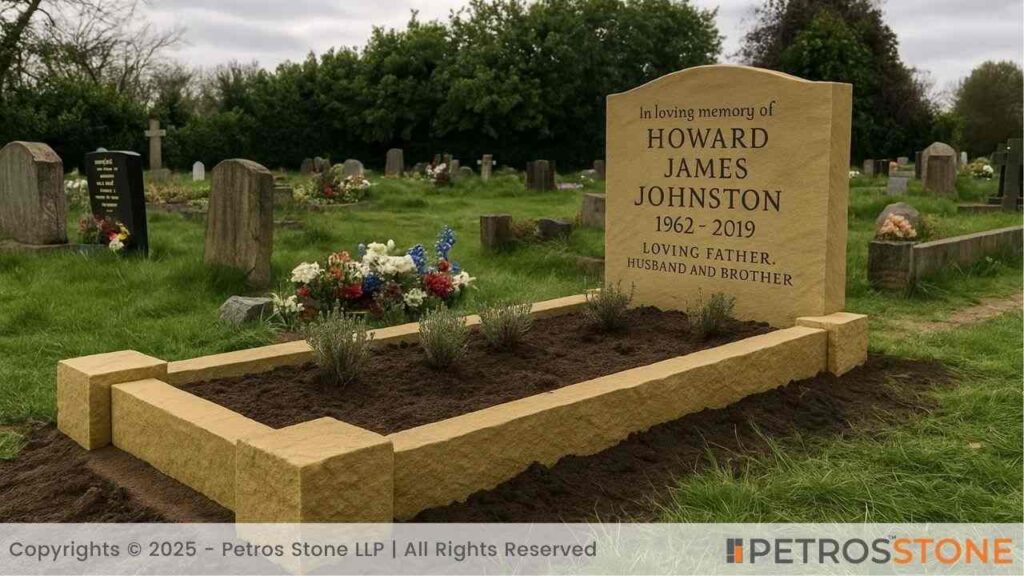
This type of monument is commonly known as the traditional headstone. It’s high, upright, and everlasting. Usually, these monuments are made of granite or marble and allow many sorts of shapes and inscriptions. Many heritage cemeteries feature these monuments, which are well‑suited to a range of climates.
Slant and Bevel Markers
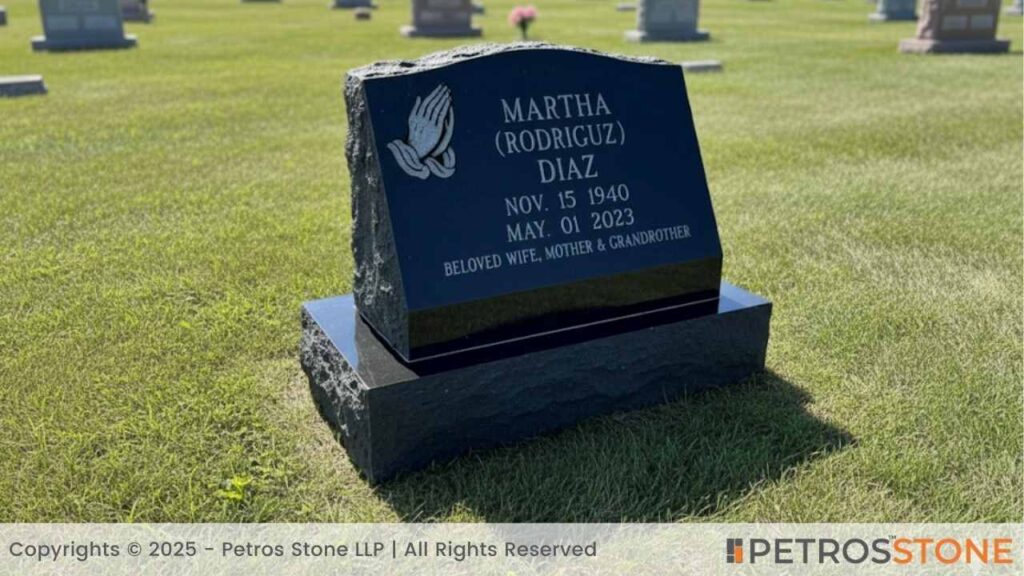
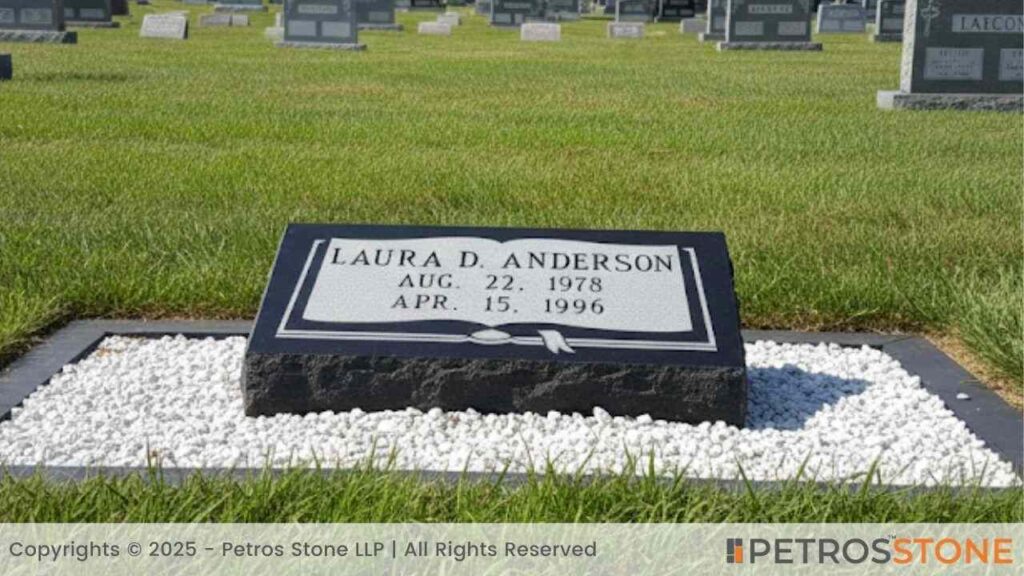
These are types set at an inclination and indicate inscriptions easily readable. The bevels have a gentle incline; the slants have a steeper rise. Both kinds are adaptable for crowded city cemeteries. They are compact, readable, and durable without being too flamboyant.
Crosses, Plaques, and Sculpted Memorials
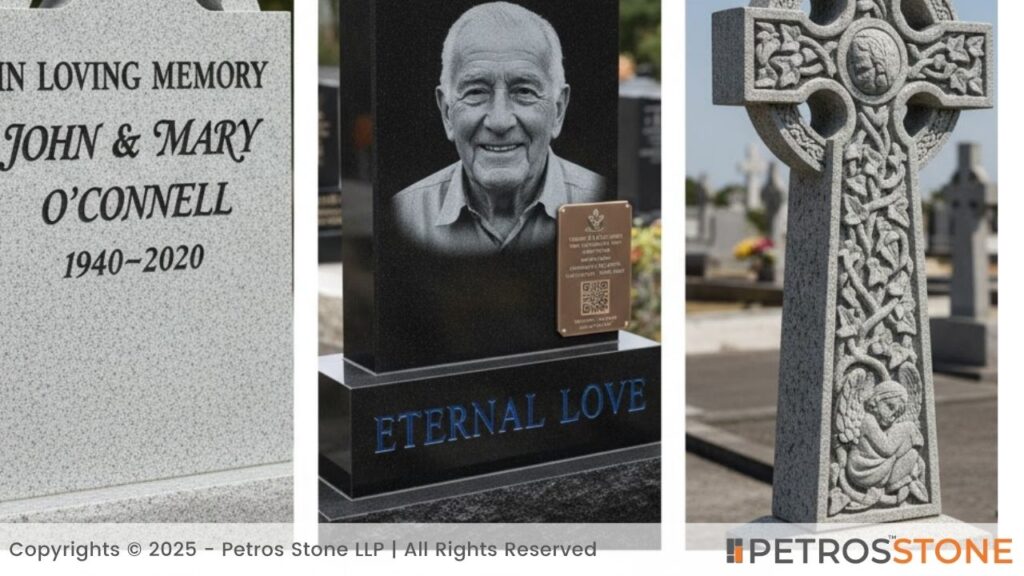
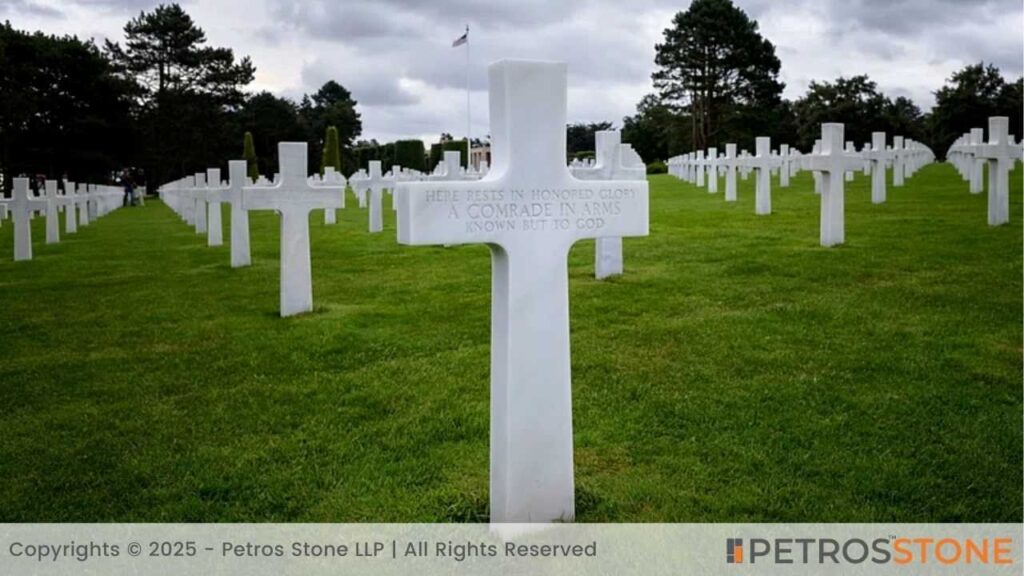
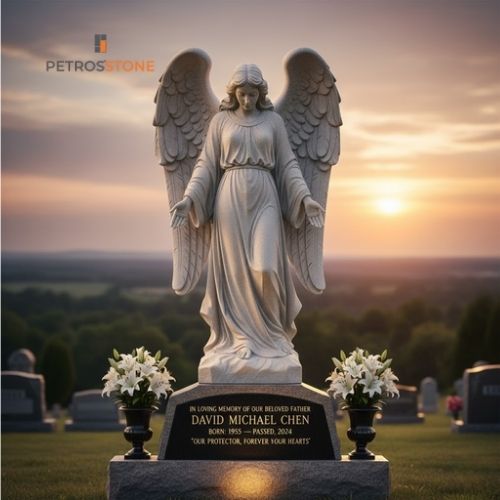
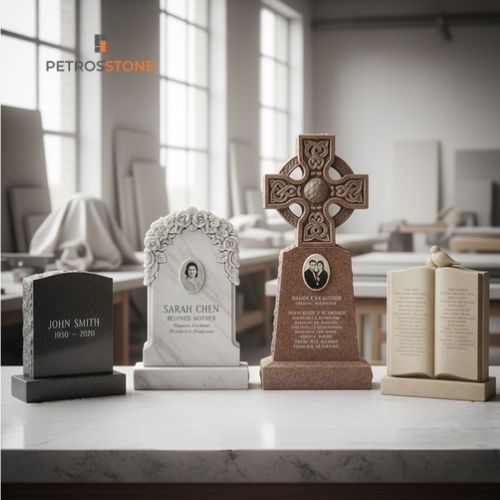
Memorials on the faith level—crosses, statues, or engraved tablets—are still very relevant, largely among Christians and Catholics, while some families now prefer to use modern artistic symbols like a book, dove, or instrument to indicate their departed relatives.
Companion and Double Monuments
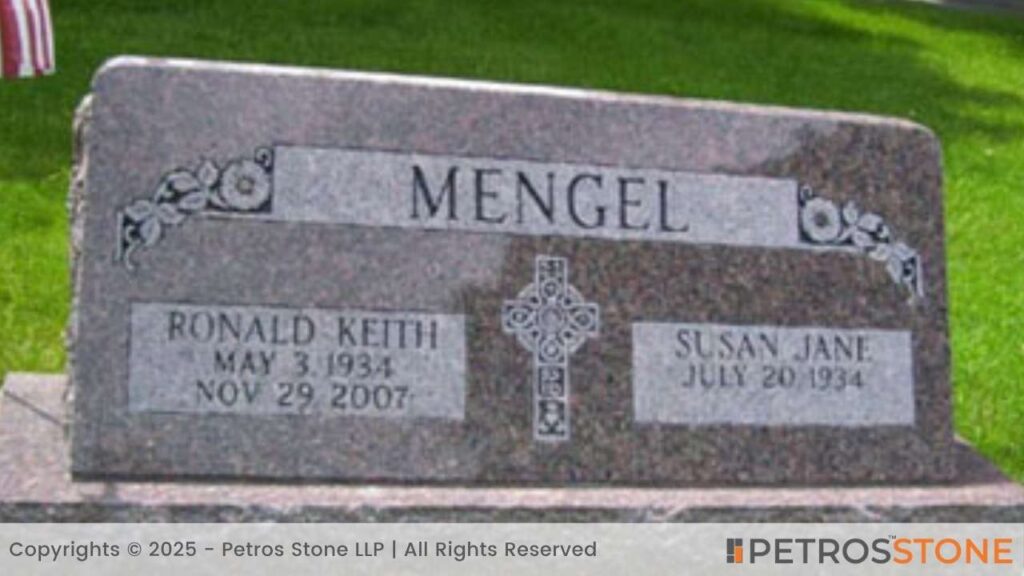
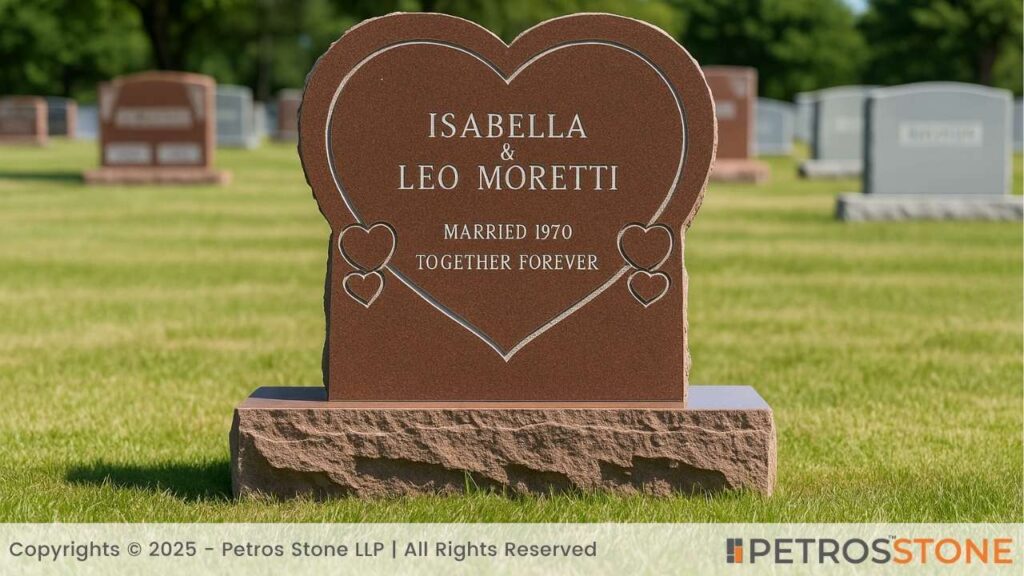
Joint headstones with two names are made for couples or families who are very close. These headstones are very common in many cultures, and they symbolise the ties of love and unity that still continue beyond this life. Choosing The Right Material
Choosing the Right Material
After deciding on the type of tombstone you need, the next crucial choice is the material for its construction. The material affects the monument’s look, durability, and weather resistance.
In regions with varying climates—heat, humidity and different rainfall levels—the selection of stone becomes both a practical and emotional aspect of the choice.
Granite Headstones
Granite is the most commonly chosen and practical material, as it is strong, affordable and weather‑resistant, which suits many climates, from coastal areas to dry plains. Marble’s esteemed artistic traditions greatly enhance its cultural significance, as exemplified by articles produced in regions like Makrana and Udaipur.
The polished granite is eminently suited to sharp engraving and inlay work. This is why granite is often chosen for memorial stones, both modern and traditional.
Marble Headstones
Marble represents elegance and spiritual significance, indicating purity, devotion, and eternal beauty. Marble’s esteemed artistic traditions greatly enhance its cultural significance, as exemplified by articles produced in regions like Makrana and Udaipur.
The only drawback is that it is comparatively soft and therefore requires pampering. It requires the usual service of polishing, cleaning, and sealing from time to time, which will preserve its brightness. It is unsuitable for outside tombstones, unless placed in the shade or in places where proper care can be provided.
Sandstone, Limestone, and Slate
Sandstone, limestone, and slate create a rustic country charm. Sandstone imparts a warm domestic feeling, limestone an unobtrusive and ancient feeling, whilst slate has the same formality as a beautiful matt finish. These products are economical and easy to find locally, but they can’t handle extreme weather.
These materials serve as natural options for memorial stones, suggesting a natural touch, and are suitable for arid regions with little rainfall. Alternatively, they can be used for environmentally sensitive memorials that may lose their natural coatings.
Bronze and Metal Plaques.
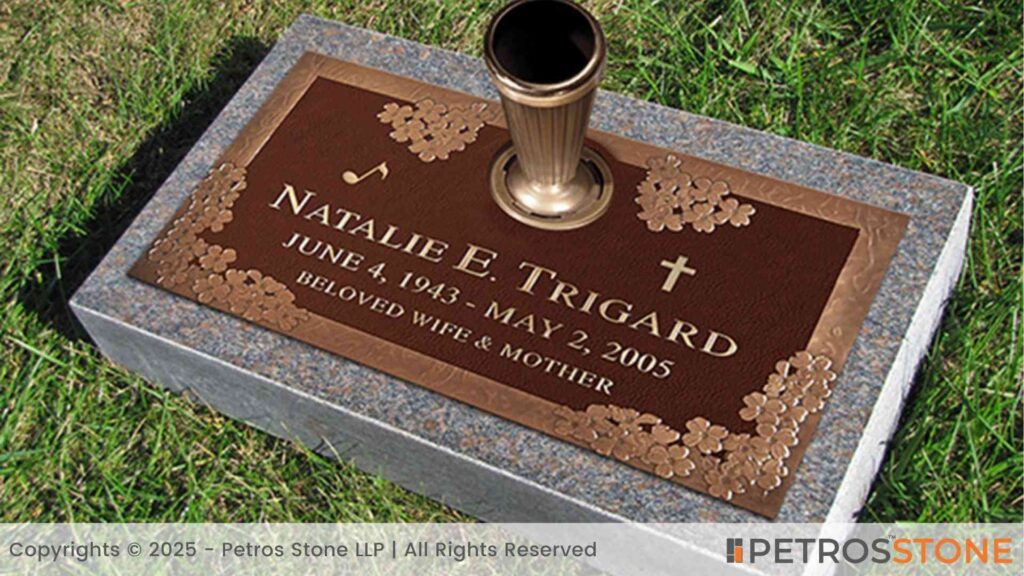
Bronze plaques have come into great vogue because of their artistic nature, composition, simple maintenance, and dignified appearance. They are invariably compounded on strong granite bases. With time, they acquire a beautiful golden brown patina.
Many families adopt these plaques for the tombs of military men or those who have served their fellow countrymen as memorials to various services, and therefore, they require them to be dignified, practical, and enduring.
In short, the material for a monument or tombstone is a practical and emotional choice. Granite symbolizes eternity, marble enhances mental clarity, and the selection of a natural stone reflects its deep connection to the earth. The ultimate choice is what most closely reminds the living of being in keeping with the person or memory that he desires to cherish.

How to Choose the Right Headstone — A Step-by-Step Checklist
Before you begin designing or ordering a headstone, take a few quiet moments to reflect and answer the following questions. This checklist will guide you through each step of the process — from choosing the right stone to personalizing the final design.
Step 1. Clarify What You Want to Commemorate
- What do you want the headstone to express — love, faith, peace, achievement, or simplicity?
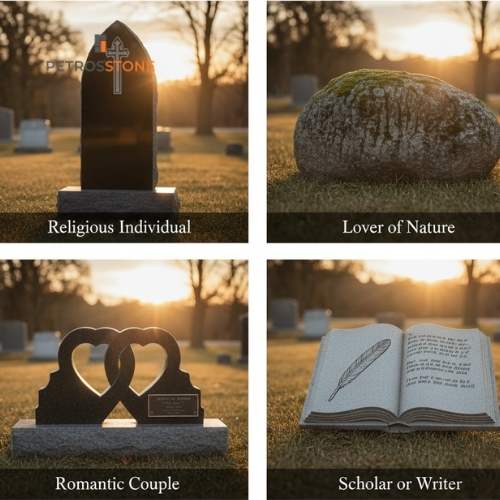
- Should it reflect personal interests (music, nature, religion, service, or family)?
- Will it mark a single grave, a companion grave, or a family plot?
Step 2. Understand Cemetery Rules
- Does your cemetery have size, height, or material restrictions?
- Are upright monuments permitted, or only flat markers?
- Is there a designated color or polish allowed in that section?
Step 3. Choose the Right Material
- Granite: Long-lasting, elegant, and cost-effective. Ideal for outdoor memorials.
- Marble: Refined and spiritual, but best suited for shaded or low-rainfall regions.
- Bronze: Dignified and timeless, though costlier.
- Sandstone/Limestone/Slate: Rustic charm, good for eco-friendly or local memorials.
- Ask yourself: Do I prefer durability or appearance first?
Step 4. Pick the Shape and Size
- Would you like a traditional upright monument, a flat marker, or a slant stone?
- Does the cemetery plot allow space for kerbing or flower vases?
- Consider whether you want a heart, open book, or cross shape — or a fully custom silhouette.
Step 5. Decide the Surface Finish
- Polished (shiny, easy to clean)
- Honed or matte (natural and elegant)
- Rustic or rock-pitched (earthy and traditional)
- Combination finishes for modern contrast
Step 6. Select Lettering and Engraving
- What words, quotes, or epitaphs best capture the person’s spirit?
- Would you like laser etching (sharp, photo-realistic) or hand carving (warm, artisanal)?
- Do you prefer gold leaf, paint infill, or natural lettering?
- Will you include religious icons or personal motifs?
Step 7. Review Budget and Compare Options
- What is your comfortable spending range — $200, $500, or more?
- Does your budget include installation, foundation, and delivery?
- Always ask for itemized quotes to compare quality versus cost.
- Remember: good craftsmanship and genuine stone ensure decades of durability.
Step 8. Approve a Scaled Design Proof
- Before production, request a digital or drawn proof showing lettering, layout, and scale.
- Make sure names, dates, and spelling are double-checked.
- Adjust proportions or motifs to ensure the design feels balanced and dignified.
Step 9. Plan for Installation and Maintenance
- Who will install the headstone — the cemetery, your supplier, or a local mason?
- Ask about re-leveling, cleaning, and annual inspections.
- Consider an optional maintenance plan for long-term care.

Design and Customization Options
Once you’ve chosen the material, the next step is design. This is where the process moves from practical to personal. The headstone becomes more than stone — it turns into a reflection of a person’s story, beliefs, and the way they lived. Families deeply rooted in tradition often meticulously consider every curve, letter, and motif.
Choosing Shapes and Sizes
Headstones come in many forms — rectangular, oval, heart-shaped, or even open-book designs. The shape often depends on plot size and cemetery rules. Upright slabs offer space for photos or carvings, while flat markers suit simpler memorials. Many families choose curved tops or dome shapes inspired by temple arches — graceful and serene.
Letters and Fonts
Fonts bring emotion to stone. Serif fonts feel timeless; script styles are more personal. Bilingual inscriptions—English and another language—are common, keeping language and identity alive.
Surface Finish and Texture
Polished stone looks formal and grand, while matte finishes feel natural and understated. In humid or dusty regions, polished surfaces clean easily, but rough finishes hide weathering better. Some families combine both for balance and contrast.
Engraving and Inlay Work
Laser engraving allows crisp lettering and portraits, while hand carving gives warmth. The inlay work—white marble on black granite or brass letters— adds refinement. These Mughal-inspired techniques give elegance without excess. Gold or paint inlays also improve visibility.
Religious and Symbolic Icons
Symbols often say what words can’t — an Om, a cross, a diya, a lotus, or a dove. Each faith, whether Hindu, Christian, Sikh, or secular, finds its own imagery of peace and continuity.
Ultimately, effective design is not about decoration—it’s about truth. The best headstones feel honest to the person’s life, quietly telling their story for generations.
Budgeting and Cost Factors
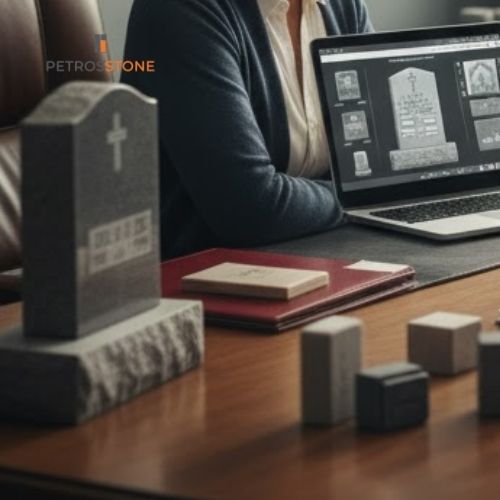
A headstone is both a memorial and a financial decision. Families often underestimate the extent of the cost range, as it depends on various factors such as the stone choice, design complexity, location, and labor charges. Prices can vary even within the same city.
Typical Headstone Cost Components and Price Range
| Cost Component | Description | Typical Price Range |
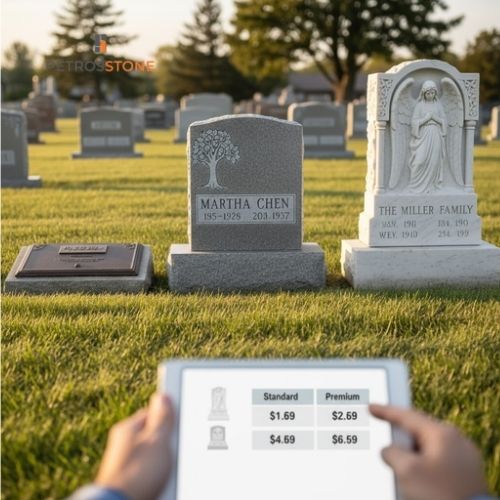
| Material | Granite is the most durable and affordable long-term option. Marble — especially Makrana or Italian — is costlier but elegant. Bronze and custom plaques are premium choices. | Granite $169–$676Marble $451–$902+Bronze $902–$1,352 |
| Design Complexity | Simple rectangular stones with plain lettering are budget-friendly. Sculptures, inlays, portraits, or elaborate carvings add cost. | Varies — $56–$451 extra |
| Installation & Labour | Includes foundation, transport, alignment, and secure placement. Costs rise in cities due to labour rates. | $56–$169 |
| Location | Urban cemeteries in larger cities charge more than those in smaller towns because of labour and land constraints. | Cost difference up to 20–30% |
| Maintenance | Regular cleaning and sealing extend life. Cemeteries may charge for upkeep services. | $5–$23 per year (approx.) |
| Insurance / Long-term Care | Some urban families opt for memorial insurance or service contracts that cover cleaning and small repairs. | $23–$56 per year (optional) |
Before finalising, get quotes from at least two or three monument builders. Compare not just the price but also the quality of stone, finish, and after-sales services. Some may offer cheaper composites that mimic granite but weather poorly over time. Always ask to see photographs or visit past installations to judge craftsmanship and authenticity.
Where to Buy a Headstone
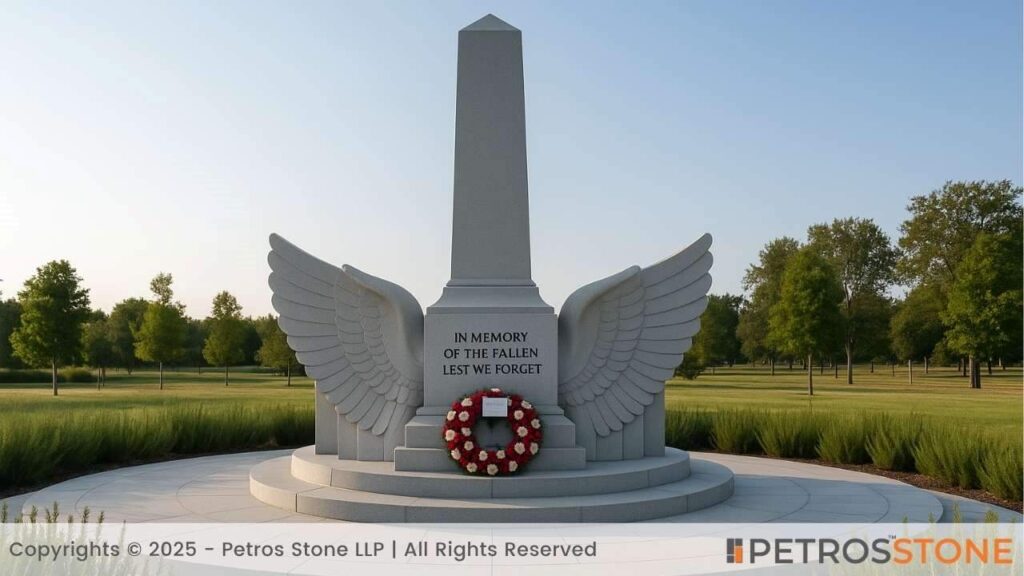
After you’ve chosen the shape, material, and design, the next question is: where should it be bought from? The right source can make the entire process painless — the wrong one can mean stress and strain. Today, choices vary, from local artisans to specialised craftsmen who combine traditional workmanship with modern precision.
Local Monument Companies
Local monument craftsmen are generally family businesses that have been carving stones for generations. They know the local customs—Christian, Hindu, or interfaith—and will guide you through the local cemetery rules.
A personalised visit provides the opportunity to check stone samples and craftsmanship and discuss design ideas individually. But unfortunately, not all local craftsmen have either the stone of sufficient durability or the finishing methods to produce excellent results. Some still rely on old hand-operated cutting tools or use irregular polishing methods. If you follow this line, choose a craftsman with a good reputation and request to see the installations he has completed in nearby cemeteries.
Online Headstone Retailers
Online monument dealers have become popular in recent years. They enable one to look through the different types of materials, see a preview of the designs in digital form, and easily compare prices. However, it is important to verify both their reputation and whether they supply real stone instead of synthetic composites. The reliable supplier will provide price transparency, payment methods, delivery schedules, and aftercare service for installation and upkeep.
Visiting Quarries or Manufacturers
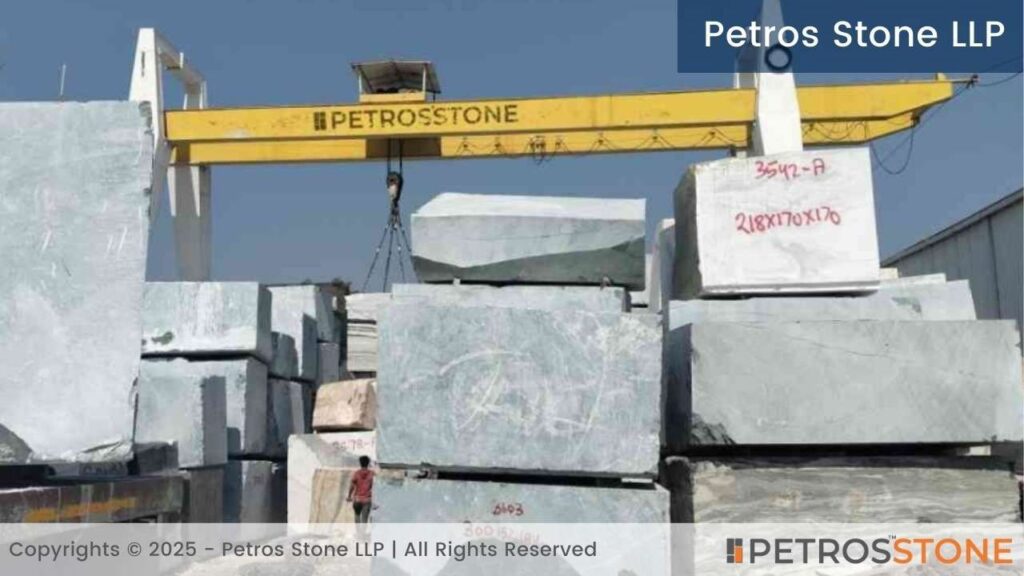
To ensure quality, visit the stone’s source: the quarries and manufacturers. Here is where Petrosstone makes a name for itself as a trustworthy name. Petrosstone, registered in Pune, India, supplies the best-quality granite, marble, and artificial stones across the globe. Not only do people use their product for interior decoration, but its quality is uniform with regard to color and architectural work.
For families who realize the importance of excellence and wish to erect beautiful and permanent memorials, the care and work of a supplier such as Petrosstone gives them the assurance that their ancestral values are properly represented.
They also offer custom cutting and engraving services, ensuring that the slab of stone is completed before reaching the workmen who create memorial stones. This process minimizes waste, enhances quality, and saves as much time as possible.
Funeral Home Assistance
Some of the Funeral Homes take supplies for memorial stones as part of their package services. While this means memorial stones can be erected in a convenient manner, they are likely to be more expensive and not so elastic in terms of design.
Funeral Homes typically work with a single group of manufacturers and suppliers, which reduces the variety of materials available; however, this simplifies the arrangements for transport and necessary paperwork.
For individuals who prefer not to manage the complexities of dealing with multiple merchants, this option would be straightforward, as long as careful attention is given to the quality of the stone and engraving before finalizing the purchase.

Care and Upkeep
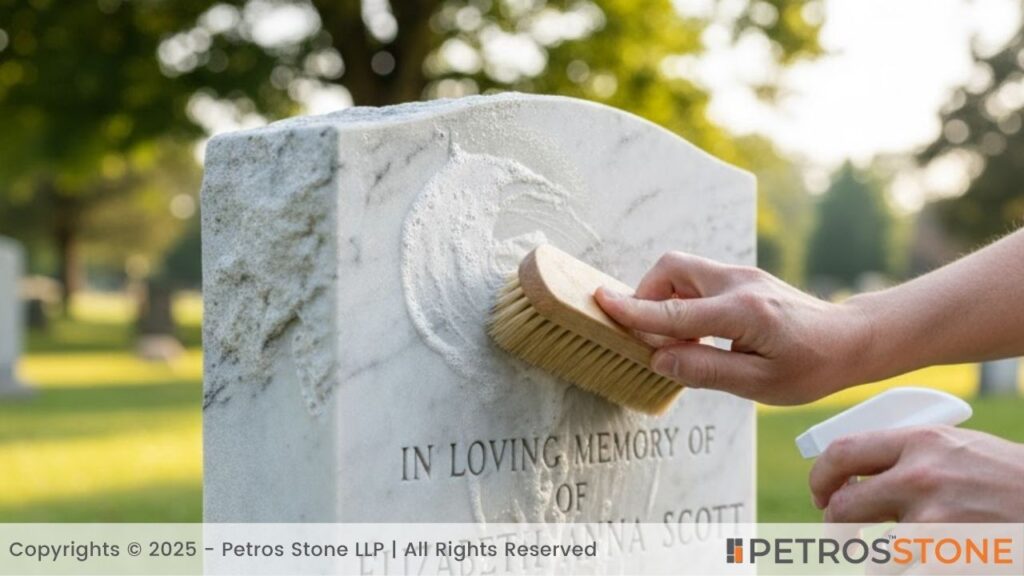
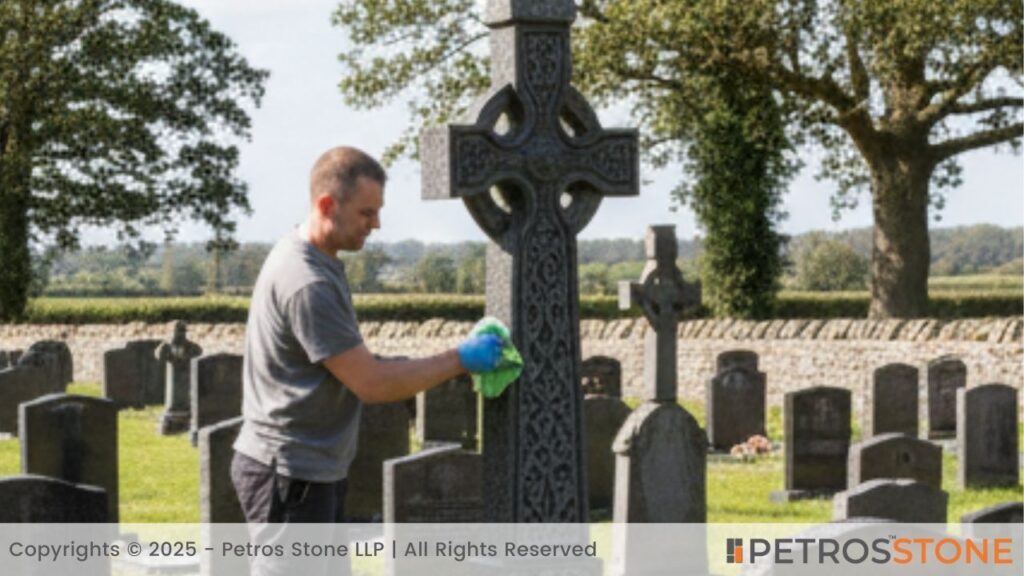
A memorial stone, like every other structure that is exposed to the elements, requires the advent of care. Different climates—humid coasts, dusty plains, and heavy rains—test the durability of even the most enduring stone. If the memorial is to appear dignified, it requires special attention, if only in a small way, simply once a year, so that at a later stage, expensive repairs will not be required. Attention as regards cleaning periodically.
Regular Cleaning Advice
Most stones should have a mild clean-up done to them to impose a clear conscience at least once or twice a year. Strongly acting sand cleaners or coarse wire brushes to rub the memorial stone surface should not be used. A bucket of water, soft soap, and a soft cloth will effectively serve this purpose. As regards granite and marble, a restful, simple neutral soap solution should be the most effective product.
If the location is on the coast where salt deposits are present on the stone’s surface, cleansing with plain water every three months is helpful for removing the white deposits.
The families who naturally visit the memorial stones on the anniversaries of death or on Soul’s day often have developed a habit of cleaning the memorials, putting flowers, and lighting candles. The procedure could be classified under upkeep care, but it would be looked on as an actual reminiscence of the past.
Restoring Faded Lettering or Polishing
Over time, inscriptions may fade, especially on marble. Professional re-engraving or repainting can restore visibility. Granite can also regain its shine with machine polishing, which removes surface stains and restores colour depth. If the lettering was originally gilded or painted, redoing it every few years maintains contrast and clarity.
Many local stone artisans offer this service at modest rates, so it’s worth checking with the same craftsman who made the headstone.
Annual Inspection and Minor Repairs
Just like homes, memorials age. The base may shift slightly, moss may grow in joints, or cracks may appear after years of rain. An annual inspection, ideally before or after the rainy season, helps catch issues early. Tightening loose fittings, resealing joints, and re-leveling the base ensure longevity.
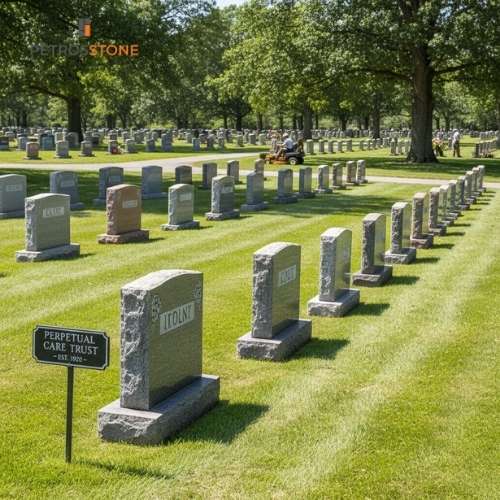
Cemeteries managed by churches or trusts sometimes provide inspection services for a small annual fee. This is especially useful for families living away from the burial site.
A well-maintained headstone does more than preserve stone; it preserves memory. It shows that love doesn’t end with a ceremony, it continues quietly, year after year, in the care we take to honor those who came before.
Summary
Choosing the right headstone is not only about stone, design, or cost, it’s about finding the most fitting way to tell a story that deserves to be remembered. Every detail, from the material you choose to the words you carve, becomes a part of that story. In many cultures, remembrance often lives in rituals, lighting a lamp, saying a prayer, visiting the resting place during festivals or anniversaries. A headstone becomes the quiet space where those rituals gather meaning. It stands as both a marker and a promise — that a life once lived continues to be acknowledged, respected, and loved.
FAQs
1. What is the best material for longevity?
Granite is widely considered the most durable material for headstones. It resists rain, heat, and pollution better than marble or sandstone. If you want a memorial that lasts generations with minimal upkeep, go for high-quality granite, ideally sourced from reliable suppliers like Petros® Stone, which specializes in premium-grade stone.
2. What is the average cost range of a headstone?
Prices vary depending on material, design, and size. A simple granite headstone may start around $169 – $282. More detailed or sculpted monuments can go for $900 or more. Marble or bronze memorials generally fall on the higher end. Always compare quotes and check installation and maintenance charges before finalizing.
3. Can I customize the design?
Yes, customization is completely possible — you can choose the shape, font, surface finish, and even add religious or cultural symbols.
Key Takeaways
- The headstone is more than stone. It is a monument to love, memory, and enduringness.
- Selection must be made in accordance with local traditions, climate and cemetery laws.
- The ideal stone is granite because it provides the best value in terms of durability and cost relative to its weight, while marble, though more expensive, offers consistent beauty and grace.
- Design characteristics, such as shape, lettering, finish, and devices, should reflect personal and national tastes.
- Careful comparisons must be made regarding prices, as locality, material, and complexity of design significantly affect the overall cost.
- Trustworthy sources, such as Petrosstone, can supply splendid granite and marble with lasting polish and perfection.
- Cleansing the stone, conducting annual inspections, renewing the seal on the headstone, and cementing the stone all contribute to the dignity of the memorial and ensure it endures for generations.
Feel free to get in touch for a free consultation, quote, and get a detailed understanding from our experts here at Petros®. Visit www.petrosstone.com or call +91-8446360361 or WhatsApp

Hi, I’m Dhananjay,
With a background in architecture and years of industry experience, I share insights on materials that shape great design. At Petros® Stone, I craft content that highlights the beauty and utility of natural stone, helping architects, builders, and homeowners make informed choices while strengthening the brand’s voice and online presence.

Brown Granite

White Galaxy Granite

Blue Bahia Granite

Silver Cloud Granite

Black Pearl Granite

Dallas White Granite