To better understand the distinctions between these varieties, Rishabh Jain, Director – International Business at Petros® Stone, spoke with Giuseppe Masselli of MS Marmo Service S.r.l, Apricena, about the characteristics and natural variation found across Serpeggiante. Masselli highlighted how differences in tone and veining give each variety its own visual identity:

Owner, MS Marmo Service S.r.l (Apricena)
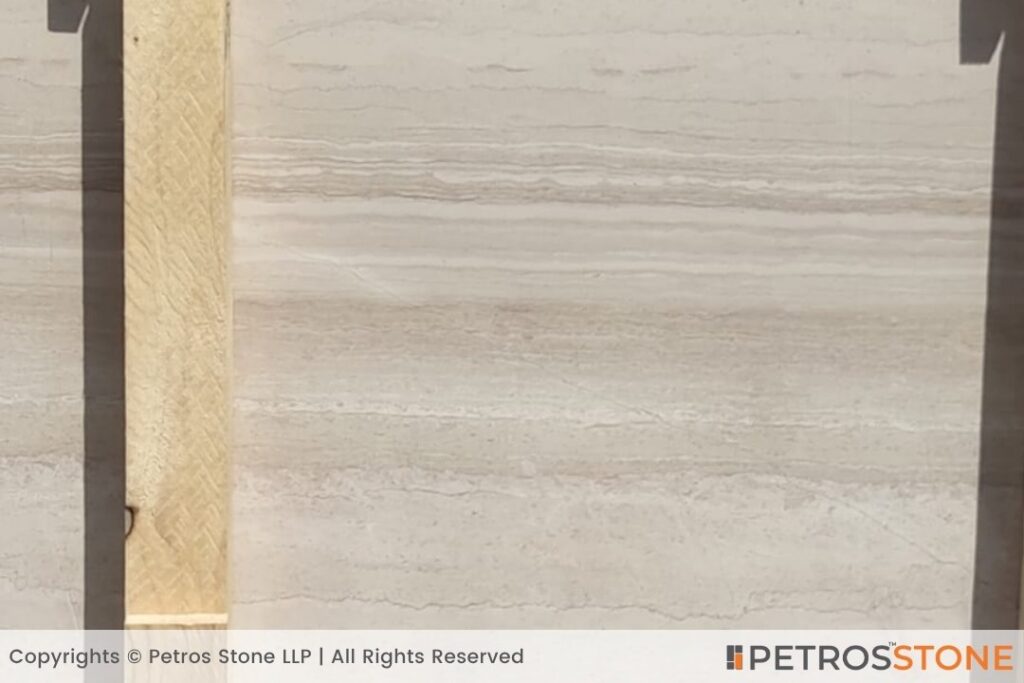
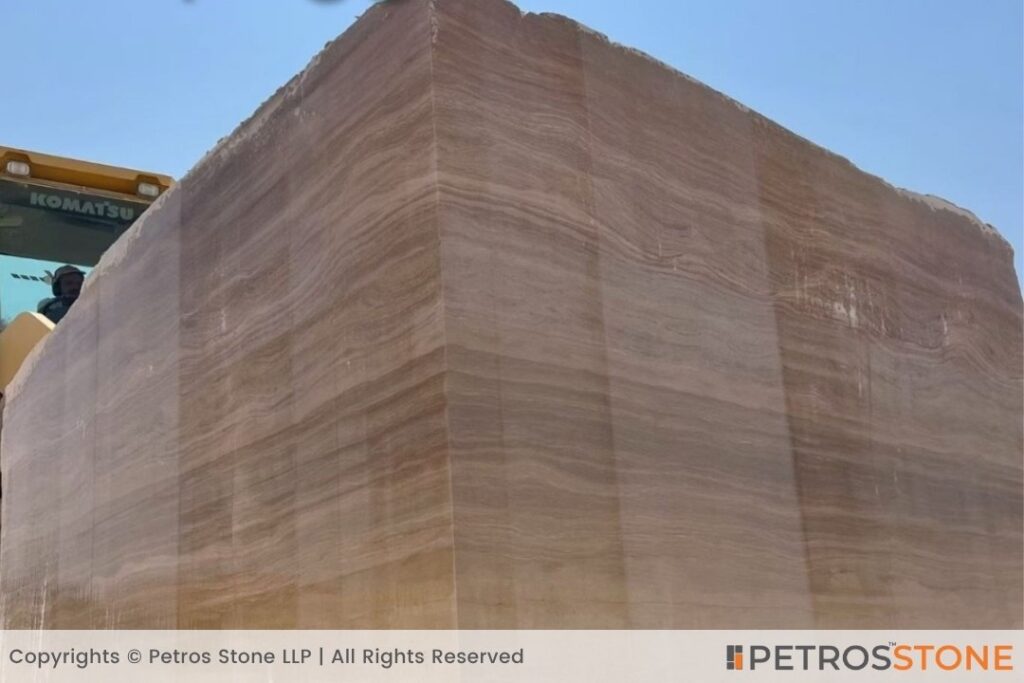
“Serpeggiante comes in three main types, Chiaro, Scuro, and Silvabella. Each one has its own personality. With Chiaro, you get a warm, light beige with soft, straight lines. Scuro, or Righina is darker, more taupe-beige, with sharper lines that just keep going. Then Silvabella, or Silver, is cooler, more beige-grey, with softer, wavy lines. They all have that wood-like movement on the surface, but the colors and veins make every variety completely different.”
- Is Serpeggiante Marble or Limestone?
- What Are the Three Main Types of Serpeggiante Marble?
- Where Does Real Serpeggiante Marble Originate?
- What Do Buyers Get Wrong About Serpeggiante?
- How Does Italian Serpeggiante Compare to Chinese Wood-Grain Substitutes?
- What are the key differences between Italian Serpeggiante and Chinese Material?
- How Do You Spot Original Serpeggiante?
- How Does Water Absorption Affect Serpeggiante Color?
- What Are the Technical Specifications of Serpeggiante Marble?
- What Are the Applications of Serpeggiante Marble?
- What is the Price of Serpeggiante Marble?
- Frequently Asked Questions
- Need Help Selecting Authentic Serpeggiante Marble?
Is Serpeggiante Marble or Limestone?
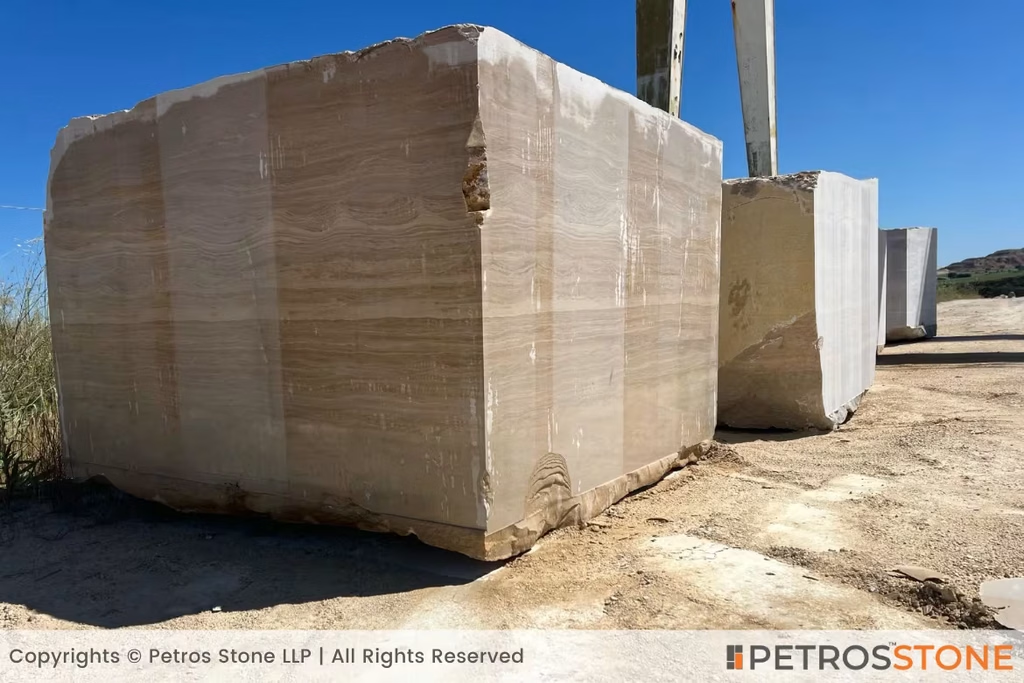
Technically, Serpeggiante is not a true metamorphic marble. Geologically speaking, it is a dense, microcrystalline sedimentary limestone formed over millions of years as marine sediment settled and compacted—never undergoing the extreme heat-and-pressure transformation that defines geological marble.
So why does virtually everyone in the industry call it marble?
In the stone trade, commercial classification often takes priority over strictly geological definitions. Decorative, polishable limestones that perform like marble in architectural applications are traditionally classified as marble. For specifiers, builders, and buyers, how the stone behaves in real-world settings matters far more than its technical label.
Owner, MS Marmo Service S.r.l (Apricena)
“Although Serpeggiante is technically a microcrystalline sedimentary limestone under European standards, its density, polishability, and mechanical performance are why it has long been commercially classified as marble.”
What Are the Three Main Types of Serpeggiante Marble?
Although different commercial names are used worldwide, authentic Italian Serpeggiante is generally classified into three primary colour variations.
Serpeggiante Light (Chiaro)
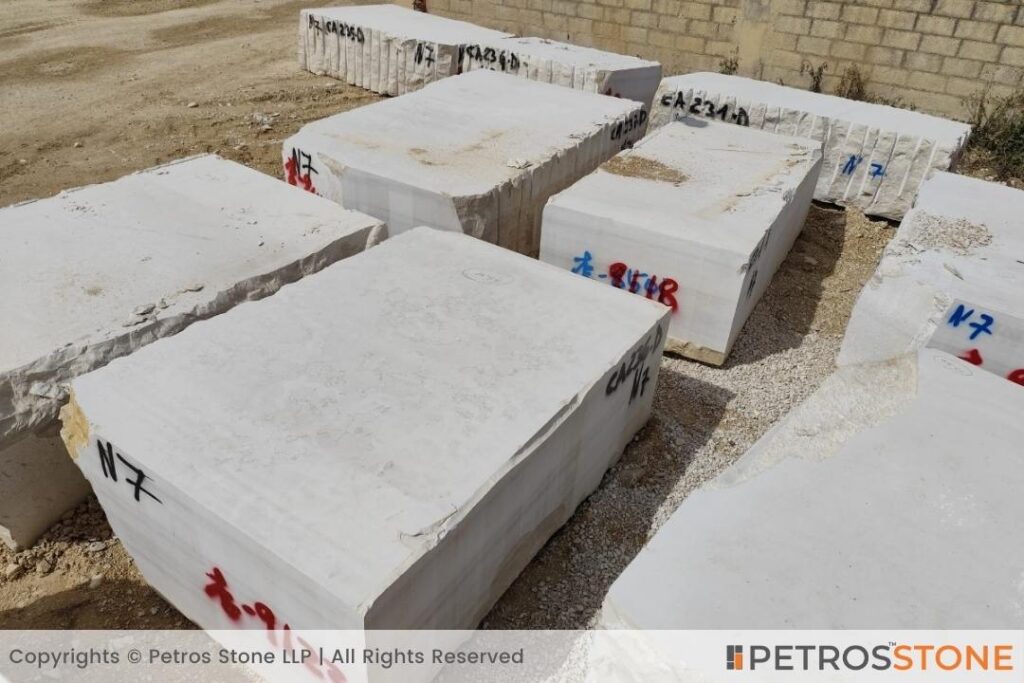
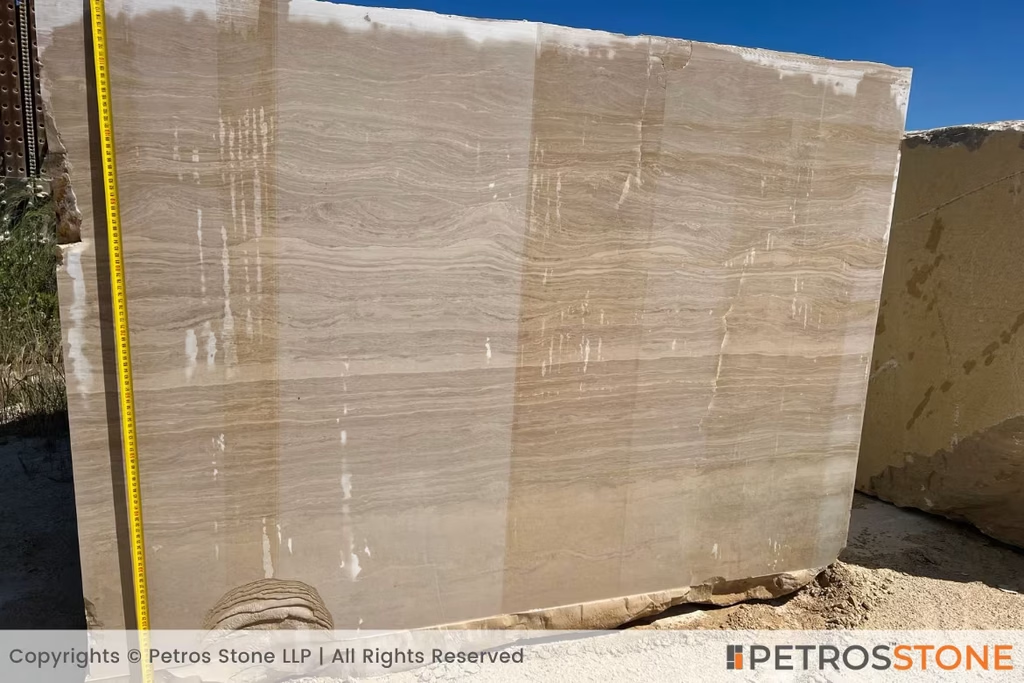
The most recognised and widely specified variety. It features an ivory or cream background with fine horizontal beige veins, creating a calm, elegant appearance. This variety is frequently used in luxury villas, hotel lobbies, premium residential flooring, and bookmatched feature walls because it reflects natural light and makes spaces appear larger. Premium Light Serpeggiante is also highly valued because large quarry blocks often produce long, uninterrupted vein patterns that are ideal for matching adjacent slabs.
Serpeggiante Dark (Scuro)
Displays warmer beige, taupe, and brown tones with more pronounced wood-like veining. Architects often choose this variety where they want a richer, more dramatic interior without sacrificing the clean linear character that defines the stone. It is particularly suitable for reception counters, executive offices, staircase cladding, and luxury bathrooms.
Serpeggiante Silver (Silvabella)
Introduces cool grey and silver undertones while retaining the same characteristic linear bedding. It has become increasingly popular in contemporary architecture because it pairs well with black metal, brushed brass, and minimalist interiors. Although less common than the Light variety, it offers a distinctive modern interpretation of the classic Italian material.
Where Does Real Serpeggiante Marble Originate?
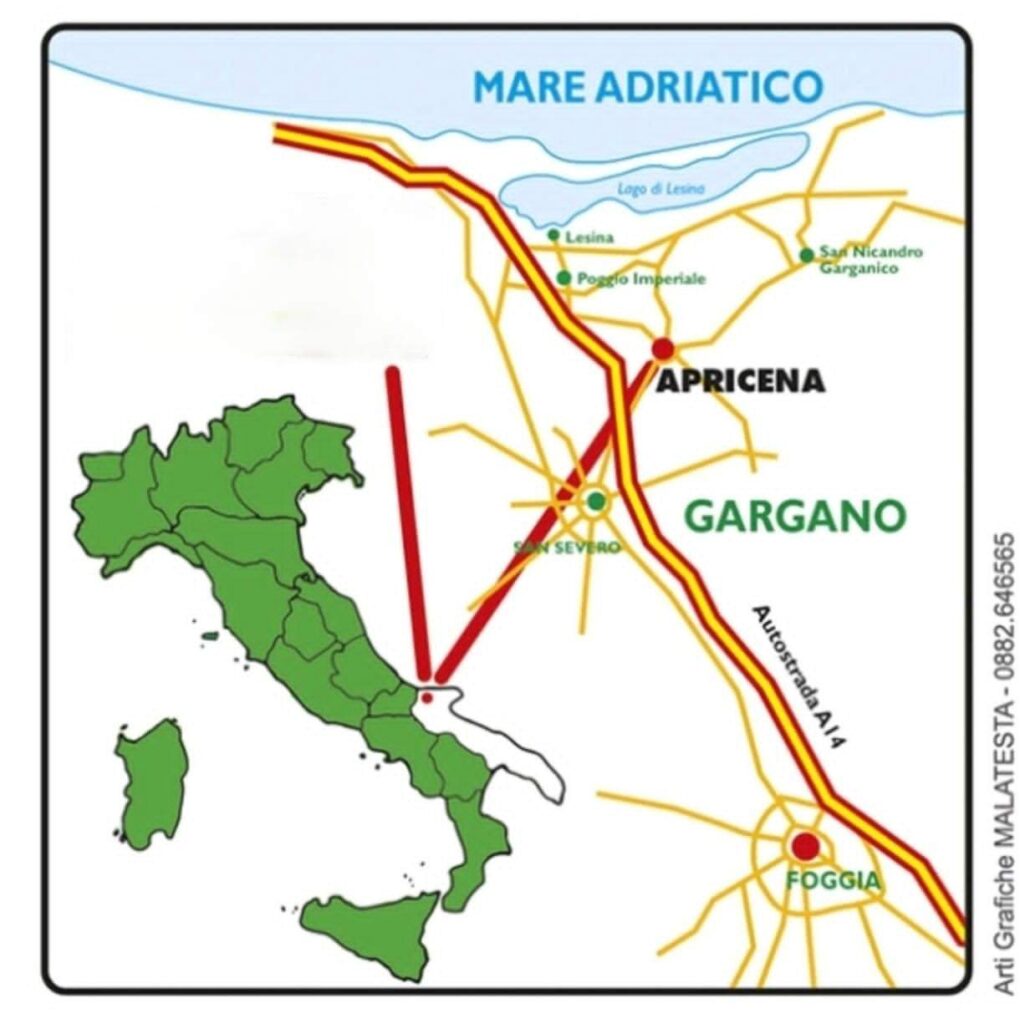
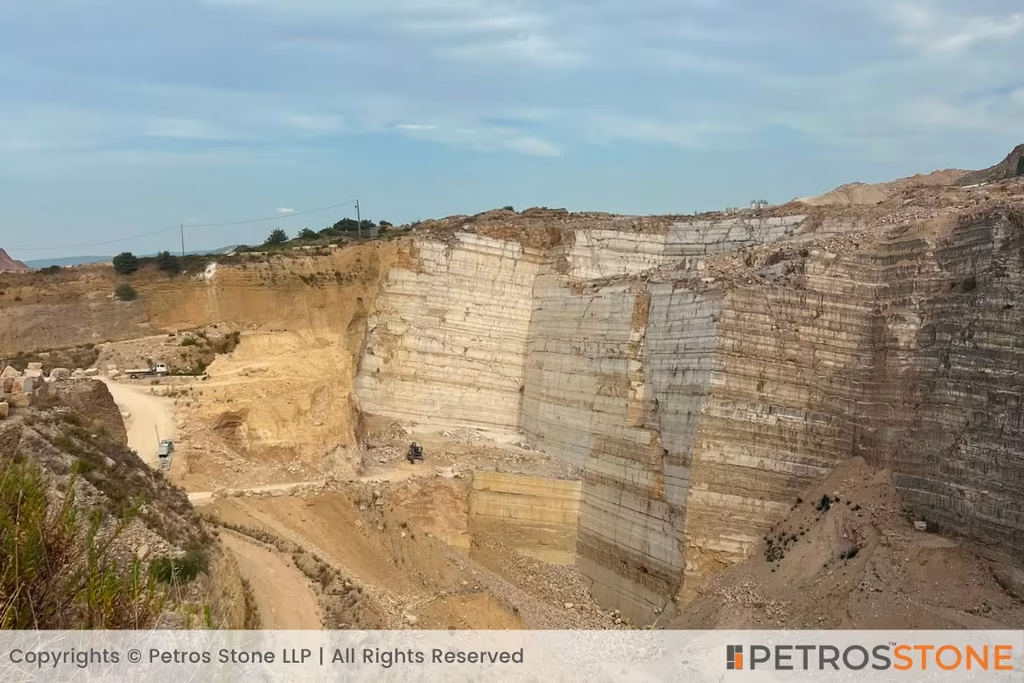
Authentic Serpeggiante comes from Apricena, in the Province of Foggia, Puglia — a region known internationally for producing dense decorative limestone used in high-end projects across Europe and beyond. Its signature horizontal banding is formed through repeated cycles of marine sediment deposition, compacting over geological time into the continuous, wood-grain-like bedding the stone is known for.
Similar-looking stones exist elsewhere, but genuine Italian Serpeggiante remains tied to this one basin — and that origin shapes more than looks, affecting density, structural consistency, block size, and how well the stone ultimately polishes.
What Do Buyers Get Wrong About Serpeggiante?
The biggest mistake in the market? Treating “Serpeggiante” as a generic label for anything with straight lines. If you’re offered it at travertine prices, you’re probably looking at Chinese Wooden Beige (a Guizhou sandstone/limestone) or a Turkish vein-cut limestone — not the real thing.
Polished sample photos rarely tell the whole story. The real test comes when full bundles are opened, and slabs are bookmatched, since that’s when consistency in color, veining, and structural integrity actually shows itself.
How Does Italian Serpeggiante Compare to Chinese Wood-Grain Substitutes?
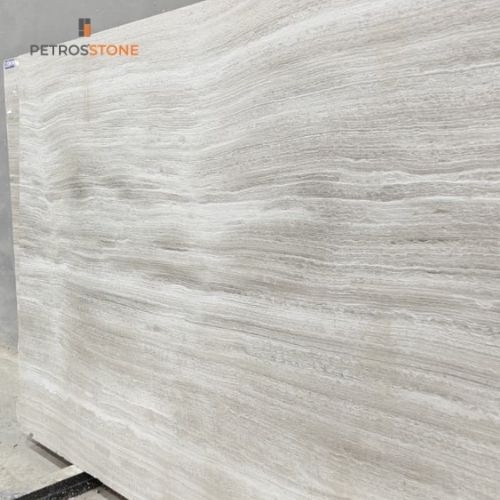
Not all wood-grain stones are created equal, even when marketed under similar names like White Wood Marble or Coffee Wooden Marble. The differences show up in the numbers: Italian Serpeggiante runs roughly 2.72 g/cm³ in density with ~0.11% water absorption and compressive strength near 262 MPa, versus Chinese alternatives typically at 2.45–2.58 g/cm³ density and 0.35–0.60% absorption, with noticeably lower strength.
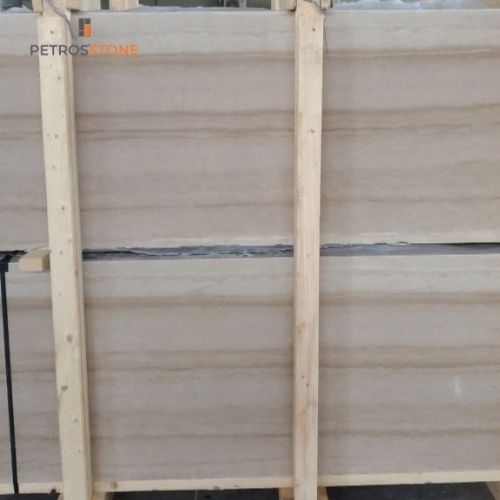
Visually, genuine Italian material shows continuous, tightly parallel veining running end-to-end across large slabs on a uniform cream or ivory base. Chinese substitutes tend to show more batch variation, shorter vein runs, and stray crystal lines that interrupt the wood-grain effect.
What are the key differences between Italian Serpeggiante and Chinese Material?
| Property | Italian Serpeggiante | Typical Chinese Alternative (e.g., White Wood) |
| Origin | Apricena, Puglia, Italy | Various regions (e.g., Guizhou), China |
| Density | ~2.72 g/cm³ | ~2.45–2.58 g/cm³ |
| Water Absorption | ~0.11% | 0.35–0.60% |
| Compressive Strength | ~262 MPa | Generally much lower |
| Veining | Continuous, parallel linear bedding | More variable, prone to breaking/cross-veining |
| Block Size | Large, stable monolithic blocks | Smaller blocks with higher fissure risk |
How Do You Spot Original Serpeggiante?
Authenticity cannot be determined from colour alone. Experienced buyers evaluate several factors before making a purchase:
Inspect Block Grade: Ask about the grade of the block (Premium Export Grade offers superior consistency for bookmatching and fewer resin repairs).
Verify Documentation: Confirm the country of origin through shipping documents or an official Certificate of Origin stating Apricena, Italy.
Review Lab Reports: Request verified laboratory reports with ASTM C97, ASTM C170, and ASTM C99 test results matching the target specs (density ~2.72 g/cm³, absorption ~0.11%).
Examine Full Slabs (Not Small Samples): Inspect full slab photographs or video walkthroughs. Premium Italian material displays continuous, evenly spaced linear veining with minimal interruptions or clay pockets.
How Does Water Absorption Affect Serpeggiante Color?
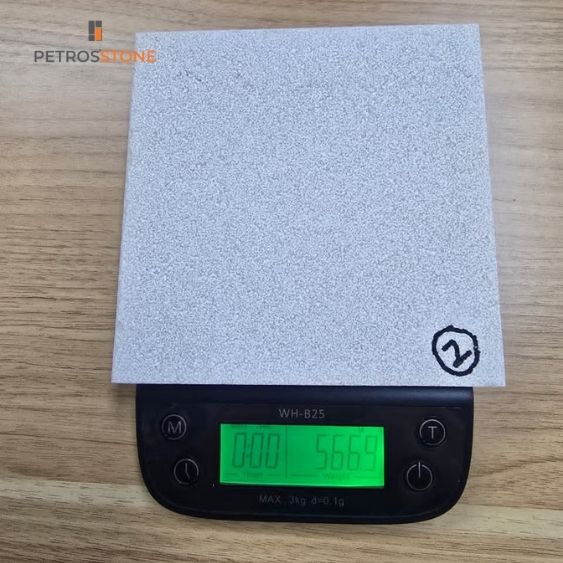
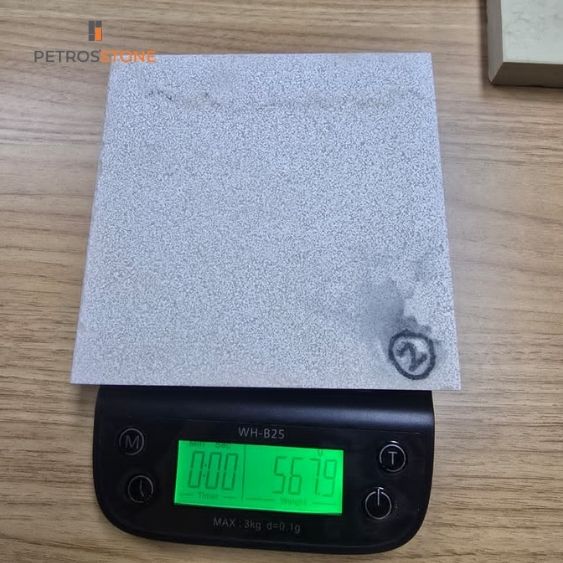
It’s common for buyers to worry that their stone looks darker after installation or when wet — but that’s simply how the material behaves, not a flaw. Genuine Serpeggiante’s water absorption sits around 0.11%, a sign of a dense, compact structure. Even so, water sitting in the surface pores changes how light reflects, deepening cream and beige tones into a warmer amber. Once it evaporates, the stone returns to its natural color — most noticeable right after installation, as residual adhesive and grout moisture dries out over days or, in humid climates, a few weeks. A quality impregnating sealer reduces moisture penetration, but no sealer fully prevents this temporary shift, and that’s true of most natural limestones and marbles.
What Are the Technical Specifications of Serpeggiante Marble?
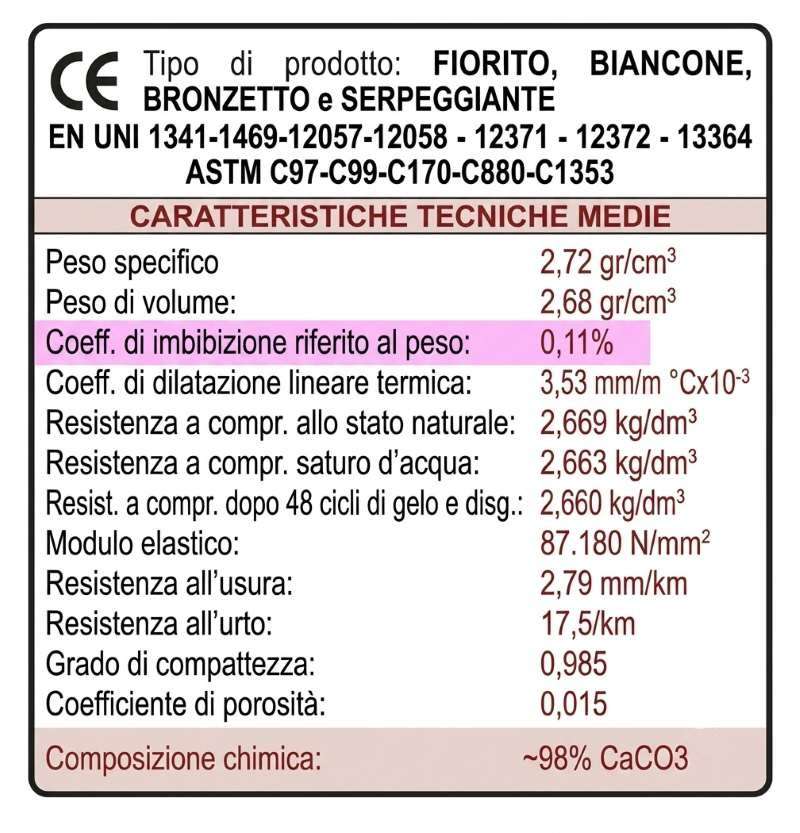
Technical Specifications of Serpeggiante Marble
| Technical Characteristic | Value |
|---|---|
| Specific Weight | 2.72 g/cm³ |
| Bulk Weight | 2.68 g/cm³ |
| Water Absorption Coefficient by Weight | 0.11% |
| Linear Thermal Expansion Coefficient | 3.53 mm/m °C × 10⁻³ |
| Compressive Strength in Natural State | 2,669 kg/dm³ |
| Compressive Strength, Water-Saturated | 2,663 kg/dm³ |
| Compressive Strength After 48 Freeze–Thaw Cycles | 2,660 kg/dm³ |
| Modulus of Elasticity | 87,180 N/mm² |
| Abrasion Resistance | 2.79 mm/km |
| Impact Resistance | 17.5/km |
| Degree of Compactness | 0.985 |
| Porosity Coefficient | 0.015 |
| Chemical Composition | ~98% CaCO₃ |
What Are the Applications of Serpeggiante Marble?
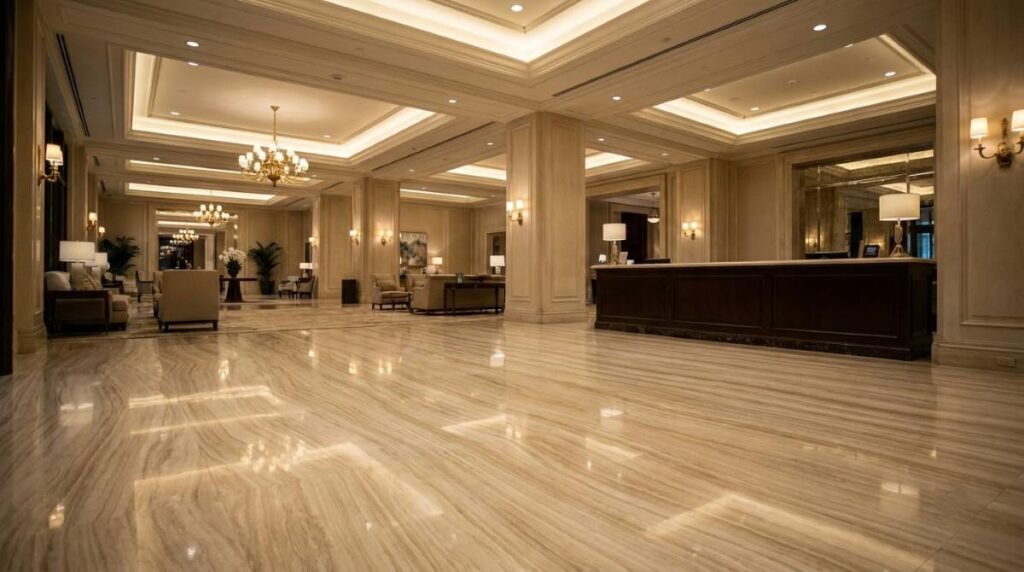
Thanks to its strength and distinctive veining, Serpeggiante works well for large-format flooring, feature walls, and bookmatched panels, hotel reception desks, bathroom cladding, staircases, elevator surrounds, and fireplace surrounds. Its horizontal grain has a natural way of elongating a space, which is why it shows up so often in corridors, lobbies, and open-plan interiors. It can be used outdoors in the right climate, though freeze-thaw exposure is worth evaluating per project.
What is the Price of Serpeggiante Marble?
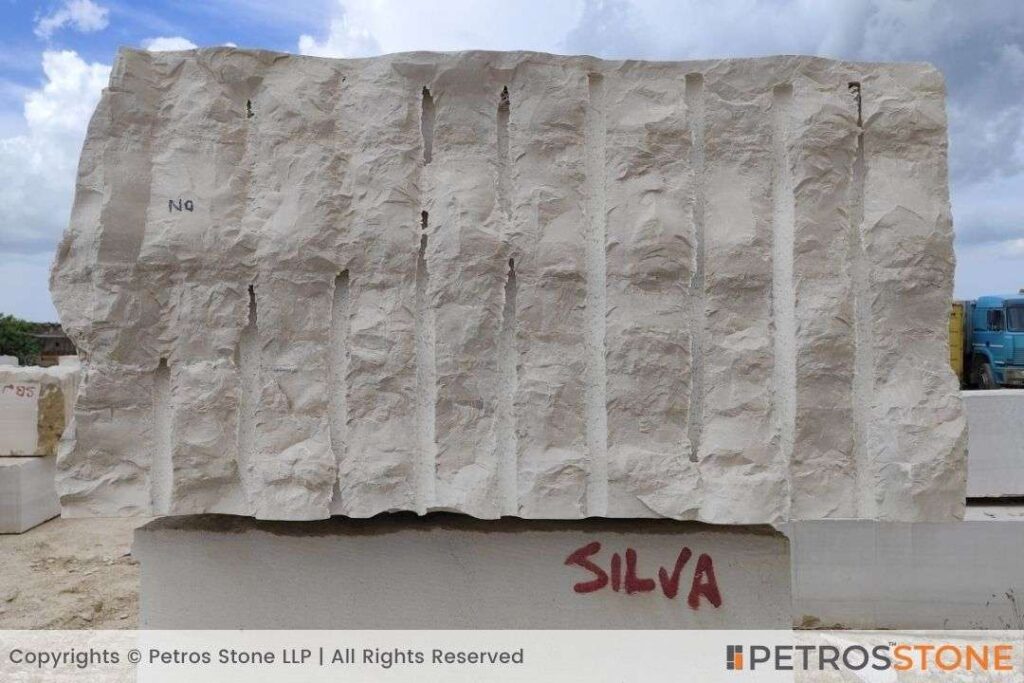
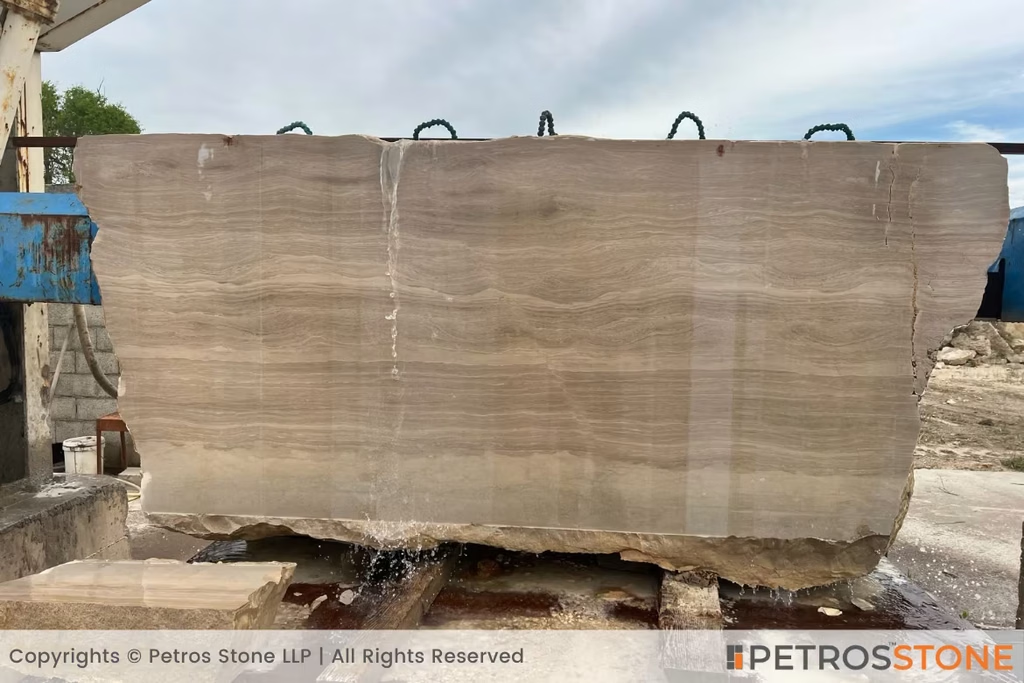
Price of Serpeggiante Blocks
| Product | Estimated USD Price |
|---|---|
| Raw Blocks | $285–$510 / MT |
Pricing for raw quarry blocks depends heavily on block size, structural soundness, and linear vein regularity.
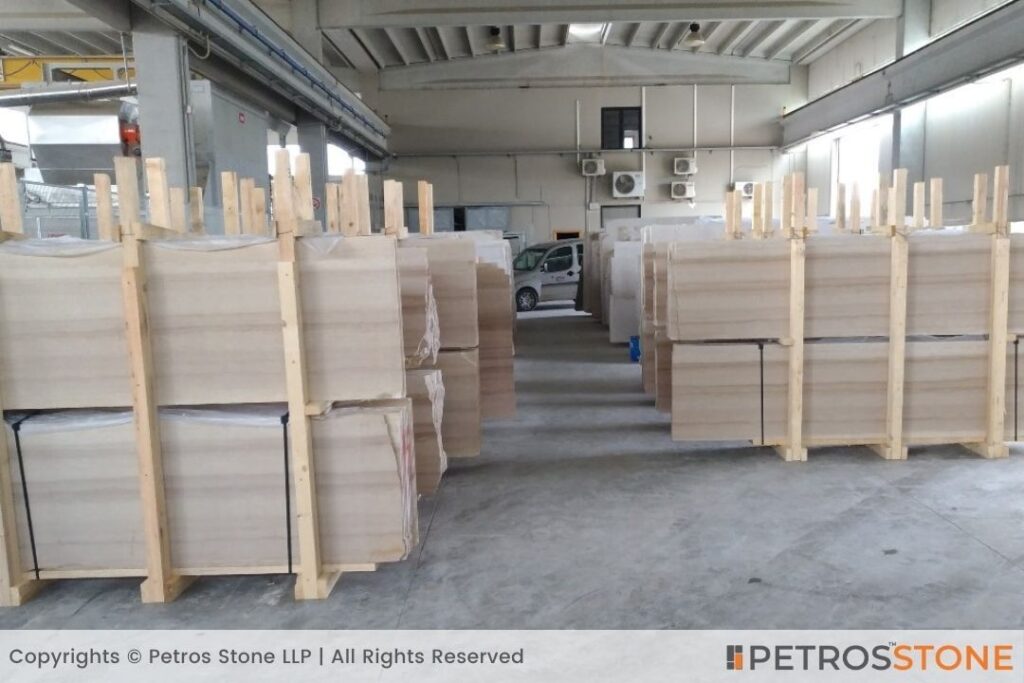
Price of Serpeggiante Slabs (20 mm Thickness)
| Product | Estimated USD Price / m² |
|---|---|
| Commercial Grade Slabs – 20 mm | $55–$60 / m² |
| Export Grade Slabs – 20 mm | $60–$68 / m² |
| Premium Export Grade Slabs – 20 mm | $68–$78 / m² |
| Premium Cut-to-Size – 20 mm | $78–$95 / m² |
Finished 20 mm gangsaw-cut, polished slabs vary based on visual purity and grade sorting.
Frequently Asked Questions
Is Serpeggiante suitable for kitchen countertops?
Its high calcium carbonate content makes it prone to acid etching from things like lemon juice or vinegar, so a high-performance sealer is essential for kitchen use.
Does it require resin treatment during processing?
Yes. High-end Italian processors typically apply clear epoxy resin with vacuum-net backing to reinforce natural micro-veins during gangsaw cutting.
How should I maintain Serpeggiante flooring?
Use pH-neutral stone cleaners only, and avoid acidic or abrasive products.
Can it be used outdoors?
Yes. High-grade Serpeggiante holds up well after 48 freeze-thaw cycles (2,660 kg/dm³), making it suitable for exterior ventilated façades in moderate climates.
What’s the difference between vein-cut and cross-cut Serpeggiante?
Vein-cut slicing runs parallel to the natural bedding planes and produces linear, wood-like stripes. Cross-cut slicing runs across those planes, producing softer, cloudier patterns.
Need Help Selecting Authentic Serpeggiante Marble?
Whether you’re an architect specifying a luxury project, an importer comparing Italian and Chinese materials, or a homeowner planning a renovation, our stone specialists can help you evaluate grades, finishes, technical specifications, and pricing before you buy.
Explore our Serpeggiante Marble collection, request high-resolution slab photos or videos, obtain the latest block and slab pricing, or speak with our team for expert guidance on selecting the right material for your project.
Contact Petros Stone today for samples, technical data sheets, and a customized quotation.

Tapas Koul leads editorial direction and content strategy at Petros® Stone, bringing over 15 years of combined experience in e-commerce, publishing, and digital communication. His work spans research, strategy, and communication, with a focus on natural stone, its technical properties, processing, and architectural applications. Collaborating with Petros® Stone’s production team, laboratory experts, and specialists, he translates industry knowledge into clear, engaging content and communication for diverse audiences.
Feel free to get in touch for a free consultation, quote, and get a detailed understanding from our experts here at Petros®. Visit www.petrosstone.com or call +91-8446360361 or WhatsApp

Brown Granite

White Galaxy Granite

Blue Bahia Granite

Silver Cloud Granite

Black Pearl Granite

Dallas White Granite