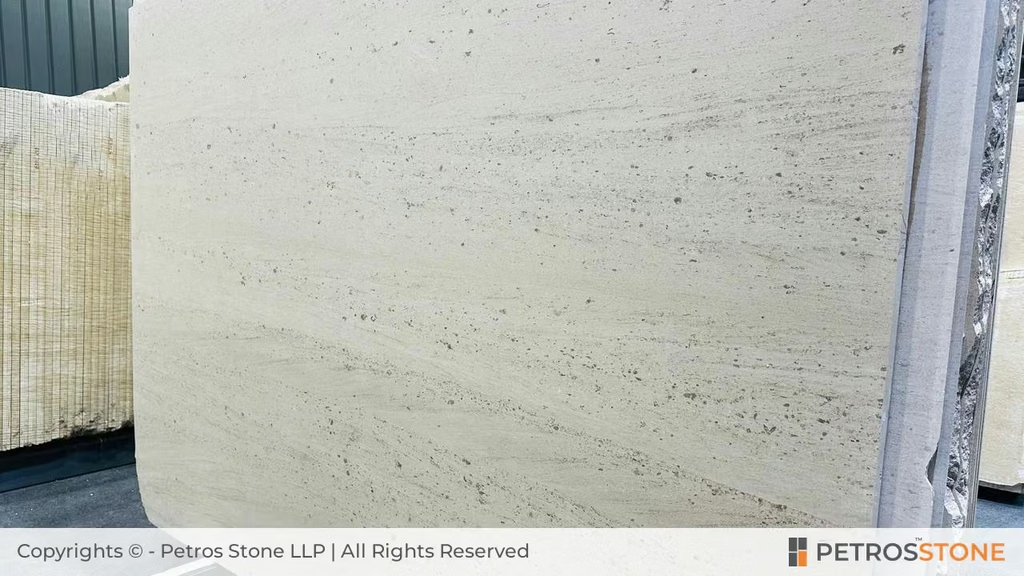
There are three types of Moca Cream by grain: Fino (also sold as Relvinha), Clássico (medium grain), and Grosso (coarse grain). They differ in grain size, in how visible the veins and fossils are, and, as a result, in look, price, and availability. Fino is the quietest and most uniform, Clássico is the best-known all-rounder with a refined parallel vein, and Grosso is the boldest, with the strongest contrast and larger brownish fossils. On top of grain, every type can be cut with the vein (linear stripes) or against it (a clouded, cross-cut look), which changes the pattern more than most buyers expect.
Note: Moca Cream is geologically a limestone, not a true marble.
Moca Cream Marble – Indicative Price Range (USD/Sq. ft.)
| Name | Image | Indicative Slab price range (USD/sq. ft.) updated Oct. 2026 | Click Here For Exact Price | Contact |
|---|---|---|---|---|
| Moca Creme Fino / Relvinha | 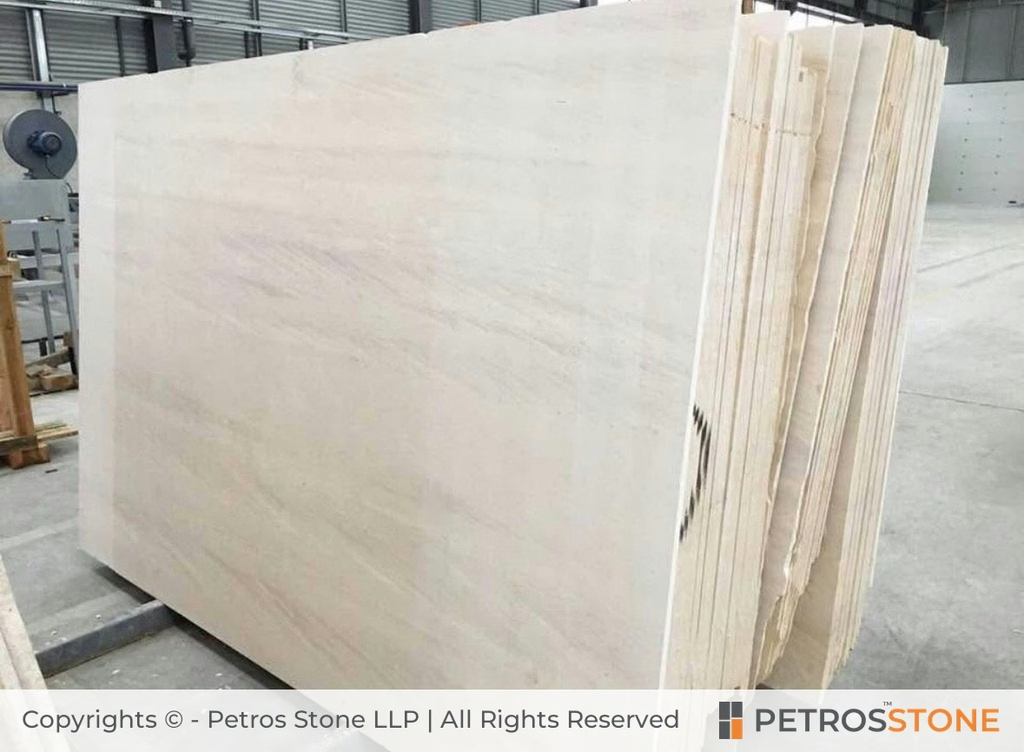 | USD 2.92 – 3.65 per sq. ft. | Exact Price | Chat |
| Moca Creme Clássico (medium grain) | 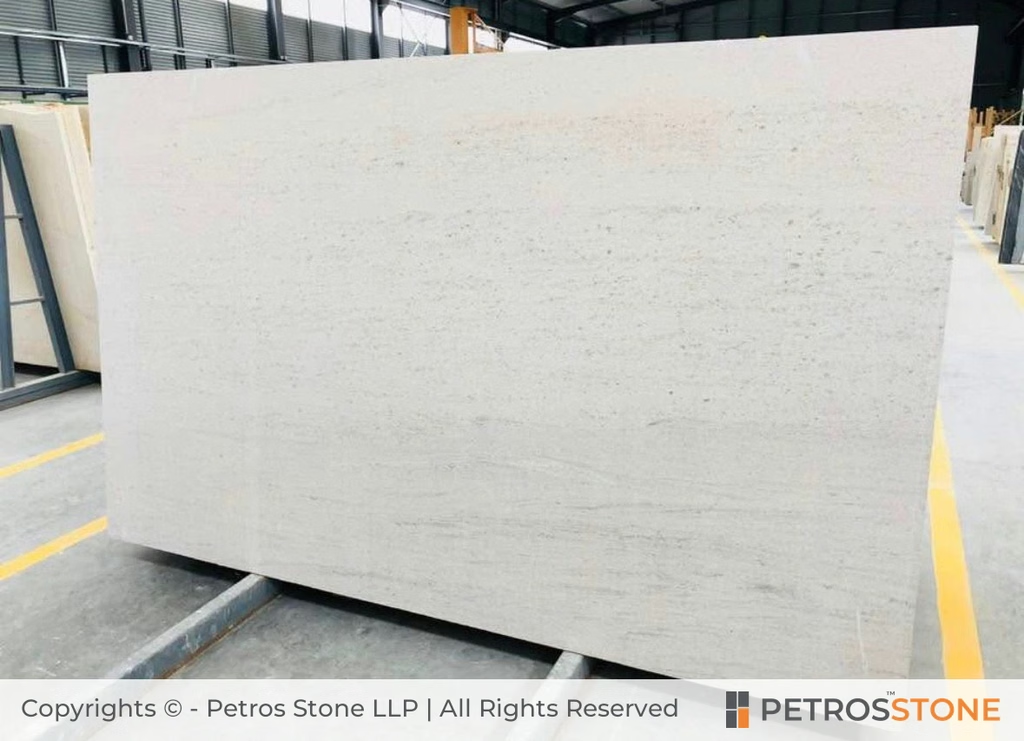 | USD 2.50 – 3.13 per sq. ft. | Exact Price | Chat |
| Moca Creme Grosso / Grossa (coarse grain) | 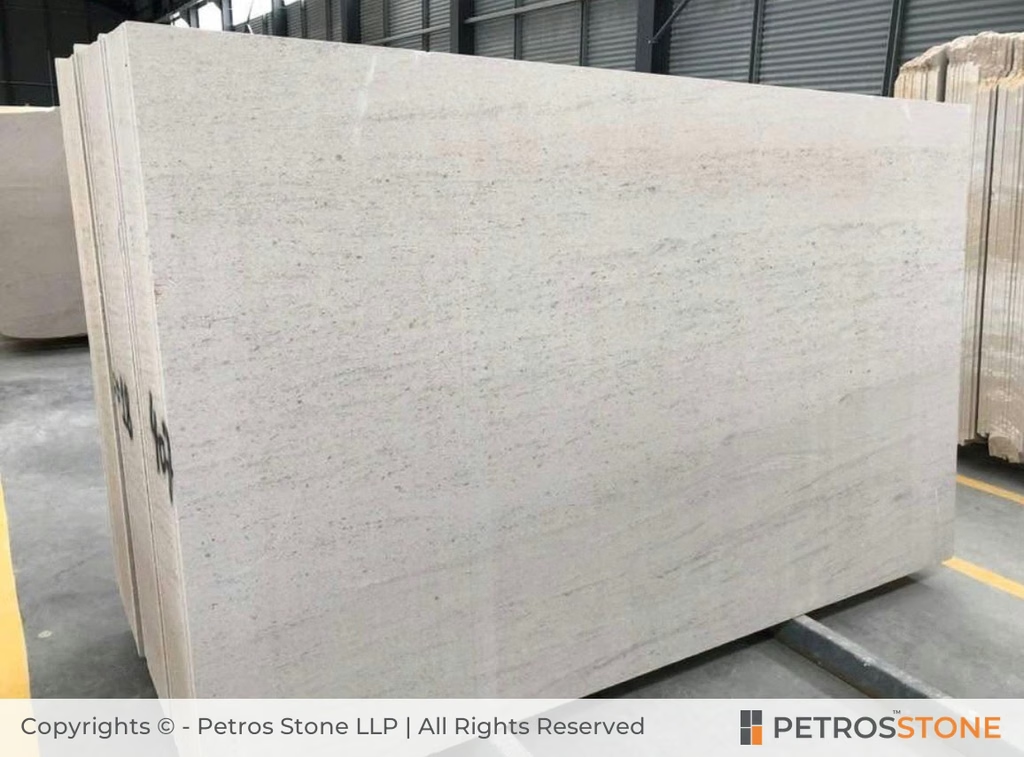 | USD 2.08 – 2.50 per sq. ft. | Exact Price | Chat |
- Moca Cream Marble – Indicative Price Range (USD/Sq. ft.)
- What Are the Types of Moca Cream by Grain?
- 1. Moca Creme Fino / Relvinha
- 2. Moca Creme Clássico
- 3. Moca Creme Grosso / Grossa
- What Is Vein-Cut and Cross-Cut Moca Cream Marble?
- Table – Various Moca Cream Marble Finishes
- Where to Use Moca Cream Marble: At a Glance
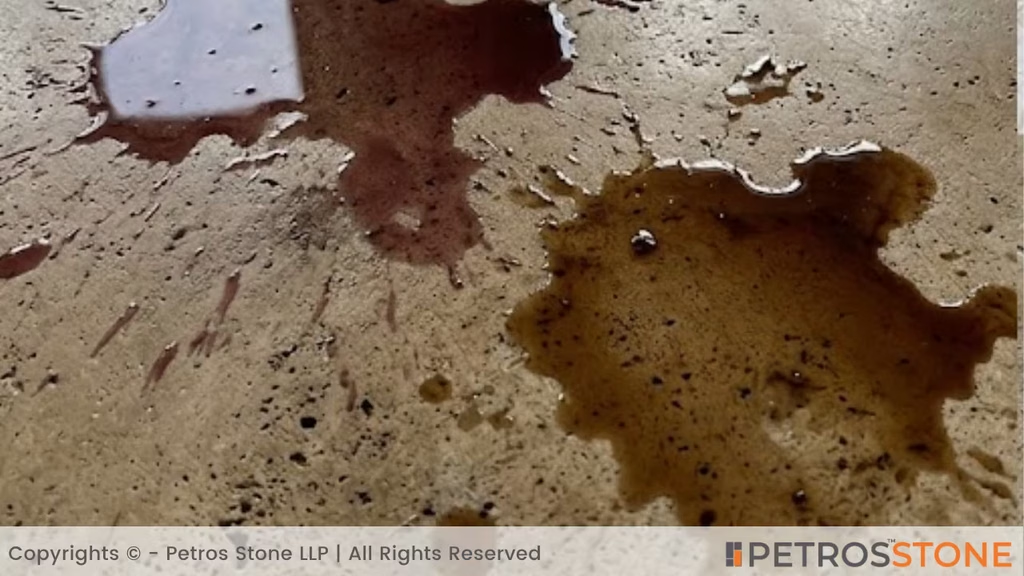
- Technical Properties of Moca Cream
- Is Moca Cream Suitable for Large-Scale Projects?
- What Factors Affect Moca Cream Price?
- How Do You Clean and Maintain Moca Cream?
- Table – Moca Cream Marble Comparison with other Beige Stones
- FAQs
- Key Takeaways
What Are the Types of Moca Cream by Grain?
Moca Cream comes from the Pé da Pedreira area near Alcanede, Portugal. Layers of different grain density give three varieties; suppliers name them differently, so confirm the grade in your quote.
Moca Cream Marble: Types at a Glance
| Type | Grain | Look | Best For | Indicative Price Range |
|---|---|---|---|---|
| Fino (Fine Grain) | Fine, compact grain | Smooth, uniform appearance with subtle texture | Premium interiors, feature walls, refined flooring | US$2.92–3.65/sq. ft. |
| Clássico (Medium Grain) | Medium grain | Balanced texture with visible natural variation | Residential flooring, wall cladding, commercial interiors | US$2.50–3.13/sq. ft. |
| Grosso (Coarse Grain) | Coarse, more pronounced grain | More textured appearance with stronger granular variation | Rustic interiors, exterior cladding, projects seeking a bolder texture | US$2.20–2.80/sq. ft. |
1. Moca Creme Fino / Relvinha
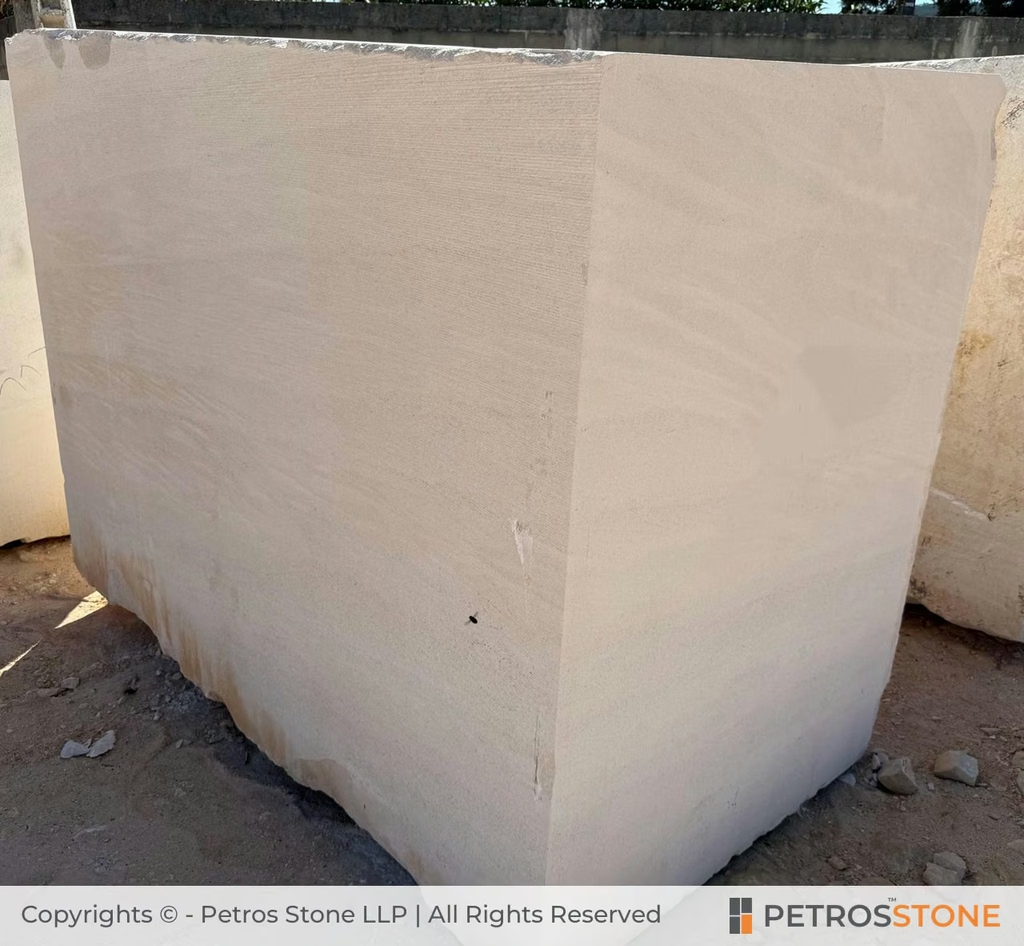
- Also sold as – Moca Creme Fina, Moca Cream Fine Grain, Relvinha, and in some markets Saint Hubert.
- Look – small, soft grains with a thin parallel vein and a very even background. Fossils are less present, so the beige colour dominates.
- Best for – large cladding runs, feature walls, vanities and interiors where you want calm, consistent colour.
- Trade-off – Fino is the hardest grade to source and usually carries a premium; confirm block availability with your supplier.
2. Moca Creme Clássico
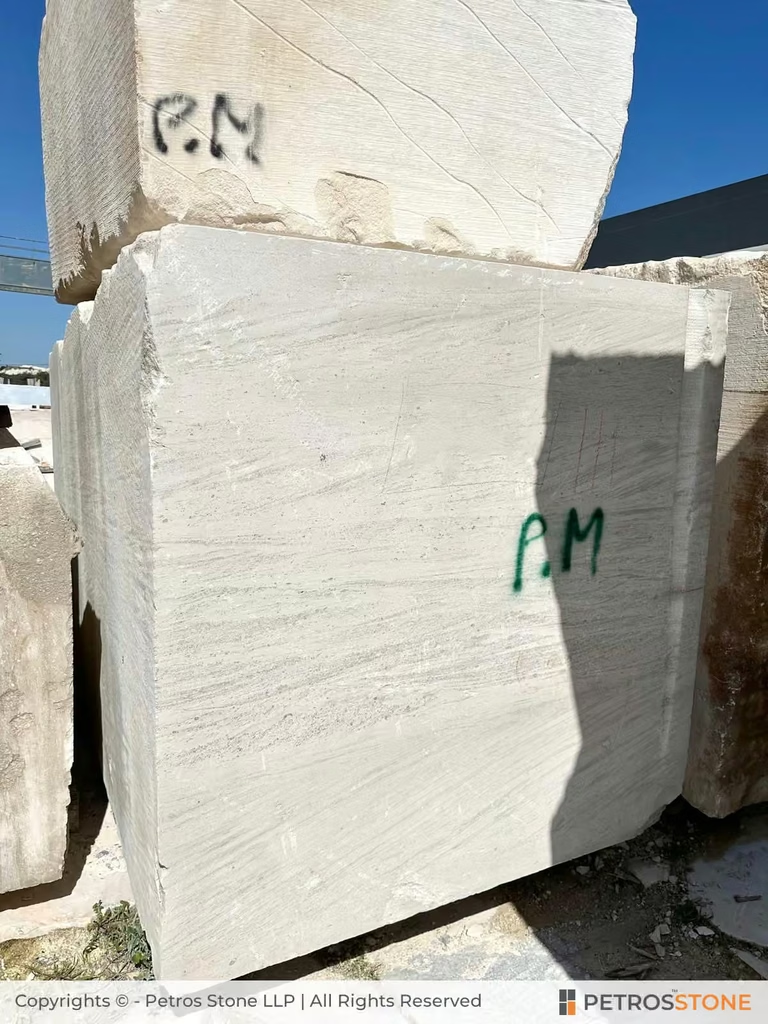
- Also sold as – Moca Creme Classic, Grão Médio (medium grain).
- Look – a light-beige stone known for a refined parallel vein, medium grain and a uniform background. The vein can vary in thickness and stays horizontally oriented. It is the best-known variety of Moca Creme.
- Best for – floors, walls, stair cladding and general residential or commercial interiors. The reference grade most specifiers have in mind.
- Trade-off – the Portuguese geological survey describes the medium-grain material as medium to coarse with marked layering, so expect more visible banding than Fino
3. Moca Creme Grosso / Grossa
- Also sold as – Moca Creme Gross Grain, Grão Grosso.
- Look – the greatest contrast between vein and beige background, with larger grains and large brownish fossils.
- Best for – buyers who want a textured, characterful surface, such as fireplace surrounds, accent walls, and rustic or tumbled finishes.
- Trade-off – more pattern means more variation from slab to slab, so it needs careful layout and lot control.
Don’t confuse it with Moca Creme Perlina. Perlina (also traded as Perlinho or Gold Coral Creme) is a different, compact limestone with fine to medium grain and grey fossil spots. It is not a grade of Moca Creme.
What Is Vein-Cut and Cross-Cut Moca Cream Marble?
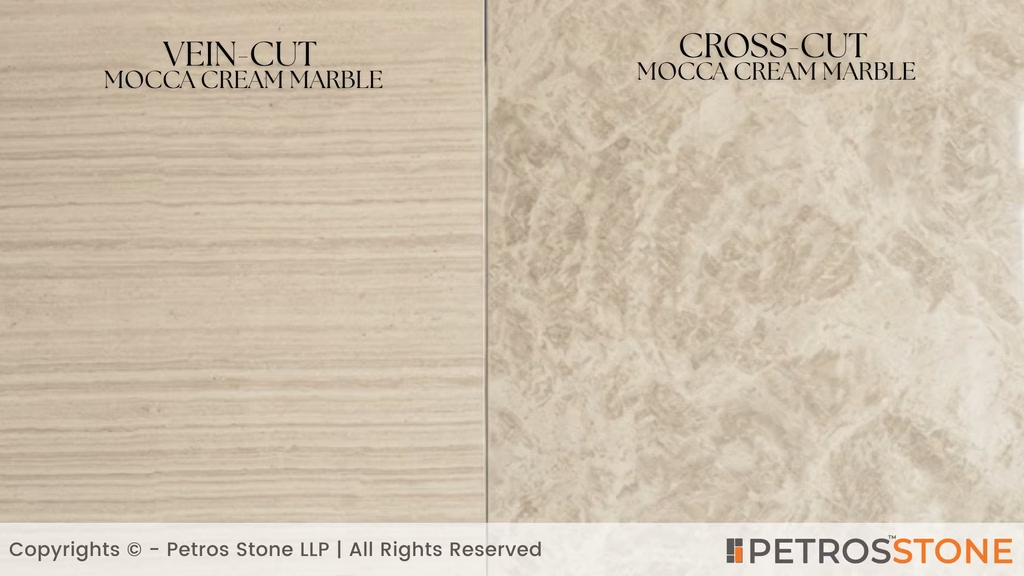
Grain size is one choice; cut direction is the second. Each variety can be sawn with the vein or against it.
- Vein-cut (cut with the layering): blocks are processed so the slab face shows long, parallel linear bands. This is the classic Moca Creme look, and the Portuguese geological survey notes that the final cut is made perpendicular to the sedimentary lamination.
- Cross-cut (contra-veio, against the vein): the slab shows no parallel vein. Instead, you get a soft, clouded surface with fine to medium grain.
Vein-Cut vs Cross-Cut Moca Cream Marble – Key Differences
| Vein-cut | Cross-cut | |
| Pattern | Linear, parallel stripes | Clouded, mottled |
| Mood | Architectural, directional | Soft, uniform |
| Typical use | Cladding, feature walls, floors laid with the grain | Floors, large uninterrupted surfaces |
| Watch for | Vein direction must be matched at joints | Cloudy patches can differ between slabs |
Terminology warning: Cut names vary by supplier. Ask for a photo of the exact slab and confirm vein-cut or cross-cut in writing.
Table – Various Moca Cream Marble Finishes
| Finish | Look and feel | Best for |
| Honed | Soft, matte, warm; the most popular choice | Interior floors, walls, bathrooms, vanities |
| Polished | Subtle sheen (limestone will not reach the gloss of marble or granite) | Walls, vanities, feature surfaces |
| Brushed / antique / tumbled | Aged, textured, forgiving of wear | Floors, rustic interiors, stair treads |
| Leather | Soft textured, hides fingerprints and light etching | Counters, accent walls |
| Split-face / bush-hammered / sandblasted | Rough, high grip | Exterior cladding, steps, paving (where permitted) |
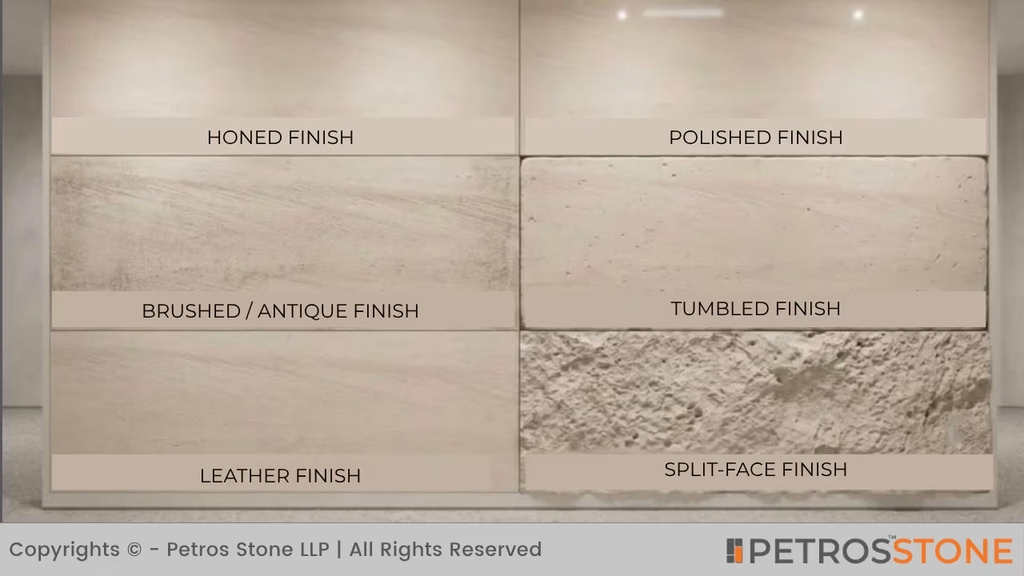
Our pick for most buyers: honed. It hides etching better than polish, feels natural and suits the stone’s soft colour. One laboratory test of a matt-polished surface recorded pendulum slip values of 71 dry and 64 wet, which is a good result, but for wet or exterior zones a textured finish gives extra margin.
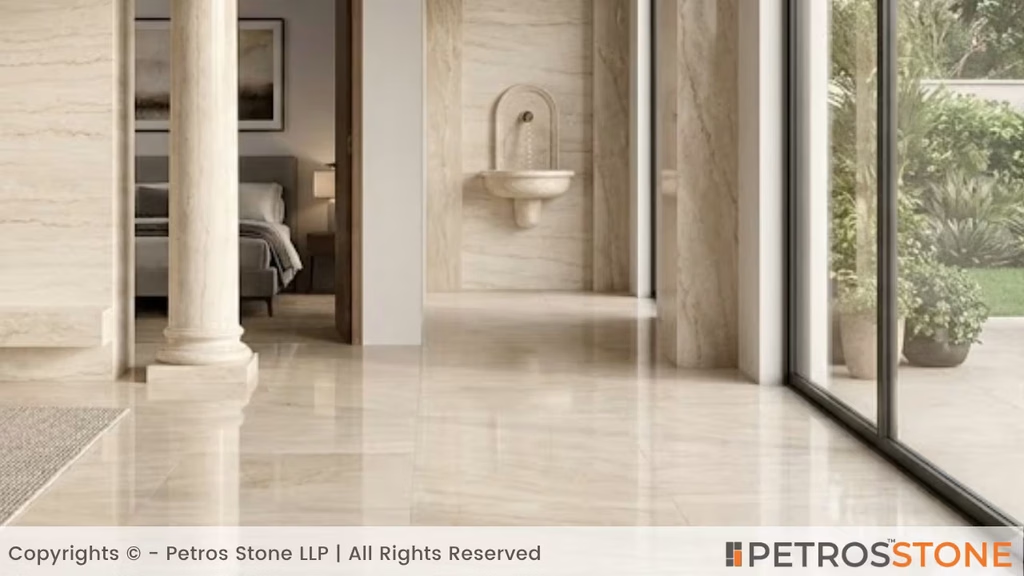
Where to Use Moca Cream Marble: At a Glance
| Application | Verdict | Condition |
|---|---|---|
| Interior walls and feature walls | Yes | Suitable for cladding, fireplaces, columns and decorative features. |
| Living rooms and bedroom floors | Yes | Best for light- to medium-traffic areas with appropriate maintenance. |
| Bathroom walls and vanities | Yes | Seal as appropriate and use suitable installation and cleaning practices. |
| Shower floors | Avoid unless suitable | Use only after verifying slip resistance, water absorption, and finish suitability for wet conditions. |
| Staircase cladding | Yes, with care | Use suitable thickness, secure fixing and appropriate edge detailing. |
| Exterior wall cladding | Yes, with proper detailing | Specify suitable stone thickness, anchoring, drainage and weather-resistant installation. |
| Exterior floors and paving | Generally avoid | Rain, temperature changes, and heavy foot traffic can increase wear. |
| High-traffic commercial floors | Generally avoid | Busy lobbies, malls and transit areas may experience faster wear and surface deterioration. |
| Kitchen worktops | Use with caution | Acids such as lemon juice, vinegar and wine can etch the surface. Choose it only if you accept regular care and natural patina. |
Technical Properties of Moca Cream
| Property (LNEG, medium grain) | Value |
| Apparent density | 2,480 kg/m³ |
| Open porosity | 6.9% by volume |
| Water absorption (atmospheric pressure) | 3.1% by weight |
| Compressive strength | 135 MPa |
| Flexural strength (concentrated load) | 14.9 MPa |
| Flexural strength after 48 freeze-thaw cycles | 12.4 MPa |
| Wide-wheel abrasion | 20.5 mm |
| Slip resistance, matt polished (pendulum) | 71 dry / 64 wet |
How to read this: Absorption of about 2.3-3.5% and porosity of 6-7% are moderate for a limestone, so sealing matters. Strength figures vary between reports: ask for the test report for your lot, and treat figures far outside this range as a red flag.
Is Moca Cream Suitable for Large-Scale Projects?
Yes, with proper planning and quality control. Moca Cream’s established quarrying base and availability in commercial formats make it suitable for large-scale projects.
- Established supply base: The producing limestone formation is approximately 50 m thick, with relatively few fractures, supporting the extraction of large blocks. Quarrying began in the 1970s and expanded with modern machinery from the late 1980s.
- Proven applications: Moca Cream has been used on the exterior of the Central Bank of Kuwait headquarters, completed in 2016, and in a villa in Abu Dhabi.
- Available formats: Options include traditional tiles from 30 × 30 cm to 120 × 60 cm at 2 cm thickness, as well as honeycomb-backed panels for cladding.
What Should You Check Before Buying Moca Cream?
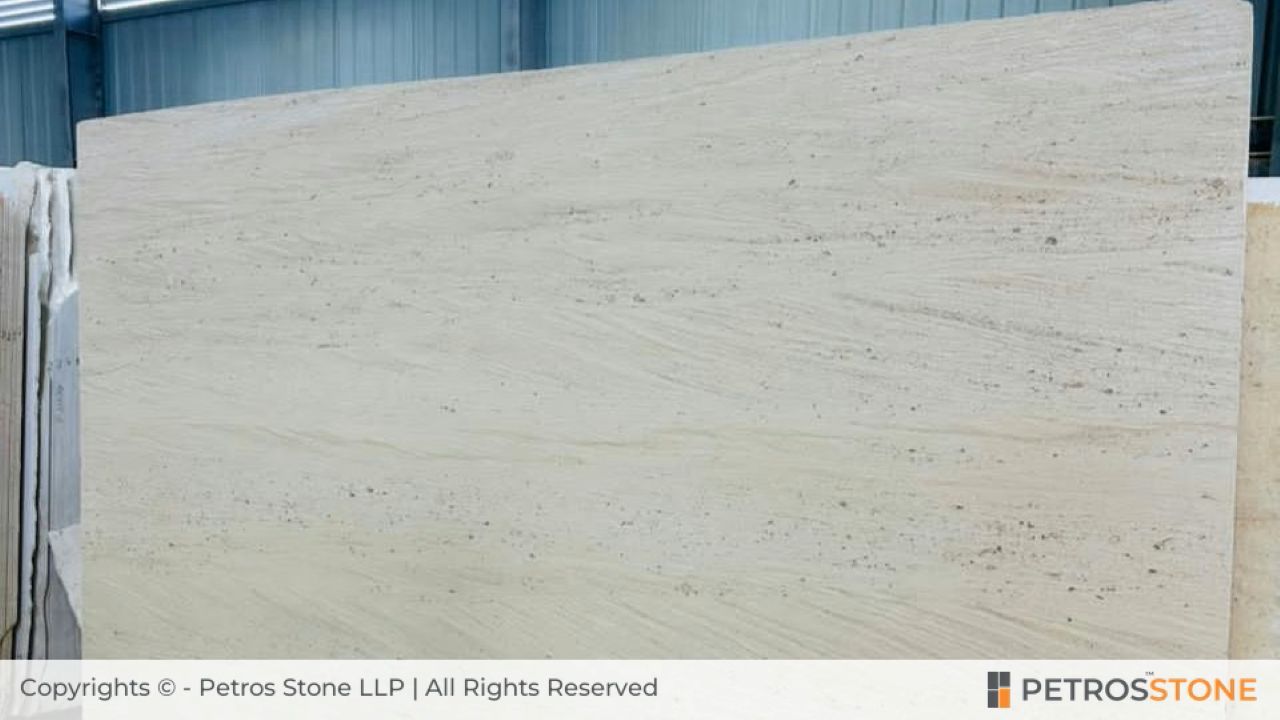
- Shade and pattern variation: Review blocks or full slabs, as colour and veining can vary between lots. Source the project from a consistent block selection wherever possible.
- Lot consistency: Request samples from the actual production lot and confirm that replacement material can be matched.
- Technical test reports: Obtain lot-specific EN test reports covering water absorption, density, flexural strength, and other project-relevant properties.
- Thickness and fixing: Confirm the required thickness according to panel size, application, and anchoring system.
- Finish and vein direction: Approve the finish, vein orientation, and joint layout before fabrication.
- Mock-up approval: Inspect a representative site mock-up under the intended lighting conditions.
- Sealing and maintenance: Specify a suitable impregnating sealer and agree on the maintenance requirements.
- Supply availability: Confirm block availability, production capacity, delivery schedules and the feasibility of future matching orders.
- Fabrication and installation: Check dimensional tolerances, fixing details and the installer’s experience with the selected format.
- Packing and transport: Confirm suitable protection, crating and handling procedures to minimise damage during transit and installation.
- Project specification: Ensure the selected material meets the application’s performance requirements and that all approvals are documented before bulk production.
What Factors Affect Moca Cream Price?

- Grain type. Fino/Relvinha carries a premium because of limited supply; Clássico is the benchmark.
- Cut. Vein-cut and cross-cut can be priced differently depending on yield from the block.
- Block selection and grade—premium or ‘extra’ selections with the most consistent colour cost more.
- Origin and authenticity. Genuine Alcanede material costs more than lookalikes.
- Thickness and format. 3/8 in tiles, 18 to 30 mm slabs and 4 cm facade panels are priced very differently.
- Finish. Leather, tumbled, and bush-hammered finishes add processing cost.
- Market conditions. Block purchasing by large buyers has tightened supply of the finer grades.
- Logistics and fabrication. Freight from Portugal, duties, cutting, edge profiles, and sealing.
- Order size and lot. Full-box minimums and single-lot supply affect pricing.
How Do You Clean and Maintain Moca Cream?
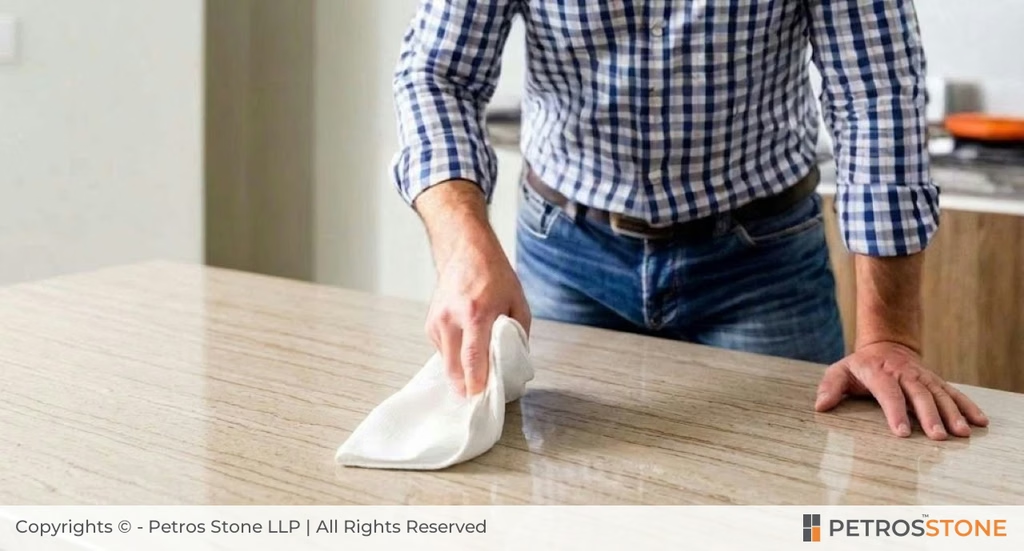
Treat it as any soft calcite limestone.
- Seal it. Use a penetrating sealer made for limestone. Seal newly installed tile before grouting to avoid grout staining. Sources vary from annual resealing to every two or more years, so follow your sealer’s instructions and re-test by dropping water on the surface: if it darkens quickly, reseal.
- Clean with pH-neutral stone cleaner only. Dust or vacuum first, since grit scratches. Mop with a stone-safe cleaner, rinse with clean water, and dry.
- Never use acids. Vinegar, lemon, citrus cleaners, limescale removers, and many bathroom products etch calcite. Avoid strongly alkaline cleaners too, as they can weaken sealers.
- Wipe spills quickly, especially wine, juice, and soft drinks.
- Avoid excess water. One supplier notes the stone is sensitive to moisture and recommends impregnation in damp or stain-prone areas.
- Use mats and felt pads at entries and under furniture.
- Repair etching professionally. A restoration contractor can re-hone or re-polish the surface.
Table – Moca Cream Marble Comparison with other Beige Stones
| Stone | Origin and type | Appearance | Key differences from Moca Cream |
Moca Cream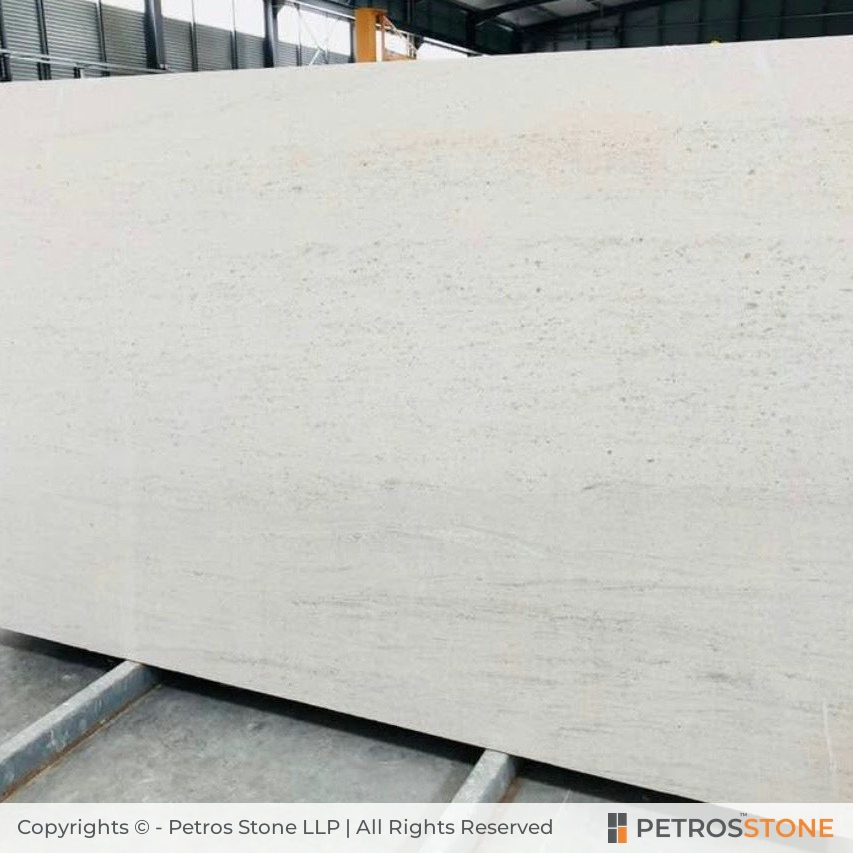 | Portugal; calcite limestone | Warm beige with parallel veins or cloud, fossils | Soft, moderate absorption; interiors and cladding |
Moleanos Cream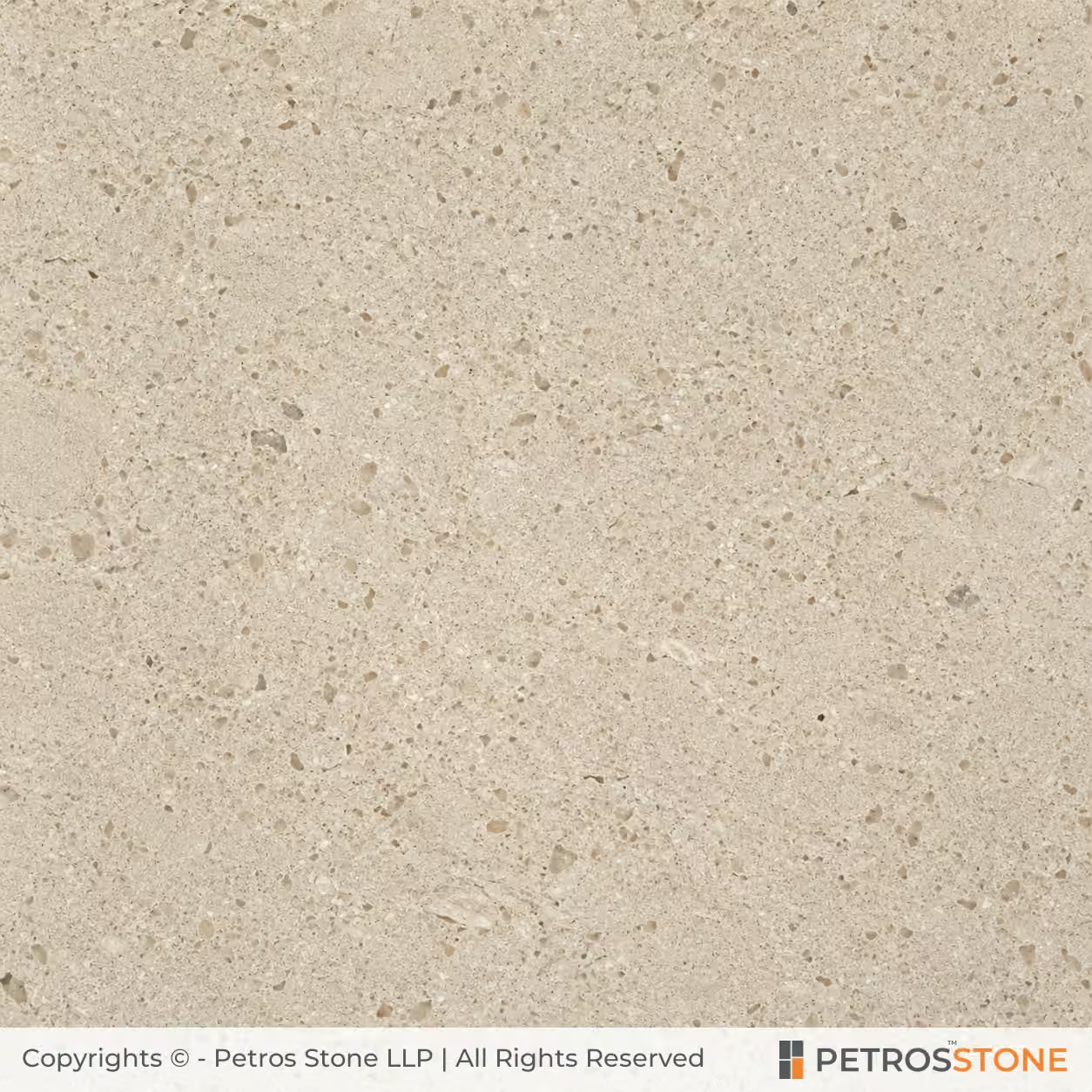 | Portugal; limestone | White to cream or buff, small shell fossils | Denser; tested at 0.8% absorption and 160 MPa in one UK datasheet; suited to paving and high-traffic exterior use |
Botticino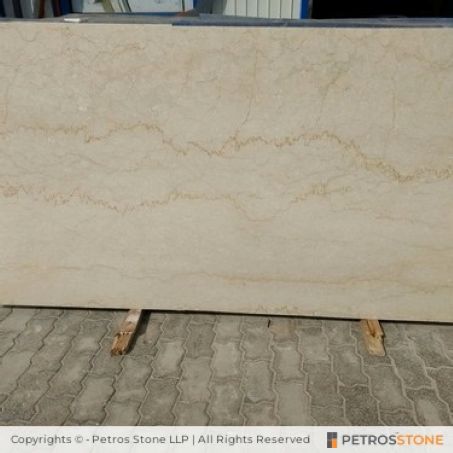 | Italy; micritic limestone sold as marble | Beige with fine veins and spots | Protected ‘Classico’ origin trademark; polishes to a higher sheen |
Crema Marfil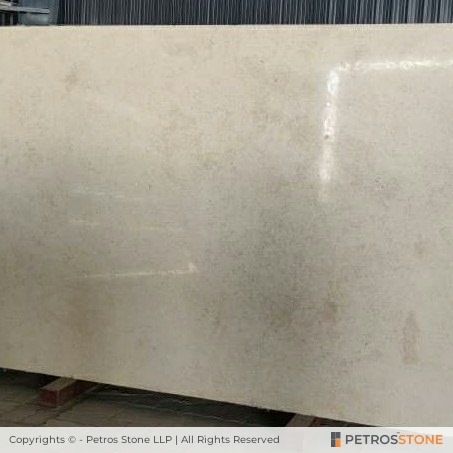 | Spain (Alicante); sold as marble | Even creamy beige, sometimes pinkish, with white to brown veins | Biggest-selling beige stone; takes a high polish; more uniform than Moca |
| Indian Cream Travertine & Beige Marbles 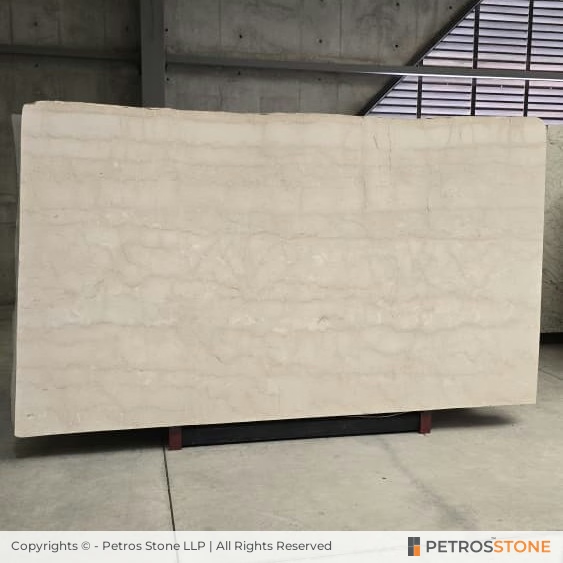 | India | Cream to yellow, often with voids or fill | Different texture and fill needs |
Which Beige Stone Should You Choose?
- Moca Cream marble for a natural honed look indoors and cladding.
- Moleanos if the stone must handle exterior paving and wear.
- Crema Marfil or Botticino for a glossier, more traditional polished-marble look.
FAQs
Is Moca Cream a marble?
No. It is a limestone (calcite) quarried in Portugal, though it is widely sold as ‘Moca Cream marble’.
Which type is best: Fino, Clássico or Grosso?
Fino for the calmest, most uniform look; Clássico for the best all-round balance and availability; Grosso for the most character.
What is Relvinha?
It is another name for the fine-grain Moca Creme (Fino).
Can Moca Cream be used outdoors?
For wall cladding, yes, with adequate thickness (one supplier says at least 4 cm anchored) and sealing. For exterior floors and paving, denser stones such as Moleanos are the safer choice.
Can I use it in a shower or bathroom?
Yes, on walls and vanities if sealed. A major US distributor does not recommend it for shower floors.
Is it suitable for kitchen counters?
Some suppliers sell it for counters, but it etches with acids and is soft. If you choose it, pick a honed or leather finish, seal it, and accept a lived-in patina.
Will it stain?
It can, because it is porous. Sealing and fast cleanup greatly reduce staining.
How can I tell genuine Moca Creme from a lookalike?
Check origin documents, quarry or block source, and a lot-specific test report. Suspiciously low prices or higher water absorption are warning signs.
How much does Moca Cream cost per sq. ft.?
Slab prices are indicative: about USD 2.92-3.65 per sq. ft. for Fino/Relvinha; see the price table for Clássico and Grosso.
Does Moca Cream need sealing?
Yes. It is a porous calcite limestone with absorption of roughly 2.3-3.5%, so use a penetrating sealer made for limestone.
Key Takeaways
- Honed is the best all-round finish; use textured finishes where grip matters.
- Typical absorption is roughly 2.3 to 3.5% with compressive strength of about 90 to 135 MPa depending on the report. Ask for the lot’s test results.
- Best for interior walls, floors, vanities, and well-detailed cladding. Avoid shower floors, exterior floors, and heavy-traffic areas.
- Seal it, clean it only with pH-neutral products, and keep acids away.

Tapas Koul leads editorial direction and content strategy at Petros® Stone, bringing over 15 years of combined experience in e-commerce, publishing, and digital communication. His work spans research, strategy, and communication, with a focus on natural stone, its technical properties, processing, and architectural applications. Collaborating with Petros® Stone’s production team, laboratory experts, and specialists, he translates industry knowledge into clear, engaging content and communication for diverse audiences.
Feel free to get in touch for a free consultation, quote, and get a detailed understanding from our experts here at Petros®. Visit www.petrosstone.com or call +91-8446360361 or WhatsApp

Brown Granite

White Galaxy Granite

Blue Bahia Granite

Silver Cloud Granite

Black Pearl Granite

Dallas White Granite