Emperador marble comes in several distinct types defined primarily by color depth (light vs. dark) and origin (Spanish, Turkish, Iranian-quarried material sold under the same trade name). Each version differs in veining character, density, price point, and best use case, which matters because ‘Emperador’ on an invoice doesn’t tell you where the block actually came from.
Some Audio Excerpts from our Conversation with Nader Chavoshi from Piedras Naturales de Chercos, Spain, Owner of an Emperador Quarry
Here are the 5 types of Emperador marble from around the world with their prices and origin:
| Emperador type/name | Images | Typical Origin | Indicative Price (USD, per sq. ft., 18–20mm) | Click Here For Exact Price | Contact |
|---|---|---|---|---|---|
| 1. Dark Emperador Marble (Marrón Imperial) | 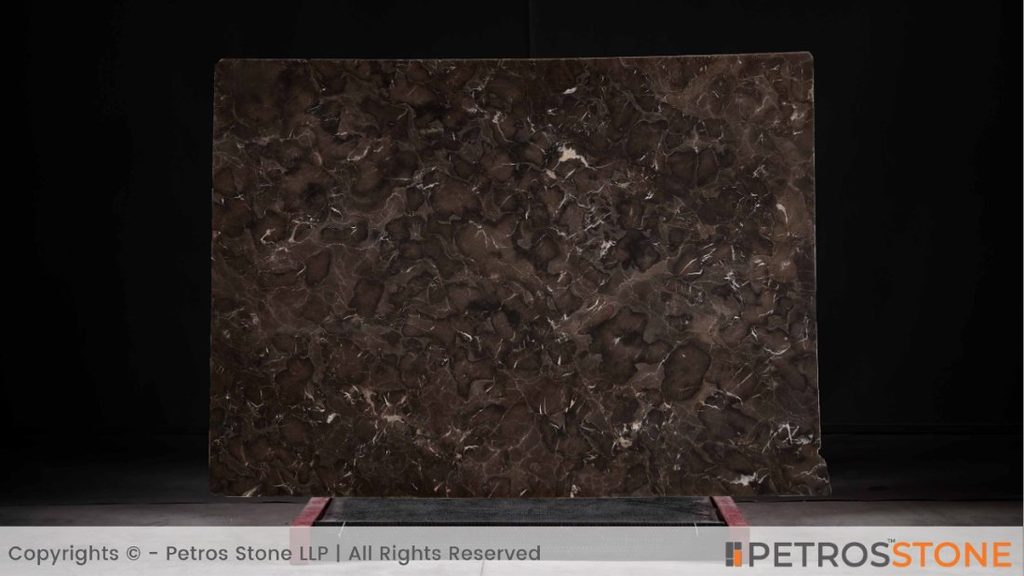 | Spain — Yecla, Jumilla, Caudete (Murcia/Albacete) | $4.17–$6.90 per sq. ft. | Exact Price | Chat |
| 2. Light Emperador Marble | 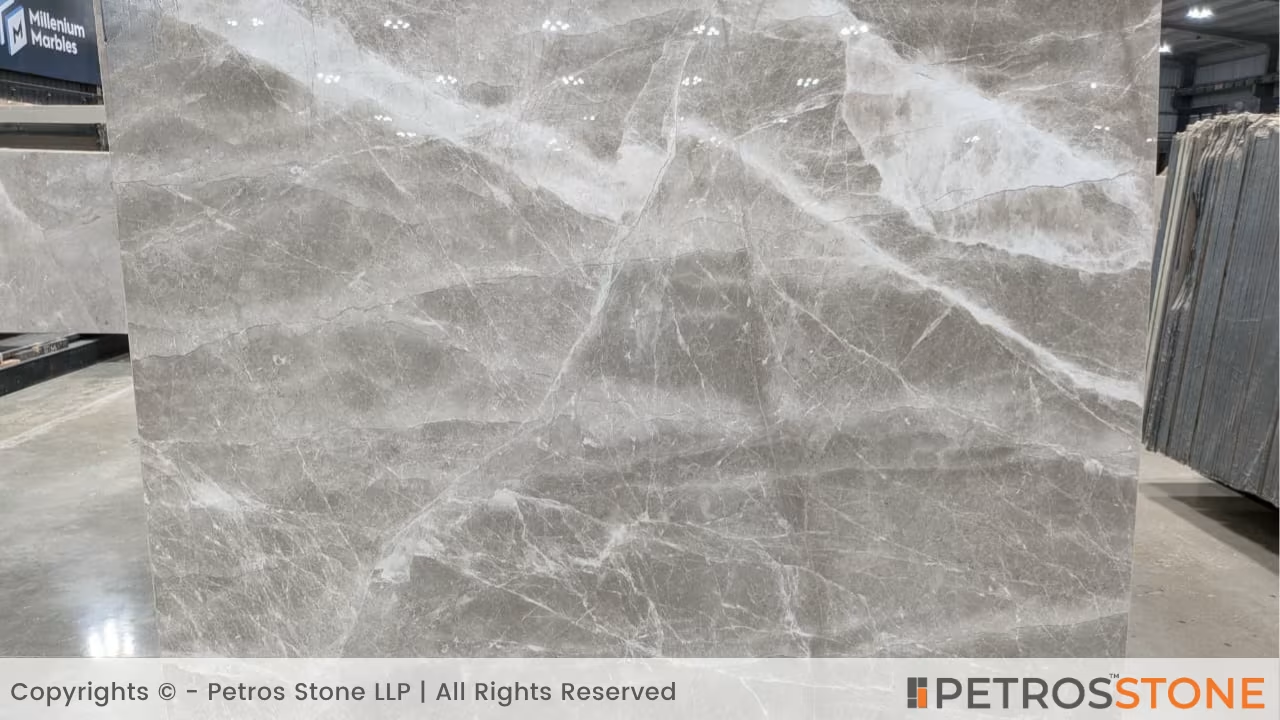 | Spain — Murcia, Alicante, Valencia | $3.13–$6.78 per sq. ft. | Exact Price | Chat |
| 3. Turkish Light Emperador Marble | 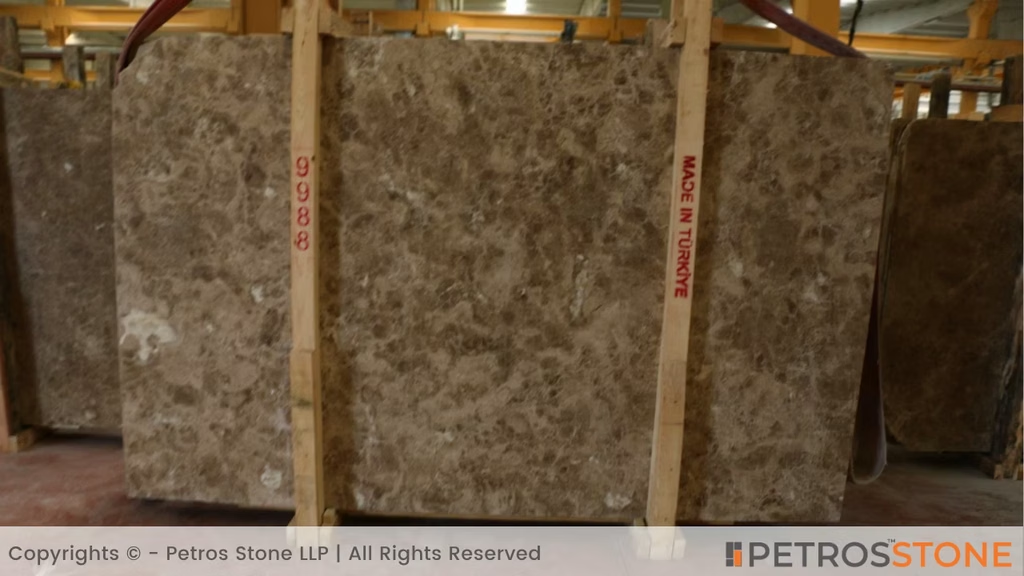 | Turkey (Bursa and other regions) | $2.61–$4.69 per sq. ft. | Exact Price | Chat |
| 4. Turkish Dark Emperador Marble | 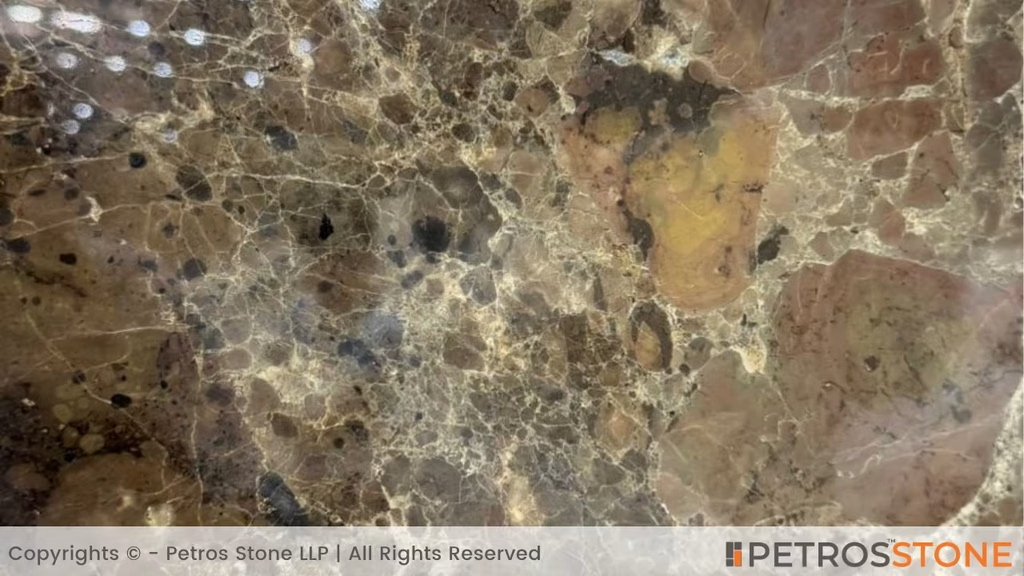 | Turkey | $3.65–$5.21 per sq. ft. | Exact Price | Chat |
| 5. Silver / Persian Emperador Marble | 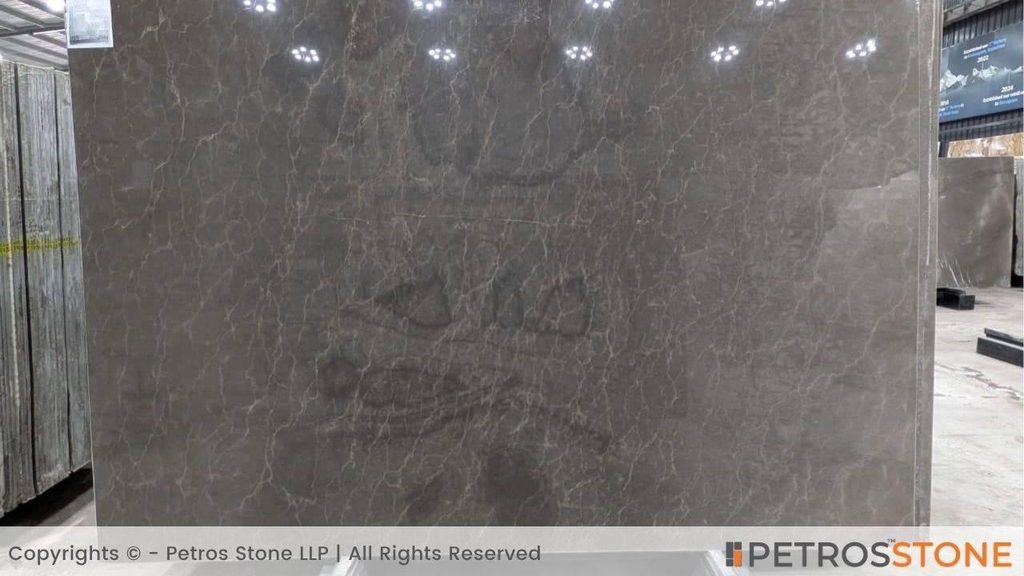 | Iran — Kerman and Fars provinces | $3.65–$5.73 per sq. ft. | Exact Price | Chat |
Spanish Emperador can vary considerably in colour, veining, and overall appearance depending on its quarry and source. To understand these differences more closely, Rishabh Jain, Director – International Business at Petros® Stone, spoke with Nader Chavosi, International Business Development Executive, Piedras Naturales de Chercos, Spain, about the characteristics and commercial variations found across Emperador. Mr. Chavosi shared his perspective on how quarry source, natural variation, and surface finish can influence the way Emperador looks and is selected for different applications.

“Regarding Emperador, I should mention that, around the world, there are mainly two types: Light Emperador and Dark Emperador. Light Emperador originally comes from Turkey, while Dark Emperador comes from Spain.”
– Nader Chavosi – International Business Development Executive, Piedras Naturales de Chercos, Spain
In this guide, we explore the Emperador marble varieties, comparing their origins, colour tones, veining patterns, and commercial classifications across major producing regions. It draws on published standards alongside practical insights from quarrying and export professionals, clearly distinguishing industry observations from laboratory-verified technical data.
- Some Audio Excerpts from our Conversation with Nader Chavoshi from Piedras Naturales de Chercos, Spain, Owner of an Emperador Quarry
- Dark vs Light Emperador? What's the Difference, and Does it Matter?
- What Is the Difference Between Light and Dark Emperador?
- Which Is Better for Different Applications?
- Is All Emperador Marble from Spain?
- Dark Emperador Marble
- Spanish Dark Emperador
- Iranian Dark Emperador
- Turkish Dark Emperador
- How Can You Tell Different Dark Emperador Origins Apart?
- Light Emperador Marble
- Spanish Light Emperador
- Iranian Light Emperador
- Turkish Light Emperador
- How Can You Tell Different Light Emperador Origins Apart?
- How to Verify Whether Emperador Marble Is Genuinely from Spain
- Which Emperador Marble Costs the Most?
- How Origin, Grade, Thickness and Finish Affect Price
- What Technical Tests Should Buyers Check?
- Factory & Processing Insights
- How Do You Choose the Right Emperador Marble?
- What Should Buyers Know About Installing Emperador Marble?
- Buyer Risks When Purchasing Emperador Marble
- FAQs
- Key Takeaways
Dark vs Light Emperador? What’s the Difference, and Does it Matter?
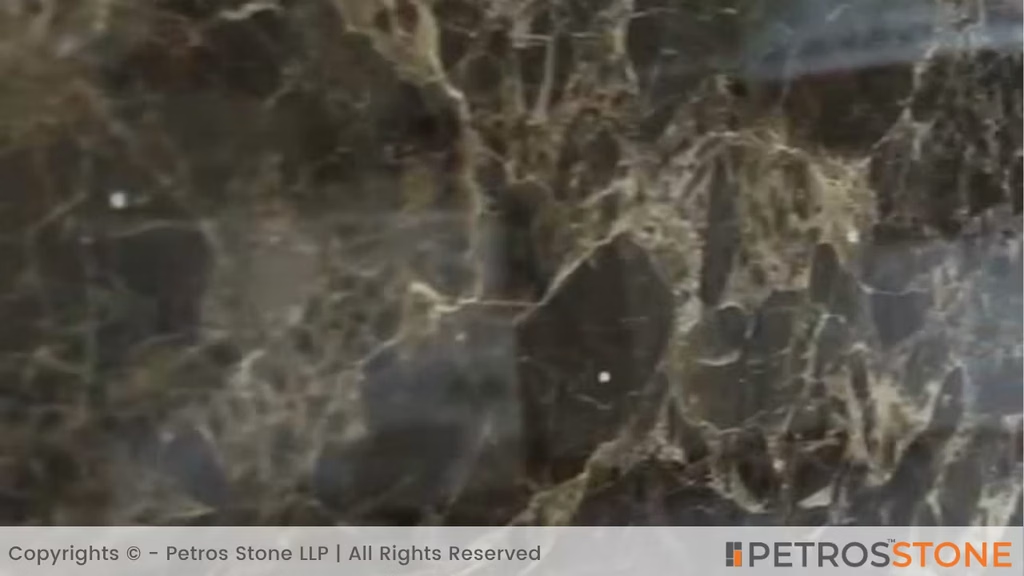
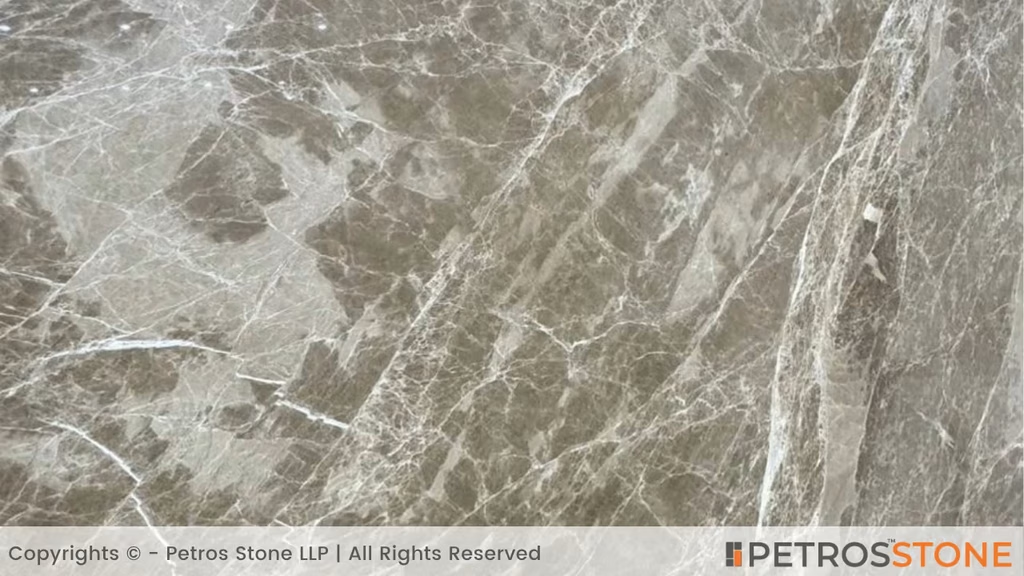
At the broadest level, Emperador marble splits into two color families:
Dark Emperador
A deep chocolate-to-coffee brown base cut through with fine white, cream, or gold veins. This is the variety most people picture when they hear “Emperador marble.”
Light Emperador
A warmer, lighter tan or honey-beige base with softer, less dramatic veining. Both families originate in Spain, but both are now also quarried and marketed under the same names from Turkey and Iran, each with its own veining character and price point.
What Is the Difference Between Light and Dark Emperador?
The core difference is color depth: Dark Emperador has a deep brown base with high contrast against its veining, while Light Emperador has a paler tan/beige base with softer contrast. Both share the same general family of vein patterns, and both are quarried from geologically related deposits in Spain (and, under the same trade names, in Turkey and Iran).
Which Is Better for Different Applications?
- Dark Emperador reads as bold and formal — it’s typically chosen for accent flooring, feature walls, borders and inlays, vanity tops, and statement countertops, and pairs well with lighter beige stones like Crema Marfil or with gold-toned fixtures.
- Light Emperador works better across larger continuous surfaces (full floors, large countertops) because its softer contrast is less visually overwhelming at scale, and it suits both traditional and contemporary interiors.
Neither is objectively ‘better’ — the choice depends on the room’
Is All Emperador Marble from Spain?
Spain is the origin of the two “original” Emperador varieties — Dark Emperador and Light Emperador — extracted from quarries in the Murcia, Alicante, and Valencia provinces, with the Yecla–Jumilla–Caudete belt in the Murcia/Albacete area being the best-known source of the dark stone. However, Turkey (particularly around Bursa) now supplies the largest volume of light-brown “Emperador-style” marble on the world market, while Iran produces a distinct grey-toned version marketed as Silver or Persian Emperador. In short, “Emperador” today functions more like a trade name for a family of brown/beige marbles than a strict guarantee of Spanish origin
“The original Emperador is the dark one from Spain. It was the first Emperador introduced to the world. Later, Turkey found a quarry with a similar design but a lighter colour, and they named it Light Emperador.”
– Nader Chavosi – International Business Development Executive, Piedras Naturales de Chercos, Spain
Dark Emperador Marble
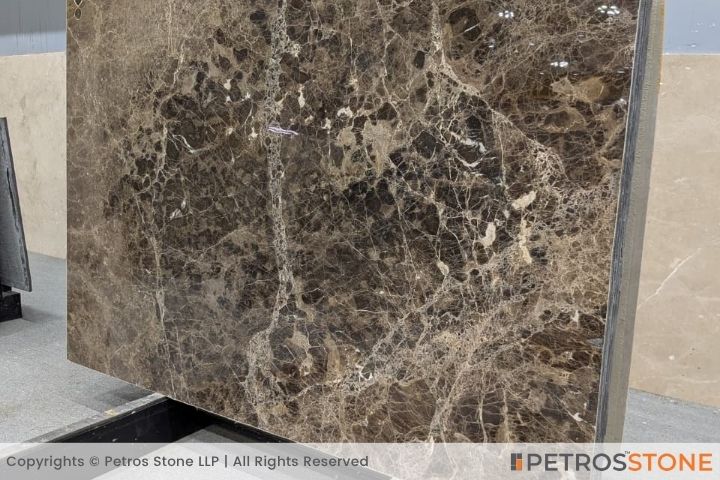
Spanish Dark Emperador
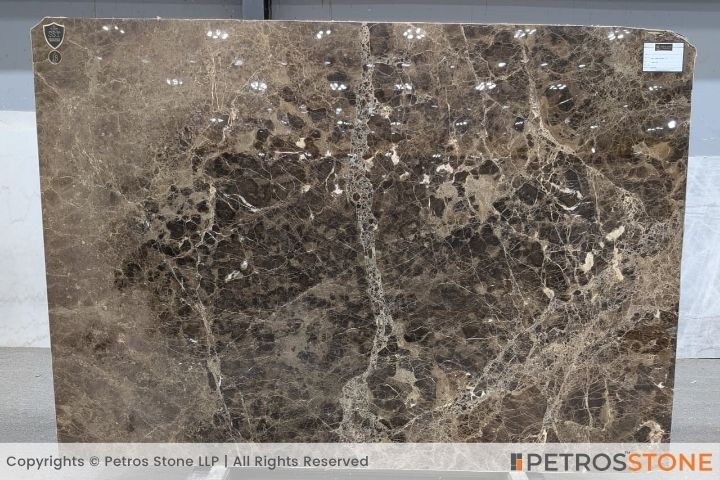
Spanish Dark Emperador, also commercially called Marrón Imperial, is a dolomitic marble quarried mainly around Yecla and Jumilla (Murcia) and Caudete (Albacete), a belt that geologists describe as the Altiplano region of southeastern Spain. It formed through low-pressure metamorphism of limestone, converting it to dolomite and giving it mechanical properties closer to Carrara or Macael marble than to a typical soft limestone, along with lower water absorption than most limestones. Its brecciated (fractured-and-recemented) structure means it needs careful resin treatment and factory polishing to bring out full color and a good gloss. Spanish dark stone is generally described as more uniform and finer-grained than its Turkish counterparts, with a more consistent deep-brown background.
Spanish Dark Emperador — Price
| Type | Indicative Block Price (USD/CBM) | Indicative Slab Price – 2 cm (USD/sq.ft.) |
|---|---|---|
| Spanish Dark Emperador | $1,010–$2,270/CBM | $4.17–$6.38/sq.ft. |
Iranian Dark Emperador
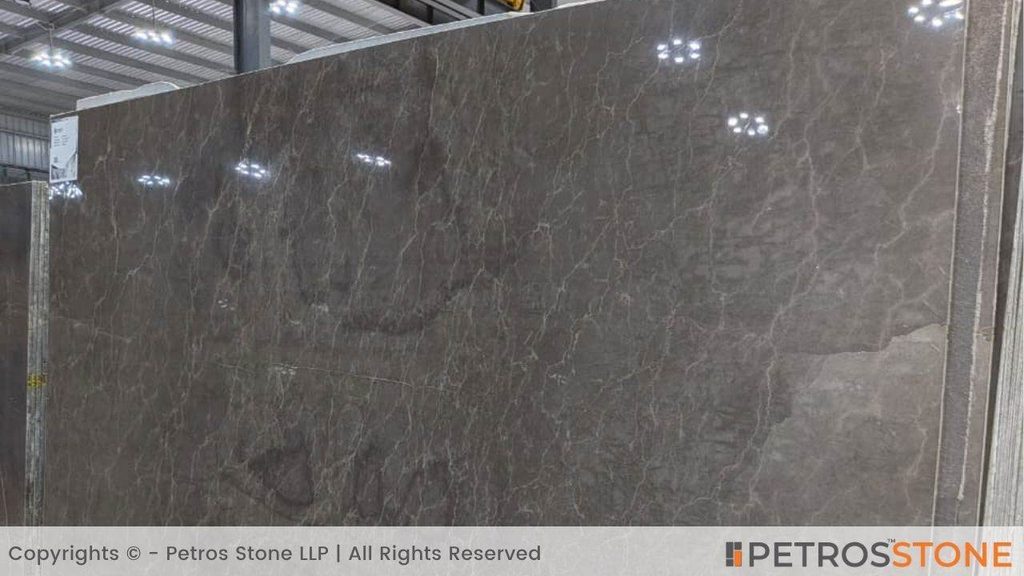
Iran produces a comparable dark brown marble from quarries in the Kerman and Fars provinces, sold under names such as Persian Dark Marble or Persian Silk Marble. It’s a respected alternative to the Spanish stone, though large, consistently high-quality blocks are harder to source because of strong regional demand.
Iranian Dark Emperador — Price
| Type | Indicative Block Price (USD/CBM) | Indicative Slab Price – 2 cm (USD/sq.ft.) |
|---|---|---|
| Iranian Dark Emperador | $800–$1,400/CBM | $3.65–$5.73/sq.ft. |
Turkish Dark Emperador
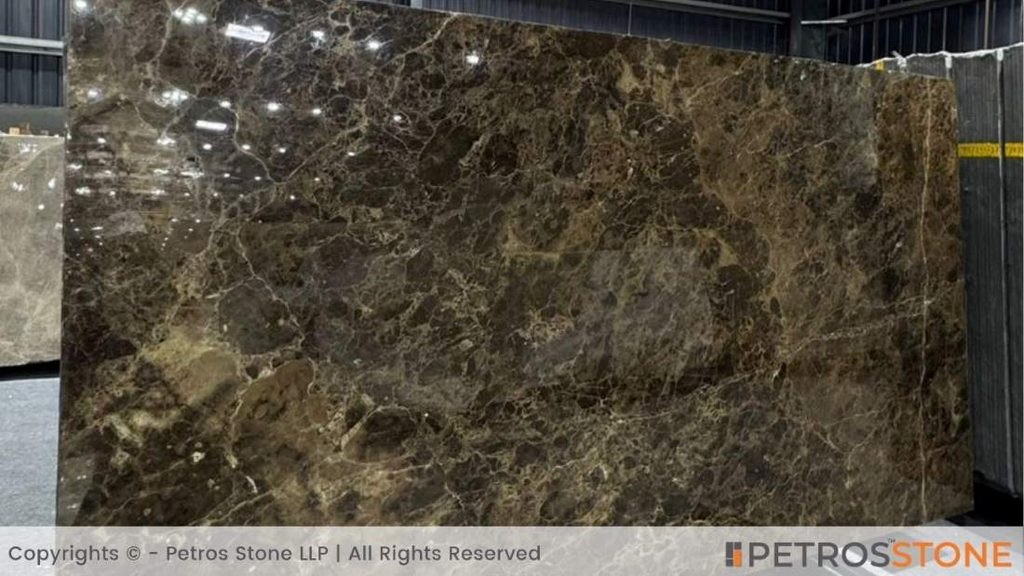
Turkey also quarries a ‘Dark Emperador,’ but it runs paler than the Spanish original and takes its name from the Spanish variety rather than matching its tone. It shares the same spider-web vein structure but in a lighter brown, and is generally positioned as a budget alternative rather than a direct substitute.
Turkish Dark Emperador — Price
| Type | Indicative Block Price (USD/CBM) | Indicative Slab Price – 2 cm (USD/sq.ft.) |
|---|---|---|
| Turskish Dark Emperador | $884–$1,262/CBM | $3.65–$5.21/sq.ft |
How Can You Tell Different Dark Emperador Origins Apart?
- Color depth and uniformity — Spanish material tends toward a deep, even chocolate-brown; Turkish dark stone is noticeably paler.
- Vein character — Turkish veining tends to run straighter and more linear; Spanish veining is more grained and irregular.
- Documentation — since Emperador is sold globally as a trade name rather than a guarantee of origin, a certificate of origin or quarry name from the supplier is the only reliable way to confirm the actual source on a large order.
Light Emperador Marble
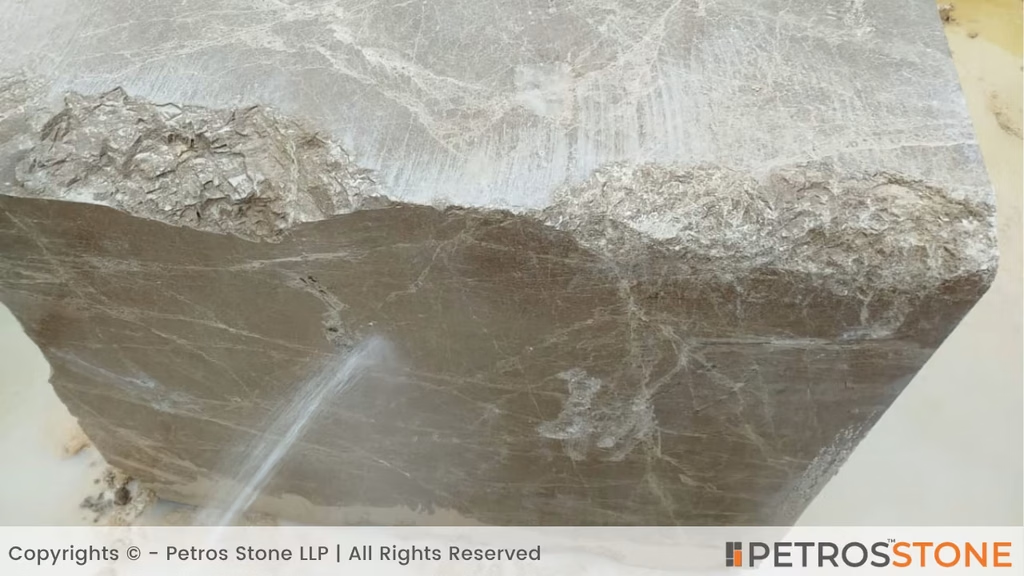
Spanish Light Emperador
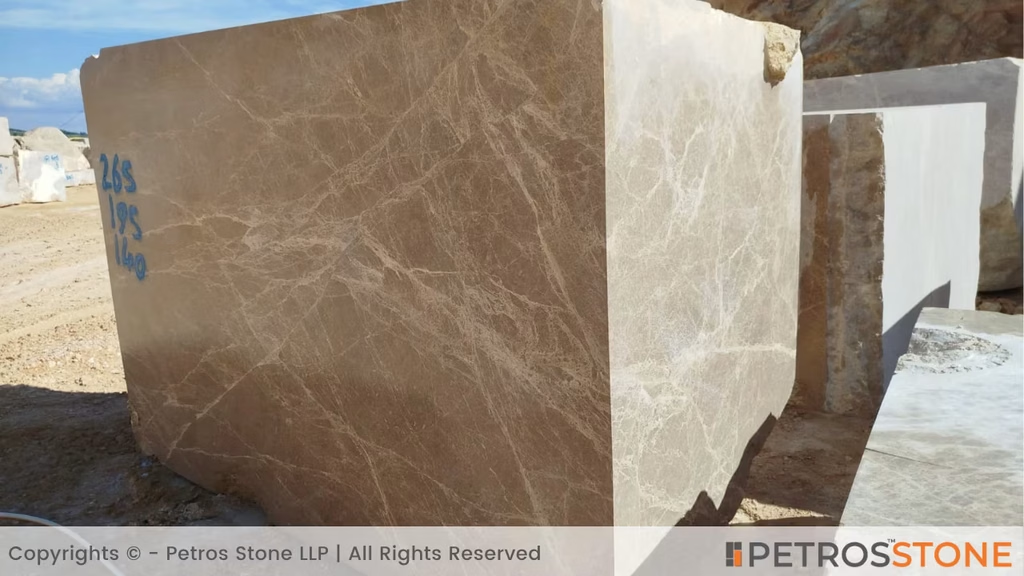
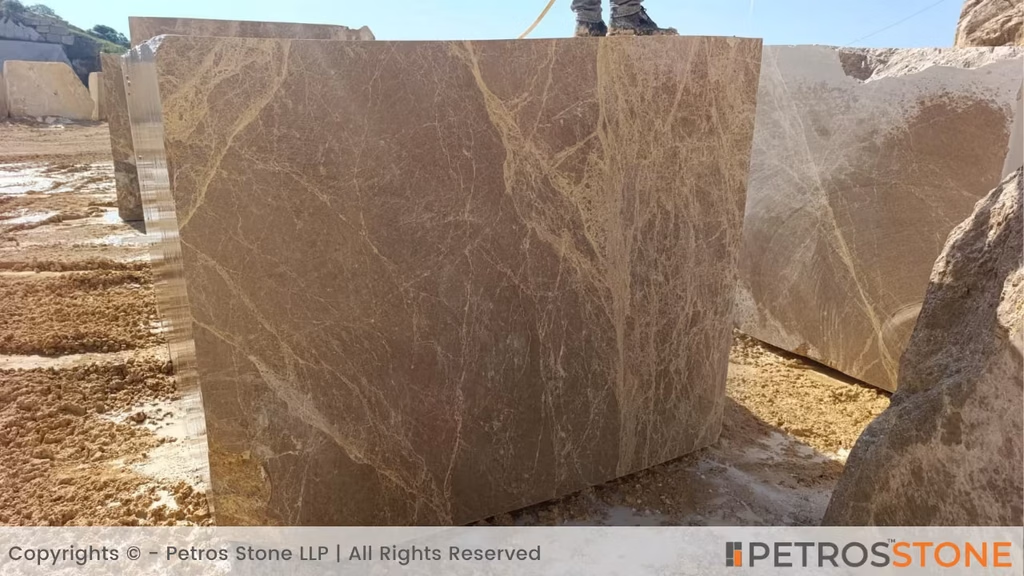
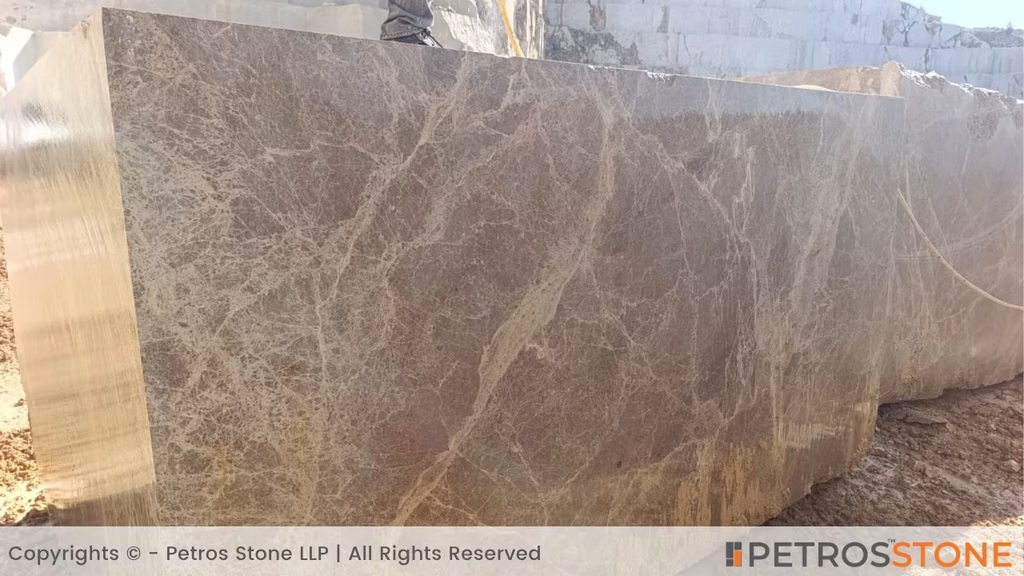
Spanish Light Emperador comes from the same general provinces as the dark stone — Murcia, Alicante, and Valencia — and is widely regarded in the trade as the highest-quality and most sought-after light-toned version, valued for a warm tan background with restrained, elegant veining.
Spanish Light Emperador — Price
| Type | Indicative Block Price (USD/CBM) | Indicative Slab Price – 2 cm (USD/sq.ft.) |
|---|---|---|
| Spanish Light Emperador | $758–$1,642/CBM | $3.13–$6.78/sq.ft |
Iranian Light Emperador
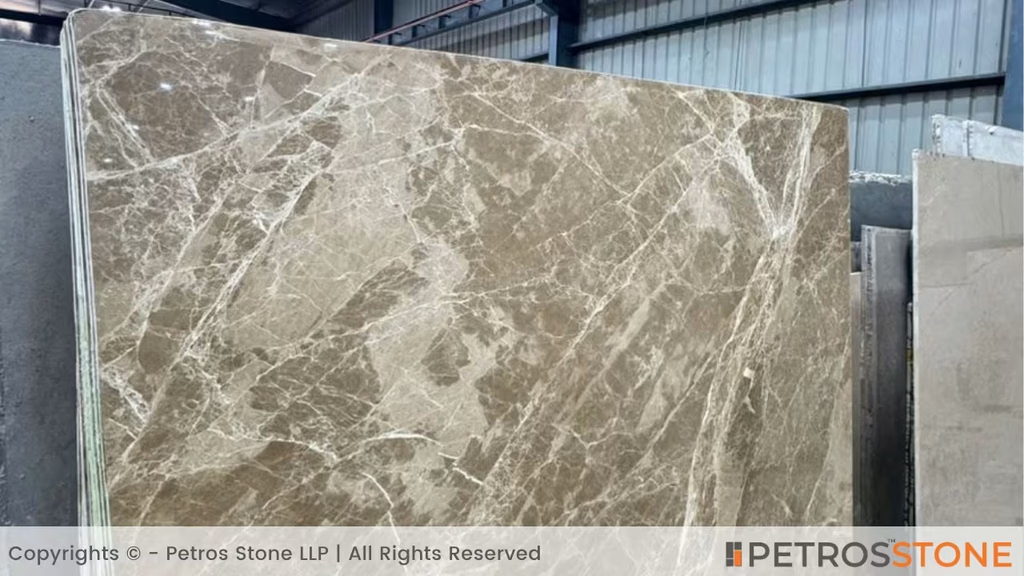
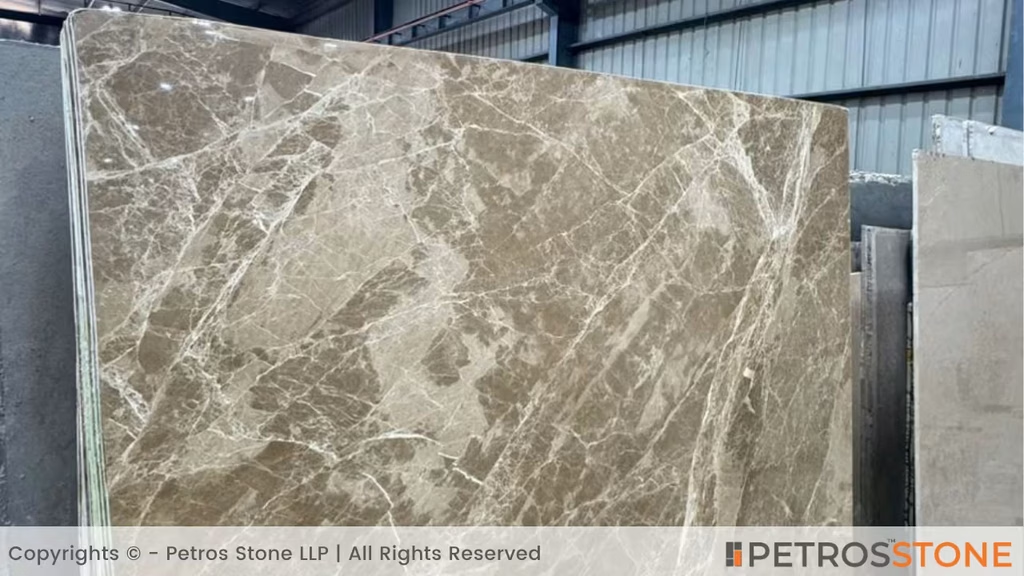
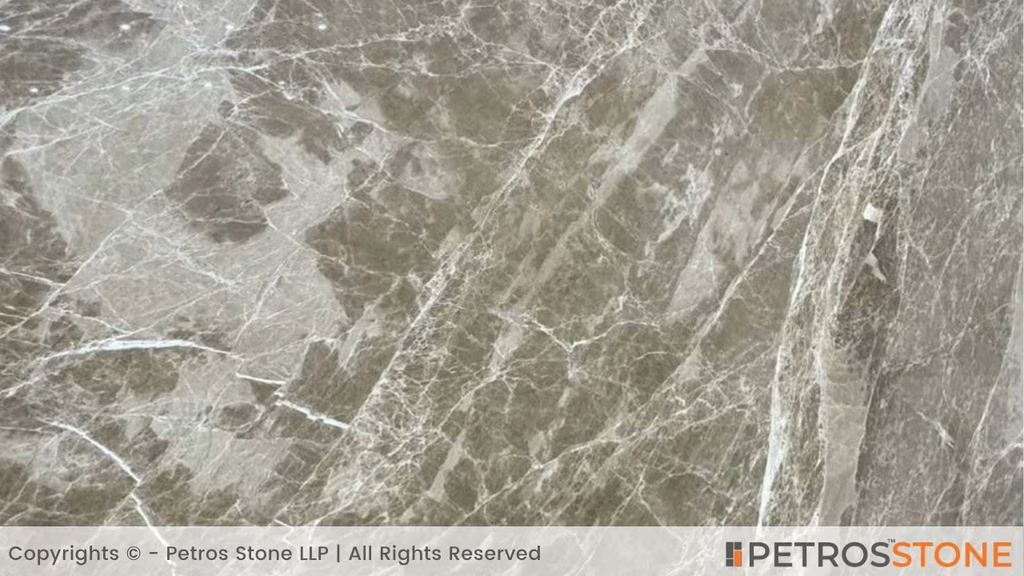
Iran also exports a light brown marble marketed as Iran Light Brown Marble or Light Emperador, quarried and finished into polished, sawn, sanded, or tumbled surfaces for a similar range of applications as the Spanish stone.
Iranian Light Emperador — Price
| Type | Indicative Block Price (USD/CBM) | Indicative Slab Price – 2 cm (USD/sq.ft.) |
|---|---|---|
| Iranian Light Emperador | $700–$1,350/CBM | $3.10–$6.25/sq.ft |
Turkish Light Emperador
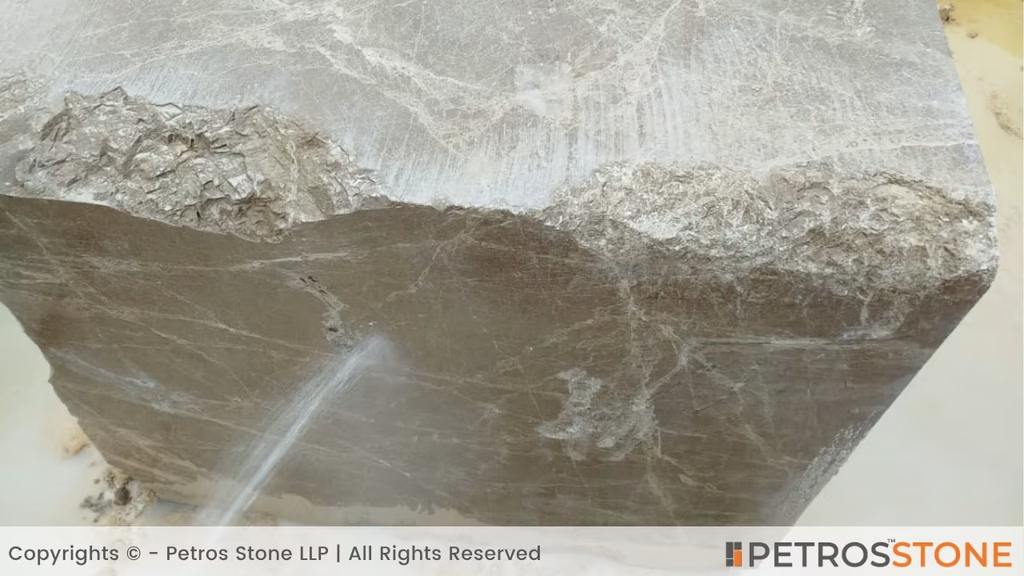
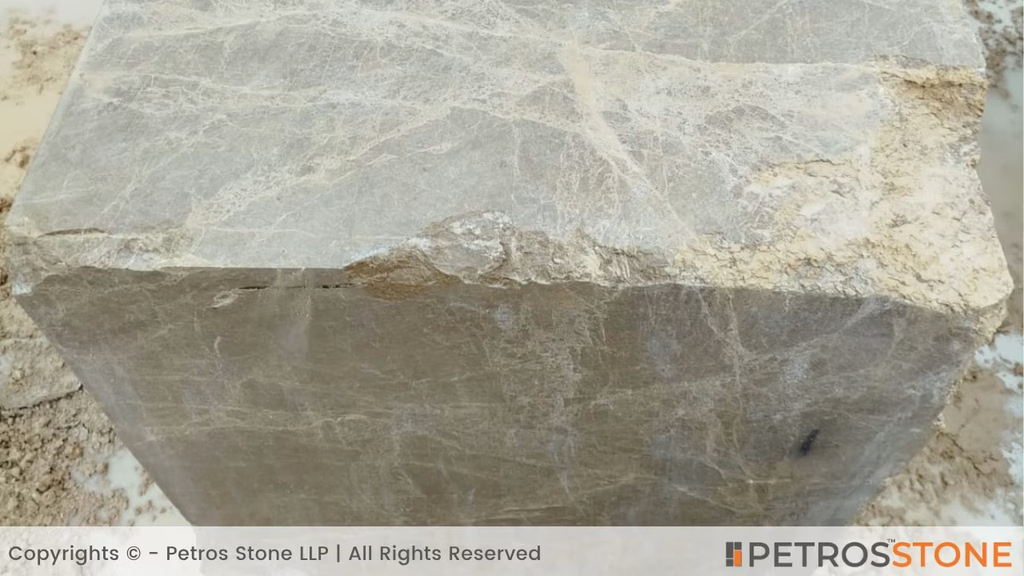
Turkey is today the largest single source of light-brown ‘Emperador-style’ marble by volume. Turkish Light Emperador shows a strong, dense spider-web vein structure over a light honey-brown background, and while its tone differs from the Spanish original, it has built up enough of a track record that many buyers treat it as a direct, lower-cost alternative rather than a mere imitation.
Turkish Light Emperador — Price
| Type | Indicative Block Price (USD/CBM) | Indicative Slab Price – 2 cm (USD/sq.ft.) |
|---|---|---|
| Turkish Light Emperador | $632–$1,136/CBM | $2.61–$4.69/sq.ft |
How Can You Tell Different Light Emperador Origins Apart?
Spanish light stone generally reads as a cleaner, warmer tan with subtler veining, while Turkish light stone shows a denser, more web-like vein network on a slightly cooler honey-beige base. As with the dark varieties, slab-to-slab variation within a single quarry can be significant, so origin claims are best confirmed against a supplier’s documentation rather than color alone.
How to Verify Whether Emperador Marble Is Genuinely from Spain
Ask for the origin certificate
Don’t just take a supplier’s word for it — ask for a proper certificate of origin that names Spain along with the specific quarry or exporting company (Yecla or Caudete in Murcia for Dark Emperador, Buñol or Pinoso for Light). Then check the invoice and bill of lading to see where it actually shipped from. If it left from a Spanish port, that’s a good sign. If it was transshipped through another country first, that’s worth questioning. And don’t stop at a logo on a piece of paper — actually look up whether the named company is real and genuinely operates in that region.
Check the veining, not just the color
This is where you can catch a lot of fakes with your own eyes. Genuine Spanish Emperador has a fairly even brown background with fine, messy, spider-web-like veining running in no particular direction — it almost looks chaotic. Turkish material can have a similar brown tone, but the veins tend to run in a more repetitive diagonal or vertical pattern instead of that random web look. Iranian stone often comes from a completely different formation, so the tone can look flatter, and the veining just doesn’t match the Spanish pattern at all. A lot of what’s sold as “Dark Emperador” is actually leftover Spanish block that didn’t pass Spain’s own grading, resold under the same name.
Compare block photos, not slab photos
Ask the supplier for photos of the actual quarry block face — not a polished, finished slab. Block faces are much harder to dress up or cherry-pick. Hold that photo next to a confirmed Spanish reference: a genuine Spanish block shows that irregular web pattern on a uniform base color. Turkish blocks tend to show straighter, diagonal streaking. Iranian blocks often look darker and flatter, without much of that web structure. If what you’re looking at has straight, repetitive lines instead of the messy web look, there’s a good chance it isn’t actually Spanish.
Ask for lab certification on big orders
If it’s a large or high-value purchase, it’s worth asking for (or paying for) a petrographic or isotope lab test that compares your sample against known Spanish quarry samples. It’s really the only proof that can’t be faked. On its own, it might be overkill for a small job, but paired with the certificate of origin, the quarry name, and a solid veining comparison, it becomes very hard for anyone to pass off Turkish or Iranian as the real Spanish thing.
Which Emperador Marble Costs the Most?
Spanish Dark Emperador (Marrón Imperial) typically commands the highest price among the Emperador family, reflecting quarry scarcity, higher processing costs for its brecciated structure, and international freight from Spain. Indian retail listings currently show Dark Emperador starting around ₹400 per sq ft for standard 18mm polished slabs, with premium bookmatched or larger-format slabs running well above that. Turkish-quarried Emperador varieties are generally the most affordable, since they benefit from shorter shipping routes to some markets and higher production volumes.
How Origin, Grade, Thickness and Finish Affect Price
- Origin — Spanish material carries a premium over Turkish or Iranian stone of a similar color, largely on reputation and consistency rather than any single measurable property.
- Grade — even within one quarry, slabs are graded by veining consistency, absence of fissures, and color uniformity; higher grades cost significantly more per square foot.
- Thickness — 18mm and 20mm are the common commercial thicknesses; thicker slabs (30mm) cost more per square foot and are used mainly for edge details or heavy-traffic flooring.
- Finish — polished finishes are the standard and cheapest to produce; honed, leathered, or brushed finishes typically add to the price because of extra processing steps.
- Trade terms — bulk block purchases are usually quoted FOB (free on board) at the port of origin, while finished slabs sold to end markets are quoted CIF (cost, insurance, freight) or as a landed retail price, which is why the same stone can look very differently priced depending on where in the supply chain you’re buying.
What Technical Tests Should Buyers Check?
Density and Water Absorption
Because Emperador marble is dolomitic, it generally has lower water absorption than calcite-based limestones, which is one reason it holds up reasonably well outside India’s more humid climates when properly sealed. Water absorption and apparent density are tested under the relevant national or international standard before a batch is approved for structural or high-traffic use.
Compressive Strength
Compressive strength testing determines how much load-bearing stress a slab can withstand before failure — a key figure for flooring in high-traffic commercial spaces or any application where the stone bears structural load.
Flexural Strength
Also called the modulus of rupture, flexural (bending) strength testing is particularly relevant for large-format slabs, thin countertops, and cantilevered edges, where the stone must resist cracking under its own weight or point loads.
Testing Standards
Internationally, marble dimension stone is governed by ASTM C503/C503M, which sets physical property requirements for absorption by weight, density, compressive strength, modulus of rupture, abrasion resistance, and flexural strength, and classifies marbles as either calcite or dolomite type. In India, the equivalent reference is IS 1130:1969 (Bureau of Indian Standards), which specifies sizing, tolerances, and physical property requirements for marble blocks, slabs, and tiles, supported by companion standards such as IS 1121 (strength testing methods) and IS 1124 (water absorption, specific gravity, and porosity testing). Reputable suppliers should be able to provide test certificates referencing these standards on request, particularly for large commercial orders.
Factory & Processing Insights
Gang-Saw Cutting
Blocks extracted from the quarry are cut into slabs using gang saws (multi-bladed saws that cut several parallel slabs from one block in a single pass) or, increasingly, diamond wire saws for higher precision and less material waste.
Resin Treatment
Because Emperador marble’s fractured, brecciated structure often contains natural micro-fissures, slabs are commonly impregnated with polyester or epoxy resin under vacuum to fill pores and hairline cracks, improving durability and giving a more even polish. Slabs prone to breakage during handling often also get a fiberglass mesh backing bonded on with resin, which reinforces the slab for transport and installation without requiring the older method of cutting reinforcing slots (‘rodding’) into the stone’s underside.
Calibration and Polishing
After cutting and resin treatment, slabs are calibrated to a uniform thickness and then polished (or honed, leathered, or brushed, depending on the desired finish) to bring out the stone’s natural color and vein contrast.
How Processing Affects Final Slab Appearance
Resin filling and a mesh backing don’t change the visible face of a well-processed slab, but they do affect how it should be fabricated (cutouts near mesh edges need extra care) and how it responds to future re-polishing. Buyers should ask suppliers whether a given batch is resin-treated, since untreated dark Emperador can be more prone to surface pitting over time.
How Do You Choose the Right Emperador Marble?
Choosing by Application
- Flooring (moderate traffic, residential): Light Emperador in a honed or polished finish spreads well across large areas without overwhelming the space.
- Feature walls, borders, vanity tops: Dark Emperador’s contrast makes it a strong focal-point material.
- Exterior or high-moisture areas: dolomitic Emperador handles moisture better than calcite marbles, but any Emperador variety should be sealed and, in freeze-thaw climates, checked against a supplier’s exterior-rated data sheet.
Choosing by Budget
If Spanish Dark Emperador is outside budget, Turkish Dark Emperador or a well-graded Emperador Dark can deliver a visually similar look at a lower per-square-foot cost — the trade-off is typically less color uniformity and a different (usually straighter) vein pattern.
Choosing by Origin and Grade
Ask for the quarry name, not just the trade name “Emperador,” and request to see actual slab photos (not catalog images) before committing to a large order, since natural variation between blocks — even from the same quarry — can be considerable.
What Should Buyers Know About Installing Emperador Marble?
Installation Best Practices
Emperador slabs should be dry-laid and reviewed for vein direction and color match before final adhesion, particularly for bookmatched pairs on feature walls. Because of the stone’s brecciated structure, professional installers typically recommend a full-bed mortar or high-quality stone adhesive rather than spot-bonding, to support the slab evenly and reduce the risk of hairline cracking at existing natural fissures.
Sealing and Maintenance
A penetrating (impregnating) stone sealer is recommended at installation and reapplied periodically — dark-colored dolomitic marbles like Dark Emperador generally hide etching less visibly than lighter stones, but they can still absorb oils and acidic spills, so sealing remains important, and spills should be wiped promptly rather than left to sit.
Climate-Specific Considerations
Emperador’s lower water absorption compared to calcite limestones makes it a reasonable choice for humid climates when properly sealed, but for exterior use in freeze-thaw regions, buyers should confirm the specific batch’s absorption and compressive strength figures against ASTM C503 or IS 1130 thresholds rather than assuming all Emperador stone performs identically.
Buyer Risks When Purchasing Emperador Marble
Trade-Name and Origin Confusion
‘Emperador’ is used as a commercial name across at least four countries of origin for visually similar but geologically distinct stones. Without a quarry name or certificate of origin, buyers have no reliable way to confirm whether a quoted ‘Emperador Dark’ slab is Spanish, Turkish, or Iranian material.
Grade and Batch Variation
Even within a single quarry, slabs vary in vein density, color consistency, and fissure content. A sample chip or catalog photo does not guarantee the appearance of the actual slabs delivered — always request current slab photos or, for large orders, a factory visit or video call.
Resin-Treated vs. Untreated Material
Resin-treated slabs are more stable and consistent but should be disclosed by the supplier; untreated material may show more natural pitting but is sometimes preferred for restoration work matching older, untreated installations.
FOB vs. CIF Pricing
Quotes can be given FOB (at the origin port, excluding freight, insurance, and import duties) or CIF/landed (including those costs). Comparing an FOB quote from one supplier against a CIF quote from another will make the FOB option look artificially cheaper — always confirm which basis a quote uses before comparing prices across suppliers.
FAQs
Is Light Emperador or Dark Emperador More Popular for Kitchens?
Light Emperador is generally more popular for full kitchen countertops and floors because its softer contrast works better across large, continuous surfaces, while Dark Emperador is more often used as an accent — an island, a backsplash, or a border — where its bolder contrast reads as a design feature rather than overwhelming the room.
Does Iranian Emperador Cost Less Than Spanish Emperador?
Generally yes, though the gap has narrowed as high-quality Iranian block supply has tightened. Spanish stone still commands a premium mainly on reputation for color consistency and finer grain, not because it’s technically superior on every measure.
Can Light and Dark Emperador Be Used Together?
Yes — pairing Light Emperador flooring or walls with Dark Emperador borders, inlays, or an accent island is a common design combination, since both share the same underlying vein character and tone family, so they read as coordinated rather than mismatched.
Is Emperador Marble Suitable for Kitchen Floors?
Yes, with proper sealing. Its dolomitic composition gives it lower water absorption than many limestones, but like all-natural marble, it can etch from acidic spills (citrus, vinegar) and should be sealed and re-sealed periodically, especially in a kitchen environment.
How Should Dark Emperador Marble Be Sealed?
With a penetrating/impregnating sealer applied to a clean, dry surface, then reapplied on a schedule recommended by the sealer manufacturer (commonly every 12–24 months for kitchen counters, less often for lower-traffic floors) — a professional installer or the slab supplier can recommend a specific product suited to the finish.
What Is the Difference Between Emperador and Marrón Imperial?
None in substance — Marrón Imperial is simply the alternate commercial name used for Spanish Dark Emperador, quarried from the same Yecla–Jumilla–Caudete belt in Murcia and Albacete. Spanish quarry suppliers typically list the product under both names interchangeably.
Is Emperador Marble Natural Marble or Composite?
Emperador is a natural, dolomitic marble formed by the metamorphism of limestone — it is not an engineered or composite stone. However, most commercial slabs undergo resin treatment (filling natural micro-fissures with polyester or epoxy resin) as a standard processing step, which is a surface/structural treatment applied to the natural stone rather than a manufactured substitute for it.
Key Takeaways
- ‘Emperador’ is a trade name, not a guarantee of origin. Spanish, Turkish, Iranian, and other materials can be sold under the same name, with differences in colour, veining, density, and price.
- Dark and Light Emperador differ mainly in colour depth and visual character. Dark Emperador has a deeper brown base and stronger contrast, while Light Emperador has a softer tan or honey-beige appearance suited to larger surfaces.
- Origin, grade, thickness, and finish all influence price. The indicative 18–20 mm slab prices in the article range from $2.61 to $6.90 per sq. ft., depending on the variety and origin.
- Buyers should verify more than the appearance. Quarry name, origin documentation, actual block and slab photographs, and laboratory testing for larger orders can help reduce the risk of receiving a different material than specified.
- Processing and installation directly affect the finished material. Gang-saw cutting, resin treatment, calibration, and polishing influence slab quality, while proper support, sealing, and batch-specific testing are important for installation and exterior applications.
Feel free to get in touch for a free consultation, quote, and get a detailed understanding from our experts here at Petros®. Visit www.petrosstone.com or call +91-8446360361 or WhatsApp

Brown Granite

White Galaxy Granite

Blue Bahia Granite

Silver Cloud Granite

Black Pearl Granite

Dallas White Granite