Stone has long symbolized power and beauty throughout history. Whether it’s a timeless marble sculpture or a modern kitchen countertop, stone remains a material of unmatched elegance and durability.
However, with evolving construction techniques, innovative designs, and advanced technology, the demand for lighter, sleeker, and more flexible stone surfaces has grown significantly. Today, architects and interior designers often ask: How thin can a slab of stone really be?
Thinnest Stone Slabs
| Type | Thickness Range | Common Applications |
| Flexible Stone Veneer | 0.5–2 mm (Thinnest Stone Slabs) | Interior décor, curved walls |
| Ultra-Thin Engineered Slab | 4–8 mm | Furniture, wall cladding |
| Reinforced Natural Stone Slab | 8–10 mm | Countertops, façades |
| Standard Slab | 20–30 mm | Heavy-duty applications |
Traditionally, stone slabs were known for their weight and thickness. But modern cutting, bonding, and reinforcement technologies have made it possible to create ultra-thin slabs that offer not just strength and longevity, but also a refined, contemporary aesthetic. These lightweight, easy-to-install slabs preserve the natural beauty of stone while reducing structural load.
In this article, we’ll explore the world of thin stone slabs, their technology, design possibilities, and how they’re transforming both residential and commercial spaces.
- Understanding Stone Slabs
- Types of Stone Slabs – Natural, Engineered and Composite
- Standard Thicknesses of Stone Slabs
- Standard Stone Slab Thickness by Application
- Defining ‘Thin’ in Stone Slabs
- Common Thin Slab Thicknesses
- Materials and Technologies for Thin Slabs
- Suitable Stones for Thin Slabs
- The Thinnest Stone Slabs Available Today
- Minimum Achievable Thickness
- Notable Brands and Products
- Table – Notable Brands and Products
- Applications of Ultra-Thin Stone Slabs
- Cost and Value Considerations
- Pricing Factors
- Cost Comparison With Standard Slabs
- Innovations and Future Trends
- Summary
- Key Takeaways
Understanding Stone Slabs
The three main categories that are widely used to classify stone slabs according to the manufacturing method and purpose are as follows:
Types of Stone Slabs – Natural, Engineered and Composite
| Type | Description | Examples | |
| Natural Stone Slabs | 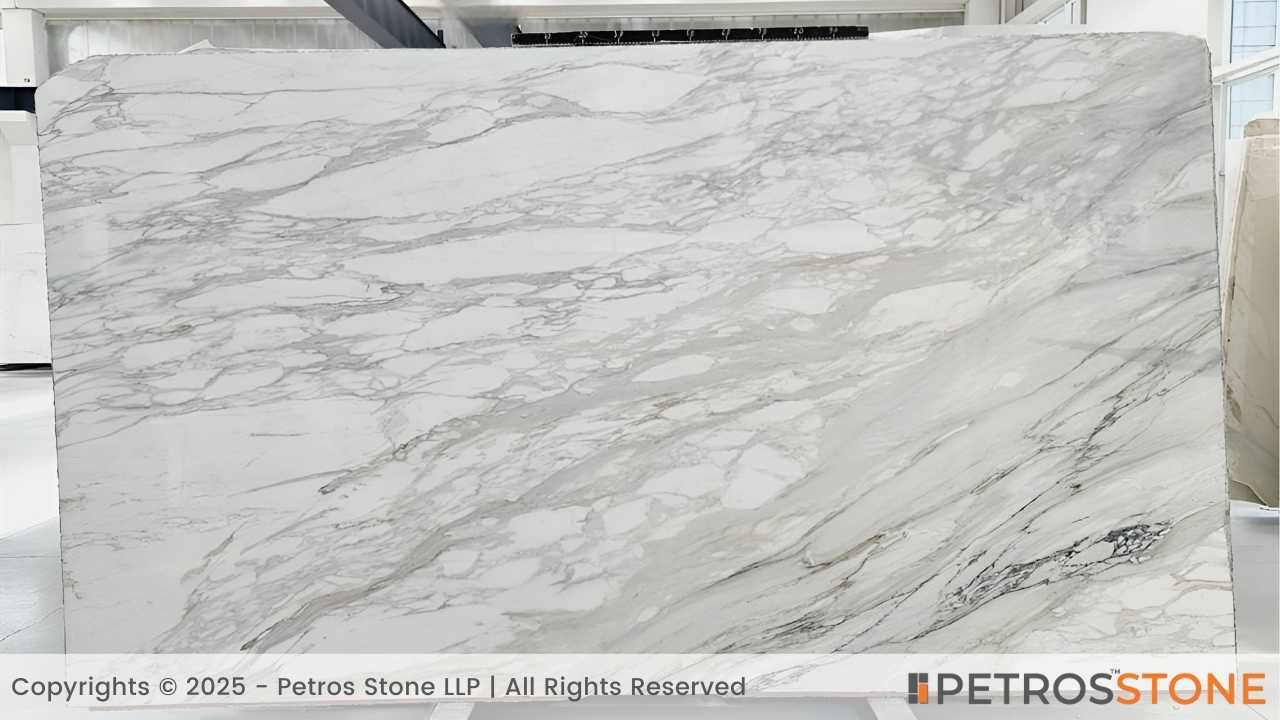 | Cut directly from large stone blocks found in quarries. Each slab is unique in color, pattern, and texture. | Granite, Marble, Slate, Onyx, Travertine |
| Engineered Stone Slabs | 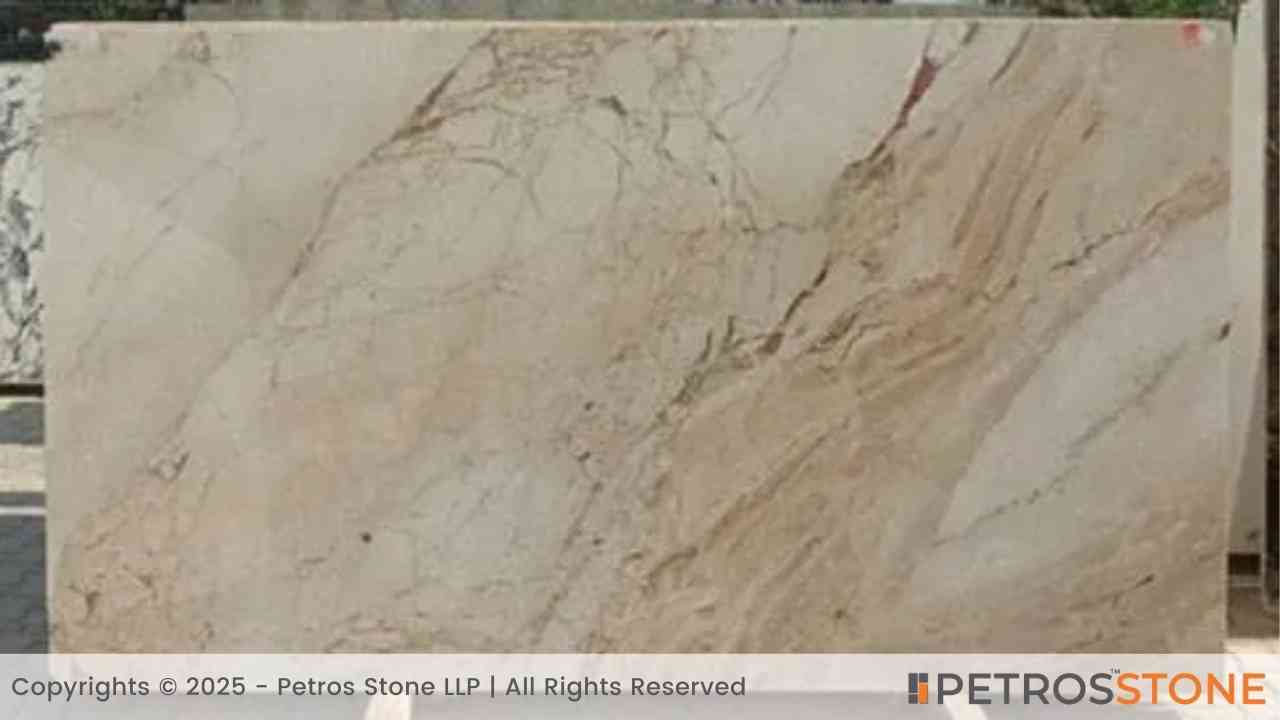 | Made from crushed stone particles (mostly quartz) bound together using resin and pigments. They are consistent and less porous. | Quartz, Silestone, Caesarstone |
| Composite or Reinforced Panels | 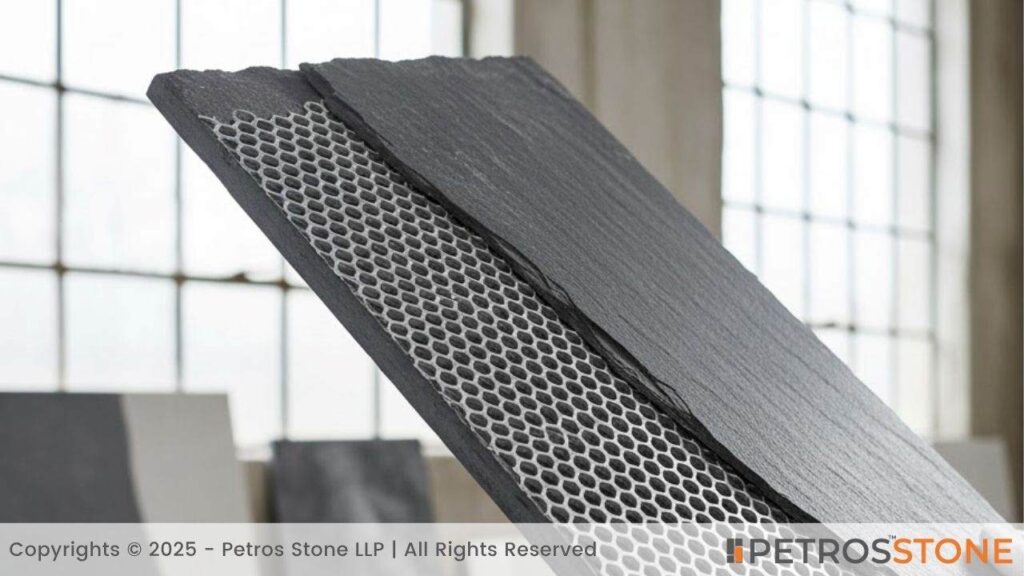 | Thin layers of stone are bonded to a lightweight backing such as aluminum honeycomb or fiberglass mesh. | ThinSlabz, Slate-Lite, Laminam Panels |
Every variety offers unique benefits. Natural stone is classic and one-of-a-kind. Strength and uniformity are provided by engineered stone. Ultra-thin, lightweight, and manageable designs are made possible by reinforced panels.
Standard Thicknesses of Stone Slabs
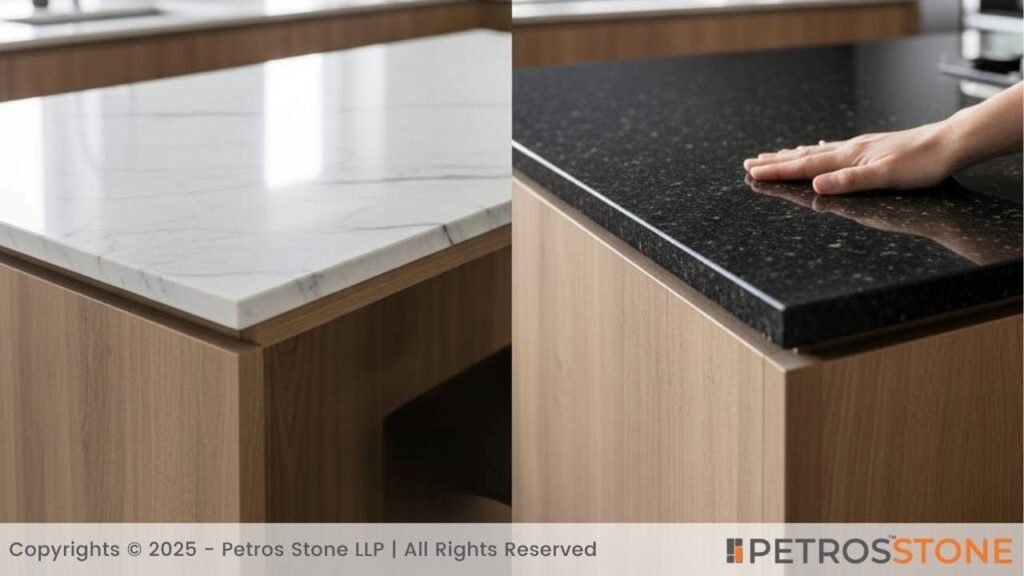
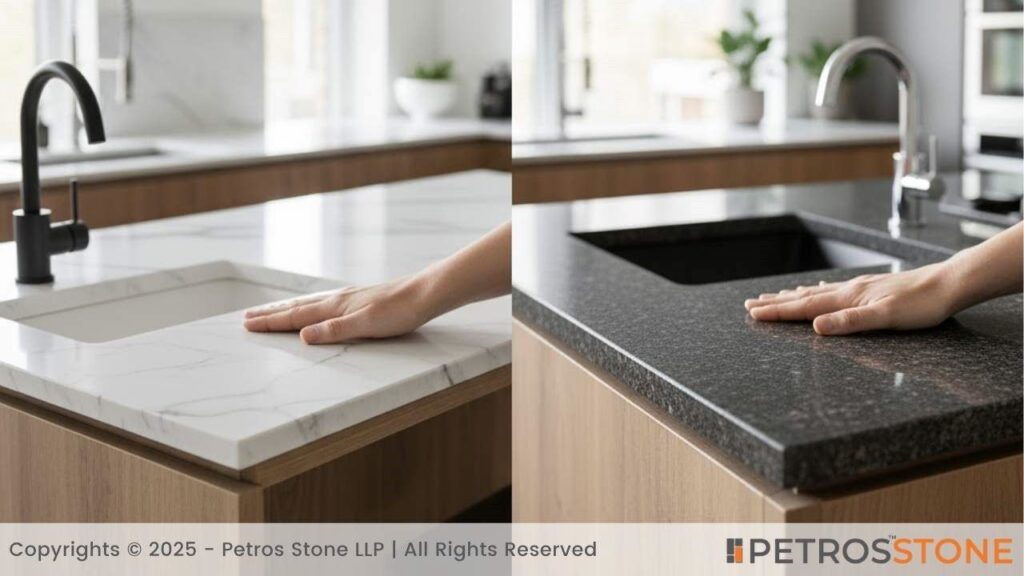
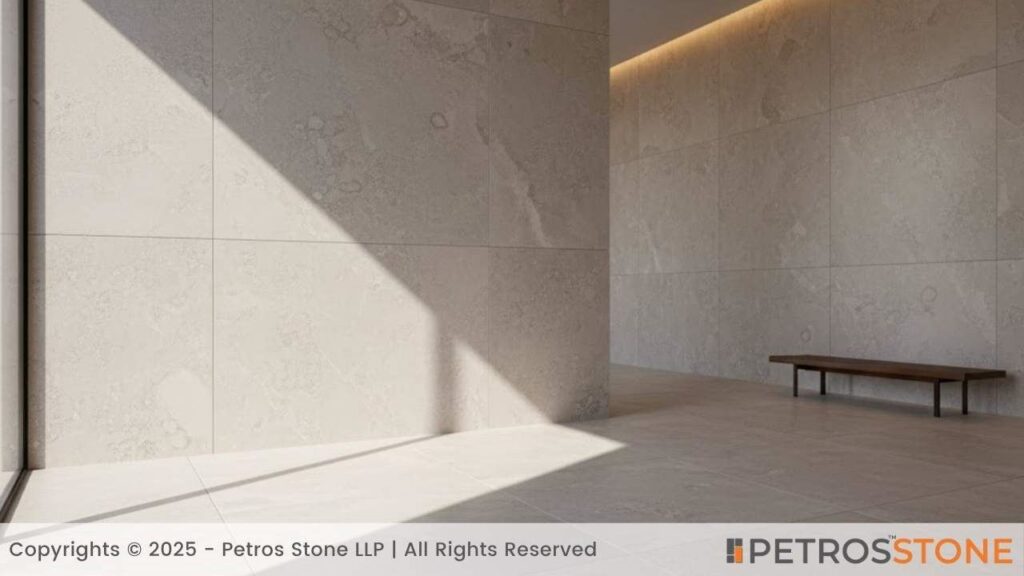
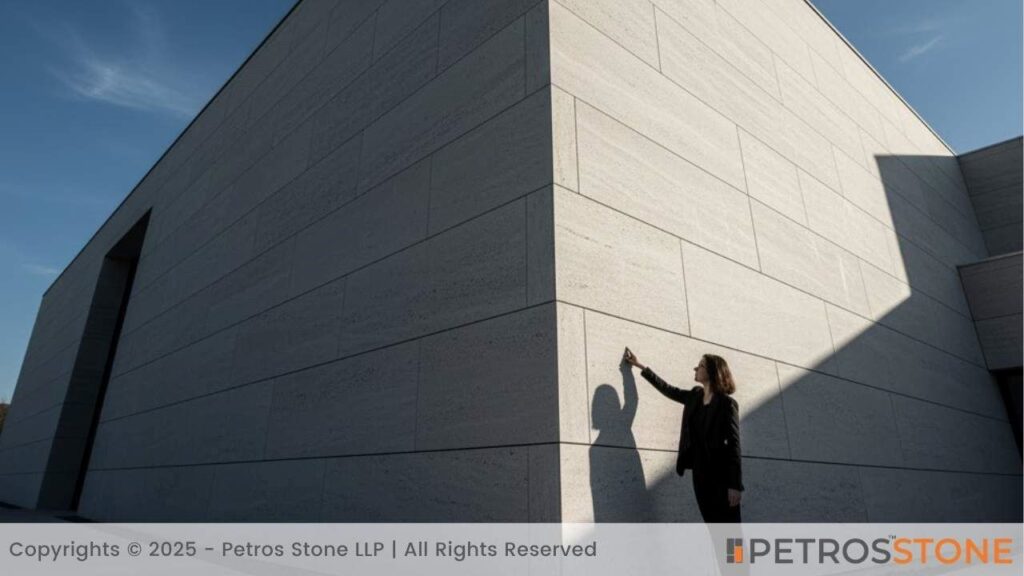
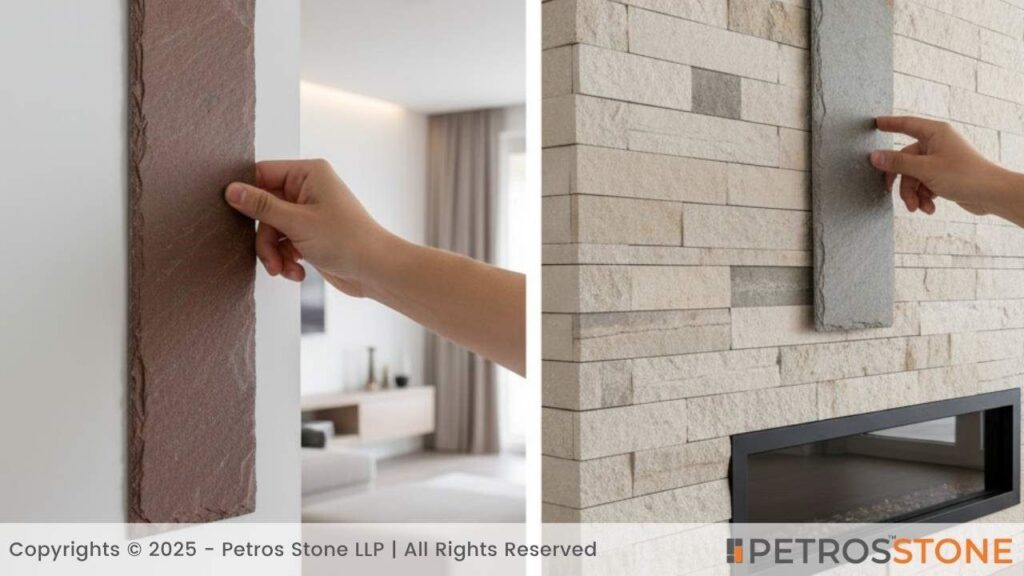
Conventionally, stone slabs are available at standard thickness. The most widespread sizes are presented in the table below:
Standard Stone Slab Thickness by Application
| Application | Standard Thickness | Comments |
| Kitchen countertops | 2 cm (¾ inch) and 3 cm (1¼ inch) | Most common for granite and marble surfaces. |
| Bathroom vanities | 1.5–2 cm | Suitable for smaller installations. |
| Flooring and wall cladding | 1–1.5 cm | Lightweight yet strong for flooring or walls. |
| Exterior façades | 2–3 cm | Thicker slabs resist weather and stress. |
| Stone veneers | 0.5–1 cm | Decorative, used on walls, columns, and facades. |
Thus, an average density of the standard stone slab is 2-3 cm: anything below 1 cm can be used as a thin or ultra-thin one.
Defining ‘Thin’ in Stone Slabs
Industry Benchmarks
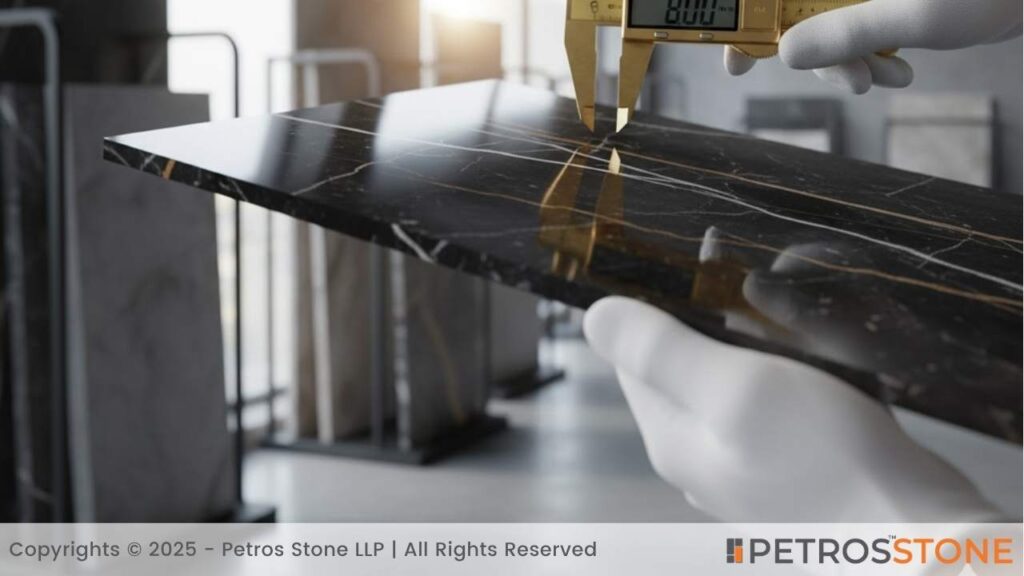
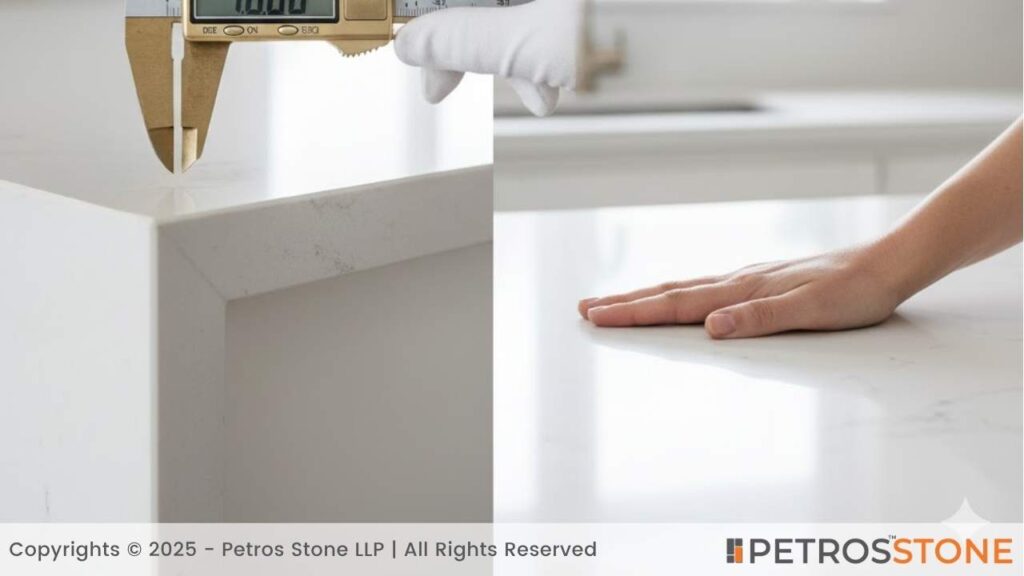
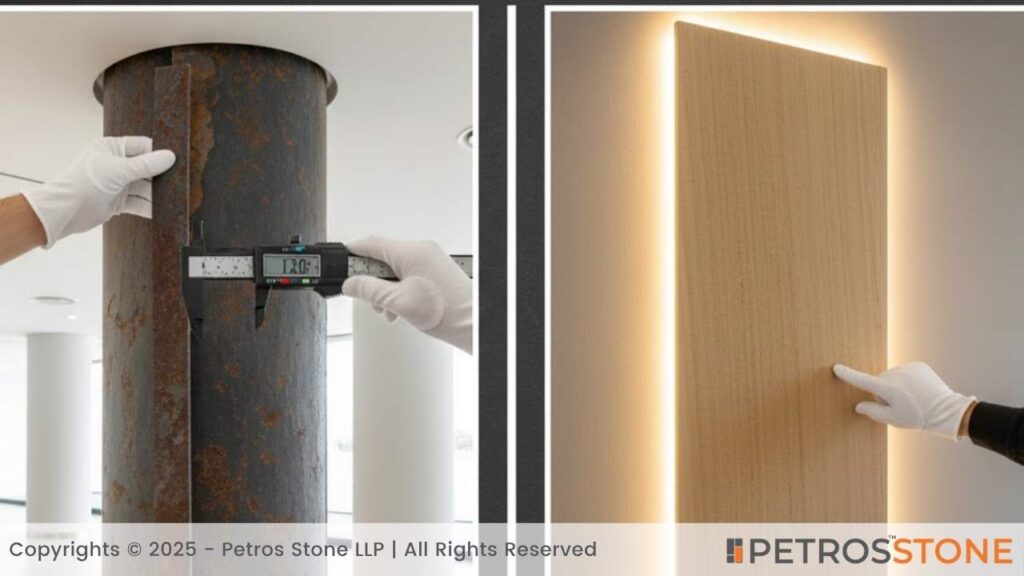
The stone industry defines “thin” differently depending on what kind of stone it is and what purpose it is used for:
- Natural Stone Industry: Any slab less than 1 cm is termed ultra-thin.
- Quartz and Engineered Stone: below 12 mm is considered slim.
- Architectural Veneers: flexible sheets 1–5 mm thick fall into the ultra-thin category.
Fundamentally, the thinner the slab, the greater reinforcement it requires not to break during cutting, transport, or installation.
Common Thin Slab Thicknesses
| Category | Thickness Range | Example Uses |
| Thin slabs | 8–12 mm | Backsplashes, wall panels |
| Ultra-thin slabs | 4–8 mm | Furniture tops, interior cladding |
| Stone veneers | 1–3 mm | Wall skins, flexible coverings |
| Flexible stone sheets | 0.5–1 mm | Curved surfaces, lighting panels |
The lighter the slab, the less bearing capacity it has, yet the more easily it can be transported, cut, and applied in large areas.
Materials and Technologies for Thin Slabs
To create thin stone slabs, it is necessary to select the appropriate stone material and implement high-technology cutting and bonding methods to keep it firm and reliable.
Stones do not all act as they did when cut thin. There are those that crack readily and some that do not. Here’s a comparison:
Suitable Stones for Thin Slabs
| Stone Type | Images | Suitability for Thin Cutting | Reason |
| Slate | 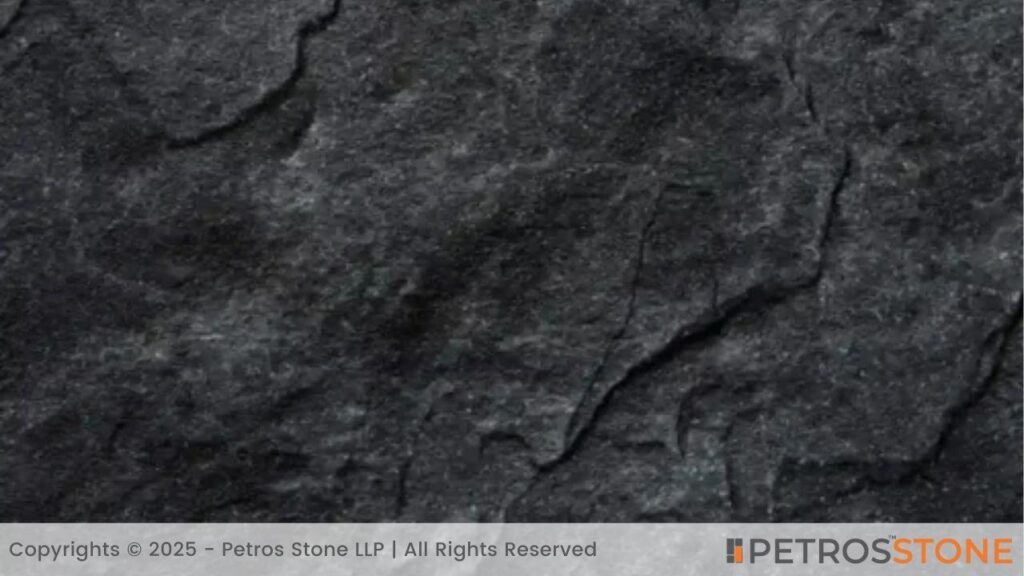 | Excellent | Natural layering allows easy splitting into thin sheets. |
| Marble | 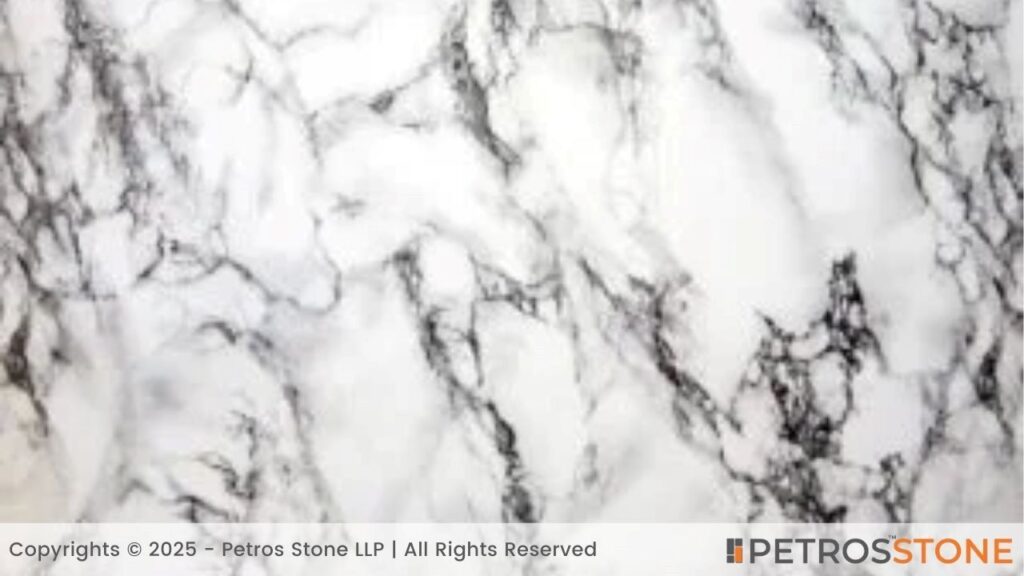 | Good | Fine grains make it suitable for thin applications. |
| Limestone | 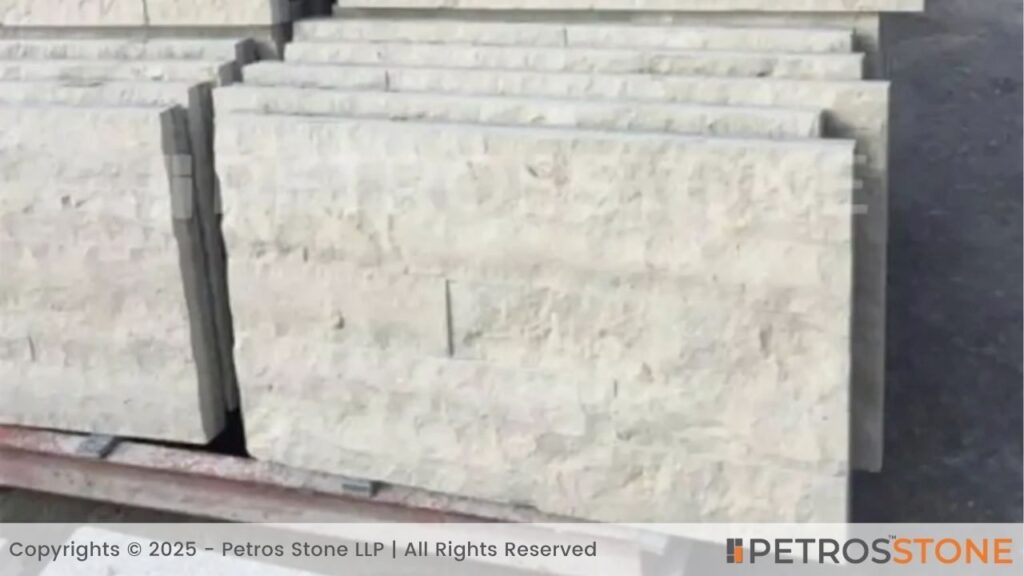 | Moderate | Porous, may need backing for thin applications. |
| Granite | 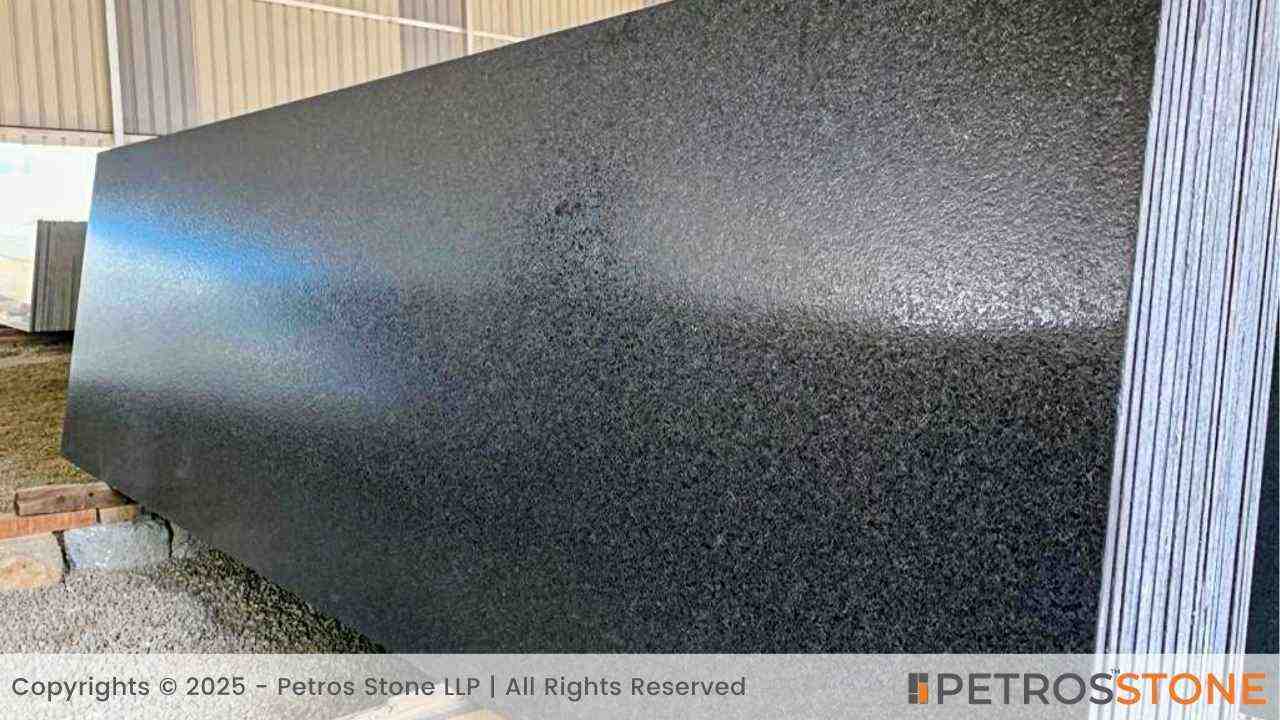 | Fair | Hard but brittle; difficult to go below 10 mm. |
| Onyx / Travertine | 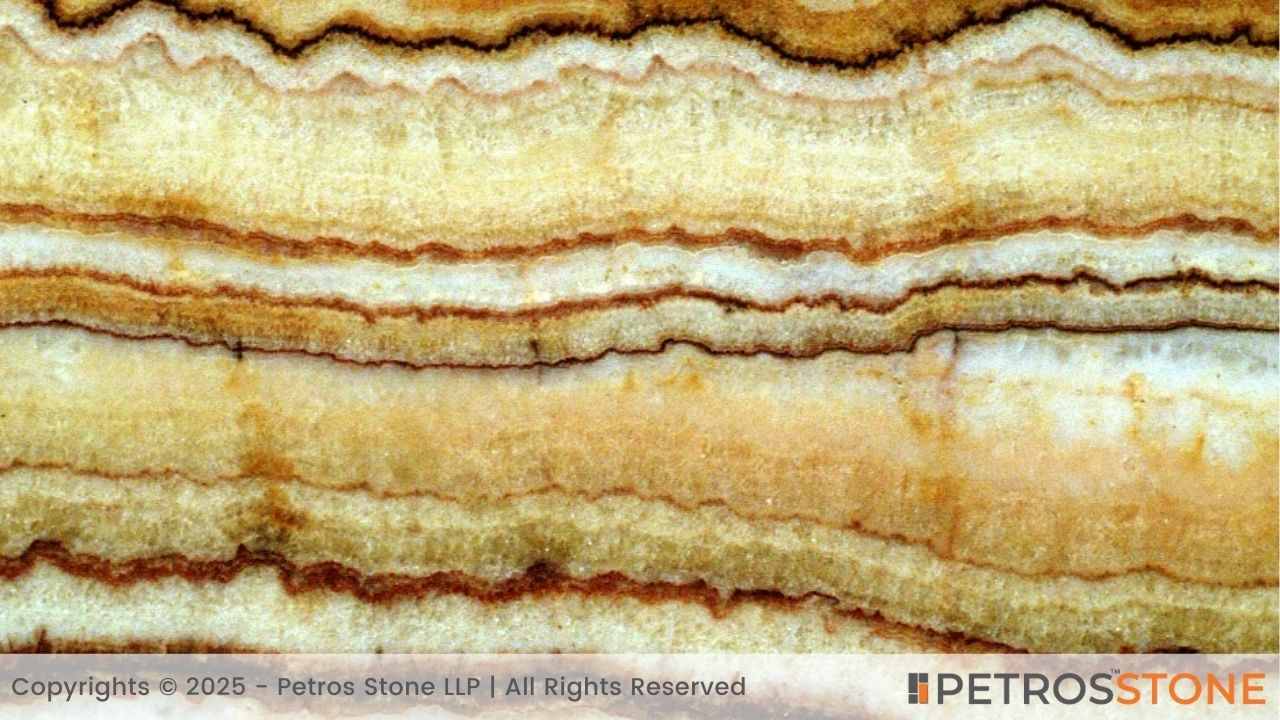 | Good | It can be made thin with resin backing and used for backlit panels. |
Best materials used in ultra-thin veneers include slate and marble, whereas granite and quartz are usually supported with a backing structure to prevent breaking.
Advanced Cutting and Reinforcement Methods
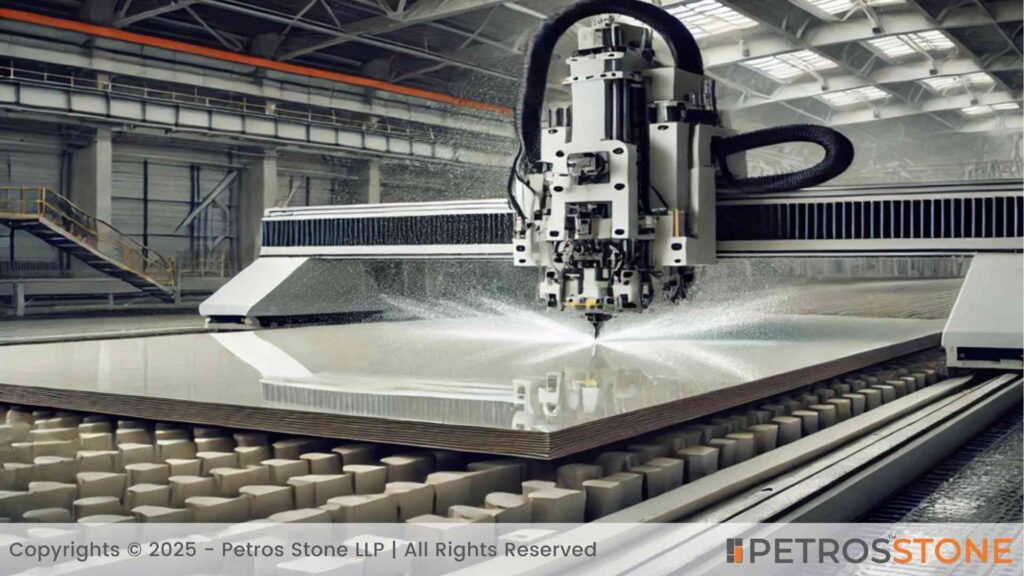
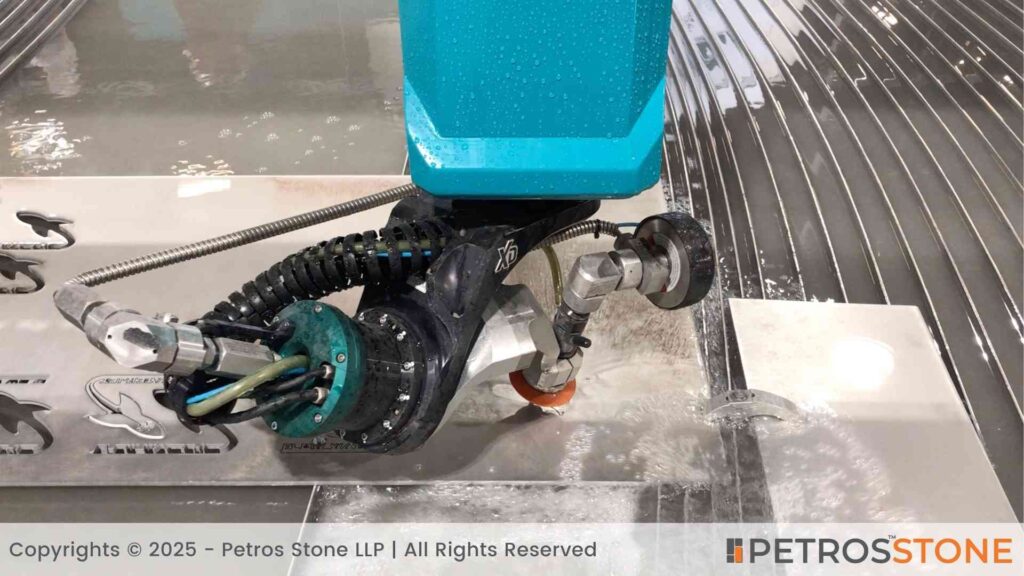
A modern fabrication of stone incorporates a mixture of technology and engineering and creates thinner slabs than previously.
- Diamond Wire Cutting: It uses high-precision diamond wires to cut even mere blocks with minimal loss.
- Gang Saw Machines: Bulky machines that machine many slabs at once, keeping them the same thickness.
- Water Jet Cutting: This involves a cutting technique in which high-pressure water with abrasives is used to make delicate and fine cuts.
- Backing Systems: Thin slabs are reinforced using fiberglass, resin, or aluminum honeycomb to gain strength.
- Mesh Reinforcement: Fiberglass mesh on the back keeps the cracks out during transportation.
- Epoxy Resin Coating: Provides longevity, natural cracks, and strengthens.
- Vacuum Bonding: Provides complete adhesion of stone and support applied to luxury composite panels.
Through these methods, manufacturers can make slabs of stone with a thinness of a few millimeters without losing durability.
The Thinnest Stone Slabs Available Today
Manufacturers have pushed stone thinness to extraordinary extremes using advanced equipment and bonding.
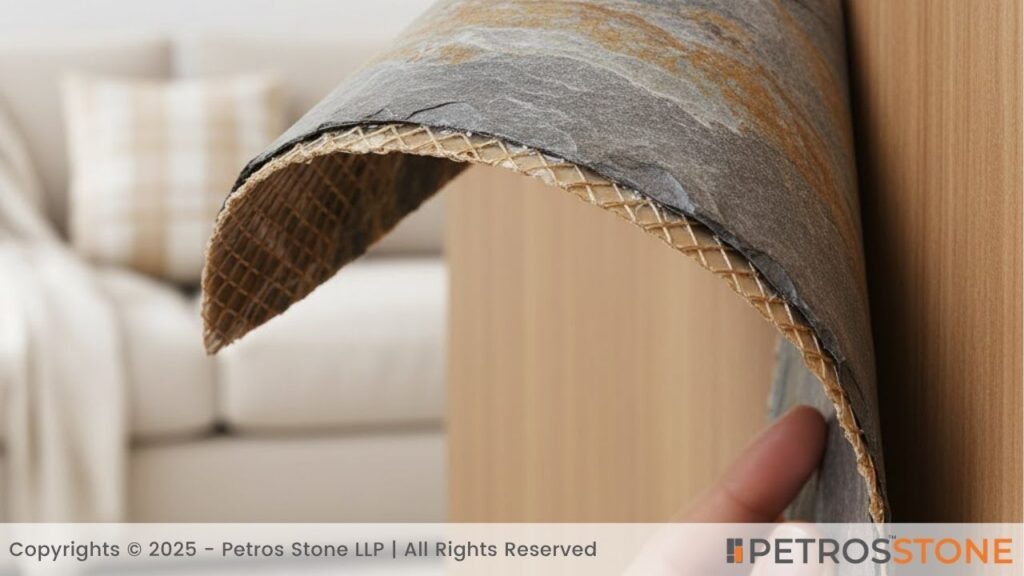
(0.5–2 mm thick, real stone layer bonded to resin and fiberglass, used for interior décor)
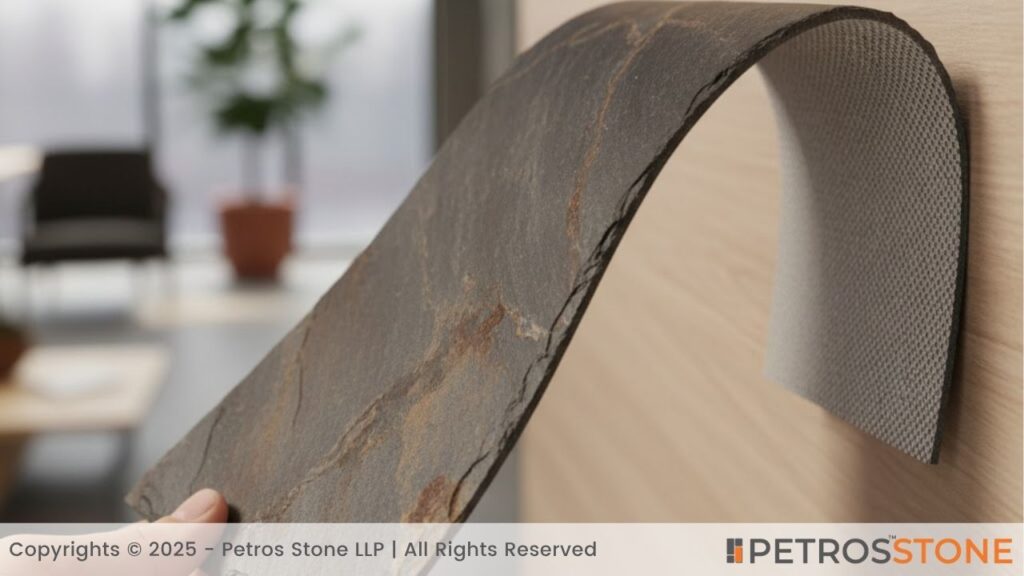
(~1.5 mm thick, made from natural slate and fiberglass; lightweight and flexible)
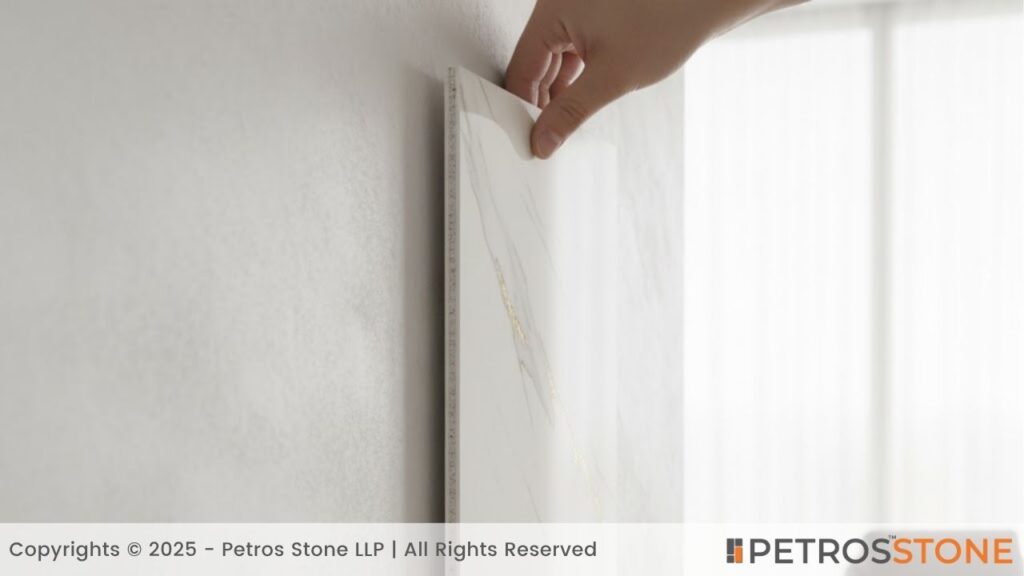
(5 mm thick, used for decorative applications like walls and furniture)
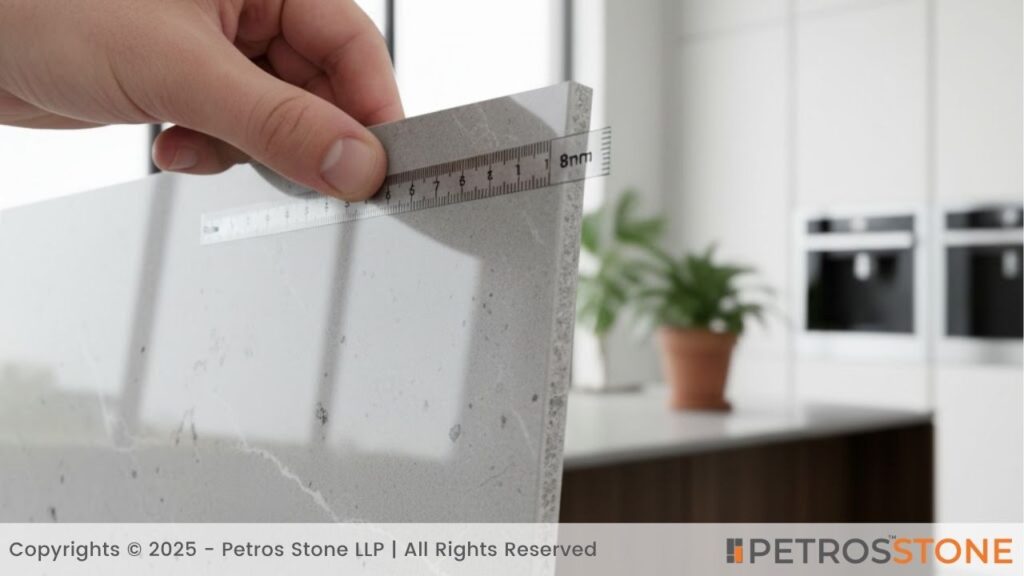
(8 mm thick, reinforced panels for countertops and cladding)
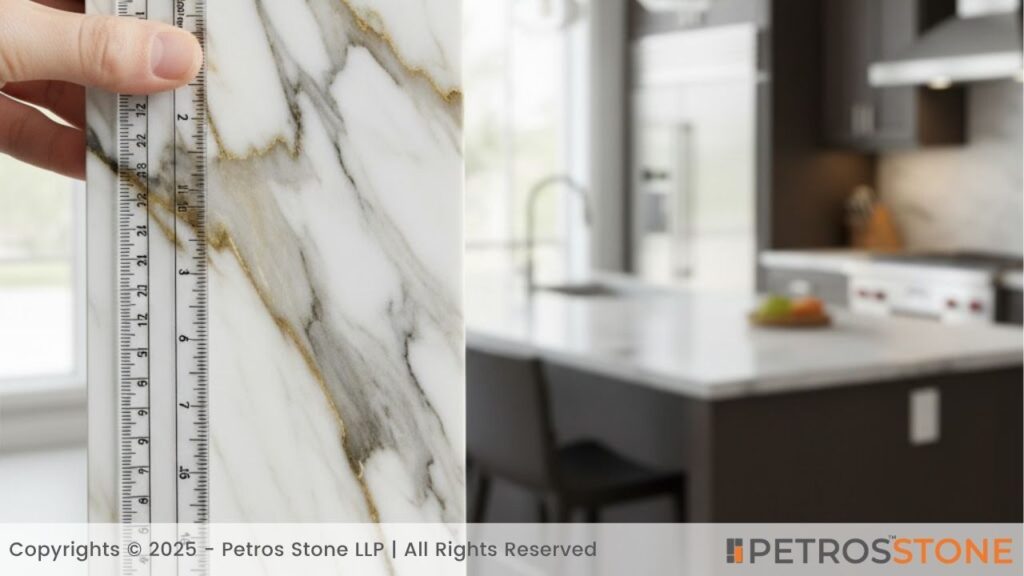
(10 mm, minimum practical thickness for unsupported slabs)
Minimum Achievable Thickness
| Product Type | Thickness | Notes |
| Flexible Stone Veneer | 0.5–2 mm | Real stone layer bonded to resin and fiberglass. Used for interior décor. |
| Slate-Lite Veneer | ~1.5 mm | Made from natural slate and fiberglass; lightweight and flexible. |
| Vicostone UltraThin Quartz | 5 mm | Used for decorative applications like walls and furniture. |
| ThinSlabz Stone Panels | 8 mm | Reinforced panels for countertops and cladding. |
| Natural Marble / Granite Thin Slab | 10 mm | Minimum practical thickness for unsupported slabs. |
Flexible veneers that are 0.5–1 mm thick and utilized for decorative wall applications are the thinnest stone materials on the market. The practical minimum for structural applications (such as countertops) is 8–10 mm.
Notable Brands and Products
The following are some of the world market leaders that specialize in ultra-thin stone technology:
Table – Notable Brands and Products
| Brand / Manufacturer | Country | Product Type | Thickness | Key Features / Applications |
Slate-Lite | Germany | Real stone veneer | 1.5 mm | Extremely thin and flexible; available in multiple textures and colors; ideal for lightweight wall coverings and decorative surfaces. |
Petros®Stone | India | Sintered and ultra-thin natural stone panels | 3–6 mm | High-performance thin stone surfaces; UV, scratch, and heat resistant; suitable for interior and exterior wall cladding, furniture, and façades. |
ThinSlabz | USA | Reinforced natural stone panels | 8 mm | Strong and lightweight panels; suitable for countertops, walls, and vertical applications. |
Vicostone Ultrathin Quartz | Vietnam | Engineered quartz slabs | 5 mm | Sleek design for modern, minimalist interiors; combines durability with refined aesthetics. |
Laminam | Italy | Porcelain stone slabs | 3 mm | Large-format thin slabs; resistant to heat, stains, and scratches; ideal for flooring, walls, and facades. |
Stonelite Panels | USA | Natural stone + aluminum honeycomb backing | 3–5 mm (stone layer) | Combines genuine stone with lightweight structural support; ideal for building façades, elevators, and ceilings. |
These brands are the latest global state-of-the-art of thin stone technology.
Applications of Ultra-Thin Stone Slabs
Ultra-thin stone is versatile and can be applied both in residential and commercial works. It is lightweight, and this has enabled designers to produce beautiful spaces without structural stress.
Residential Uses
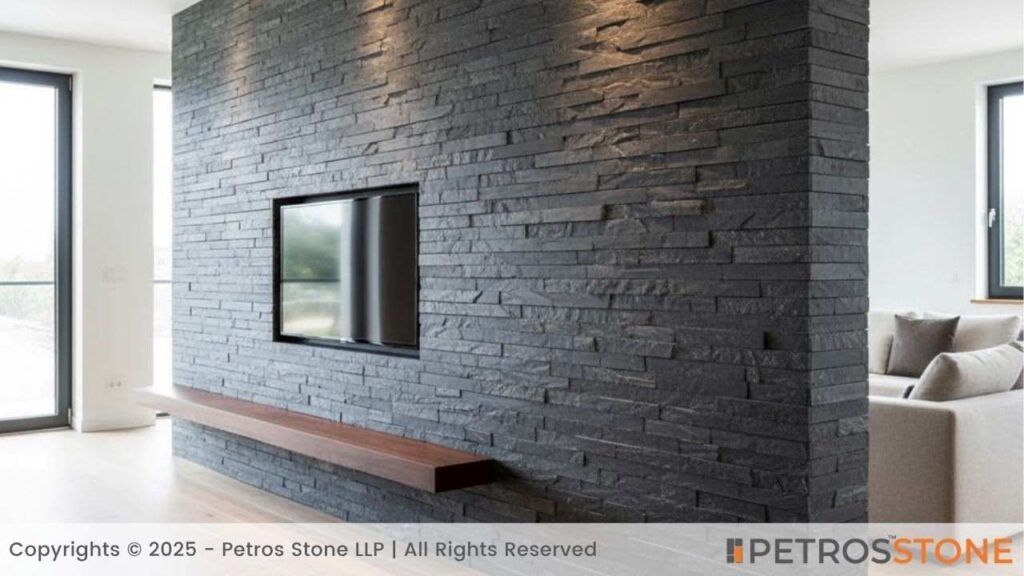
(Thin stone veneers are able to turn plain walls into luxury stone finishes at a minimum load.)
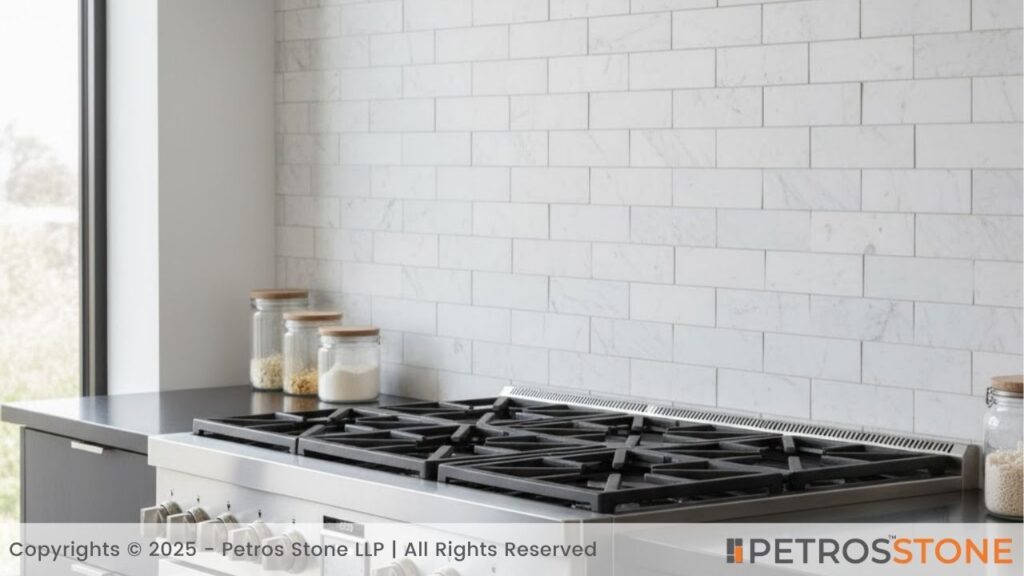
(The easiest to cut and install, into the wall; it gives style and is not as thick as slabs.)
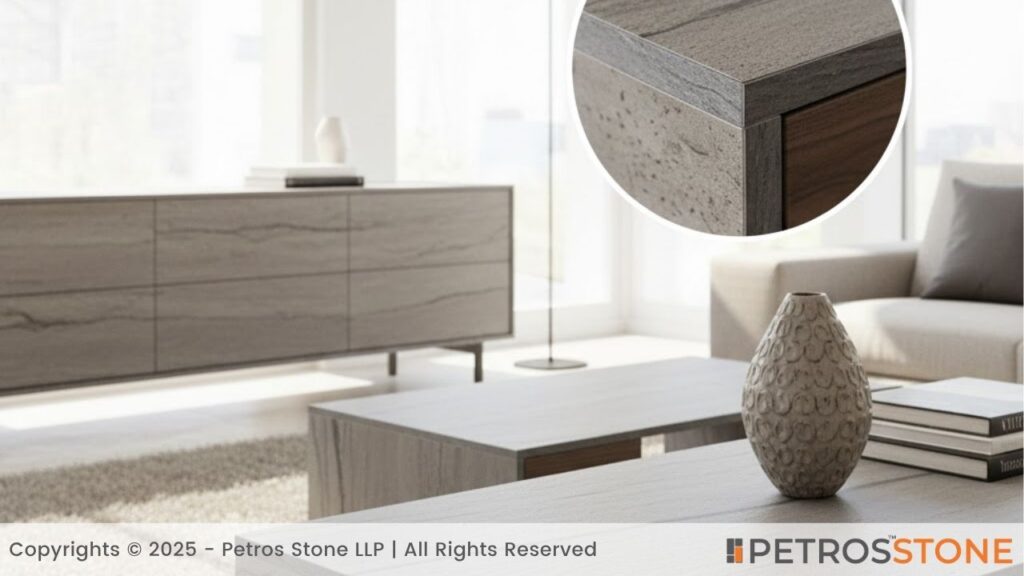
(Applied to wooden furniture or metal furniture, including tables, cabinets, and wardrobes, as a covering.)
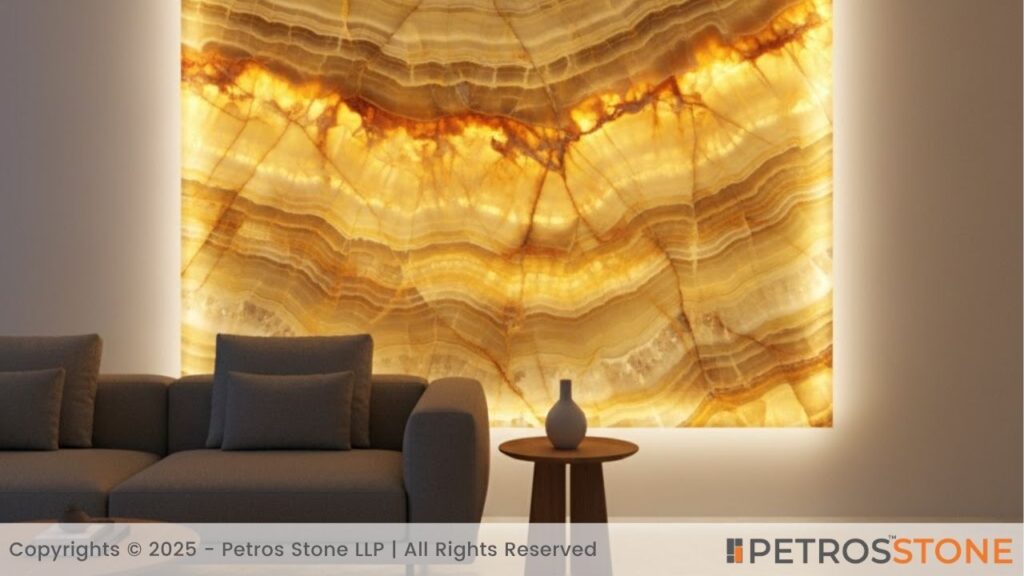
(Backlit decorative panels are made of thin translucent stones, such as onyx.)
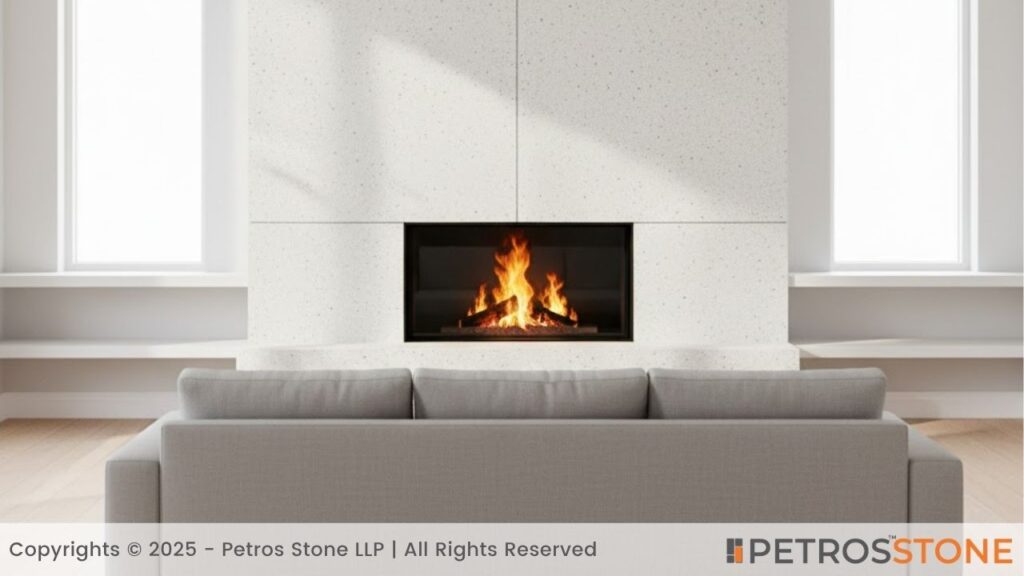
(Light enough to be fixed directly to the drywall without the presence of masonry.)
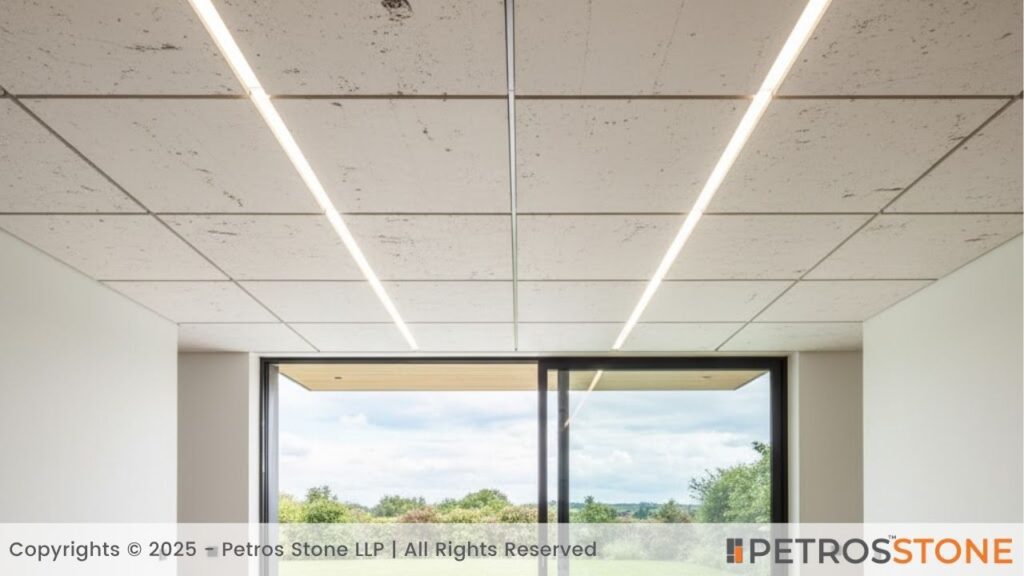
(Ultra-thin stone can be used creatively on a ceiling where huge slabs would not have been a possibility.)
- Wall Cladding: Thin stone veneers are able to turn plain walls into luxury stone finishes at a minimum load.
- Kitchen Backsplashes: The easiest to cut and install, into the wall; it gives style and is not as thick as slabs.
- Furniture Design: Applied to wooden furniture or metal furniture, including tables, cabinets, and wardrobes, as a covering.
- Lighting Features: Backlit decorative panels are made of thin translucent stones, such as onyx.
- Fireplace Surrounds: Light enough to be fixed directly to the drywall without the presence of masonry.
- Ceiling Panels: Ultra-thin stone can be used creatively on a ceiling where huge slabs would not have been a possibility.
Example: Stone-finished furniture can be glued with a 2 mm flexible stone veneer directly onto plywood or MDF (180 kgs vs. 70 kgs) to produce a deception of natural stone furniture.
Commercial and Architectural Uses
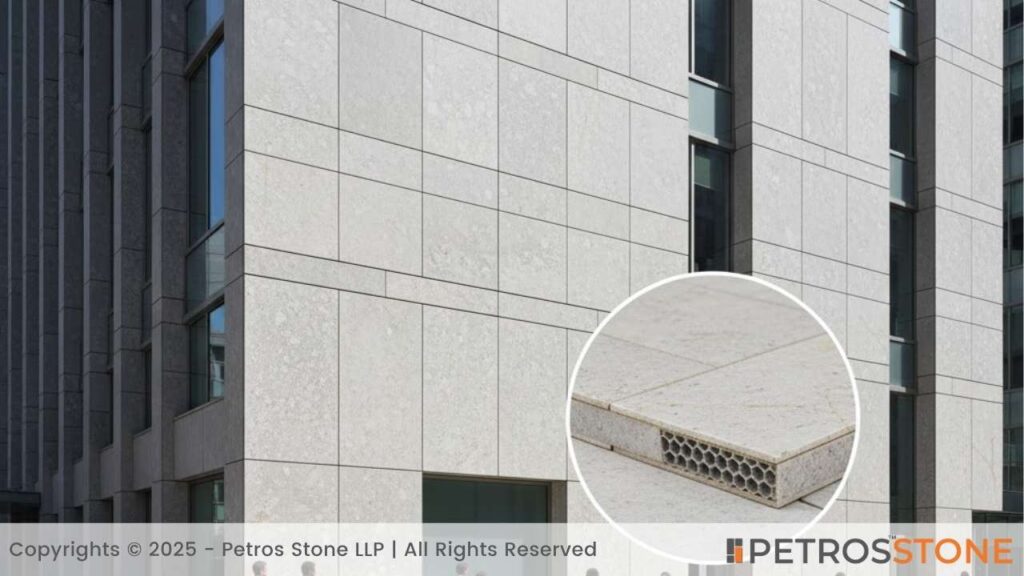
Honeycomb-supported thin stone tiles are prevalent in offices, malls, and hotels.
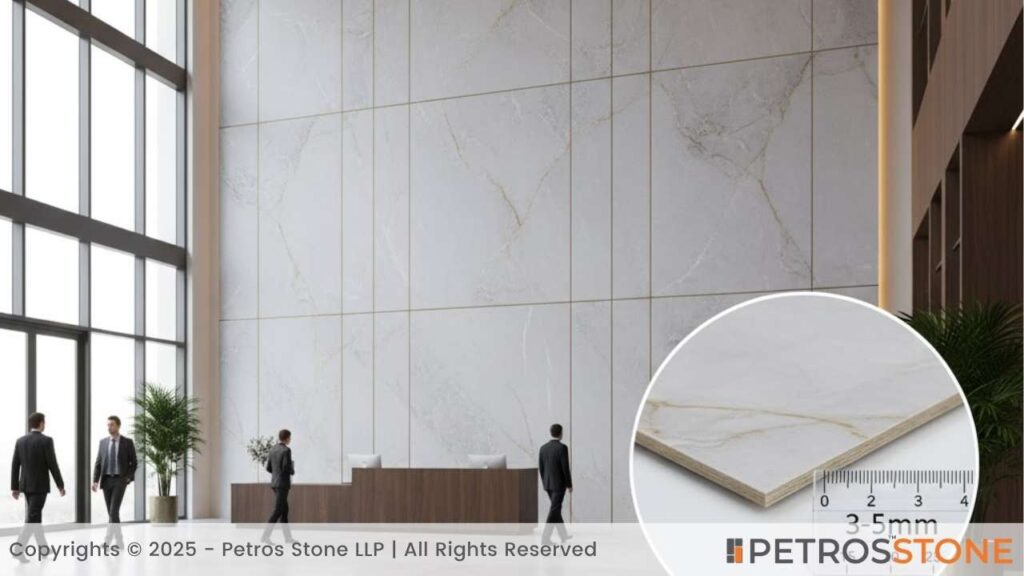
Designers mostly use 3-5 mm veneers to produce smooth and contemporary appearances.
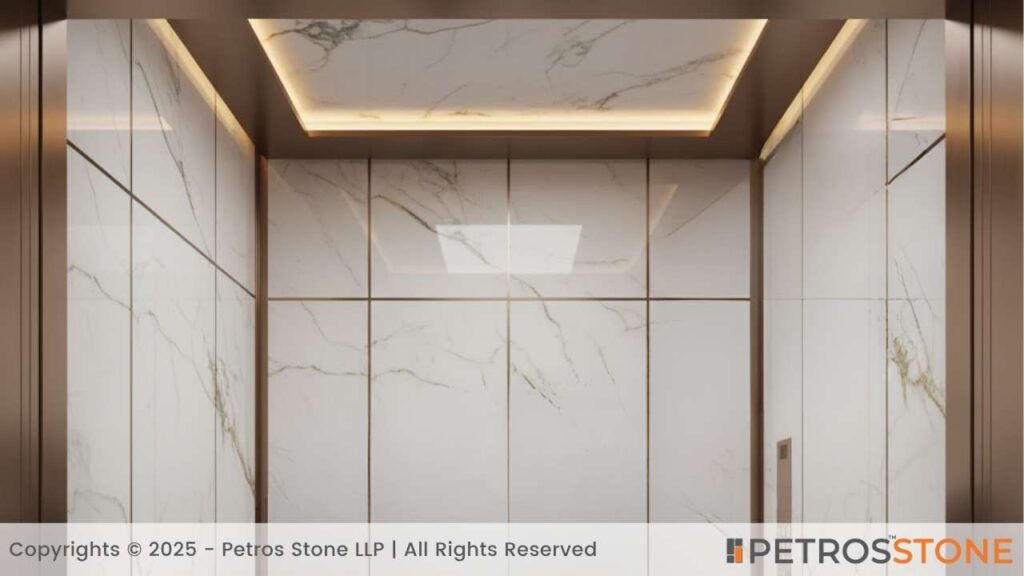
Light panel stone will remove weight but will not cut durability.
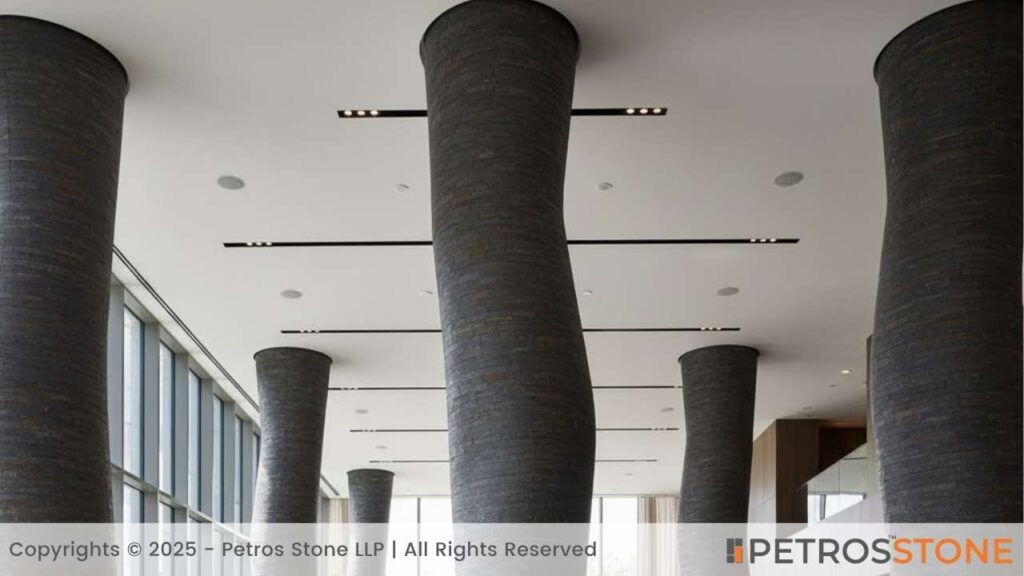
Flexible veneers cover sinuous-shaped surfaces with ease.
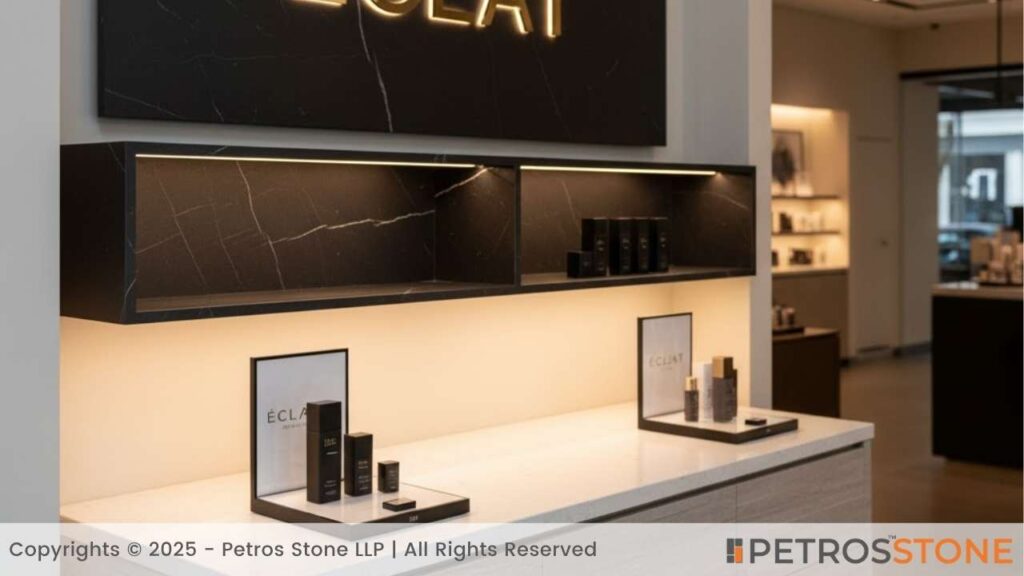
Thin stone offers a fashionable appearance to brands.
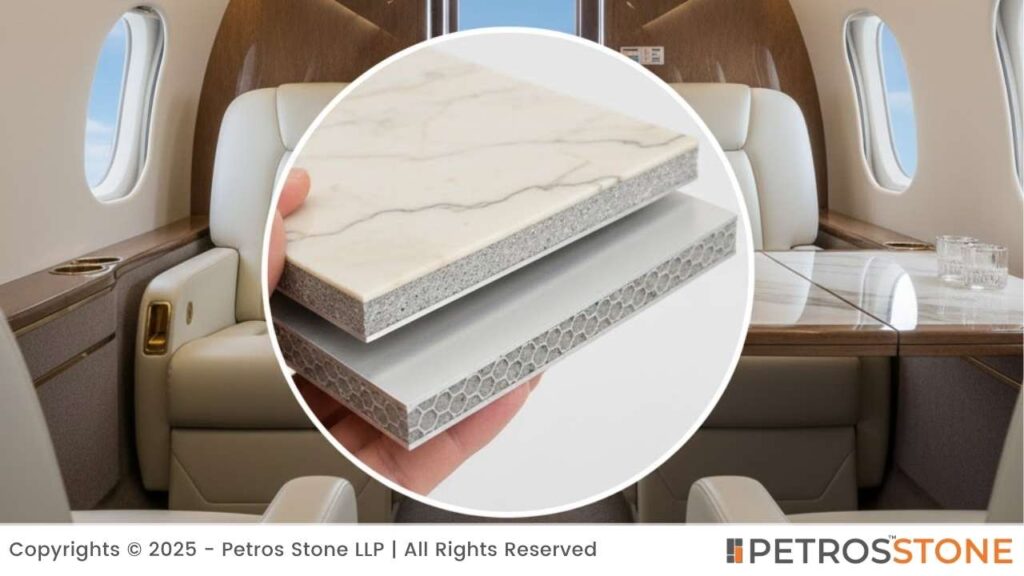
The ultra-light stone composite panels are intended to be applied in areas where weight is highly important
Weight and safety are also important in large-scale construction. The stone is thin, so structural load is minimized, and the building has a natural appearance.
- Exteriors: Honeycomb-supported thin stone tiles are prevalent in offices, malls, and hotels.
- Internal Lobby Walls: Designers mostly use 3-5mm veneers to produce smooth and contemporary appearances.
- Elevator Interiors: Light panel stone will remove weight but will not cut durability.
- Columns and Pillars: Flexible veneers cover sinuous-shaped surfaces with ease.
- Retail Displays and Signage: Thin stone offers a fashionable appearance to brands.
- Aircraft and Yacht Interiors: The ultra-light stone composite panels are intended to be applied in areas where weight is highly important.
Cost and Value Considerations
The cost of a thin stone slab varies according to several factors that include, but are not limited to the weight of the material.
Pricing Factors
| Factor | Impact on Cost |
| Stone rarity and type | Exotic stones like onyx or blue marble cost more. |
| Manufacturing technology | Vacuum bonding and resin treatment increase production costs. |
| Backing materials | Aluminum or fiberglass backing adds cost but also strength. |
| Cutting precision | Thin slabs require expensive diamond and water-jet machines. |
| Waste ratio | Thinner slabs have higher breakage during fabrication. |
| Installation | Requires skilled labor and specialized adhesives. |
Although thin slabs require less raw material, both prices per square foot are equal or even lower than standard slabs due to these high-tech processes.
Cost Comparison With Standard Slabs
| Type of Slab | Approx. Thickness | Relative Cost | Installation Difficulty | Weight (kg/m²) |
| Standard Granite / Marble | 20–30 mm | Medium | Moderate | 60–80 |
| Thin Slab | 8–12 mm | Slightly High | Moderate | 30–40 |
| Ultra-Thin Veneer | 1–5 mm | High | Easy | 2–10 |
As it demonstrates, the ultra-thin veneers are more expensive per square meter but are associated with easier installation and lower transportation expenses. They can be much more useful generally in projects where both design and weight reduction are very important.
Innovations and Future Trends
The thin stone trade is dynamic and changing in terms of its incorporation of natural aesthetics alongside emerging technology.
New Materials and Fabrication Processes
- Carbon-Fiber Backing: Strengthens thin stone to featherlightness.
- Graphene-Enhanced Resins: Increases flexibility and avoids cracking.
- 3D Printing + Stone Dust: This enables the production of stone-like sheets with a variable thickness and texture.
- Laser Cutting: Allows patterns on thin stone that are accurate within micrometers.
- Self-Healing Coatings: Other new sealants automatically amend microcracks with increased stone life.
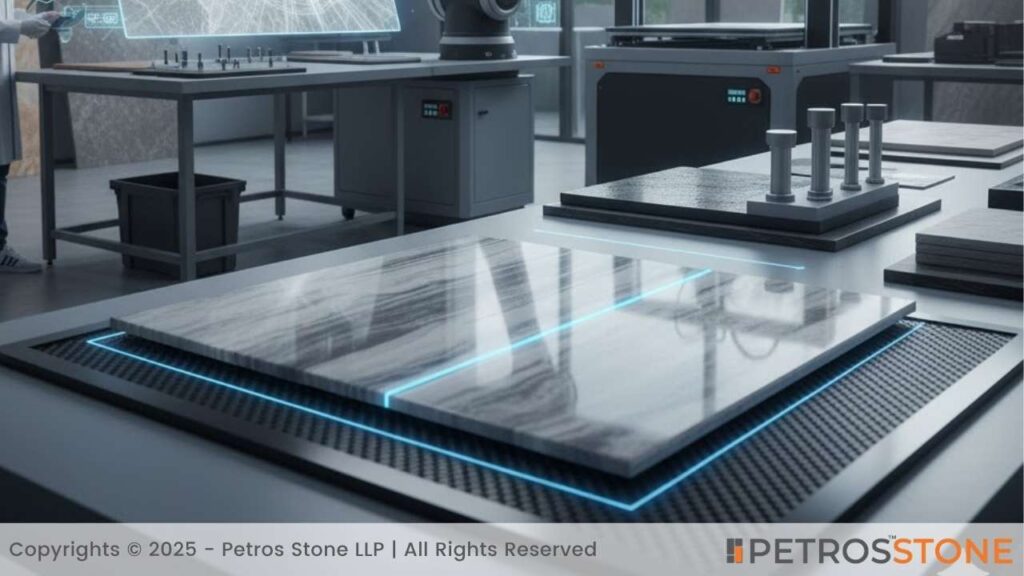
These advancements are rendering ultra-thin stone more dependable and affordable, even for normal domestic applications.
Market and Design Trends
- Sustainability: Thin slabs consume less stone and power, which is environmentally friendly.
- Minimalist Design: Slim counters and smooth wall materials suit contemporary design.
- Modular Construction: Thin slabs can become elements of prefabricated wall systems.
- Smart Integration: Backlit or transparent stones are merged with the natural texture of light.
- Global Expansion: Thin stone façade is rapidly expanding in Asia, Europe, and the Middle East.
Further innovation, thus in the future could use sub-millimeter composite stone films capable of simulating real stone, yet fully flexible and of low weight.
Summary
So, what is the thinnest stone slab you can buy?
This question is answered by how the slab will be used:
- In decorative veneers, the thinnest veneer slabs are 0.5-1 mm (such as Slate-Lite or flexibility veneer).
- In the case of structural surfaces (countertops or facades), the lowest practicable thickness is 8-10mm, commonly backed with fiberglass or honeycomb.
- Engineered engine rocks such as Vicostone Ultrathin Quartz go as low as 5 mm for aesthetic panels.
Ultra-thin stone is transforming modern design. It incorporates the beauty of naturally sourced materials with the effectiveness of composite engineering. Extremely, these slabs are lighter, become less expensive to transport, and easier to install, without losing the beauty of real stone. Continuous progress in reinforcement as well as fabrication can lead us to expect even thinner stone slab reinforcement in the future that will be a lot stronger and more sustainable.
Key Takeaways
- Ultra-thin stone slabs now range from 0.5 mm to 10 mm, thanks to advanced cutting, resin bonding, and reinforcement technologies.
- Flexible stone veneers (0.5–2 mm) are the thinnest real stone products available, ideal for lightweight wall coverings and curved designs.
- For structural applications such as countertops or façades, reinforced slabs of 8–10 mm remain the practical minimum thickness.
- Leading brands like Slate-Lite, Vicostone, ThinSlabz, and Laminam have redefined design possibilities with ultra-light, durable stone panels.
- Thin stone technology enables lower transport costs, easier installation, and eco-friendly construction, making it a major trend in modern architecture.
Feel free to get in touch for a free consultation, quote, and get a detailed understanding from our experts here at Petros®. Visit www.petrosstone.com or call +91-8446360361 or WhatsApp

Hello!
I’m Dr Mridali, a content writer with a background in dentistry and a passion for turning complex topics into clear, engaging stories. From healthcare to architecture, I create blogs that inform, educate, and connect with readers. With every piece, I aim to blend accuracy with creativity to make information truly valuable.

Brown Granite

White Galaxy Granite

Blue Bahia Granite

Silver Cloud Granite

Black Pearl Granite

Dallas White Granite