Black granite is still dominating the stone markets around the world because of its resistance to environmental changes, low maintenance, and aesthetic appeal that have attracted the world’s attention over the years. It has become a popular choice of architects and designers, whether for residential kitchen countertops or massive commercial flooring projects.
Nevertheless, as the world grows more demanding and the price differences between high-quality and low-quality materials increase, the market has seen a surge in artificial or ‘doctored’ black granite. To a large percentage of buyers, especially importers and project contractors, the consequences of buying altered stone would lead to huge losses when they unknowingly buy it.
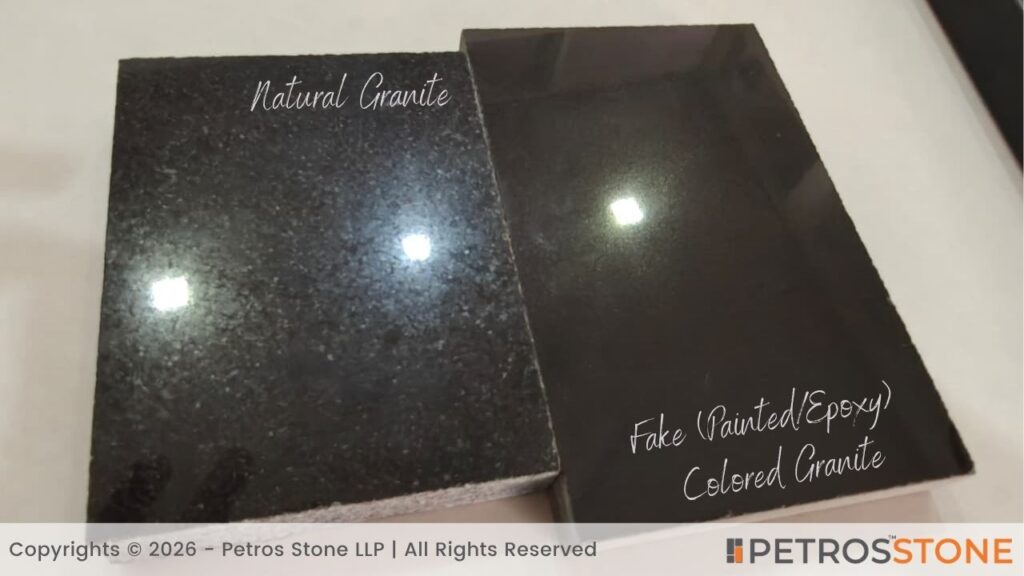
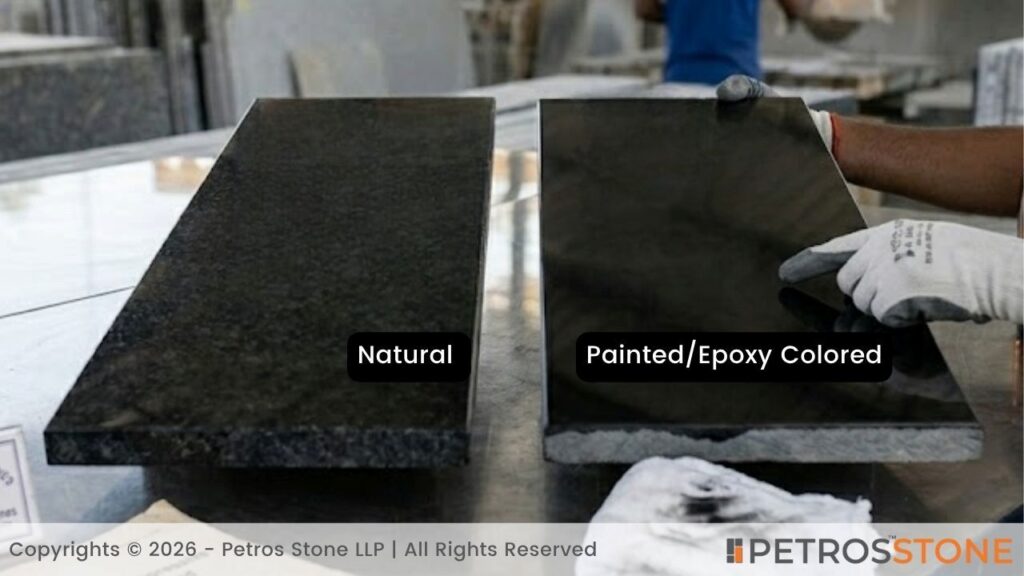
Natural vs Painted Granite – Key Differences
| Feature | Natural Black Granite | Fake (Painted/Epoxy Colored) Granite | Test Method | Industry Standard / Benchmark | Practical Impact |
| Color & Appearance | Natural variation with depth and mineral consistency | Overly uniform or artificial black tone | Visual inspection under natural light | Natural mineral distribution (IBM guidelines) | Fake stone may fade or show patches over time |
| Surface Finish | Deep, mirror-like polish with natural reflection | Resin-coated or artificially glossy | Reflection test (light angle check) | ASTM C1353 (surface finish evaluation) | Coating may peel or dull with use |
| Durability | High compressive strength (>200 MPa) | Lower structural integrity | Lab compression test | ASTM C170 | Fake granite may crack or weaken faster |
| Water Absorption | <0.4% (very low porosity) | Higher and uneven absorption | Water drop test | ASTM C97 | Leads to staining and moisture damage |
| Weight & Density | Dense and heavy (approx. 2.63–2.75 g/cm³) | Slightly lighter due to inferior composition | Weight comparison | ASTM C97 density range | Lighter slabs may indicate lower quality |
| Scratch Resistance | High resistance (Mohs 6–7) | Surface color can scratch off | Scratch test with metal object | Mohs hardness scale | Scratches reveal underlying lighter stone |
| Price Range | $75–$120 per sq. meter (FOB) | $25–$50 per sq. meter | Market price comparison | Global trade benchmarks (DGCIS/USITC) | Unrealistically low price is a red flag |
| Heat Resistance | Naturally heat-resistant | Coating may discolor under heat | Heat exposure test | ASTM C484 | Risk of discoloration in kitchens |
| Longevity | 15–25+ years with minimal maintenance | 2–5 years before visible degradation | Long-term performance observation | Industry usage data | Higher replacement and maintenance costs |
According to trade insights from the Directorate General of Commercial Intelligence and Statistics (DGCIS), India remains one of the largest exporters of granite, contributing significantly to global supply chains.
In this article, we explain how to accurately identify fake or painted black granite using practical on-site tests and industry-approved benchmarks from ASTM International and Bureau of Indian Standards. We also combine real factory insights from gang saw cutting to resin treatment with field inspection methods to help buyers avoid costly mistakes.
- Natural vs Painted Granite – Key Differences
- How to Spot Painted or Epoxy Colored Black Granite
- Natural vs Painted Granite – Key Differences
- Why Fake (Painted or Epoxy Colored) Black Granite Exists
- How is it Painted or Epoxy Colored?
- Risks of Buying Painted or Epoxy Colored Granite
- Commonly Faked Black Granite Types
- How to prevent getting scammed with Artificially Painted Black Granite?
- Tips to Avoid Buying Fake (Painted or Epoxy Colored) Granite
- Case Study – Real Market Scenario
- Why Choosing the Right Supplier Matters
- Key Takeaways
How to Spot Painted or Epoxy Colored Black Granite
Spotting fake black granite, like painted or dyed versions, is important to prevent issues like fading, peeling, or damage over time. Here are some proven techniques that experts rely on both in factories and on-site.
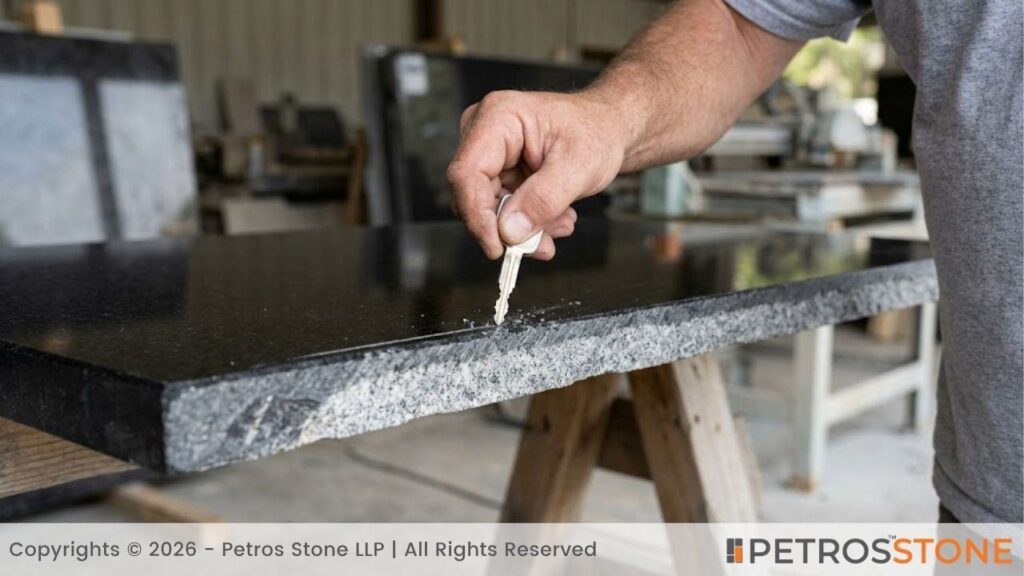
1. Scratch Test
The scratch test is one of the quickest ways to identify whether a black granite slab is natural or surface-treated.
To perform this test, lightly scratch an unpolished edge or underside of the slab. In genuine granite, the color remains consistent throughout because it is formed by natural minerals. However, if the scratch reveals a lighter grey or brown tone beneath the surface, it usually indicates resin treatment or dyeing applied after gang saw cutting.
In many factories, lower-grade blocks are enhanced using epoxy resins mixed with pigments and then polished through multi-head calibration lines. While this improves appearance, it does not change the core material.
Field Insight
Natural granite will show uniform mineral distribution even after scratching, whereas treated slabs expose a clear color difference between surface and core.
Buyer Warning
Surface-enhanced slabs may fade or lose color over time, especially in outdoor applications with high UV exposure.
2. Water Absorption Test
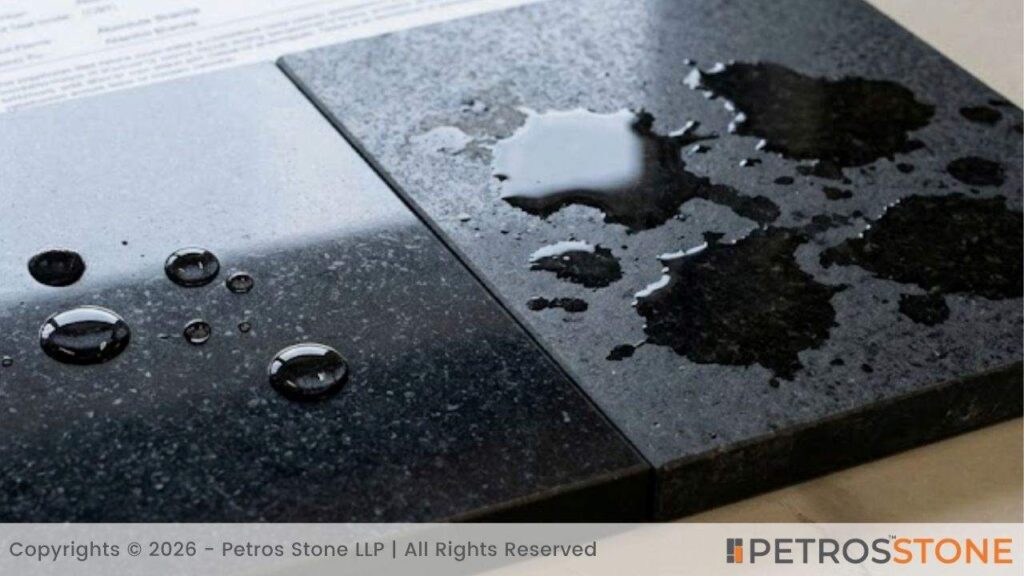
Water absorption testing helps evaluate the density and porosity of granite.
Place a few drops of water on the surface and observe the behavior. High-quality granite absorbs water very slowly and evenly due to its dense structure. In contrast, treated or lower-grade granite often shows uneven dark patches, indicating inconsistent porosity or resin-filled surface pores.
According to ASTM C97
- Natural granite: 0.05% – 0.20% water absorption
- Treated/commercial granite: may exceed 0.40% – 0.60%
Factory Insight
Vacuum resin treatment is commonly used to fill micro-cracks, but this only improves surface performance—not internal density.
Site Observation
In humid climates, such as Indian monsoon conditions, treated slabs may develop moisture shadows or staining over time.
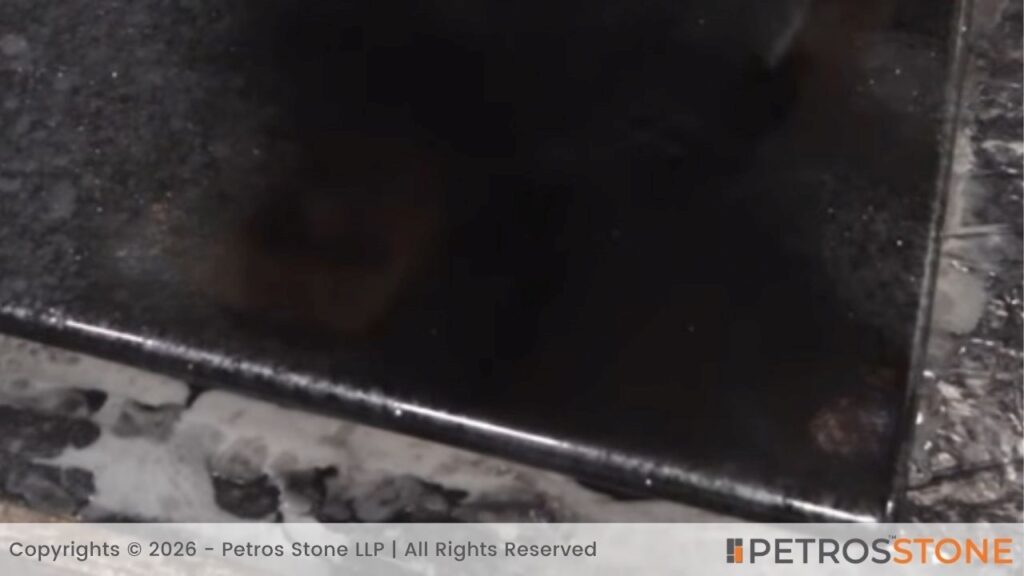
3. Edge and Back Inspection
Inspecting the edges and back surface is one of the most reliable methods to verify authenticity.
Natural granite maintains consistent color across:
- Top polished surface
- Side edges
- Back (even if rough)
This consistency aligns with geological mapping by the Geological Survey of India, where mineral composition remains uniform throughout the block.
In treated slabs:
- The top surface appears darker and more uniform
- The back side often looks lighter, patchy, or resin-coated
- Mesh backing may be applied for reinforcement
Factory Insight
Back surfaces are rarely polished after gang saw cutting, making them the best place to identify treatment.
Buyer Warning
Always request back and edge photos when sourcing slabs remotely, especially for export orders.
4. Acetone Test
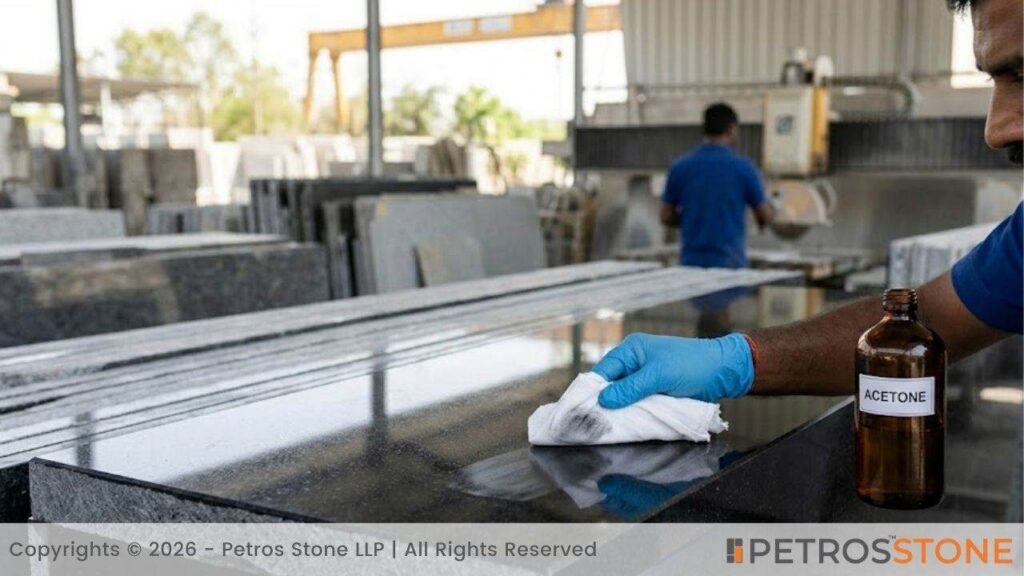
The acetone test is used to detect surface dyeing or pigment-based enhancement.
Apply acetone to a white cloth and rub a small area of the slab. If the cloth picks up black residue, the surface has likely been dyed. Natural granite will not react to acetone.
Factory Insight
Some manufacturers use advanced UV-stable resins that may not react easily, so this test should be combined with scratch and edge inspection.
Limitation
Acetone does not detect deep resin filling or nano-coatings.
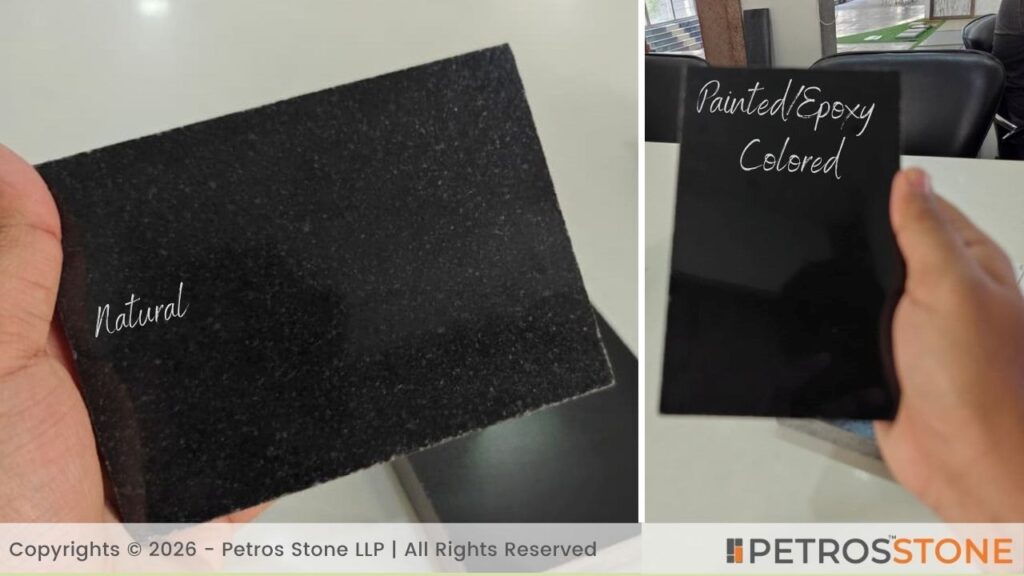
5. Color and Reflection Test
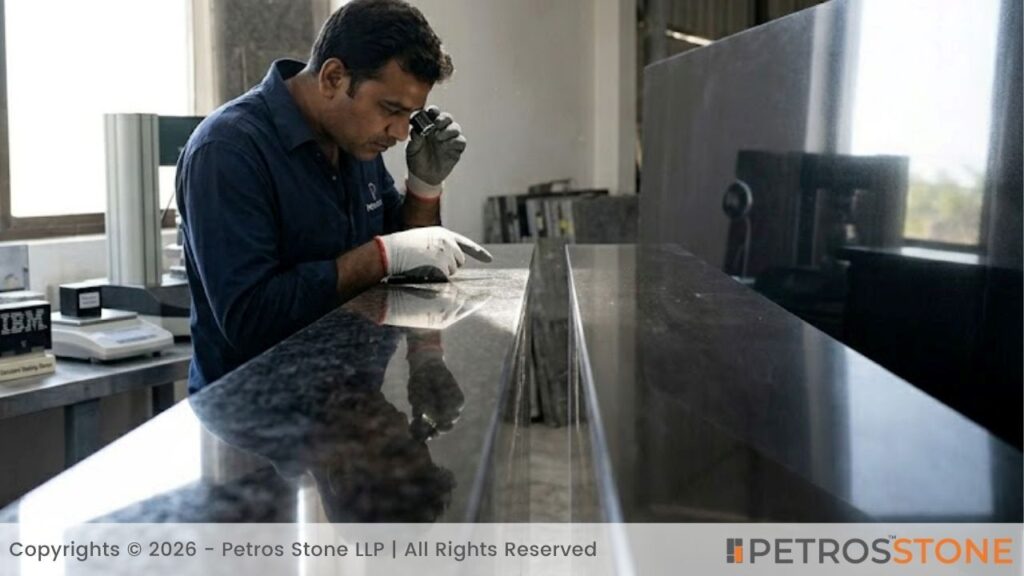
Visual inspection of color and reflection can reveal important differences.
Natural black granite typically shows:
- Fine mineral grains under close inspection
- A deep, slightly diffused reflection
In contrast, treated granite often appears:
- Overly uniform in color
- Glassy or artificial in reflection due to resin coating
Field Tip
Observe the slab under natural light at an angle. Genuine granite shows depth and variation, while treated surfaces appear flat.
6. Density and Strength
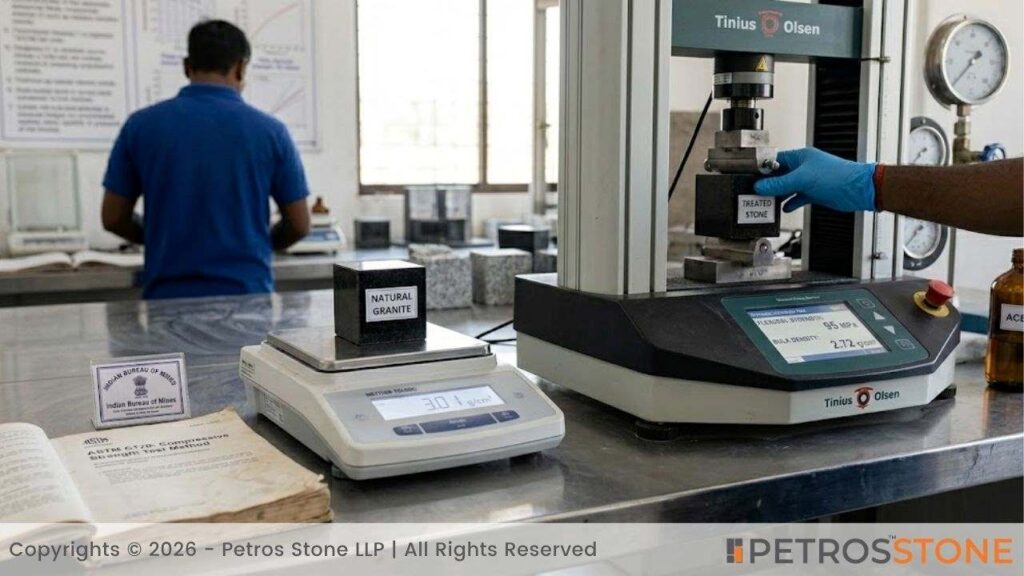
The physical properties of granite provide the most reliable confirmation of quality when tested in a lab.
Typical values for high-quality black granite:
- Density: 2.95 – 3.05 g/cm³
- Compressive strength: 180 – 260 MPa (as per ASTM C170 )
- Flexural strength: 10 – 25 MPa (as per ASTM C99)
Factory Insight
Export-grade slabs are cut from dense quarry blocks with minimal fissures, while commercial-grade slabs often rely on resin filling to improve surface finish.
Field Observation
Lower-density slabs may feel lighter and produce a dull sound when tapped, indicating internal inconsistencies.
Buyer Risk
Low-strength granite is prone to cracking in applications such as countertops, staircases, and exterior cladding.
7. Price Evaluation
Pricing is often the clearest indicator of granite quality and treatment level.
India Market Pricing
| Grade | Thickness | Price (USD/m² FOB) |
|---|---|---|
| Quarry / Export Grade | 18–20 mm | $30 – $48 |
| Premium Absolute Black | 20 mm | $55 – $85 |
| Commercial / Treated | 16–18 mm | $15 – $28 |
FOB vs CIF
- FOB: Price at Indian port (excluding shipping)
- CIF: Includes freight + insurance (typically +$15–$25/m²)
Industry Insight
Export data trends from CAPEXIL and DGFT show that lower price segments are dominated by calibrated and resin-treated materials.
Buyer Warning
If a supplier offers ‘Absolute Black Granite’ at unusually low prices, it is likely:
- A different geological variety
- Or a treated/commercial-grade slab

Natural vs Painted Granite – Key Differences
| Feature | Real Black Granite | Painted or Epoxy Colored Black Granite | Test Method | Industry Standard / Benchmark | Practical Impact |
| Color & Appearance | Natural variation with depth and mineral consistency | Overly uniform or artificial black tone | Visual inspection under natural light | Natural mineral distribution (IBM guidelines) | Fake stone may fade or show patches over time |
| Surface Finish | Deep, mirror-like polish with natural reflection | Resin-coated or artificially glossy | Reflection test (light angle check) | ASTM C1353 (surface finish evaluation) | Coating may peel or dull with use |
| Durability | High compressive strength (>200 MPa) | Lower structural integrity | Lab compression test | ASTM C170 | Fake (Painted or Epoxy Colored) granite may crack or weaken faster |
| Water Absorption | <0.4% (very low porosity) | Higher and uneven absorption | Water drop test | ASTM C97 | Leads to staining and moisture damage |
| Weight & Density | Dense and heavy (approx. 2.63–2.75 g/cm³) | Slightly lighter due to inferior composition | Weight comparison | ASTM C97 density range | Lighter slabs may indicate lower quality |
| Scratch Resistance | High resistance (Mohs 6–7) | Surface color can scratch off | Scratch test with metal object | Mohs hardness scale | Scratches reveal underlying lighter stone |
| Price Range | $75–$120 per sq. meter (FOB) | $25–$50 per sq. meter | Market price comparison | Global trade benchmarks (DGCIS/USITC) | Unrealistically low price is a red flag |
| Heat Resistance | Naturally heat-resistant | Coating may discolor under heat | Heat exposure test | ASTM C484 | Risk of discoloration in kitchens |
| Longevity | 15–25+ years with minimal maintenance | 2–5 years before visible degradation | Long-term performance observation | Industry usage data | Higher replacement and maintenance costs |
Why Fake (Painted or Epoxy Colored) Black Granite Exists
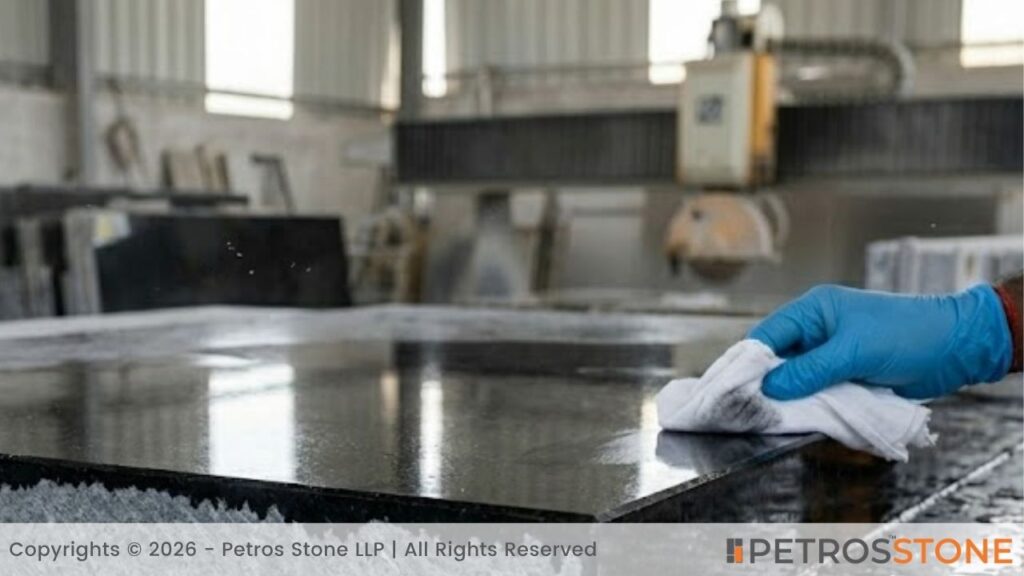
Price Gap Between Premium and Low-Grade Granite
Prices of the Fake (Painted or Epoxy Colored) granite are the major driving factor. For example:
- Genuine Absolute Black Granite: $75–$120 per sq. meter (FOB India)
- Lower-grade black stone: $25–$45 per sq. meter
This disparity gives way to unethical suppliers in order to manipulate lower-quality materials.
High Market Demand
The U.S. International Trade Commission notes that there is constant demand for imports of dimension stone, especially granite, which is being used in kitchen remodeling and commercial construction. Black granite has continued to be the best seller as it has neutral aesthetics.
Common Manipulation Techniques
Suppliers may use:
- Industrial dyes to darken the stone.
- Gloss-enhancing resin coats.
- Chemical treatments to cover imperfections.
How is it Painted or Epoxy Colored?
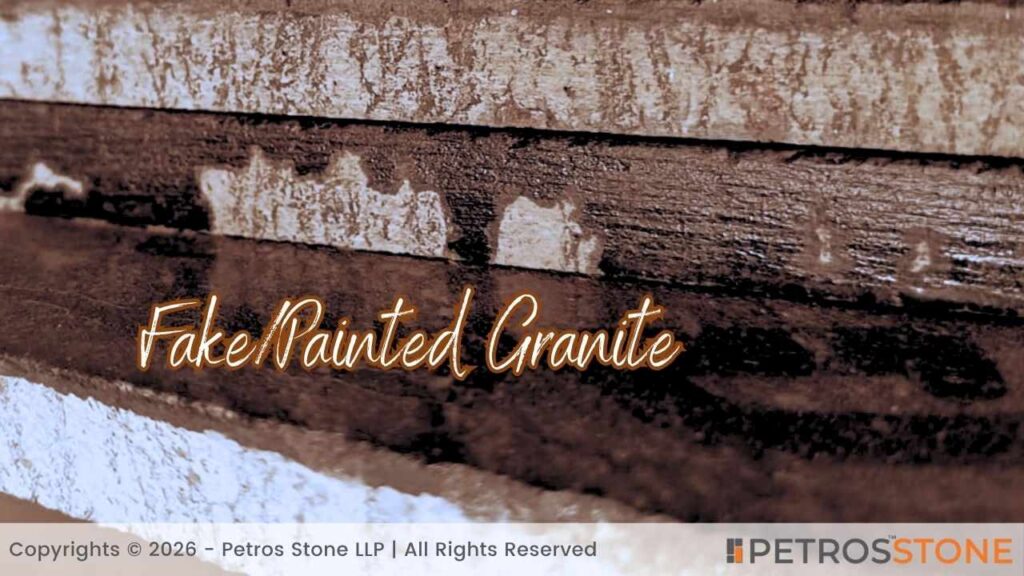
Painted black granite is natural granite, which has been treated artificially to replicate high-grade black granite.
Methods Used to Alter Granite
- Surface dyeing
- Epoxy, polyester resin covering.
- Chemical or even heat darkening.
Differences from Natural Granite
Natural granite also contains natural color differences because of the distribution of the minerals, whereas painted granite seems homogeneous.
Why It Fails Over Time
Artificial coating gets degraded because of:
- UV exposure
- Cleaning chemicals
- Daily wear
Fading and patchiness are two problems that start to be noticed in 6-12 months.
Risks of Buying Painted or Epoxy Colored Granite
Financial Loss
Customers usually pay prices close to genuine granite but receive low-quality material.
Aesthetic Issues
- Uneven fading
- Visible patches
- Loss of shine
Durability Concerns
Under sunlight (UV exposure), these artificial pigments gradually break down and oxidize, causing the surface to deteriorate; within 6–24 months, the slab may start turning greyish or brownish, develop uneven patchy fading, and ultimately lose its original deep, uniform black appearance. Additionally, such materials may not meet performance benchmarks defined by ASTM International standards like C97 (absorption), C170 (compressive strength), and C99 (flexural strength), especially in high-load or exterior applications.
Maintenance Challenges
- Frequent resealing is required.
- Sensitive to acidic or abrasive cleaning agents.
Impact on Projects and Reputation
In the case of contractors and exporters, the utilization of fake granite may hurt the reputation and create conflicts with clients.
Commonly Faked Black Granite Types
Absolute Black Granite
Absolute Black is one of the most commonly faked granites due to its uniform, deep black color and high market value. Stones of lower grade are frequently painted or coated with resin to resemble their expensive appearance.
- Highly uniform appearance makes it easy to replicate artificially.
- Frequently dyed or treated with surface coatings.
- Manipulation of prices is extremely widespread.
Black Galaxy Granite
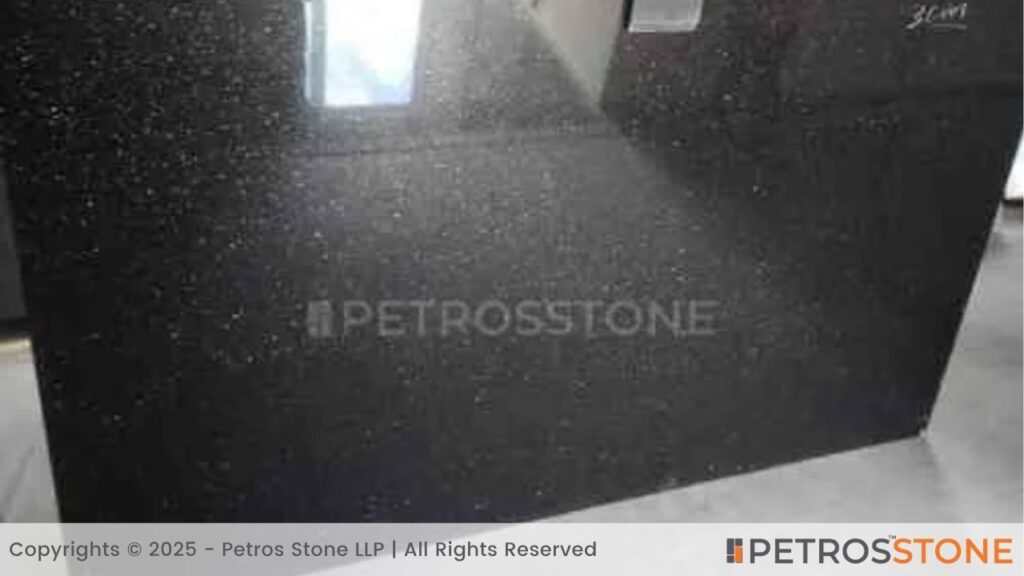
Black Galaxy is famous because of its naturally deposited golden flakes that have been formed by bronzite minerals. Copies attempt to repeat this effect but cannot recreate the natural depth.
- Artificial glitter can be excessively homogeneous.
- No depth in reflection.
- Coated surfaces rather than natural mineral polish.
Black Pearl Granite
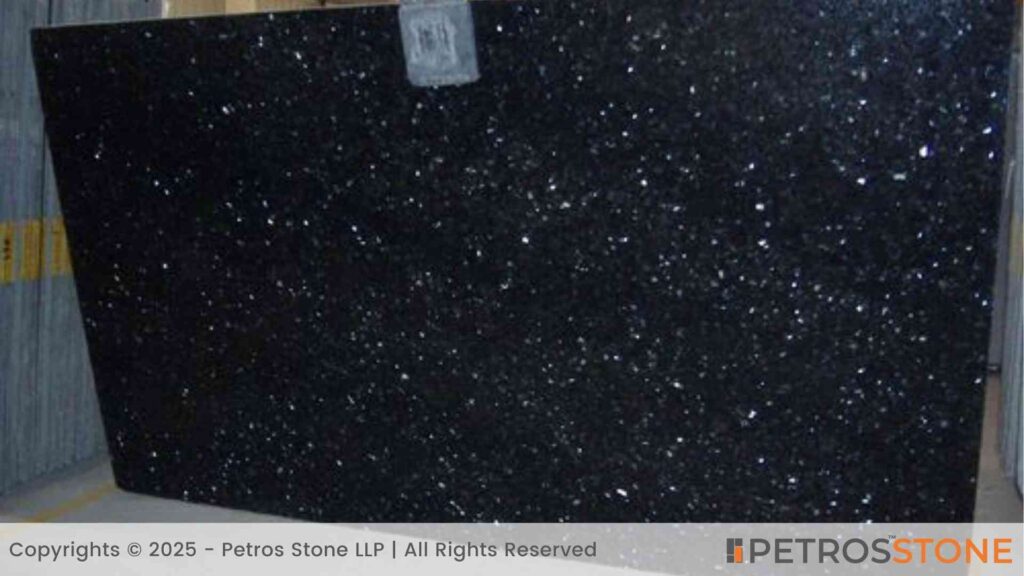
Black Pearl granite is known for its dark base with silver-grey iridescent mineral clusters, giving it a subtle shimmering effect. Its medium-to-high density and interlocking grain structure make it durable for countertops and flooring.
- Fake versions do not show natural shine. The surface looks flat and lacks depth.
- The black color depends only on the surface layer. It may fade or become dull with use.
- The quality is not consistent. Strength and polish can vary from one batch to another.
How to prevent getting scammed with Artificially Painted Black Granite?
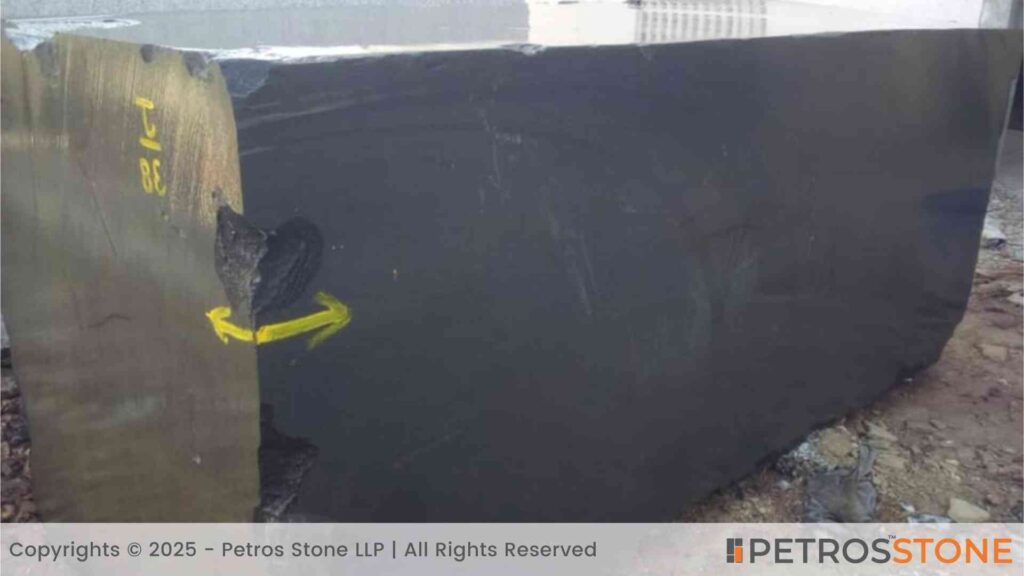
Quarry-Level Selection
Companies such as Petros® Stone source directly from the quarries, avoiding chances of manipulation.
Quality Inspection Processes
- Visual slab inspection.
- Batch consistency checks.
- ASTM-based lab testing.
Certifications and Grading Standards
- ASTM International standards
- Indian Bureau of Mines classification
- BIS compliance
Advanced Testing Methods
- Spectrographic mineral analysis
- Water absorption testing
- Surface hardness evaluation
Tips to Avoid Buying Fake (Painted or Epoxy Colored) Granite
Choose Reputed Suppliers
Always deal with well-known exporters as well as those who have good documentation at all times, like the origin of the quarry and the price provision, i.e., FOB or CIF. Quality control and transparency are maintained by reliable suppliers.
Inspect Slabs in Person
Physical inspection of the slabs should be conducted whenever feasible, as opposed to relying on polished samples or pictures only. For consistency, check the surface, edges, and the back.
Ask for Samples and Reports
Get small samples and ASTM test reports of water absorption, density, and the entire quality before placing bulk orders.
Compare Market Prices
Compare prices between suppliers. Very low quotations usually mean treated or fake (painted or epoxy colored) granite.
Work with Experts
To be sure of the right selection of material, consult architects and stone consultants or experienced importers.
Case Study – Real Market Scenario
The Purchase Mistake
One of the importers in the U.S. had purchased the “Absolute Black Granite” at the price of $38 per sq. meter CIF from a new supplier.
Issues Faced After Installation
Within 9 months:
- Fading near sink areas.
- Patchy discoloration under sunlight.
- Increased sealing frequency.
Key Learnings
On examination, the slabs were discovered to be resin coated and dyed.
As was observed by a Petros® Stone inspector:
“It is often known that the back of the slab will tell the truth. If the color does not match the surface, then it is not natural granite”.
Why Choosing the Right Supplier Matters
Importance of Transparency
Reliable suppliers provide:
- Quarry origin details.
- Lab test reports.
- The transparency in the prices by FOB and CIF.
Role of Quality Control
Strict quality checks ensure that there is adherence to ASTM and BIS standards.
Long-Term Value for Buyers
Genuine granite offers:
- Longer lifespan.
- Lower maintenance costs.
- Better return on investment.
Key Takeaways
- Fake (Painted or Epoxy Colored) black granite may look identical initially, but often fades, patches, or loses polish over time.
- Always perform basic tests (scratch, water, backside inspection) to verify authenticity.
- Unusually low pricing (FOB/CIF) is a major red flag for treated or low-grade material.
- Buy from reliable suppliers with proper quarry details and ASTM/BIS test reports.
- Final rule – Combine inspection, pricing awareness, and supplier credibility to avoid costly mistakes.
Feel free to get in touch for a free consultation, quote, and get a detailed understanding from our experts here at Petros®. Visit www.petrosstone.com or call +91-8446360361 or WhatsApp

Hello!
I’m Dr Mridali, a content writer with a background in dentistry and a passion for turning complex topics into clear, engaging stories. From healthcare to architecture, I create blogs that inform, educate, and connect with readers. With every piece, I aim to blend accuracy with creativity to make information truly valuable.

Brown Granite

White Galaxy Granite

Blue Bahia Granite

Silver Cloud Granite

Black Pearl Granite

Dallas White Granite