Importing granite from India might seem like a cheaper and viable option at first glance. Prices can range from ₹180 to ₹450 per square foot for 20 mm slabs (USD 2 to 5.5). Organizations like CAPEXIL back exports, and DGFT ensures regulatory checks, making the process look reliable.
But the real issues often don’t show up in price quotes. Problems arise during production, transport, or when the materials are installed.
Here are 10 Key Reasons to Consider Before Importing Granite From India:
- Payment Risks & Fraud
- Poor-Quality or Damaged Materials
- Inconsistent Manufacturing Standards
- Supply Chain Delays
- Weak Legal Enforcement
- Improper Export Packaging
- Availability in Local Markets
- Challenges with Rare Stone Sourcing
- Inspection & Supervision Costs
- High Stress & Management Effort
In this article, we explore the real risks involved in importing granite from India, beyond just the initial price advantage. We break down common issues related to quality, payments, manufacturing inconsistencies, and logistics based on real-world experiences. The goal is to help buyers make informed decisions and avoid costly mistakes in international stone sourcing.
10 practical, experience-backed reasons to reconsider before importing granite from India.
1. Issues with Payments and Risk of Fraud
In global stone trading, advance payments happen a lot, but they come with serious risks. Many new buyers end up working with traders who don’t own or work with factories. There are real examples where buyers pay deposits for getting stone slabs or blocks, but once they send the money, the sellers often delay or completely stop responding.
Buyers often overlook how weak international enforcement laws are. Recovering even USD 10,000 or USD 15,000 can turn into a major legal and financial headache. To avoid this, experienced importers rely on LC (Letter of Credit), third-party verifications, and a proper factory audit.
At Petrosstone, we often see how payments can go wrong. A European buyer once contacted us after sending an advance of about USD 12,500 to someone claiming to own a factory. Later, they found out he was just a trader using old stock pictures.
The documents looked convincing. They had IEC codes, GST details, and export invoices. But these didn’t prove he could produce anything. This is why most serious buyers we deal with today ask to verify production in real-time and conduct factory audits. They don’t rely on just paperwork filed with DGFT.

2. Receiving Poor-Quality or Damaged Materials
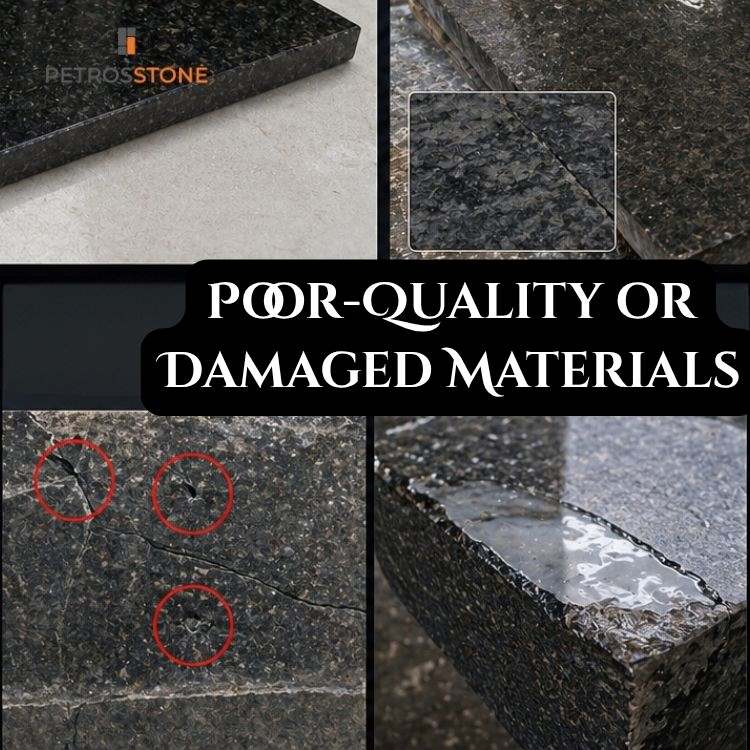
Granite gets sold a lot using shiny slab pictures or small cutout samples, but what arrives might not always match what was promised. One common problem is ‘bait and switch.’ Companies claim they are sending high-quality export-grade granite, but buyers sometimes get commercial-grade pieces instead. These can have small cracks, uneven colors, or lower-quality polishing.
Factories see this issue crop up during steps like gang saw cutting and resin treatment. To hide flaws, low-grade slabs might get layers of resin piled on, or pieces from different blocks might get mixed. While the photos can make it look fine, its actual appearance and performance at the site might disappoint.
When it comes to factories, variation in quality often begins right at the block selection stage. I’ve witnessed situations where two blocks, even from the same quarry, performed completely differently when cut.
While processing on the gang saw, one block produced flawless slabs, but the other revealed tiny hidden fractures after calibration. These flaws don’t always show up on raw blocks or in photos. This makes inspecting slabs up close essential.
3. Mixed-Up Manufacturing Standards
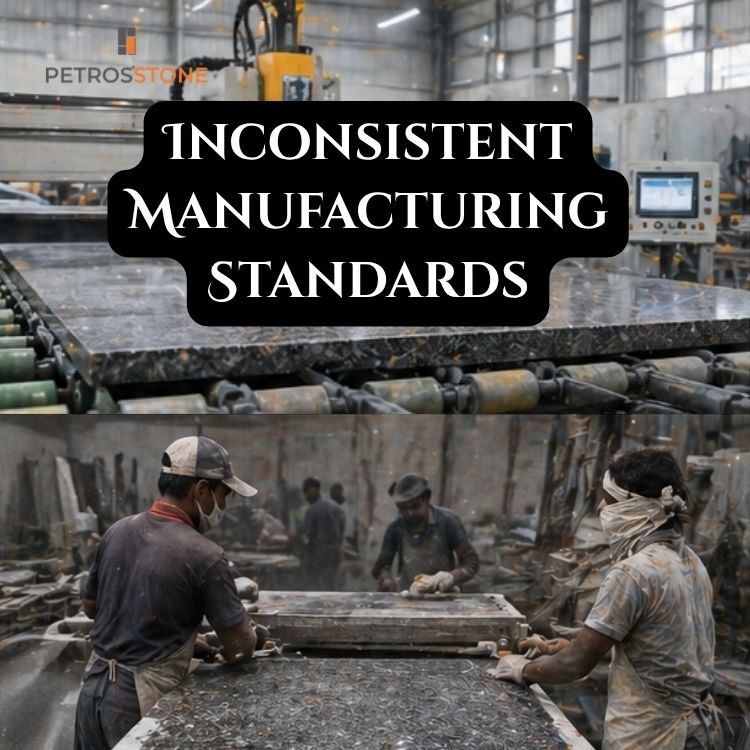
India has a mix of modern granite factories and some that are unorganized. The gap between them is quite noticeable. Big exporters use advanced machines like automated polishers and calibration equipment, which work with high precision. On the other hand, smaller factories rely on manual methods.
In real-world projects, this often results in thickness differences of around 3 to 5 mm, uneven polishing, and finishes that don’t match. These issues can cause problems during installations for floors where misalignment and uneven surfaces increase labor and require more rework.
We once reviewed a container from a semi-automatic facility where the slabs were meant to have a thickness of 20 mm, calibrated. When it arrived, the thickness ranged from 17 mm to 22 mm.
This kind of issue happens when factories don’t use automatic calibration lines and instead depend on manual grinding. As mentioned earlier, this causes problems, and the installers have to adjust with extra adhesive, which can result in uneven floors and future lippage.
4. Delays in Long-Distance Supply Chains
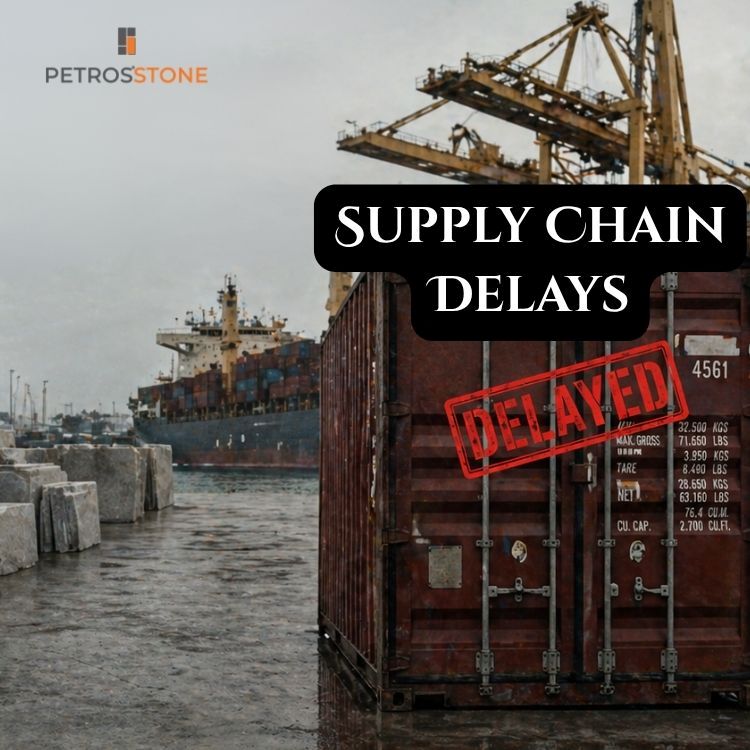
Granite exports go through various steps like production, loading containers, customs clearance at ports, and shipping. While the expected time for deliveries is between 30 and 90 days, actual schedules can be uncertain and hard to predict.
In real-world projects, delays happen because of vessel rollovers, port bottlenecks, or problems with paperwork. A late container can throw off construction timelines when the stone is part of an important design element.
Delays, from what we notice often, don’t happen just because of production. In a recent instance, the material was prepared on time, but a vessel rollover at the Nhava Sheva port caused the container to get stuck. This issue ended up pushing the delay almost 3 weeks further.
To meet strict project deadlines like those in hotels or commercial flooring, this kind of delay can stall installation plans.
5. Poor Legal and Contract Enforcement
Even with a signed deal, enforcing it across countries can be tough. Legal systems are different, and dealing with disputes in a foreign country takes too much time and money.
Most buyers don’t understand that small or medium-sized deals aren’t worth a legal fight. This makes trust and proper checks much more important than just having signed documents.

6. Bad Export Packaging
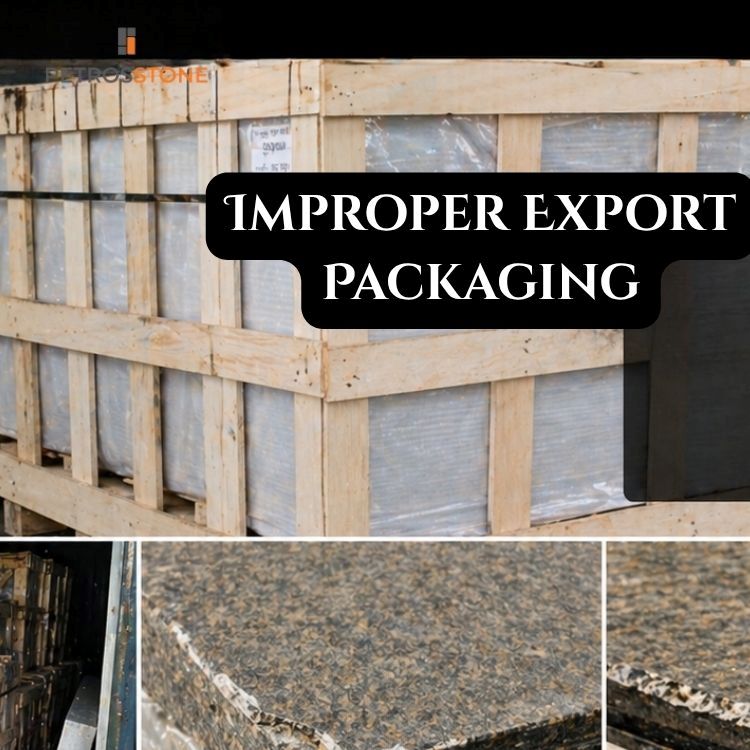
Granite slabs are both heavy and breakable, which makes good packaging very important. Reliable factories pack them in treated wooden crates, with steel bands and proper cushioning. But some suppliers try to save money by skipping these steps.
During actual shipments, poor packaging often causes broken corners, chipped edges, or even cracks across the middle of the slab due to bumps during transport. Once the shipment arrives, most of this damage cannot be fixed and is covered by insurance.
I clearly remember a situation where a frustrated buyer contacted us right after his shipment arrived. He had gotten a shipment from another exporter packed in non-fumigated wooden crates, which customs flagged at the destination. The goods were delayed, and part of the shipment had to be reprocessed.
7. Easy Access in Local Markets
Well-known Indian granite types like Black Galaxy and Tan Brown are often already available in international warehouses. Large distributors import these in bulk and supply them.
Small buyers may find that importing doesn’t save much money when you factor in freight costs, duties, and potential risks. Often, buying brings quicker delivery and easier ways to check quality.
It’s amusing, how some buyers come to us looking to buy stones like Tan Brown to find out later that the exact material is already sitting in their local warehouse.
When you take into account things like shipping costs, chances of damage, and the waiting time, bringing in regular granites from abroad often isn’t worth it, unless you’re ordering in large quantities or working with a factory near a quarry.

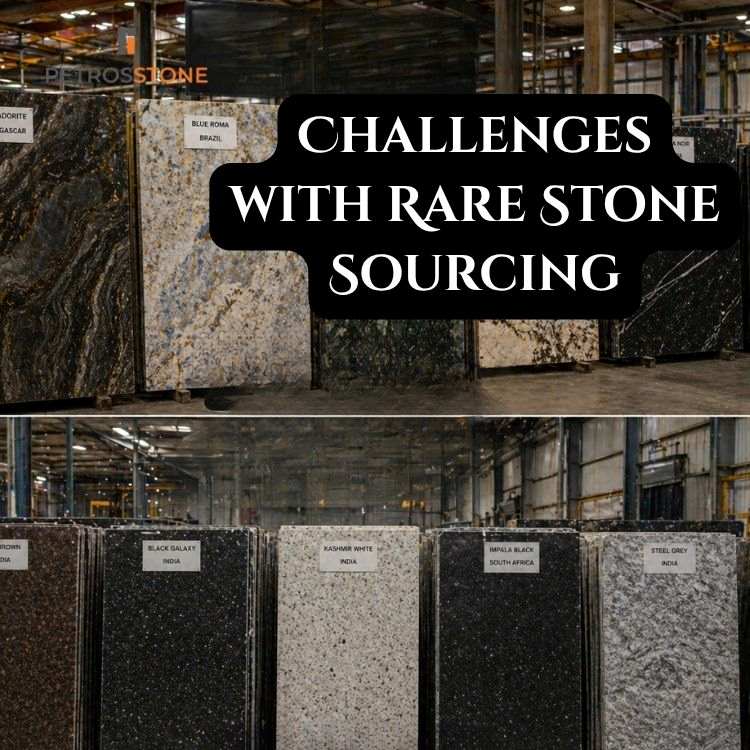
8. Choosing Rare Stones or Common Options
Importing works best when you’re looking for rare or unique materials from specific quarries. But for standard granites, the trouble and cost sometimes outweigh the advantages.
Another issue is keeping things consistent. Rare or unique stones aren’t always ready in large amounts. Without the option to buy in bulk, it can be tough to keep projects uniform.
9. Costs of Checking and Supervision
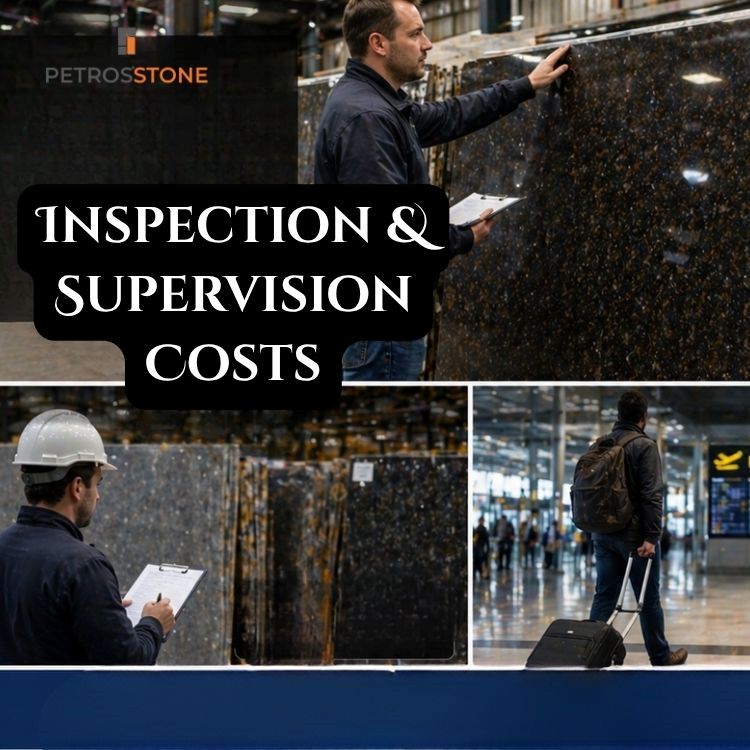
To reduce risks, buyers arrange for inspections or visit factories in person. While these steps are crucial, they end up increasing overall expenses.
Checking services cost around USD 200–500 for each container. Travel costs, however, can climb to ₹1–3 lakh (about USD 1,200 – 3,500). What may seem like a budget-friendly sourcing choice turns pricier as these added costs pile up.
Many new importers think inspections are something they can skip. The truth is, they are impossible to avoid.
At Petrosstone, most of the international clients we deal with either hire third-party inspectors or request full slab videos for approval before shipment. This does increase expenses (USD 300 to 500 per container), but not doing it can result in far greater losses.
10. Stress for Importers and Added Management Work
Importing granite comes with more than just technical or money-related risks. Buyers have to stay on top of things all the time. They monitor production, finalize slab picks, figure out shipping timelines, and sort out all the paperwork.
What many fail to realize is how much pressure and work this involves. There’s constant doubt: will the slabs look as expected, will shipments meet deadlines, or will there be problems with quality after installation?
From our talks with buyers who come back, one issue keeps popping up – the stress of dealing with imports.
It’s more than just ordering stone. You have to juggle time zones, check production details, track deliveries, and deal with unexpected problems on-site. One client shared how a late container delayed their whole project by a month.
That’s the hidden cost most price comparisons don’t capture.

Wrapping Up
India leads as a key hub for exporting granite, supported by CAPEXIL and DGFT. However, the challenges in this space are significant too.
From what we’ve seen on the ground, choosing the right partner makes all the difference for smooth imports. The best suppliers take charge of block selection, ensure proper resin treatment and calibration, and remain transparent from production all the way to packing.
Many buyers who run into problems eventually switch to suppliers with clear processes. At Petros® Stone, clients often tell us that accurate slab approvals reliable export grading, and meeting packing standards are what make their projects hassle-free.
In the end, importing granite isn’t just about cutting costs. It’s about consistent quality and avoiding unexpected problems on the ground.
Feel free to get in touch for a free consultation, quote, and get a detailed understanding from our experts here at Petros®. Visit www.petrosstone.com or call +91-8446360361 or WhatsApp

Tapas Koul leads editorial direction and content strategy at Petros® Stone, bringing over 15 years of combined experience in e-commerce, publishing, and digital communication. His work spans research, strategy, and communication, with a focus on natural stone, its technical properties, processing, and architectural applications. Collaborating with Petros® Stone’s production team, laboratory experts, and specialists, he translates industry knowledge into clear, engaging content and communication for diverse audiences.

Brown Granite

White Galaxy Granite

Blue Bahia Granite

Silver Cloud Granite

Black Pearl Granite

Dallas White Granite