Quartz slabs have become one of the most popular materials for kitchen counters, bathroom vanities, and interior surfaces. Strong and resistant to stains, quartz slabs are available in numerous colors and designs. Since quartz slabs are engineered using crushed natural quartz bound with resins and pigments, buyers may notice noticeable variations in slab appearance and performance. The grade labels, which include A, B, and C, are used by sellers and manufacturers to facilitate easy purchasing. These grades provide you with details on perfection, finish, and suitability in different projects.
Table – Quartz Slabs Grade Comparison
| Parameter | Grade A Quartz Slabs | Grade B Quartz Slabs | Grade C Quartz Slabs |
| Color uniformity | Excellent consistency; minimal shade variation | Good uniformity with minor variation | Noticeable color shifts, patchy areas |
| Pattern flow | Natural, continuous, believable veining | Mostly consistent, slight breaks in design | Often uneven, abrupt pattern changes |
| Surface finish | High-gloss flawless polish, smooth edges | Good polish with slight dull spots | May show polishing lines, uneven gloss |
| Visible defects | Almost none; premium inspection | Minor pinholes, occasional resin spots | Chips, resin patches, micro-cracks more common |
| Gloss level (meter reading) | 55–65 GU (high) | 45–55 GU | 30–45 GU |
| Thickness accuracy | Very tight ±1 mm tolerance | ±2 mm tolerance | ±3 mm or more |
| Slab flatness | Perfectly flat | Slight bend possible | Warping more commonly seen |
| Density / weight | Highest density; feels heavier | Moderate density | Lightest among all grades |
| Quartz content % | 90–95% quartz | 85–90% quartz | 70–85% quartz (more resin) |
| Scratch resistance | Very high | High | Moderate |
| Stain resistance | Excellent; low porosity | Good; occasional sealing recommended | Moderate; more absorbent |
| Heat resistance | High; handles moderate heat | Medium | Lower heat resistance |
| UV resistance | Strong | Moderate | Weak; may yellow over time |
| Durability lifespan | 20–25 years | 12–18 years | 5–10 years |
| Warranty (brand dependent) | Longest (15–25 years) | Medium (8–15 years) | Shorter (2–8 years) |
| Ideal usage | Luxury kitchens, hotels, premium interiors, designer spaces | Standard homes, mid-range commercial work | Budget projects, rental units, temporary setups |
| Availability of jumbo slabs | Common | Moderate | Rare |
| Slab consistency (batch to batch) | Very high | Good | Low consistency |
| Ease of installation | Very stable; fabricator-friendly | Easy to install | May chip/cut unevenly |
| Resin visibility | Least visible (premium quality resin) | Slight resin spots possible | Resin patches clearly visible |
| Price range | Highest | Mid-range | Lowest |
Understanding the meaning of these A, B, and C grades is what enables you to take the right slab. Higher grades typically imply being pretty and living longer, but it is even more expensive. A lower grade is cheap and can exhibit faults or tear earlier.
In this article, we define the term grade as applied to quartz slabs, explain the qualities of grades A, B, and C, demonstrate the process of examining slabs in a showroom or on site, and provide some practical advice to buyers, designers, and builders.
- Table – Quartz Slabs Grade Comparison
- What Does ‘Grade’ of Quartz Slabs Actually Mean?
- Types of Quartz Slab Grading Systems in the Market
- A, B, C Grades of Quartz Slabs – Characteristics
- 1. Grade A (First Choice / Premium)
- 2. Grade B (Standard / Mid-Range)
- 3. Grade C (Second Choice / Commercial Grade)
- Quick Comparison of Quartz Slab Grades A, B, and C
- Table – Quartz Slabs Grade Comparison
- How to Visually Inspect Quartz Slab Grades (DIY Checks)
- Physical and Practical Tests (For Showrooms or Site)
- Laboratory and Technical Tests
- Price vs Quality – Reading the Market
- Table – Showcasing Relationship between Price Band and Grade
- How to Check Quartz Slabs Before Buying
- Table – Buyers Checklist
- Final Buying Tips for Homeowners and Designers
- Quick Reference Tables
- Summary
What Does ‘Grade’ of Quartz Slabs Actually Mean?
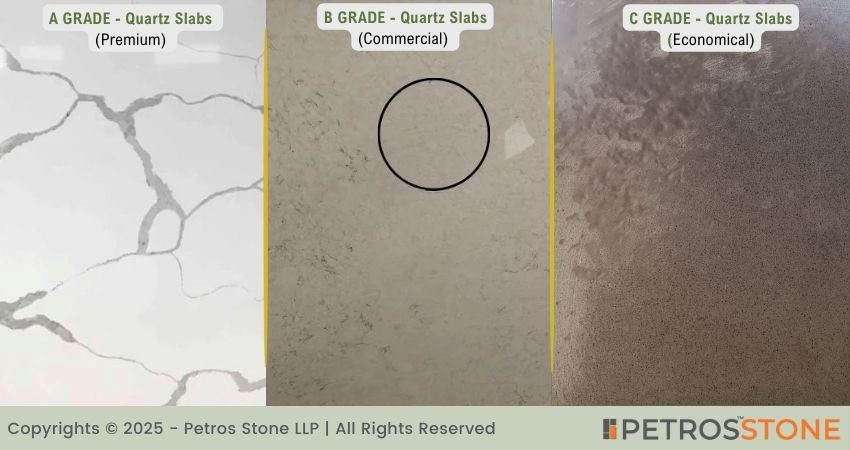
In the quartz slab market, the term ‘grade’ is used to denote the manufacturing and finishing quality as a whole. It is not a scientific rating and a single lab test. Rather, grade is a sum of multiple factors:
- Quality of raw materials (size and purity of the quartz particles)
- Quality and proportion of resin.
- Pigment and pattern control
- Production of accuracy (compression, curing, polishing)
- Quality of finish (level of polish, matte finish)
- Controlling and quality control in the factory.
- Defects (chips, air pockets, resin lines) are present.
- Thickness and flatness accuracy
Due to the internal standards of manufacturers and sellers, grades are not universal. The same brand of slab that is labeled as Grade A may not match another brand of slab labeled Grade A. Nevertheless, the overall concept remains the same: A grade = best of that maker; B grade = good; C grade = economical.
Grade also influences warranty, the choice of some patterns, and the use of slabs in areas where lots of people will traverse. To a buyer, grade is knowing what is behind marketing photographs and viewing the slab yourself.
Types of Quartz Slab Grading Systems in the Market
No single international standard that grades quartz slabs exists. Showrooms and different brands have their own systems. The most frequently encountered techniques are listed below:
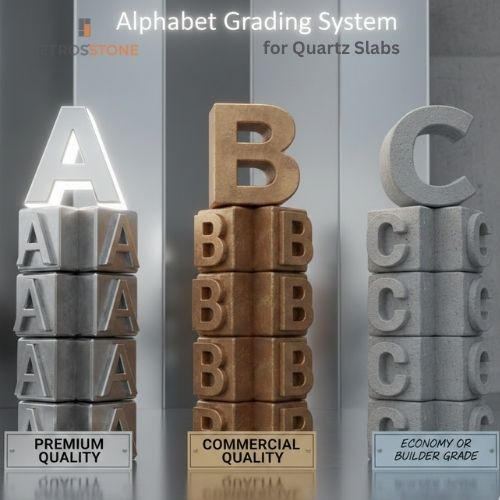
Alphabet Grading System
Letters that are used in this system include A, B, and C.
- A Grade – premium quality
- B Grade – commercial quality
- C Grade – economy or builder grade
Tier or Series System
Quartz slabs can be divided by large manufacturers into tiers, depending on the complexity of the design:
- Tier 1 – basic colors
- Tier 2 – mid-range patterns
- Tier 3 – premium designs
- Tier 4 – luxury or imported designs
Price-band system
Slabs are grouped by price. The more expensive it is, the higher the perceived grade is.
Lot/Batch coding
Other factories label every batch and indicate the batch that has undergone premium checks. Buyers are able to order lot numbers or photos of batches.
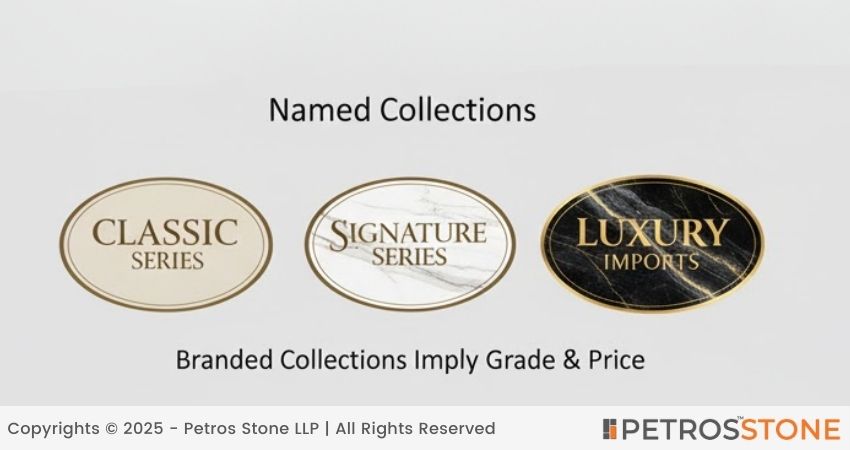
Named collections
Big brands incorporate collection names (e.g., ‘Signature Series,’ ‘Classic Series’), which have implied grade and price.
There are also variations in the systems and, therefore, always inquire what the seller includes with an A grade. When you can, compare slabs of different grades of the same manufacturer. So that is the best way to know how that maker uses grades.
A, B, C Grades of Quartz Slabs – Characteristics
This section describes the characteristics that each grade has.
1. Grade A (First Choice / Premium)
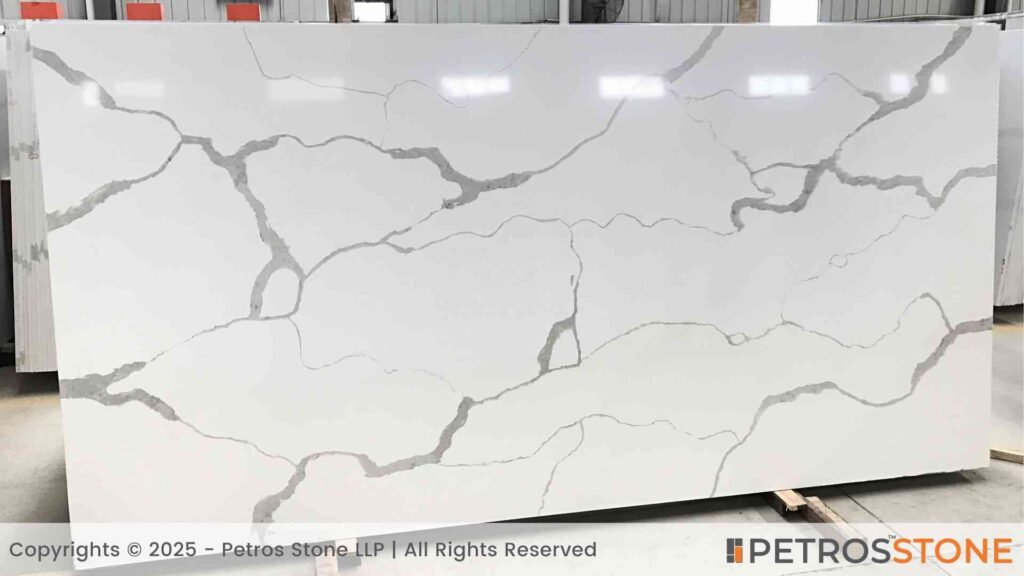
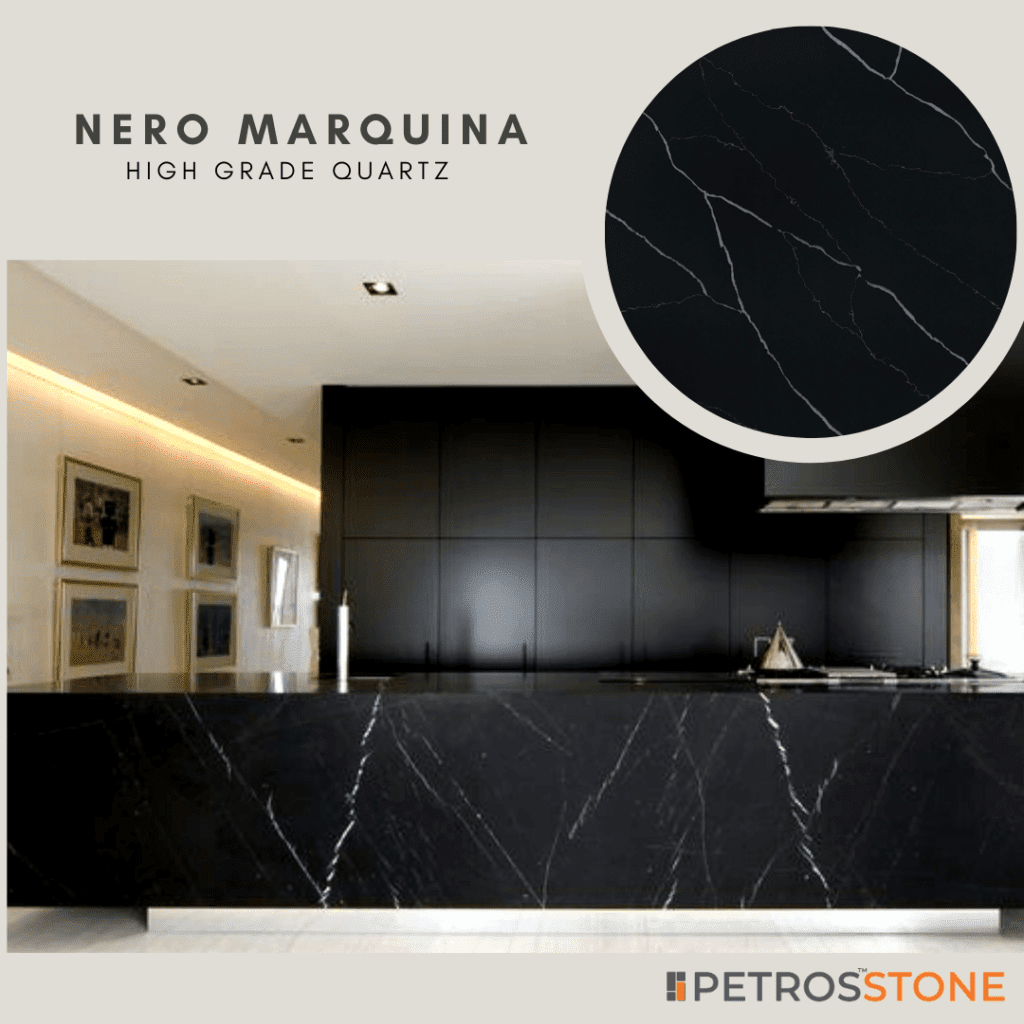
Grade A quartz slab is the highest grade of quartz slab that a manufacturer or dealer can offer. It is applied in situations where both looks and performance in the long run are important.
Visual and Physical Features
- Quite smooth color and pattern all over the slab.
- Smooth transitions of pattern, vein-like natural occurrence.
- Well-polished or well-finished uniform texture with matte finish.
- Very few visible inclusions, resin lines, or chips.
- A regular thickness through the slab (e.g. 20 mm or 30 mm as specified).
- Dense feel and solid weight; reduced proportion of resin.
- The backing is clean and reflects good production.
Performance and Warranty
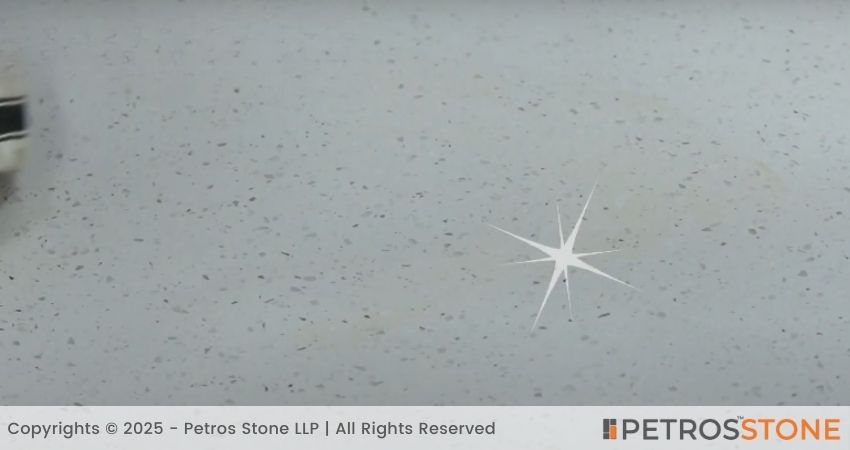
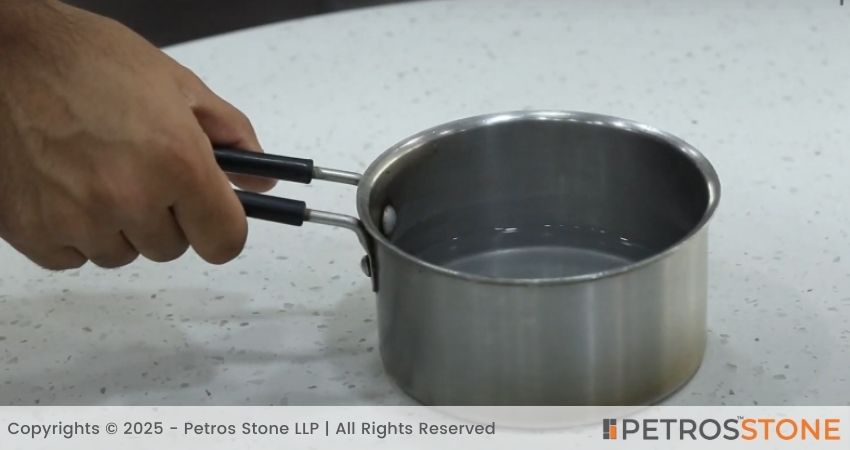
- Very tough to most stains, heat (even in normal usage), and scratches.
- Good structural stability; reduced likelihood of breakage when cutting and installing.
- Frequently has the longest factory guarantee.
Typical Use
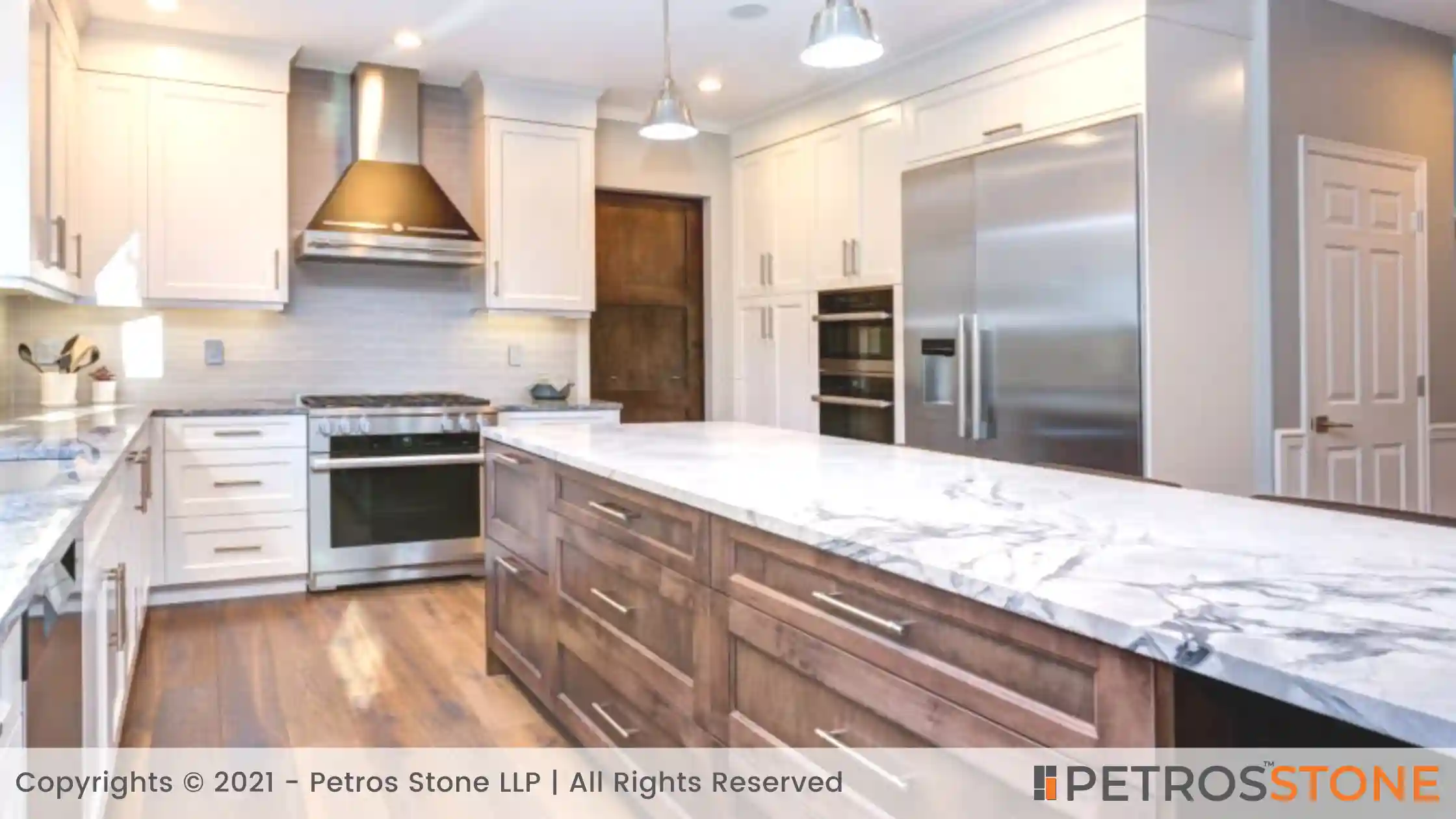
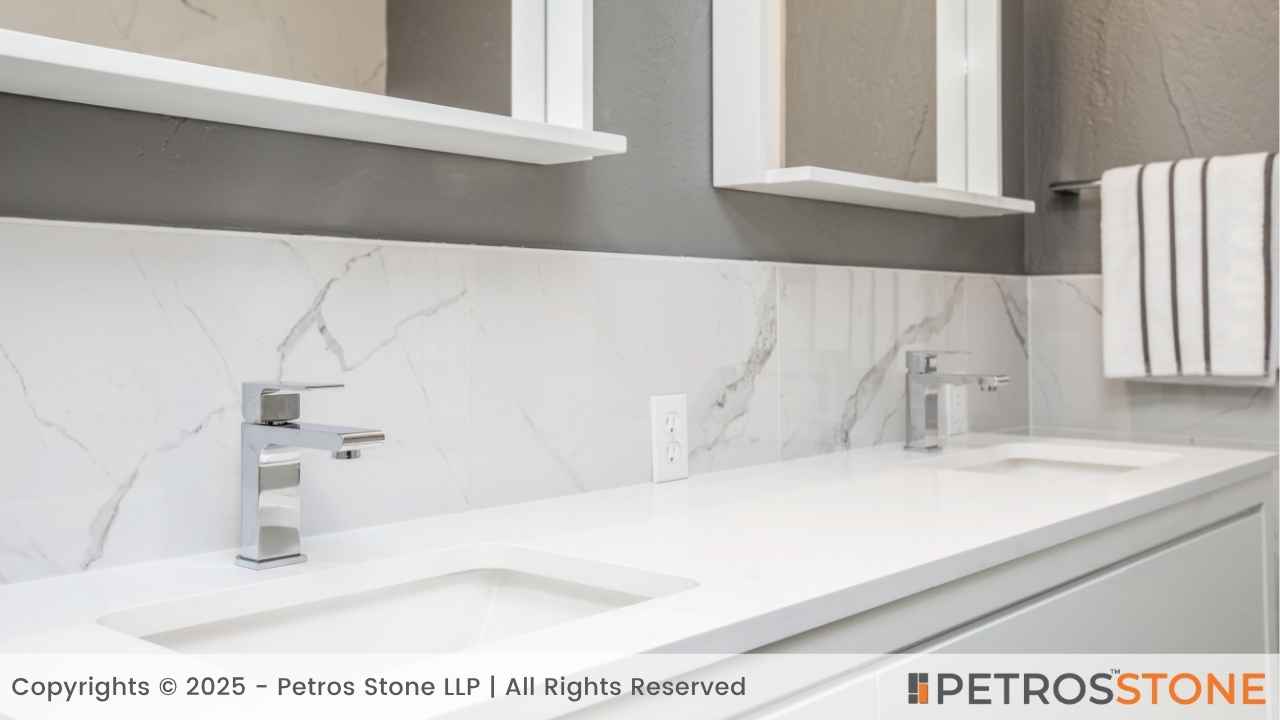
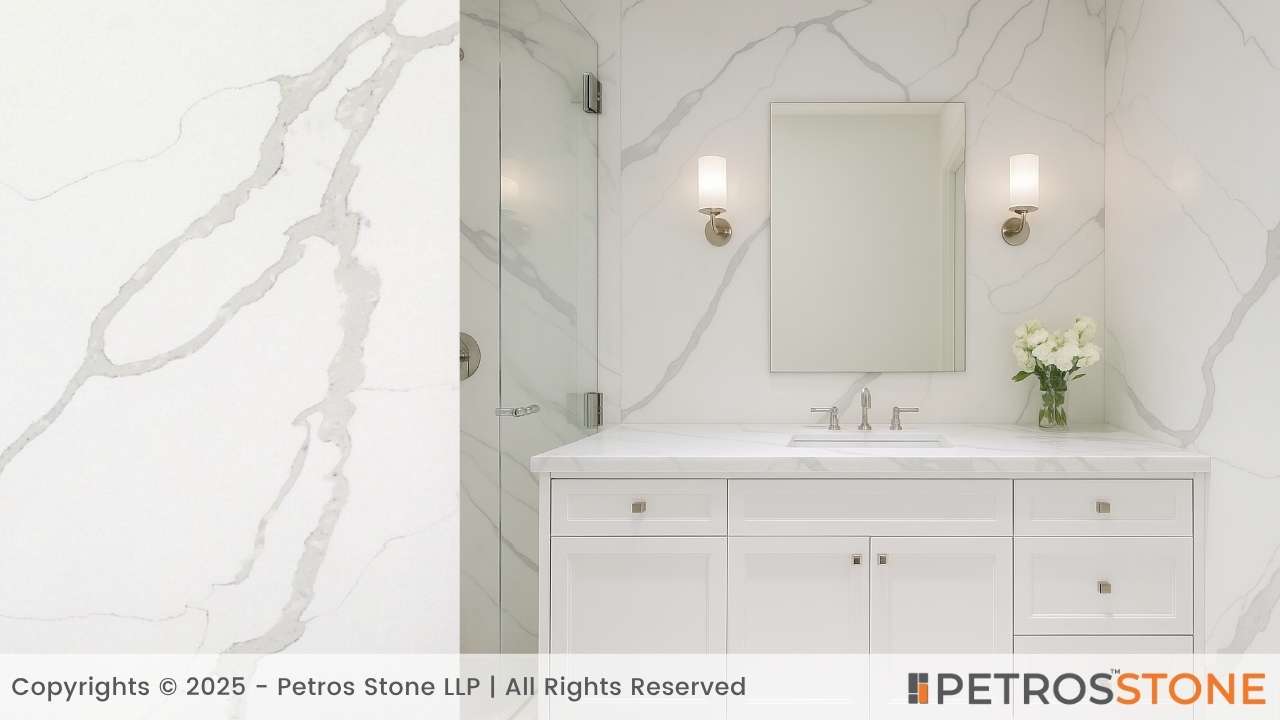
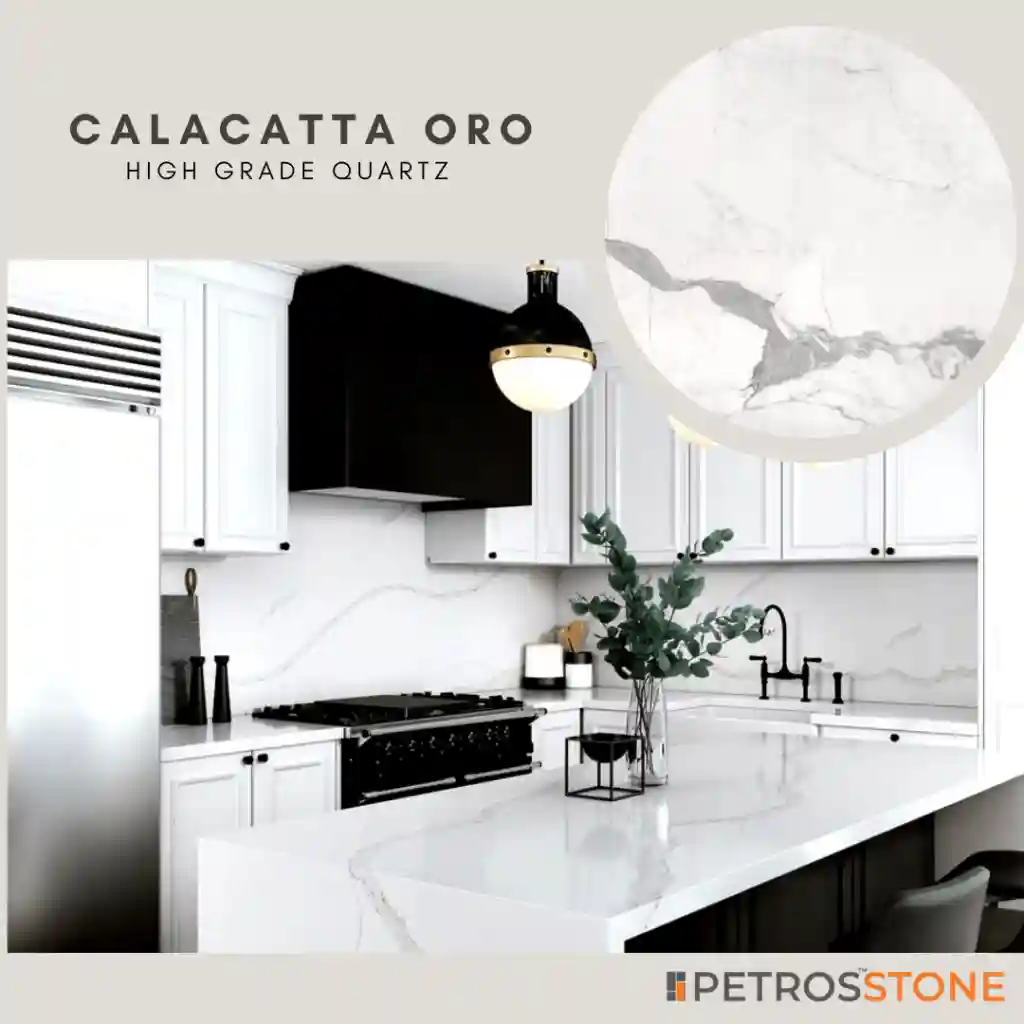
- Luxury kitchens and bathrooms, show homes, hotels, executive offices, and design where the surface look is paramount.
2. Grade B (Standard / Mid-Range)
Grade B is an inexpensive and good substitute. It offers a balance between quality and price in most residential and commercial applications.
Visual and Physical Features
- Good consistency of color and pattern with minor variation can be found.
- The finishing is smooth and not necessarily as glossy as an A grade.
- Minor inclusions or small resin plugs can be present; however, they tend not to be evident on remote appearances.
- Small tolerances are near the specification of thickness.
- Reasonable density; harder than A grade and yet solid.
Performance and Warranty
- Good resistance against daily stains and scratches on use.
- Very convenient to fit into busy family kitchens or commercial counters that require frequent maintenance.
- Warranty duration is mid-range.
Typical Use
- Standard bathrooms, family kitchens, and the retail stores and office, where both look and durability are valuable, but cost is an issue.
3. Grade C (Second Choice / Commercial Grade)
Grade C is economical and is frequently applied in price-sensitive projects or in those that do not focus on the surface as its encasement.
Visual and Physical Features
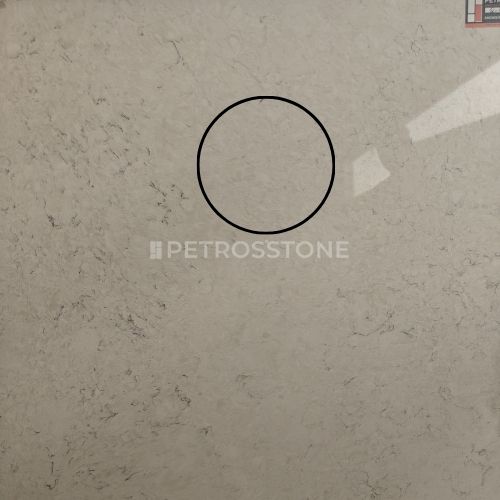
- Observable difference in color/pattern.
- Finish can be dull or can bear signs of polishing.
- Greater visibility of inclusions, resin streaks, or small bubbles.
- Different thicknesses can be used besides tight specifications.
- In many cases, it is lighter weight or a little less dense with increased resin content.
Performance and Warranty
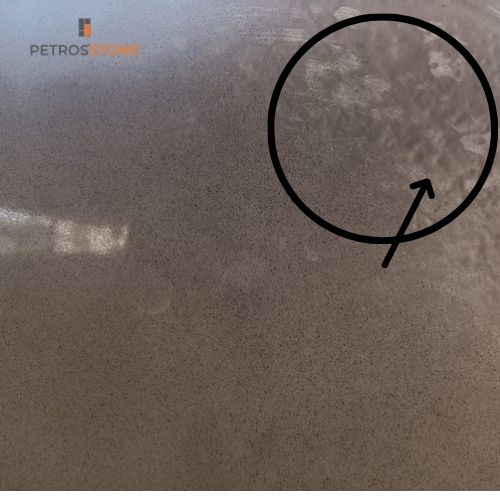
- Suffices for light usage, but can easily be stained or scratched.
- More likely to have defects, chips, or edges that are required to be repaired.
- Shorter or limited warranty.
Typical Use
- Rentals, builders’ apartments, utility rooms, and other areas where price regulation is a major focus.
Quick Comparison of Quartz Slab Grades A, B, and C
Table – Quartz Slabs Grade Comparison
| Parameter | Grade A Quartz Slabs | Grade B Quartz Slabs | Grade C Quartz Slabs |
| Color uniformity | Excellent consistency; minimal shade variation | Good uniformity with minor variation | Noticeable color shifts, patchy areas |
| Pattern flow | Natural, continuous, believable veining | Mostly consistent, slight breaks in design | Often uneven, abrupt pattern changes |
| Surface finish | High-gloss flawless polish, smooth edges | Good polish with slight dull spots | May show polishing lines, uneven gloss |
| Visible defects | Almost none; premium inspection | Minor pinholes, occasional resin spots | Chips, resin patches, micro-cracks more common |
| Gloss level (meter reading) | 55–65 GU (high) | 45–55 GU | 30–45 GU |
| Thickness accuracy | Very tight ±1 mm tolerance | ±2 mm tolerance | ±3 mm or more |
| Slab flatness | Perfectly flat | Slight bend possible | Warping more commonly seen |
| Density / weight | Highest density; feels heavier | Moderate density | Lightest among all grades |
| Quartz content % | 90–95% quartz | 85–90% quartz | 70–85% quartz (more resin) |
| Scratch resistance | Very high | High | Moderate |
| Stain resistance | Excellent; low porosity | Good; occasional sealing recommended | Moderate; more absorbent |
| Heat resistance | High; handles moderate heat | Medium | Lower heat resistance |
| UV resistance | Strong | Moderate | Weak; may yellow over time |
| Durability lifespan | 20–25 years | 12–18 years | 5–10 years |
| Warranty (brand dependent) | Longest (15–25 years) | Medium (8–15 years) | Shorter (2–8 years) |
| Ideal usage | Luxury kitchens, hotels, premium interiors, designer spaces | Standard homes, mid-range commercial work | Budget projects, rental units, temporary setups |
| Availability of jumbo slabs | Common | Moderate | Rare |
| Slab consistency (batch to batch) | Very high | Good | Low consistency |
| Ease of installation | Very stable; fabricator-friendly | Easy to install | May chip/cut unevenly |
| Resin visibility | Least visible (premium quality resin) | Slight resin spots possible | Resin patches clearly visible |
| Price range | Highest | Mid-range | Lowest |
This table is a general guide. Slab lines and individual brands may vary.

How to Visually Inspect Quartz Slab Grades (DIY Checks)
A lot can be known of a slab by simple viewing tests. These checks do not need any tools and can be used in a showroom or at a supplier yard.
1. Color and Pattern Uniformity

Steps
- Position oneself at a distance of 3-5 feet from the slab.
- Look at the slab from close (1 to 2 feet) and distant.
- Turn the slab slightly; observe the whole surface.
What to look for
- Big flat areas of color tend to represent greater quality.
- Random spots of variation indicate low grades.
- In veined or marble-effect pieces, the continuity of the vein in a natural course is a good indication of good pattern management.
Tip: Take pictures of the slab at various angles using your phone. Compare pictures afterwards to look for uniformity.
2. Surface Finish and Gloss
Steps
- Run your hand over the surface lightly.
- Keep a small flashlight or smartphone torch that is held at an angle to the surface.
What to look for
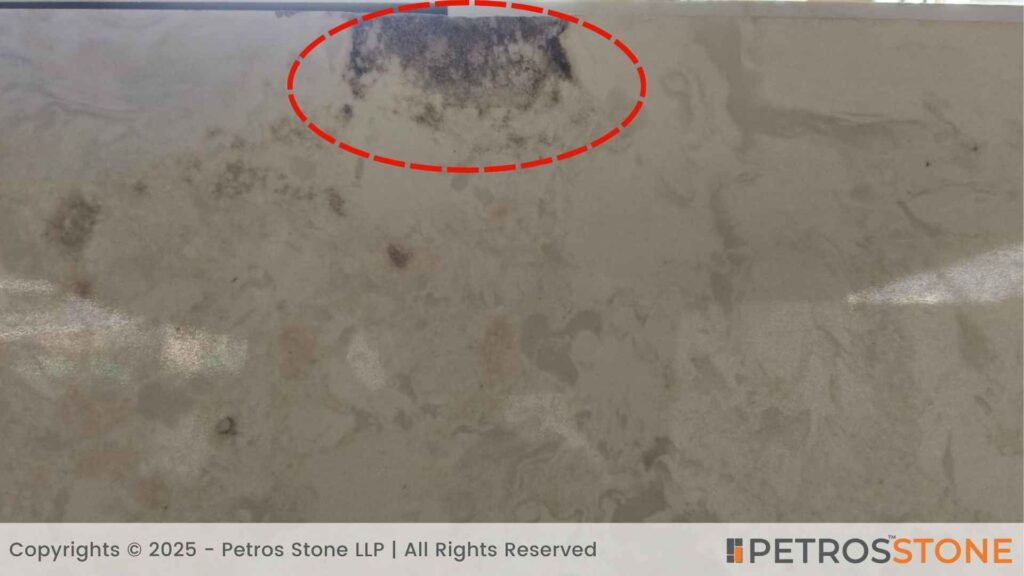
- Smoothness: Quartz slabs of high grade are smooth.
- Gloss: High gloss has a clear reflection of the light; matte ones must be smooth and do not have patches.
- Flat or bumpy areas may be evidence of either inadequate polishing or issues with the curing process.
3. Visible Defects and Edges
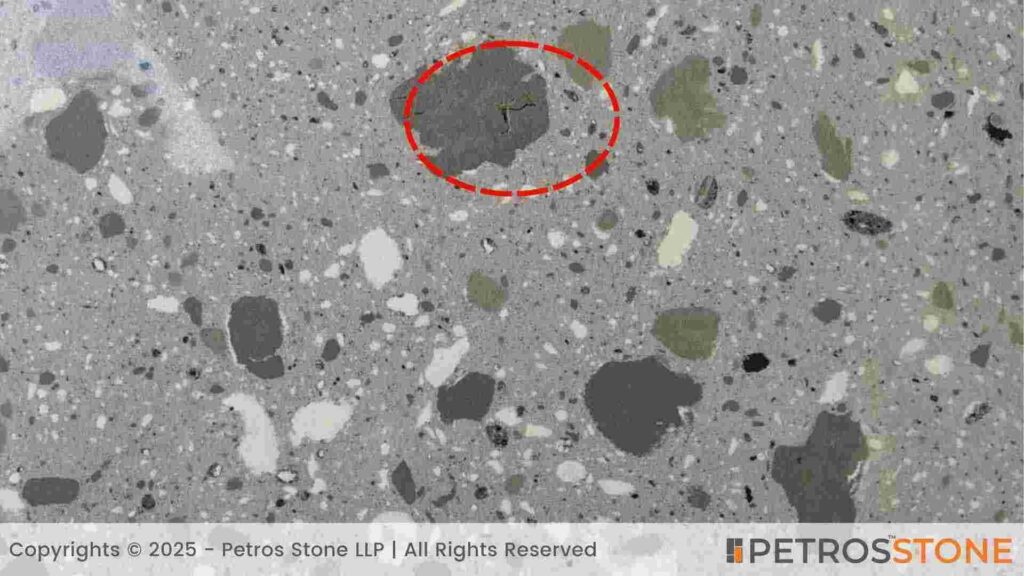
Steps
- Check the edges where the slab was cut.
- Examine under direct light for holes, air pockets, or resin plugs.
What to look for
- Small air bubbles, small holes, or spots of resin are expected, although they should be few in good slabs.
- Rough or chips mean ill handling or low quality.
- Check the back of the slabs, too; untidy or broken backing may be an indication of poor factory regulations.
Tip: Request the seller to point out any flaws and show you other slabs of the same batch to make a comparison.
Physical and Practical Tests (For Showrooms or Site)
When the seller gives room to explore or test sample pieces, these practical tests would inform more about the grade and durability.
1. Thickness and Flatness
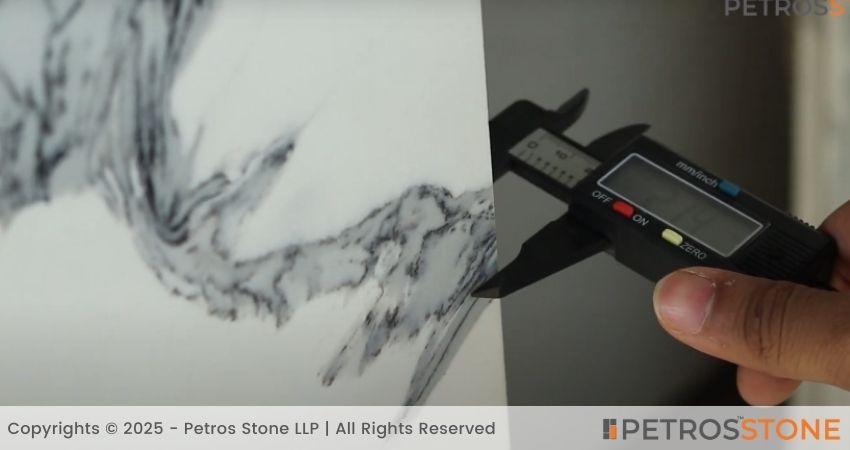
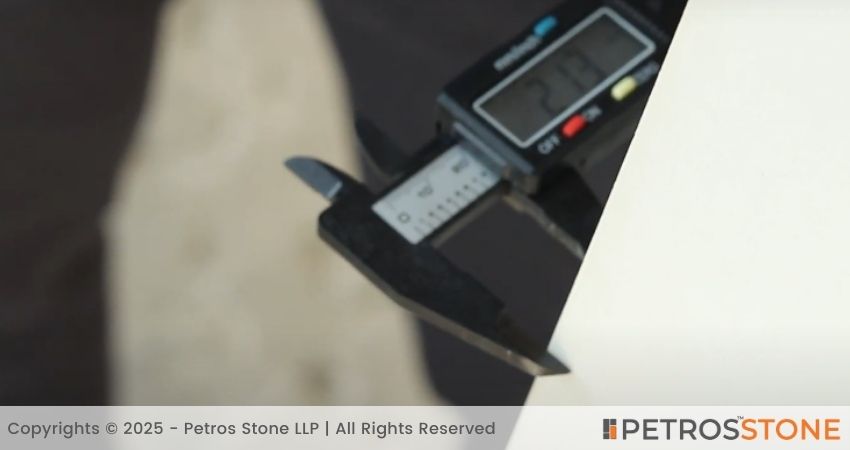
Tools needed (optional): steel straightedge, feeler gauge, tape measure.
Steps
- Measure the slab thickness at three or four points.
- Lay a straightedge across the length and width of the slab; take note of gaps.
What to look for
- High-grade quartz slabs meet the claimed thickness with tight tolerance.
- The large bowing or unevenness lowers the rating; it will require additional support during installation.
Why it matters
- Lack of uniformity leads to increased difficulty of edge work and installation, and can cause stress points that crack in the long run.
2. Density and Weight
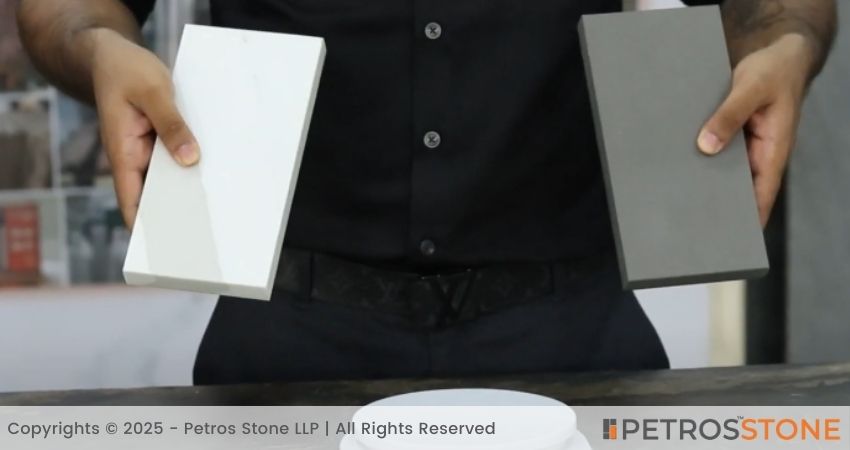
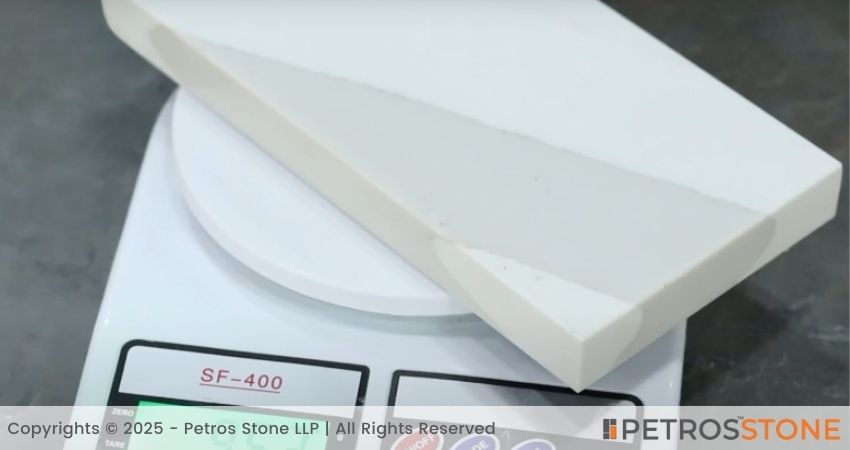
Steps
- Take one small sample or move up a corner of a slab with help.
- Compare the weight of two similarly sized slabs.
What to look for
- Higher natural quartz content and reduced resin are almost always marked by a heavier feel.
- Slabs that are of lower quality and are much lighter, and contain more resin and fillers.
Why it matters
- Cheap slabs may contain more resin, which may result in reduced heat resistance, increased tendency to yellow, and reduced scratch resistance in the long run.
3. Simple Stain and Scratch Tests
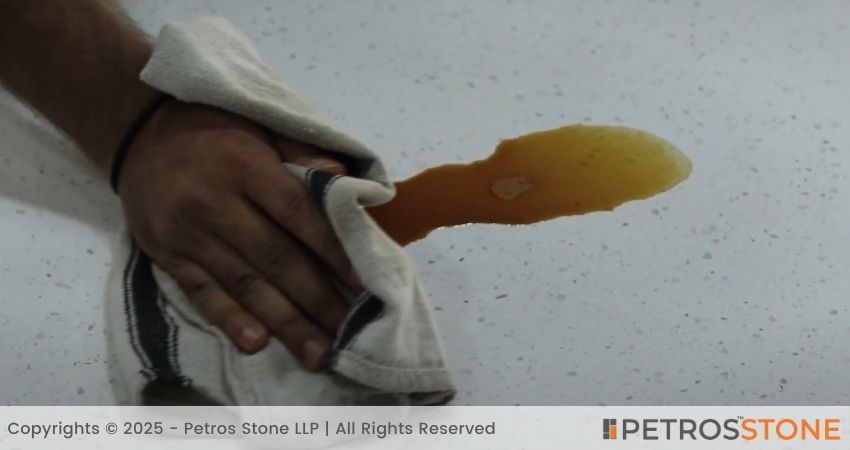
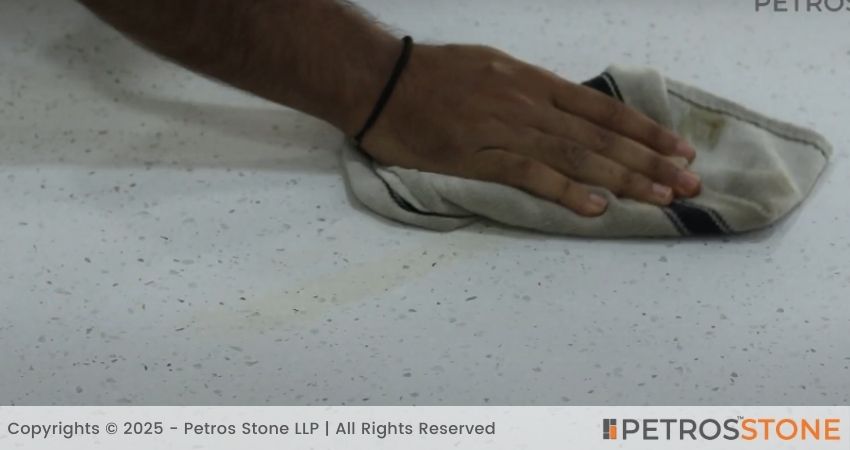
Important: The tests may only be done on sample offcuts when the seller allows. Do not test a slab that you intend to purchase, because your test may be damaged and not reimbursed.
Stain Test
- Use a small amount of coffee, turmeric solution, or oil.
- Wait for approximately 5–10 minutes, then wipe with a damp cloth and mild soap.
What to look for
- Grade A is stain-resistant and can be wiped off.
- Grade B can necessitate a little bit more rigorous cleaning, but it will most likely come out.
- Grade C might have light surface staining, which requires scrubbing or a stain remover.
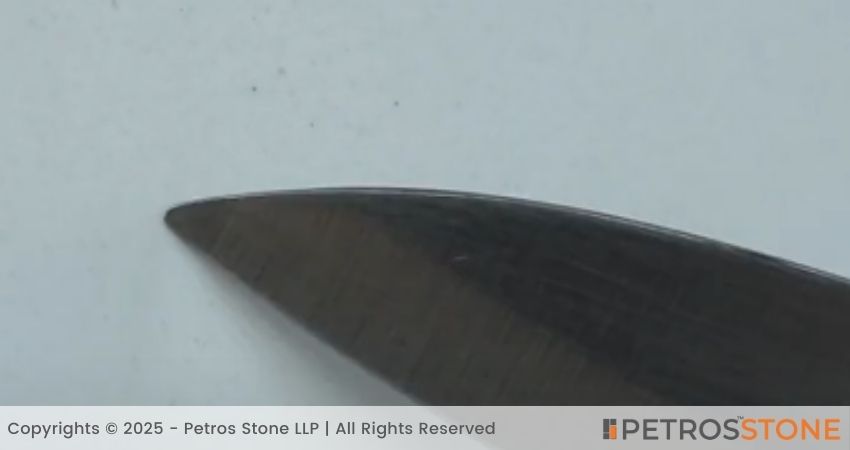
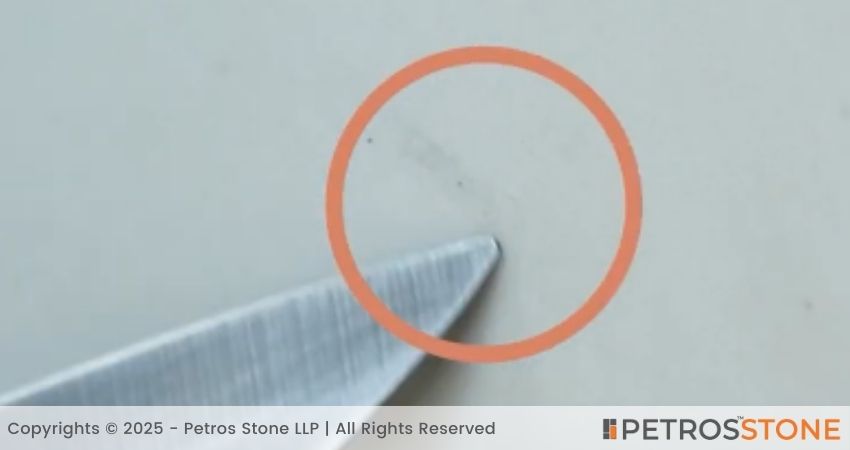
Scratch test
- Only using an offcut with the approval of the seller, use the edge of a key or a coin.
- Rub a small area and dry.
What to look for
- When the surface has deep scratches that are easily visible, then there is a likelihood that the slab has less resistance to scratches.
Note: Quartz slabs are not scratch-proof. Any test must not entail the use of aggressive force. It is possible to scratch any engineered stone with very hard materials, such as steel knives.

Laboratory and Technical Tests
When you purchase on a commercial basis and require technical reliability, then you may order particular kinds of tests or ask the manufacturer to provide certificates:
- Flexural strength (degree of bending before breaking)
- Abrasion resistance (wearing resistance of the surface)
- Water absorption (low is better)
- Thermal shock resistance (important for hearths and near stoves)
- Chemical resistance (to cleaners and solvents)
The majority of house owners will not conduct these tests. In the case of high-spec commercial projects, then these figures count, and they are generally supplied by the manufacturer.
Price vs Quality – Reading the Market

Price is strongly related to grade, and it is not an ideal signal for price. Something to know in relation to price is how it is expected to go in regard to grade, as well as to anticipate in various situations.
1. How Price Bands Reflect Grade
Table – Showcasing Relationship between Price Band and Grade
| Price Band | Likely Quartz Slab Grade | Typical Price Range | Product Characteristics | What Influences the Price |
| High | Grade A (Premium / First Choice) | Usually the highest tier in the market; Often 30 –70% higher than mid-range quartz | – Excellent color uniformity – Rare or designer patterns (marble-like veining, book -match slabs) – High quartz crystal content (90%+) – Low resin percentage – Superior polish, shine, and finish – Almost zero visible imperfections | – Premium brands and international manufacturers – Use of high-quality raw quartz crystals – More complex production technology (vacuum vibro-compression, controlled curing) – Expensive pigments and designer patterns – Higher QC standards, multiple inspection cycles – Better heat and UV resistance – Costs of import duty and logistics (if imported) |
| Mid | Grade B ( Standard) | Moderately priced; 15–30% cheaper than premium slabs | – Good but not perfect uniformity – Standard patterns (speckled, grainy, subtle veining) – Moderate quartz content – Slightly lower gloss – Minimal defects but acceptable for homes and offices | – Local manufacturing reduces cost – Standard pigments and patterns that are easy to produce – Less strict quality control compared to premium – More competitive market segment – Balanced resin-to-quartz ratio keeps cost lower – Larger batch production reduces price |
| Low | Grade C (Commercial/ Economy) | Cheapest in the market; 40–70% cheaper than premium slabs | – Basic single-tone or simple speckled patterns – Lower quartz content, higher resin percentage – Color variations between slabs – Visible micro-defects, pinholes, filler patches – Lower shine and less UV resistance | – Mass manufacturing in bulk – Lower cost raw materials and pigments – Basic technology and fewer QC tests – Resin-heavy mixture reduces production cost – Suitable mainly for rental units or budget projects – Minimal branding or OEM production |
Notes:
- Looking at marble designs on a vein is more expensive than plain colors, as the pigments are sensitive.
- Designer collections or imported goods usually sell at a premium price for brand and exclusiveness.
- Installation, edge profile, cut-outs, and fabrication can add to the ultimate cost.
2. When to Choose A, B, or C Quartz Slab Grades
The selection of the proper grade relies on three key factors, including budget, usage, and visibility.
Choose Grade A if:
- You desire a quality appearance and durability.
- One of the main areas will be the countertop (main kitchen, showroom).
- You intend to rent the space on a long-term basis and value resale.
- You have a larger budget and are likely to expect heavy use.
Choose Grade B if:
- You desire good performance at a reasonable cost.
- You are on a mid-budget level, and you are stylish.
- Its usage will not be extreme and will be regular.
Choose Grade C if:
- There is a low budget, and the surface is not a prominent feature.
- You are constructing numerous units, and you must contain costs.
- It will be employed in secondary places such as the pantry or laundry room.
How to Check Quartz Slabs Before Buying
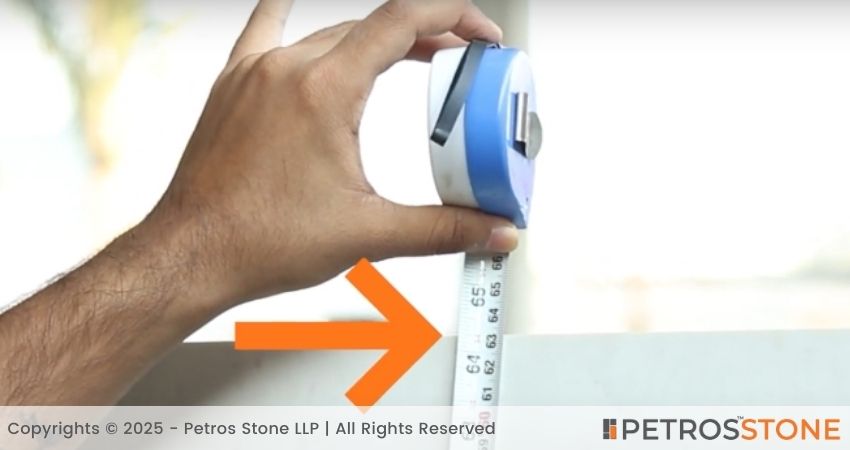
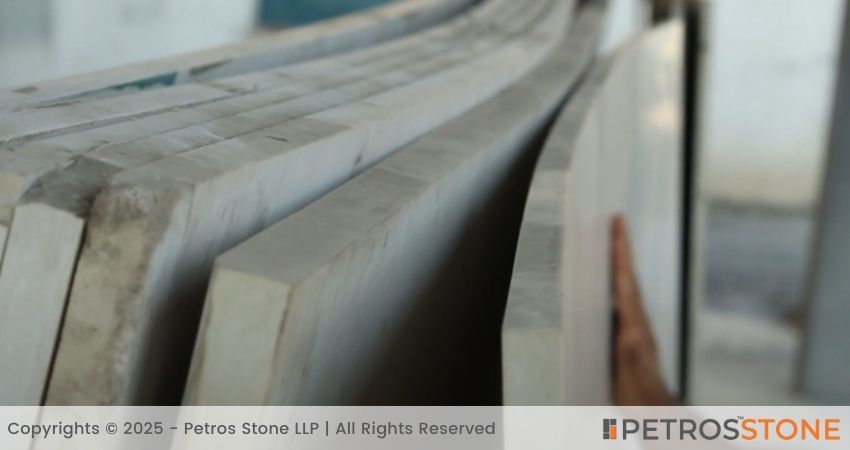
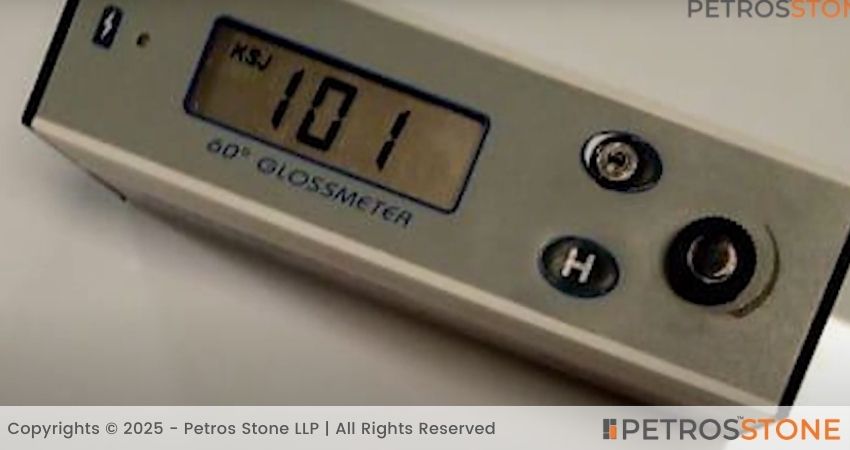
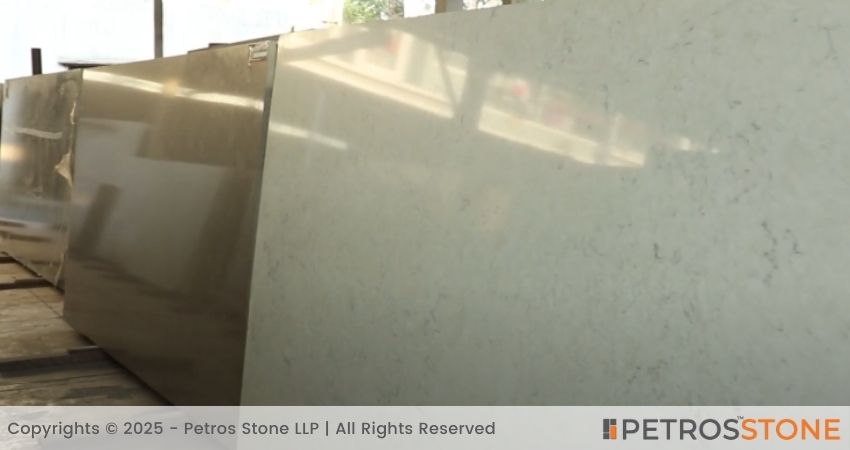
Table – Buyers Checklist
| Step | Action | What to Check / Why It Matters |
| 1 | Confirm project needs | Decide thickness, edge profile, color, and finish. Prevents wrong selection. |
| 2 | Ask the seller about their A/B/C grading | Each brand defines grades differently. Avoid confusion. |
| 3 | Inspect at least 2 slabs from the same batch | Ensures color and pattern consistency. |
| 4 | View the slab from 3–5 feet distance | Helps check uniformity and large pattern flow. |
| 5 | Use an angled light to inspect the surface | Reveals gloss differences, swirl marks, and micro-scratches. |
| 6 | Examine edges, back, and cut lines | Detects cracks, filling, patchwork, or hidden defects. |
| 7 | Measure slab thickness in multiple spots | Ensures even thickness and avoids fabrication problems. |
| 8 | Check straightness with a straightedge | Confirms the slab is not warped or bent. |
| 9 | Feel the weight/density | Denser slabs usually indicate higher quality. |
| 10 | Do stain and scratch tests (if allowed) | Test on offcuts or samples only. |
| 11 | Compare slabs across different price bands | Helps you judge if the cost matches the quality. |
| 12 | Ask about warranty, production lot, and lead time | Important for long-term reliability and delivery planning. |
| 13 | Confirm installation and fabrication charges | Avoids extra hidden costs later. |
| 14 | Get written confirmation of the slab/lot number | Prevents suppliers from swapping slabs. |
| 15 | Keep a small extra budget | Helps manage unexpected support or fabrication needs. |
Tip: Always remember to state that the actual installed slab should be identical to the slab that is being inspected. In case the seller replaces the slabs on installation, quality may vary.
Final Buying Tips for Homeowners and Designers
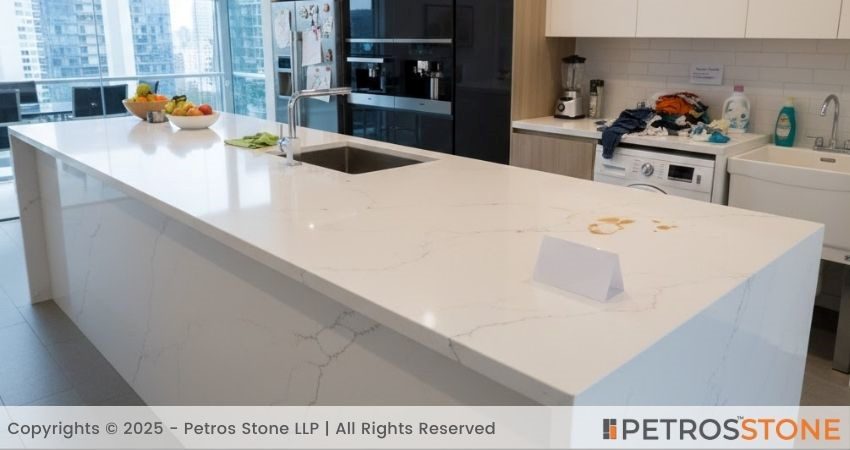
1. Select Full Slab
Small samples cannot be trusted; a full slab is the one that represents the real color and veining.
2. Check Lot Detail
Request photos and the lot number of production on slabs before delivery.
3. Plan Showpiece Area
Select the most attractive section of the slab to be the most visible section of your project.
4. Check Seam Plan
Discuss seam locations early to achieve good pattern matching.
5. Ensure Proper Support
Select the appropriate thickness and ensure that long spans are well supported.
6. Know Damage Policy
Know the requirements for transport and installation to prevent conflicts.
7. Use Correct Cleaners
Use cleaning substances that are recommended by the brand, not harsh chemicals.
8. Level Base Cabinets
In case of replacement of the existing surfaces, make sure that the cabinets are flat and firm.
9. Confirm Authenticity
Demand certificates when purchasing branded or high-quality quartz slabs.
Quick Reference Tables
Table A — Visual Inspection Quick Guide
| Check | Grade A | Grade B | Grade C |
| View from 3–5 ft | Even color | Mostly even | Noticeable patches |
| Surface feel | Silky smooth | Smooth | Slightly uneven |
| Light reflection | Clear | Slight distortion | Hazy |
| Edge quality | Clean | Acceptable | Rough |
| Visible inclusions | Rare | Few | Several |
| Recommended for kitchen island | Yes | Yes | Not recommended |
Table B — Buying Decision Matrix
| Priority | If top priority is… | Choose… |
| Appearance & longevity | Beautiful, long-term kitchen | Grade A |
| Value for money | Good look for cost | Grade B |
| Lowest cost | Rental units, builder projects | Grade C |
| Quick turn-around | Local stock, mid-range | Grade B |
| Brand & warranty | Long warranty & brand | Grade A |
Summary
The selection of the appropriate quartz slab grade involves compromising on appearance, durability, and cost. Grade A offers the most attractive appearance and a longer duration of life, but is more expensive. Grade B provides a reasonable compromise for most homes. Grade C is used in low-cost projects, in which cost control matters.
Note that the grade labels depend on the manufacturer. You must always view the actual slab, demand lot numbers, photos, and warranties and installation details before payment. After thorough inspection and proper questioning, you would have a great-looking, yet very performing quartz slab surface for many years to come.
Feel free to get in touch for a free consultation, quote, and get a detailed understanding from our experts here at Petros®. Visit www.petrosstone.com or call +91-8446360361 or WhatsApp

Hello!
I’m Dr Mridali, a content writer with a background in dentistry and a passion for turning complex topics into clear, engaging stories. From healthcare to architecture, I create blogs that inform, educate, and connect with readers. With every piece, I aim to blend accuracy with creativity to make information truly valuable.

Brown Granite

White Galaxy Granite

Blue Bahia Granite

Silver Cloud Granite

Black Pearl Granite

Dallas White Granite