In today’s design landscape, marble has become almost synonymous with luxury. And among all natural stones, Italian marble continues to hold a special place, whether it’s for high-end residences, hotel lobbies, or statement interiors.
But here’s something most buyers don’t fully realize, the true quality of Italian marble isn’t defined only by where it is quarried, it’s defined by how it is processed.

At Petros®, we’ve seen this play out repeatedly. Two marble blocks from the same region in Italy can yield completely different results once they enter the factory. One may turn into flawless, high-gloss slabs, while the other may develop microcracks, shade inconsistencies, or polishing issues.
In this article, we take you inside the Petros® factory to understand how premium Italian marble is processed step by step, from raw block inspection to final quality checks. We also explore how each stage, including cutting, resin treatment, calibration, and polishing, directly impacts the durability, finish, and on-site performance of the marble.
Why Processing Plays a Critical Role
Italian marble is a metamorphic stone, primarily composed of calcium carbonate. As per ASTM International (C503), it typically has:
| Property | Typical Range | Test Standard |
|---|---|---|
| Density | 2.5 – 2.7 g/cm³ | ASTM C97 |
| Water Absorption | 0.15% – 0.25% | ASTM C97 |
| Compressive Strength | 70 – 140 MPa | ASTM C170 |
| Flexural Strength | 7 – 15 MPa | ASTM C99 |
| Hardness (Moh’s Scale) | 3 – 4 | — |
| Abrasion Resistance | Moderate | ASTM C241 (where applicable) |
On paper, these values indicate a relatively soft and porous stone. But in real-world applications, what matters more is how the stone is handled during processing.
We’ve come across slabs that technically meet these lab parameters but still underperform after installation developing dull patches, cracks, or uneven finishes. In most cases, the issue isn’t the stone itself, but how it was processed at the factory level.
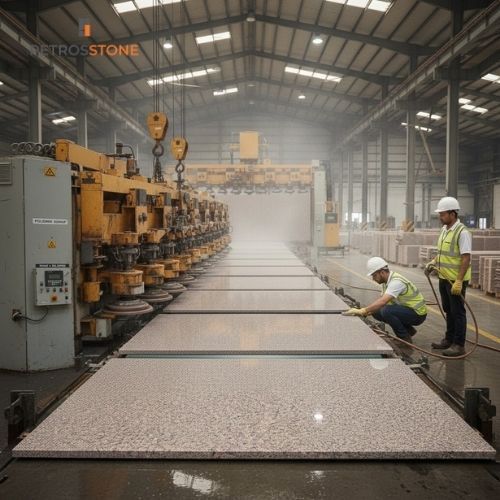
Processing of Italian Marble at Petros® Stone
Block Selection at the Yard
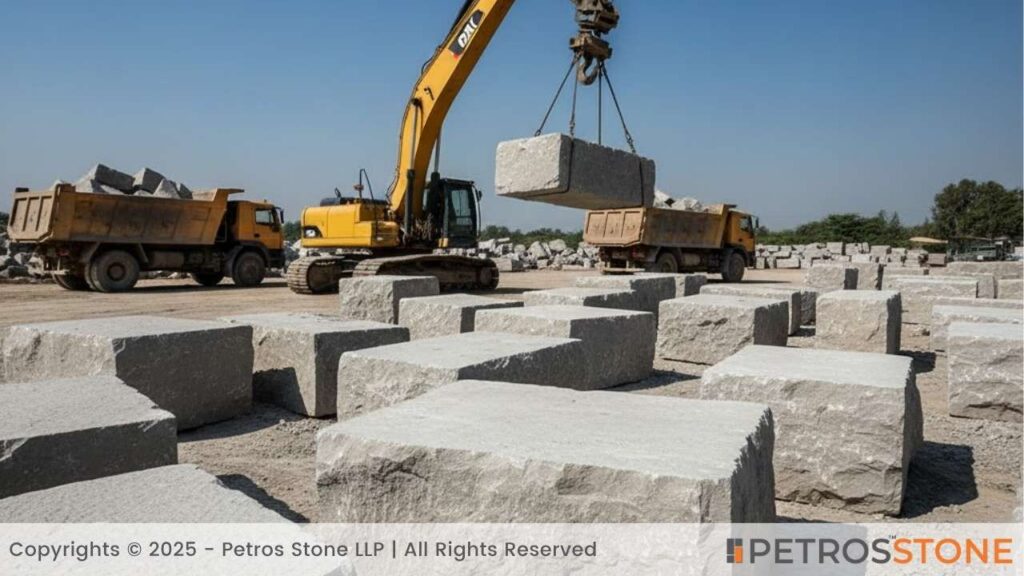
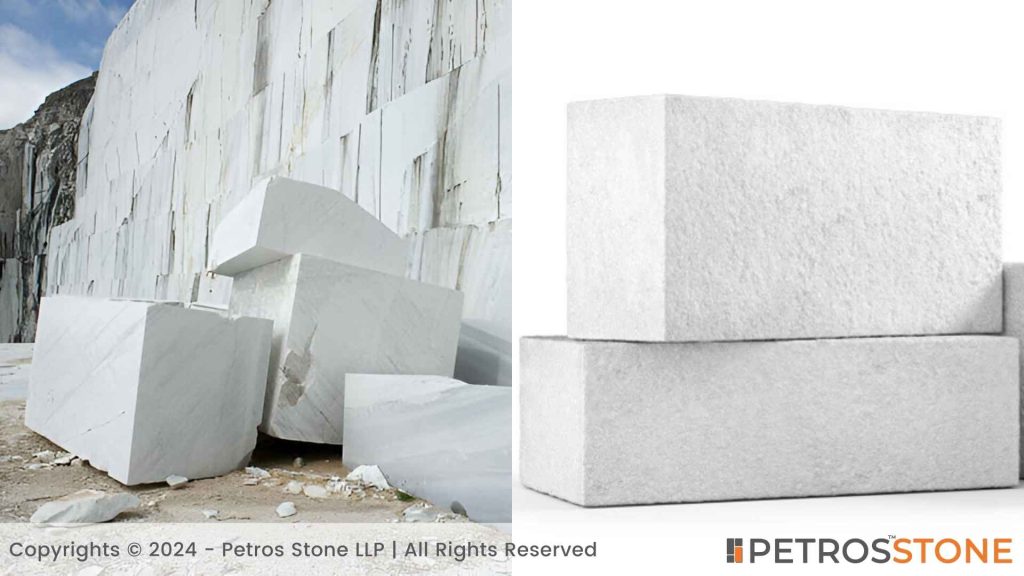
Every slab starts its life as a massive block, often weighing several tons, imported from regions like Carrara in Italy.
When these blocks arrive at our facility, the first step isn’t cutting, it’s inspection. And this stage is more critical than it appears.
At Petros® Stone, blocks are checked not just for visible cracks but also for internal stress lines, shade variation, and structural integrity. From experience, we’ve learned that some blocks look perfectly fine from the outside but reveal hidden fractures during cutting.
In fact, rejecting a block early can save significant losses later. It’s a decision many factories hesitate to make, but it directly impacts the quality of the final slabs.
Cutting the Block with Precision
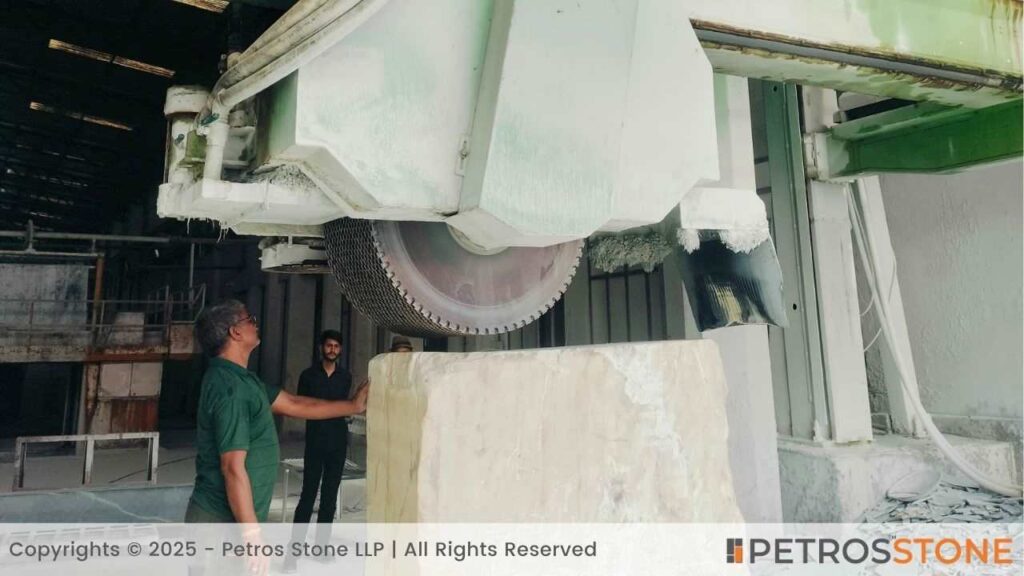
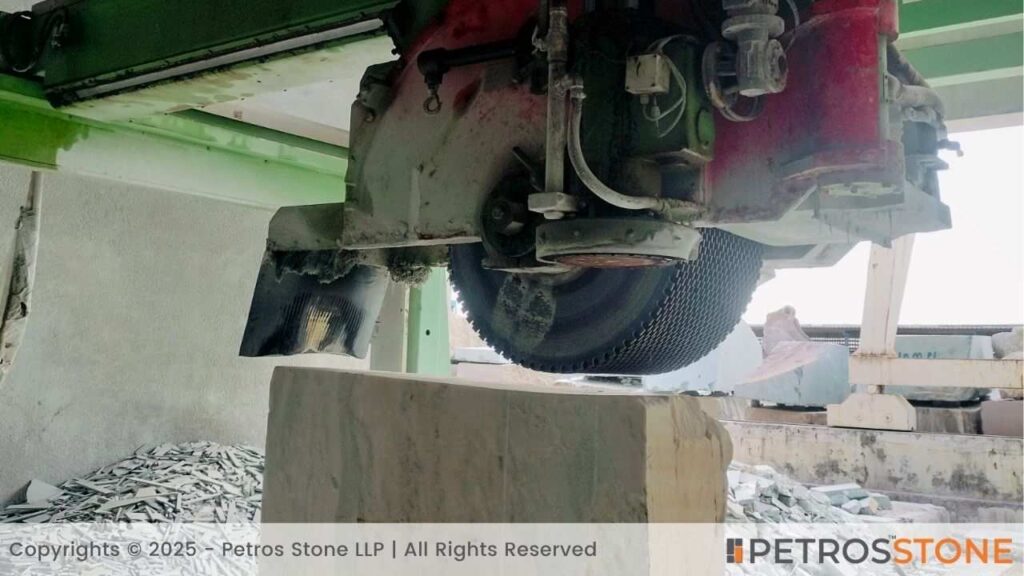
Once a block is approved, it moves to the cutting stage. This is where large multi-wire saws or gang saw machines come into play.
The goal here is simple: convert a raw block into slabs of consistent thickness, typically 18 to 20 mm for most applications. But achieving this consistently requires precision machinery and careful control.
We’ve seen cases where improper cutting introduces internal stress into the slab. These stresses don’t always show up immediately. Instead, they appear later, during polishing or even after installation, as fine cracks or surface irregularities.
That’s why cutting isn’t just about slicing stone, it’s about preserving the structural integrity of the material.
Resin Treatment
Marble, by nature, is porous and prone to minor fissures. Left untreated, these can lead to long-term durability issues.
This is where resin treatment becomes essential.
At Petros®, slabs undergo a controlled resin impregnation process, often under vacuum conditions. This ensures that the resin penetrates deeply into the stone, filling microcracks and strengthening the slab from within. The slabs are then oven-cured to ensure proper bonding.
One of the biggest differences we’ve observed in the industry is the way this step is handled. Some processors apply resin only on the surface to improve appearance temporarily. While this may look fine initially, it often leads to problems later, especially when the slab is cut or polished further.
Proper resin treatment, on the other hand, enhances both durability and finish consistency.

Calibration
This is one stage that rarely gets attention—but has a massive impact on-site.
After resin treatment, slabs are calibrated to ensure uniform thickness. At Petros®, this is done using automated calibration machines that maintain tight tolerances—typically within ±0.5 mm.
Why does this matter?
Because even small variations in thickness can create major issues during installation. We’ve seen slabs from other suppliers vary between 17 mm and 22 mm, even when sold as 20 mm. Installers are then forced to compensate using extra adhesive, leading to uneven surfaces and long-term lippage.
Calibration might not be visible to the eye, but it defines how well the stone performs once installed.

Polishing
Polishing is often seen as the stage where marble gets its luxurious appeal—and that’s true. But it’s also a stage where hidden defects become visible.
Using automatic multi-head polishing machines, slabs are polished to achieve a high gloss level, typically 85–95 gloss units. This brings out the natural veining and depth of the stone.
At the same time, polishing can reveal:
- Resin inconsistencies
- Microcracks
- Shade variations
This is why polishing isn’t just about aesthetics — it’s also a final checkpoint for quality.

Finishing and Cutting
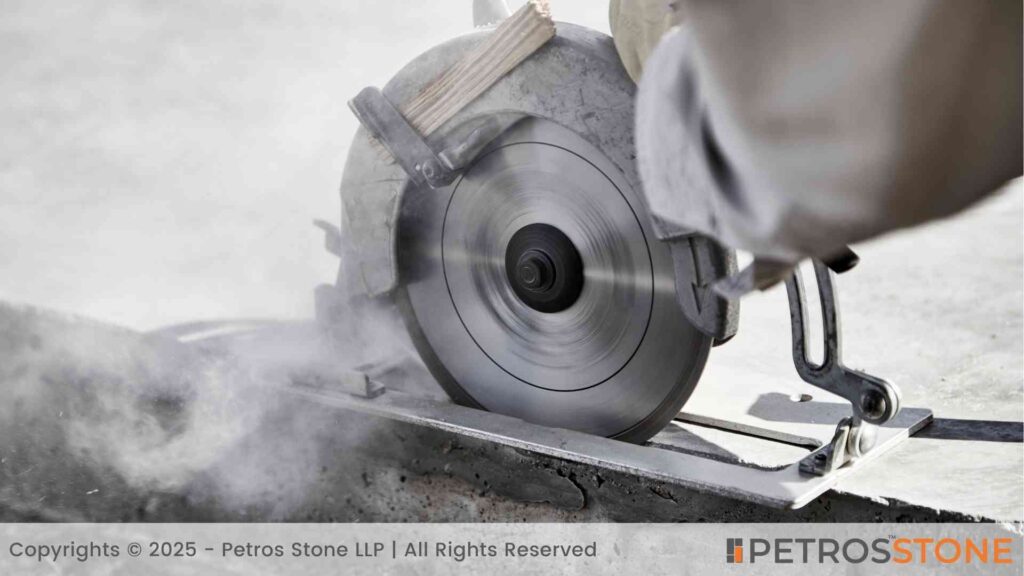
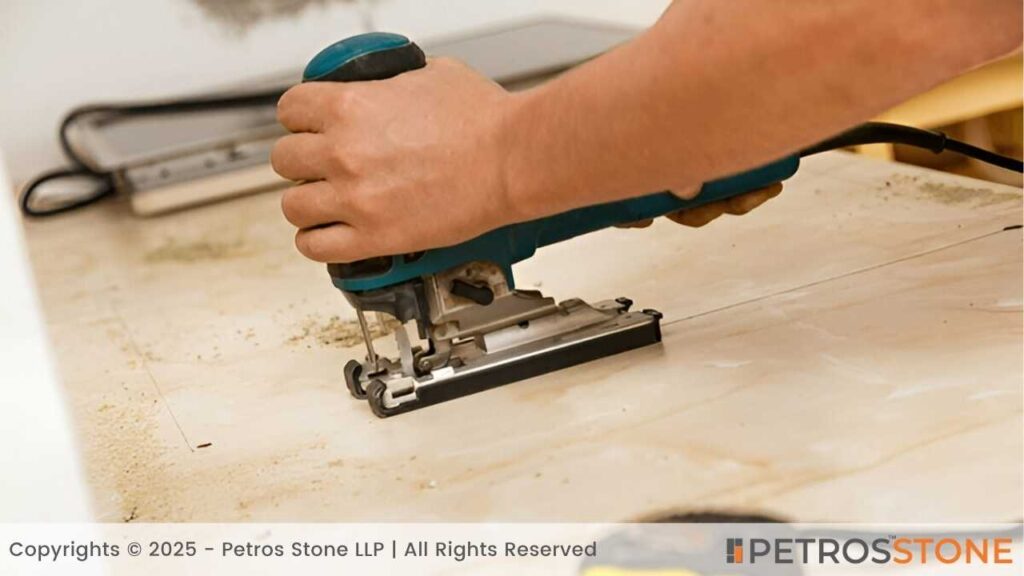
Once polished, slabs are cut to required sizes using bridge cutters or CNC machines. Edges are finished, and dimensions are standardized to suit project requirements.
Precision at this stage ensures easier installation and minimizes on-site adjustments. It also reduces wastage and improves overall project efficiency.
Quality Control
Before dispatch, every slab goes through multiple quality checks. These include:
- Thickness verification using precision tools
- Gloss measurement using a gloss meter
- Color consistency checks across batches
- Inspection for cracks, chips, and surface defects
- Flatness checks to detect bending or warping
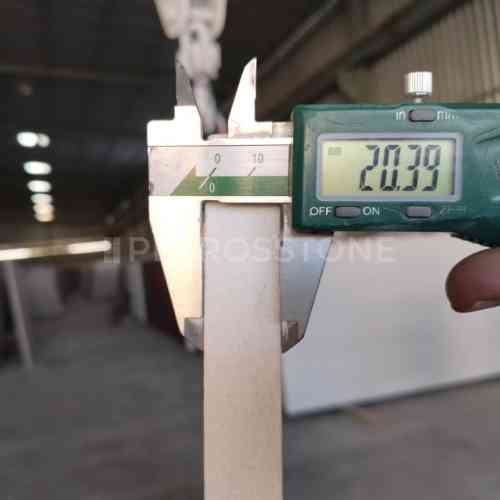
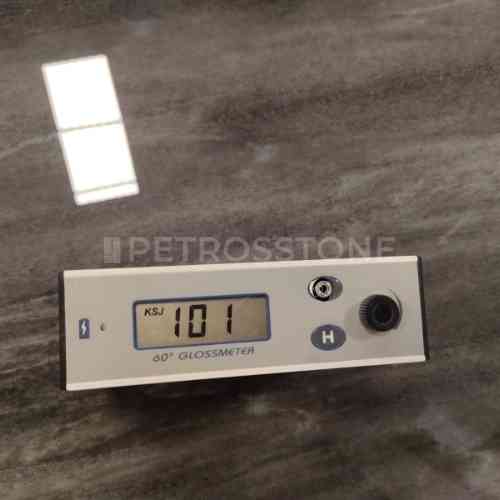
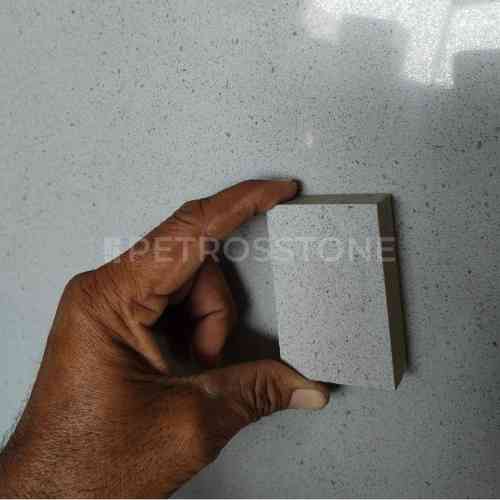

From experience, this is the stage where even minor issues are caught. We’ve seen slabs that look perfect visually but fail flatness checks, something that can cause major problems during installation.
Understanding the ‘Italian Marble’ Label


Another important aspect worth addressing is the origin of marble. Not every marble sold as ‘Italian’ actually comes from Italy.
Some varieties are genuinely quarried in regions like Carrara. Others are sourced from countries like Turkey, Brazil, or Greece but processed to achieve a similar aesthetic.
Without clear communication, this can create confusion for buyers. That’s why understanding origin, processing, and grading is essential before making a decision.
What Buyers Often Overlook
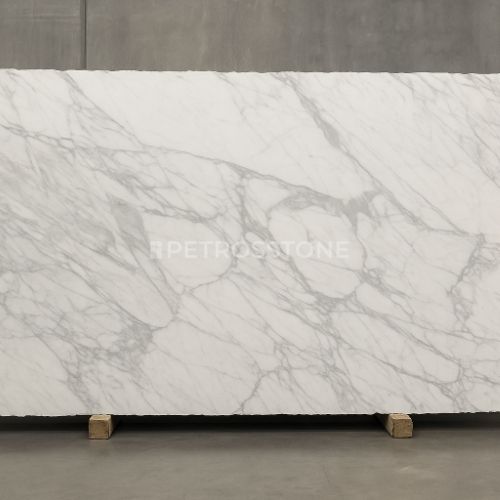
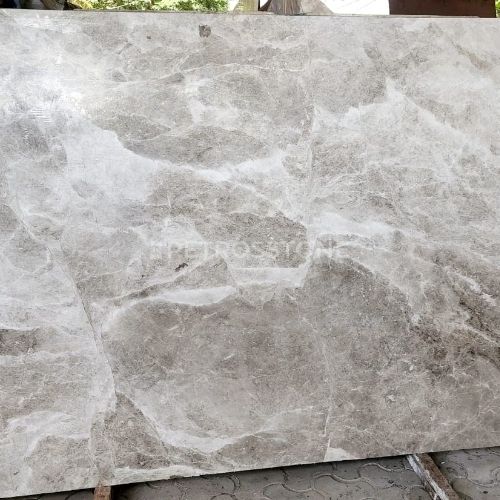
In our experience, most issues with marble projects don’t arise from the material itself, but from gaps in understanding.
Buyers often focus on surface appearance or pricing, while overlooking factors like resin quality, calibration accuracy, and slab consistency.
We’ve had clients approach us after facing challenges such as uneven flooring, visible resin patches, or mismatched shades across batches. In almost every case, the root cause traced back to processing shortcuts.
Key Takeaways
- Italian marble undoubtedly offers unmatched elegance. But its true value lies not just in its origin, it lies in how carefully it is processed.
- From block selection to final polishing, every step plays a role in determining whether the marble will simply look good, or actually perform well over time.
- At Petros®, the focus has always been on controlling these variables, ensuring that every slab meets not just visual expectations, but also structural and functional standards.
- In the end, marble isn’t just about how it looks in a showroom, it’s about how it holds up in real spaces, for years to come.
Feel free to get in touch for a free consultation, quote, and get a detailed understanding from our experts here at Petros®. Visit www.petrosstone.com or call +91-8446360361 or WhatsApp

Hello!
I’m Tanika, an architect and writer, blending design expertise with a passion for storytelling. At Petros Stone, I help readers navigate through the complex material choices and empower them to craft well-informed and beautiful spaces through natural stones.

Brown Granite

White Galaxy Granite

Blue Bahia Granite

Silver Cloud Granite

Black Pearl Granite

Dallas White Granite