Michelangelo marble is one of the most commonly misidentified stones in the natural stone market. Genuine Michelangelo marble comes from the Carrara region of Italy and is known for its exceptionally pure, bright white background and distinctive charcoal and golden veining. Its dense crystalline structure gives the stone a deep, luminous appearance. Unlike standard Carrara marble, which often has softer blue-grey tones and more subtle veining, Michelangelo marble offers a cleaner white field, stronger contrast, and a more striking natural pattern. These qualities make it a distinctive and highly sought-after marble.
To cut through the market confusion and explore the stone in true depth, Rishabh Jain, Director – International Business at Petros® Stone, spoke with Mr. Nabil Marrouf of Barattini Marmi S.R.L. in Carrara, Italy (Quarry Owner). As a quarry owner with direct hands-on experience, Nabil provides an insider’s view on what defines genuine Michelangelo marble, how it is graded, and why it is so frequently misrepresented.
Some Audio Excerpts from our Conversation with Mr. Nabil Marrouf from Barattini Marmi S.R.L., Italy
In this article, we explain what defines genuine Michelangelo marble, where it comes from, and why it is so often confused with other white Carrara marbles. We also look at how quarry owners identify and grade Michelangelo marble, its applications, pricing, and the key checks buyers should make before purchasing.
- What Is Michelangelo Marble?
- Where Is Michelangelo Marble Originally From?
- Why Is There So Much Confusion Regarding Michelangelo Marble?
- When Buying Michelangelo Marble, What Is It Usually Confused For?
- How Are Genuine Michelangelo Blocks Identified?
- What Are the Main Uses of Michelangelo Marble?
- What is the difference between flooring Michelangelo marble and sculptural Michelangelo marble?
- A Simple Checklist For Buyers
- Key Takeaways
What Is Michelangelo Marble?
At its core, Michelangelo marble is defined by two things: a dominant, distinctly bright white background, and a scatter of fine dark markings running through it. It isn’t a heavily veined marble in the dramatic, bookmatched sense of some other Carrara stones — the character comes from the density and distribution of small dark points set against that bright white base, not from bold streaking.
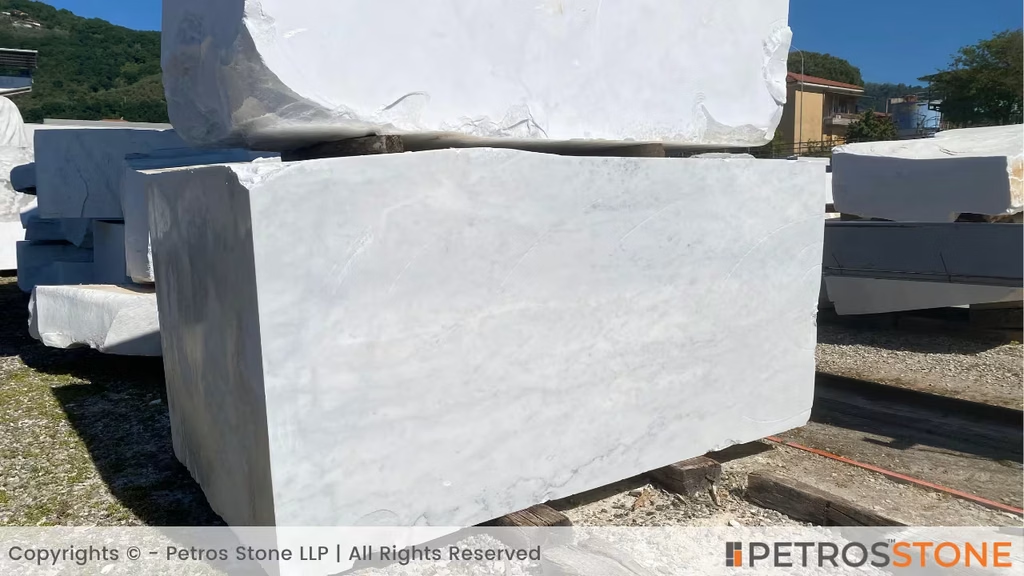
That’s also how Nabil describes it:

“The Michelangelo block is defined by its striking white, with subtle touches of black adding contrast and depth.”
Mr. Nabil Marrouf from Barattini Marmi S.R.L., Carrara, Italy (Quarry Owner)
This is also why photographs matter more than descriptions when buying this stone. A slab that looks visually close in a catalogue image can still be a completely different quarry material once you see it in person. Buyers should always ask for current, quarry-sourced photography — a block face, a polished slab, and a close-up of the surface markings — rather than relying on stock imagery or old reference photos that may not represent the batch being sold.
What Is the Price of a Michelangelo Marble Slab?
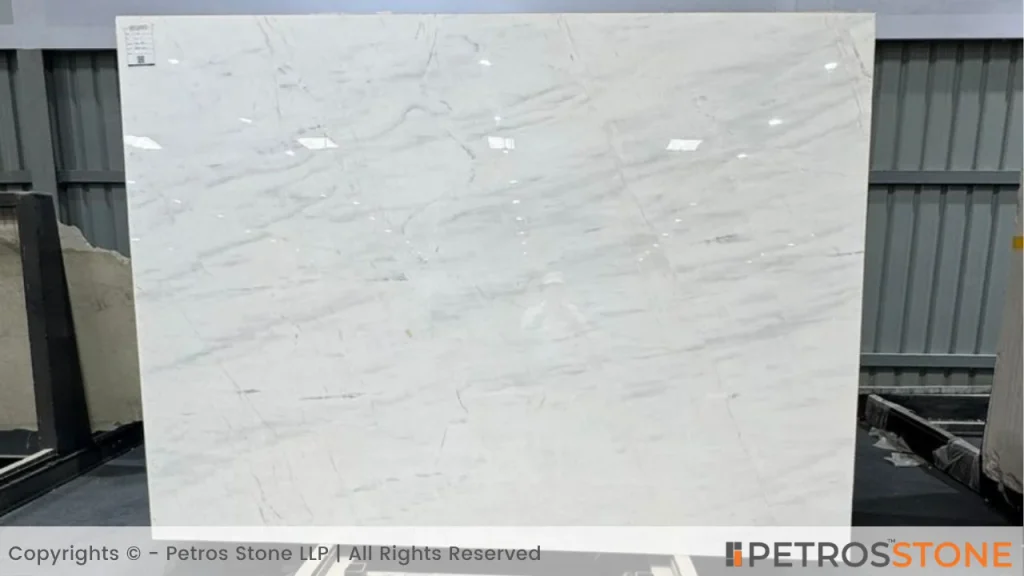
International/export pricing
At the quarry level (Italy), ex-factory pricing runs €450–950 per square meter. In the US, this typically translates to approximately $80 to $150 per square foot, with the most vein-free, purely white slabs from each block commanding the highest prices and selling first from any batch.
How it compares to other premium whites
This puts genuine Michelangelo in the same tier as high-end Calacatta and Statuario. For context, standard Calacatta material costs run $80 to $150 per square foot, with installed pricing landing between $150 and $250 per square foot — so Michelangelo, being an even rarer and more minimally-veined member of that family, tends to sit at or above the top of that band once fabrication and installation are added.
Michelangelo Marble Slab Price
| Marble Variety | Slab Cost (US) | Installed Price |
| Genuine Michelangelo | $80 – $150 / sq ft (€450–950/m² quarry) | $250+ / sq ft |
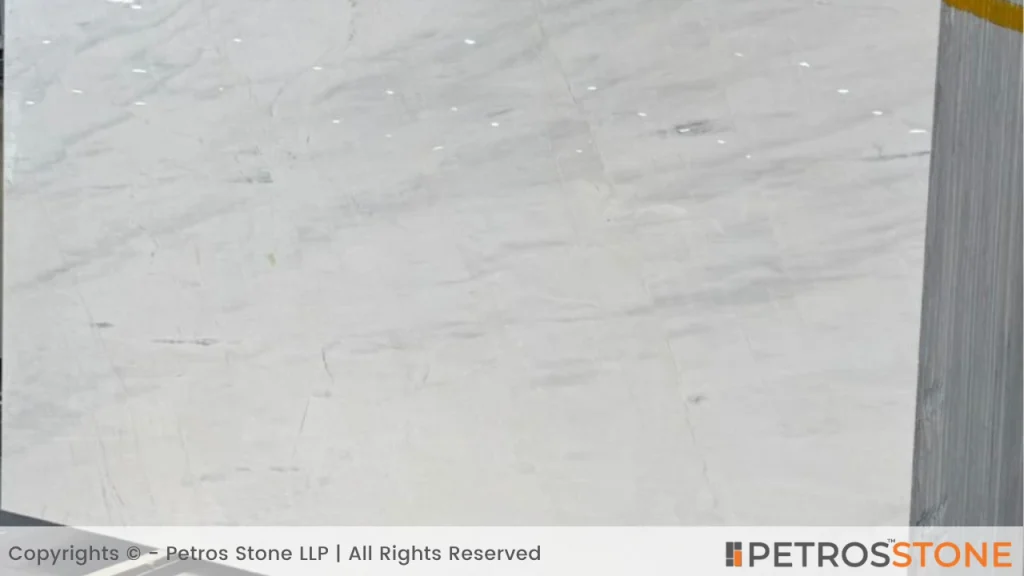
Size of Michelangelo Marble
Standard slab dimensions are governed by block size and cutting yield, which vary from block to block rather than following one fixed standard. Buyers planning large-format flooring or wall cladding projects should confirm available slab dimensions directly against the specific block being quoted, rather than assuming uniform sizing across every purchase.
Price for a 2 cm Thick Slab of Michelangelo Marble
As with overall slab pricing, 2 cm thickness pricing is tied to the individual block’s quality grade — a clean, low-defect block commands a different price point than one with visible cracks or heavy fissuring. Confirm current 2 cm pricing directly with the quarry for the specific lot being purchased.
Grades of Michelangelo Marble
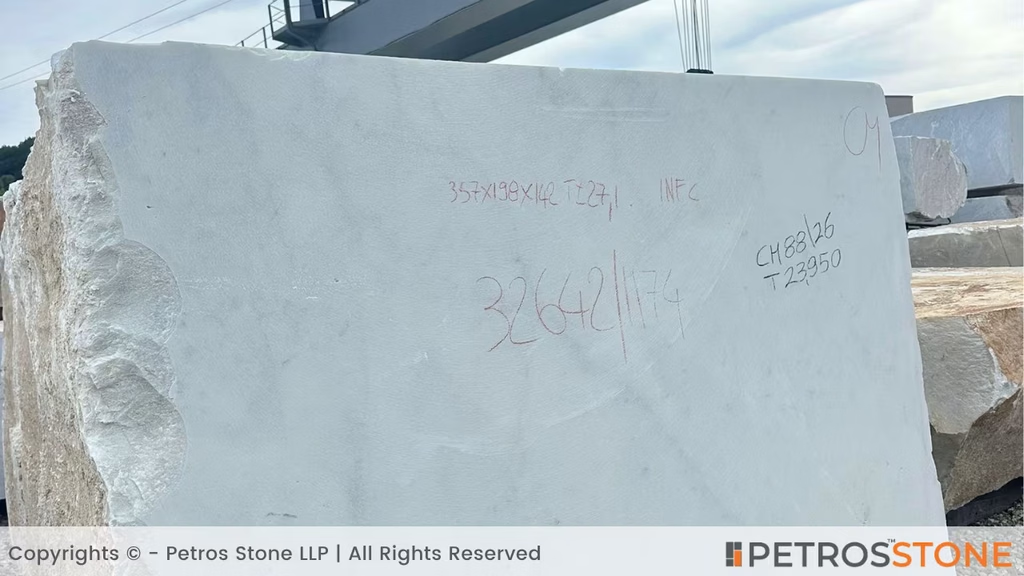
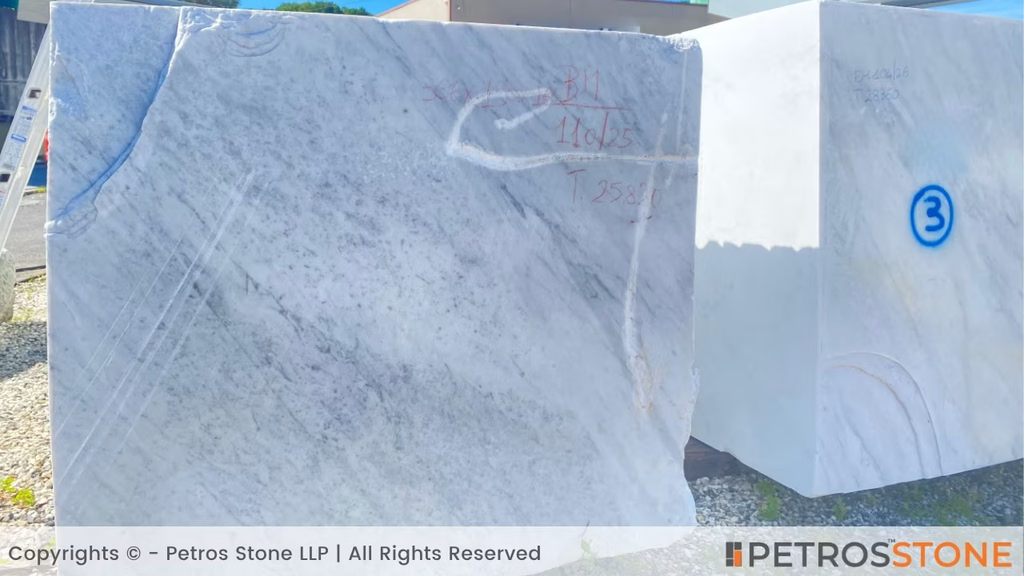
Like most natural stones, Michelangelo marble is sold across multiple grades. Here’s a brief explanation.
Grade A Michelangelo Marble
This is the highest-quality tier, with few geological flaws, voids, or fissures and relatively consistent working characteristics. The veining is generally clean and controlled, while the blocks require little to minimal resin or filler treatment. Grade A is typically selected for large-format slabs, countertops, premium flooring, and high-end bookmatched installations.
Grade B Michelangelo Marble
This is the commercial-grade tier, where geological features such as veins, voids, fissures, and lines of separation are more common. These blocks may require resin, filling, waxing, or cement treatment during processing. Grade B can still produce attractive slabs, but greater variation and repair requirements make careful block and slab selection important, particularly for visible or large-format applications.
Grade C Michelangelo Marble
This is the lower commercial tier, with more pronounced fissures, voids, pitting, color variation, and other natural imperfections. These blocks generally require more extensive filling or resin treatment and may vary more between slabs. Grade C is commonly better suited to smaller formats, decorative applications, or projects where extensive surface treatment and natural variation are acceptable.
Where Is Michelangelo Marble Originally From?
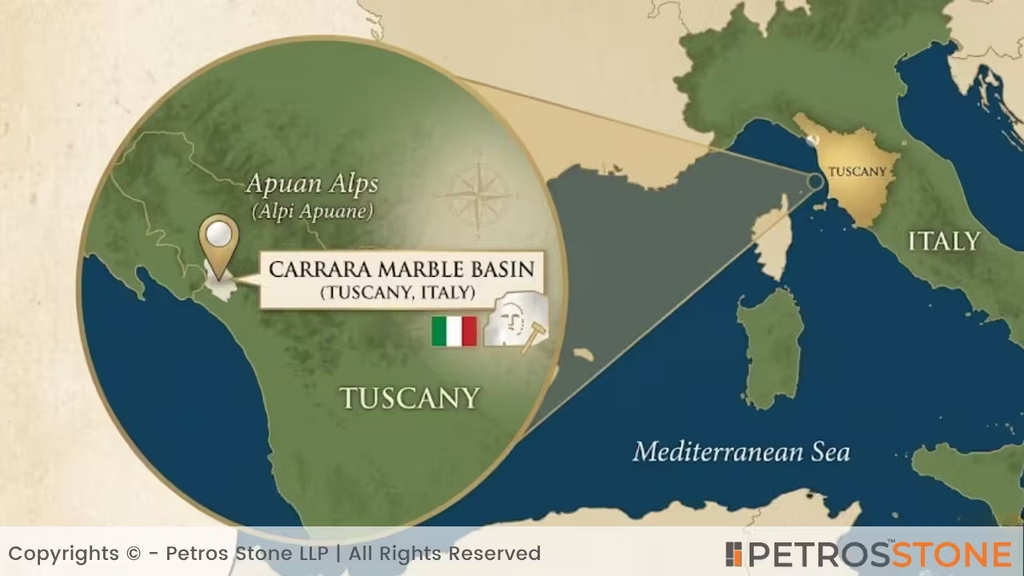
Genuine Michelangelo marble is quarried in Carrara, Italy—the same marble basin historically associated with the sculptor Michelangelo Buonarroti, from which the trade name comes. Barattini Marmi’s own operation is based directly in this region. This regional origin is the single most important fact a buyer can verify because—as the next section explains—the name itself has become detached from that origin in much of the broader market.
Why Is There So Much Confusion Regarding Michelangelo Marble?
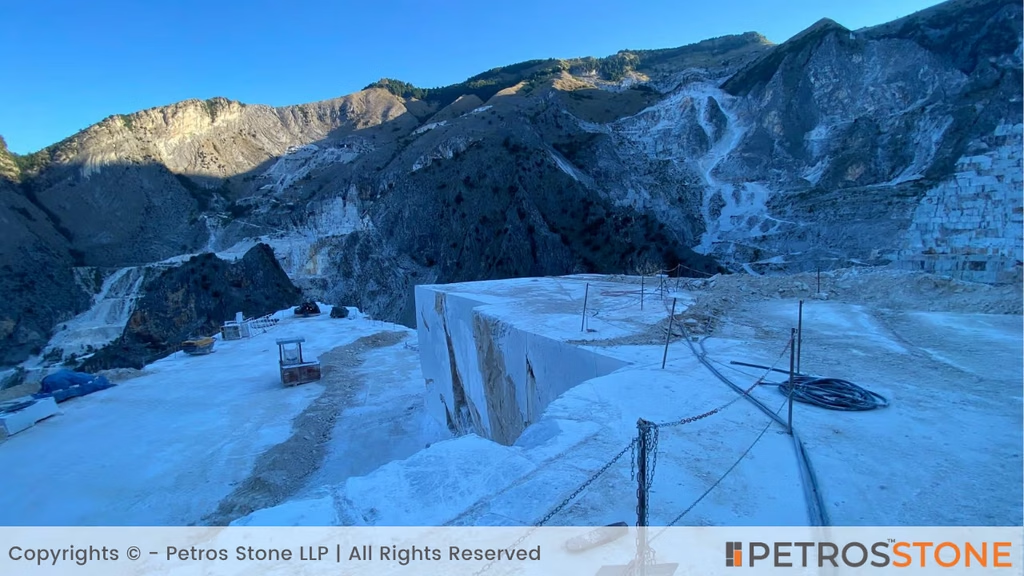
The confusion largely stems from the name itself being used generically across the trade, rather than referring to stone from one verified source. Because “Michelangelo marble” carries prestige by association with Carrara and with the sculptor’s legacy, the name gets applied loosely — sometimes to stone that shares a similar white background but lacks the actual characteristic markings described above, and sometimes to material sourced from an entirely different quarry or region.
The practical result is that two slabs sold under the identical trade name can come from different quarries, carry different veining characteristics, and command very different prices — with the buyer having no easy way to tell them apart without seeing verified quarry documentation or photography.
When Buying Michelangelo Marble, What Is It Usually Confused For?
The most common point of confusion is Bianco Carrara — a related but visually distinct white marble from the same broader region. Bianco Carrara shares the white background tone that makes it superficially resemble Michelangelo marble, but it doesn’t carry the same dark surface markings. In other words, the two stones can look similar enough at a glance — especially in a small sample or a photograph — that suppliers can substitute one for the other, intentionally or not, and buyers may not notice the difference until the material is installed at scale.
Here’s how the quarry draws that distinction directly:
“This is the second type — a white marble similar to Michelangelo, but without the black markings. It is Bianco Carrara, a classic Carrara marble known for its clean white appearance.”
Mr. Nabil Marrouf from Barattini Marmi S.R.L., Carrara, Italy (Quarry Owner)
Petros® Stone LLP collaborates directly with premier Tuscan quarries like Barattini Marmi to secure genuine material straight from the source. This direct access allows buyers to bypass market confusion and receive fully documented, authentic Carrara marble with complete origin transparency. As a result, clients are guaranteed the exact veining, purity, and heritage expected of true Michelangelo-grade stone.
How Are Genuine Michelangelo Blocks Identified?
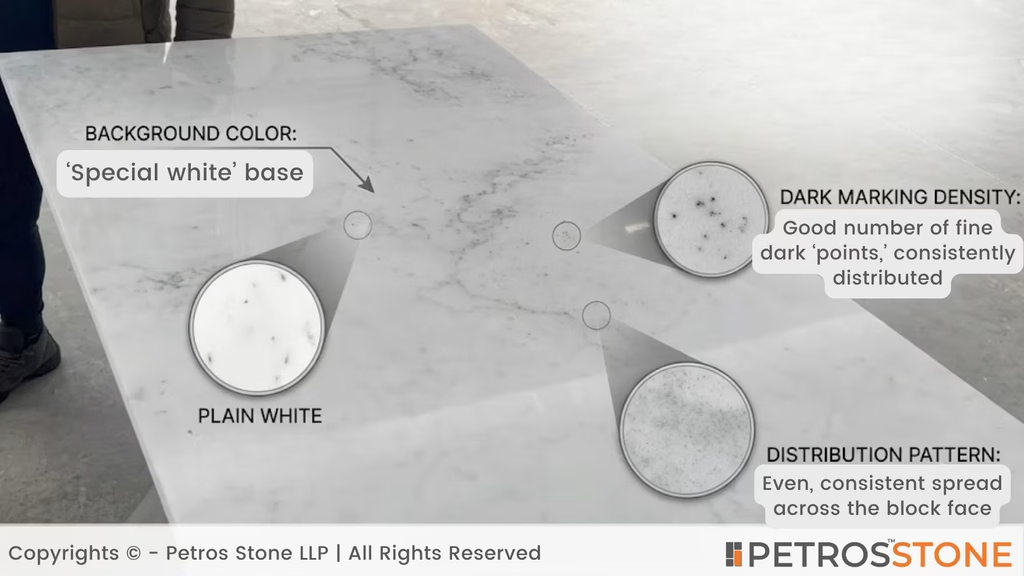
Beyond the general white-with-black description, there’s a specific, checkable feature that quarry professionals use to identify the stone.
Key Checkable Features to Identify Genuine Michelangelo Marble
| Feature | Genuine Michelangelo Marble | Signal to Question |
|---|---|---|
| Background color | “Special white” base | Plain white with no distinctive quality |
| Dark marking density | Good number of fine dark “points,” consistently distributed | Only one or two scattered marks |
| Distribution pattern | Even, consistent spread across the block face | Sparse, patchy, or isolated markings |
What Are the Main Uses of Michelangelo Marble?
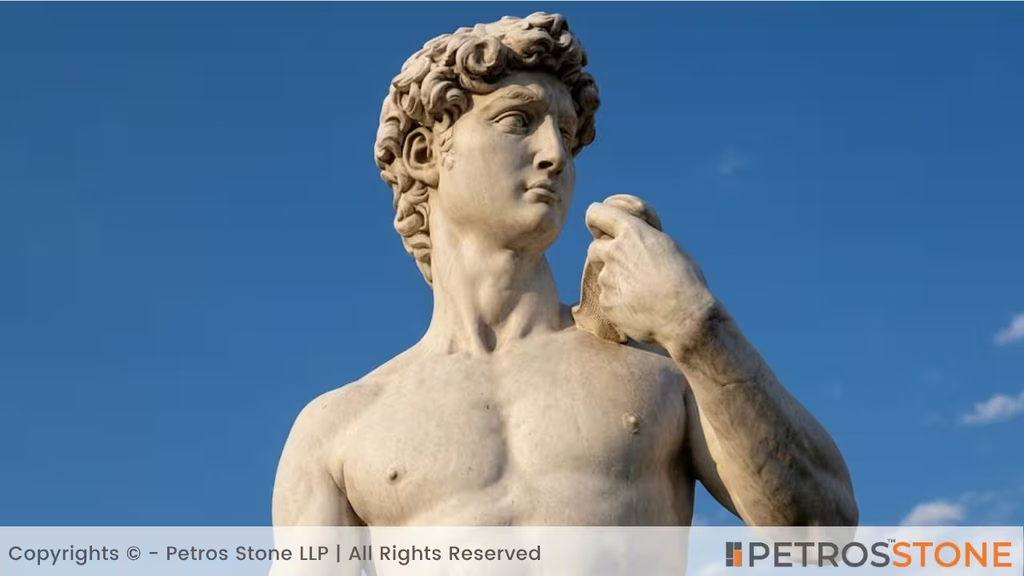
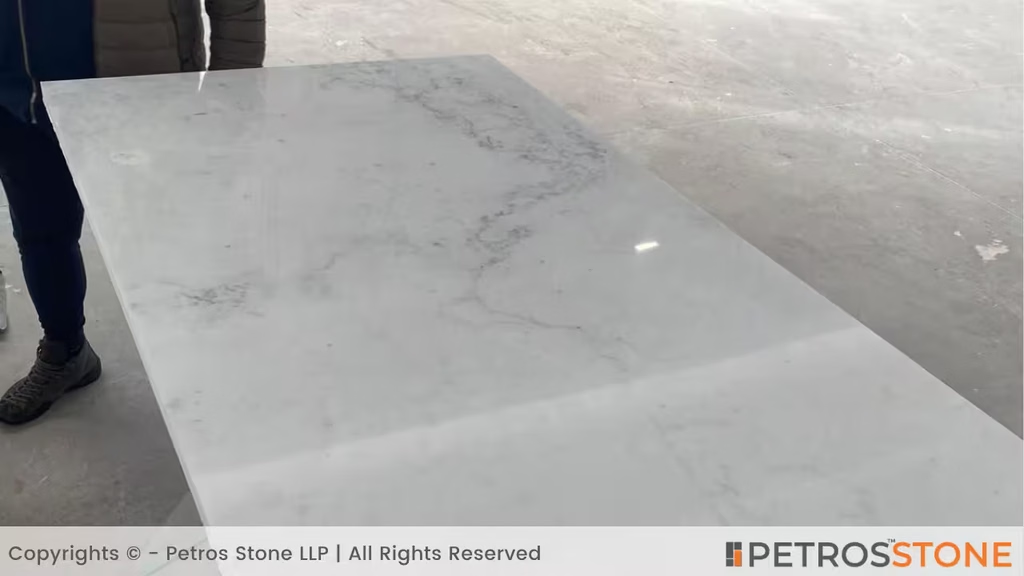
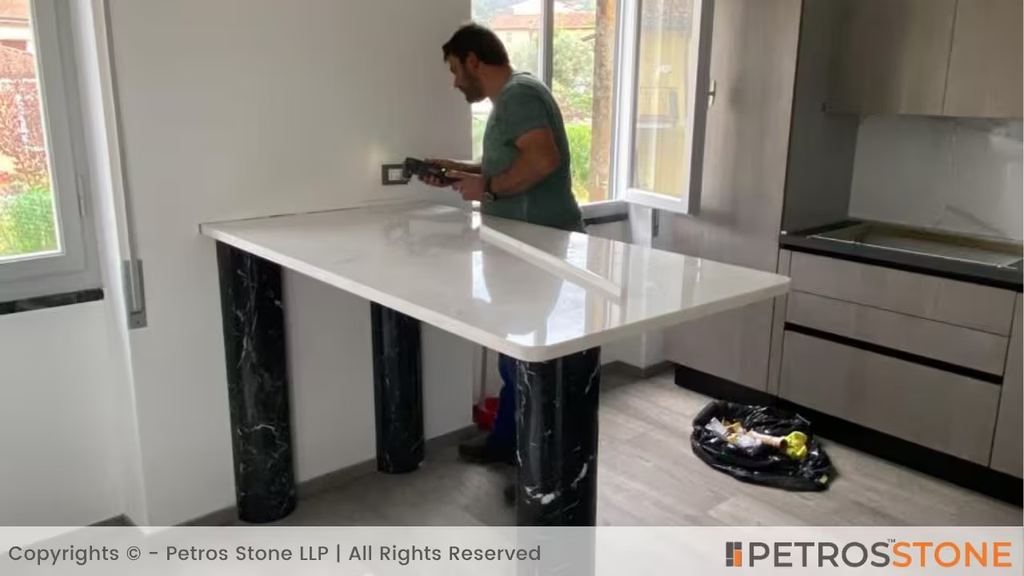
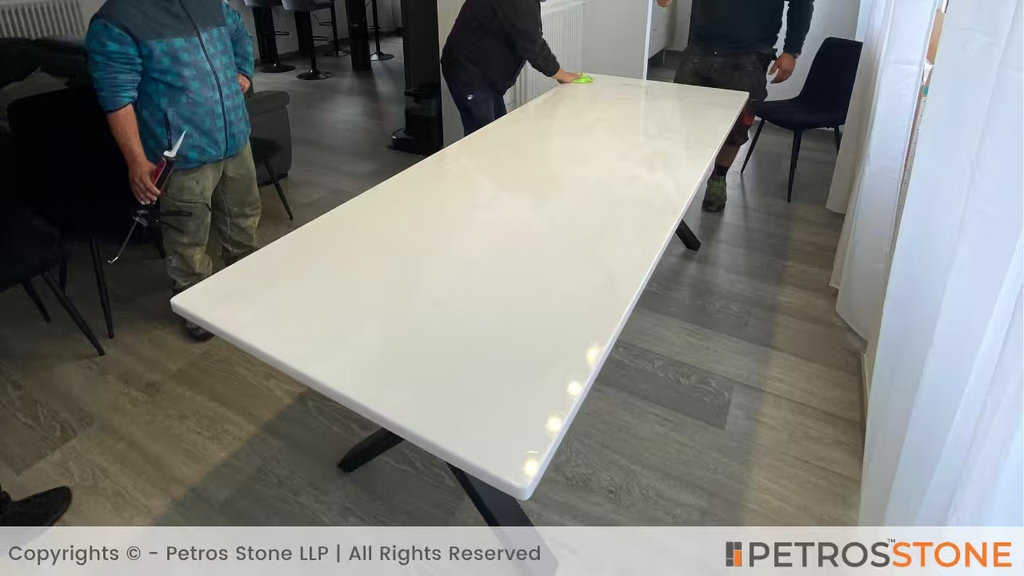
Michelangelo marble is used across both architectural and decorative applications, including:
- Flooring
- Wall cladding
- Countertops and vanity tops
- Sculptural and decorative pieces
The stone’s bright white base makes it a popular choice wherever a light, high-contrast surface is wanted, while the fine dark markings give it more visual texture than a plain white marble — which is part of why it’s sought after for statement surfaces like feature walls and vanity tops, not just utilitarian flooring.
What is the difference between flooring Michelangelo marble and sculptural Michelangelo marble?
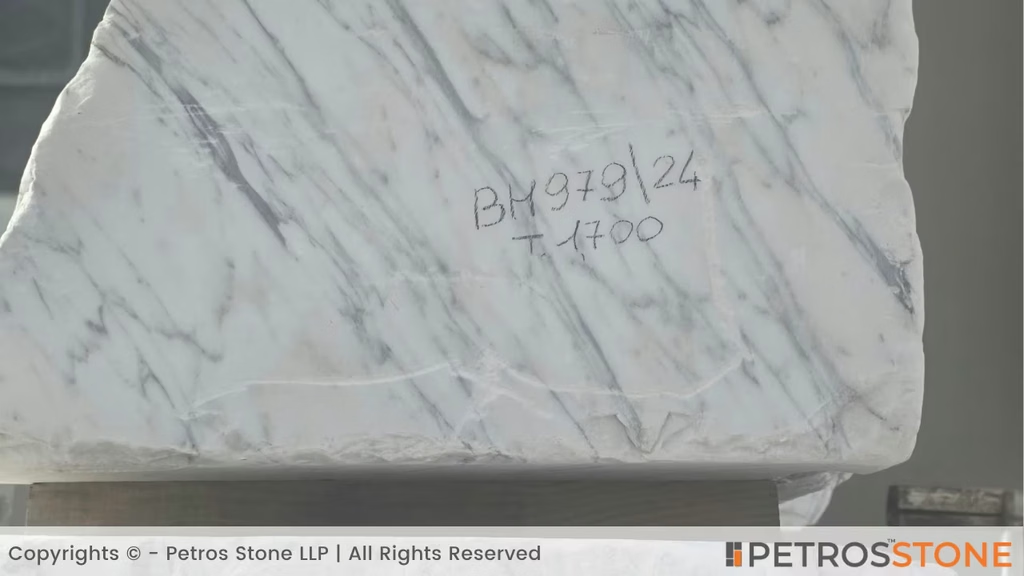
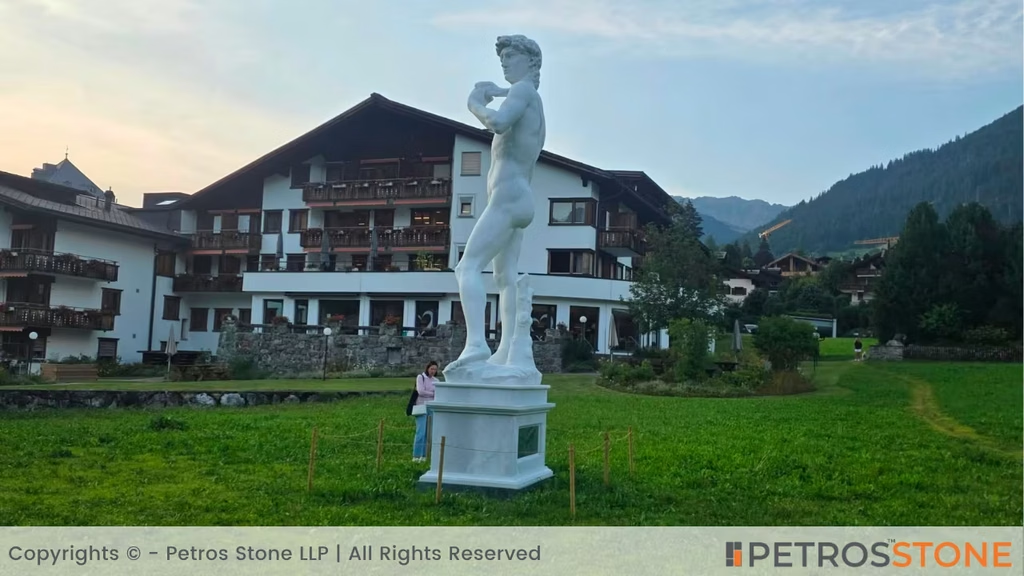
Flooring-grade material is typically selected for durability, consistent finish, and slip resistance. At the same time, sculptural-grade blocks are chosen for their purity, lack of veining or fissures, and ability to hold fine detail under carving. The two uses pull in different directions: flooring can tolerate more visual variation across tiles since it’s viewed as a large, blended surface, while a sculptural block needs to be structurally sound and visually clean enough to carve without the risk of the material fracturing along a hidden fissure.
This distinction connects directly to how block quality is evaluated overall — and it’s the clearest, most concrete grading principle in the conversation. Before anything else — before vein pattern, before point density, before color — the presence or absence of cracks is what determines whether a block qualifies as top-tier, sculptural-grade material or gets directed toward flooring and cladding use instead. A crack-free block is rare and commands a premium; a block with fissures, even a visually attractive one, gets graded down and priced accordingly, regardless of how well its surface markings match the ideal white-with-black-points profile described above.
A Simple Checklist For Buyers
| Checkpoint | What to Confirm |
|---|---|
| Quarry & region of origin | Genuine material traces back to Carrara, Italy — confirm the exact quarry, not just the trade name |
| Characteristic markings | Look for a “special white” background with a good density of fine dark points — not a plain white surface with only a mark or two |
| Rule out Bianco Carrara | If the white background looks right but there’s no dark marking at all, it may be a different, related stone sold under the same name |
| Grade basis | Ask what’s defining the grade — the presence or absence of cracks is the single biggest factor in quality and price, so “Grade A” should come with an explanation, not just a label |
| Batch-to-use match | Confirm whether the block/slab is graded as flooring-grade or sculptural-grade, since the two follow different grading priorities |
| Current, block-specific pricing & sizing | Thickness, slab dimensions, and price vary block to block — confirm figures against the exact lot, not a general market rate |
| Quarry-sourced photography | Request a block face, a polished slab, and a close-up of surface markings — not stock images or old reference photos |
With a name as widely used — and as widely misused — as Michelangelo marble, the difference between the real thing and a convincing substitute usually comes down to exactly these details: origin, markings, defect grading, and documentation. Verifying them before purchase is the simplest way to make sure you’re paying for what you think you’re buying.
Key Takeaways
- Genuine Michelangelo marble comes from Carrara, Italy, and is characterized by a bright white background with fine dark markings.
- Bianco Carrara is one of the most common materials confused with Michelangelo marble because of its similar white appearance.
- Cracks and structural defects are the primary factors in grading, with Grade A material being the soundest and commercial Grade C showing more fissures, pitting, and repairs.
- Michelangelo marble is used for flooring, wall cladding, countertops, vanity tops, and sculptural applications, with different quality requirements for each use.
- Buyers should verify the quarry origin, block-specific photography, markings, grade, dimensions, thickness, and current pricing before purchasing.
Feel free to get in touch for a free consultation, quote, and get a detailed understanding from our experts here at Petros®. Visit www.petrosstone.com or call +91-8446360361 or WhatsApp

Brown Granite

White Galaxy Granite

Blue Bahia Granite

Silver Cloud Granite

Black Pearl Granite

Dallas White Granite