A headstone is a deeply personal choice, it represents not just where a person is laid to rest, but also stands as a lasting symbol of respect, memory, and love. Choosing the right material is essential, as it must withstand the test of time for decades or even centuries. Among the most popular yet often debated materials are granite and marble.
In this article, we provide detailed granite vs marble headstone comparison, and explore the strengths and limitations of both stones to help you make an informed and meaningful decision. You’ll learn about their durability, maintenance needs, design flexibility, cost, cultural significance, and more. By the end, you’ll clearly understand which material, granite or marble, offers the best balance of beauty, longevity, and value for your memorial.
Marble Vs Granite Headstone – A Quick Comparison
| Factor | Marble | Granite |
| Hardness/strength | Softer, more vulnerable to wear | Very hard, highly durable |
| Porosity/absorption | More porous, higher absorption | Low porosity, resists water |
| Weather resistance | More vulnerable to acid erosion | More resistant to weathering |
| Maintenance | Needs frequent cleaning and sealing | Less maintenance, occasional cleaning |
| Cost | Often higher, especially for premium marble | More cost-effective long-term |
| Visual & engraving options | Elegant veining, classical look, easier carving | Many color options, fine engraving possible |
| Lifespan | Good, but may degrade over time | Excellent, it can last centuries |
| Granite Headstone | Factor | Marble Headstone |
|---|---|---|
| Extremely hard and resistant to scratches, chipping, and abrasion; ideal for long-term outdoor use. | 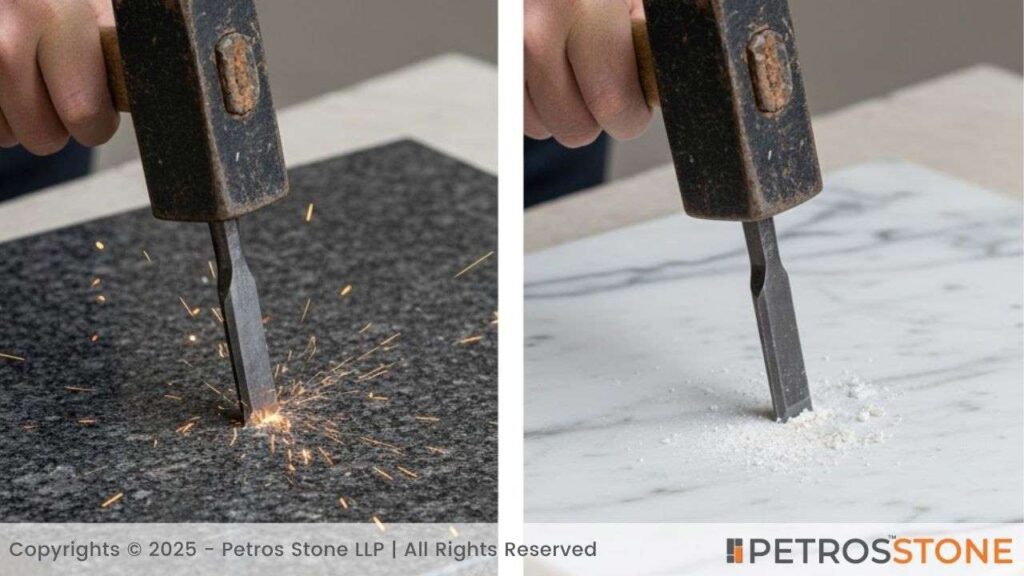 Hardness and Wear Resistance | Softer stone that can erode or wear down faster, especially in windy or sandy regions. |
| Low porosity; absorbs minimal water, reducing risks of staining and freeze–thaw damage. | 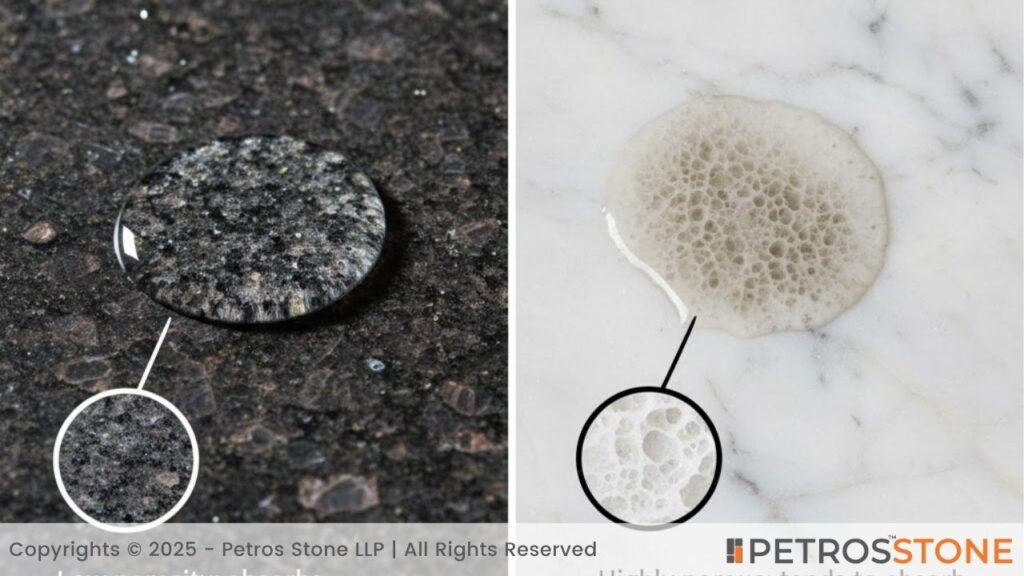 Porosity and Water Absorption Porosity and Water Absorption | Highly porous; tends to absorb water, leading to long-term surface damage and discoloration. |
| Chemically stable; resists acid rain and retains polish and texture for decades. | 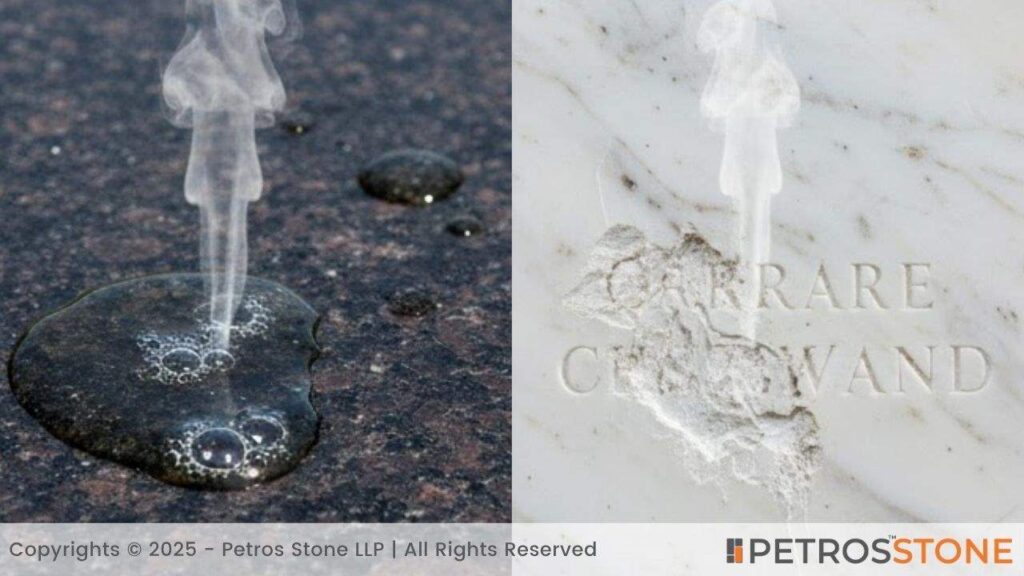 Chemical Weathering (Acids & Pollutants) Chemical Weathering (Acids & Pollutants) | Reacts with acids such as acid rain, causing surface etching and fading of inscriptions. |
| Dense structure discourages organic growth, requiring minimal maintenance. | 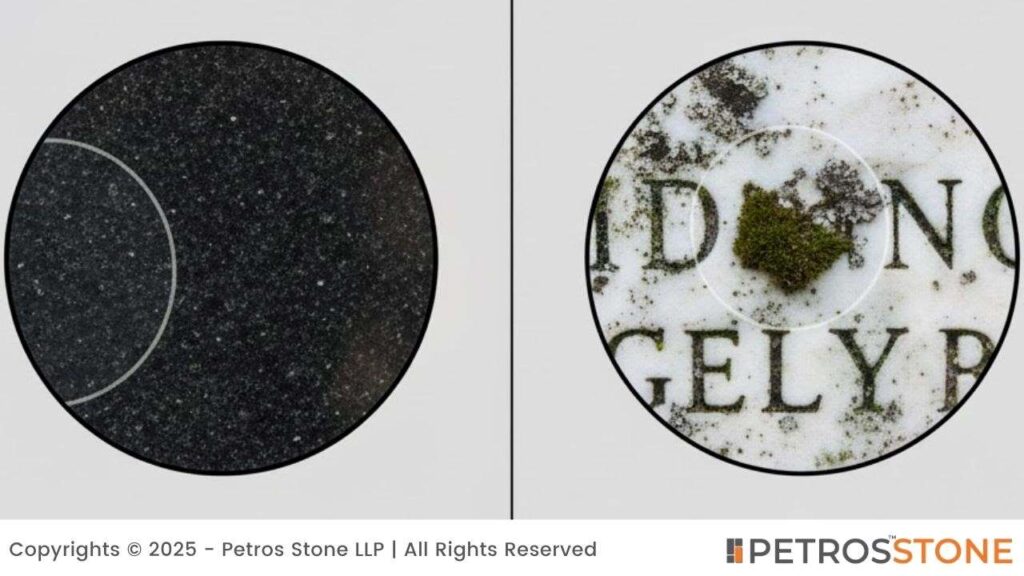 Biological Growth (Lichen, Moss, Algae) Biological Growth (Lichen, Moss, Algae) | Porous surface encourages moss, lichen, and algae growth, demanding frequent cleaning. |
| Maintains original color and polish with little fading even after decades. | 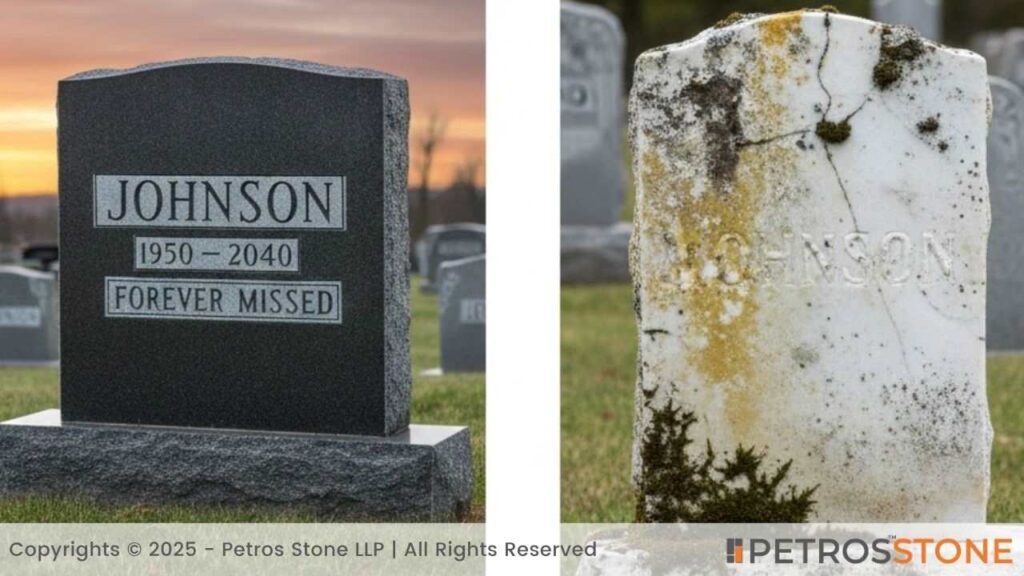 Longevity and Structural Integrity Longevity and Structural Integrity | Gradually loses sharpness and brightness; may develop discoloration and surface wear over time. |
- Understanding Headstone Materials
- Marble vs Granite – A Quick Comparison Summary Table
- What Is Marble?
- What Is Granite?
- Weather Resistance and Durability
- Table – Durability Comparison
- Maintenance and Upkeep
- Design and Engraving Possibilities
- Cost and Value Consideration
- Table – Cost & Value Comparison
- Cultural and Regional Preferences
- Environmental Impact and Ethical Sourcing
- Expert and Artisan Insights
- How to Choose Wisely
- Summary
- Key Takeaways
Understanding Headstone Materials
A headstone (also known as a gravestone, tombstone, or memorial) is a monument placed at the head of a grave, typically inscribed with details such as the name, dates, epitaph, and symbols of remembrance.
The chosen material must withstand weathering, pollution, biological growth (like moss and lichen), and the passage of time. It should also allow for engraving, personalization, and maintain aesthetic appeal.
Stone remains the preferred material, as it endures far longer than wood or metal in most climates. Among all options, marble and granite are the two most popular choices, both valued for their historical significance, beauty, and fine craftsmanship.
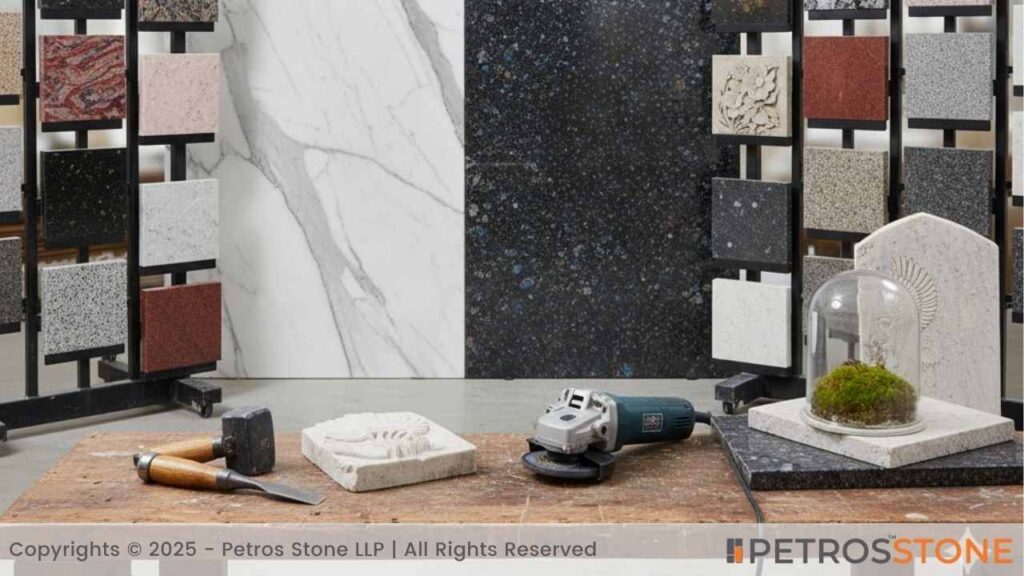
Marble vs Granite – A Quick Comparison Summary Table
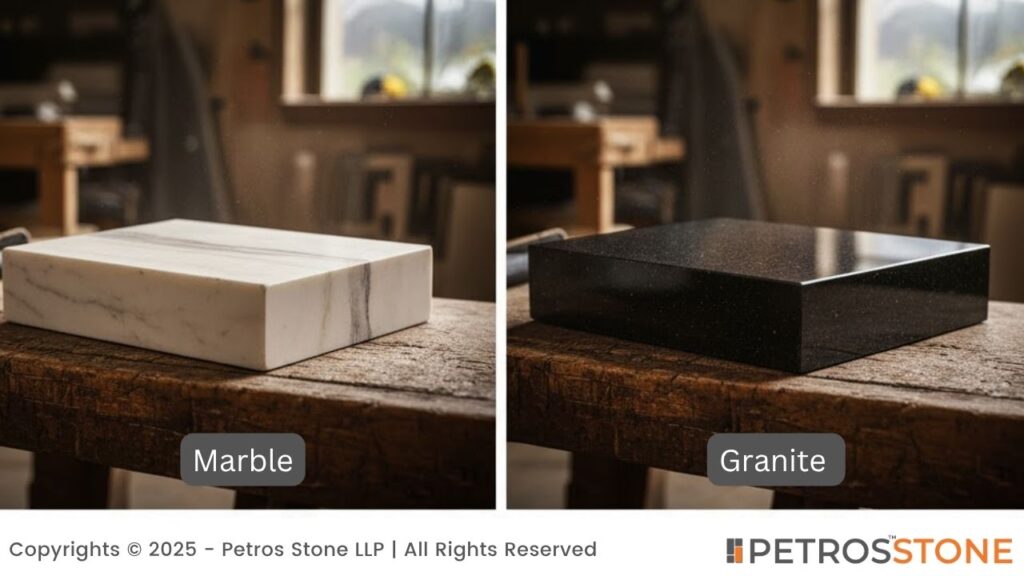
| Factor | Marble | Granite |
| Hardness/strength | Softer, more vulnerable to wear | Very hard, highly durable |
| Porosity/absorption | More porous, higher absorption | Low porosity, resists water |
| Weather resistance | More vulnerable to acid erosion | More resistant to weathering |
| Maintenance | Needs frequent cleaning and sealing | Less maintenance, occasional cleaning |
| Cost | Often higher, especially for premium marble | More cost-effective long-term |
| Visual & engraving options | Elegant veining, classical look, easier carving | Many color options, fine engraving possible |
| Lifespan | Good, but may degrade over time | Excellent, it can last centuries |
What Is Marble?
Geological origin and composition
- Marble is a metamorphic rock created from calcium carbonate in the form of limestone subjected to heat and pressure in the deep layers of the crust.
- The crystals of calcite reform during metamorphism, and impurities (minerals, iron, clay) may form color streaks.
- Its primary chemical building block is calcium carbonate, and as a result, it also has weaknesses, such as reacting with acids.
Typical appearance, color variations, and finishing options
- Marble is desired because it has a smooth texture, a fine grain, and takes up high polish as well.
- It usually has veins or streaks of a contrasting color owing to mineral impurities. This charm includes these patterns of veining.
- Most typical colors are white, cream, light gray, and occasionally pink, green, or yellow, based on mineral composition.
Marble Headstone Finishes

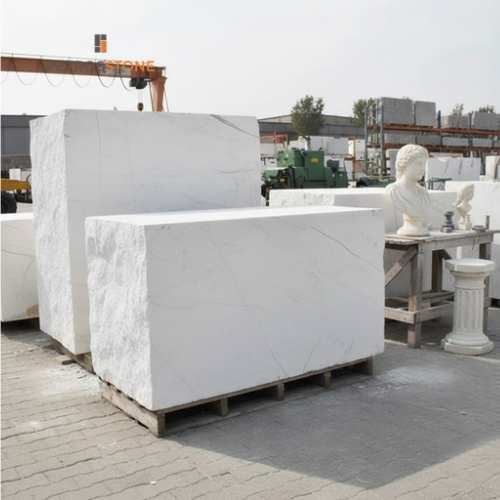
Finishes often used:
Polished (high gloss, reflective surface)
Honed (matte, less glare)
Sandblasted (for inscriptions or reliefs)
Carved or sculpted forms (statues, bas-reliefs)
Historical use in monuments and memorials
- The history of marble in sculptures, monuments, and architecture is rich (consider famous statues, temples, and memorials).
- Marble is used in many popular monuments located all over the world due to its elegance and ability to create fine details.
- Marble is one of the materials used in earlier times as a memorial due to its beauty and ability to be carved.
Emotional appeal and visual elegance
- Marble has an association with classical beauty, dignity, chastity, and custom.
- It is very light in colour and has a veining which frequently gives it a tranquil, cheerful and stately appearance, especially in cemeteries.
- To many people, a marble headstone implies a sign of refined taste, prestige, and respect.
What Is Granite?
Geological origin and composition
- Granite is an igneous rock, which is created by the slow cooling of the liquid rock (magma) within the depths of the earth, therefore, causing the crystals of the minerals to form and to result in their bonding.
- It is mainly quartz, feldspar, and mica, and sometimes contains trace minerals.
- The interlocking crystalline structure makes granite very strong, hard, and low in porosity.
Typical appearance, color variations, and finishing options
- The look of granite-based minerals is granular or grained, depending on the type of minerals.
- The palette is quite wide: blacks, grays, browns, reds, blues, greens, and mixtures.
Granite Headstone Finishes
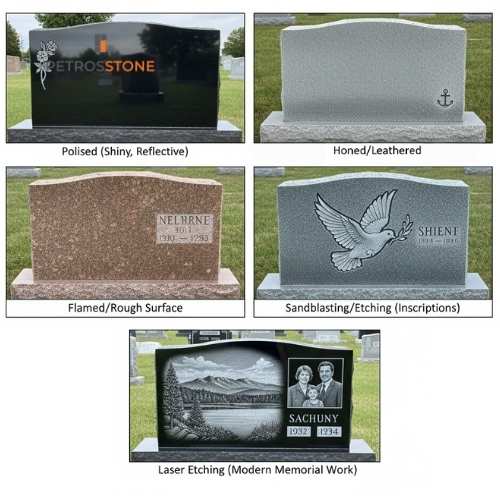
- Finishes include:
- Polished (shiny, reflective)
- Honed/leathered (matte or slightly textured finish)
- Flamed/rough surface for a rugged look
- Sandblasting/etching for inscriptions
- Laser etching in modern memorial work
Historical use in monuments and memorials
- Nowadays, granite is commonly used in various memorial and monument industries due to its durability.
- It has increasingly been used in headstones since the 20th century, replacing the softer stones such as marble and limestone in many locations.
- Today, there are numerous large cemeteries and memorial workshops that specialize in granite memorials.
Emotional appeal and visual elegance
- Granite might not seem as soft or classical as marble, yet its speckled surfaces and powerful colors grant it a dignified and long-lasting beauty.
- It is solid, permanent, and conveys strength.
- Engraving and symbols may also come to the fore, particularly where lighter or darker inlays have been employed.
Weather Resistance and Durability
It can be considered one of the most crucial things in selecting a headstone, because it will endure weather, pollution, temperature variations, and biological growth.
1. Hardness and Wear Resistance
| Granite Headstone | Marble Headstone |
|---|---|
| Extremely hard and resistant to scratches, chipping, and abrasion; ideal for long-term outdoor use. | Softer stone that can erode or wear down faster, especially in windy or sandy regions. |
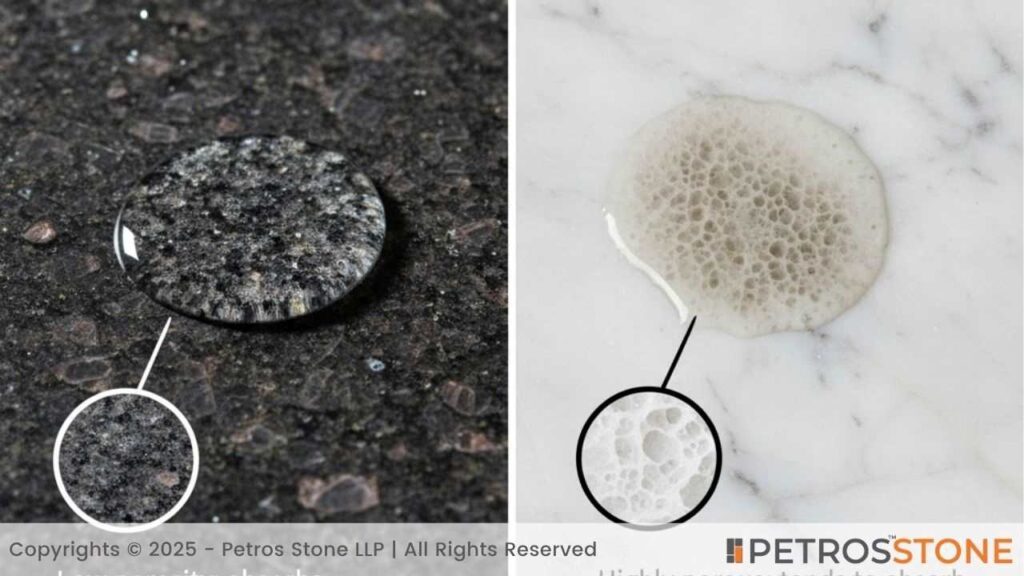
2. Porosity and Water Absorption
| Granite Headstone | Marble Headstone |
|---|---|
| Low porosity; absorbs minimal water, reducing risks of staining and freeze–thaw damage. | Highly porous; tends to absorb water, leading to long-term surface damage and discoloration. |
3. Chemical Weathering (Acids & Pollutants)
| Granite Headstone | Marble Headstone |
|---|---|
| Chemically stable; resists acid rain and retains polish and texture for decades. | Reacts with acids such as acid rain, causing surface etching and fading of inscriptions. |
4. Biological Growth (Lichen, Moss, Algae)
| Granite Headstone | Marble Headstone |
|---|---|
| Dense structure discourages organic growth, requiring minimal maintenance. | Porous surface encourages moss, lichen, and algae growth, demanding frequent cleaning. |
5. Longevity and Structural Integrity
| Granite Headstone | Marble Headstone |
|---|---|
| Maintains original color and polish with little fading even after decades. | Gradually loses sharpness and brightness; may develop discoloration and surface wear over time. |
Table – Durability Comparison
| Durability Aspect | Marble | Granite |
| Hardness/scratch resistance | Lower | High |
| Resistance to chemical attack | Vulnerable to acids | Stable, resists acid better |
| Water absorption/porosity | Higher | Low |
| Freeze-thaw damage risk | Higher | Lower |
| Biological growth adhesion | Easier adherence | More resistant |
| Lifespan (maintained) | Several decades to a century, with risks | Many decades to centuries |
| Inscription clarity over time | More likely to fade or erode | More likely to remain sharp |
Maintenance and Upkeep
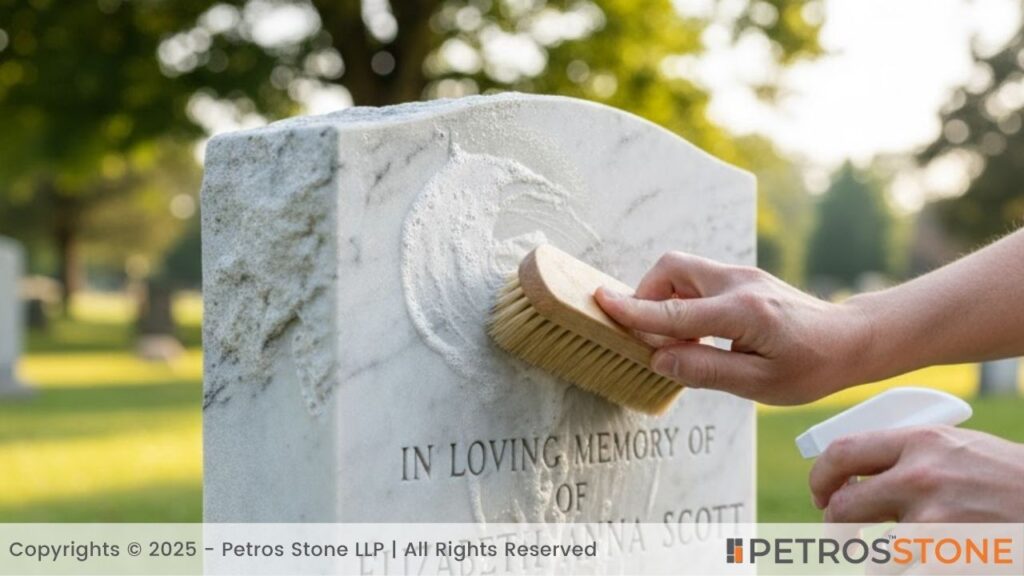
Marble (more hands-on care)
- Cleaning: Cleaning of marble headstones can be required more often (annually or in more contaminated and damp climates). Wipe with soft brushes, gentle stone cleaners (pH neutral). Strong acids or caustic soda are not to be used, as they might etch the stone.
- Sealing/protective coating: Marble is porous and therefore, it is better when sealed periodically (e.g., every 12-2 years) to reduce the rate of absorbing water, dirt, and pollutants.
- Examination and restoration: Examination of surface pitting, defects, or discoloration. Major damage may require replacement or overhaul, whereas minor surface damage can be restored by professional stone conservators.
- Avoid coarse equipment: Wire brushes, pressure cleaners, or acidic cleaners must not be used. These can easily rip marble surfaces or scratch them.
- Moss/biological removal: Gently clean, perhaps with a soft detergent, and run under water.
Granite (lower maintenance, but not zero)
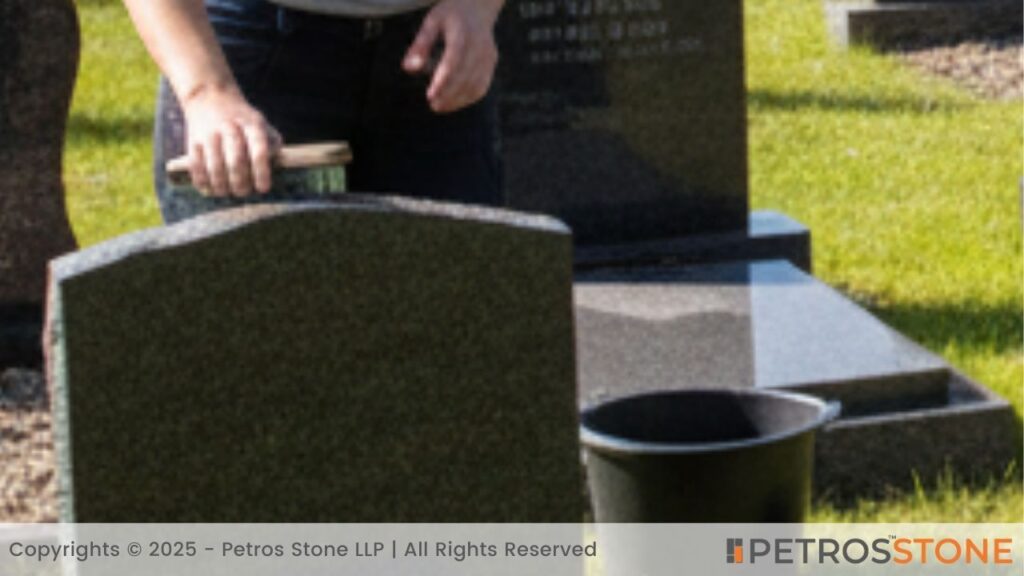
- Cleaning: Granite is less expensive to maintain. In most cases, cleaning once or twice a year with light soap and water, a soft brush or sponge is enough. Use no coarse chemicals or scraping.
- Sealing: Granite, although less porous, most memorials are also initially closed. The seal can be several years old; the seal can be resealed only in a more hostile climate or after numerous years.
- Inspection: Monitor every now and then against cracks, discoloration, or other issues. In the majority of situations, granite resists.
- Biological removal: Moss or lichen can be easily removed. It is a hard tool, so granite tolerances are greater.
- Avoid high-pressure cleaning: Even a hard rock such as granite must not be sandblasted or subjected to pressure washing.
Design and Engraving Possibilities
Ease of carving, detailing, and sculptural work
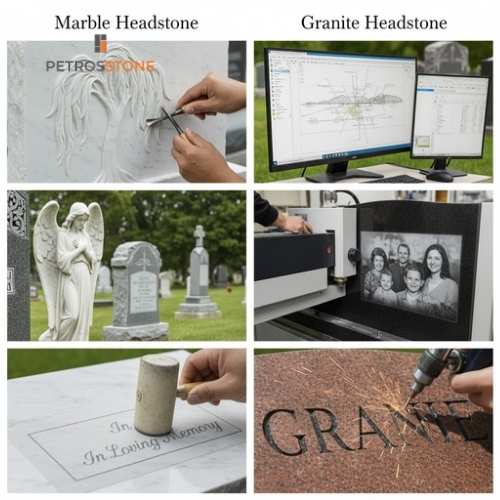
- Marble is softer and simpler to sculpt. Complex reliefs, sculptures, and minor details are easier to accomplish. Where great elaboration is required, statues and reliefs, and finely wrought decorations are sometimes of marble.
- Granite is more difficult to cut deeply or with fine detail since it is harder. Modern methods (computerized carving, sand-blasting, laser etching) have, however, enabled very fine work even in granite.
Contrast and readability of inscriptions
- In granite, lighter inscriptions on darker stone are frequently permitted, and this contributes to legibility when read after a long time.
- Marble inscriptions may be less vivid. Slowly, due to erosion, inscriptions can be shallow and may not be easily readable.
- The stability of granite helps maintain the sharpness of letters and symbols carved on the material.
Color and inlay options
- The diversity of the base colours and patterns of granite provides a range of variation in contrasting inlays, edge colours, or decoration.
- Marble has a restricted palette and tends to be light in most cases.
- Other colored pieces of granite or marble might be used together in certain memorials, although the strength of granite allows increased flexibility.
Hybrid designs
- Some artisans mix marble with granite, such as a granite base and a marble sculptural panel. This will strike a balance between longevity and aesthetics. However, attention should be paid to the differentiation of weathering (junctions of stones may be stressful points).
Cost and Value Consideration


Upfront Cost: Stone, Fabrication, Installation
- Marble is more costly, especially high-quality marble with deep veins.
- Carving marble is more costly and time-consuming.
- Granite is also cheap because it is common all over.
- Both materials are sensitive to price due to color, grade, and quality.
- Costs of installation are largely comparable.
- Stone weight is an additional cost associated with transport.
Maintenance / Restoration Cost Over Time
- Marble requires frequent cleaning and sealing as well as periodic restoration, such as re-etching or polishing.
- Such maintenance requirements may introduce multi-decade expenses.
- Granite needs fewer professional interventions and a lower workload, and is cheaper in the long run.
- Granite continues to be a better bet in terms of cost-to-life.
Resale / Inheritance Value (If Applicable)
- Headstones are rarely resold, but granite has a longer structure and finish.
- Marble may also lose its clarity and sheen with time, making it lose its visual appeal.
Value for Money
- Granite offers good long-term value because it is durable and needs low maintenance.
- Marble is sometimes used due to its symbolic beauty and emotional meaning, despite its high price.
Table – Cost & Value Comparison
| Cost / Value Factor | Marble | Granite |
| Upfront cost (stone + carving) | Higher (for premium marble) | Competitive, often lower per unit quality |
| Installation cost | Similar (stone is heavy in both) | Similar |
| Maintenance & repair over time | Higher (frequent cleaning, restoration) | Lower |
| Long-term value | Risk of degradation reduces value | Retains shape, readability, and appearance |
| Overall cost per year of service | Higher | Lower |
Cultural and Regional Preferences
In different places, the type of stone can be determined by the culture, climate of a region, and the local traditions.
| Category | Marble | Granite |
| Cultural & Religious Symbolism | Seen as pure and sacred, common in traditional and religious memorials. | Symbol of strength and permanence; preferred in modern memorials. |
| Artisan Preference | Easier to carve; popular among traditional craftsmen. | Requires modern tools; favored by contemporary masons. |
| Climate Suitability | Suits dry or mild climates; may weather faster in rain or pollution. | Performs well in harsh, wet, or cold climates. |
| Sunlight Resistance | Light shades may fade or discolor. | Dark tones resist fading and keep their polish longer. |
| Local Availability | Cheaper where marble quarries exist. | More affordable, where granite is mined locally. |
| Cemetery & Regional Rules | Some cemeteries prefer their classic look. | Widely accepted in most cemeteries and regions. |
Environmental Impact and Ethical Sourcing
Quarrying Impact
- Stone mining does require power, space, and water.
- Unless taken care of, it can lead to dust, waste, and habitat damage.
- Careful quarries are sensitive to environmental and safety standards.
Transport Carbon Footprint
- Relocating massive stones over a distance consumes more fuel and releases more emissions.
- The found stone is locally sourced and saves on environmental impact and cost.
Waste and Offcuts
- Stone cutting generates dust and residual pieces.
- Good liars reuse or recycle waste.
Chemical Treatments and Sealants
- Certain sealants or cleaners have toxic substances.
- Non-toxic, eco-friendly products are also safe to both the environment and health.
Durability and Replacement
- Stones such as granite that have a longer lifespan minimize replacements and wastage.
- Increased life reduces environmental cost.
Fair Labor and Ethical Practices
- Choose suppliers who pay fair wages and provide safe working environments.
- Ethical sourcing promotes sustainable and responsible production.
Expert and Artisan Insights

When studying the suppliers of memorials, masons, and monument companies, a few common understandings are made:
- Most memorial companies are shifting towards the use of granite instead of marble due to its stability, durability, and less maintenance.
- It is still made of marble, mainly as a sculpture material, decorative panel, mausoleum, or in secured mausolea (indoor/sheltered settings).
- Others are the artisans who say: love the beauty of marble, use it, but reckon on its restoration or replacement after forty years or so. By comparison, granite is set and forgotten in most climates.
- Occasionally, high-end memorials are made with a combination of materials: a granite base or support, and marble or lighter stone elements; such arrangements provide longevity.
- Invariably ask the grade of stone: not all granite is alike. Ineffective granite or marble will wear down.
- Request warranties or guarantees from the memorial provider and inquire how they will keep their inscriptions and functionality for years.
How to Choose Wisely
When all of the above is combined, the following is a recommended course of action:
1. Evaluate your climate and surroundings
In case of heavy rainfall, pollution, acid rain, freezing and thawing cycles in your area, durability should be considered first (prefer granite).
2. Choose the amount of care possible
Do you want low maintenance over the decades, and that would lean toward granite. Marble could be used if you do not mind ordinary maintenance and potential restoration.
3. Establish your budget
It should not cover just the initial cost but also the expected maintenance and long-term restoration or replacement.
4. Check local availability and sources
Ask local memorial makers what types of stones they normally use. Local stone means less transportation cost, and performance locally is proven.
5. Examine stone grade and sample
Ask your memorial provider to provide sample pieces. Check grain, density, and look for flaws and micro-cracks. Inspect them under the light. Enquire about the source and quality of the stone.
6. Meet professionals or craftsmen
Request the memorial creator, what would s/he pick in your climate, and why? What have they observed to be ineffective or effective over the years?
7. Consider designs that are hybrid or protective
Do you adore marble designs? Look into a design where marble is partially covered (e.g., sheltered or with granite framing). Or where the weather is slight, use marble.
8. Cemetery regulations
Review control regulations on material limitations, size, anchoring, and so on, where your decision must meet standards.
9. Think long-term
Plan strategically. A long-term headstone is here to stay. When a stone has a greater tendency to lose by fading or other means of erosion or repair, this reduces its memorial value.

Summary
Whether to get marble or granite to make a headstone is not merely a question of beauty, but also a question of permanence, heritage, upkeep, and worth. Marble is the on-lasting grace, the exquisite veils, and the delicate sculptural possibilities. Granite is rugged, long-lasting, weather-resistant, and has reduced maintenance costs.
Granite is often more practical in the actual world: it preserves inscriptions perfectly sharp, it absorbs pollution, it is hard to break, and it lasts longer with a minimum of maintenance. The marble can be selected due to its beauty and tradition, yet remaining fully aware of its giving way nature and the care it requires.
Key Takeaways
- Durability & maintenance: Granite is far more weather-resistant and low-maintenance over decades; marble requires more frequent care and may erode in harsh environments.
- Appearance & carving: Marble is easier to sculpt for detailed statuary and reliefs, while modern techniques allow fine engraving in granite and offer a wider palette of colors.
- Cost & long-term value: Marble often costs more upfront and can incur higher restoration costs over time; granite generally offers better long-term value.
- Choice factors: Pick granite for longevity and low upkeep (especially in wet, polluted, or freeze–thaw climates); choose marble for classical aesthetics and intricate sculpture when you can commit to maintenance.
Feel free to get in touch for a free consultation, quote, and get a detailed understanding from our experts here at Petros®. Visit www.petrosstone.com or call +91-8446360361 or WhatsApp

Hello!
I’m Dr Mridali, a content writer with a background in dentistry and a passion for turning complex topics into clear, engaging stories. From healthcare to architecture, I create blogs that inform, educate, and connect with readers. With every piece, I aim to blend accuracy with creativity to make information truly valuable.

Brown Granite

White Galaxy Granite

Blue Bahia Granite

Silver Cloud Granite

Black Pearl Granite

Dallas White Granite