Customers often get scammed when they’re offered Indian marble under the name and price tag of Italian marble. Marble is one of the most widely used materials, whether for residential or commercial designs. And with deceiving similarities, differentiating between an Indian and imported marble can be challenging. This is why understanding the differences between the two is crucial. Of the two varieties – Indian and Italian marble, which is a better choice? How to identify the differences between the two?
6 Key Ways To Identify Genuine Italian Marble
- Check Certificate of Origin
- Assess Resin Filling
- Look for Mesh Backing
- Evaluate Whiteness and Veining
- Verify 18–20 mm Thickness
- Analyse Polish Quality
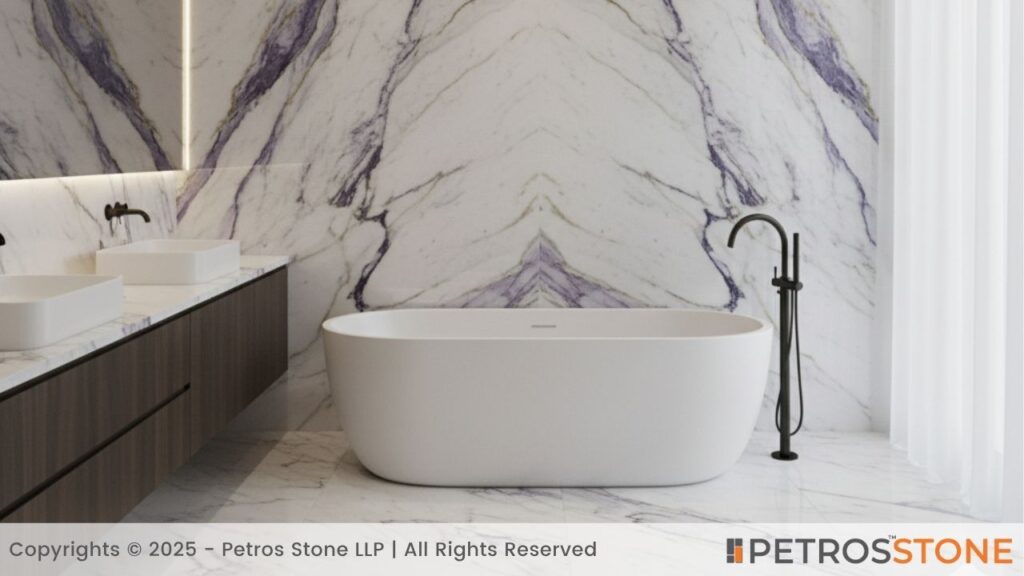

In this article, we explore the key differences between Indian and Italian marble, including origin, polish quality, resin treatment, thickness, pricing, and visual appearance to help buyers make informed decisions. We also shared expert identification tips such as checking the certificate of origin, mesh backing, and slab consistency to avoid common marble scams in the market.
- Knowing Indian and Italian Marble
- Debunking the Common Myths
- Why Does Identification of Marble Matter?
- How to Identify the Marble – Expert Tips
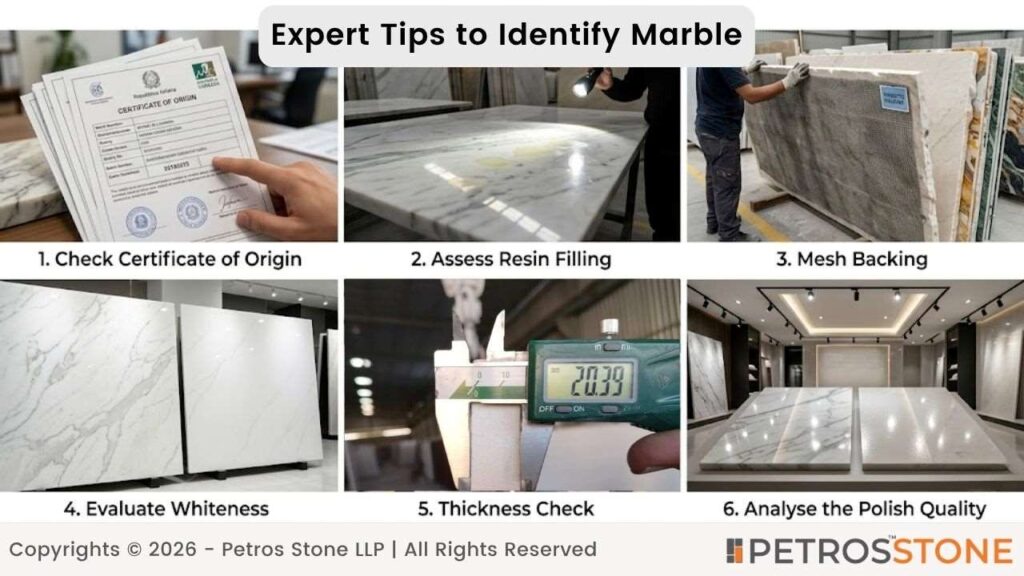
- 1. Check Certificate of Origin
- 2. Assess Resin Filling
- 3. Mesh Backing
- 4. Evaluate Whiteness
- 5. Thickness Check
- 6. Analyze the Polish Quality
- Common Indian Marbles Often Mistaken for Italian Marble
- 1. White Marble
- 2. Beige Marble
- 3. Brown Marble
- 4. Black Marble
- 5. Grey Marble
- Key Takeaways
Knowing Indian and Italian Marble
| Parameter | Indian Marble | Italian Marble |
| Source | Quarried in different parts of India. | Imported from Italy. |
| Shine | Moderate lustre | Highly shiny surface |
| Softness | 3-5 on the Mohs scale– typically harder. | Softer stone with a hardness of 3-4 on the Mohs scale. |
| Price | USD 0.85 per sq. ft. | USD 3.71 per sq. ft. |
| Thickness | 15mm-20mm | 18mm-20mm |
| Common Varieties | Banswara Purple, Himalayan Green, Indian Black, Indian Calacatta Panda marble, etc. | Calacatta Statuario, Alaska Grey, Armani Brown, Grey Carrara marble, etc. |
Debunking the Common Myths
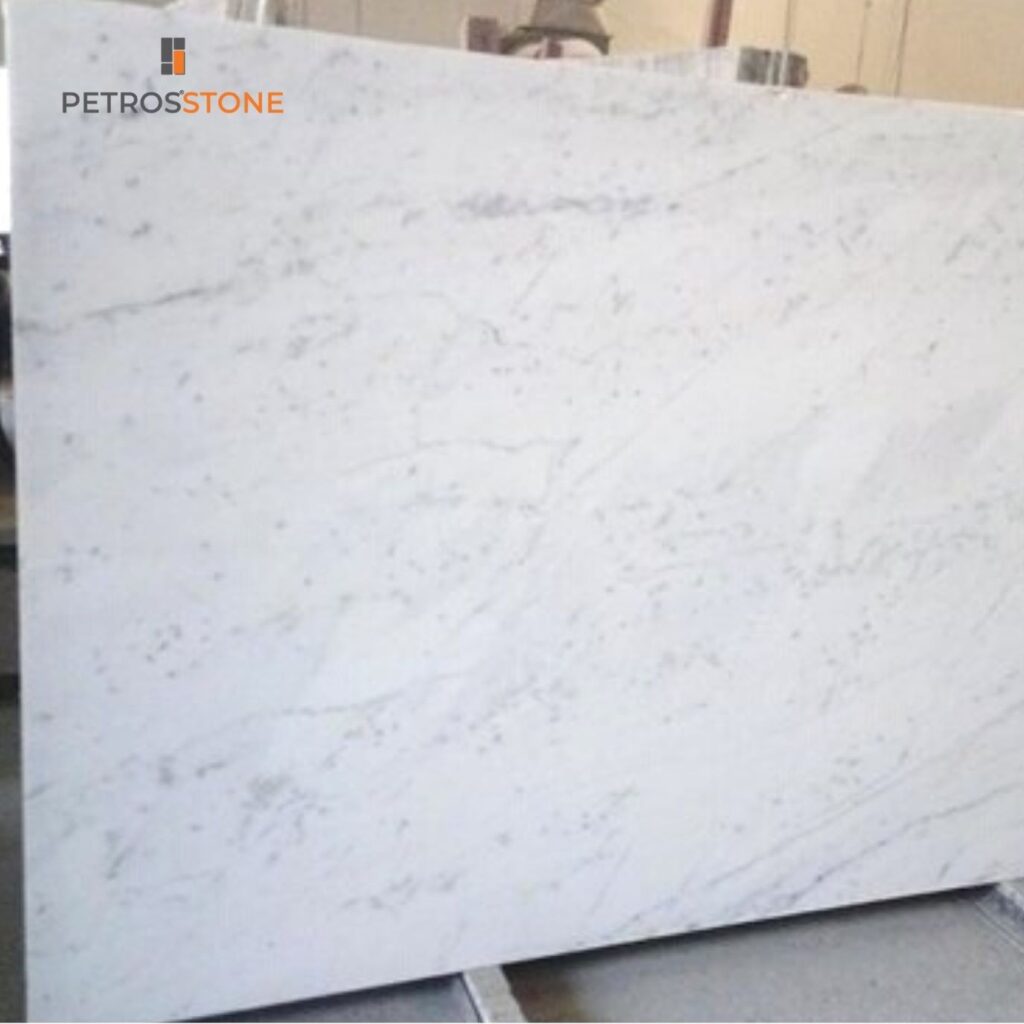
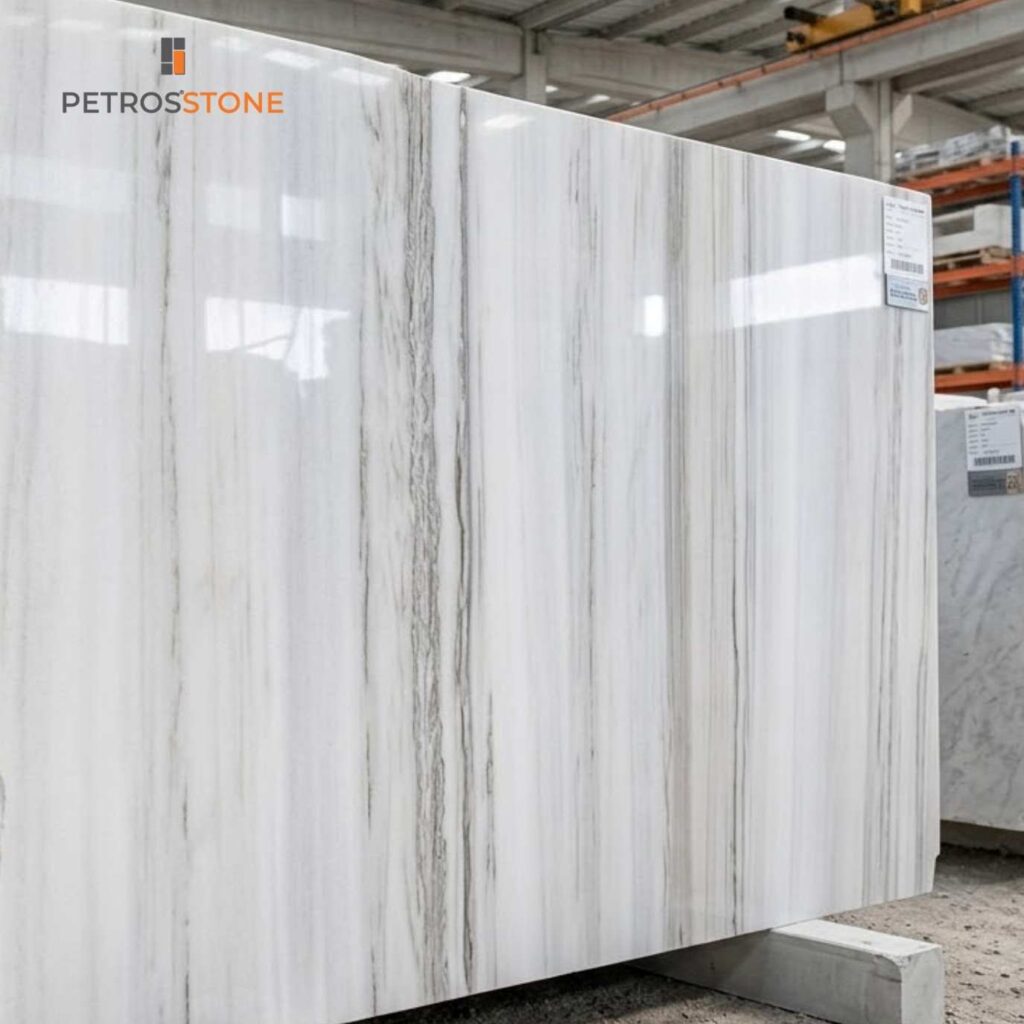
White marble is Italian.
One of the most common misconceptions regarding Italian marble is that it’s bright white. The reality is that not all white marbles are imported. India is also known for its varieties of white marble, such as Makrana, Calacatta Panda, and Banswara white.
Highly polished marble has to be imported.
A polished surface, rather than being an inherent property, is the result of surface treatment. Both Indian and Italian marbles can be polished.
If it’s expensive, it’s Italian marble.
The cost of marble is heavily influenced by several factors, including finish and rarity, along with the origin of the marble. There can be several rare Indian marble varieties that can be priced higher than an Italian marble.
Why Does Identification of Marble Matter?
Cost
When you’re buying a marble for your project, you’d want to pay the justified price for the stone. Commonly, Italian marble is priced higher than the common Indian varieties due to its transportation, import duties, etc. A misidentification of marble can lead to the chances of getting scammed and facing loss.
Performance
Based on the area of application, you’d want to know the right variety of marble. This is primarily due to the reason that Indian marble is harder than the Italian varieties. Which is why it’s more suitable for high-traffic areas.
Resale Value
When it comes to the Indian real estate market, the authenticity of material helps boost the property resale value. The usage of original Italian marble offers a better resale price.
How to Identify the Marble – Expert Tips
1. Check Certificate of Origin
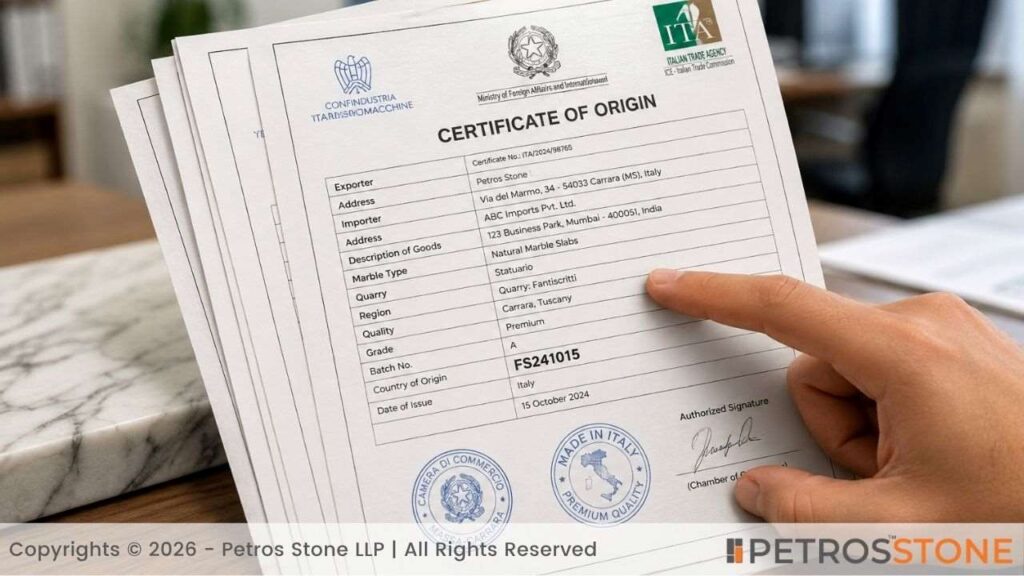
One of the best tricks to identify a genuine Italian marble is checking the documentation. Ask your marble supplier to provide a certificate of origin, details of the quarry, its region, quality, and grade of the marble.
An authentic marble will have these details, along with the batch number and documentation of importing the stone.
2. Assess Resin Filling
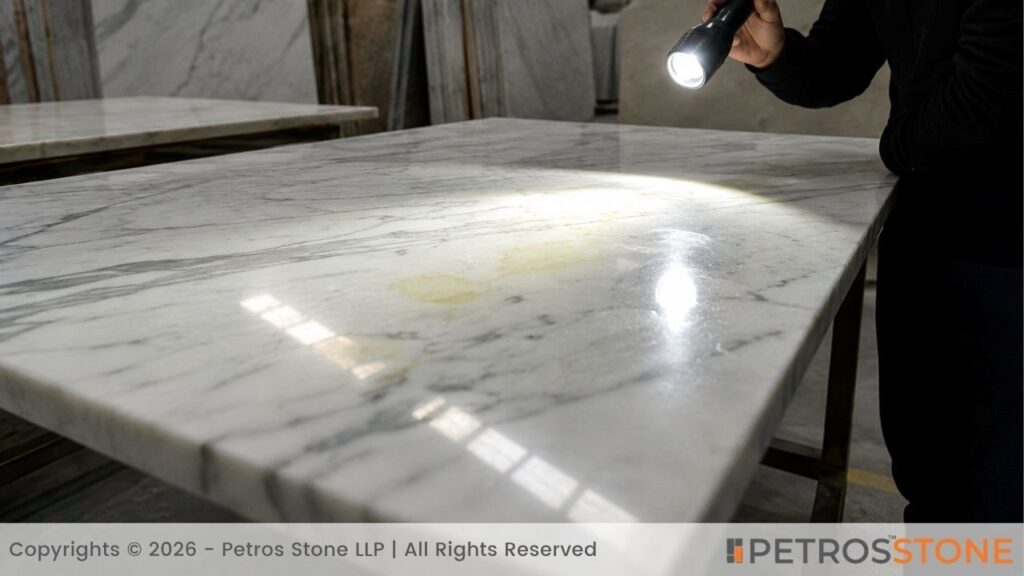
Italian marble is a softer stone than Indian marble. Which is why it has to be chemically treated to enhance the properties. 75% of the resin-treated marble is either imported or a low-grade marble processed under heavy chemical treatment.
To identify the authentic marble, check the slab under an angled light. In this case, the resin-filled areas will appear glossier. On the other hand, a low-grade marble will have uniform shine throughout.
While resin is known to strengthen the marble, its excessive usage adds a yellow tint to the marble over time.
3. Mesh Backing
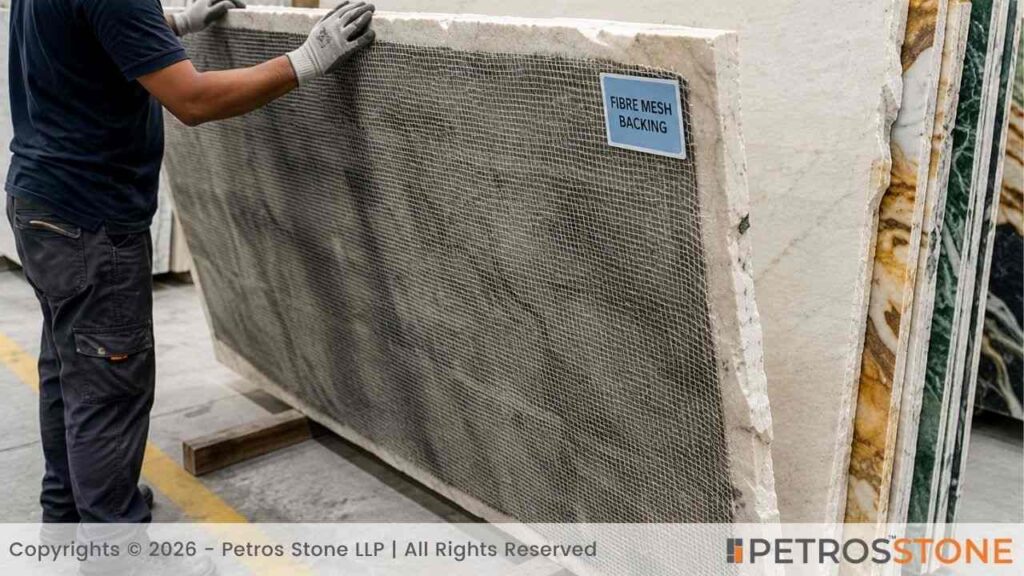
The best way to identify a natural and treated slab is by checking the back of the marble. An original Italian marble will have a fibre net or mesh at the back. This is essentially added to reinforce the soft stone and to prevent damage during transportation.
4. Evaluate Whiteness
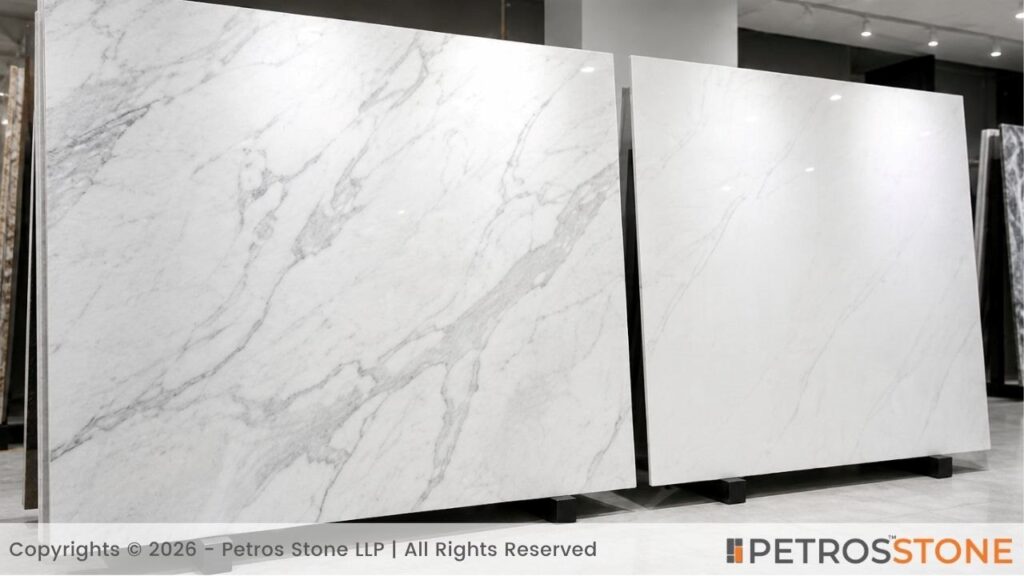
Bright white marbles are often tagged Italian. However, this is not the only clue for an Italian marble. While it’s brighter than Indian marble varieties, it’s important to look for the following visual cues, too:
- Ensure that the veining is organic and irregular.
- The slab must exhibit subtle tonal variation than a flat white slab.
5. Thickness Check
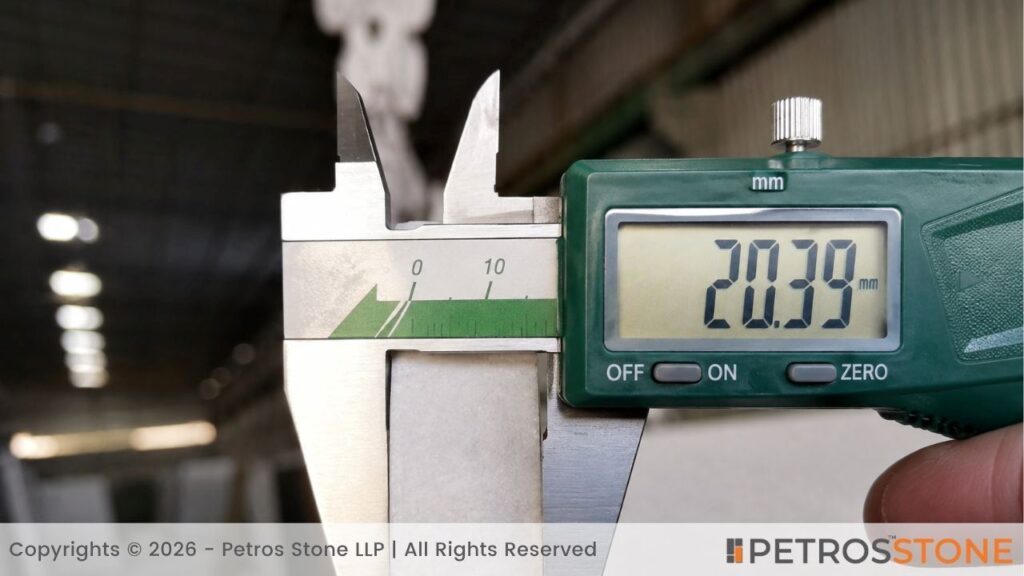
Italian marble is imported in the common thickness range of 18mm and 20mm. Indian marble, on the other hand, can be availed in both lower and higher thicknesses.
Before buying the marble, make sure that the Italian marble falls under the right thickness category. Another trick to assess the authenticity of the marble is to analyse slab consistency. Imported slabs will showcase consistent thickness throughout the span.
6. Analyze the Polish Quality
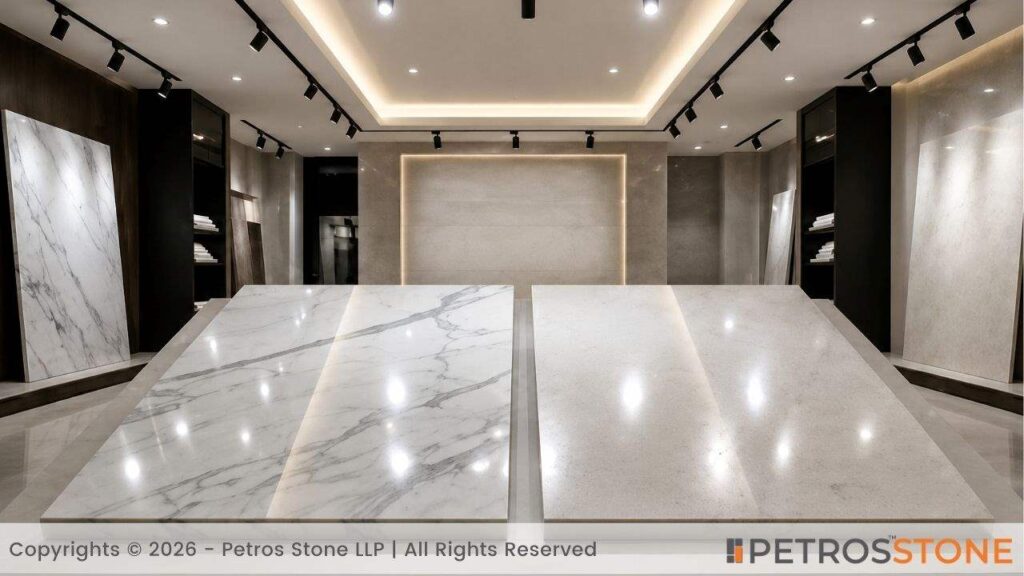
Italian marble is glossier than the Indian varieties. It is prized for its luxurious appeal with a mirror-like finish. Furthermore, Italian marble is usually polished on one side of the slab, whereas Indian marbles may have polished surfaces on both sides.
Common Indian Marbles Often Mistaken for Italian Marble
1. White Marble
| Popular Variety | Visual Appearance | Cost | |
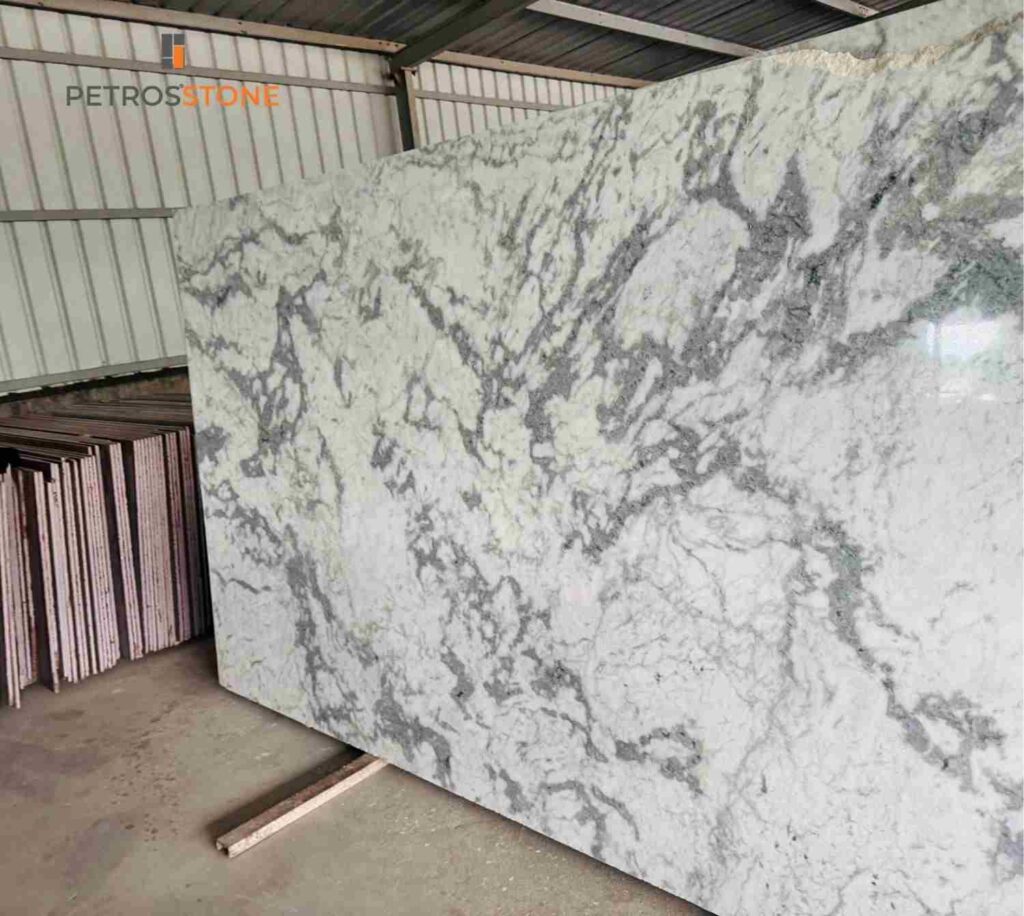
| Indian Marble | White Indian Statuario Marble | While it resembles Italian marble with a white base and grey veins, in this case, the look is more refined with a cloudy-veining pattern. | USD 1.65 – 3.85 per sq. ft. |
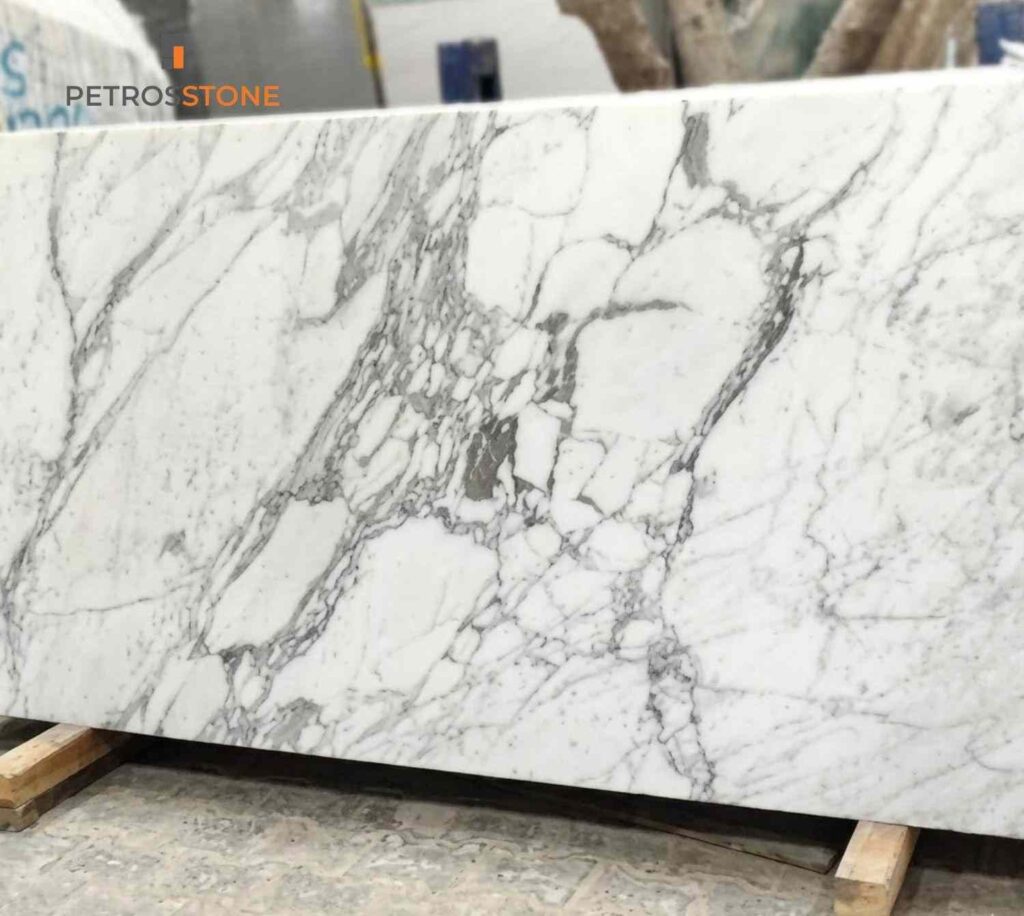
| Italian Marble | Calacatta Statuario Marble | One of the luxurious Italian marbles with a white base and complex veining in charcoal, smoky grey, and black tones. | USD 6 – 42 per sq. ft. |
2. Beige Marble
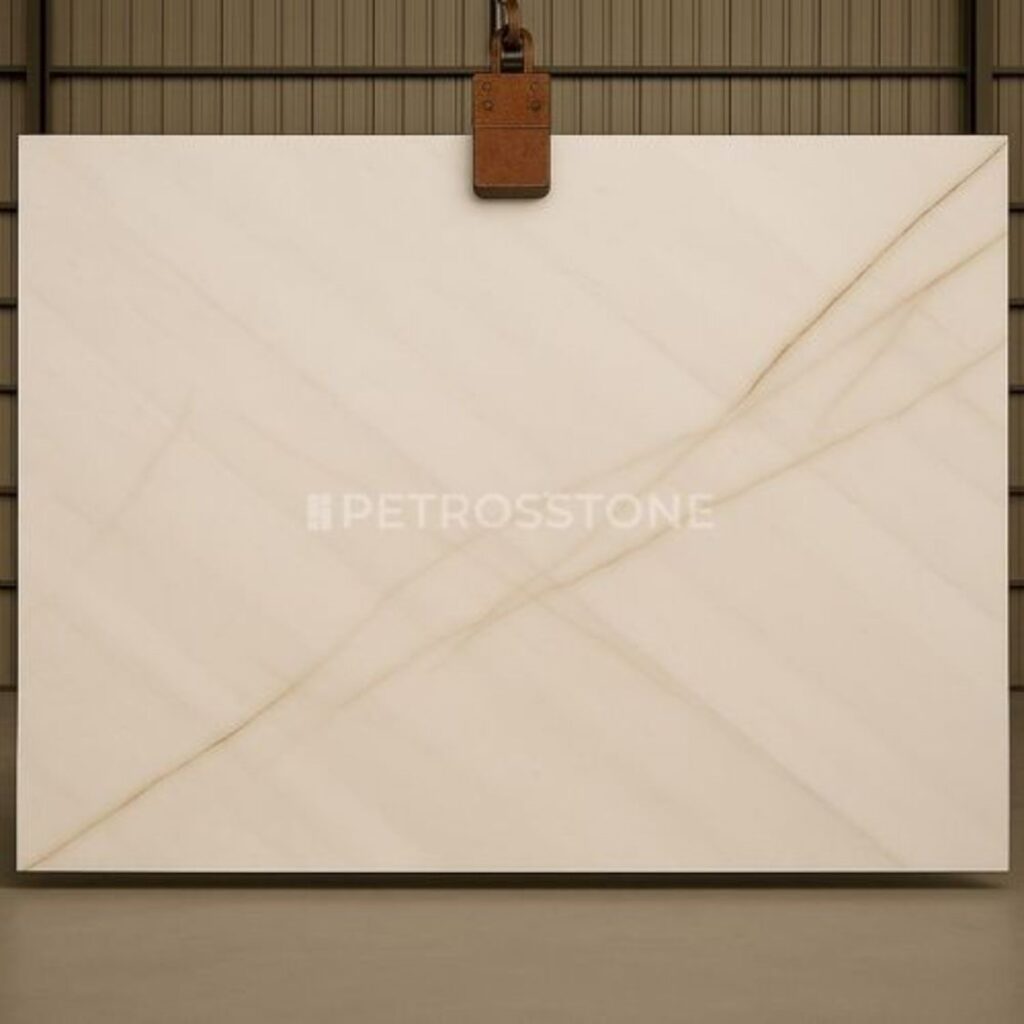
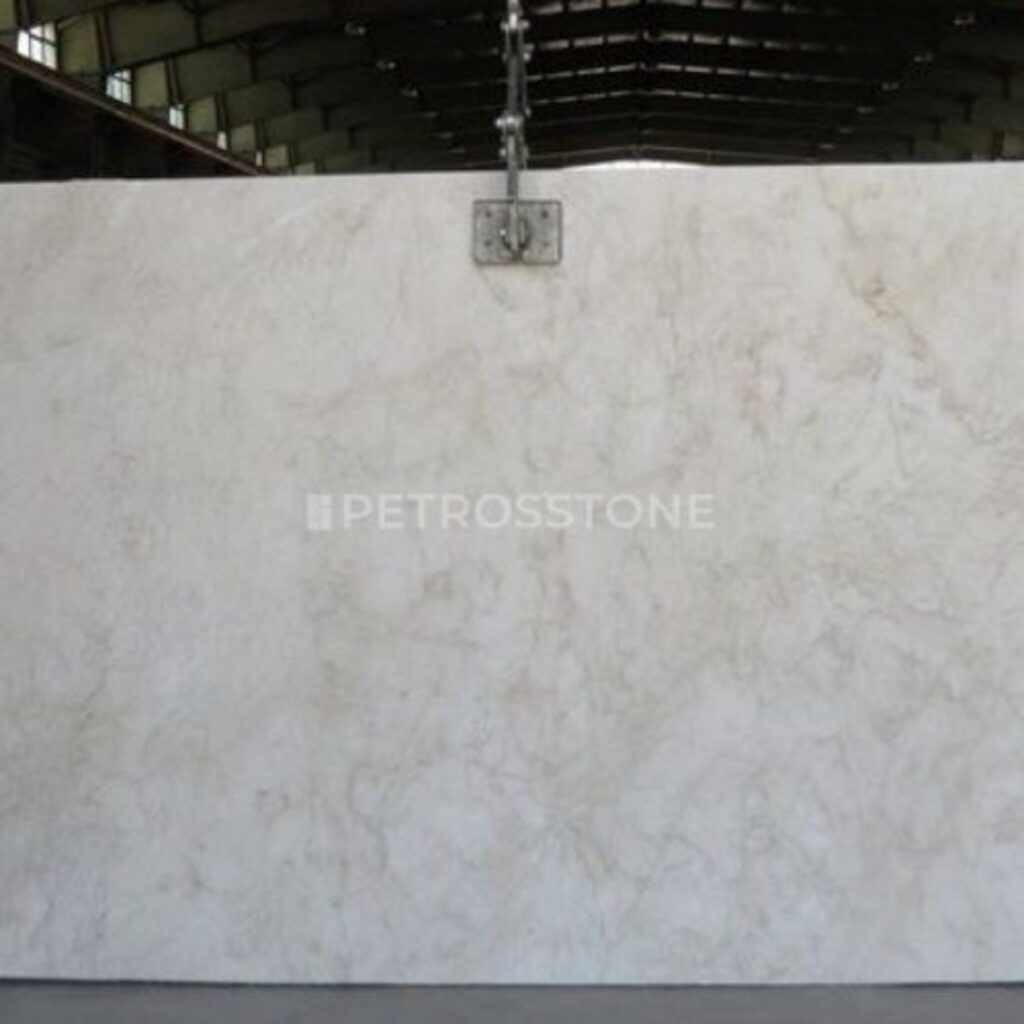
| Popular Variety | Visual Appearance | Cost | |
| Indian Marble | Fantasy Cream Marble | Features a warm beige background with dramatic wave-like veins in dark and light brown. | USD 1.90 per sq. ft. |
| Italian Marble | Bianco Beige Marble | A creamy-white tone with very subtle veins in light golden and beige. | USD 1.90 per sq. ft. |
3. Brown Marble
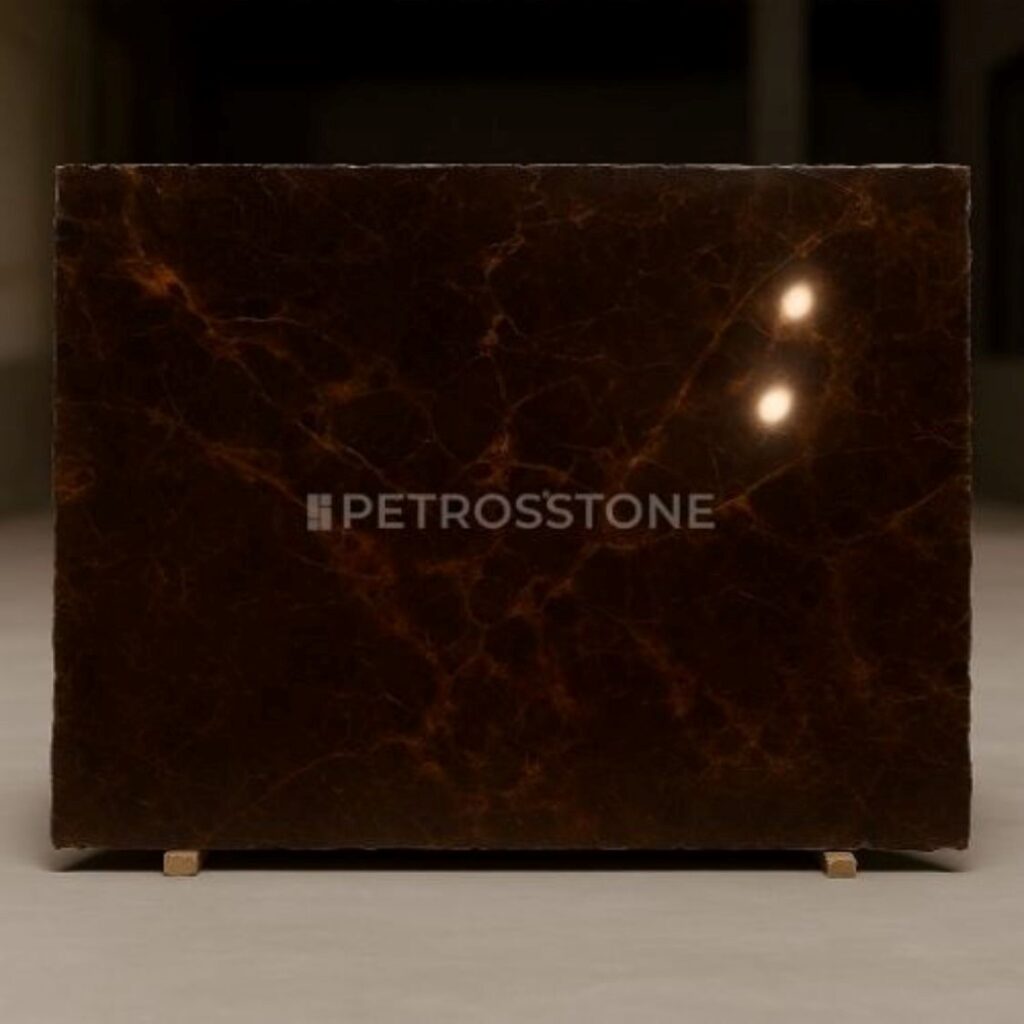
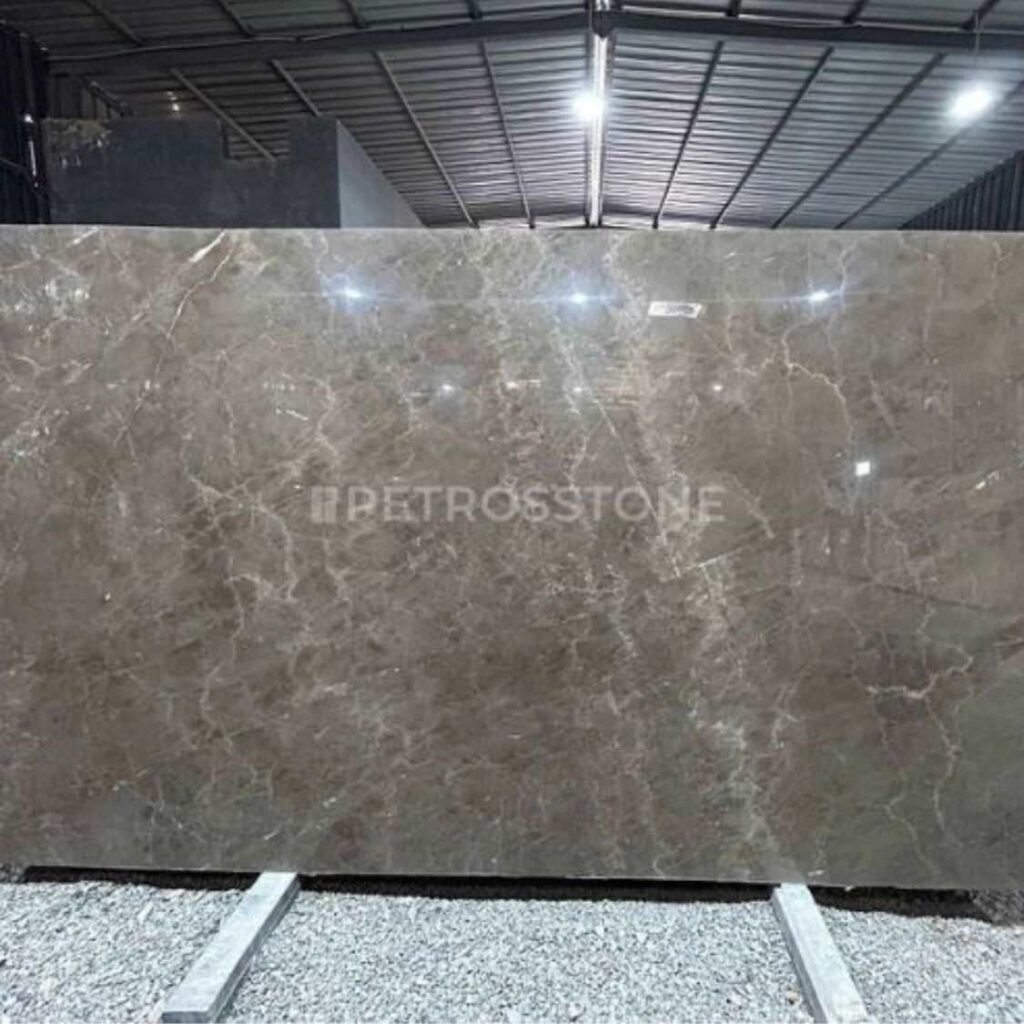
| Popular Variety | Visual Appearance | Cost | |
| Indian Marble | Choco Marfil Marble | A dark-brown base with organic veining patterns in cream, golden, and beige. | USD 2.60 per sq. ft. |
| Italian Marble | Armani Brown Marble | One of the most sophisticated-looking brown marbles with a cocoa-brown background and white diagonal veining. | USD 2.95 per sq. ft. |
4. Black Marble
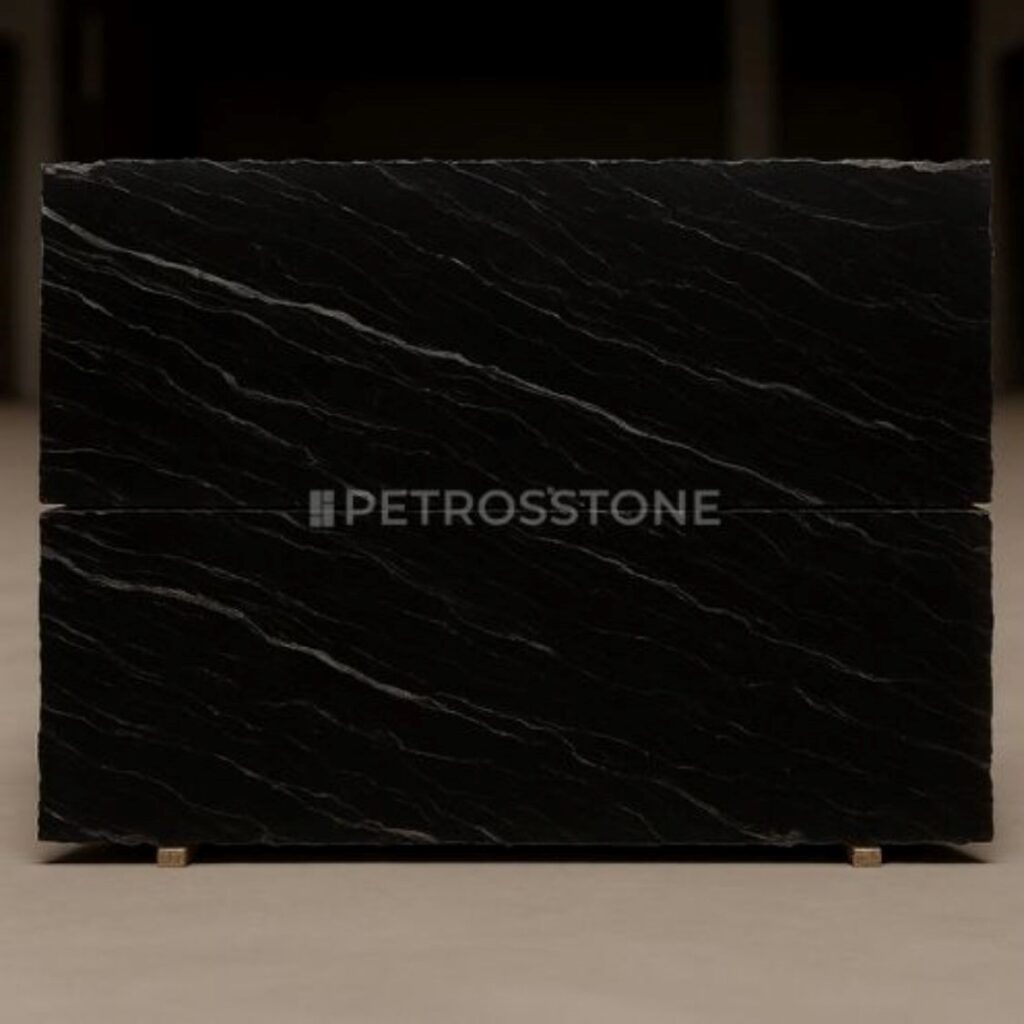
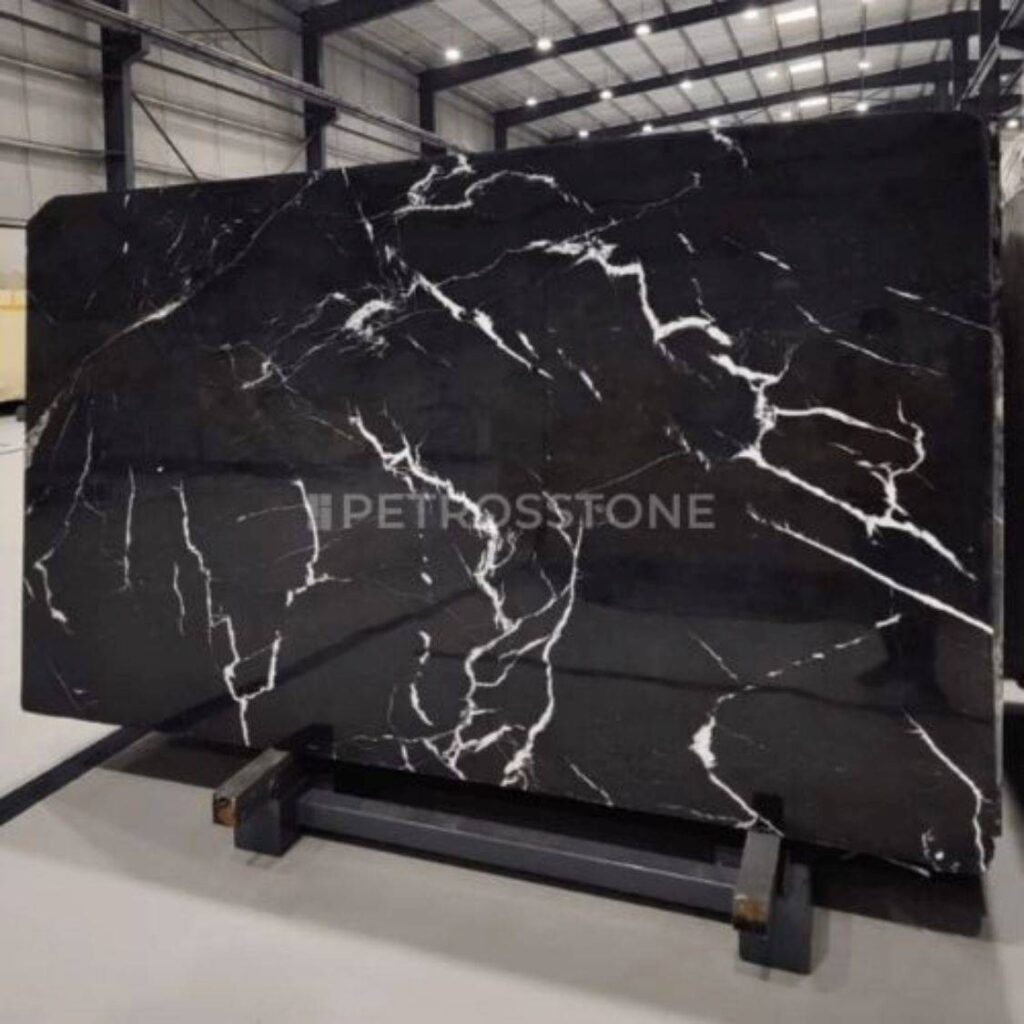
| Popular Variety | Visual Appearance | Cost | |
| Indian Marble | Indian Black Marble | Also known as Nero Black marble, it features a black base with golden and white veining. | USD 2.35 per sq. ft. |
| Italian Marble | Black Marquina Marble | Deep black base featuring a striking veining pattern in white. The veins can either be in a linear pattern or a scattered spider-web formation. | USD 2.60 per sq. ft. |
5. Grey Marble
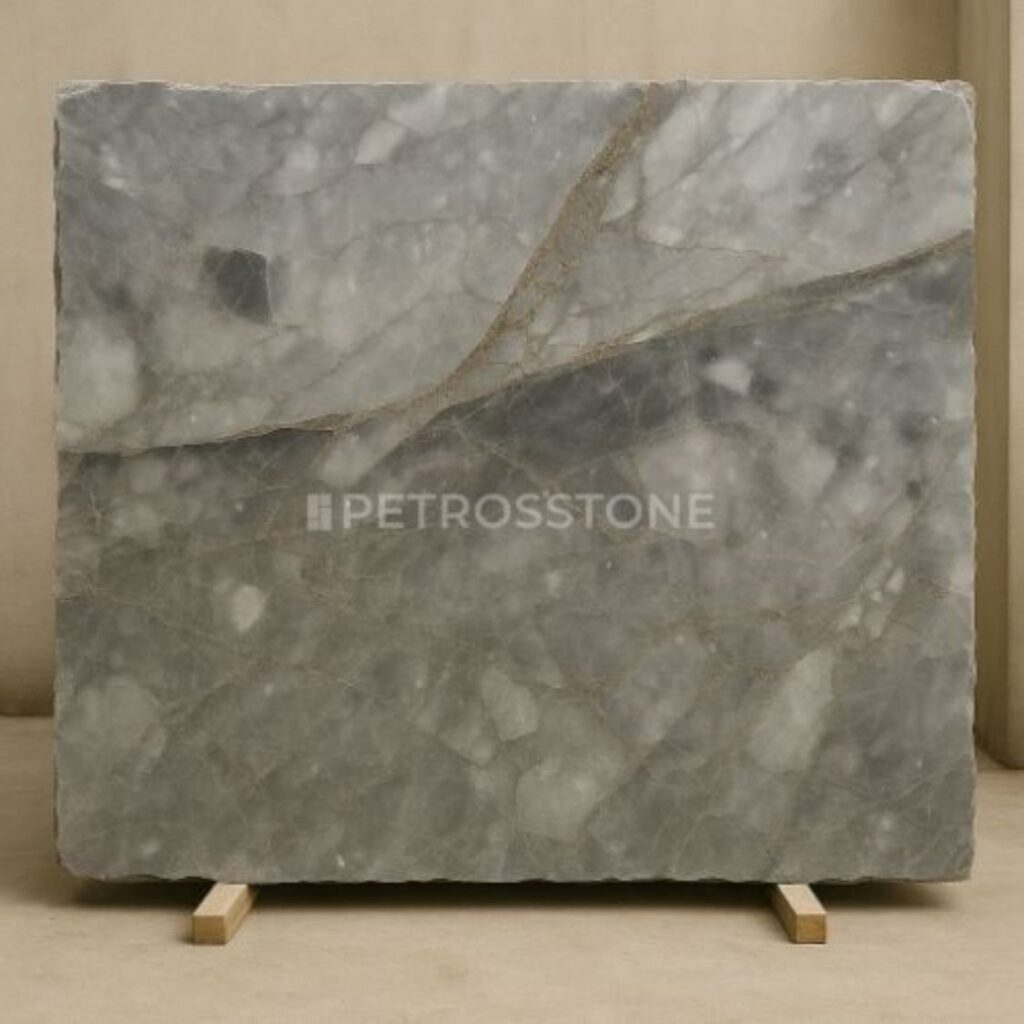
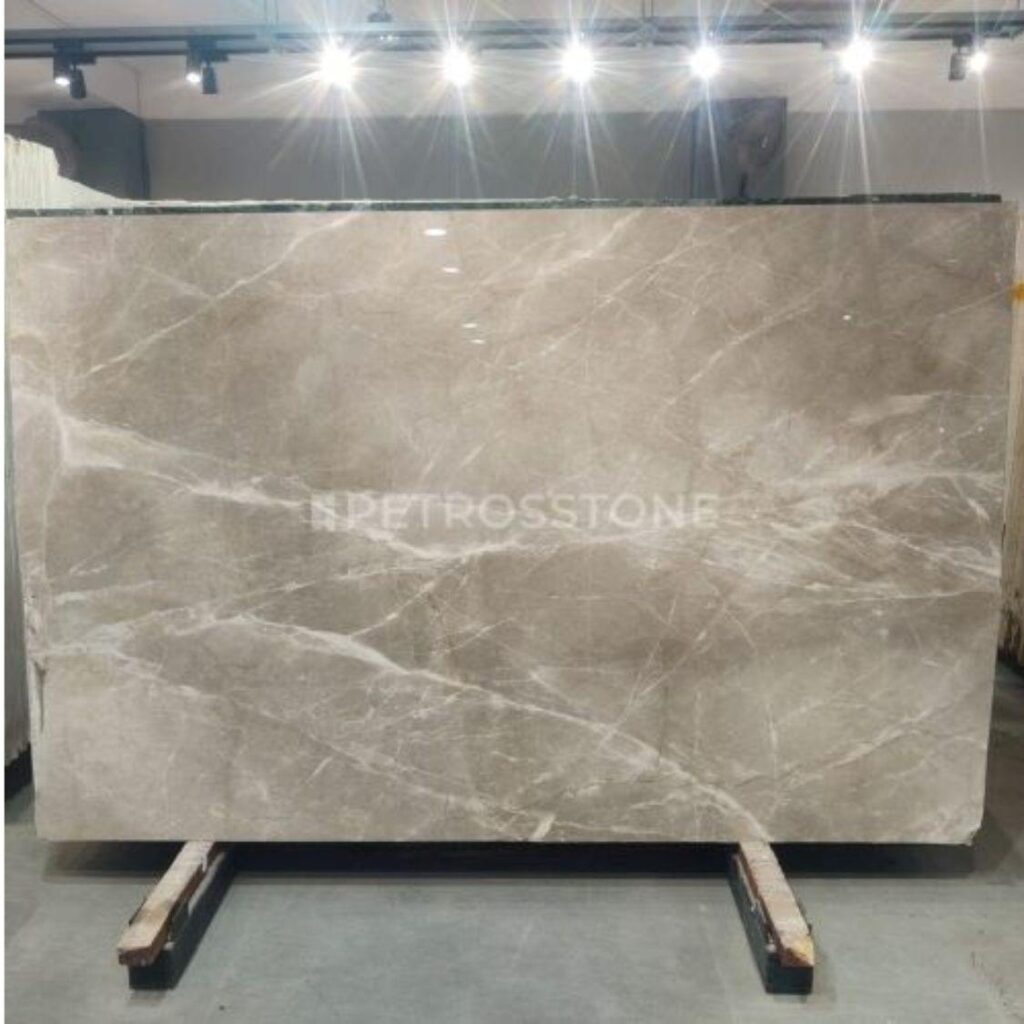
| Popular Variety | Visual Appearance | Cost | |
| Indian Marble | Grey Mist Marble | Smooth grey background featuring soft veins in silver and white, offering a mist-like visual appearance. | USD 1.90 per sq. ft. |
| Italian Marble | Burberry Grey Marble | A modern-looking grey marble featuring a taupe-grey background with a delicate veining pattern in white tones. | USD 2.50 per sq. ft. |
Key Takeaways
- Authentic Italian marble should be identified through its variety, veining, finish quality, and price range rather than a single feature.
- Always ask for a certificate of origin and quarry documentation to verify marble authenticity.
- Proper documentation improves resale value and builds buyer confidence during future property transactions.
- Export-grade Italian marble generally offers better consistency, lower defects, and superior finishing compared to commercial grades.
At Petros® Stone, Italian marbles are sourced from trusted quarries with proper authenticity documentation and transparent sourcing practices. You can explore our range of Italian marble here.
Feel free to get in touch for a free consultation, quote, and get a detailed understanding from our experts here at Petros®. Visit www.petrosstone.com or call +91-8446360361 or WhatsApp

Hello!
I’m Tanika, an architect and writer, blending design expertise with a passion for storytelling. At Petros Stone, I help readers navigate through the complex material choices and empower them to craft well-informed and beautiful spaces through natural stones.

Brown Granite

White Galaxy Granite

Blue Bahia Granite

Silver Cloud Granite

Black Pearl Granite

Dallas White Granite