When people choose a kitchen countertop, they usually start with the slab—granite or quartz, light or dark, natural or engineered. The edge profile often comes later, almost like a finishing touch.
That is a mistake in homes with children.
The edge is the part a child runs into, leans against, grabs while turning, or meets at head height near an island or breakfast counter. In active homes, the kitchen is rarely a quiet, adult-only space. It is a moving environment where children pass through, meals are prepared, and multiple people use the space at once. In that context, edge choice is not decoration — it is part safety, part durability, and part common sense.
Here’s a list of 10 Most Kid-Friendly Kitchen Countertop Edges:
- Full Bullnose Edge
- Half Bullnose Edge
- Pencil Round Edge
- Eased Edge with Soft Radius
- Demi Bullnose Edge
- Small Roundover Edge
- Waterfall Radius Edge
- Double Pencil / Soft Contemporary Radius
- Laminated Rounded Edge
- Large Radius Custom Safety Edge
Countertop
Edge
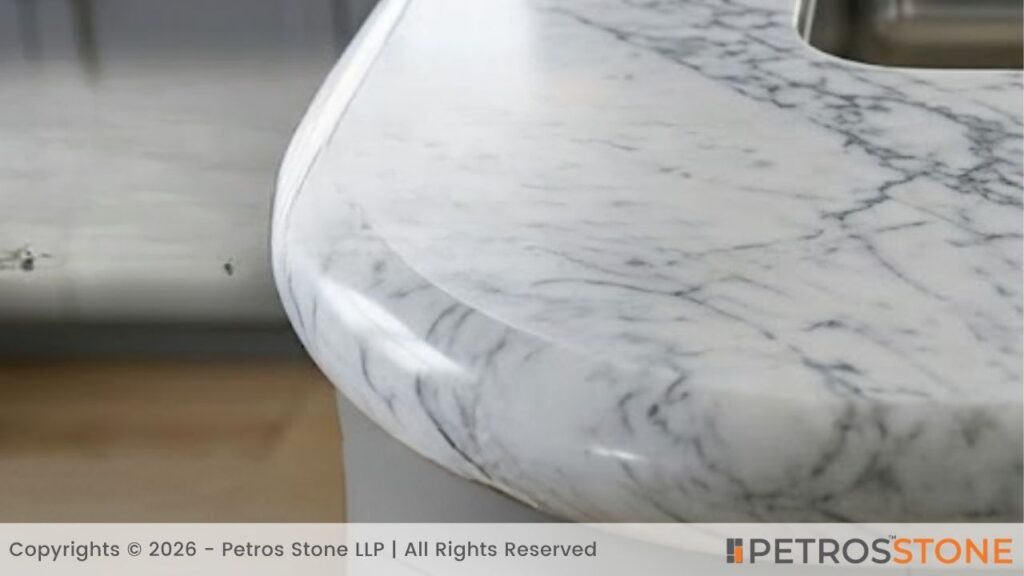
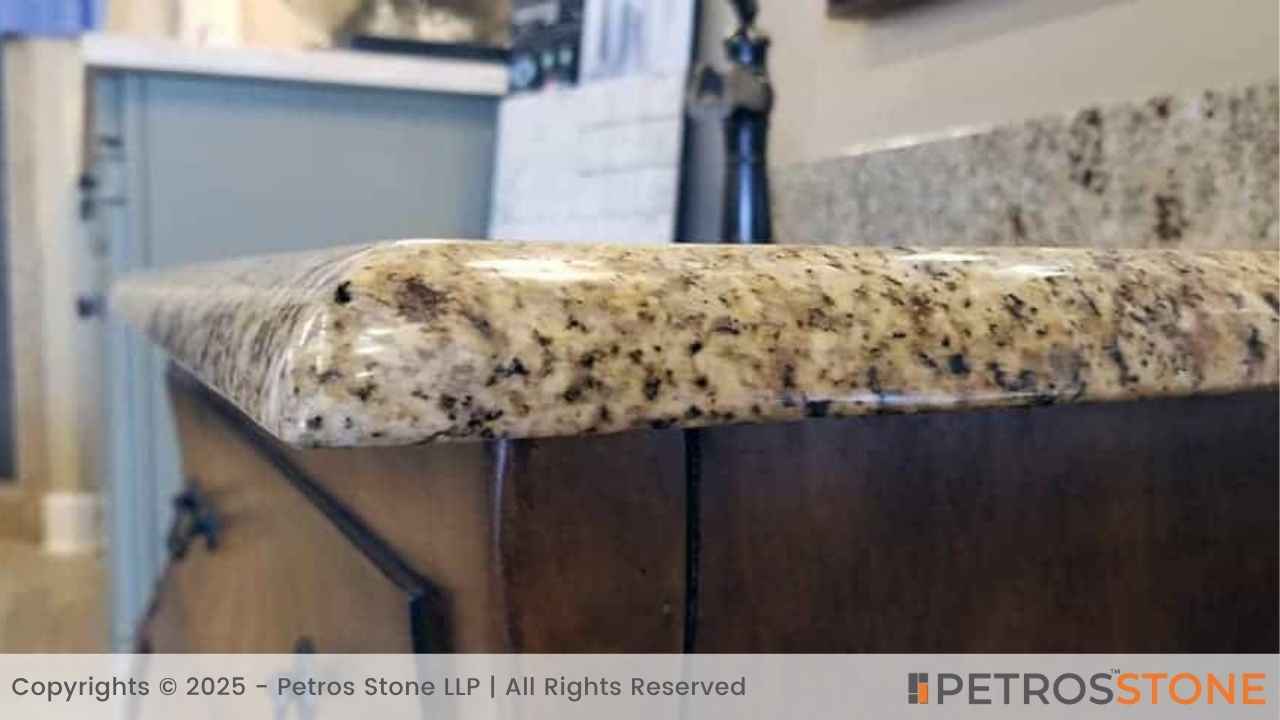
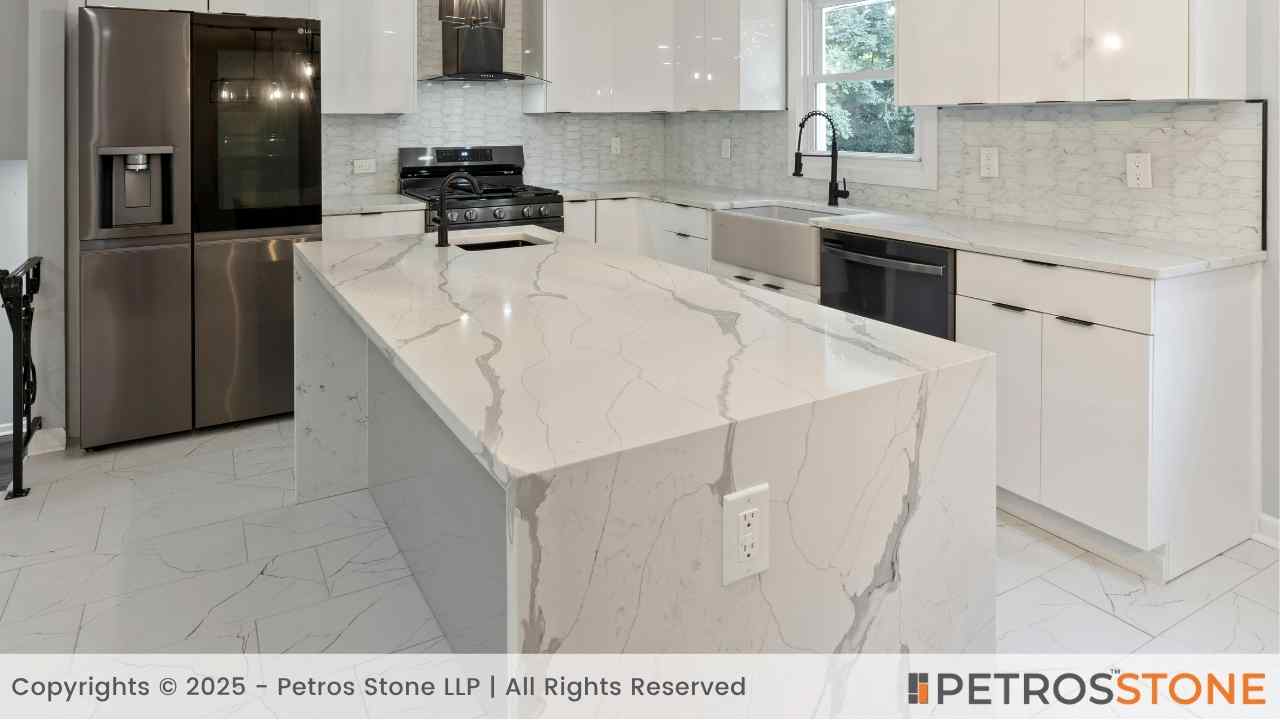
There is no such thing as a truly injury-proof stone edge. A hard surface is still a hard surface. But some profiles are clearly more forgiving than others. Child-safe design guidance consistently recommends rounded edges and avoiding sharp projecting corners in areas used by children. That principle applies directly to kitchen countertops.
So, the real question is not just what looks best, but what will still feel sensible once daily use begins.
In this article, we break down the most kid-friendly countertop edge profiles and explain how each performs in real-world use. We also look at what actually makes an edge safer — not just in theory, but in daily kitchen activity. By the end, you will have a clear, practical understanding of which edge works best for your home, your material, and your level of usage.
- Why Countertop Edge Choice Matters More in Homes With Children
- What Makes a Countertop Edge Kid-Friendly
- Material Compatibility
- Technical Perspective (Lab vs Real-World Performance)
- 10 Most Kid-Friendly Kitchen Countertop Edges
- 1. Full Bullnose Edge
- 2. Half Bullnose Edge
- 3. Pencil Round Edge
- 4. Eased Edge with Soft Radius
- 5. Demi Bullnose Edge
- 6. Small Roundover Edge
- 7. Waterfall Radius Edge
- 8. Double Pencil / Soft Contemporary Radius
- 9. Laminated Rounded Edge
- 10. Large Radius Custom Safety Edge
- Cost and Practical Considerations
- Typical Edge Pricing
- Factory Insight – How Edges Are Actually Made
- Real-World Observation
- Common Mistakes
- How to Choose the Right Kid-Friendly Edge
- FAQs
- Key Takeaways
Why Countertop Edge Choice Matters More in Homes With Children
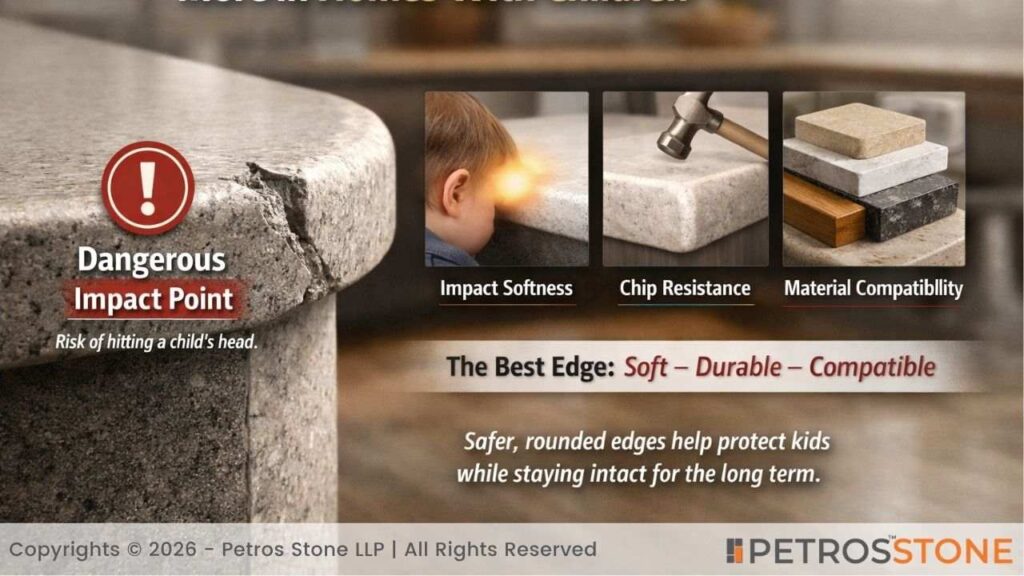
A sharp edge becomes risky because it sits exactly where a child’s forehead, cheekbone, or arm may hit during movement.
Modern kitchens often include islands or peninsulas that double as eating areas or workspaces. These create exposed corners that receive more daily contact than expected.
There is also a durability aspect. A chipped corner is not just a cosmetic issue, it creates a sharper, more unpredictable impact point. The best kid-friendly edge is not only softer but also one that stays intact over time.
That is why edge selection should consider three factors together – impact softness, long-term chip resistance, and compatibility with the material.
Real Project Experience
Over the past 10–15 years working with natural stone and engineered surfaces across residential kitchen projects, we have seen a consistent pattern: edge-related complaints are far more common in homes with children.
In multiple installations, especially island countertops, sharp or minimally eased edges that looked acceptable in showroom samples became problematic once installed at full scale.
The most frequent issues observed on-site include:
- Minor head or arm impacts at island corners
- Edge chipping at high-contact zones
- Users informally “rounding off” edges over time through wear
In contrast, projects using full bullnose, demi bullnose, or large radius edges consistently showed fewer complaints and better long-term satisfaction.
What Makes a Countertop Edge Kid-Friendly
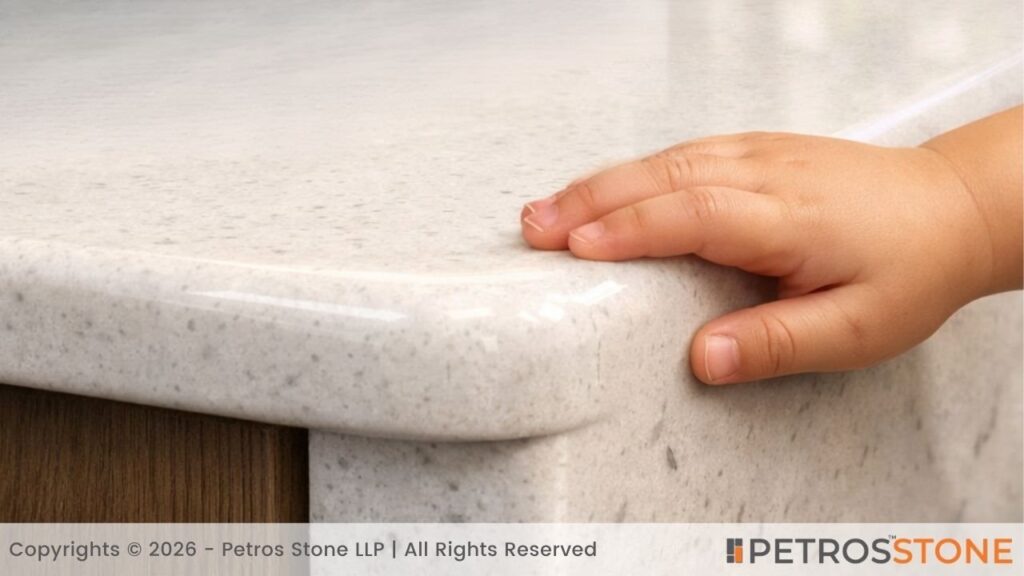
The first factor is radius. More rounding generally means safer impact. A sharp square edge concentrates force, while a curved edge distributes it.
The second factor is corner continuity. Some profiles appear soft from one angle but still have sharp transitions. Others are rounded throughout.
The third factor is practicality. Some decorative edges trap dirt or allow water to drip more easily. The most effective edge balances safety with ease of maintenance.
In most cases, the best profiles soften the impact without becoming overly complex or difficult to clean.
A Summarized Table
| Factor | What It Means | Impact on Safety | Practical Considerations |
|---|---|---|---|
| Radius (Curvature) | Degree of rounding on the edge profile | Larger radius spreads impact force, reducing injury risk | Very large radii may slightly reduce sharp visual definition |
| Corner Continuity | Whether the edge remains smooth and rounded across the entire profile | Continuous curves eliminate hidden sharp points and reduce sudden impact zones | Some profiles look soft but still have sharp underside transitions—must be checked closely |
| Practicality | Ease of cleaning and daily usability | Indirect safety—clean edges prevent buildup that can create slippery or unhygienic zones | Overly decorative edges can trap dirt, water, and grease; simpler profiles perform better |
Quick Takeaway
The safest and most effective countertop edges are those with consistent curvature (good radius), fully rounded transitions (true continuity), and simple geometry (easy maintenance) — not just visually soft designs.
Material Compatibility
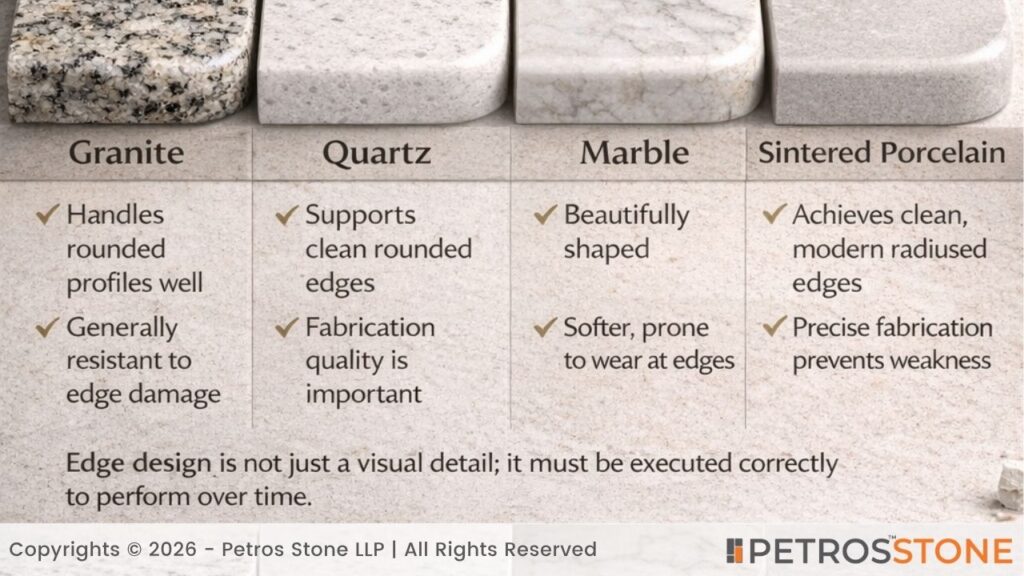
Not every edge behaves the same across materials.
Granite handles rounded profiles well and is generally resistant to edge damage. Quartz also supports clean rounded edges, though fabrication quality is important. Marble can be shaped beautifully but is softer and more prone to wear at exposed edges.
Sintered surfaces and porcelain slabs achieve clean, modern radiused edges, but fabrication precision is critical to avoid edge weakness.
Edge design is not just a visual detail; it must be executed correctly to perform over time.
Technical Perspective (Lab vs Real-World Performance)
From a material science standpoint, edge durability depends on density, porosity, and internal bonding strength. These are measured using international standards such as:
- ASTM International C97 (Water Absorption)
- ASTM International C170 (Compressive Strength)
- ASTM International C99 (Flexural Strength)
- Bureau of Indian Standards IS codes for dimensional stone
Typical Values (Industry Range):
- Granite density: ~2.60–2.75 g/cm³
- Water absorption: 0.2–0.4%
- Compressive strength: 180–220 MPa
While these values indicate strong bulk material performance, edge behavior is different.
Lab tests measure full slab strength, but edges are localized stress points, where poor polishing or sharp geometry increases failure risk.
This is why rounded profiles perform better in real-world conditions—even when lab values remain identical.
10 Most Kid-Friendly Kitchen Countertop Edges
A sharp, minimal edge may look appealing in a showroom. In daily use, especially in active households, it can feel far more aggressive.
Kitchens are working environments. Counters are used for cooking, serving, and quick tasks. The most effective edge is not the most dramatic one, it is the one that blends into daily life while remaining safe and durable.
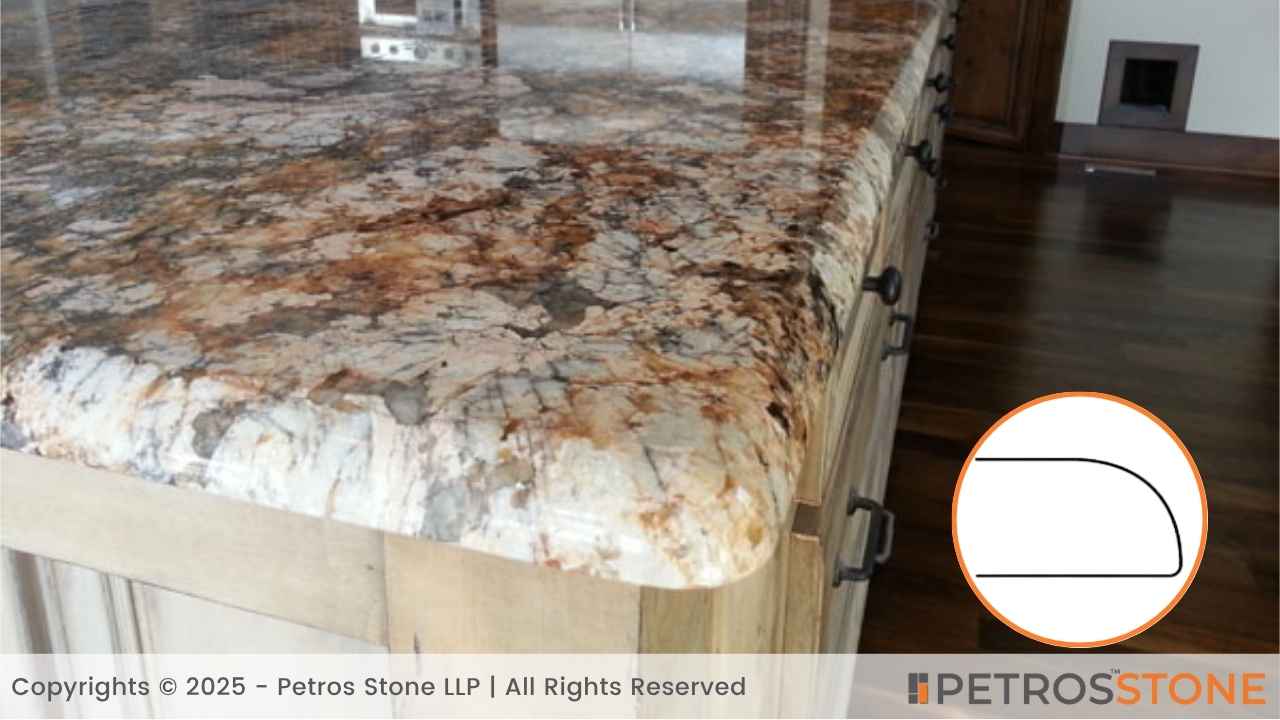
1. Full Bullnose Edge
This is the most commonly recommended safety-focused profile.
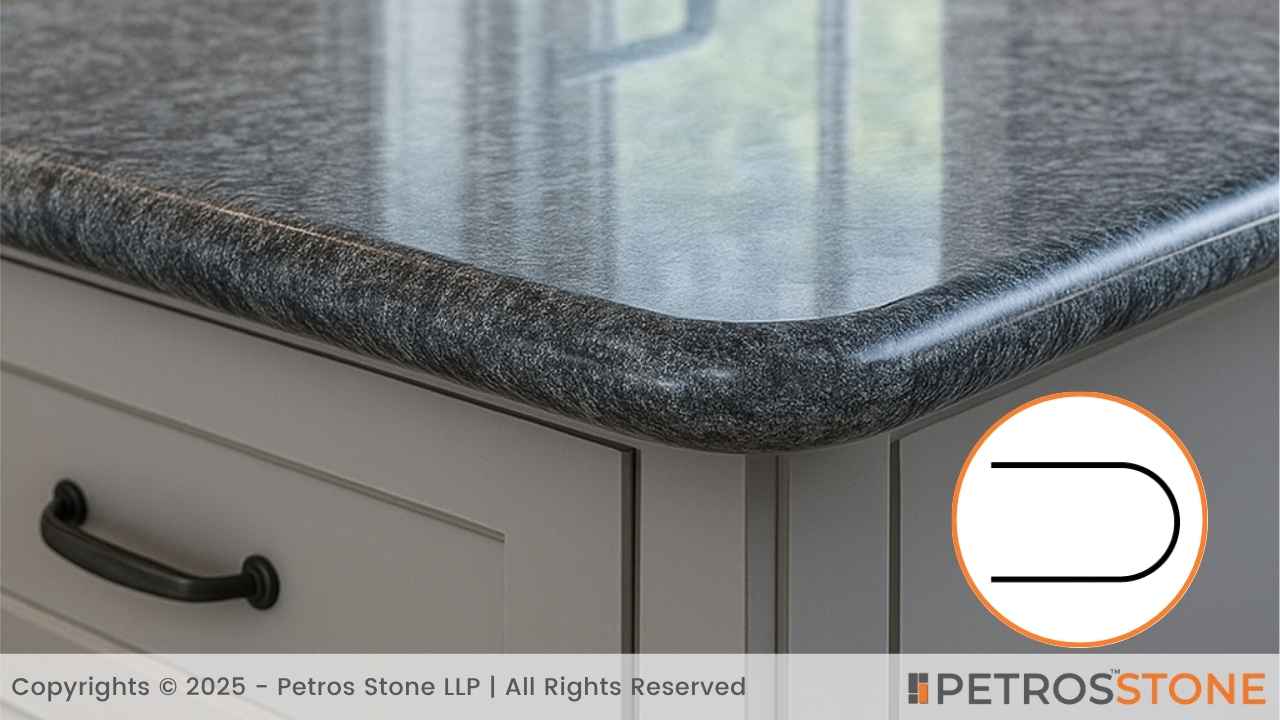
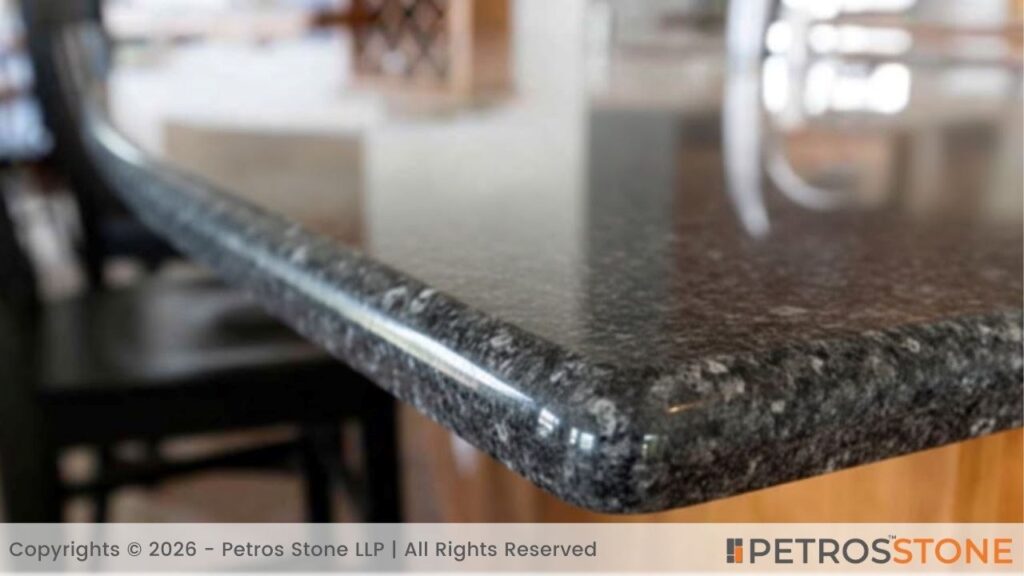
A full bullnose is rounded from top to bottom with no sharp transitions. It reduces impact severity and minimizes the risk of chipping.
The downside is that it can allow water to run underneath and may appear more traditional. Still, for safety, it remains one of the best options.
Pro-Tip – Solving the ‘Bullnose Drip’
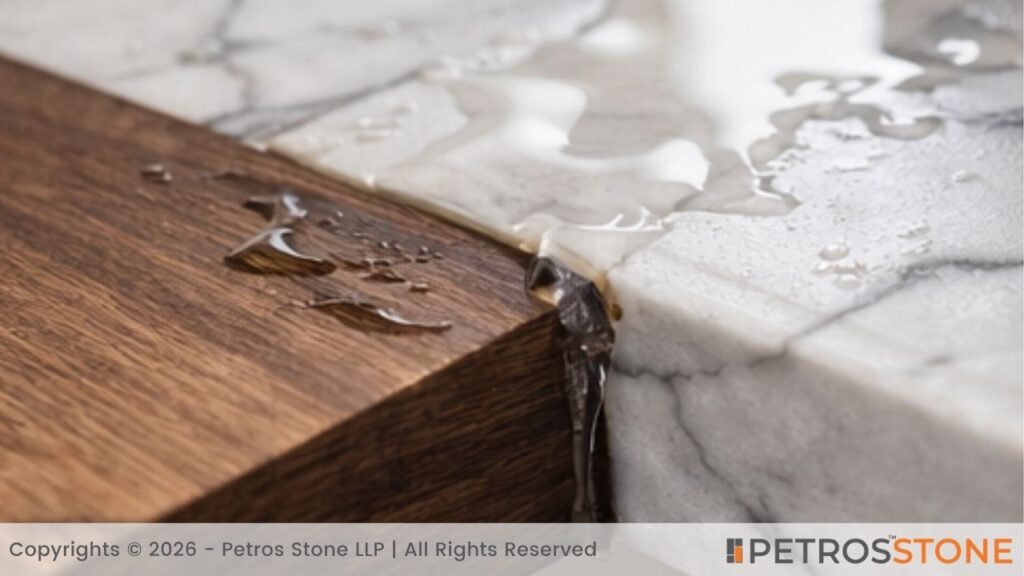
As mentioned, one common hesitation with Full Bullnose or highly rounded edges is that liquids don’t ‘break’ at the edge; surface tension allows water to curl under the stone and run down your expensive cabinetry.
The Solution – The Drip Groove (Kerf Cut).
Ask your fabricator to cut a shallow, 2mm to 3mm deep groove on the underside of the stone, roughly 12mm to 15mm back from the front edge. This ‘kerf cut’ physically breaks the surface tension, forcing water to drip onto the floor rather than reaching your cabinet doors. It’s an invisible detail that provides the safety of a Bullnose with the practical protection of a Half Bullnose.
2. Half Bullnose Edge
Half bullnose offers a balanced approach.
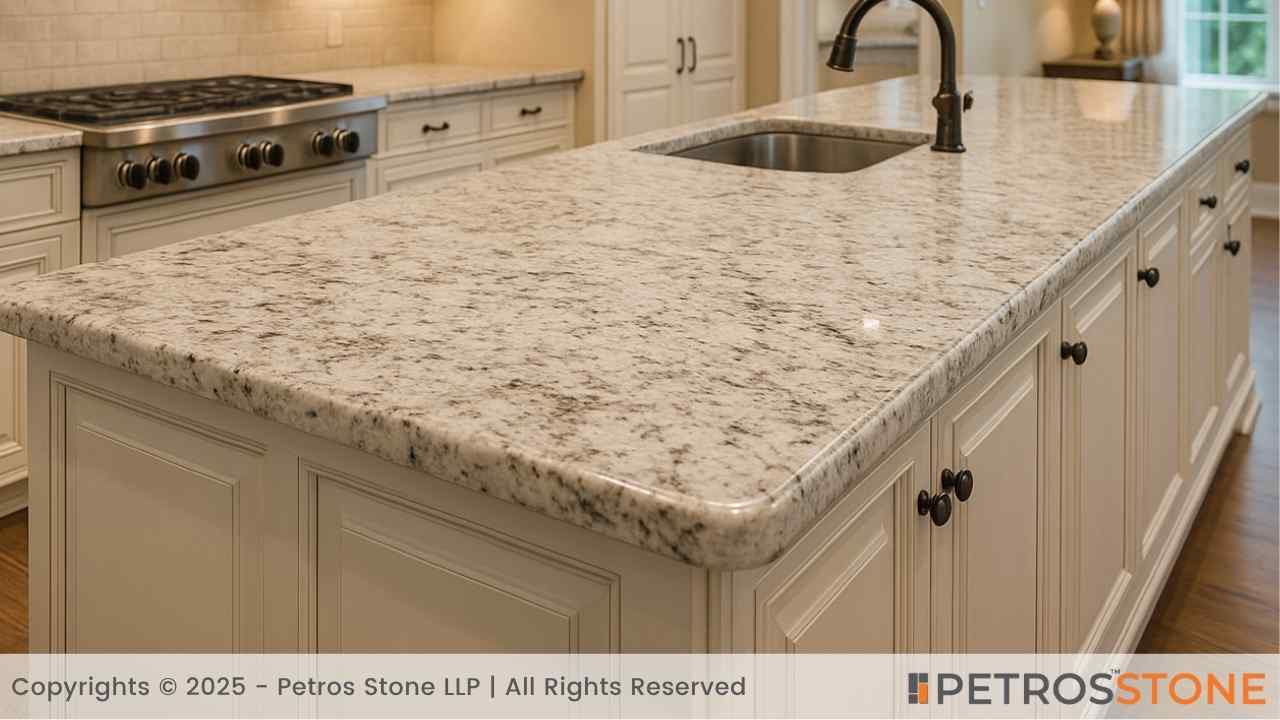
It softens the top edge while keeping the underside more controlled. This provides improved safety without the full rounded appearance.
It works well for those who want a practical yet modern solution.
3. Pencil Round Edge
Pencil round is one of the most widely used profiles.
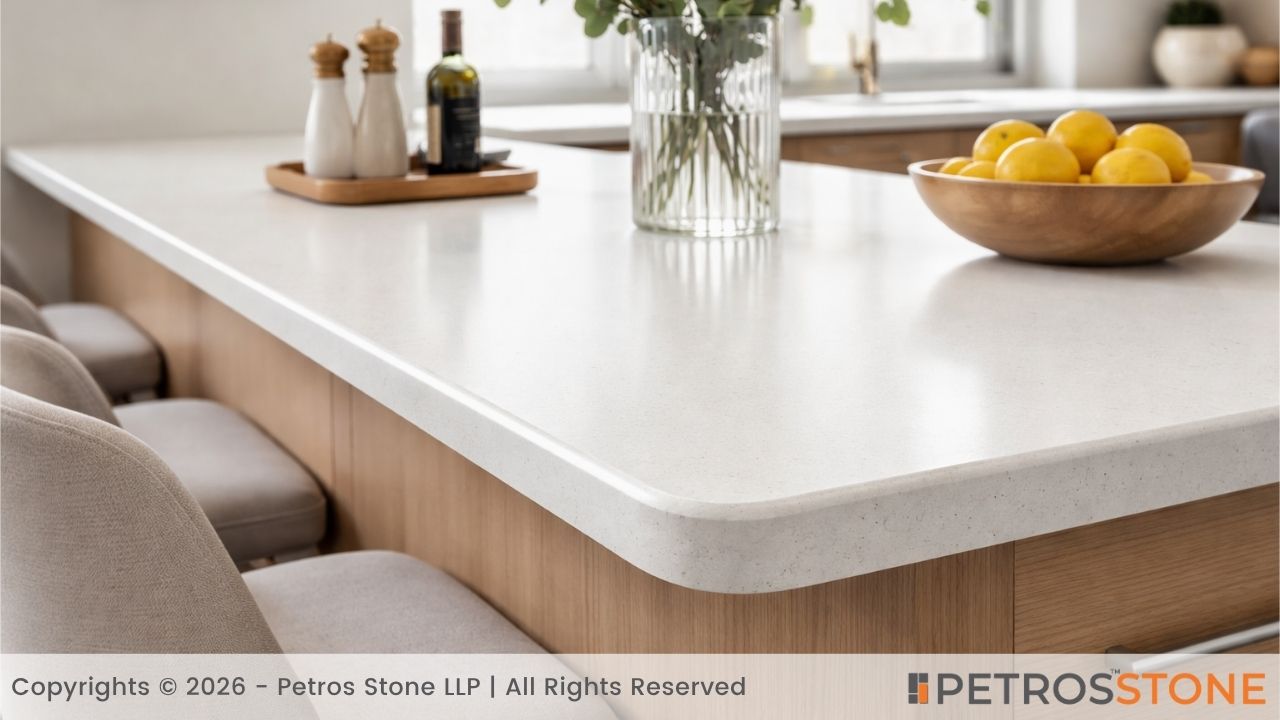
It slightly softens the edge while maintaining a clean, modern look. It removes the sharpness of a square edge without adding bulk.
While not as soft as a full bullnose, it offers a strong balance between safety and design.
4. Eased Edge with Soft Radius
A basic eased edge can feel sharp if poorly finished. However, a properly softened version introduces a subtle radius.
This is often chosen for minimalist designs, but it is not the safest option for young children. It improves upon a sharp edge but does not provide the same level of impact reduction as rounded profiles.
5. Demi Bullnose Edge
Demi bullnose sits between simple and decorative.
It provides a more refined look than pencil round while still maintaining a rounded form. It performs well in terms of safety and durability, particularly on harder materials.
This is a subtle and practical choice.
6. Small Roundover Edge
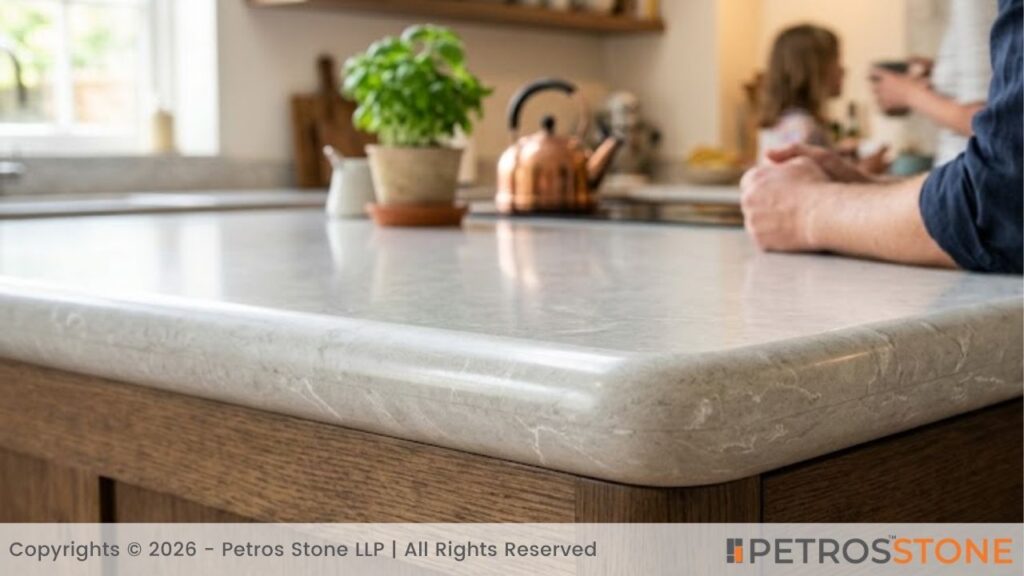
It slightly softens the edge without changing the overall profile significantly. It works well where a full rounded edge may feel too heavy.
For households with older children, it often provides sufficient safety.
7. Waterfall Radius Edge
This is typically used for islands and exposed ends.
A waterfall radius softens both the horizontal edge and the vertical drop, reducing the risk at key impact points. Since island corners are common collision areas, this design can significantly improve safety.
8. Double Pencil / Soft Contemporary Radius
This profile creates a balanced, symmetrical soft edge.
It maintains a modern look while removing harsh lines. It is particularly suitable for contemporary kitchens where design consistency is important.
9. Laminated Rounded Edge
This involves building up the edge thickness and then rounding it.
It creates a more substantial, softer edge and can improve both safety and visual weight. It is often used for islands or counters where people frequently lean.
The trade-off is higher fabrication cost and the need for precise workmanship.
10. Large Radius Custom Safety Edge
For households prioritizing safety, this is often the best solution.
A larger custom radius significantly reduces impact harshness. It is especially useful in kitchens with young children or high activity levels.
While less commonly displayed in showrooms, it can be one of the most effective upgrades.
Less Suitable Edge Profiles
Some profiles look appealing but are less practical for family use.
Sharp square edges are the most problematic, concentrating impact force. Beveled edges reduce sharpness slightly but still create defined angles.
Decorative profiles such as ogee edges add visual complexity but introduce harder geometry and maintenance challenges. In active kitchens, these often create more problems than they solve.
Cost and Practical Considerations
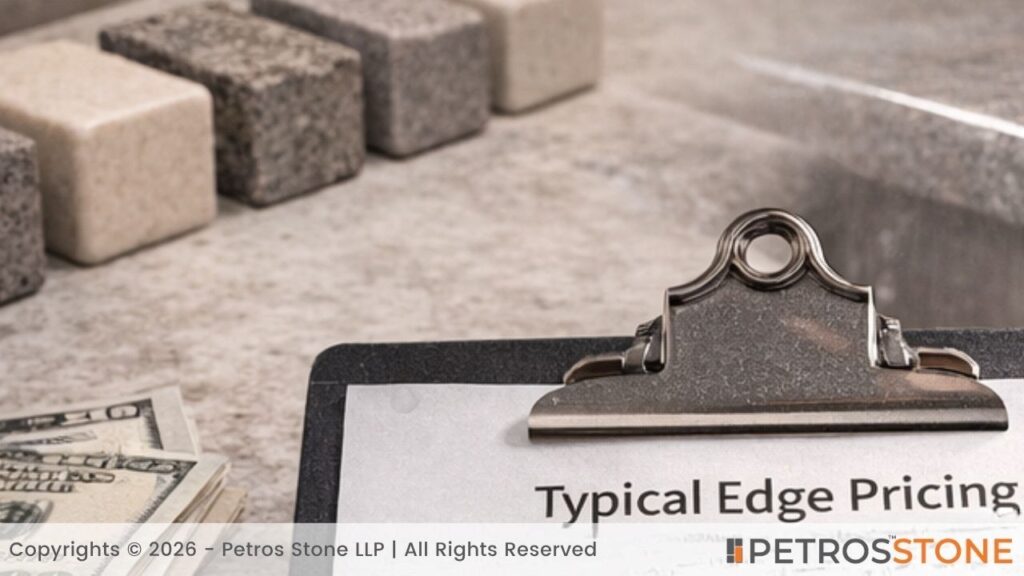
Rounded edges generally cost more than basic straight edges due to additional fabrication and polishing.
However, the long-term value often outweighs the initial cost. Durability, safety, and daily usability matter more than small upfront savings.
Execution is equally important. Even a well-chosen edge can fail if fabricated poorly. Consistency across corners and edges is critical.
Typical Edge Pricing
| Edge Profile | Thickness | Price (USD / running ft) | Remarks |
|---|---|---|---|
| Straight / Eased Edge | 20mm | $0 – $2 | Usually included in base fabrication |
| Pencil Round (Small Radius) | 20mm | $2.5 – $4.5 | Most common modern safe edge |
| Demi Bullnose | 20–30mm | $4.5 – $7.5 | Good balance of safety + design |
| Full Bullnose | 20–30mm | $6 – $11 | Higher polishing effort required |
| Large Radius / Custom Safety Edge | 30–40mm (laminated) | $10 – $22 | Premium, best for child-safe designs |
| Laminated Thick Edge (40mm+) | Built-up | $15 – $30 | Includes bonding + edge shaping |
Note:
- Prices are fabrication-only, excluding stone cost
- Export projects follow FOB India pricing, while domestic includes installation
- Quartz and sintered materials typically cost 10–20% more in edge work due to tooling wear
Factory Insight – How Edges Are Actually Made
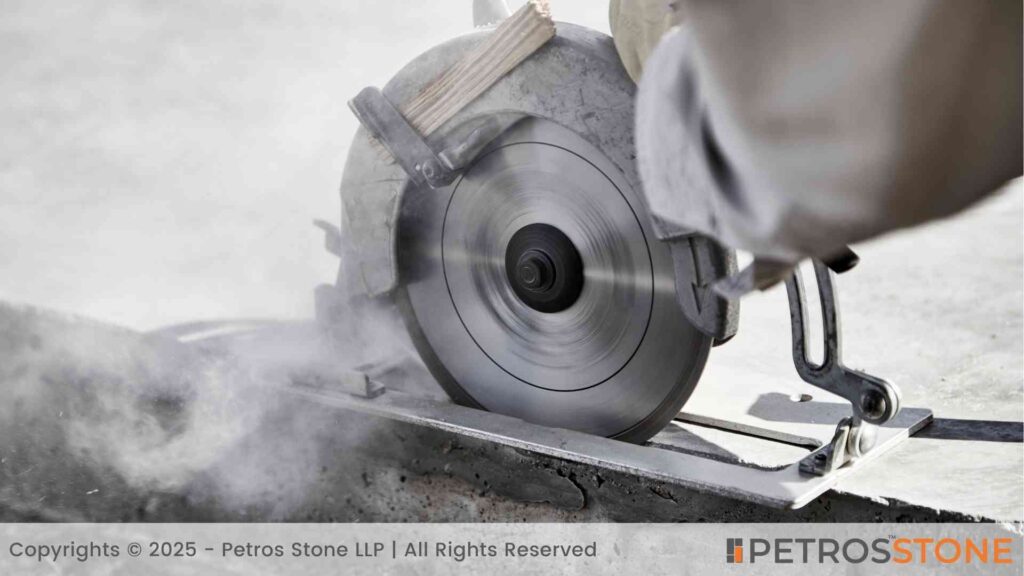
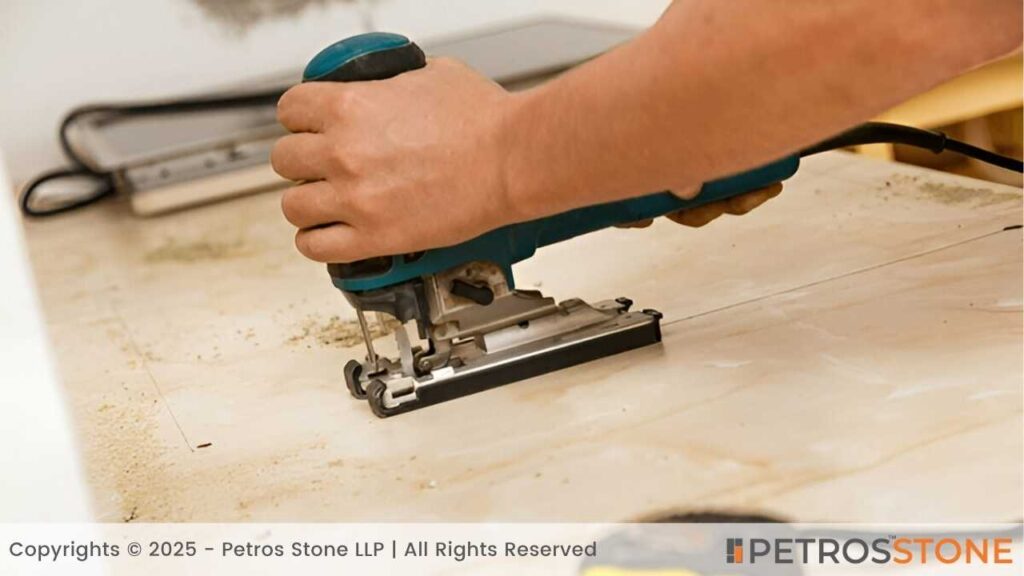
Edge quality depends heavily on fabrication processes, not just design selection.
In most factories:
- Slabs are cut using gang saw machines (for granite) or bridge cutters (CNC)
- Edges are shaped using diamond profiling wheels
- Final finish is achieved through multi-stage polishing (grits 50 to 3000)
For quartz and engineered surfaces:
- Resin-bound material requires controlled polishing speed to avoid edge burning
For sintered surfaces:
- Calibration and edge reinforcement are critical to prevent micro-cracks
A well-designed edge can still fail if:
- Polishing is inconsistent
- Radius is uneven
- Corners are manually finished without templates
This is why two identical edge profiles can perform very differently depending on the fabricator.
Real-World Observation
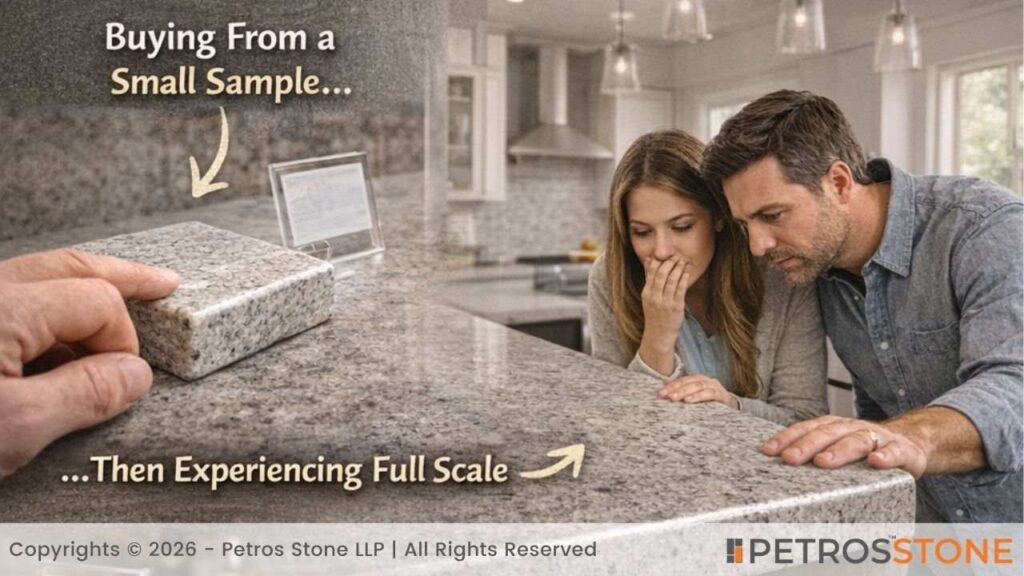
A common pattern is that buyers choose an edge based on a small showroom sample, then reconsider once they see the full-scale installation.
Edges that appear subtle in samples can feel significantly sharper in real spaces, especially at typical impact heights. This highlights the importance of evaluating edges in context, not just in isolation.
Common Mistakes
- Treating the edge as a minor detail
- Assuming all rounded edges provide equal safety
- Ignoring material compatibility
- Overlooking fabrication quality
- Prioritizing appearance over daily usability
How to Choose the Right Kid-Friendly Edge
- If safety is your top priority, choose a full bullnose or a large custom safety radius.
- If you want a modern kitchen that still feels family-appropriate, choose half bullnose, pencil round, or double pencil / soft contemporary radius.
- If you are choosing a central island with children in the house, spend more attention on the exposed corners than the long runs. A radiused waterfall or thicker, rounded build-up can be well worth it.
- If the budget is tight, a good pencil round is often better than a badly executed fancy edge.
- And if multiple generations use the same kitchen, err on the side of softness. People rarely regret a safer edge. They do regret a beautiful, sharp one after the first bad collision.
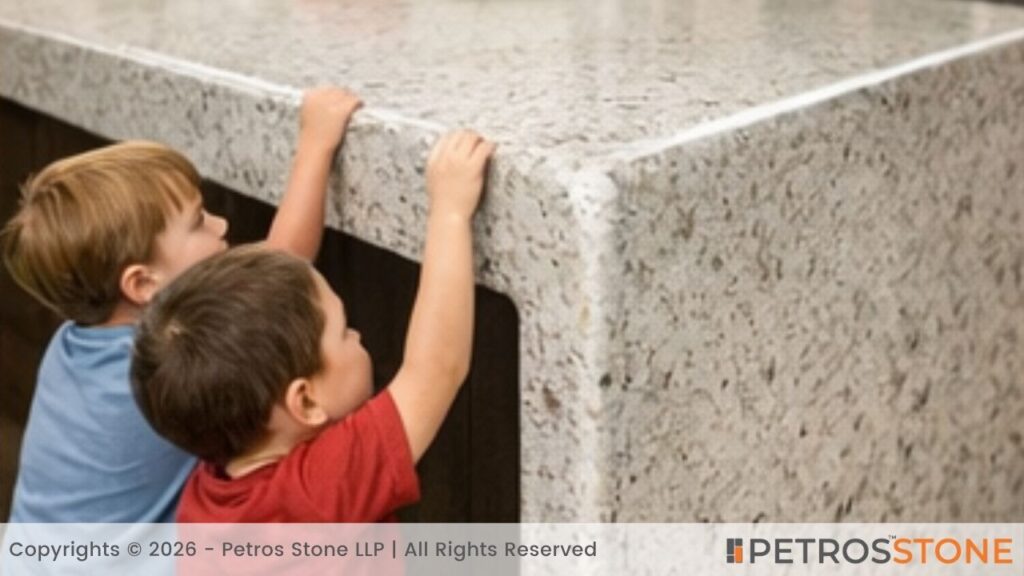
In most cases, a slightly softer edge is a better long-term decision than a sharp, visually striking one.
FAQs
Which countertop edge is safest for children?
Full bullnose is usually the safest standard option. A custom larger radius can be even better if the layout has exposed corners.
Is bullnose better than pencil round for Indian homes?
For pure safety, yes. For balancing safety with a more modern look, pencil round is often the better compromise.
Are quartz countertop edges safer than granite edges?
The shape matters more than the material for impact. But long-term chip resistance depends on both material and fabrication quality.
Which edge chips the least over time?
Generally, more rounded profiles chip less visibly than sharp square or beveled edges because they do not leave a thin fragile corner.
Do rounded edges cost significantly more?
Usually more, yes, but not wildly more in the context of the full kitchen. The extra fabrication is often worth it in family homes.
What edge should I choose for a kitchen island with kids?
A half bullnose, soft double pencil, or waterfall radius edge is usually the smartest choice. Avoid sharp mitered island corners if children use the space daily.
Key Takeaways
- Safety over style – The best countertop edge is not the most visually striking, but the one that consistently feels safe during everyday use.
- Softer edges perform better in real life – Rounded or softened profiles reduce impact risk and are better suited for active, family-oriented kitchens.
- Think beyond installation day – A kitchen is a working space—choose an edge that remains comfortable, durable, and practical over time, not just appealing in a showroom.
Feel free to get in touch for a free consultation, quote, and get a detailed understanding from our experts here at Petros®. Visit www.petrosstone.com or call +91-8446360361 or WhatsApp

Hi, I’m Shivangi,
With years of experience in the architecture and design space, I write to bridge the gap between material knowledge and practical application. At Petros® Stone, I create content that highlights the beauty, function, and impact of natural stones, helping homeowners and professionals make confident design decisions.
Explore my LinkedIn profile to learn more about my work!

Brown Granite

White Galaxy Granite

Blue Bahia Granite

Silver Cloud Granite

Black Pearl Granite

Dallas White Granite