Granite tiles are admired as symbols of beauty and strength. For centuries, they have graced palaces, temples, luxury hotels, and modern homes across the world. Known for their exceptional toughness, these tiles bring a sense of luxury while delivering unmatched longevity in both residential and commercial spaces.
Granite itself is a natural stone formed from slowly cooled magma deep beneath the Earth’s surface. This gradual cooling creates a dense, crystalline structure capable of withstanding heat, moisture, and immense pressure. Today, granite tiles are widely used in homes, offices, commercial buildings, and public areas because they offer a perfect blend of aesthetic appeal and outstanding performance.


Granite Tiles – Pros and Cons
| Pros | Details |
|---|---|
| Highly durable | Granite withstands heavy use and can last decades; even after 15–20 years, floors look new after re-polishing. |
| Supports heavy appliances | Ideal for kitchens—handles the weight of refrigerators, ovens, and other large appliances. |
| Heat, spill & scratch resistance | Resists everyday kitchen spills, heat exposure, and wear. |
| Natural variation & beauty | Offers unique colours and patterns; polished surfaces reflect light and make small rooms look bigger. |
| Luxurious underfoot feel | Users love the cool, premium feel of granite tiles. |
| Low maintenance | Remains spotless with basic cleaning and annual sealing. |
| Adds property value | High aesthetic appeal increases the premium feel of the home. |
| Cons | Details |
|---|---|
| Heavy material | Requires professional installation; if mishandled or dropped, tiles may crack. |
| Needs annual sealing | Must be sealed once a year to stay stain-resistant. |
| Cool surface | The cool underfoot feel may be uncomfortable in colder climates (though many consider this a pro). |
| Can be slippery when highly polished | Especially when wet, polished granite may reduce traction (general material trait). |
In this article, we will cover all aspects related to granite tiles, including their manufacturing process, benefits, drawbacks, differences with other types of tiles, the opinions of professionals, maintenance guidelines, and tips on how to buy them. Towards the end, you will have a very distinct picture of whether granite tiles are the right decision for your place.
- Granite Tiles – Pros and Cons
- Understanding Granite Tiles
- What Are Granite Tiles
- Manufacturing and Finishing Process
- Table – Manufacturing and Finishing Process
- Common Granite Tile Finishes
- Comparison with Other Tile Types
- Table – Granite vs Porcelain Tiles
- Table – Granite vs Marble Tiles
- Granite vs Ceramic, Travertine, Quartzite, and Slate Tiles
- Table – Granite vs Ceramic, Travertine, Quartzite, and Slate Tiles
- Advantages of Granite Tiles (Pros)
- Disadvantages of Granite Tiles (Cons)
- Expert Review and Insights
- Cost and Value Analysis
- Table – Cost and Value Analysis
- Aesthetic and Design Review
- Care and Maintenance Guide
- Table – Sealing and Preventive Care for Granite Tiles
- Buying Guide and Selection Tips
- Budget Planning and Price Comparison
- Summary
- Key Takeaways
Understanding Granite Tiles
What Are Granite Tiles
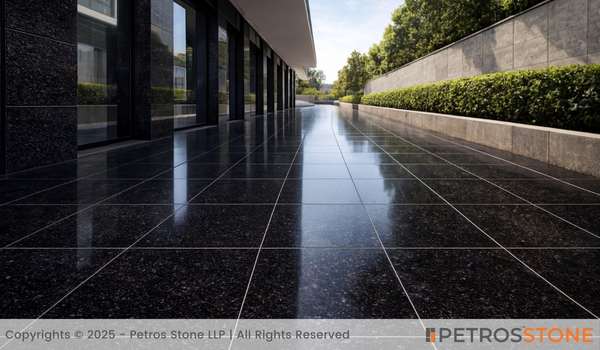
Granite tiles are flat and accurately cut from granite blocks. Moreover, their structure mirrors the mineral texture of the stone, creating patterns that cannot be reproduced artificially. They are available in different sizes, finishes, and thicknesses to suit different interiors and exteriors.
Granite is an igneous rock. Additionally, it forms through the slow crystallization of magma deep beneath the earth’s surface. It consists principally of three major minerals:
- Quartz: Gives it sparkle, hardness, and scratch resistance.
- Feldspar: adds color, luster, and visual warmth.
- Mica: Contains reflective glimmer, which improves the beauty of nature.
The mixture of these minerals makes granite have its trademark checkerboard look and high wear and tear resistance. The surface can be highly polished to give an elegant interior appearance or rough-textured (flamed, leathered) to give it an outdoors grip and natural appearance.
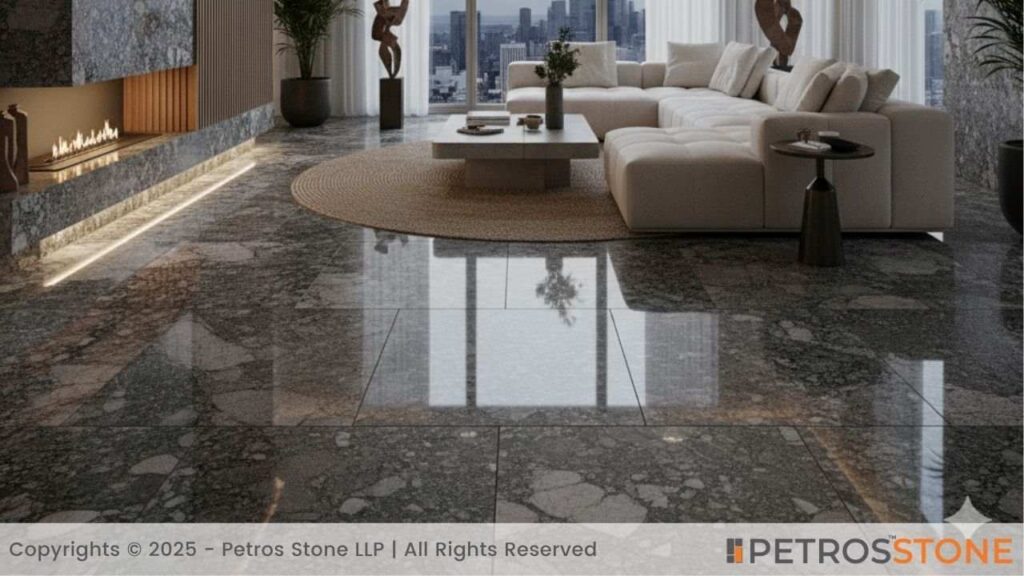
In residential and commercial settings, granite tiles remain popular because they balance strength with aesthetic appeal. Furthermore, they offer consistent performance even under heavy use. They offer:
- High-performance durability.
- Natural difference in color and pattern.
- Excellent heat, scratch, and wear resistance.
- High aesthetic appeal and added property value.
As a result, these qualities make granite tiles one of the most reliable options for achieving classic, elegant, and long-lasting surfaces.
Manufacturing and Finishing Process
Granite passes through a process of various steps before it is finished and installed as a tile.
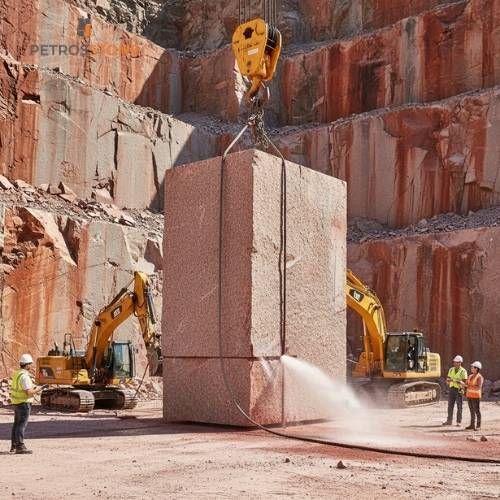
Granite blocks are extracted from quarries using advanced cutting tools
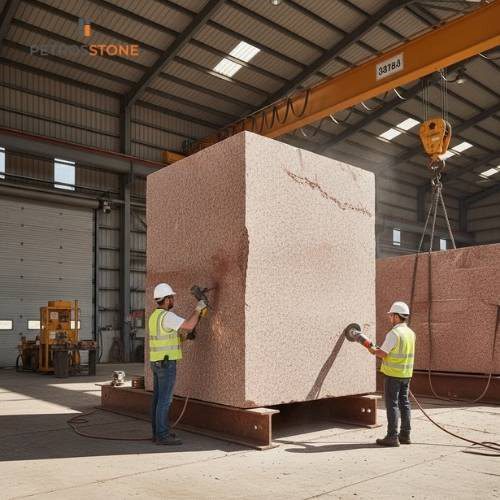
Blocks are shaped and prepared for cutting
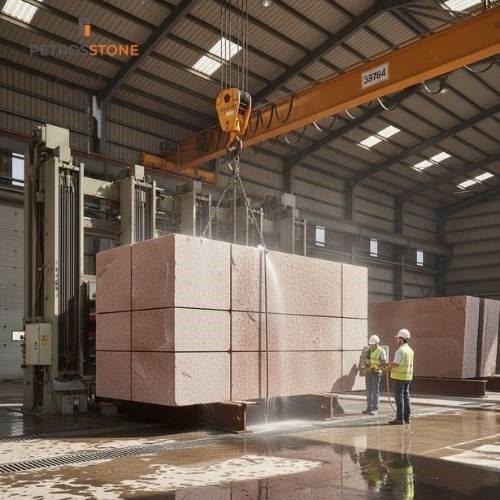
Diamond wire saws slice the blocks into slabs
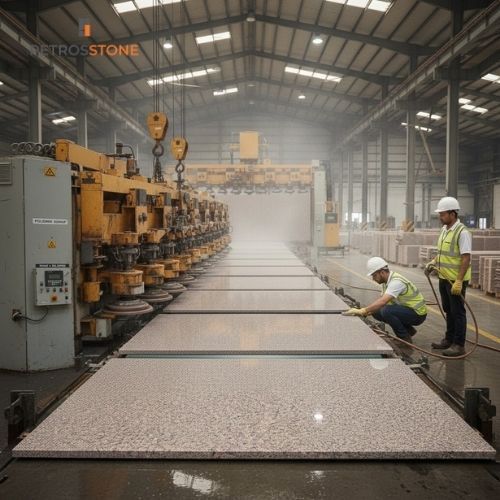
The surface is ground and polished to achieve the desired finish
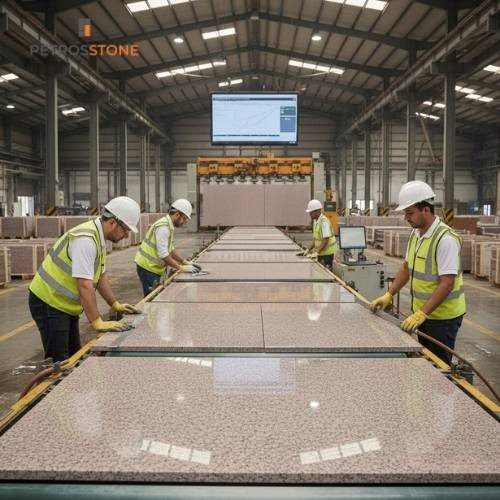
Tiles are inspected for cracks, uniformity, and thickness
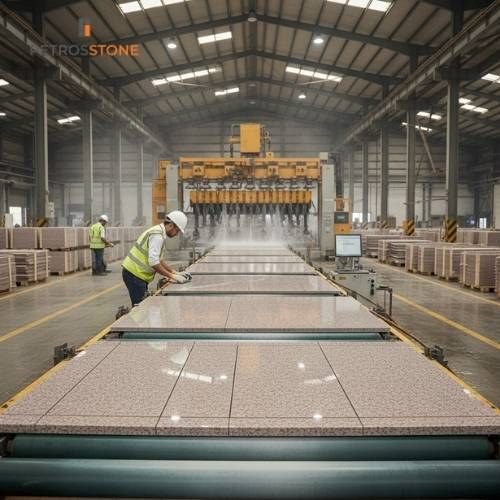
Slabs are cut into standard tile sizes
(e.g., 12×12, 24×24 inches)
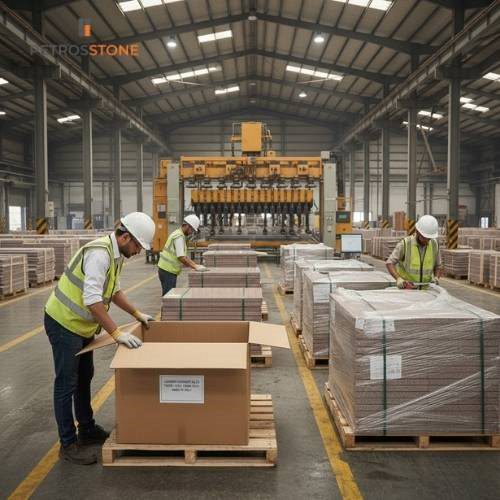
Tiles are labeled and packed for shipping
Table – Manufacturing and Finishing Process
| Step | Process | Description |
| 1 | Quarrying | Granite blocks are extracted from quarries using advanced cutting tools. |
| 2 | Dressing | Blocks are shaped and prepared for cutting. |
| 3 | Cutting | Diamond wire saws slice the blocks into slabs or tiles. |
| 4 | Polishing | The surface is ground and polished to achieve the desired finish. |
| 5 | Quality Check | Tiles are inspected for cracks, uniformity, and thickness. |
| 6 | Cutting to Size | Slabs are cut into standard tile sizes (e.g., 12×12, 24×24 inches). |
| 7 | Packaging | Tiles are labeled and packed for shipping. |

Common Granite Tile Finishes
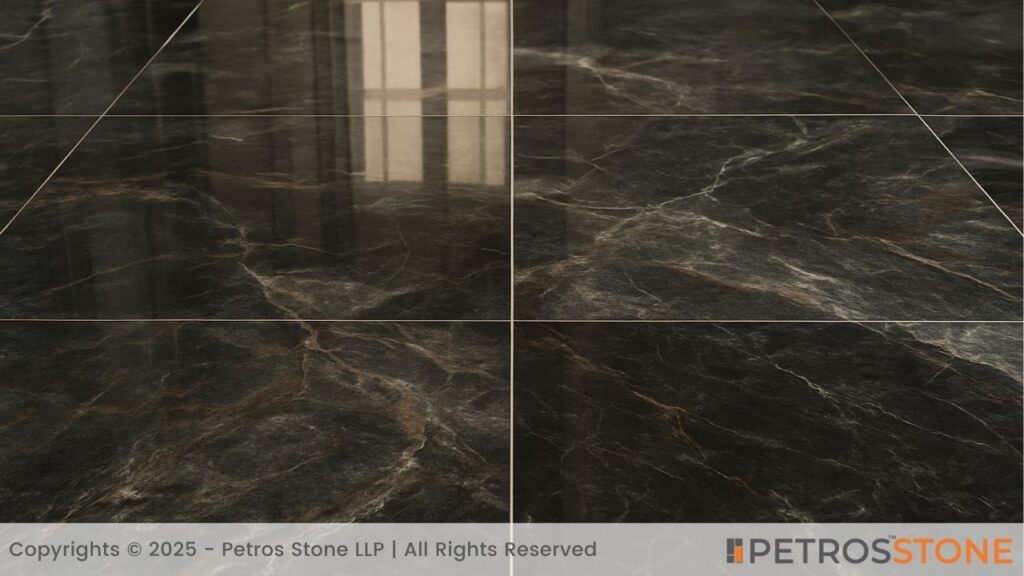
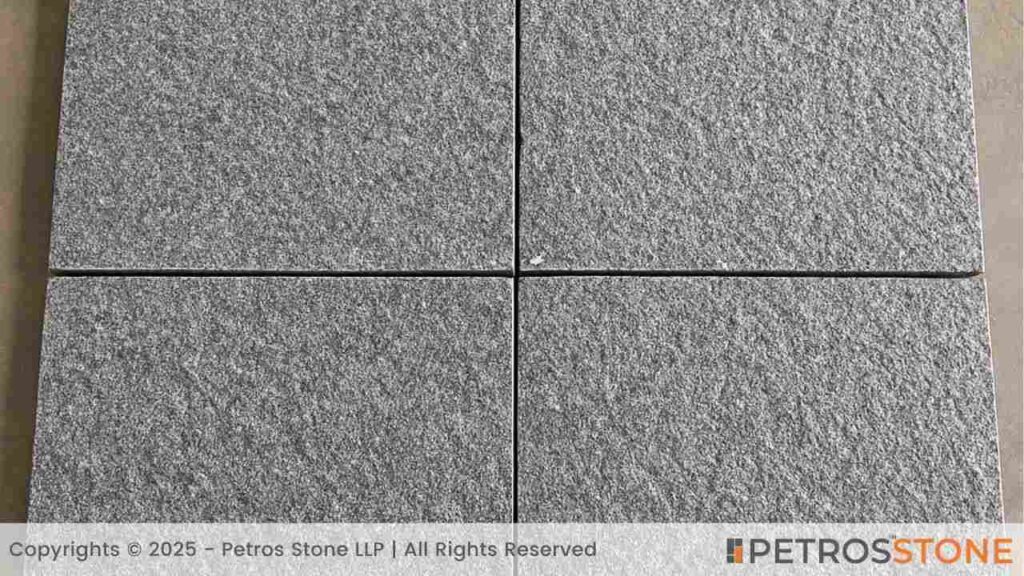
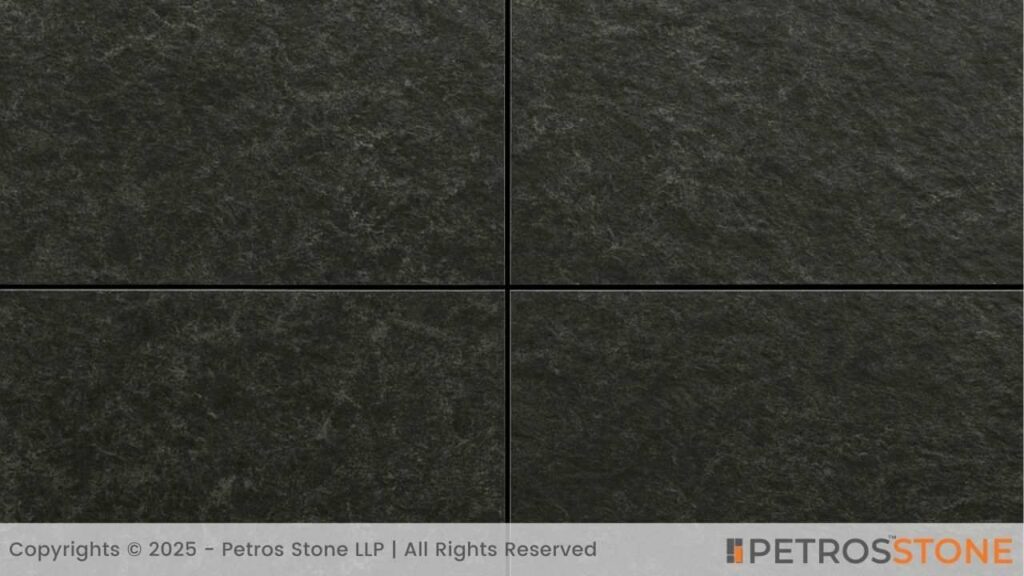
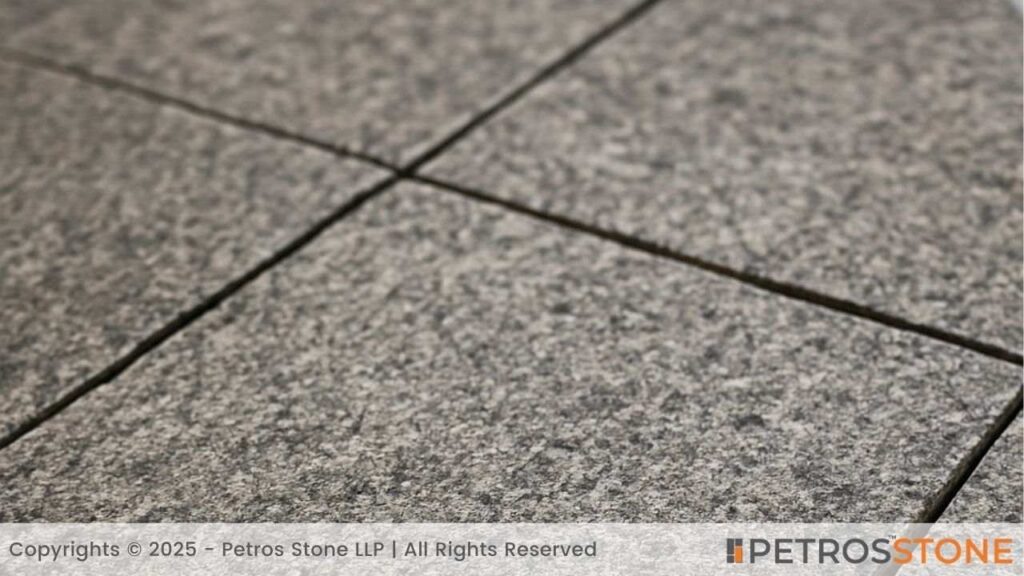
- Polished: high gloss finish, suitable for interiors.
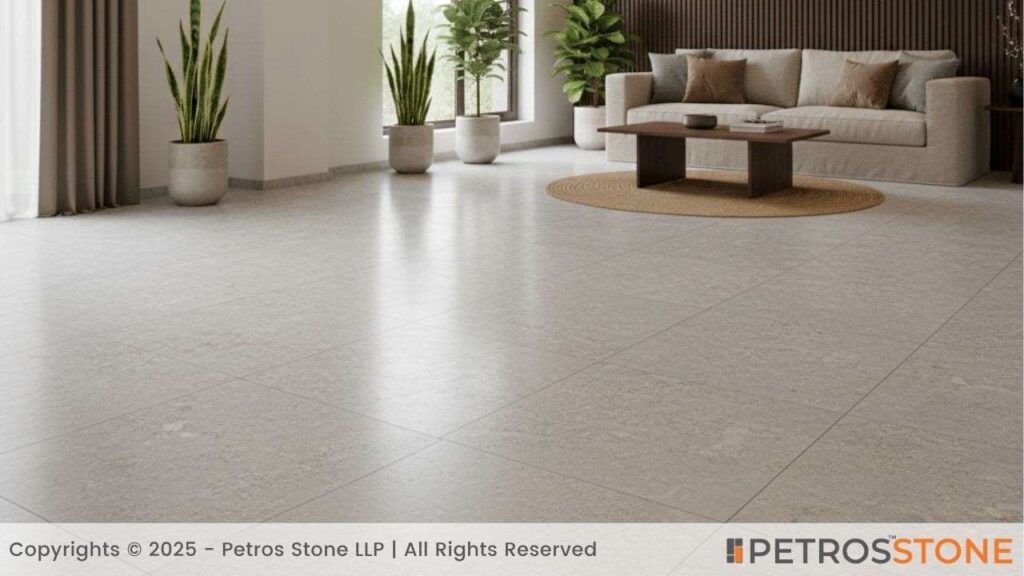
- Honed: matte and smooth at the same time, befitting subtle qualities.
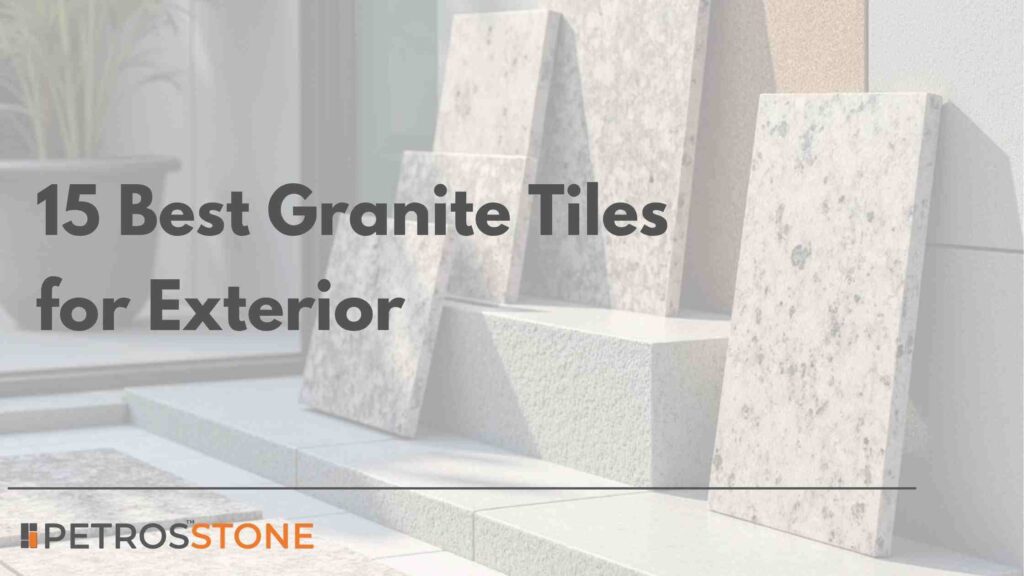
- Flamed: coarse, it is suited to outdoor and anti-slip.
- Leathered: smooth, touchable surface, used in kitchens.
- Brushed: a bit textured to rough interiors.
All finishes alter the behavior of how light interacts with the surface and determine its usage


Applications of Granite Tiles
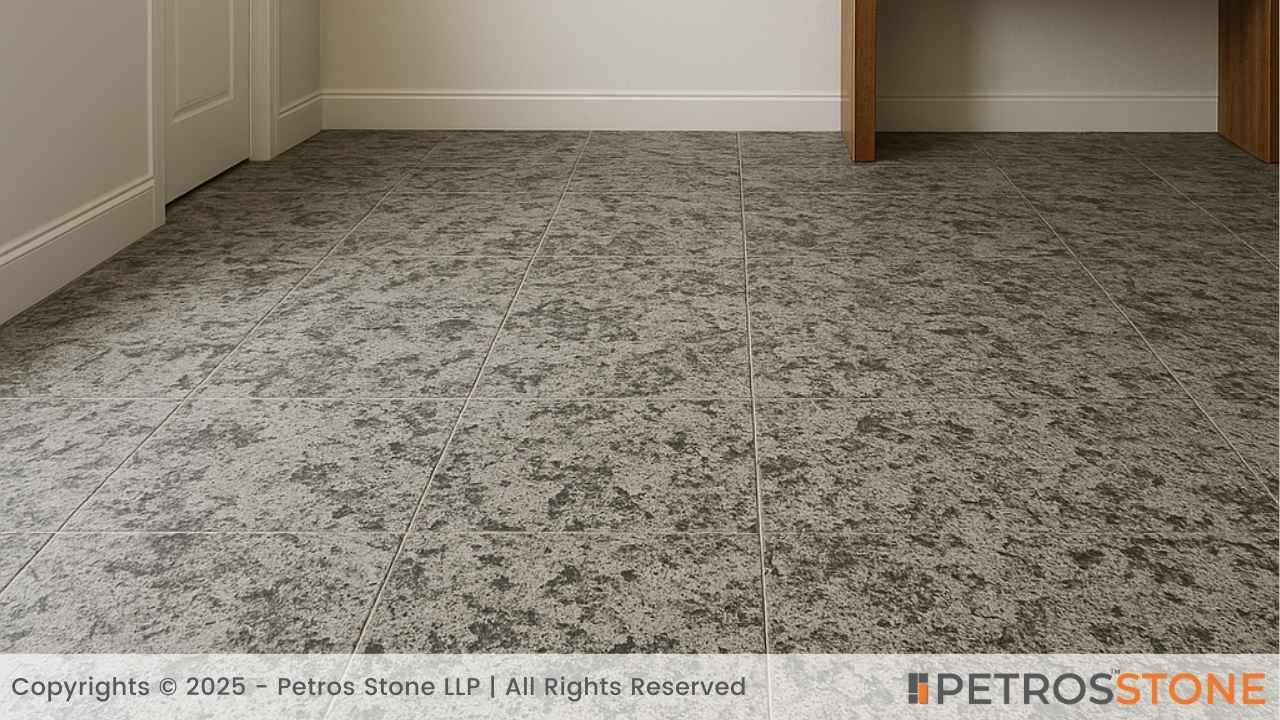
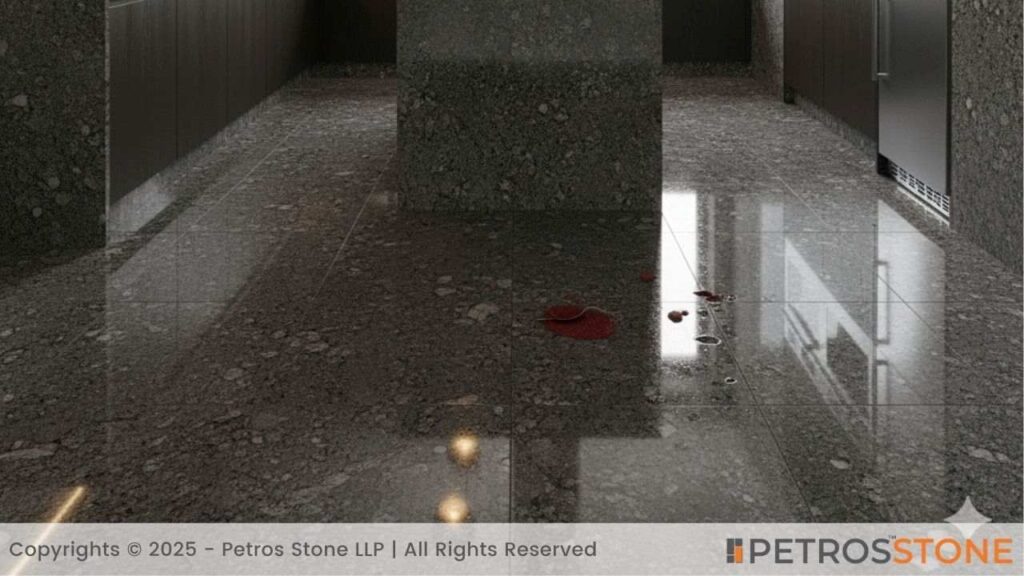
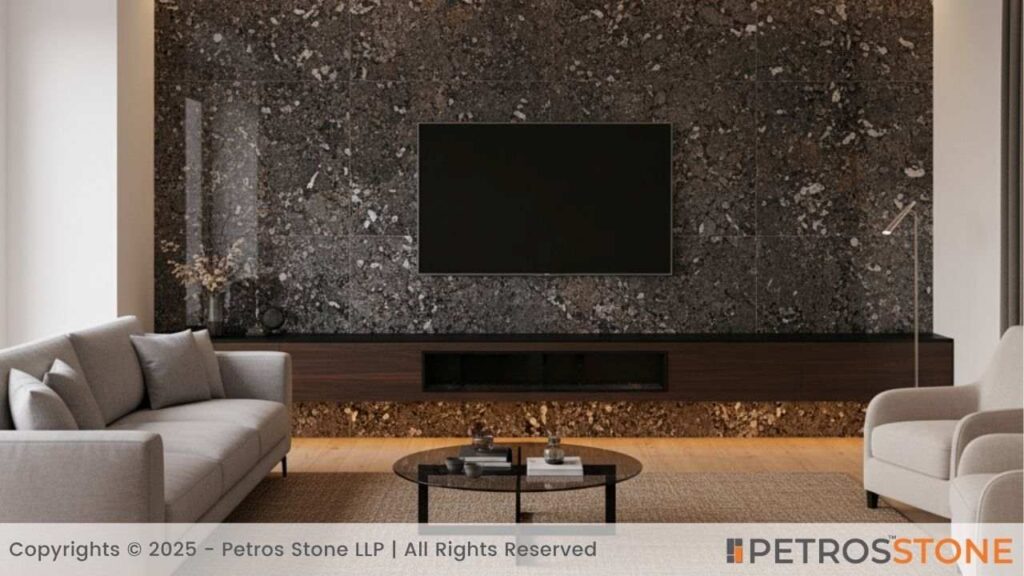
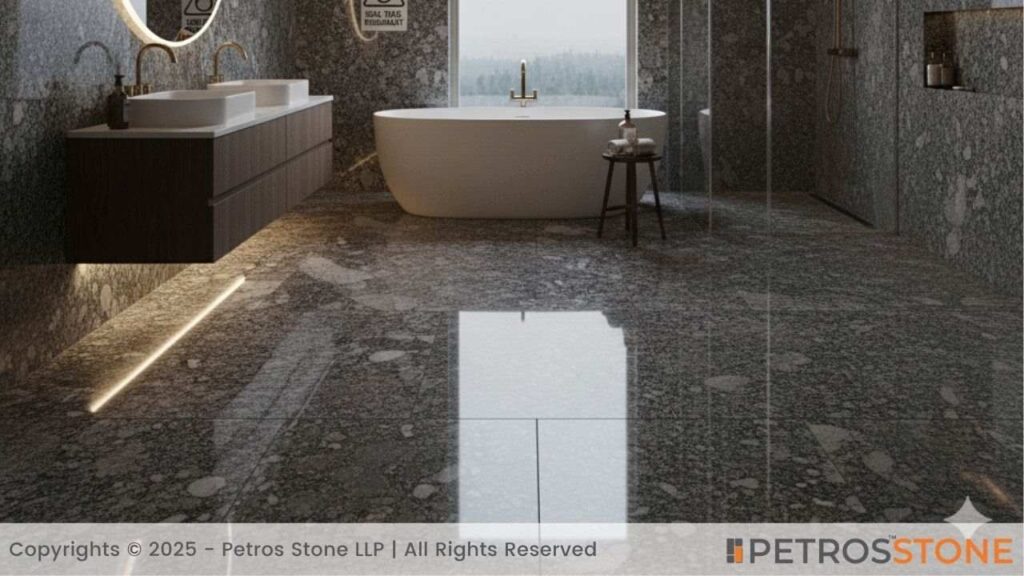
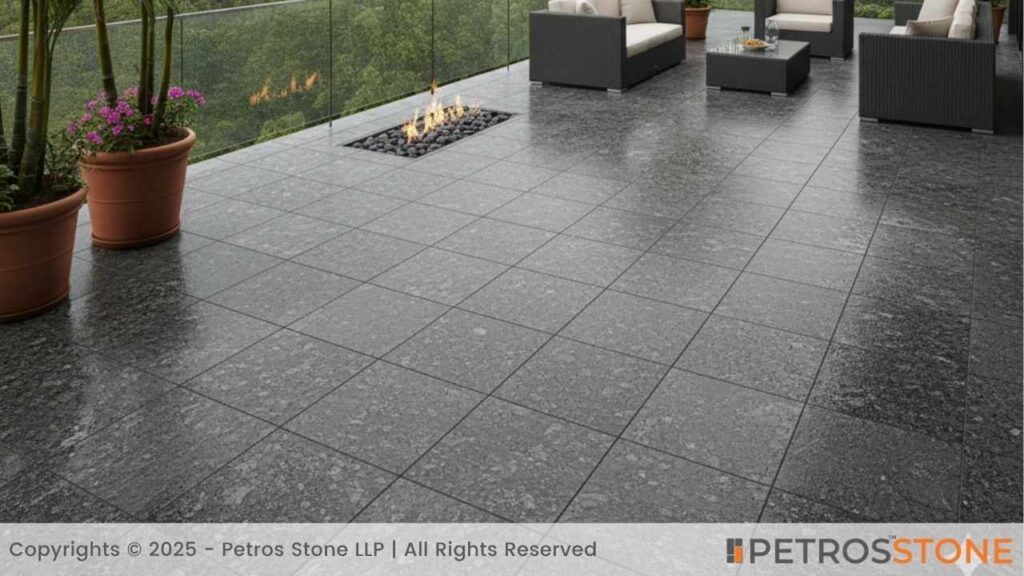
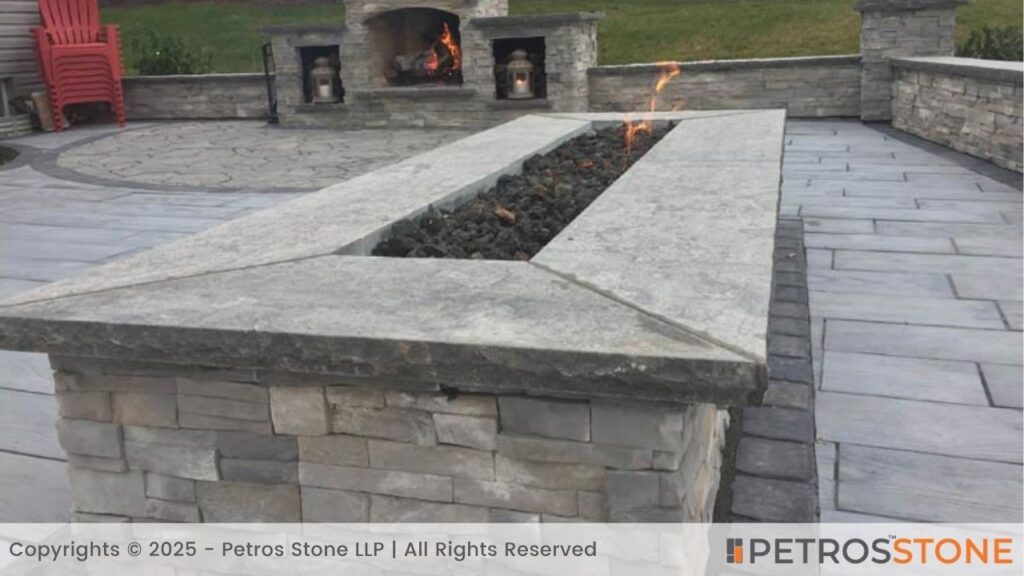
Granite tiles are prized for their durability, attractiveness, and utility, which makes them best-suited in numerous applications both internally and externally.
- Flooring is commonly used in living rooms, corridors, lobbies, and business premises due to its strength and smooth texture.
- Countertops: These are ideal in the kitchen, the bathroom, and in the bar because they are hard to heat, stain, and scratch.
- Wall Cladding: It enhances the look of room feature walls and facades on exterior walls and has a natural, rich look.
- Bathrooms: Ideal is used on the tops of vanities, floors, and walls of showers, and also contributes to the style and durability.
- Outdoor Spaces: Patios, driveways, and garden paths, as well as decks encircling pools, are also in use because they resist the weather.
- Fireplaces: Ideal fireplace surrounds, which appear beautiful and add brilliant heat resistance.
Due to its firmness and versatility, granite works remarkably well in a variety of settings – both in contemporary houses and in commercial zones with heavy foot traffic.
Comparison with Other Tile Types
Granite vs Porcelain Tiles
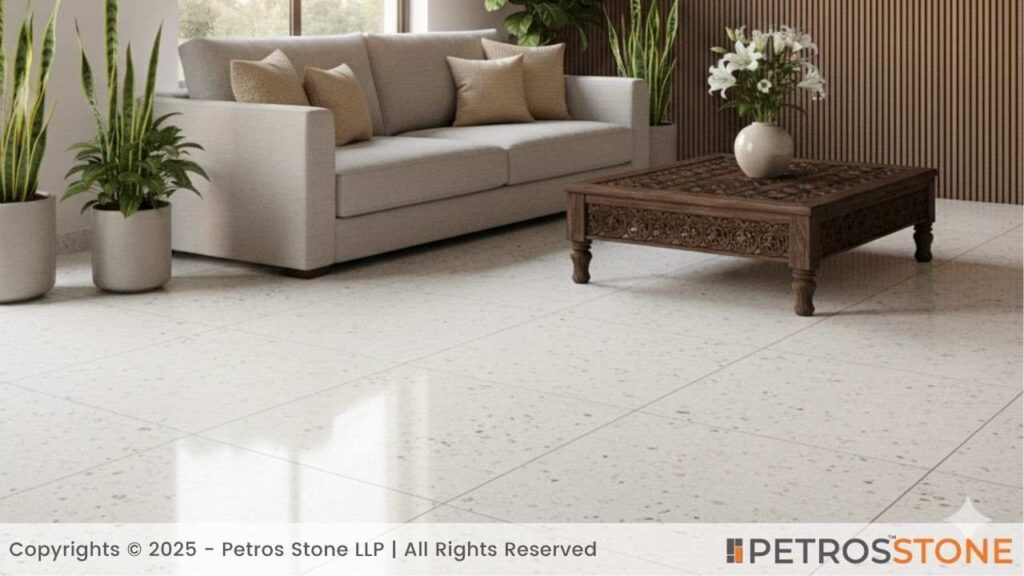
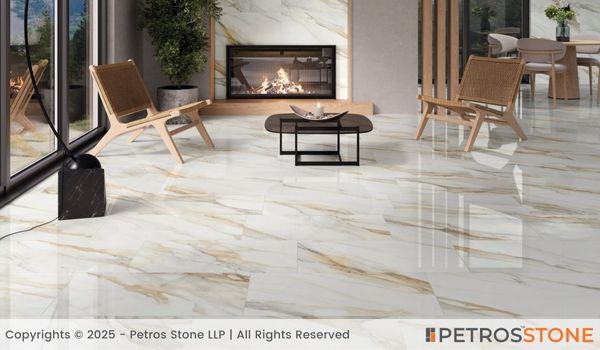
The porcelain tiles are produced artificially using high-fired clay and minerals. Granite, on the other hand, is 100 percent natural. Their benefits are quite different; hence, they are used for different purposes.
Table – Granite vs Porcelain Tiles
| Feature | Granite Tiles | Porcelain Tiles |
| Origin | 100% natural stone, quarried and cut into slabs | Machine-made ceramic product made from refined clay and minerals |
| Composition | Quartz, feldspar, and mica | Kaolin clay, feldspar, and silica |
| Durability | Extremely strong and impact-resistant | Very durable but can chip or crack under heavy impact |
| Scratch Resistance | Excellent — ideal for high-traffic areas | Good, but may scratch with rough use |
| Water Absorption | Low to moderate (requires sealing) | Very low — highly water-resistant |
| Heat Resistance | Outstanding — tolerates high temperatures | Good — may crack under sudden temperature changes |
| Appearance | Natural, unique grains and color variations | Uniform, digitally printed designs; consistent tone |
| Slip Resistance | Depends on finish (flamed/leathered better for grip) | Often treated with an anti-slip coating |
| Cost | Higher material and installation costs | Moderate; cost-effective for large areas |
| Lifespan | 25–50 years or more with care | 15–25 years, depending on quality and usage |
| Ideal Use | Premium interiors, countertops, and outdoor flooring | Bathrooms, kitchens, and commercial floors where uniformity is desired |
Economic projects are made using porcelain and granite and are unique and opulent.
Granite vs Marble Tiles
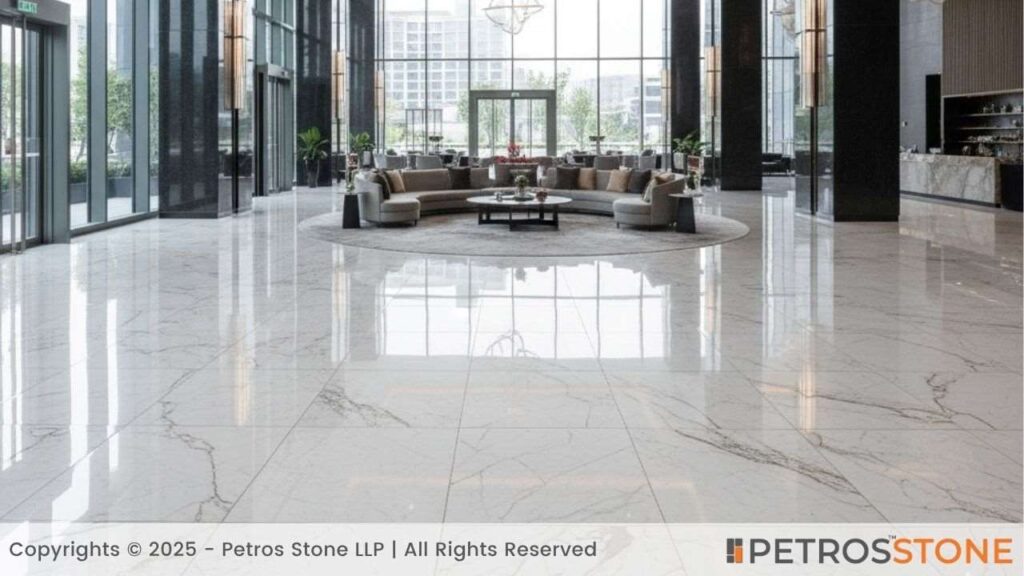
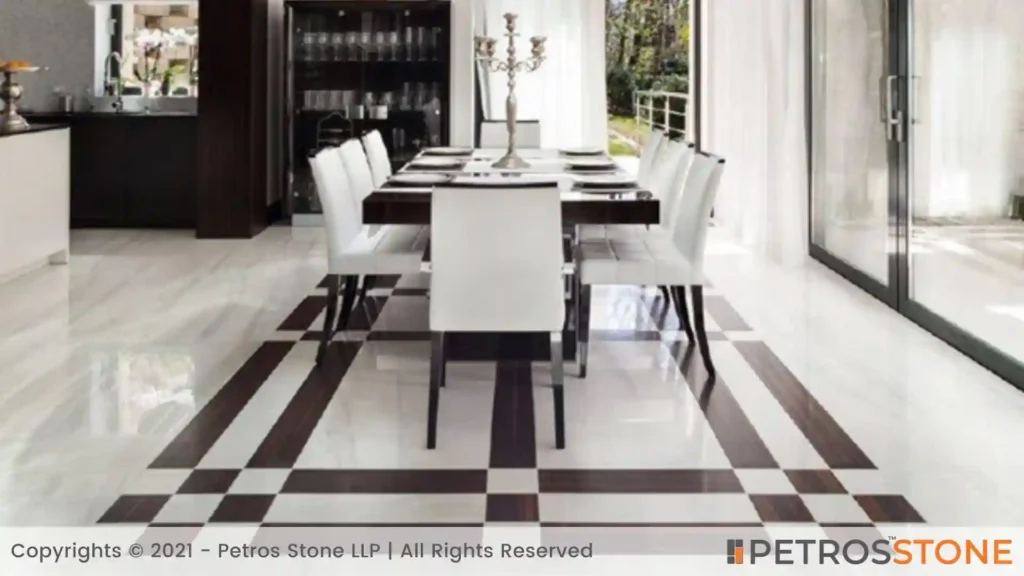
Marble and granite are often compared because they are both naturally beautiful; however, they differ widely in their characteristics.
Table – Granite vs Marble Tiles
| Feature | Granite Tiles | Marble Tiles |
| Composition | Formed from quartz, feldspar, and mica; igneous origin. | Composed mainly of calcite and dolomite; metamorphic origin. |
| Hardness & Density | Very hard and dense; ideal for heavy-traffic areas. | Softer and more porous; better for decorative use. |
| Scratch Resistance | Excellent; resists everyday wear and abrasion. | Low; prone to scratches from sharp objects. |
| Heat Resistance | Outstanding; tolerates hot pans and outdoor temperatures. | Good, but it can get etched by sudden heat changes. |
| Water Absorption | Low to moderate; needs periodic sealing. | High; absorbs moisture easily if not sealed properly. |
| Stain Resistance | High; resists most kitchen and bathroom stains. | Moderate; susceptible to etching from acids and spills. |
| Maintenance | Low; simple cleaning and occasional sealing. | High; requires regular sealing and polishing. |
| Appearance | Speckled, grainy texture with natural variation. | Smooth surface with elegant veined patterns. |
| Color Range | Wide — blacks, greys, pinks, greens, and blues. | Limited to whites, creams, and light earthy tones. |
| Finish Options | Polished, flamed, honed, leathered. | Polished or honed finishes are most common. |
| Durability | Excellent; lasts for decades with minimal wear. | Moderate; the surface can dull over time. |
| Applications | Flooring, countertops, facades, and outdoor paving. | Interior walls, vanity tops, and decorative flooring. |
| Cost | Moderate to high; good long-term value. | Generally high due to quarrying and polishing costs. |
| Overall Suitability | Best for durability and functionality. | Best for luxurious, aesthetic indoor spaces. |
Granite is your way to go when you desire class without necessarily maintaining it. Marble may be the best choice if you are more interested in luxury and veining.
Granite vs Ceramic, Travertine, Quartzite, and Slate Tiles
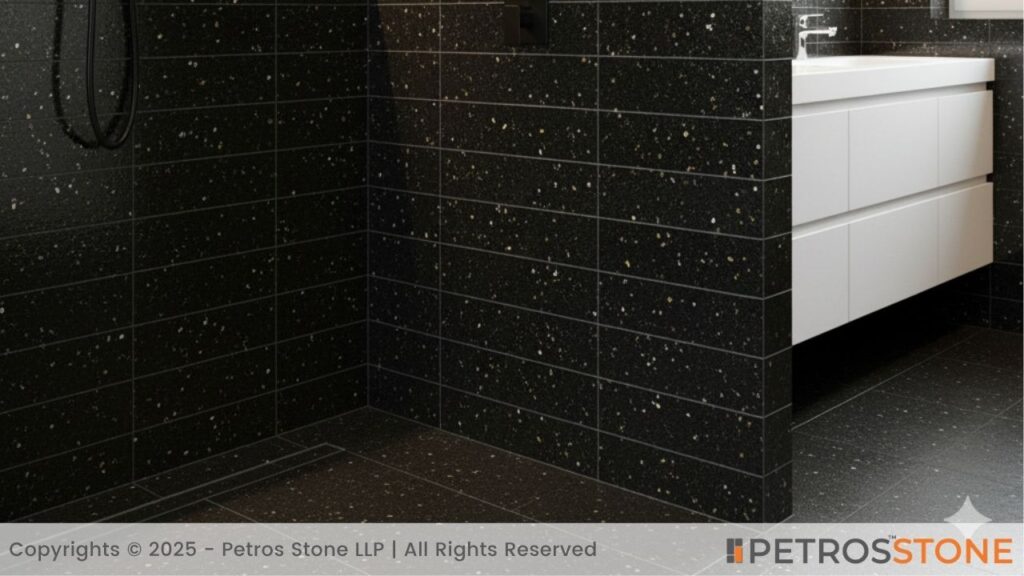
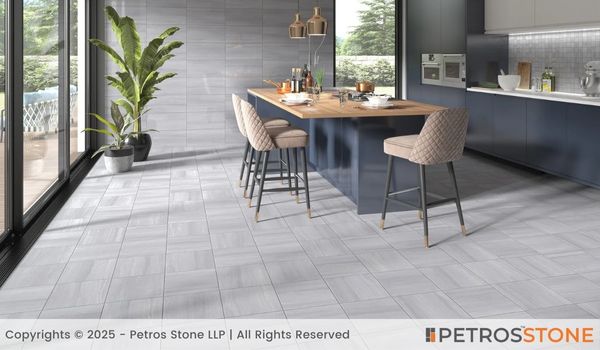
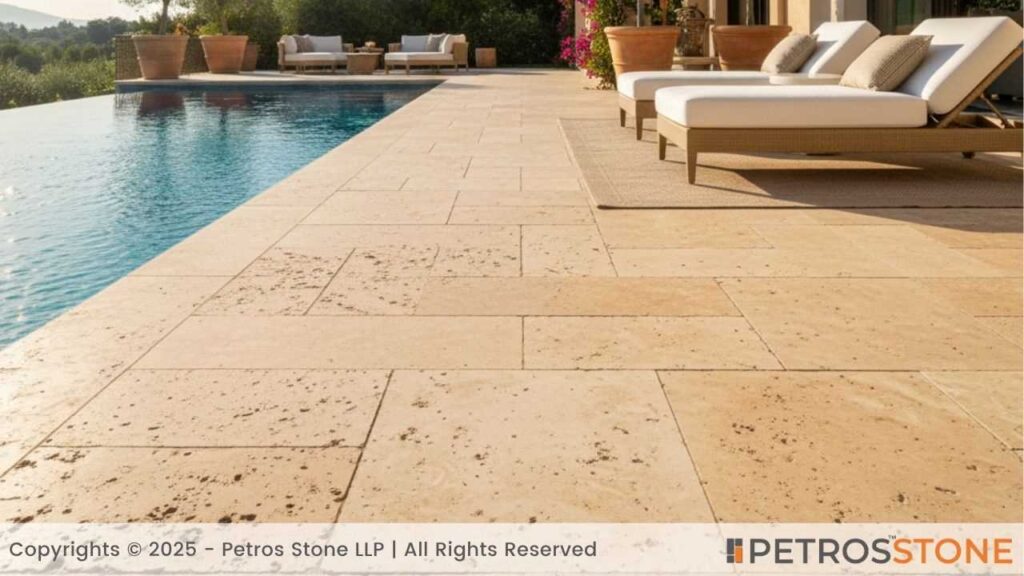
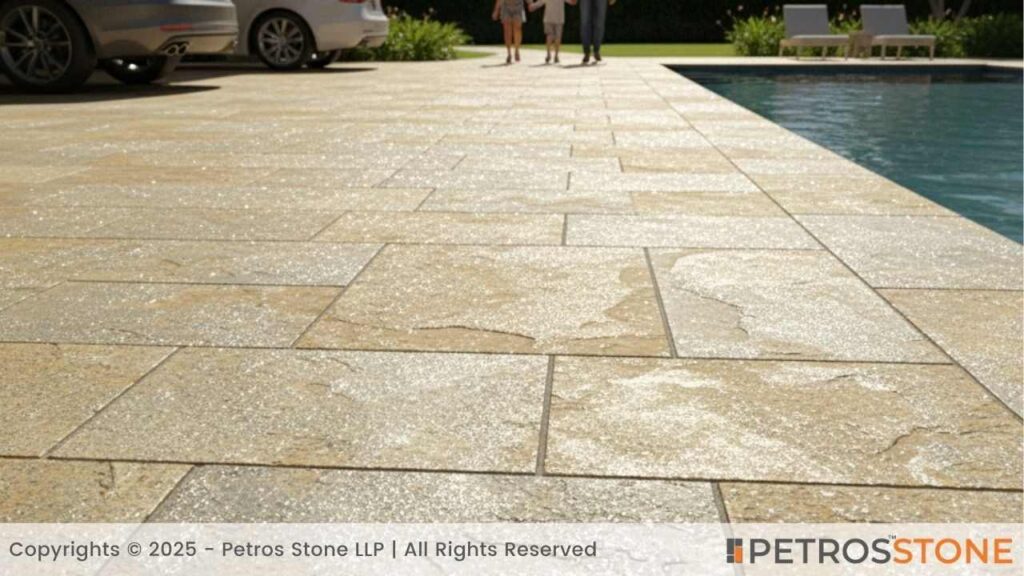
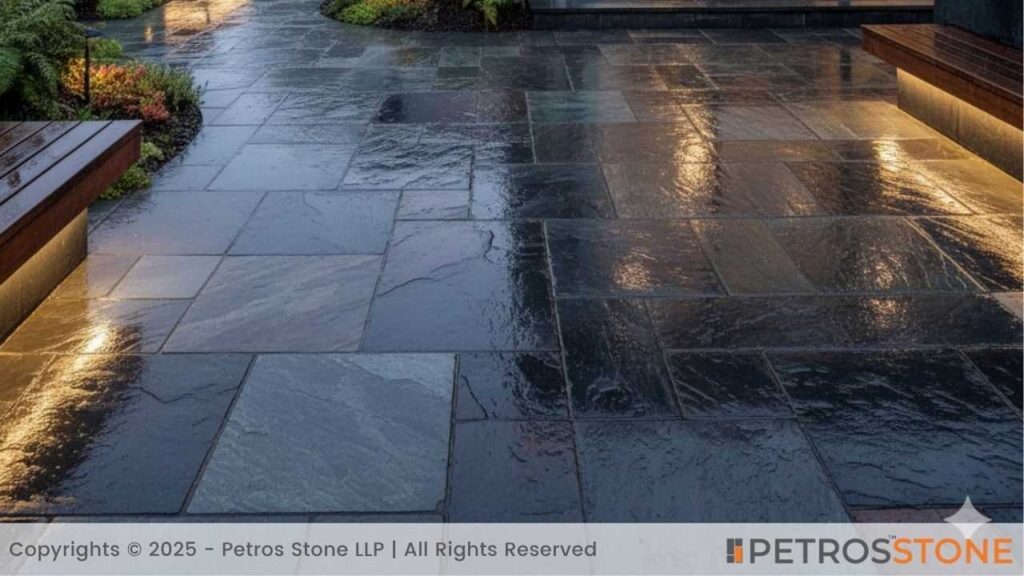
Table – Granite vs Ceramic, Travertine, Quartzite, and Slate Tiles
| Tile Type | Durability | Maintenance | Average Cost (₹/sq. ft.) | Slip Resistance | Heat Resistance | Water Absorption | Best For | Key Drawbacks |
| Granite | Very high | Moderate (requires sealing) | 120–300 | Moderate to high (varies by finish) | Excellent | Low (when sealed) | All-purpose — floors, countertops, indoor/outdoor | Expensive, cold surface |
| Ceramic | Medium | Low | 40–80 | Low to moderate | Good | Moderate to high | Walls, low-traffic areas | Brittle under heavy load, less natural look |
| Travertine | Medium | High (needs frequent sealing) | 120–200 | Good | Good | High (porous) | Bathrooms, accent walls, décor | Stains easily, not ideal for heavy traffic |
| Quartzite | Very high | Low | 200–400 | Moderate | Excellent | Very low | Countertops, outdoor façades | Costly, limited color range |
| Slate | High | Medium | 100–180 | Excellent (naturally textured) | Excellent | Low to moderate | Patios, terraces, rustic interiors | Uneven surface, can flake over time |
Granite is all-purpose, offering both luxury and endurance.
Advantages of Granite Tiles (Pros)
Durability and Strength
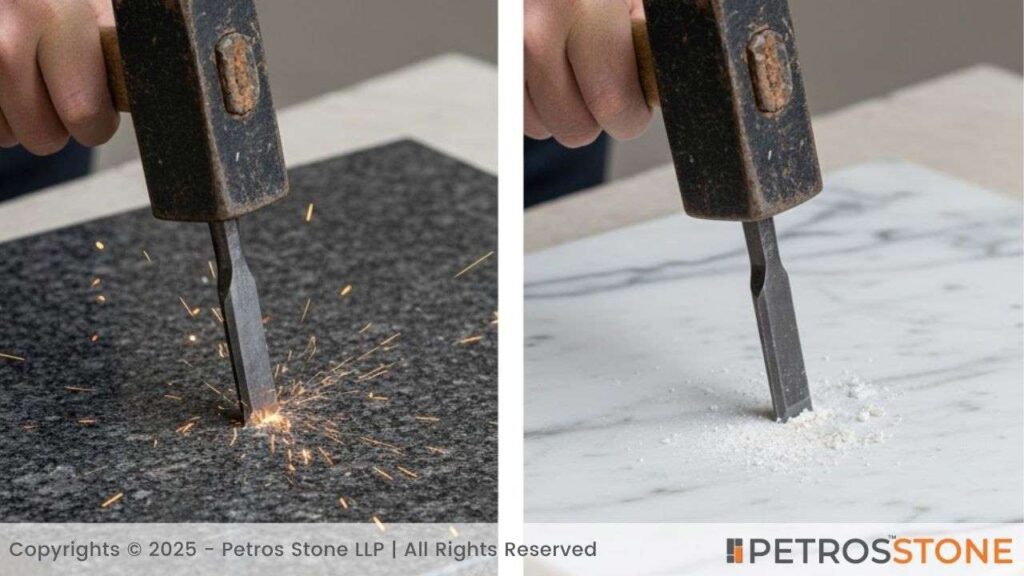
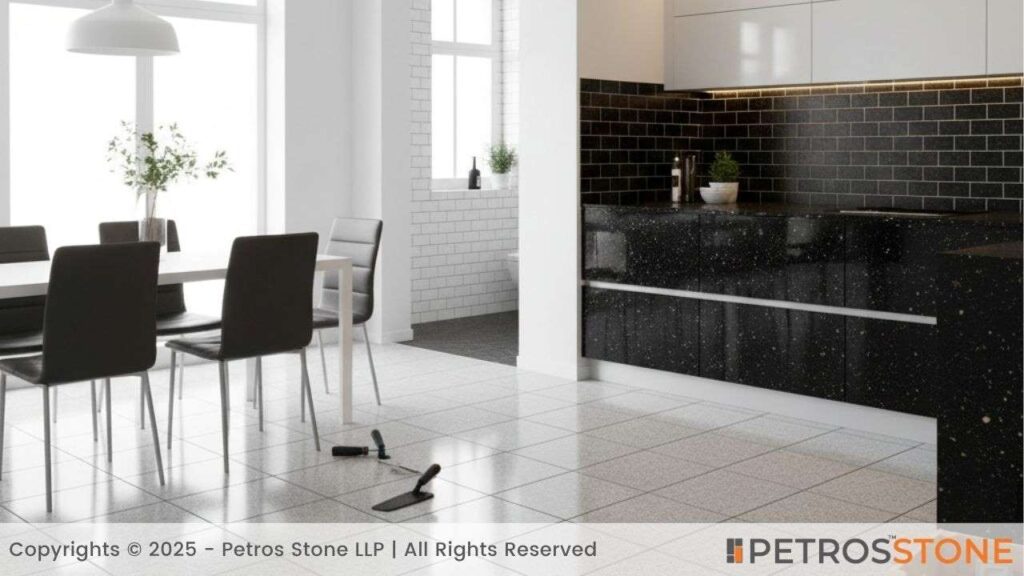
Granite is also a natural hard rock, and its rating is 6-7 on the Mohs scale. It is able to hold a great amount of load; therefore, it is appropriate in shopping centers, hotel entrances, and active kitchens. The granite tiles do not chip easily, as most other types of tiles do, and this implies that they can be used for decades.
Natural Beauty and Variety
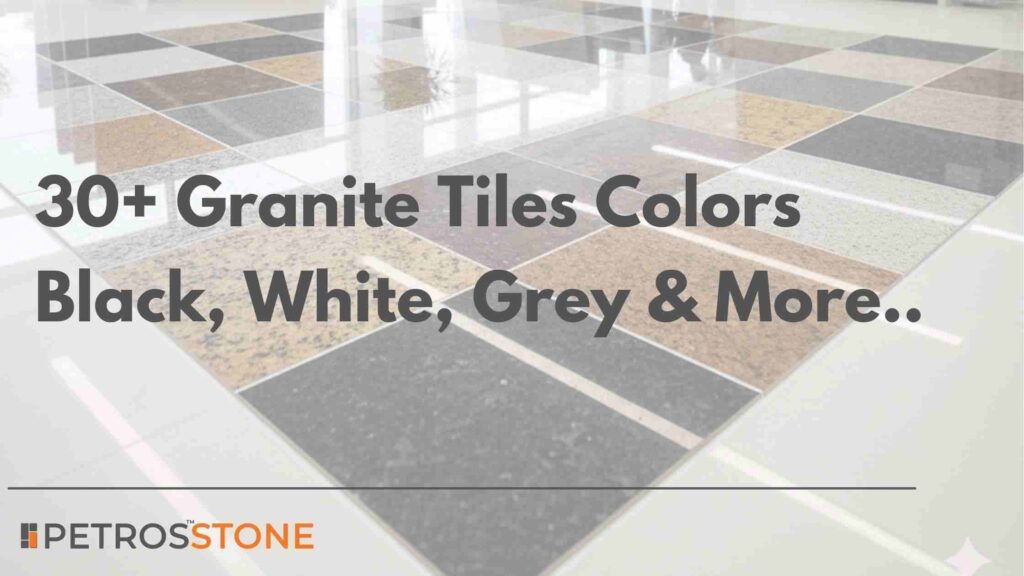
There are no two identical granite tiles. Every work possesses its texture, specks, and veins. It is the depth and visual interest that this natural variation provides, which can never be replicated by artificial materials. Granite has a multitude of colors, whether you choose the understated whites or the dramatic and darker blacks.
Popular varieties include:
- Black Galaxy: opaque black and golden flecks.
- Tan Brown: deep chocolate shades.
- Kashmir White: neutral sophistication.
- Steel Grey: contemporary and minimalistic.
- Rosy Pink: warm and homely.
Resistance to Heat, Scratches, and Weathering
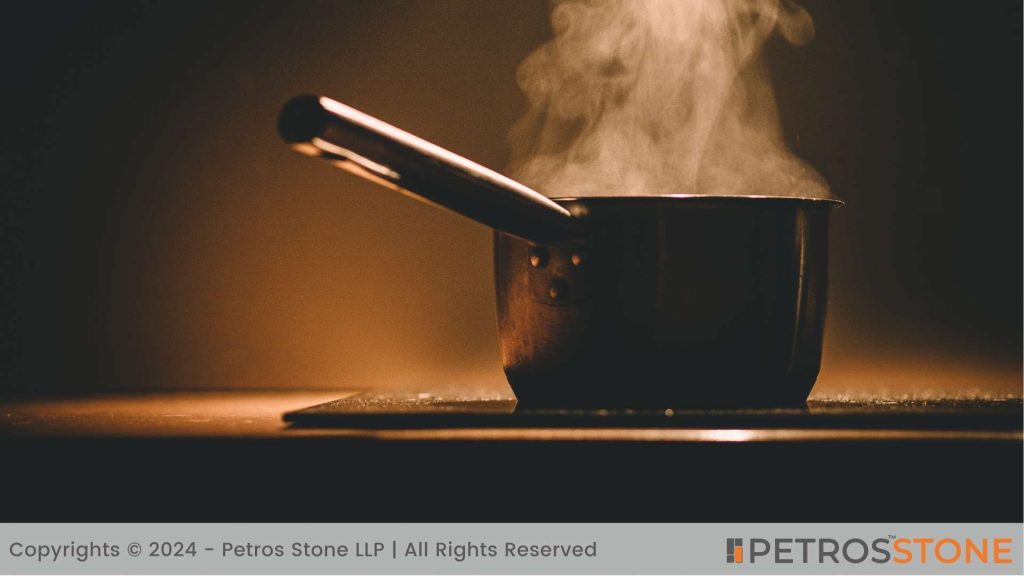
Extreme conditions are also favorable to the granite. Granite countertops allow hot pans to be placed on them without any damage. The granite tiles that are applied outside are long-lasting as they do not fade under the sun, and they are not easily broken in cold and wet seasons. Its hardness prevents it from being scratched by imposing furniture or cutting blades.
Long-Term Value and Property Appeal
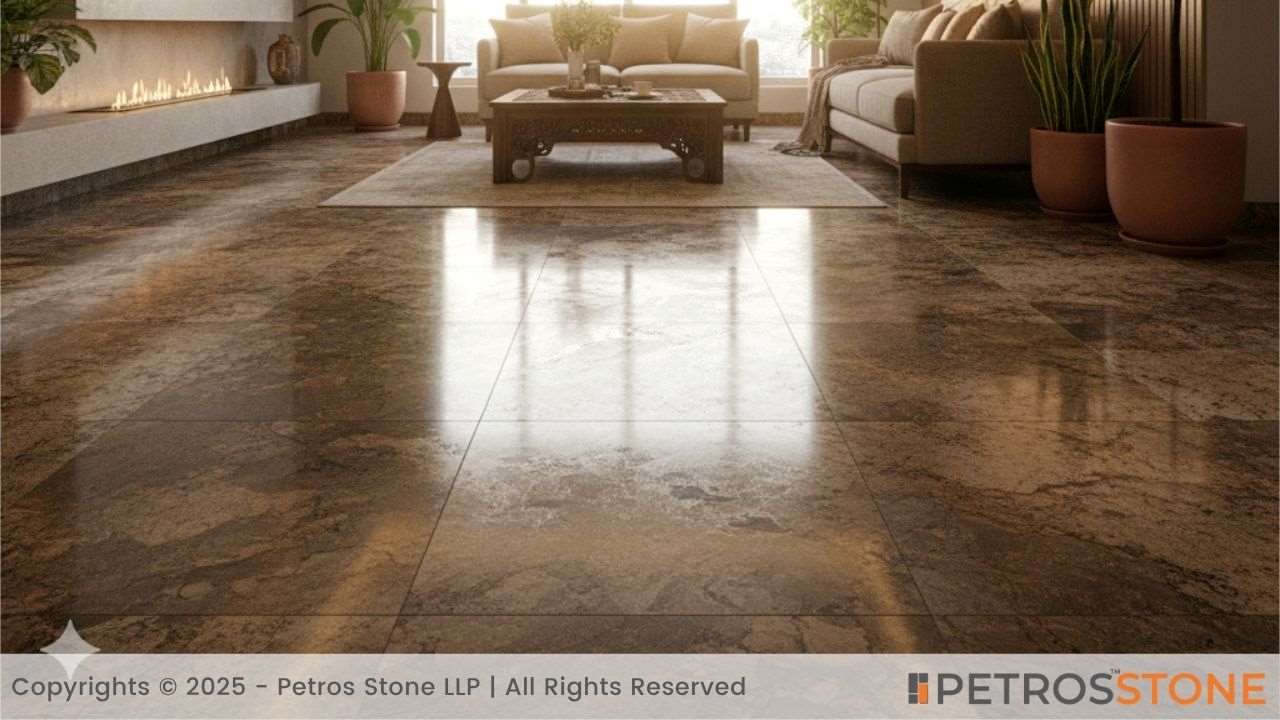
Even though granite is expensive at the start, it saves in the long run. It is more durable and more classical in appearance. Households with granite flooring or countertops tend to sell at a greater price, as buyers can see them as an indicator of high quality.
Eco-Friendliness and Sustainability
Granite is a natural material, and only minimal processing should be done. The environmental impact of modern quarrying techniques is less, and granite can be completely recycled. Nor does it release chemicals or gases that are harmful, which makes the indoor air remain healthy.
Versatility in Design and Application
Granite can be used in minimalistic rooms or royal residences. Polished granite can be combined with matte finishes to achieve artistic effects. The big tiles produce smooth floorings, whereas small tiles are applicable to ornamental wall panels or bathroom walls.
Disadvantages of Granite Tiles (Cons)
Porosity and Sealing Needs
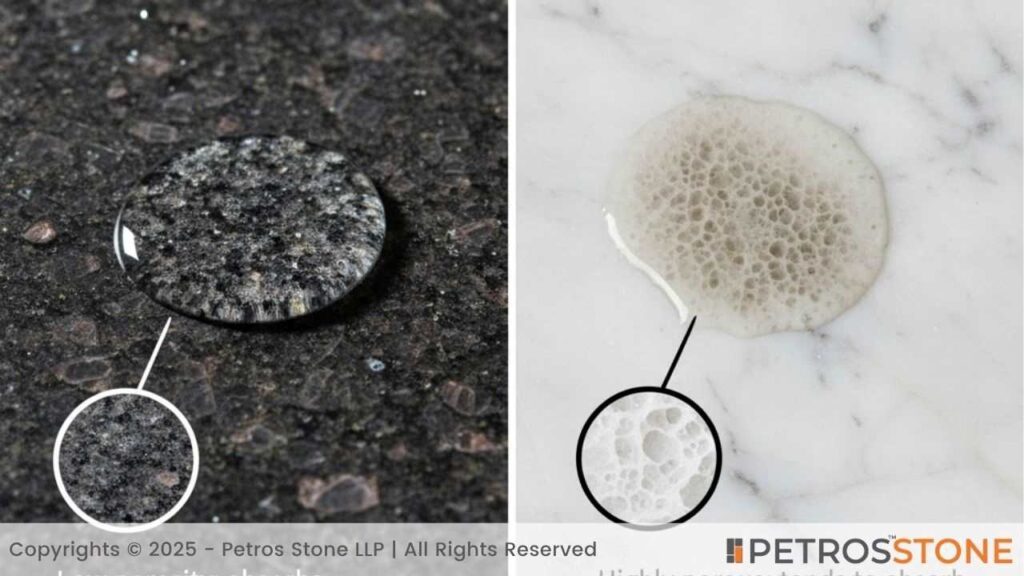
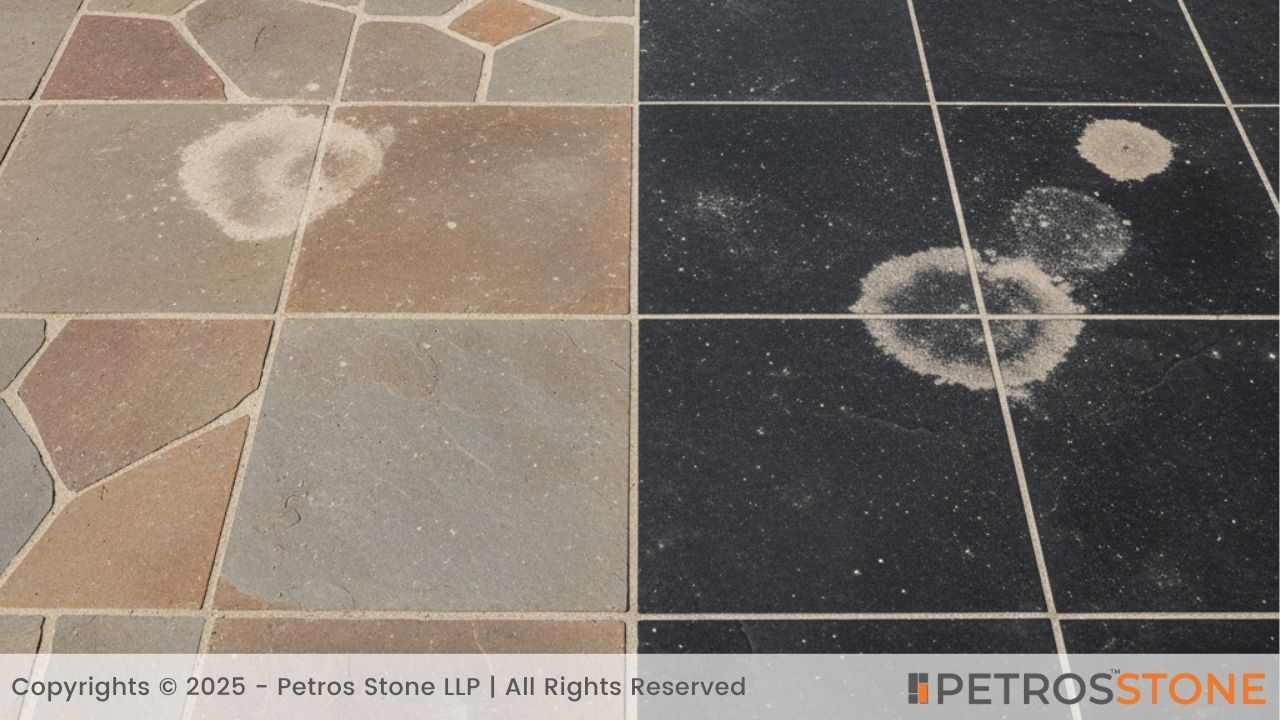
Granite contains small pores capable of taking in liquids, leading to stains. To avoid this seal it after a year. New sealants are simple to use and long-lasting, which contributes to maintenance.
High Material and Installation Cost
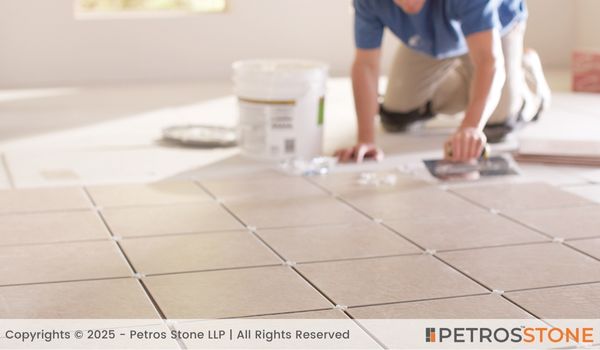
Granite is a premium product. In addition to the price of the tiles, there are also professional installation and sealing costs, which add to the cost.
| Expense Type | Approx. Cost (in USD) |
| Material | $1.35 – $3.38 per sq. ft. |
| Installation | $0.56 – $1.13 per sq. ft. |
| Sealing | $0.23 – $0.34 per sq. ft. annually |
For imported stones such as Brazilian or Italian granite, the price may even rise to above ₹600 per sq. ft.
Cold and Hard Surface Feel
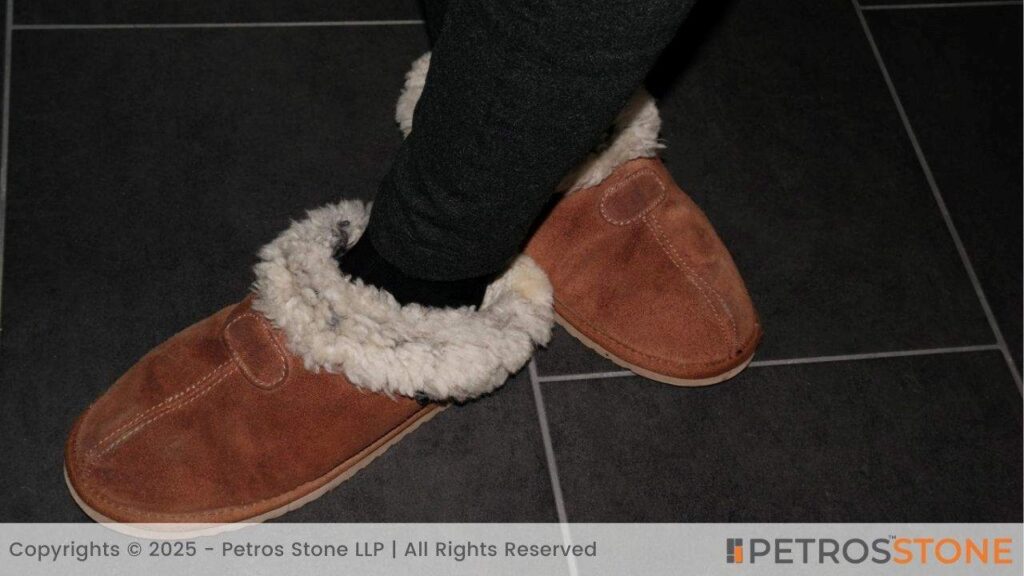
The granite is cold, and in winter, which is not a comfortable feature. It is also hard, with no cushioning, and items that slide down it could disintegrate immediately. To avoid the pain, place anti-fatigue mats or rugs beneath the frequently used standing locations.
Inconsistent Patterns and Color Variations
There is no perfect match between tiles since granite is natural. This may cause big surfaces to be uneven when tiles are placed randomly. Never purchase fewer tiles than the number of the adjoining tiles, so that the color you have will be the same throughout.
Maintenance and Care Requirements
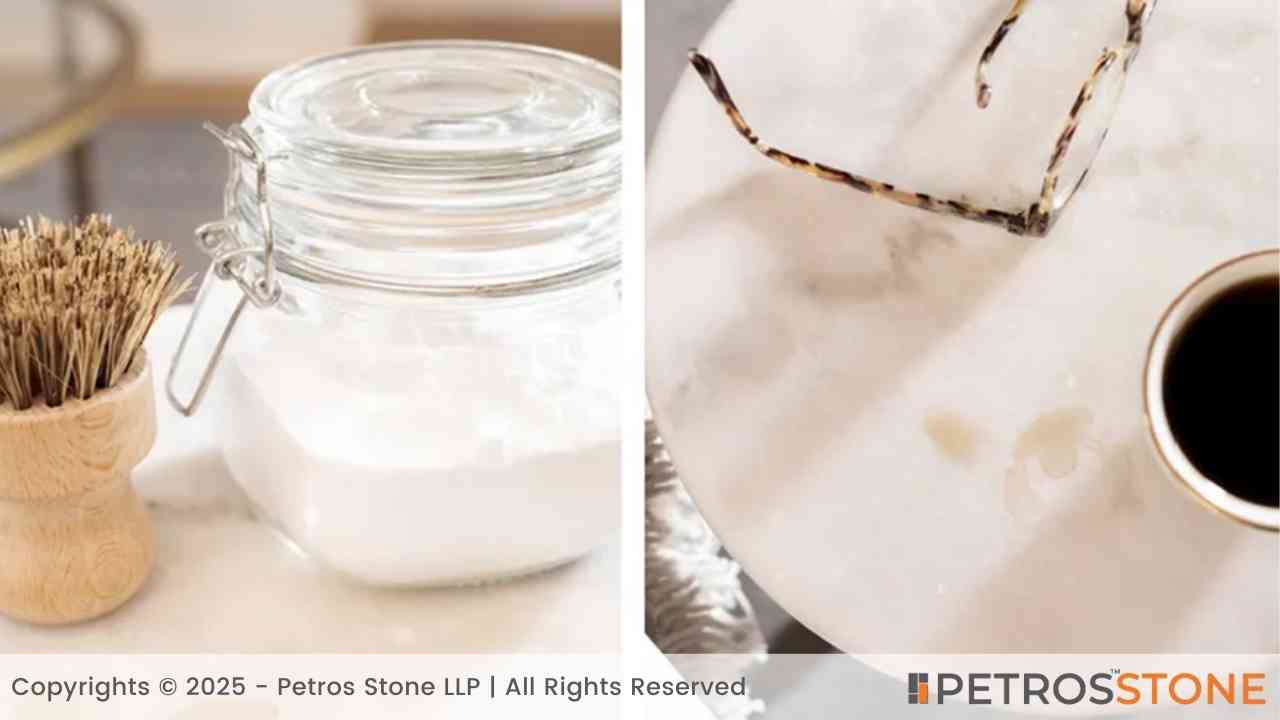
Granite is not maintenance-free. Frequent washing using non-acidic solutions is necessary. Cleaners that contain vinegar, bleach, and ammonia should not be used as they destroy the polish.
Expert Review and Insights
Installation Experience and Best Practices
Professionals recommend:
- Ensure that it is always attached to a smooth floor to avert cracks.
- Apply adhesives designed for natural stone.
- On top, before grouting, apply sealant.
- Gaps in the expansion of leaves allow natural movement.
- Check individual tiles for the defect.
The stone may last for decades with proper installation.
Cost and Value Analysis
Granite can be expensive, although it costs less per year of service in comparison to most tiles.
Table – Cost and Value Analysis
| Tile Type | Initial Cost | Average Lifespan | Annual Maintenance | Cost per Year (Approx.) | Overall Value | Remarks |
| Granite | High | 40–50 years | Low | Low | Excellent | Long lifespan and minimal maintenance make it cost-efficient over time. |
| Porcelain | Medium | 20–25 years | Low | Moderate | Good | Affordable and durable, but shorter lifespan than granite. |
| Ceramic | Low | 10–15 years | Moderate | Moderate | Fair | Economical option but prone to chipping and wear. |
| Marble | High | 20–25 years | High | High | Moderate | Luxurious appearance but demands frequent maintenance. |
| Quartzite | High | 30–40 years | Low | Moderate | Very Good | Strong and durable, though limited color options. |
| Travertine | Medium | 20–30 years | Moderate | Moderate | Good | Attractive but needs sealing to prevent stains. |
| Slate | Medium | 25–35 years | Low | Moderate | Good | Long-lasting, slip-resistant, but limited polish options. |
Investing in granite in the long term can be rewarded in terms of longevity and house value.
Maintenance and Longevity Review
With minimum care, granite remains shiny over a span of years. It is periodically polished back to its original finish. Granite is also a long-lasting material because most of the ancient monuments and temples are still in existence after hundreds of years.
Ethical Sourcing and Environmental Impact
Environmental principles, regulated mining of the rocks, water reuse, and regeneration of the ransacked areas are high standards followed by conscientious granite suppliers. In order to make sourcing ethical, consumers can look at certifications like ISO or IGDA (Indian Granite Development Authority).
Aesthetic and Design Review
Popular Colors and Patterns
Granite tiles come in a diverse variety of gorgeous colors and natural patterns:
- Absolute Black: Contemporary, smooth, and designed to fit contemporary interiors.
- Colonial Gold: Golden and brown specks with warm tones in a posh look.
- Viscount White: Shiny, luxurious, and perfect to make spacious appearances.
- Baltic Brown: Multi-tone blend of brown and black, providing an in-depth interior.
- Crystal Blue: Contemporary, cool color with shimmering mineral designs.
These designs may be matched with virtually all types of wall or cabinet colors.
Texture and Finish Options
| Finish Type | Look & Feel | Best Used For |
| Polished | Glossy, reflective | Indoor floors, countertops |
| Honed | Matte, smooth | Living rooms, hallways |
| Flamed | Rough, non-slip | Outdoor patios |
| Leathered | Textured, warm look | Kitchens, bathrooms |
Bush-Hammered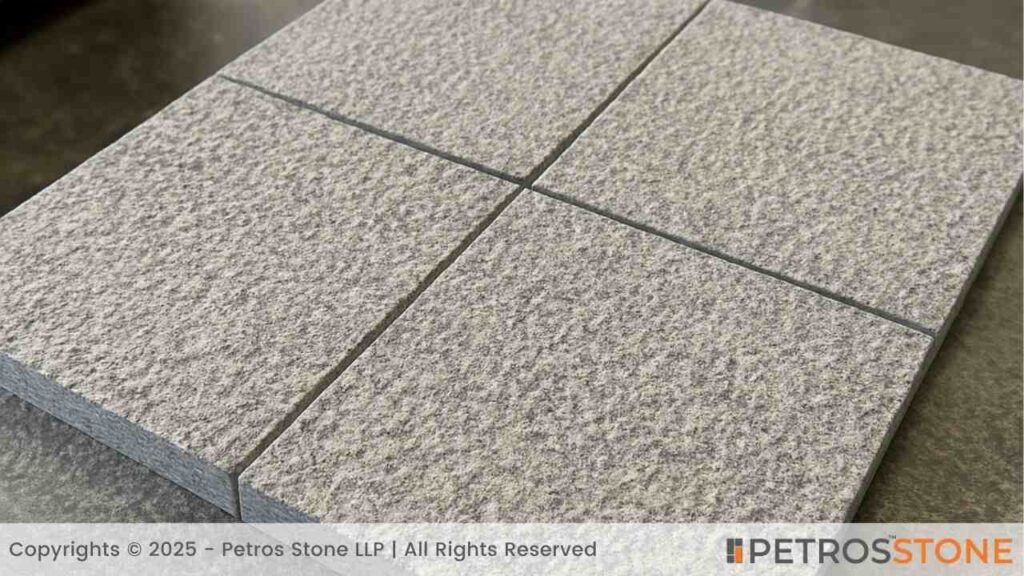 | Rugged, anti-slip | Industrial or outdoor flooring |
Varied finishes provide an opportunity to balance between beauty and practicality.
Integration in Modern and Traditional Interiors
- Modern Design: Steel and glass are coupled with granite tiles, grey or black in color.
- Traditional Homes: Warm-hued granite complements wood.
- Minimalist Interiors: Granite used in light is added to increase openness.
- Luxury Spaces: Sparkling dark granite offers a highly luxurious atmosphere.
Large floors are frequently given depth by designers with granite borders or inlays.
Care and Maintenance Guide

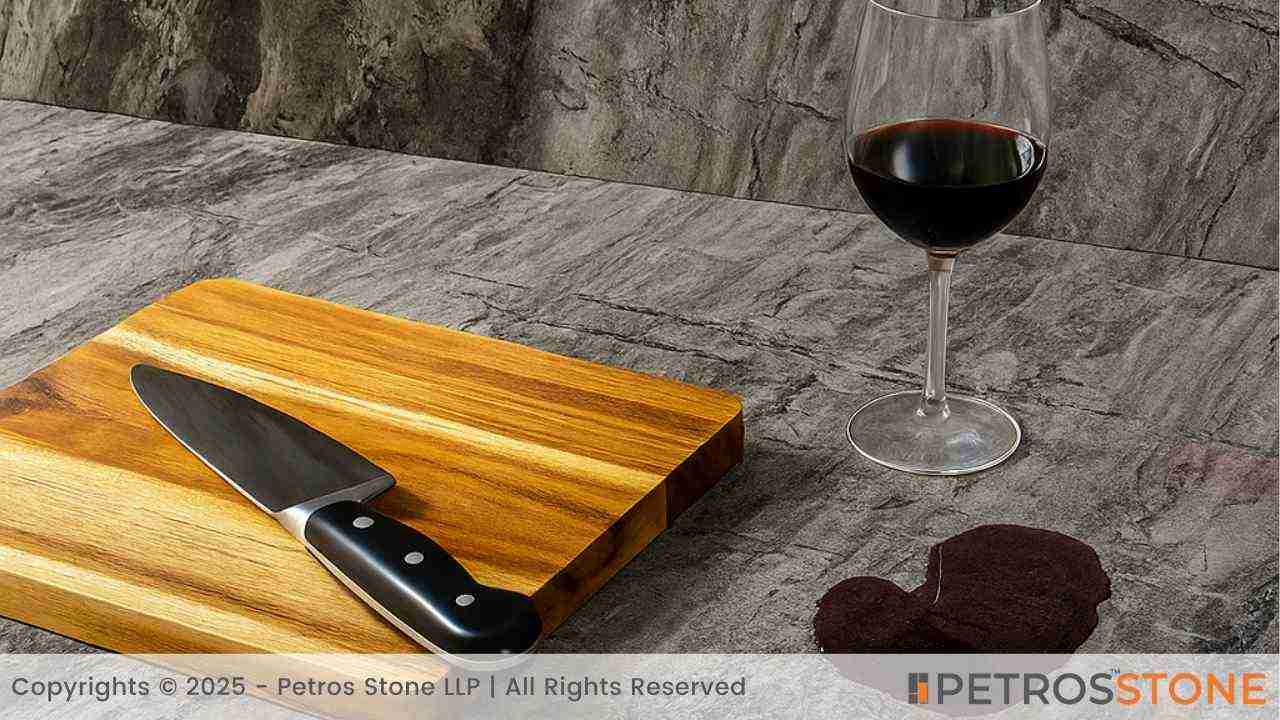
Daily Cleaning and Upkeep
- Regular washing of the stone can be performed using a soft microfiber cloth with a low PH stone cleaner of neutral nature.
- Wipe down surfaces or voluntarily dust or sweep them.
- Spillage of oil or wine and acidic liquids should be cleaned up at the earliest opportunity in order to prevent stains or etching.
- Watch out against abrasive scrubbers, heavy chemicals, or vinegar, which can dry or dull the surface.
- When it comes to countertops, cutting boards and trivets are always used to cover the surface against scratches and heat spots, despite the tremendous resistance that granite has.
- Wipe off surfaces after being cleaned to keep them shiny and wipe off water spots.
For countertops, it is recommended to cut on boards to avoid scratching the surfaces, although granite is hard.
Sealing and Preventive Care
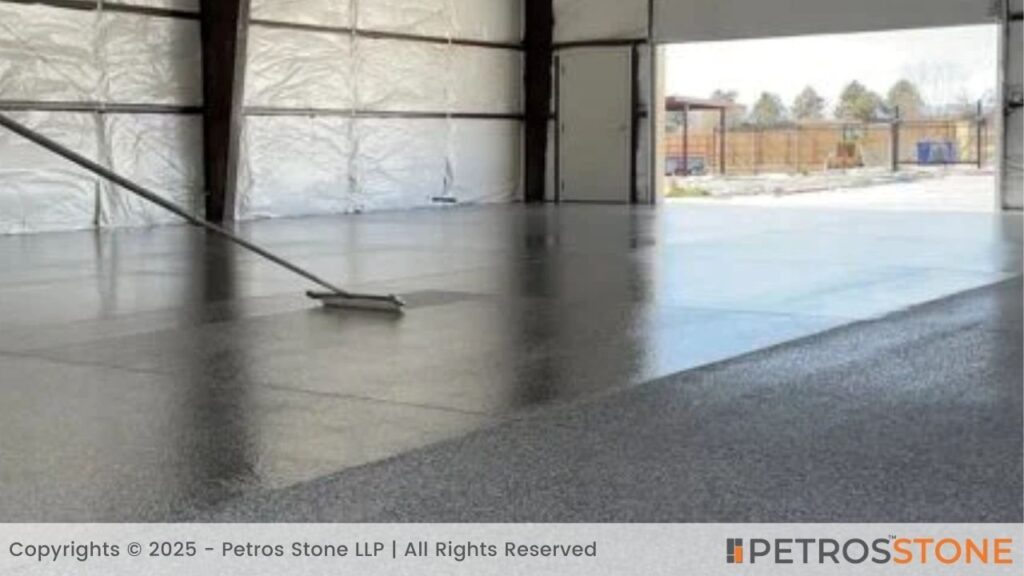
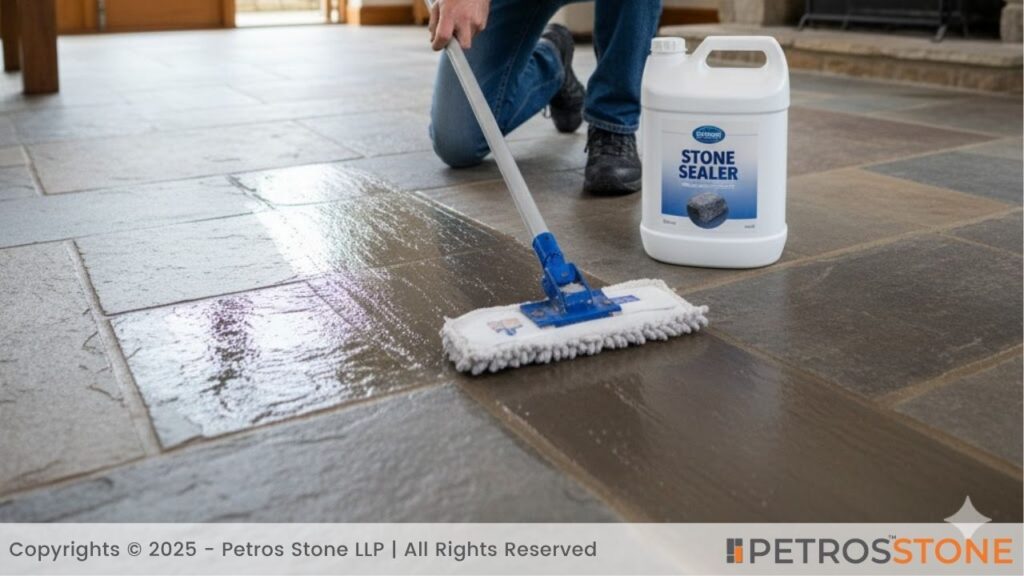
Water and oil absorption are blocked by sealing.
Table – Sealing and Preventive Care for Granite Tiles
| Step | Action | Purpose | Frequency / Timing |
| 1 | Clean the surface thoroughly with a mild pH-neutral cleaner and dry completely. | Removes dust, grease, and residues before sealing. | Before sealing |
| 2 | Inspect for cracks or dull spots; repair or polish if needed. | Ensures even sealing and prevents absorption through damaged areas. | Before each sealing cycle |
| 3 | Apply a high-quality granite sealer evenly using a clean cloth or sponge. | Creates a protective layer that blocks water and oil absorption. | Once every 12–18 months |
| 4 | Let the sealer sit for 5–10 minutes, then wipe off any excess liquid. | Prevents streaks and ensures uniform coverage. | Immediately after the application |
| 5 | Allow the surface to cure undisturbed. Avoid placing objects or walking on it. | Ensures full penetration and bonding of the sealer. | Curing time: 24 hours |
| 6 | Conduct a simple water drop test after curing—if water beads up, sealing is effective. | Confirms protection level and identifies areas needing reapplication. | After each sealing |
When the water ceases to bead on the surface, resealing becomes a requirement.
Repair, Restoration, and Professional Polishing
A similar epoxy can be poured into minor chips. Professionals can re-polish dull tiles using diamond abrasives. With frequent restoration, granite to this day remains fresh even after decades of exploitation.
Buying Guide and Selection Tips
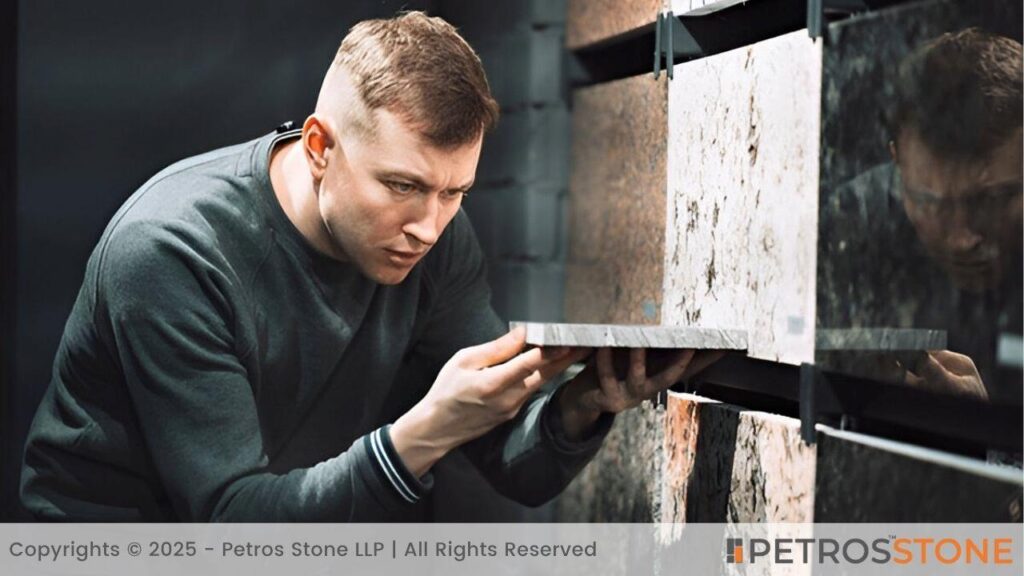
Choosing the Right Grade and Finish
Granite tiles are of three major grades:
- Commercial Grade: Contains slight natural defects, so it is a cost-effective choice when covering a large work or utility space.
- Standard Grade: Provides uniform color and finish that can be used in most residential flooring as well as counter surfaces.
- Premium Grade: Color is consistent, it is finely polished, and no spots can be seen- best used in the high-end interiors.
Select the finish according to where it is to be applied:
- Polished: It is best to be used in an indoor setting, such as the living room and kitchen, because of the glossy appearance.
- Flamed: An outdoor or wet surface that has a rough, non-slip texture.
- Leathered: Provides a contemporary or rustic feel with the addition of a soft matte surface.
Questions to Ask Suppliers and Installers
- What is the grade and origin of the stone?
- Does it come ready, or does it require post-installation sealing?
- To what extent can I anticipate wastage during cutting?
- What is the warranty on installation?
- Is it possible to examine slabs before purchase?
It is these questions that will guarantee that you purchase good granite and have proper installation.
Budget Planning and Price Comparison
| Granite Type | Approx. Price (USD/sq. ft.) | Usage |
| Indian Granite | $1.35 – $2.82 | Residential, commercial |
| Imported Granite | $2.82 – $6.77 | Luxury interiors |
| Tiles | $0.90 – $2.03 | General flooring |
| Slabs | $2.26 – $5.64 | Countertops, walls |
Installation, sealing, and maintenance are some of the costs to take into account when planning your budget. Initial expenses are on the high side, but due to the life span, granite is cost-effective in the long run.
Summary
One of the most persistent and captivating materials in present-day buildings and design is granite tiles. Their organic origin leaves a one-sided identity of each tile, characterized by complex veining, rich textures, and history. Granite easily brings a feeling of permanence and grace to any setting, whether on floors and countertops or on the walls.
Key Takeaways
| Aspect | Granite Tiles | Details / Notes |
| Material Type | Natural igneous stone | Formed from cooled magma; composed mainly of quartz and feldspar. |
| Durability | Extremely high | Highly resistant to wear, impact, and heavy foot traffic. Ideal for long-term use. |
| Scratch Resistance | Excellent | Does not scratch easily, even under rough use. |
| Heat Resistance | Outstanding | Withstands high temperatures; safe for kitchens and outdoor areas. |
| Water Absorption | Low to moderate | Requires proper sealing to prevent moisture penetration. |
| Maintenance | Moderate | Needs periodic sealing and regular cleaning with pH-neutral cleaners. |
| Cost | High initial, low over lifetime | Expensive upfront, but it offers decades of performance with minimal replacement costs. |
| Eco-Friendliness | Sustainable, recyclable | 100% natural, reusable, and does not emit harmful VOCs. |
| Appearance | Natural, unique patterns | Each tile has distinct veining, color variation, and grain structure. |
| Finish Options | Polished, Flamed, Leathered, Honed | Different finishes suit specific design needs and surface requirements. |
| Applications | Floors, countertops, walls, and outdoor spaces | Suitable for homes, offices, commercial, and public areas. |
| Weather Resistance | Excellent | Performs well under varying temperatures and humidity levels. |
| Main Drawbacks | High cost, cold surface, sealing required | It can feel hard underfoot and needs maintenance to retain luster. |
| Installation | Professional installation recommended | Heavy material; proper leveling and sealing are critical. |
| Lifespan | 25–50+ years | Extremely long-lasting with proper care. |
| Value | Long-lasting, luxurious, adds property appeal | Enhances resale value due to premium look and durability. |
| Best For | Premium interiors, outdoor patios, and commercial lobbies | Perfect where elegance and endurance are priorities. |
Granite is regarded as the stone of unbelievable strength and durability. It can stand a lot of foot traffic and extreme temperatures and wear every day without losing its charm. This has made it an ideal choice of material in both residential and commercial projects where performance that is long-lasting is required. Its heat, scratch resistance, and water resistance add more reasons to support its utility in the kitchen, bathrooms, and outdoor environment.
Feel free to get in touch for a free consultation, quote, and get a detailed understanding from our experts here at Petros®. Visit www.petrosstone.com or call +91-8446360361 or WhatsApp

Hello!
I’m Dr Mridali, a content writer with a background in dentistry and a passion for turning complex topics into clear, engaging stories. From healthcare to architecture, I create blogs that inform, educate, and connect with readers. With every piece, I aim to blend accuracy with creativity to make information truly valuable.

Brown Granite

White Galaxy Granite

Blue Bahia Granite

Silver Cloud Granite

Black Pearl Granite

Dallas White Granite