Granite is a natural stone important in construction, as it is strong, durable, and aesthetically pleasing. India has become one of the world’s top granite producers and exporters, with a broad range of colors and finishes, exporting to global markets such as the United States, Europe, and the Middle East. The geological diversity of the country yields unique granite types, which are hardly available elsewhere.
It has been observed that international customers are not necessarily interested in color or cost alone. Instead, they require uniformity of quarry output, adherence to global norms, and fair pricing like FOB (Free on Board) and CIF (Cost, Insurance, Freight).
Geographical Distribution of Granite in India
| Region | Primary States | Key Granite Varieties | Major Districts / Hubs | Export Market & Usage |
| Southern India | Andhra Pradesh, Tamil Nadu, Karnataka, Telangana | Absolute Black, Black Galaxy, Kashmir White, Tan Brown | Ongole, Madurai, Krishnagiri, Karimnagar | USA, China, UAE. Premium countertops and large commercial projects. |
| Western India | Rajasthan, Gujarat | Rosy Pink, Desert Brown, Platinum White | Jalore, Barmer, Udaipur, Mundra (Port Hub) | Middle East (Dubai). Exterior cladding and landscaping. |
| Northern India | Haryana, Himachal Pradesh | Niche/Local varieties | Small-scale local quarries | Domestic Market. Primarily used for regional construction. |
| Eastern India | Odisha, Jharkhand, West Bengal | Emerging color schemes and dense stones | Khordha, Ganjam, Dumka | Emerging Export. Structural uses and custom architectural niches. |
The geographical distribution of granite in India, therefore, remains very important knowledge to architects, constructors, and importers who would like to make the most out of sourcing processes and performance in the long run.
In this article, we provide a comprehensive analysis of the geographical distribution and technical standards of Indian granite, specifically focusing on how regional quarrying hubs influence color consistency and export quality. We also examine the critical role of ASTM testing and strategic logistics in ensuring that these natural stone surfaces meet the rigorous demands of the global market.
- Geological Formation of Granite
- Overview of Granite Resources in India
- Major Granite – Producing Regions in India
- Southern India – The Granite Hub
- Western India Granite
- Northern India Granite
- Eastern India Granite
- State-Wise Granite Distribution
- Factors Influencing Granite Distribution
- Economic Importance of Granite Distribution
- Environmental and Sustainability Concerns
- Future Trends and Opportunities
- Key Takeaways
Geological Formation of Granite
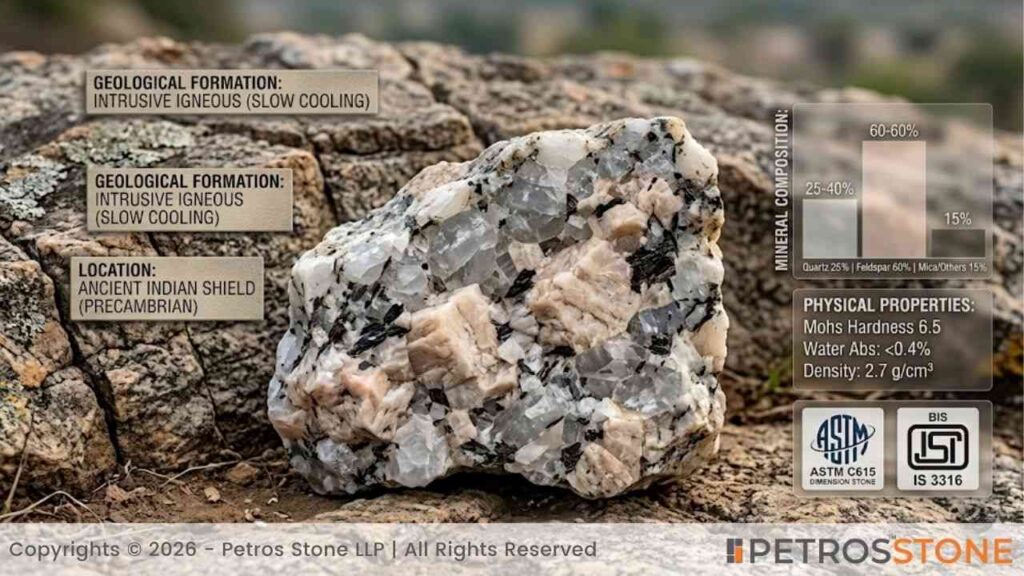
Granite is an igneous rock that is intrusive in nature, meaning it formed as magma crystallized slowly beneath the Earth’s surface This slow cooling leads to the creation of giant crystals of minerals that give granite its texture of granules.
The granite reserves of India are mostly linked to the ancient Indian Shield, which dates back to the Precambrian period. They are among the oldest geological features in the world and are found all over peninsular India, according to the Indian Bureau of Mines.
Granite is usually composed of:
- Quartz (20–40%)
- Feldspar (50–60%)
- Mica and other minerals (5–10%)
These minerals add performance properties to it:
- Hardness: 6–7 on the Mohs scale
- Water absorption: Less than 0.4%
- Density: Around 2.63–2.75 g/cm³
Technical Standards
Granite Testing Standards (Lab vs Field Performance)
Granite performance is not only defined by appearance but also by standardized laboratory testing. International buyers, especially in the U.S. and Europe, rely on verified test results before approving bulk orders.
Relevant standards from ASTM International include:
- ASTM C97 – Water Absorption Test
- ASTM C170 – Compressive Strength Test
- ASTM C99 – Flexural Strength Test
Typical Test Values (Indian Granite)
| Property | Lab Value Range | Field Observation |
|---|---|---|
| Density | 2.63 – 2.75 g/cm³ | Consistent across most South Indian granites |
| Water Absorption | 0.1% – 0.3% | Slightly higher in lighter granites |
| Compressive Strength | 180 – 250 MPa | Excellent load-bearing capacity |
| Flexural Strength | 10 – 20 MPa | Important for thin slabs (2 cm use) |
Industry Insight – In factory conditions, slabs that pass ASTM standards may still show variation on-site due to improper installation, substrate movement, or moisture exposure, especially in humid climates.
Overview of Granite Resources in India
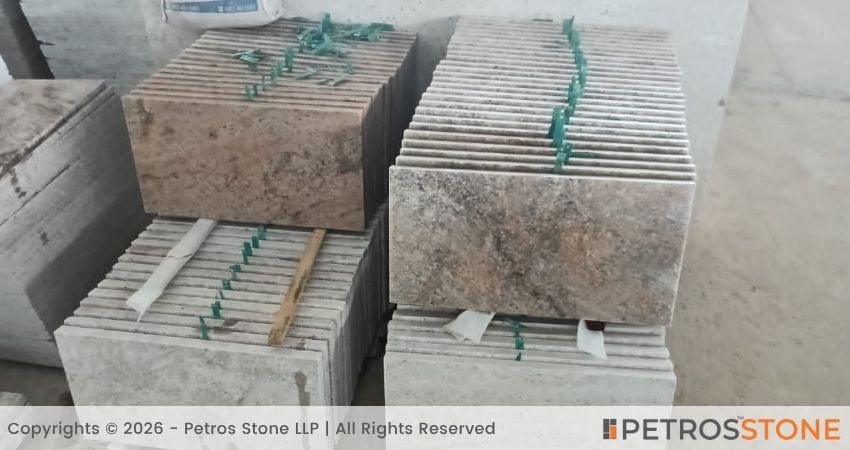
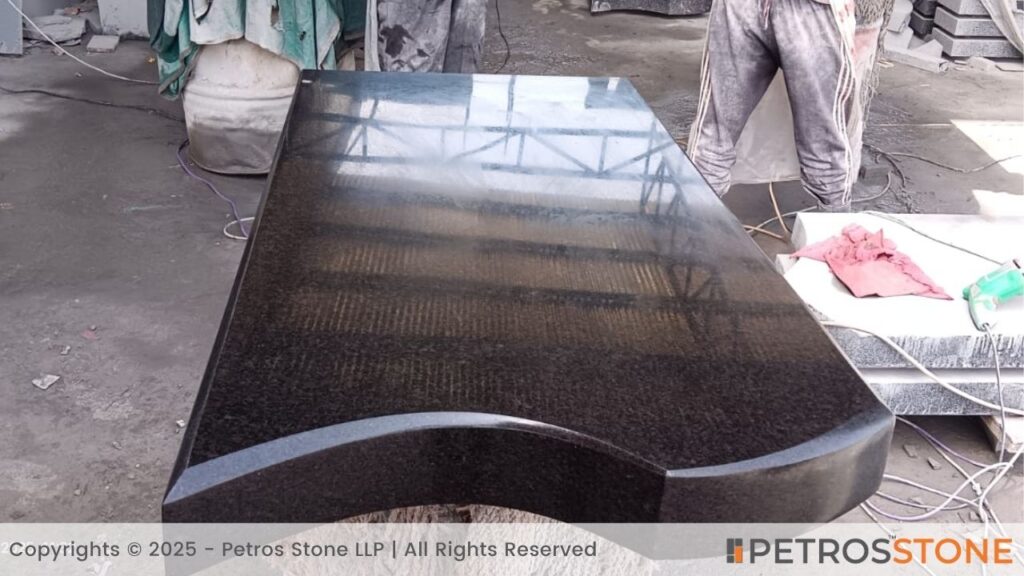
India possesses vast granite reserves spread across multiple states, with over 200 shades and varieties identified. These include black granites, colored granites, and exotic patterned stones. The United States is one of the largest importers, particularly for countertop and flooring applications.
Granite exports from India are typically categorized into:
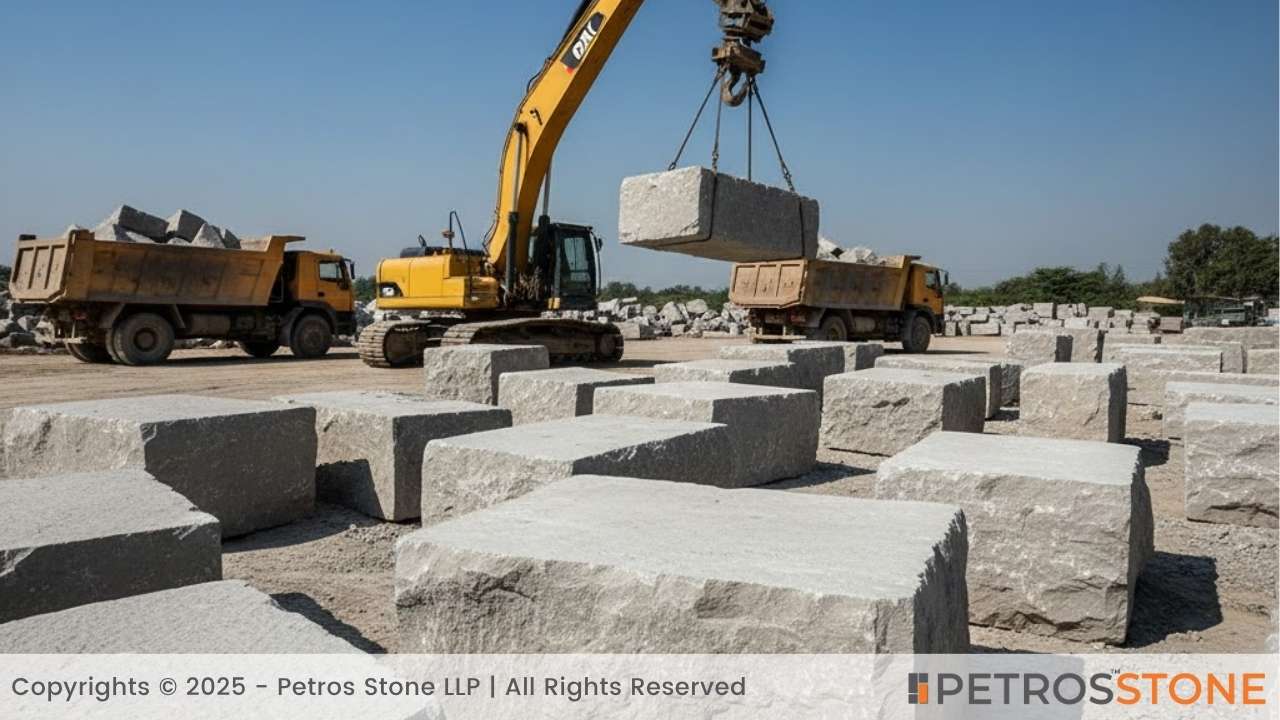
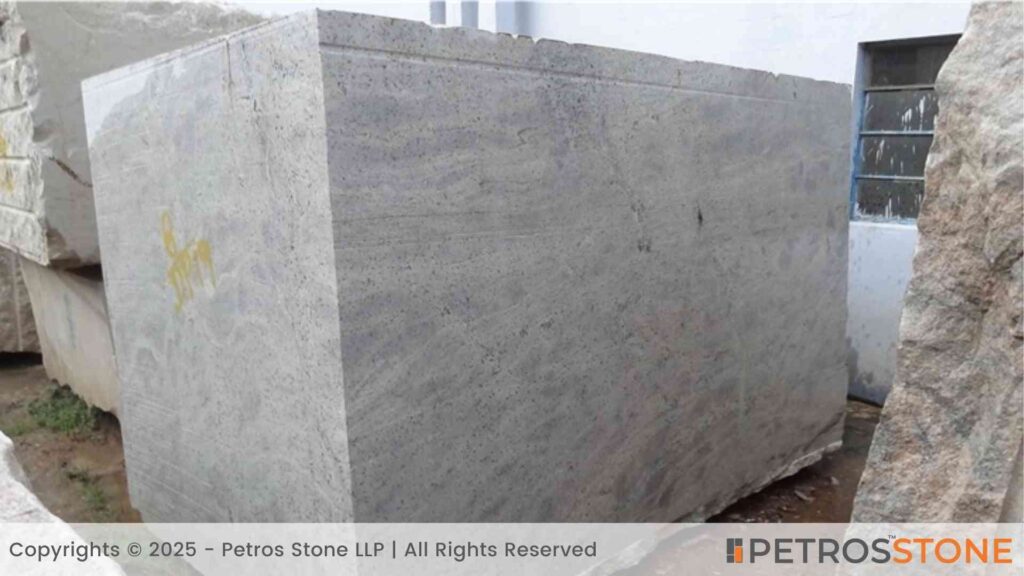
- Rough blocks
- Cut blocks
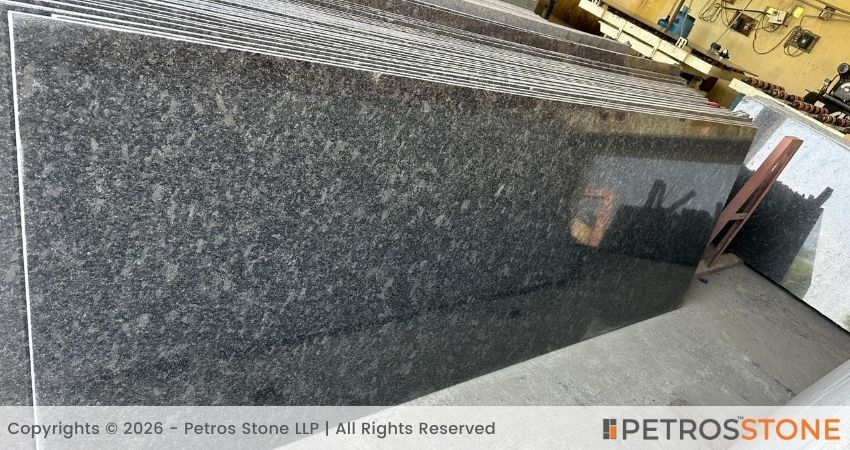
- Polished slabs
- Tiles and monuments
Major Granite – Producing Regions in India
Southern India – The Granite Hub
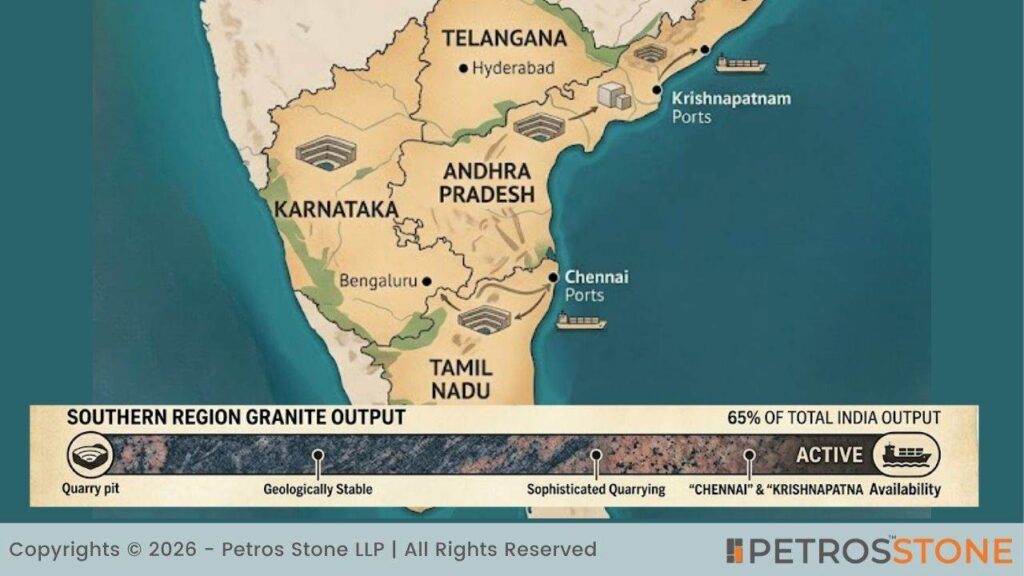
The bulk of granite is produced in Southern India, which accounts for almost 65 percent of the total output. Andhra Pradesh, Tamil Nadu, Karnataka, and Telangana are some of the states with good deposits of granite.
This region benefits from:
- Geologically stable landscapes.
- Sophisticated quarrying methods.
- Closeness to large ports such as Chennai and Krishnapatnam.
Southern Indian shipments are more cost-effective because they can be shipped inland at less cost.
Western India Granite
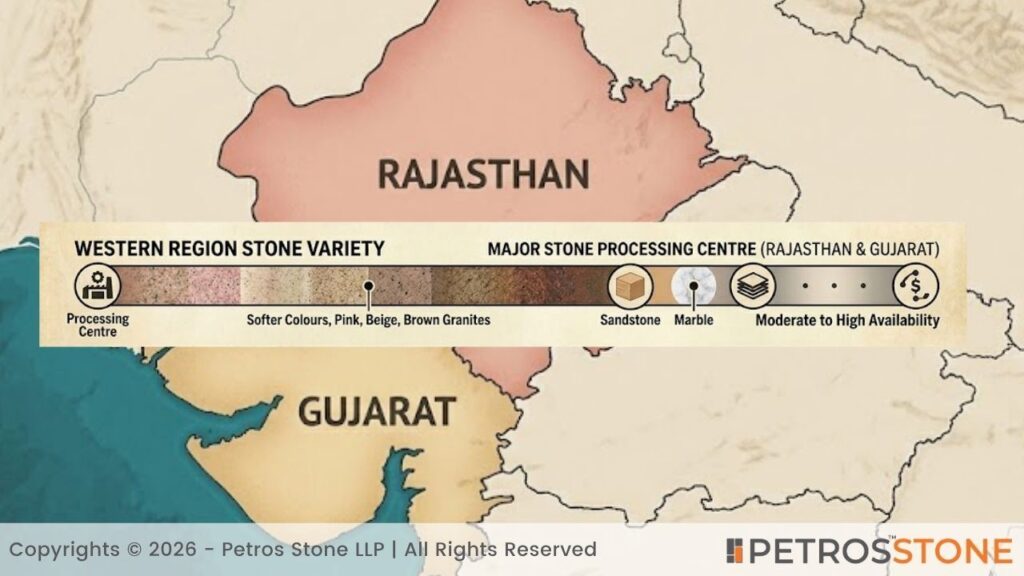
The softer colors include pink, beige, and brown granites, which are typical of Western India, especially of Rajasthan and Gujarat.
Rajasthan, specifically, has extensive reserves and is also a significant producer of sandstone and marble, which makes it a major centre of processing with natural stone.
Northern India Granite
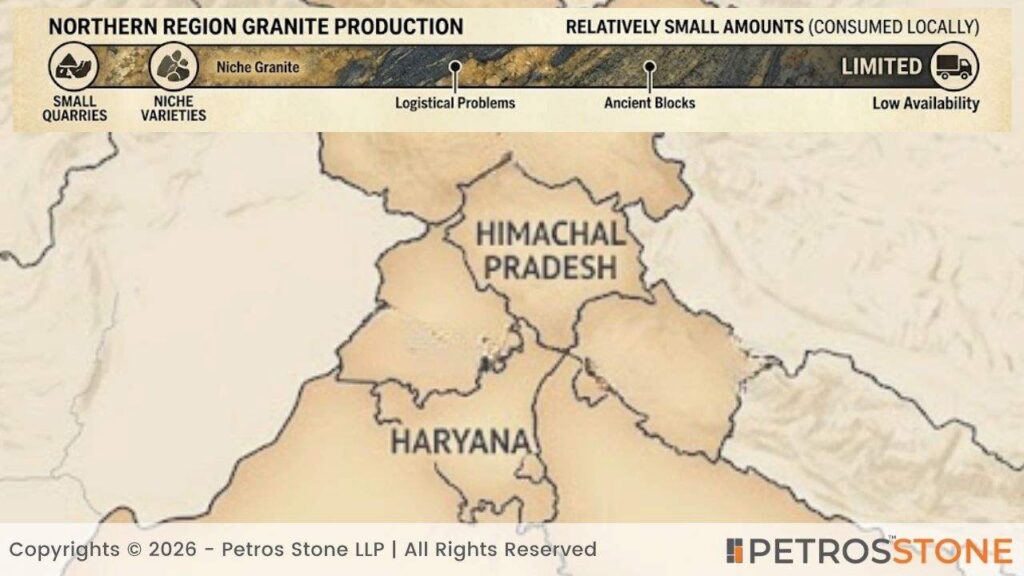
The North Indian region contains relatively small amounts of granite, yet makes niche varieties. Most granite in this region is consumed locally due to logistical problems and the smaller sizes of quarries.
Eastern India Granite
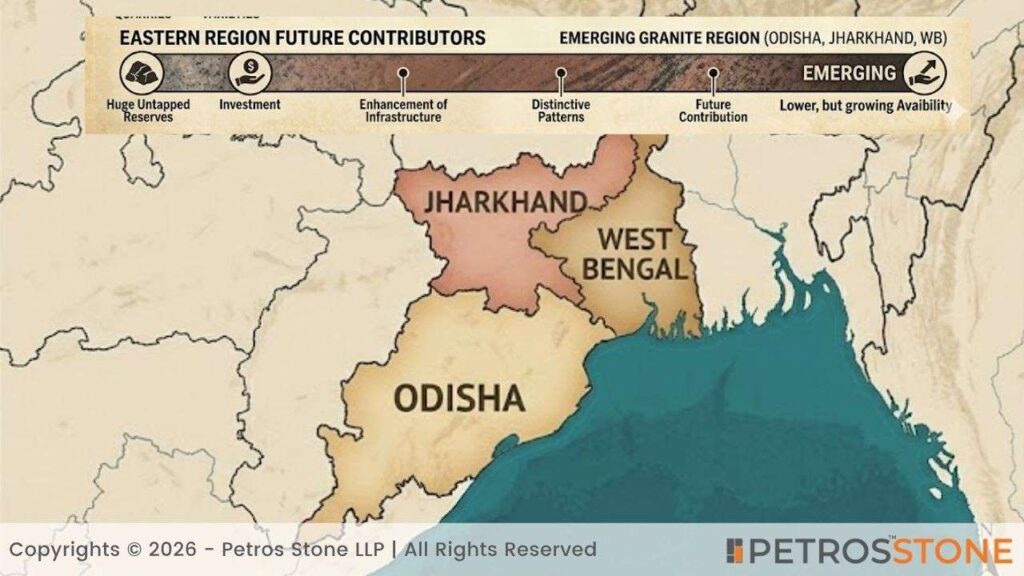
Eastern states such as Odisha, Jharkhand, and West Bengal are becoming important contributors. These regions are likely to contribute more in the future with the enhancement of infrastructure and rising investments.
State-Wise Granite Distribution
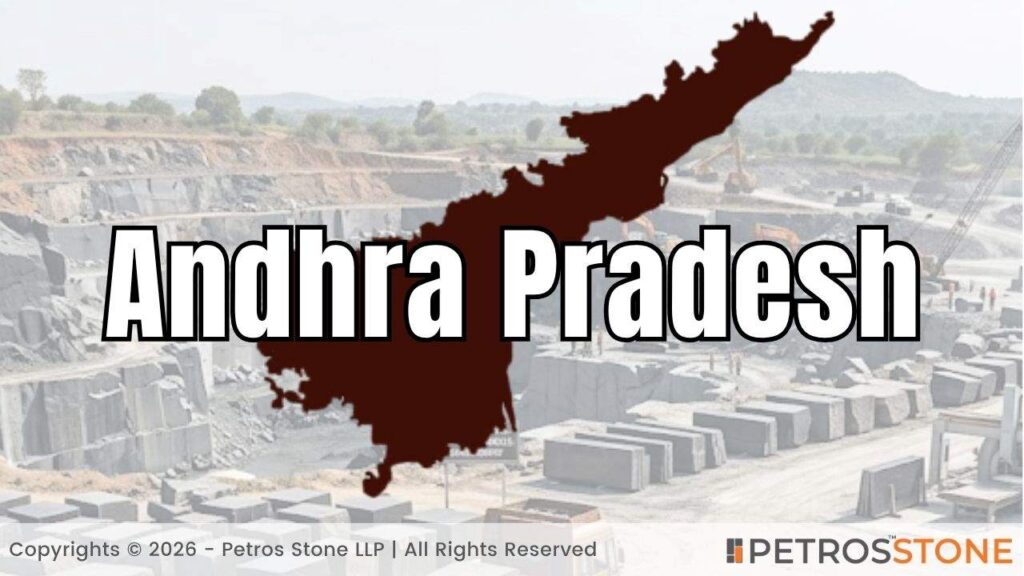
Andhra Pradesh
It is the largest state of granite production in India, with a special focus in the state of Andhra Pradesh, producing Absolute Black granite, which is very highly demanded in overseas markets.
Key Highlights
- Major districts: Ongole, Prakasam, and Chimakurthy.
- Known for: Dark black, evenly ground.
- Export demand: The U.S. and China are high.
Pricing & Trade Insight
- FOB (blocks): $650–$900 per cubic meter.
- Large-scale commercial use permits high consistency.
Industry Insight
Petrosstone’s recent shipment of Absolute Black Granite to New Jersey reflects a clear project-driven selection strategy rather than a routine export. Absolute Black is known in the industry for its exceptional shade consistency, typically maintaining less than 2–3% variation across slabs from the same quarry belt (primarily Ongole region, as mapped by Geological Survey of India).
This level of uniformity becomes critical in large-format countertop projects, commercial islands, and multi-unit developments, where even minor tonal shifts can disrupt visual continuity after installation. Compared to many other black granites that show batch-to-batch variation, Absolute Black’s tighter grain structure and controlled quarry blocks allow processors to maintain consistent output during gang saw cutting and calibration.
Technical Performance
- Low water absorption (<0.3%).
- High compressive strength.
- Countertop and flooring: Suitable.
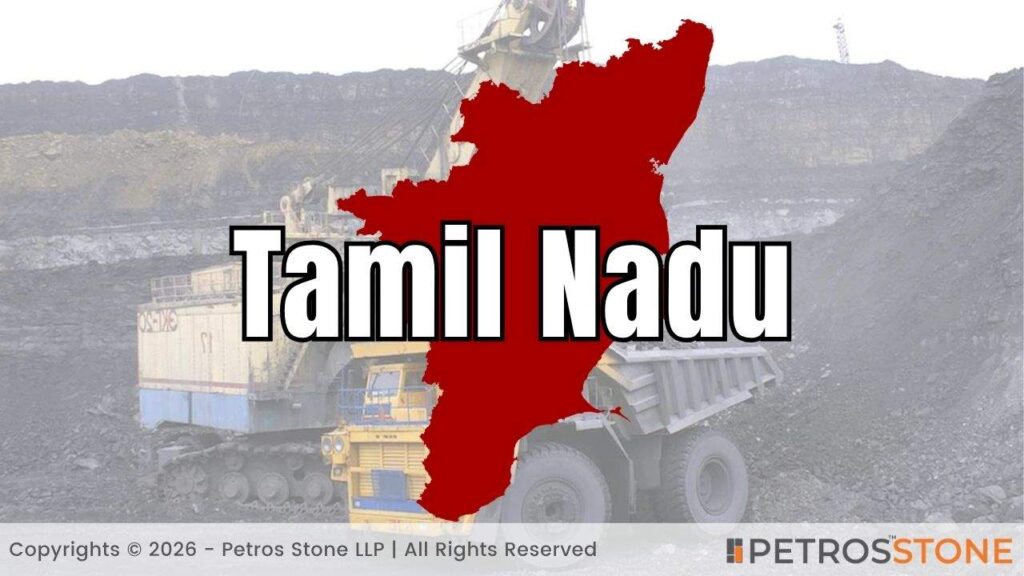
Tamil Nadu
Tamil Nadu is the state that produces high-quality and ornamental granite with high export.
Key Highlights
- Major districts: Madurai, Salem, Krishnagiri.
- Popular types: Kashmir White, Paradiso, Colombo Juparana.
- Effective processing infrastructure.
Pricing & Trade Insight
- FOB slabs: $18-35 per sq. ft. based on finish.
- Good polish enhances value in exports.
Industry Insight
At Petrosstone, it has been observed that factories in Tamil Nadu have better edge finishing and polishing uniformity that will lower the rework expenses of U.S. fabricators.
Technical Performance
- Medium water absorption.
- Excellent polish retention.
- Perfectly suited to interiors.
Limitation – Some types vary in color between batches, and these must be carefully chosen.
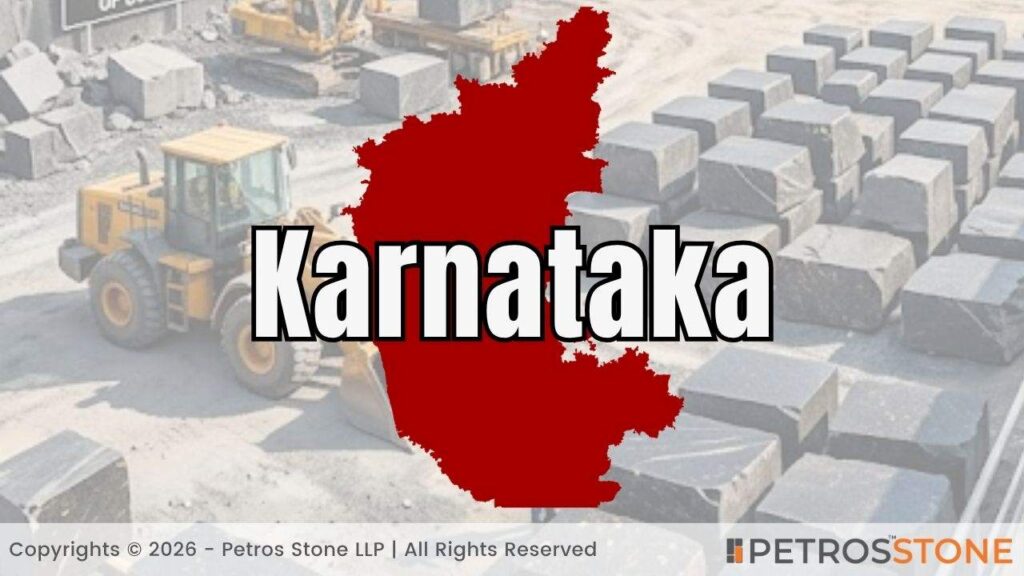
Karnataka
India is a country with a relatively historical export of Black Galaxy Granite worldwide, with Karnataka being one of them.
Key Highlights
- Significant areas: Ongole belt growth and other areas nearby.
- Known for: Black with sprinkles of gold.
- The demand is high for kitchen countertops.
Pricing & Trade Insight
- CIF U.S.: $20–$30 per sq. ft.
- Premium because of the exclusive look.
Industry Insight
Petrosstone recorded in a shipment in Houston that bigger slab sizes (more than 300 cm) in Karnataka reduced waste for fabricators by almost 8%.
Technical Performance
- High scratch resistance.
- Low porosity.
- Durable for heavy-use areas.
Limitation – Batches may have different gold speck densities.
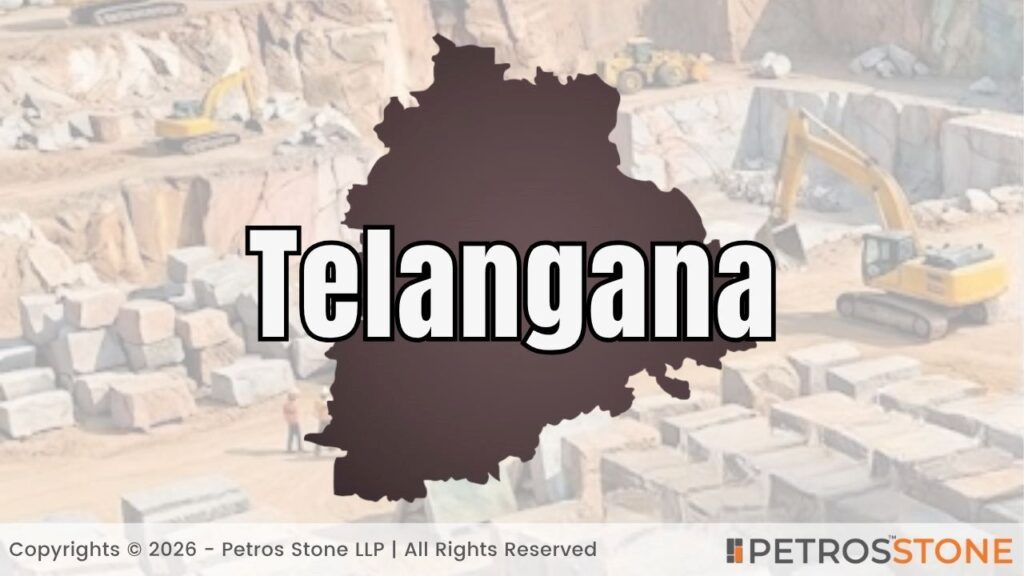
Telangana
Telangana has become a prominent granite exporter, especially of black and colored granites.
Key Highlights
- Major districts: Karimnagar, Warangal.
- Known for: Tan Brown, Coffee Brown.
- Rapid growth in quarrying.
Pricing & Trade Insight
- FOB blocks: $500–$800 per cubic meter.
- Price wars because of higher supply.
Industry Insight
Telangana granite has gained traction in mid-range commercial projects due to its more competitive pricing , making it a practical choice for cost-sensitive developments.
Technical Performance
- Moderate hardness.
- Good durability.
- Indoor and outdoor applications.
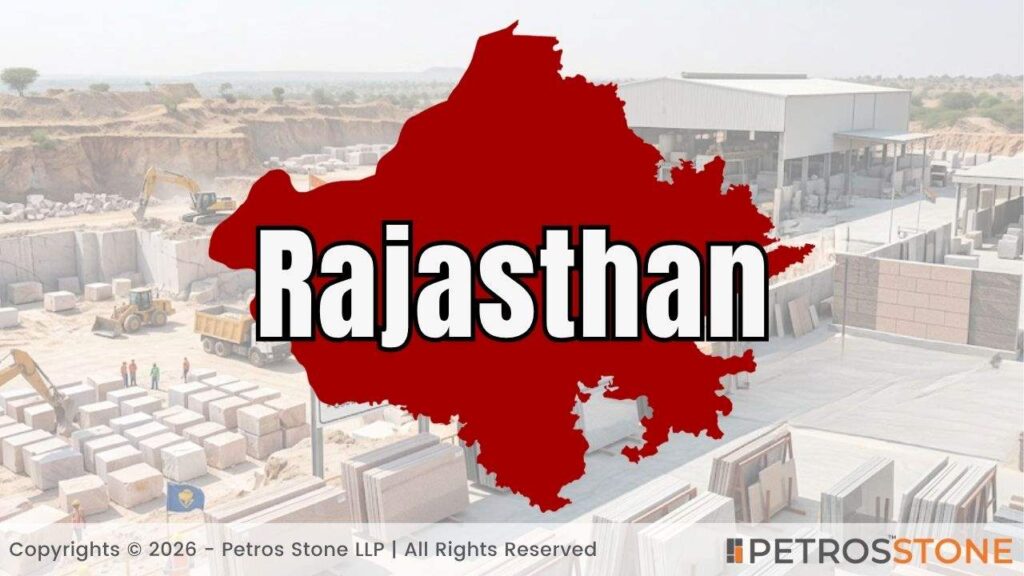
Rajasthan
The production of Rajasthan ranks among the major producers in the north of India, with lighter and warmer granite tones.
Key Highlights
- Major districts: Jalore, Barmer, and Udaipur.
- Popular types: Rosy Pink, Desert Brown.
- Good domestic and export market.
Pricing & Trade Insight
- FOB slabs: $12–$25 per sq. ft.
- Reduced logistics cost in North India.
Industry Insight
In a landscaping project in Dubai, Petrosstone employed Rajasthan granite because of its uniformity in color weather.
Technical Performance
- Moderate water absorption.
- Good weather resistance.
- Appropriate for exterior cladding.
Limitation – Hardness slightly less than that of the southern granites.
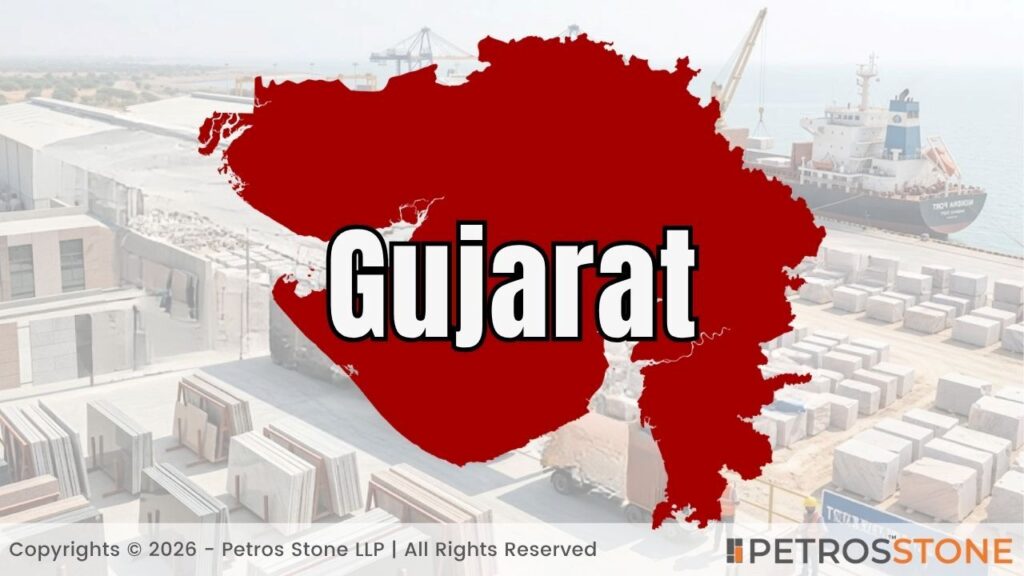
Gujarat
Gujarat has granite industries that are largely dependent on logistics and access to ports instead of reserves.
Key Highlights
- Accessibility of ports at Mundra and Kandla.
- Production of medium-grade granite.
- Good export infrastructure.
Pricing & Trade Insight
- Inland freight reduces CIF costs by $20–$40 per ton.
- Competitive export pricing.
Industry Insight
Gujarat ports enable to decrease the lead time of shipments by 5-7 days relative to the southern ports.
Technical Performance
- Moderate durability.
- Appropriate for commercial projects.
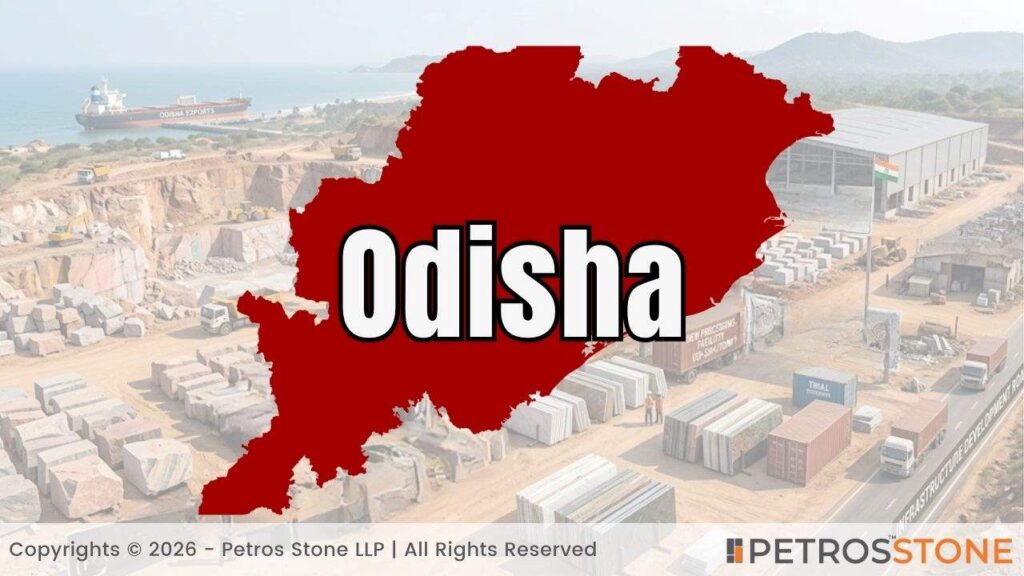
Odisha
Odisha is a new granite belt with huge untapped reserves.
Key Highlights
- Major regions: Khordha, Ganjam.
- Known for: Distinctive color schemes.
- Increasing investments.
Pricing & Trade Insight
- Reduced FOB prices due to growing infrastructure.
- Growing export potential.
Industry Insight
Odisha trial shipments reported cost reductions of up to 15%, but uniformity is being tested.
Technical Performance
- Good compressive strength.
- Applicable in structural uses.
Limitation – Poor processing facilities.
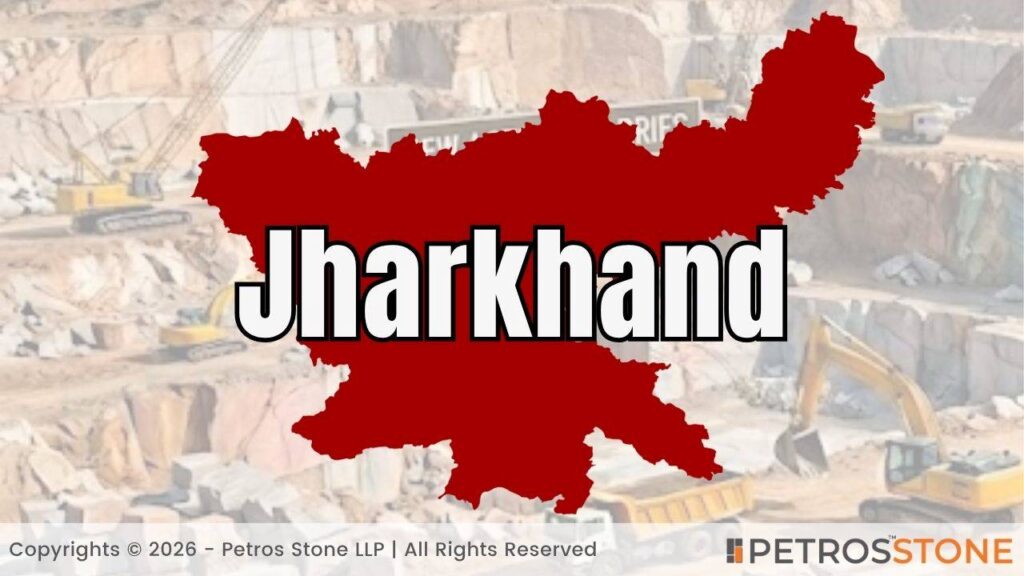
Jharkhand
Jharkhand is slowly venturing into the granite export market with dense and rough stones.
Key Highlights
- Smaller quarry operations.
- Growing domestic demand.
Pricing & Trade Insight
- Low labor costs lead to competitive pricing.
- Limited export volume.
Industry Insight
At this juncture, Jharkhand granite may be more favorable in regional backing as opposed to massive exports.
Technical Performance
- Moderate strength.
- Appropriate in low-traffic zones.
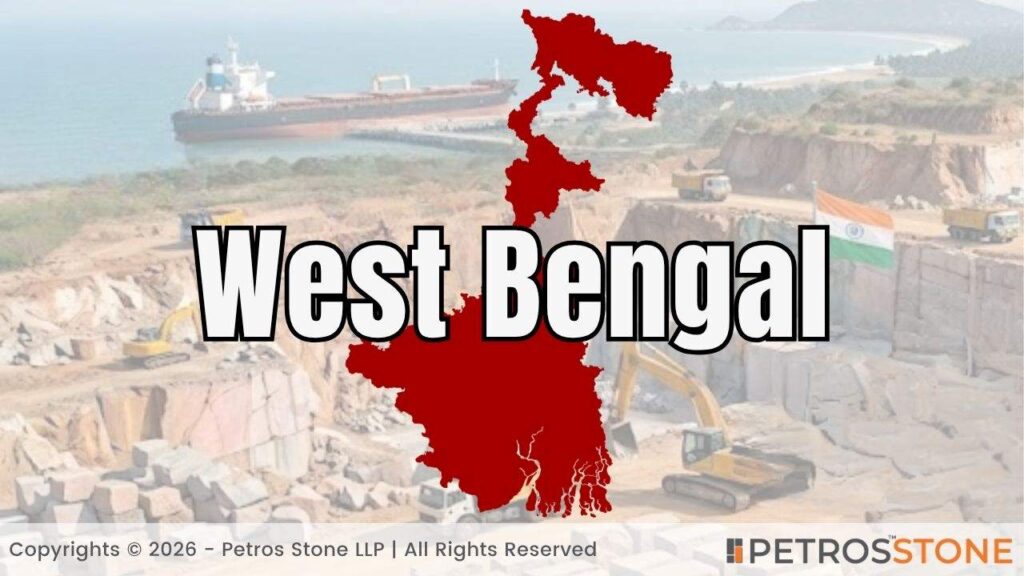
West Bengal
West Bengal contributes less but provides unique granite patterns.
Key Highlights
- Limited quarrying activity.
- Focus on decorative stones.
Pricing & Trade Insight
- Export viability is impacted by the increased cost of logistics.
- Mostly used domestically.
Industry Insight
West Bengal granite has niche demand in custom architecture projects.
Technical Performance
- Good aesthetic appeal.
- Moderate durability.
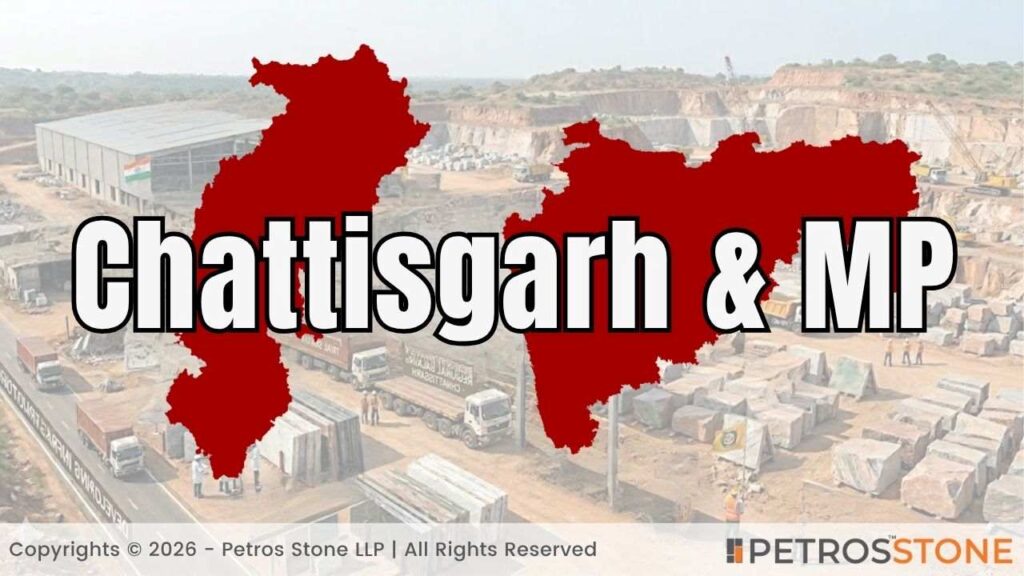
Other Emerging States
The discovery of new quarries and policy support is making states like Chhattisgarh and Madhya Pradesh gain attention.
Key Highlights
- Untapped reserves.
- Improving private investment.
- Mining incentives by the government.
Pricing & Trade Insight
- Reduced the cost of entry for new buyers.
- Future export opportunities.
Technical Performance
- Varies by location.
- Needs extensive testing to be used extensively.
Risk Factor – Poor consistency owing to poor development of the quarry in the early stages.
Factors Influencing Granite Distribution
Geological Factors
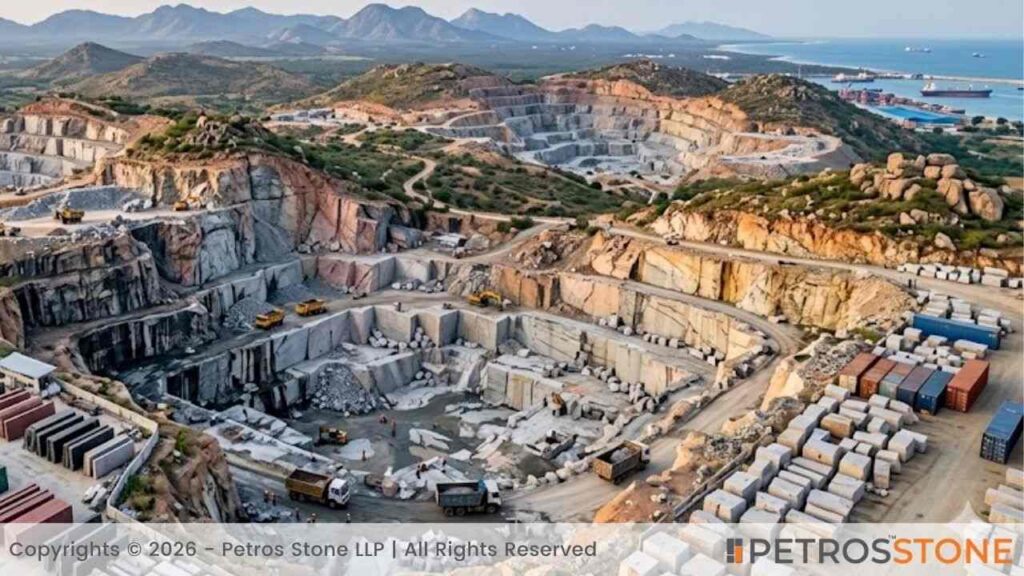
The existence of ancient crystalline rock structures is the leading determinant of granite distribution. Areas that experienced a stable tectonic history are likely to have better deposits.
Climatic Conditions
In areas with dry climates like Rajasthan, quarrying is easily conducted, and the delays associated with weather are minimized.
Infrastructure and Accessibility
Infrastructure – Granite distribution uses transportation infrastructure that is critical. One case of a Petrosstone shipment revealed that the delivery of granite blocks to ports that originate in the inland quarries may increase the end cost by $40–$70 per ton, greatly impacting the price competitiveness.
Government Policies and Regulations
Granite production is affected by mining leases, environmental clearances, and export regulations. Exporting to foreign markets requires compliance with the standards established by organizations such as the U.S. International Trade Commission.
Economic Importance of Granite Distribution

Granite mining and export are very important to the Indian economy, creating jobs and foreign exchange.
India is a competitor to other countries, such as Brazil or China, in the world granite market. Indian granite is also in high demand because it comes in different types and is affordable.
The main economic advantages are:
- Development in quarrying and processing.
- Diversification of industries.
- Increased export revenues.
Environmental and Sustainability Concerns
Environmental Impact of Granite Mining
Environmental impacts of granite quarrying may include:
- Land degradation
- Dust pollution
- Water depletion
According to a report by the Indian Bureau of Mines, there is a need to adopt sustainable mining practices that will reduce these effects.
Sustainable Mining Practices
Some sustainable practices are:
- Controlled blasting techniques
- Recycling water used in processing.
- The use of waste stone for construction aggregate.
The slab optimization strategies have been adapted by Petrosstone to help minimize used material by about 10-12%, which enhances sustainability and profitability.
Future Trends and Opportunities
The Indian granite business is developing dynamically due to technological changes and shifting market demands.
Key trends include:
- Growth in demand for large-format slabs.
- Quarrying and processing automation.
- Increasing attention to certified materials.
The clients demand not only the beauty but also the traceability: the knowledge about the origin of the stone and whether it can be compared to the ASTM requirements.
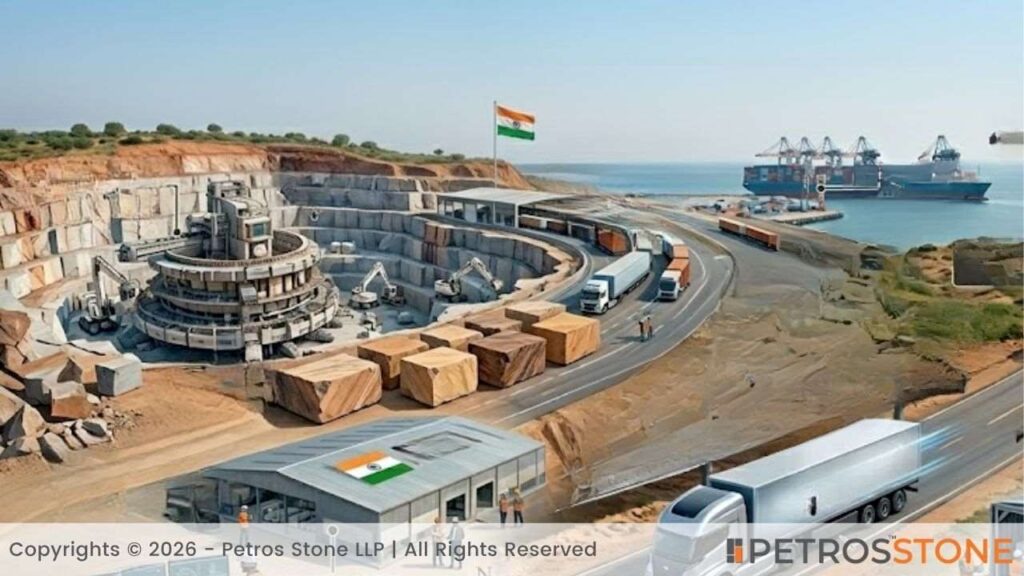
Growth opportunities include:
- Increasing exports to new markets.
- Value-added product development.
- Adopting digital supply chain solutions.
Nevertheless, risks like color fluctuation, breakage during transportation, and global changes in shipping rates are the major issues.
A significant percent rise in breakage risk was observed on a recent shipment during the monsoon season because of exposure to moisture, demonstrating the necessity of adequate packaging and shipping.
Note – It is worth clarifying that moisture often leads to oxidation (rusting) in iron-rich granites or weakened epoxy resins, which then leads to breakage during transit.
Key Takeaways
- India’s granite distribution reflects its geological diversity, with Southern India as the primary production hub, while Western and Eastern regions are emerging with new varieties and commercial potential.
- Strong export infrastructure and wide stone selection position India as a leading global supplier of natural stone, supported by established processing clusters and port connectivity.
- Key industry challenges remain—including environmental compliance, rising logistics costs, and maintaining lot-to-lot quality consistency, especially for large export orders.
- Combining quarry knowledge, factory precision (cutting, resin treatment, calibration), and international compliance significantly improves buyer confidence and project outcomes.
- For architects, contractors, and importers, granite sourcing is a strategic decision, where quarry location directly impacts color consistency, pricing, and long-term performance rather than just availability.
Feel free to get in touch for a free consultation, quote, and get a detailed understanding from our experts here at Petros®. Visit www.petrosstone.com or call +91-8446360361 or WhatsApp

Hello!
I’m Dr Mridali, a content writer with a background in dentistry and a passion for turning complex topics into clear, engaging stories. From healthcare to architecture, I create blogs that inform, educate, and connect with readers. With every piece, I aim to blend accuracy with creativity to make information truly valuable.

Brown Granite

White Galaxy Granite

Blue Bahia Granite

Silver Cloud Granite

Black Pearl Granite

Dallas White Granite