Choosing the right grave monument is an emotional and personal decision. Flat monuments (also called flush markers) and upright monuments (traditional headstones) each have distinct features that can affect cost, appearance, and care.
Flat Monuments vs Upright Monuments — Comparison Table
| Feature | Flat Monuments (Flush Markers)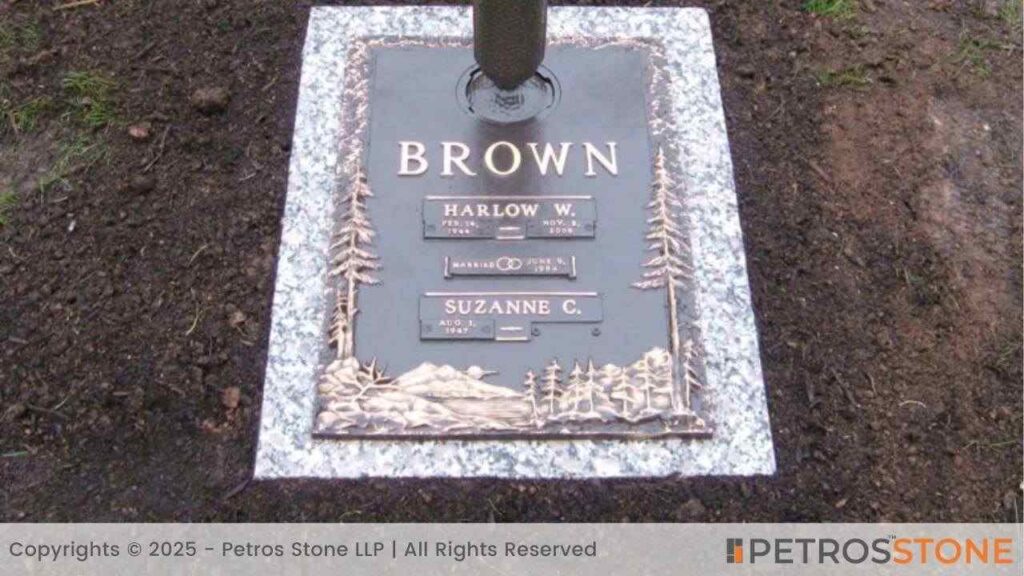 | Upright Monuments (Headstones)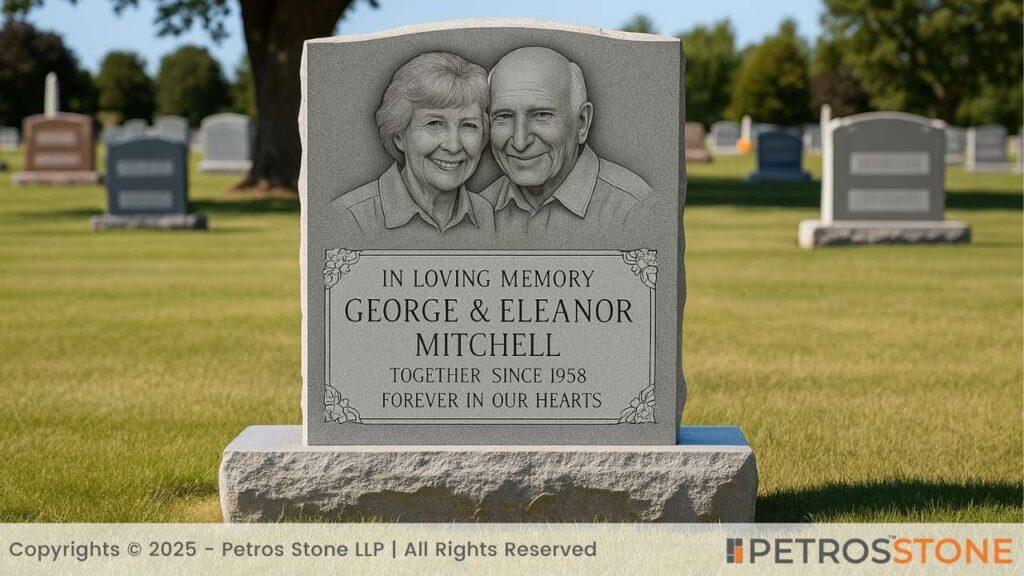 |
|---|---|---|
| Appearance | Minimal, modern, lies level with the ground; blends quietly | Traditional, tall, highly visible; strong presence |
| Height & Size | 3–4 inches thick; standard sizes ~24×12 in or 36×18 in | Height ~20–48 inches; width/depth vary widely |
| Material Options | Granite or bronze; simple design | Granite, marble; more artistic shaping and dimension |
| Durability | Highly durable (especially granite) | Very durable, but upright structure may need periodic adjustment |
| Engraving & Personalisation | Limited space for names, dates, simple symbols | Large surface area: inscriptions, long texts, portraits, artwork |
| Design Flexibility | Simple, clean, low-profile aesthetic | Variety of shapes: curves, crosses, statues, detailed carving |
| Installation | Set flush on concrete foundation beneath lawn level | Requires base and deeper foundation to support vertical structure |
| Maintenance | Very low maintenance; lawn mowing and cleaning are easy | Requires more care: cleaning surfaces, ensuring level, removing moss/bird-marks |
| Ease of Locating | Less prominent—may be harder to spot from a distance | Very visible—easy to locate, stands as a focal point |
| Cost | From US$ 280 to US$ 565+ | From US$ 400 to US$ 2,820 for basic; Elaborate monuments US$ 5,640 to US$ 11,300+ |
| Best For | Modern look, tight budgets, cemeteries with lawn-level rules, low maintenance | Families wanting a classic, prominent tribute; more inscription or artwork; legacy piece |
| Cemetery Regulation Fit | Often required in memorial parks (flat markers only) | Only permissible if cemetery allows upright monuments |
| Symbolism | Subtle, understated remembrance | Strong legacy, presence, formality |
| Longevity | Long-lasting with good materials | Very long-lasting, though upright demands slightly more upkeep |
| Overall Advantage | Affordable, simple, sleek, practical | Highly customizable, visible, traditional, grand |
In this article, we explore the differences between flat and upright monuments in a clear, practical way so you can choose the memorial that truly reflects your needs and sentiments. We break down how each monument type performs in terms of appearance, durability, customization, installation, maintenance and cost.
- Flat Monuments vs Upright Monuments — Comparison Table
- Understanding Monument Types
- Key Differences Between Flat and Upright Monuments
- Material and Durability
- Personalization and Engraving Options
- Installation and Maintenance
- Cost Comparison
- Flat Monuments vs Upright Monuments — Comparison Table
- Benefits of Flat Monuments
- Benefits of Upright Monuments
- Things to Consider Before Choosing
- How to Choose the Right Monument for You
- Expert Recommendations
- Summary
- FAQs
- Key Takeaways
Understanding Monument Types
What Is a Flat Monument?
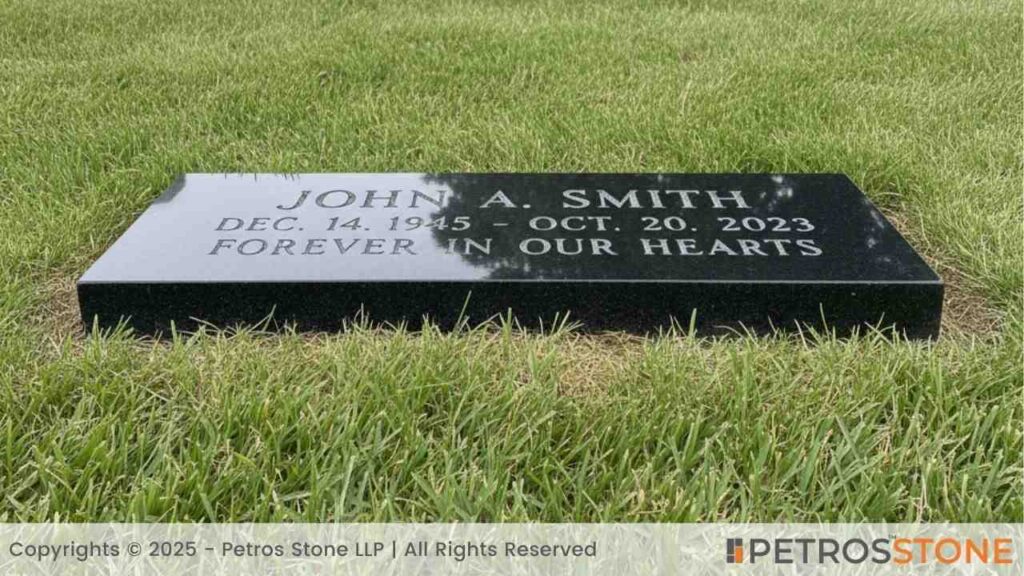
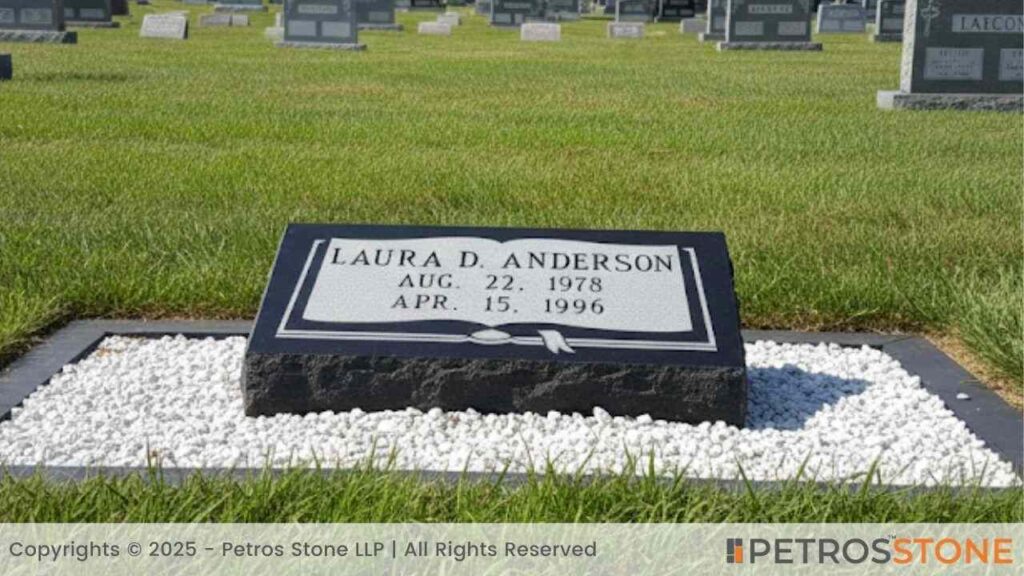
A flat monument, usually known as a lawn-level or flush marker, lies almost even with the soil. It generally measures just 3 – 4 inches thick. The markers are typically made of bronze or granite and feature a sleek, very low-profile appearance. Flat monuments merge quietly into the surroundings because of their level position with the lawn. They are often referred to as “grass markers” and are typically minimalist and contemporary in appearance.
What Is an Upright Monument?
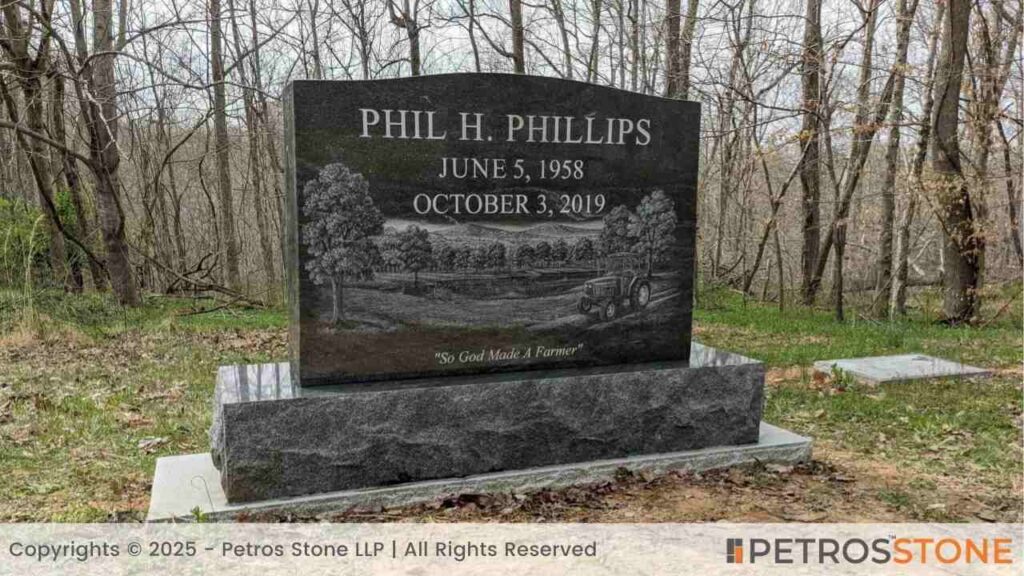
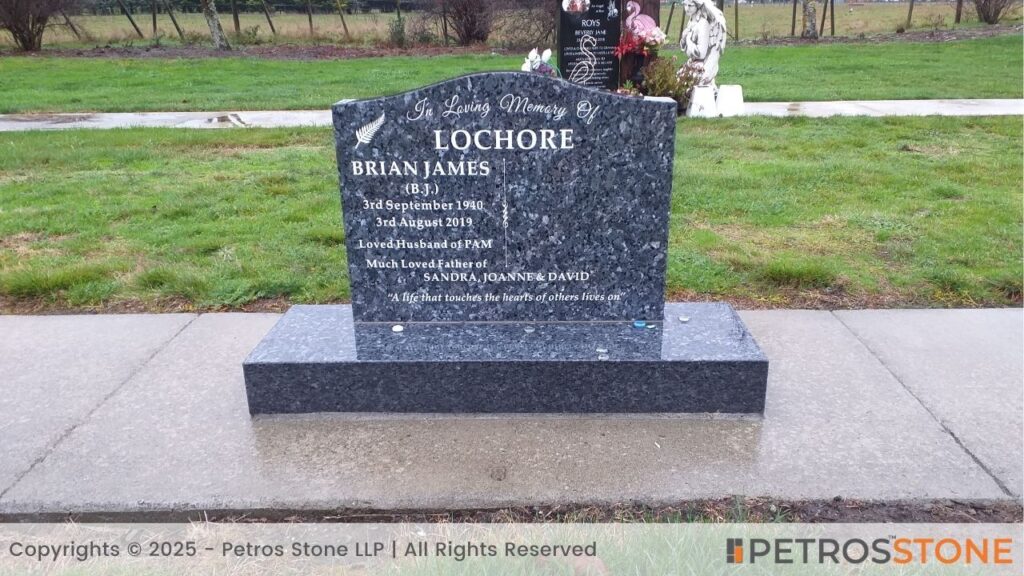
The traditional standing headstone is an upright monument. Typically, it consists of two parts: A vertical tablet with engraved labels and messages, along with a base that holds it. The height of most upright stone monuments can vary from approximately 20 inches to 48 inches tall. Typically constructed from either marble or granite materials, they will often sit atop an individual’s grave with pride. In addition, the traditional upright monument design is highly visible and provides ample opportunity for engraving or artwork on the surface of the monument.
Key Differences Between Flat and Upright Monuments

Design & Visual Appeal
- Flat Markers: Due to the flat nature of the design of a flat marker, it has a low visual profile. A flat marker also typically has a clean appearance. Due to its placement at ground level, the surrounding grass and other elements in the area provide a minimalist view of the marker. A flat marker is designed in a minimalist fashion and appeals to individuals who prefer a clean or modern aesthetic appeal.
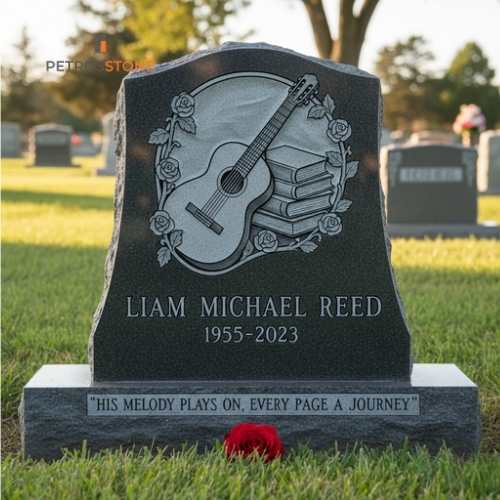
- Upright Monuments: Upright monuments are a dignified way to honor an individual by providing a sense of stature to a family plot. The vertical design and silhouette of an upright monument provide a classic and time-honored design feature. The design of an upright monument may include multiple designs, such as curves and angles, and is clearly visible from far away. This style of monument is preferred by many families looking for a more formal memorial to be placed at a gravesite.
Size, Shape, and Height Variations
- Flat Markers: The design of flat markers consists of rectangular slabs that match the ground surface. The thickness of flat markers measures between 3 and 4 inches. The dimensions of flat markers differ between cemeteries but standard measurements include 24×12 inches and 36×18 inches.
- Upright Monuments: The design of upright monuments includes various dimensions and forms. The height of upright monuments reaches between 20–48 inches, while their width and depth follow cemetery regulations. The design of upright headstones extends from basic rectangular shapes to elaborate crosses and angel sculptures. The elevated design of upright monuments enables artists to create more elaborate engravings and decorations on their surfaces.
Material and Durability
Granite
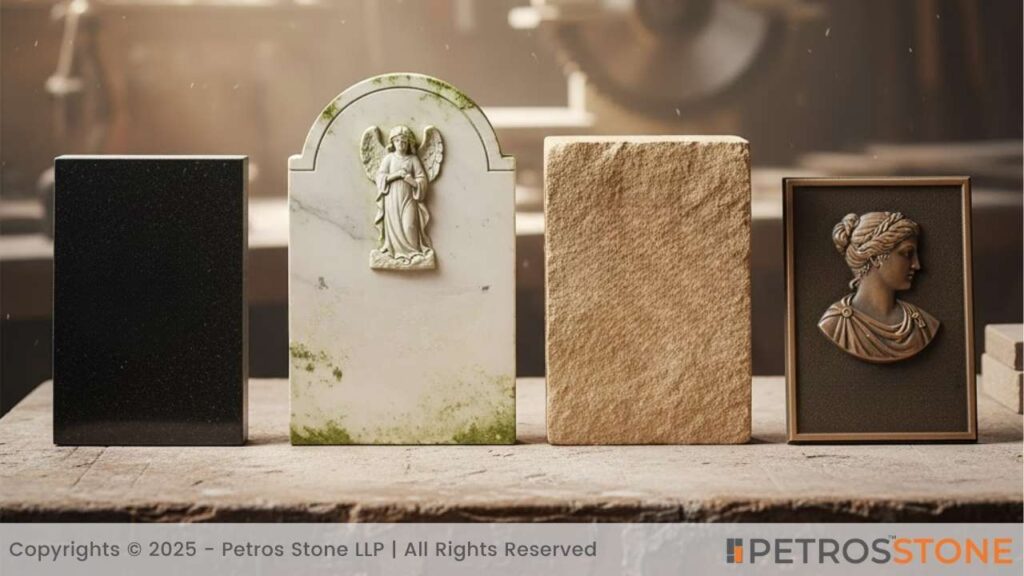
The most popular choice for both flat and upright monuments. Granite stands as one of the hardest materials, which makes it highly resistant to weathering and ensures its long-term durability. A well-made granite monument endures through multiple generations.
Marble and Other Stones
Marble creates a traditional appearance through its white and gray color schemes; however, it shows weaker resistance to weathering than granite. The weather resistance of limestone and sandstone monuments remains poor because these materials absorb water easily, which causes them to deteriorate.
Bronze
Bronze is a material commonly chosen by artists for flat markers, who use it to create plaques that are then affixed to granite bases. Bronze materials show excellent durability, but they will develop a patina that appears after multiple decades.
Modern cemeteries choose to use granite or bronze materials for their permanent memorial structures. The quality of materials determines their lifespan. High-quality granite and bronze materials will survive longer than their inferior counterparts.

Personalization and Engraving Options
Flat Monuments
The design of flat markers restricts the amount of space available for engraving. The standard design includes names and dates together with brief quotes or symbols. The combination of laser and diamond etching techniques enables artists to add photos and detailed images to granite surfaces, including flat markers, although the available space remains restricted. The design options for flat markers remain limited because they have a restricted surface area.
Upright Monuments
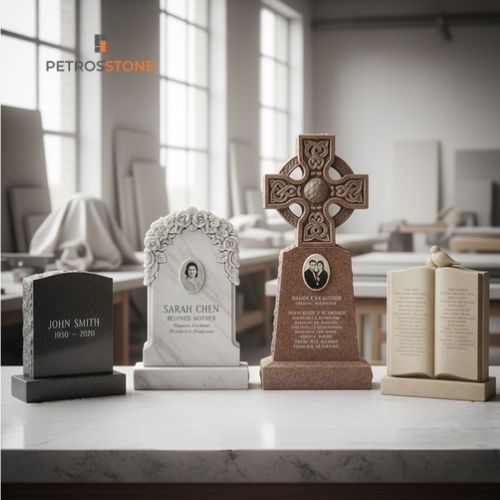
The design of upright monuments provides sufficient space for personalisation. The design allows users to add extended text, religious symbols and photographs through engraving. Families choose upright monuments to display detailed artwork and share stories about their deceased loved ones.
Installation and Maintenance
Flat Monuments
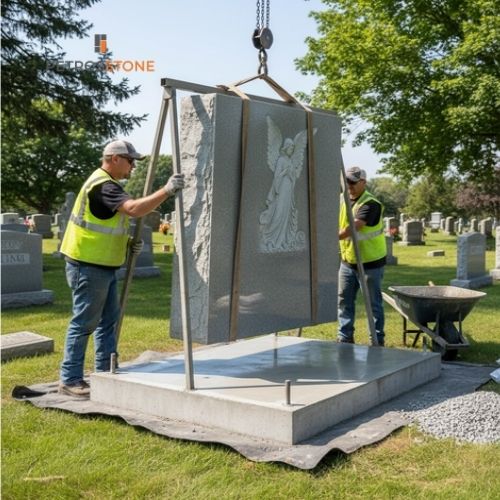
The installation process for flat markers involves placing them at ground level on concrete foundations which extend beneath the grass surface. The design allows lawn maintenance personnel to operate their mowers without any interference.
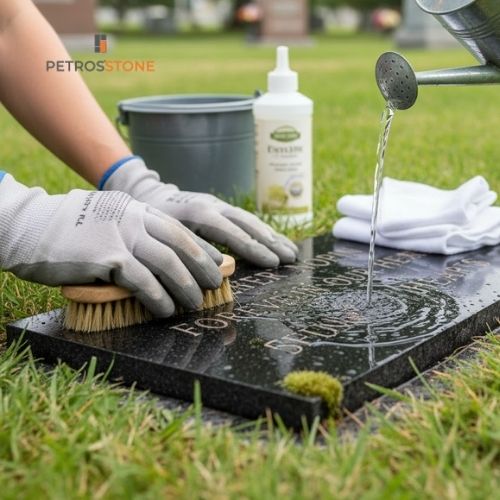
The design requires minimal upkeep as they remain flat against the ground. The surface needs occasional cleaning and you should brush away any accumulated debris.
Upright Monuments
The base of upright stones needs a thick concrete foundation to support their vertical structure. The passage of time causes these stones to experience slight movement, which sometimes requires professional adjustment to maintain their level position.
The increased surface area of upright monuments makes them more prone to rain, bird droppings and moss growth, which requires periodic cleaning and maintenance.
A properly installed upright monument with a solid foundation will not experience any movement or tilting. Monument builders offer warranties and scheduled maintenance services to handle any problems that occur with monument stability or wear.
Cost Comparison
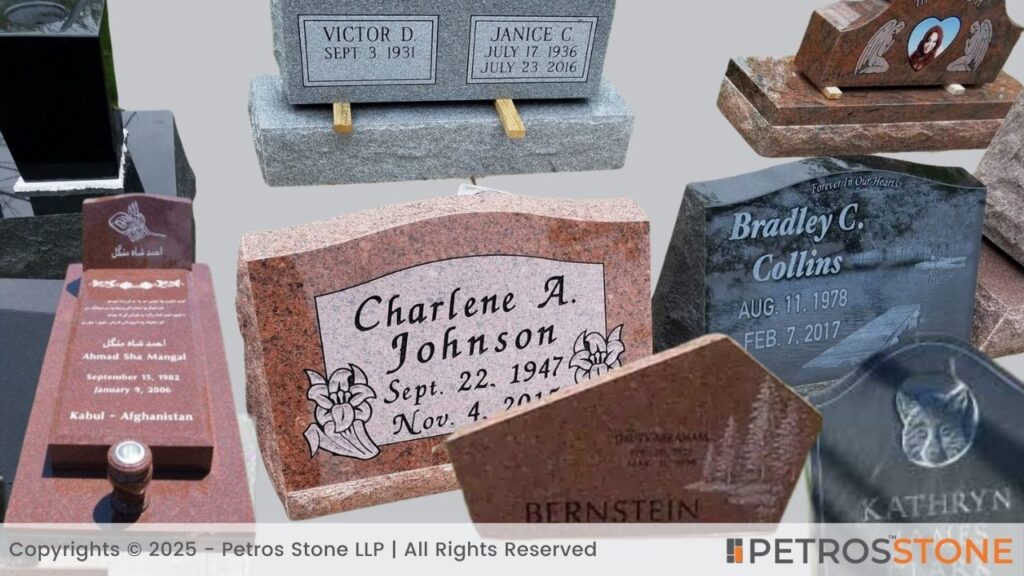

The cost of a monument varies greatly based on its size, material, and customisation options. As an approximate guide:
Flat Monuments
Fundamental smooth markers begin from INR 25,000 to INR 50,000, although quite simple markers may be available at the lower end.
Upright Monuments
A regular individual upright could vary from INR 80,000 to INR 2.5 lakh. for a modest style. Elaborate or big monuments (multi-person headstones, carved statues, etc.) are able to run a lot higher, quickly exceeding INR 5-10 lakh. (In reality, extremely complex mausoleums or monuments can cost you several lakhs to crores.)
Customization
Incorporating etchings, portraits, exclusive stone finishes, and fancy edging can raise the purchase price for just about any sort of monument. The total includes installation fees as well as cemetery fees (permanent care, foundation, etc.). Always check quotes for comparable specifications to see how design options impact cost.
Flat Monuments vs Upright Monuments — Comparison Table
| Feature | Flat Monuments (Flush Markers) | Upright Monuments (Headstones) |
|---|---|---|
| Appearance | Minimal, modern, lies level with the ground; blends quietly | Traditional, tall, highly visible; strong presence |
| Height & Size | 3–4 inches thick; standard sizes ~24×12 in or 36×18 in | Height ~20–48 inches; width/depth vary widely |
| Material Options | Granite or bronze; simple design | Granite, marble; more artistic shaping and dimension |
| Durability | Highly durable (especially granite) | Very durable, but upright structure may need periodic adjustment |
| Engraving & Personalisation | Limited space for names, dates, simple symbols | Large surface area: inscriptions, long texts, portraits, artwork |
| Design Flexibility | Simple, clean, low-profile aesthetic | Variety of shapes: curves, crosses, statues, detailed carving |
| Installation | Set flush on concrete foundation beneath lawn level | Requires base and deeper foundation to support vertical structure |
| Maintenance | Very low maintenance; lawn mowing and cleaning are easy | Requires more care: cleaning surfaces, ensuring level, removing moss/bird-marks |
| Ease of Locating | Less prominent—may be harder to spot from a distance | Very visible—easy to locate, stands as a focal point |
| Cost | From US$ 280 to US$ 565+ | From US$ 400 to US$ 2,820 for basic; Elaborate monuments US$ 5,640 to US$ 11,300+ |
| Best For | Modern look, tight budgets, cemeteries with lawn-level rules, low maintenance | Families wanting a classic, prominent tribute; more inscription or artwork; legacy piece |
| Cemetery Regulation Fit | Often required in memorial parks (flat markers only) | Only permissible if cemetery allows upright monuments |
| Symbolism | Subtle, understated remembrance | Strong legacy, presence, formality |
| Longevity | Long-lasting with good materials | Very long-lasting, though upright demands slightly more upkeep |
| Overall Advantage | Affordable, simple, sleek, practical | Highly customizable, visible, traditional, grand |
Benefits of Flat Monuments
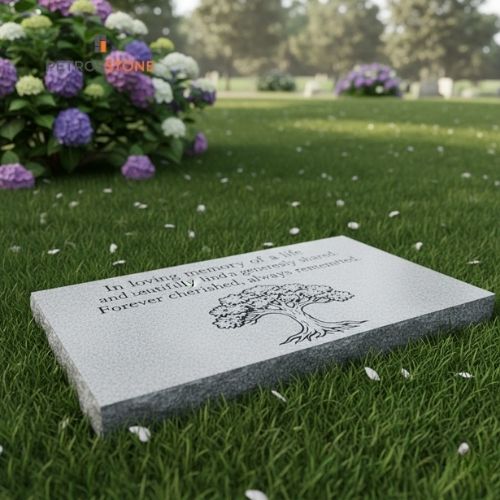
- Cost-Effective: The cheapest option is generally flat markers. A flat monument offers a dignified tribute without the high price of an upright one in case budget is an issue.
- Low Maintenance: A flat monument is simple to take care of because it is at ground level. The ability to mow and do lawn work near your flat monument is also easy, and generally requires no maintenance beyond an occasional cleaning.
- Modern Design: Flat monuments are known for being modern and minimalistic. Many find this type of design attractive, as it looks clean and blends well into the lawn.
- Cemetery Requirements: Due to space constraints in many memorial parks, or some areas of cemeteries, flat monuments provide the only option for uniformity and maintenance purposes. Choosing a flat monument guarantees you are in compliance with cemetery regulations.
Benefits of Upright Monuments
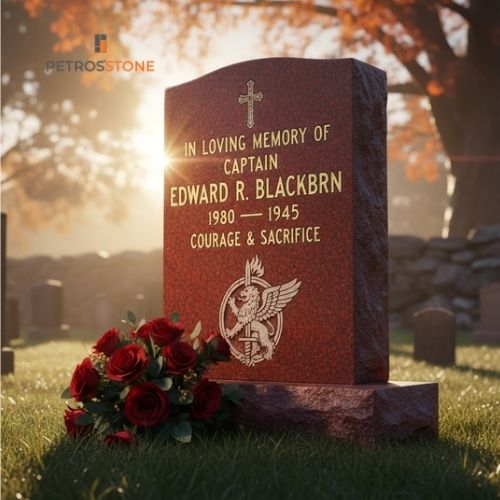
- Easier to Find: Upright headstones give a clear indication of where the gravesite is located. Uprights are also easily seen from a distance, making them ideal for marking gravesites.
- Many Options For Customization: Uprights allow for plenty of room for writing an extensive tribute, adding religion-based emblems, and detailed carvings. These features create a more customized and rich memorial experience.
- Classic Design: Uprights evoke tradition and formality. Many families prefer an upright monument for its classic appeal and timelessness, allowing it to be passed from generation to generation.
- Strong Symbolism: Tall monuments symbolize strength and legacy. Uprights can also serve as a focal point for visitors, and may include religion-based iconography or statues that a plain flat marker cannot include.
Things to Consider Before Choosing
Financial Considerations
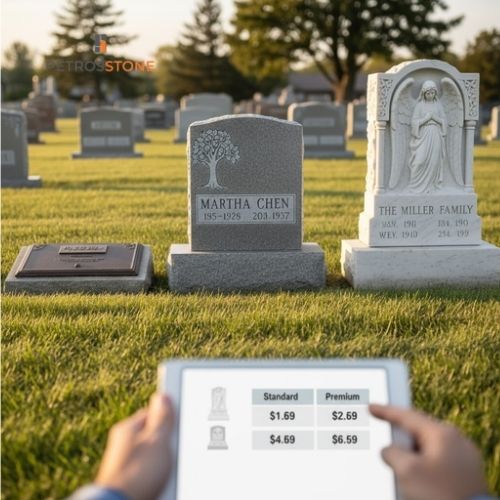
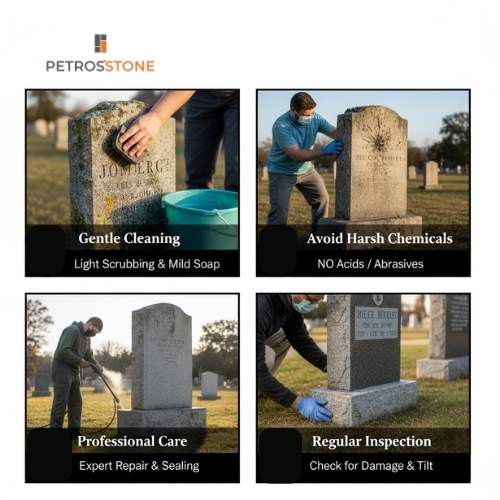
Think about just how much you can comfortably spend. The cost of a headstone is determined by its dimensions, thickness, type of stone, and degree of personalization.
Establish a clear spending budget very early. Flat monuments or even simpler uprights tend to be much safer options in case your budget is limited. Be sure to budget for taxes, delivery, and cemetery charges – these are usually added costs.
Long-Term Maintenance Goals
When deciding on a marker, think about who will take care of it and how often. A flat marker is generally simpler to keep clean/maintain than an upright monument, which can be especially beneficial if family members live far from the cemetery and thus would have difficulty keeping up with regular maintenance/cleaning.
Flat markers collect less water/debris, so lawn mowing is also easier for areas surrounding them. An upright monument can be a good choice if you want a distinct memorial and are willing to perform the required maintenance (i.e., restore staining or level the stone). Regardless of whether you choose a flat marker or upright monument, using long-lasting materials (fine granites) will result in lower overall maintenance costs in the future.
How to Choose the Right Monument for You
Practical Tips Before Ordering
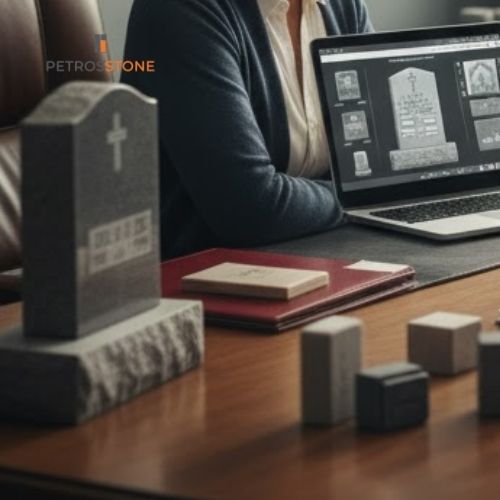
- Look at the Proof: Before the stone is cast, check all engraving details – names, dates, quotes – for accuracy twice. Heartache as well as expensive corrections can result from even the smallest spelling error. Consult your monument supplier for a stencil or digital proof and read it thoroughly.
- Strategy Ahead: Start the monument process as early as possible, if possible. A custom stone may take weeks to design and approve, plus delivery. Delays can be avoided by knowing the allowed sizes and materials of the cemetery (by requesting ahead of time).
- Question About Warranties: Many reputable monument companies provide materials and workmanship warranties. Understand what’s covered. A thorough understanding of a warranty can safeguard you if the stone chips or even the engraving fades quickly than anticipated.
- Consult the Experts: Talk with the monument vendor regarding your requirements if you’re unsure. Petrosstone can assist you in selecting options that meet your style as well as budget requirements. The decision can be made easier if you are able to see examples of finished monuments or brochures.
Common Mistakes to Avoid
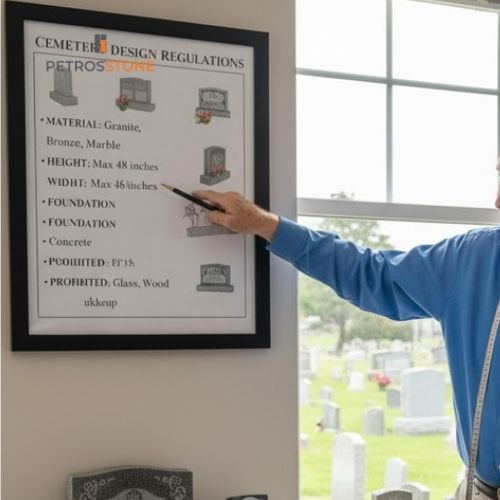

- Ignoring Cemetery Rules: Monument type, dimension, and material are governed by specific regulations in cemeteries. Some limit areas to only flat markers. Don’t assume your design is permitted – constantly verify with cemetery management first. A monument that is not compliant may be refused or subject to additional charges.
- Over-Customization Beyond Budget: It is easy to get carried away in the process of creating a monument that incorporates every possible feature. Even though a grand monument is a fitting tribute, it should not burden you with debt. Be conscious of your budget. In case you’re attracted by the thought of intricate engravings or sculptures, bear in mind that each addition will considerably increase the cost (and often maintenance) of the monument.
- Trying to Save Money by Choosing Low-Quality Materials: Cutting corners on the stone itself can be risky. The cheaper “builder-grade” granite may exhibit imperfections or become more susceptible to staining. For durability, always opt for the stone recommended by a trustworthy supplier. Keep in mind that a tombstone is a lasting memorial, and a cheap material may deteriorate within a number of decades, resulting in a higher cost of repair or replacement.
Expert Recommendations
When should flat monuments be chosen?
If you would like contemporary simplicity and ease of maintenance, choose a flat (lawn-level) marker. Flat markers are best for memorial parks in which a streamlined, unobtrusive style is ideal. They are also ideal for smaller budgets or situations requiring minimal maintenance.
When should upright monuments be selected?
For a timeless, traditional tribute, lean towards an upright stone. An upright is more suitable for a monument that will accommodate large volumes of text, pictures or artwork, or for a bold visual statement. This is particularly appropriate for family plots or even when you would like the memorial to be a long-lasting legacy.
Choosing a balance
Frequently, the most effective option lies between extremes. A small upright can provide a little personalization area without being too big, or a flat marker can be ornately carved to provide interest while remaining low-profile. As one monument manual states, the “choice depends upon individual preferences, finances, and the kind of memorial.” There is no single “wrong” choice – choose the one that reflects your loved one and meets your practical needs.
Are you ready to pay a lasting tribute? For bespoke advice along with a quote tailored to your requirements, get in touch with Petros® Stone. Our team of experts will assist you in selecting the right monument, creating significant engravings and ensuring a smooth installation.
Summary
The decision between upright and flat monuments has to balance aesthetics, budget, cemetery laws and regulations, and long-term care. Flat markers offer subtle elegance as well as practicality, whereas upright monuments command attention and allow for more personalization. Regardless of what you decide on, the most important thing would be that the memorial matches your family’s memories as well as values.
FAQs
Do upright monuments have more durability than flat ones?
Not necessarily. The material is the most important factor in durability, not the style. Granite is extremely durable and can withstand centuries of use for both upright and flat markers.
What kind of monument is simpler to maintain?
Flat monuments tend to be simpler to maintain. Simply because they lie flush with the ground, grass mowing as well as regular garden care is able to occur with no obstruction.
Is it possible to embellish flat monuments using photographs or laser etching?
Yes. Flat granite markers and upright stones can be engraved with photos or images using modern engraving techniques. The polished surface of a flat marker can be etched with extremely detailed scenes or portraits using laser or diamond etching techniques. The primary difference is actually space: A flat marker has a smaller surface area, making it possible for the design to be reduced or even simplified when compared with a bigger upright stone.
Key Takeaways
- Flat markers are placed at an even level with the ground. They’re reasonably priced, modern-looking, and require minimal upkeep. Perfect for cemeteries that require stones at a lawn level.
- Traditional-looking upright monuments stand high (20-48 inches or greater). They provide a lot more room for inscription as well as personalisation.
- The most durable option is granite. Check cemetery material guidelines and select high-quality stone.
- Flat markers are typically significantly cheaper than uprights. Beforehand, determine your budget and estimate the amount of inscription or artwork you require.
- Always verify cemetery size/type limitations and proofread all engraving details before finalisation.
- For both beauty and practicality, opt for a small upright or even an embellished flat marker. The consultants at Petros® Stone can help you achieve the ideal balance.
Feel free to get in touch for a free consultation, quote, and get a detailed understanding from our experts here at Petros®. Visit www.petrosstone.com or call +91-8446360361 or WhatsApp

Hi, I’m Dhananjay,
With a background in architecture and years of industry experience, I share insights on materials that shape great design. At Petros® Stone, I craft content that highlights the beauty and utility of natural stone, helping architects, builders, and homeowners make informed choices while strengthening the brand’s voice and online presence.

Brown Granite

White Galaxy Granite

Blue Bahia Granite

Silver Cloud Granite

Black Pearl Granite

Dallas White Granite