Calacatta marble can be used outdoors, but its suitability depends on the climate, finish, installation, and level of exposure. Its elegant white background and distinctive veining make it attractive for covered patios, outdoor walls, and sheltered architectural features. However, it is sensitive to acidic substances, may stain, and can weather over time. In areas exposed to rain, frost, or temperature changes, moisture absorption and surface deterioration require careful consideration. A suitable finish, professional installation, proper drainage, and regular sealing can help maintain its appearance. For heavily exposed outdoor areas, granite or other weather-resistant stones may be a more practical choice.
In this article, we explore where Calacatta marble can be used outdoors, how climate and installation affect its durability, and the role of finishes, sealing, and maintenance. We also examine its limitations and compare more weather-resistant alternatives for exposed areas.
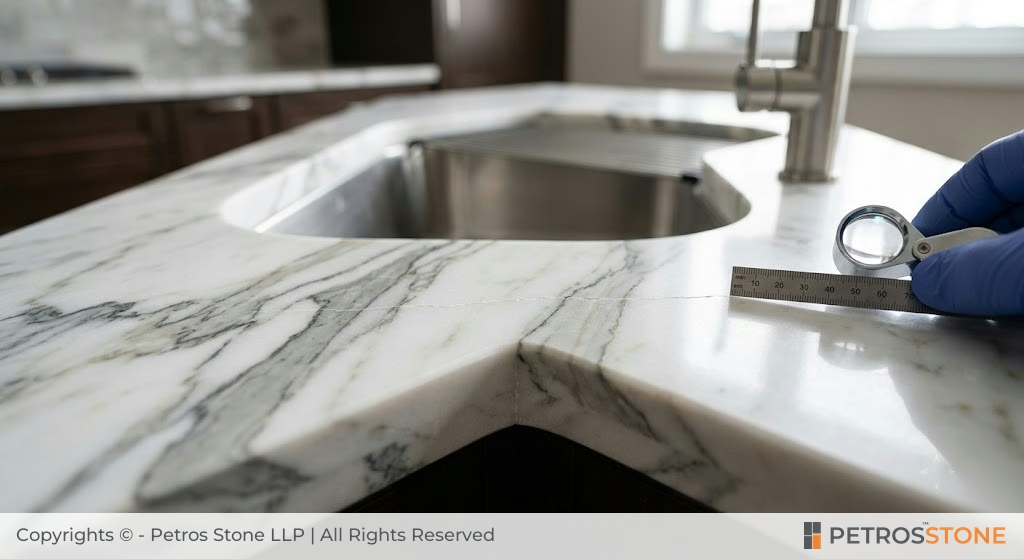
What Outdoor Conditions Threaten Calacatta Marble?
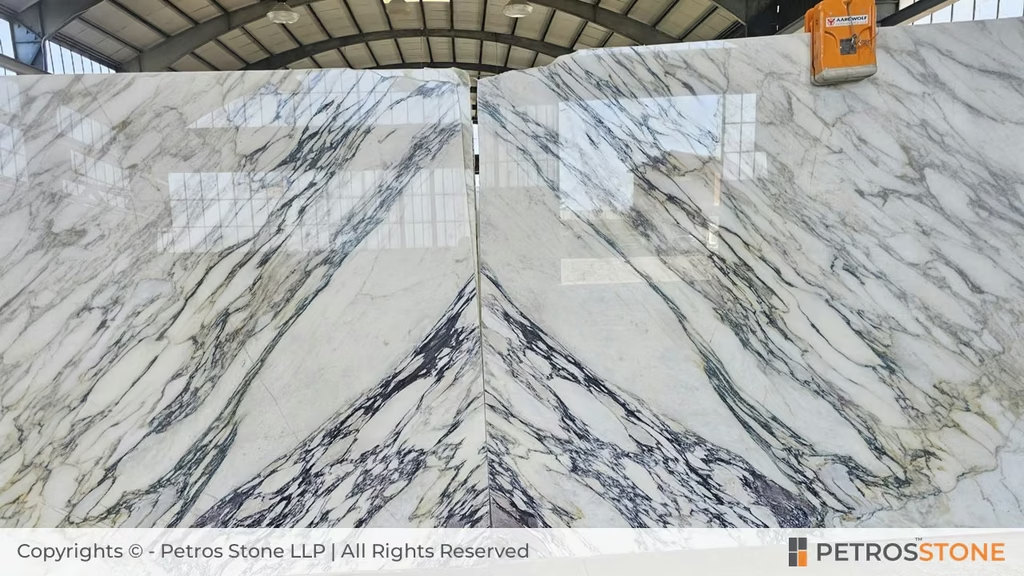
How Do Freeze-Thaw Cycles Damage It?
Water enters the stone’s pores and hairline cracks, freezes, and expands. Repeated cycles build micro-fractures that eventually lift off the surface in flakes, a failure called spalling. Conservation research on outdoor marble notes that existing cracks put marble at risk from frost damage, and that older, more porous marble is hit harder.
Not all Calacatta is equally porous. ASTM C503/C503M specifies physical-property requirements for marble dimension stone, while ASTM C97 provides a test method for measuring water absorption and bulk specific gravity. The EN 1341 standard covers performance requirements and test methods for natural stone slabs used in external paving. These standards provide a basis for evaluating stone, but they do not establish that every Calacatta variety is suitable for outdoor use. Ask for test reports covering the actual lot and confirm that the results meet the requirements for your intended application.
What Do UV and Sun Do to Color and Surface?
Less than most guides claim. The best-known study on UV bleaching looked at dark blue-grey limestone, not white marble. For white marble, the more common color problem is yellowing from iron oxidation where moisture lingers, often in shaded, damp spots. Expect gradual dulling of a polished surface rather than dramatic fading. Light-colored stone also reflects heat, so it stays cooler underfoot than dark stone.
How Do Rain, Acid Rain, Leaves, and Food Spills Affect It?
Marble is calcium carbonate, so acids dissolve it. Rain is mildly acidic and slowly roughens polished surfaces. Citrus, wine, and acidic pool chemicals cause etching (dull marks). Leaves and bird droppings cause organic stains. A sealer does not stop etching: even well-sealed Calacatta can etch if lemon juice sits on it briefly.
How Does Salt Damage Marble?
Salt is the quiet killer. De-icing salt and salt from saltwater pools soak in, dry, and crystallize inside the stone. The growing crystals cause pitting and pop-outs. Rinsing with fresh water after pool use helps.
Where Does Calacatta Marble Work and Where It Doesn’t?
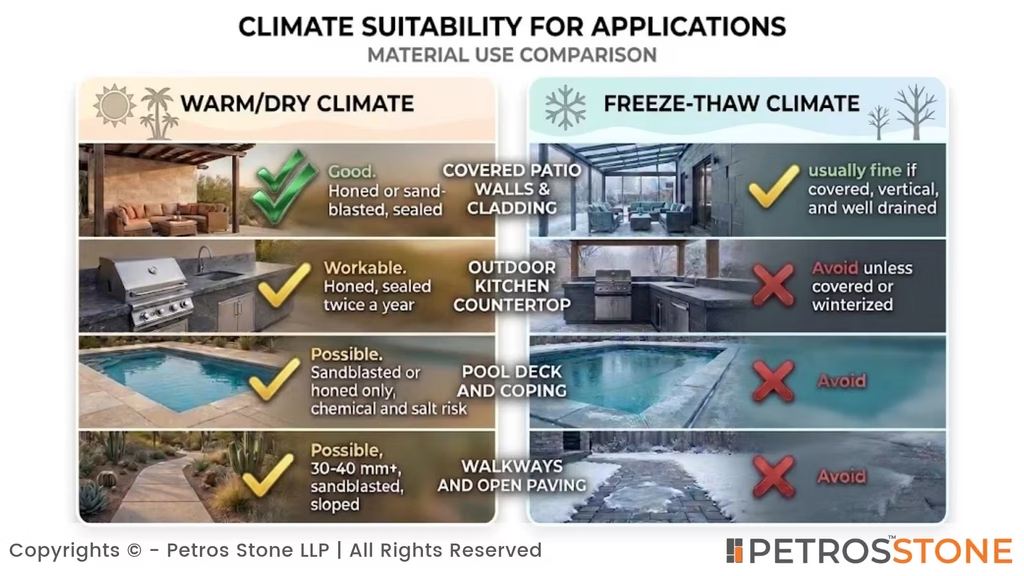
- Covered patios and walls. The safest outdoor use. Suppliers list outdoor cladding as a recommended use because vertical, sheltered stone sees less standing water.
- Outdoor kitchen counters. Calacatta’s suitability depends on its tested properties, climate, finish, and installation. In warm climates, sheltered counters may be practical with appropriate sealing and maintenance. In freeze-thaw climates, water penetration and repeated freezing make exposed counters riskier. Check the actual stone’s test results before specifying it outdoors. Sealing can reduce staining but cannot prevent acid etching or guarantee freeze-thaw resistance.
- Pool decks and coping. Polished marble is far too slippery when wet. Sandblasted, leathered, or honed finishes are the norm, and many specs use a wet dynamic coefficient of friction (DCOF) of 0.42 or higher as the baseline. Budget for sealing and for rinsing off pool water and salt.
- Walkways and paving. Heavy foot traffic plus weather is the harshest test. Specify thick, textured, sloped paving or choose another material.
How Thick Should It Be, and What Finish?
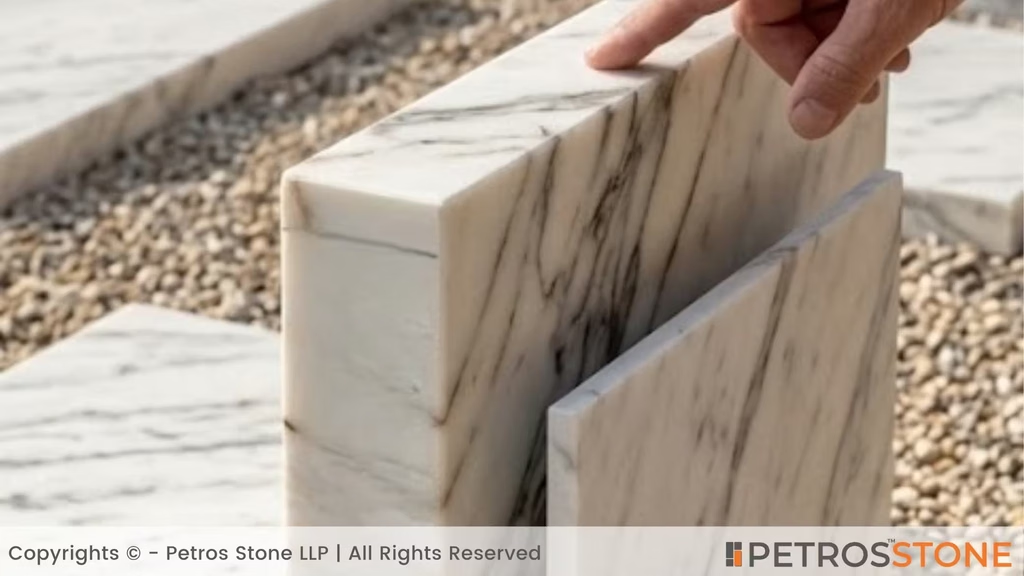
If you use Calacatta in the open, increase thickness and change the finish.
| Use | Recommended thickness |
| Interior floors | 18-20 mm is fine |
| Outdoor countertops | 2 cm or 3 cm |
| Exposed patio or paving | 1.5″ (about 38-40 mm) or more |
For reference, suppliers sell 30 mm as the standard external paver thickness, so 1.5″ is a deliberate step up for exposed patios.
Thickness protects against breakage under load. It does not make marble freeze-proof. Water still enters the stone.
Finish matters more outdoors than indoors:
- Polished: too slippery for walking surfaces; shows etching fastest.
- Sandblasted: the standard outdoor choice. Adds grip and softens the dramatic veining slightly.
- Honed or leathered: good grip and hides wear, but more absorbent than polished, so sealing is non-negotiable.
Installation mistakes to avoid
- Using tiles that are too thin: Standard 12 mm interior tiles may be unsuitable for exposed outdoor paving. Choose a thickness appropriate to the expected loads, installation method, and exposure.
- Poor slope or drainage: Without adequate slope and drainage, water can collect on or beneath the stone, increasing the risk of damage in freeze-thaw conditions.
- Using dark grey mortar: Calacatta marble can be translucent, allowing dark adhesive or mortar to show through the surface. Use a suitable white adhesive or white cement recommended for natural marble.
Do I Need to Seal Outdoor Calacatta Marble and How?
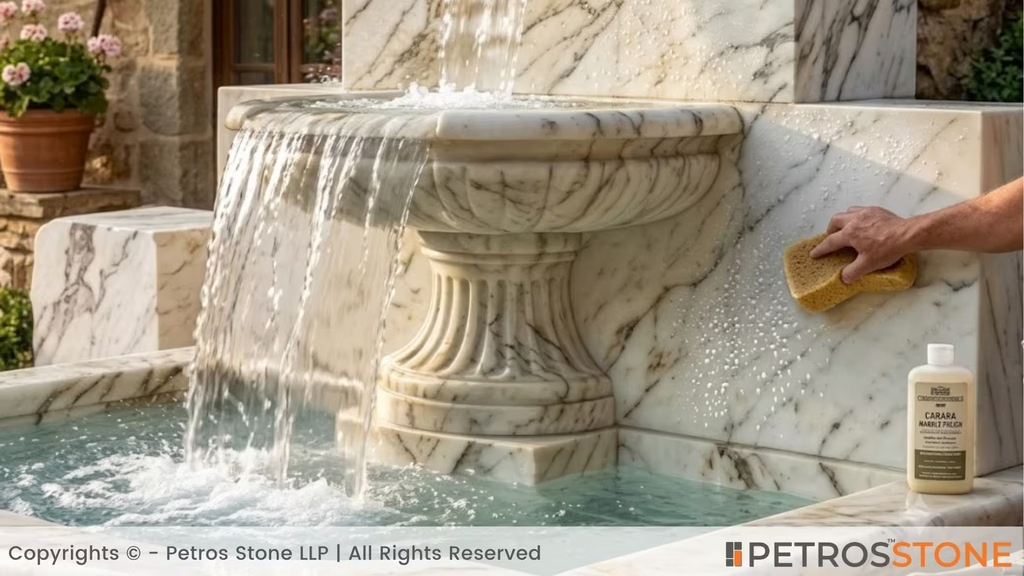
Yes, but know what sealer does.
- Use an exterior-rated penetrating (impregnating) sealer, not a topical film or wax. Solvent-based products are often recommended over water-based for outdoor counters and bar tops.
- Realistic schedule: indoor polished marble is commonly resealed every 6-12 months and honed every 3-6 months. Outdoors, plan on at least twice a year for kitchen counters, and retest after harsh seasons.
- Test, don’t guess: drip water on the surface. If it soaks in before you can wipe it, reseal.
- Seal cut edges and the underside too if the stone sits on mortar.
How Do You Maintain Calacatta Marble Outdoors?
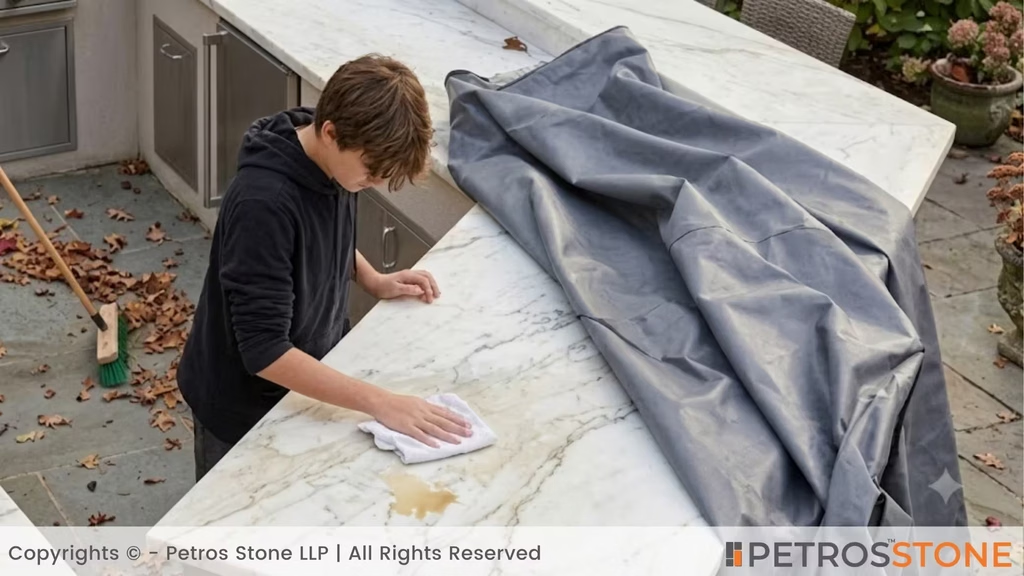
Cleaning
- pH-neutral stone cleaner only. No vinegar, citrus, or acidic pool chemicals.
- Sweep leaves promptly. A low-to-medium pressure wash with neutral cleaner is fine for textured paving.
- Wipe food and drink spills quickly.
Winter Protection
- Cover counters and furniture-height surfaces in freezing months and keep water from pooling beneath.
- Never use rock salt. Use sand or a stone-safe alternative.
What Are Better Outdoor Alternatives?
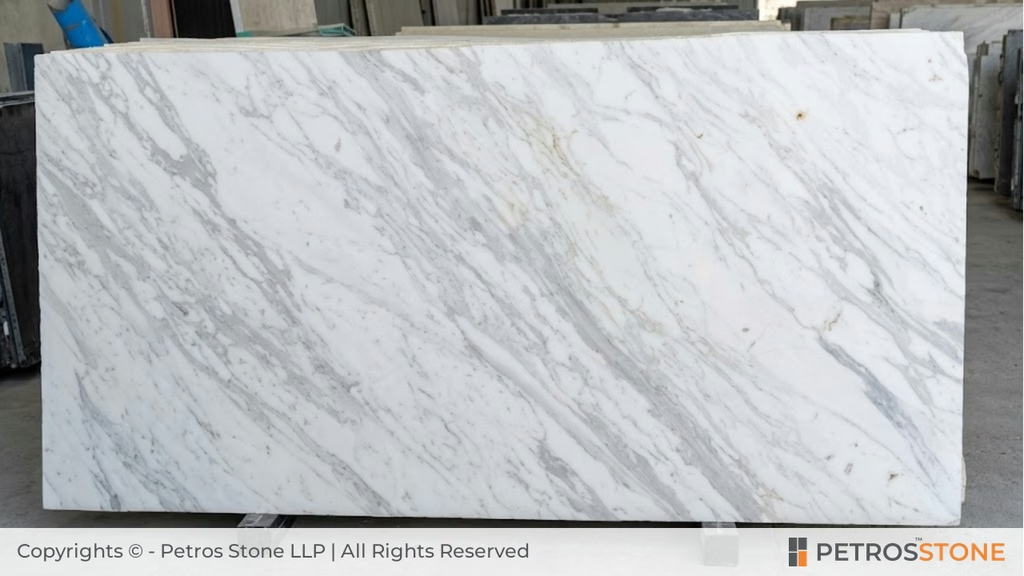

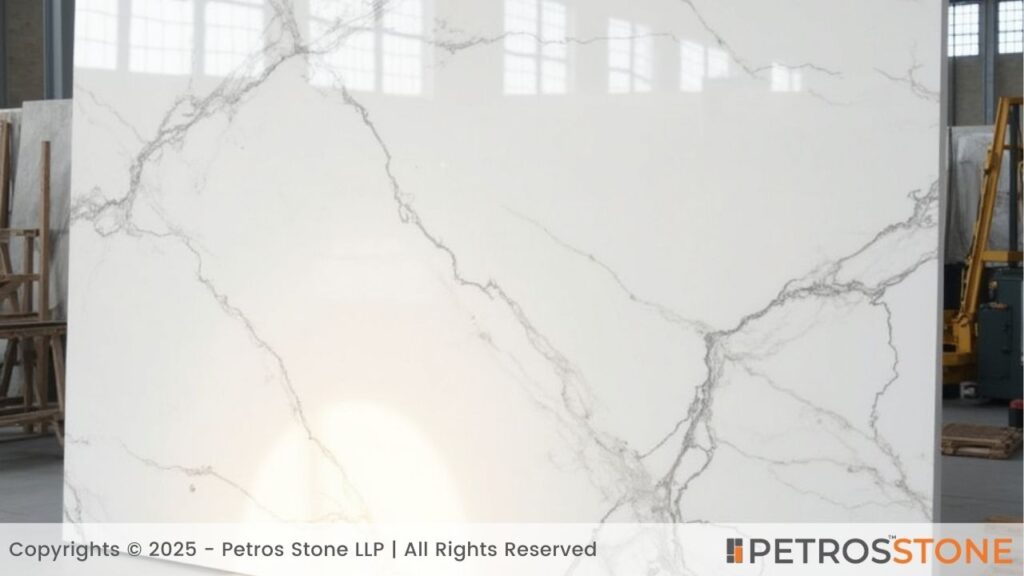
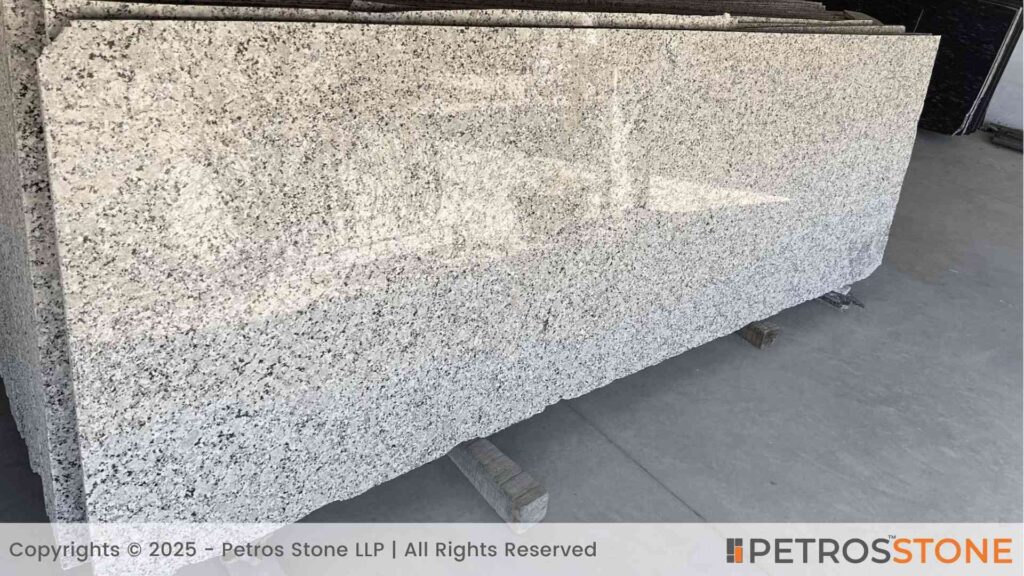
For lower cost, easier maintenance, and a similar look.
| Calacatta marble | Porcelain (marble-look) | Quartzite | Granite | |
| Hardness (Mohs) | About 3 | Harder than granite | About 7 | About 6-6.5 |
| Water absorption | Exterior cap 0.20%; varies by block | Under 0.5% (“impervious”) | Low, but needs sealing | Low (one granite tested at 0.27%) |
| Freeze-thaw | Risky, climate-dependent | Designed for it when installed correctly | Tolerates freeze-thaw | Tolerates freeze-thaw |
| Sealing | Every 6 months to yearly; twice yearly outdoors | None | Penetrating sealer; some suppliers say every 6 months | Every 1-3 years |
| Typical installed cost (US, per sq ft) | $80-$200 | $40-$120 | $60-$200 (most $80-$140) | $40-$100 |
| Look | The real thing | Very convincing | Marble-like veining | Speckled; less dramatic |
Costs are typical US installed ranges from fabricator and industry guides and vary widely by region and grade. Outdoor countertops generally run 20-60% above comparable indoor slabs, with an overall range of $60-$250 per sq ft installed.
- Porcelain for a Calacatta look. The most practical outdoor substitute. Porcelain absorbs under half a percent of its weight in water and needs no sealing. It is not magic: poor mortar coverage and trapped water can still spall tile in freezing climates, so ask for frost-rated tile and full-coverage installation.
- Denser natural stones for countertops. Quartzite gives marble-like veining with far better hardness. Granite is the proven outdoor workhorse and is cheaper.
- Hybrid. Marble indoors, durable lookalike outdoors. The two spaces read as one design without exposing the marble to weather.
FAQs
Will It Crack in Winter?
Yes, it can. Water inside the stone freezes and expands, causing micro-cracks and flaking over repeated cycles. Risk is highest on exposed surfaces in climates with frequent freeze-thaw cycles.
Will It Fade in the Sun?
Not dramatically. Its polished finish can dull over time, while persistent moisture may contribute to yellowing. See our guide to Calacatta marble care.
Is It Safe for Bare Feet Around a Pool?
Yes, with a suitable textured finish. Sandblasted, honed, or leathered marble offers better grip than polished marble, which can be dangerously slippery when wet. Rinse the stone after pool use to remove salt and chemicals.
How Much Does Outdoor Calacatta Marble Cost?
Expect an indicative US installed price of $60–$250 per sq. ft. Outdoor countertops generally cost 20–60% more than comparable indoor installations. The final price depends on stone grade, thickness, fabrication, installation, and location.
What Is the Best Alternative to Calacatta Outdoors?
Marble-look porcelain is a practical alternative. It typically absorbs less than 0.5% water and does not require sealing. In freezing climates, choose frost-rated porcelain with full-coverage installation. Granite is another durable option.
Can I Use It on an Outdoor Kitchen Counter?
Yes, in warm climates with suitable protection. Choose a honed finish, 2–3 cm thickness, and an exterior-rated penetrating sealer. Seal as needed and wipe acidic spills promptly. In freezing climates, quartzite, granite, or porcelain is generally more practical.
Can Sealing Make It Freeze-Proof?
No. Sealing reduces water absorption and staining but cannot eliminate freeze-thaw damage.
10. Key Takeaways
- Calacatta works best outdoors in covered, sheltered settings and warm climates.
- Freeze-thaw cycles are a major risk for exposed marble.
- Specify suitable thickness, a textured finish, proper slope, and effective drainage.
- Use an exterior-rated penetrating sealer; sealing does not prevent acid etching.
- For freezing climates or heavy outdoor use, consider porcelain or granite.

Tapas Koul leads editorial direction and content strategy at Petros® Stone, bringing over 15 years of combined experience in e-commerce, publishing, and digital communication. His work spans research, strategy, and communication, with a focus on natural stone, its technical properties, processing, and architectural applications. Collaborating with Petros® Stone’s production team, laboratory experts, and specialists, he translates industry knowledge into clear, engaging content and communication for diverse audiences.
Feel free to get in touch for a free consultation, quote, and get a detailed understanding from our experts here at Petros®. Visit www.petrosstone.com or call +91-8446360361 or WhatsApp

Brown Granite

White Galaxy Granite

Blue Bahia Granite

Silver Cloud Granite

Black Pearl Granite

Dallas White Granite