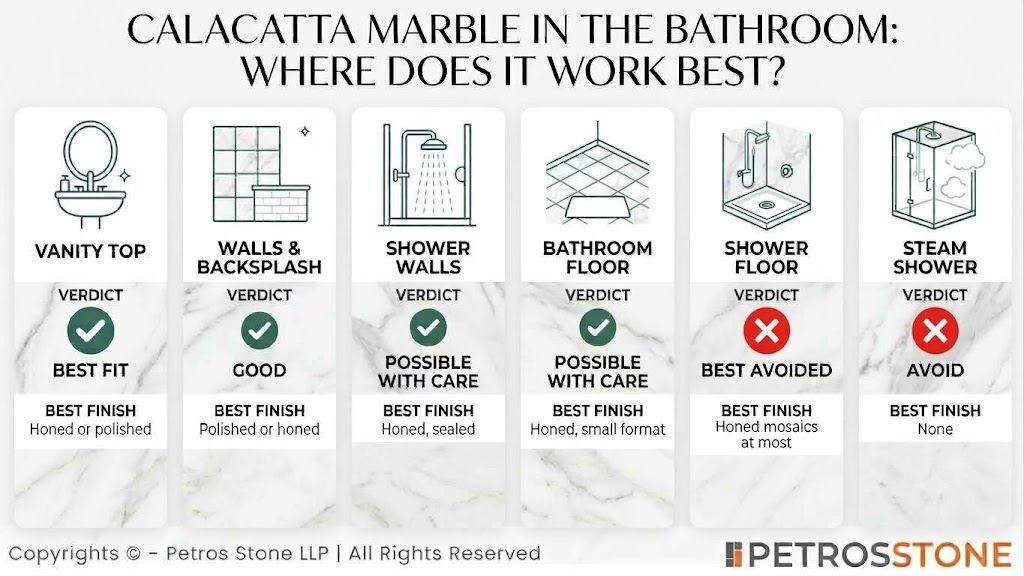
Yes, when used appropriately. Calacatta marble works particularly well for vanities and bathroom walls. Showers and floors are also suitable, provided the marble is properly sealed, has an appropriate slip-resistant finish, and is installed correctly.
- Is Calacatta Marble a Good Choice for a Vanity Top?
- Can You Use Calacatta Marble in a Shower or on a Bathroom Floor?
- Does Calacatta Marble Rust or Show Watermarks?
- How Do You Seal Calacatta Marble Properly?
- How Do You Clean and Maintain Calacatta Marble Daily?
- What Does Calacatta Marble Cost, and What Are the Alternatives?
- Is Calacatta Marble Right for Your Bathroom?
- FAQs
- Key Takeaways
Is Calacatta Marble a Good Choice for a Vanity Top?
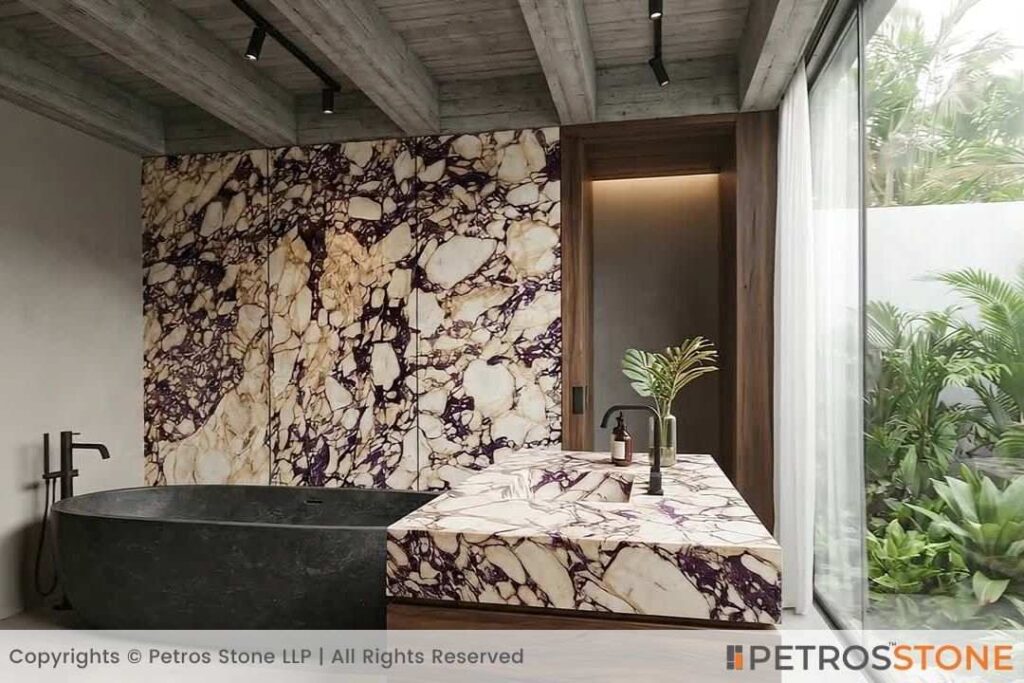
A vanity sees splashes, not standing water, and a single slab has few joints. The risk is chemical, not water: marble is mostly calcium carbonate, so acids dissolve its surface and leave dull marks called etches.
Products that can damage it: toothpaste, perfume, hair dye, nail polish remover, alcohol, shaving cream, shampoo, and drain cleaner, per vanity-maker care guides. Keep them on a tray and wipe spills at once.
Best Finishes for Calacatta Marble in Bathrooms
| Surface | Better finish | Why |
| Vanity top | Honed for low fuss; polished if you will wipe spills fast | Etches show more on a gloss finish, though light etches on polished stone can be buffed out with polishing powder |
| Walls and backsplash | Polished or honed | Little contact with products |
| Floor | Honed | More grip underfoot |
| Shower | Honed | More grip; hides water marks better |
Sink cutouts and edges – Ask the fabricator to seal the cut edges of the sink opening, because that is where water sits longest, and to choose an eased or small rounded edge, which chips less than a sharp one.
Can You Use Calacatta Marble in a Shower or on a Bathroom Floor?
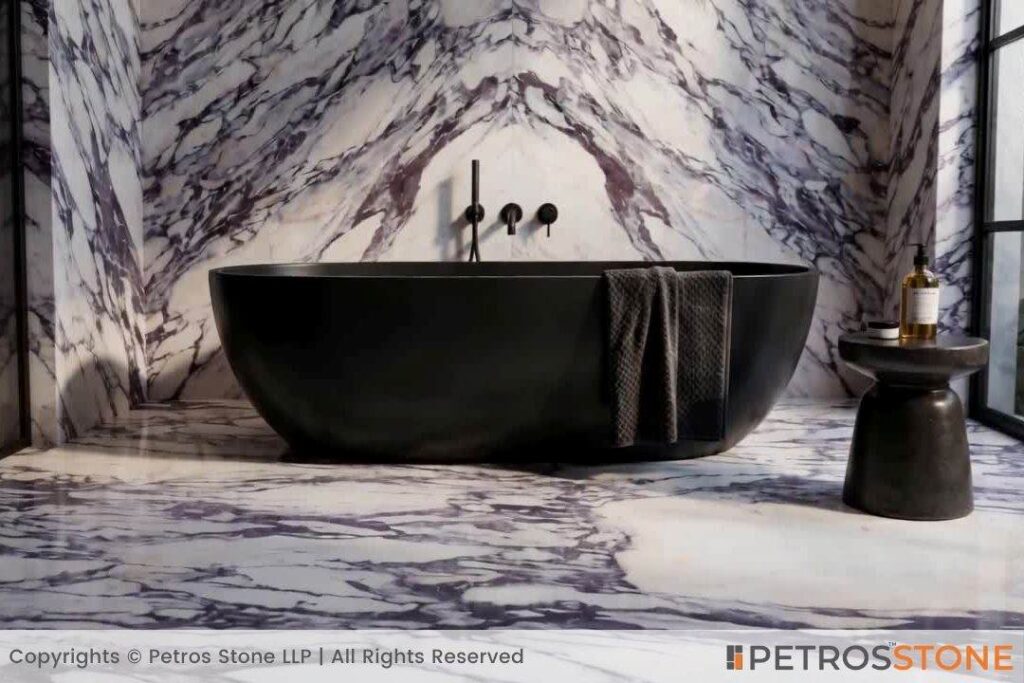
Shower walls: Yes, if the stone is sealed and installed over proper waterproofing. Choose the best grade (A) of stone, use stainless steel fixings, and squeegee after use. A slab has fewer grout joints than tile, and mould in showers usually starts at the grout. Skip steam showers: the tile industry handbook (TCNA) has no method for stone tile in them.
Floors: Marble is slippery when wet, and honed is not automatically safe. One honed Calacatta tile at a major retailer lists a wet grip value (DCOF) below 0.42, the minimum for wet interior floors.
Slab or tile? Slab for walls and vanities (seamless, easier to keep dry); tile or mosaic for floors (grout gives grip).
What goes wrong most often:
Polished marble on a wet floor, unsealed grout, no waterproofing behind the stone, and metal touching the marble.
Does Calacatta Marble Rust or Show Watermarks?
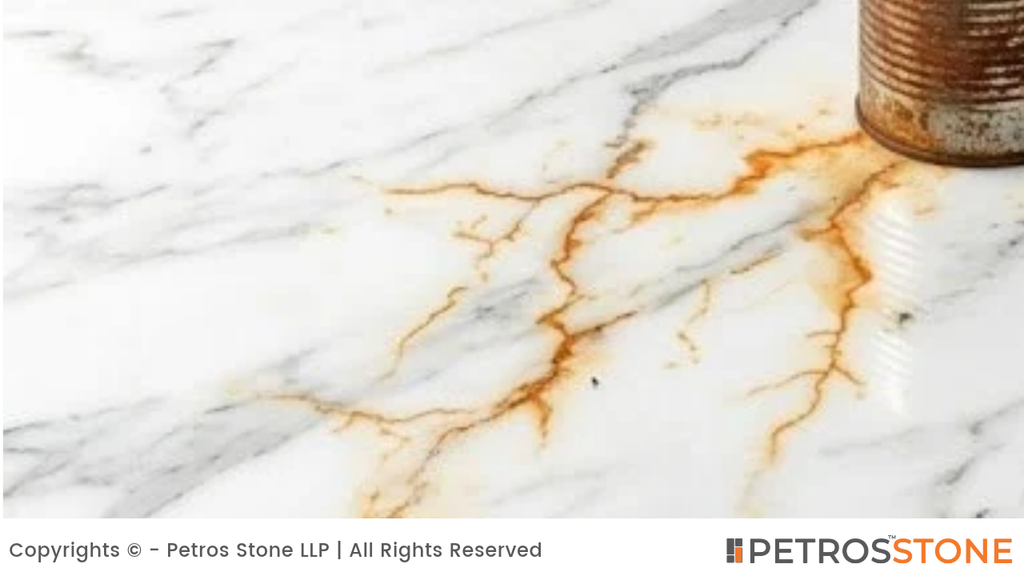
Marble does not rust, but it can show orange-brown stains. White marble often contains iron minerals such as pyrite, and moisture or touching metal (steel clips, cans, razors) can turn them rusty. Plain water usually just darkens the stone briefly; lasting marks come from three other causes:
Common Marks on Calacatta Marble & Causes
| Mark | Cause |
| Etch | Acid (citrus, vinegar, toothpaste, perfume) dissolves the surface |
| Hard-water deposit | Minerals left as water evaporates |
| True stain | Coloured liquid or oil soaks into pores |
| Rust | Iron mineral or metal contact |
Prevent them: wipe splashes, squeegee walls, keep metal off the stone, and test your water for iron.
How Do You Seal Calacatta Marble Properly?
Does sealing make it waterproof or etch-proof?
No. A penetrating sealer slows liquids soaking in, which prevents stains, but it does not stop acid etching.
Does it need sealing?
Put a drop of water on the stone and wait about 5 to 10 minutes. If the stone darkens, seal it.
Steps
- Clean the stone and let it dry fully; sealer applied over damp stone or dirt traps both.
- Test the sealer on a hidden spot.
- Apply a penetrating (impregnating) sealer evenly, and let it soak in for the time on the label (often 5 to 15 minutes).
- Buff off every trace of excess before it dries; a second coat only if the label says so.
- Let it cure 24 to 72 hours before wetting it.
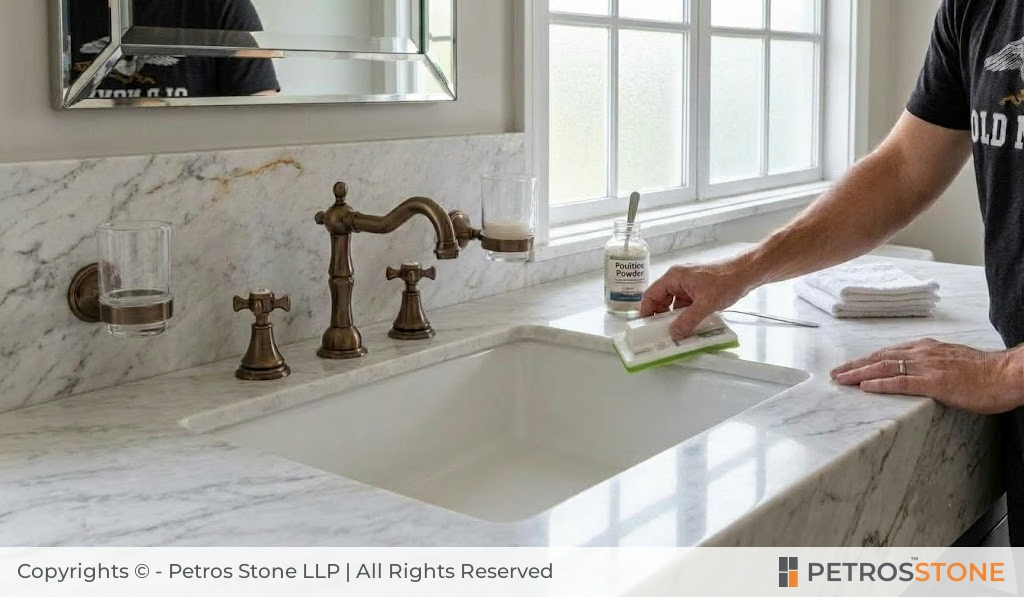
New shower – Seal the marble before grouting (it makes grout cleanup easier and stops pigment soaking in), wait about 24 hours, then grout. Seal the grout after it cures, usually 48 to 72 hours, and wait at least 24 hours more before showering.
How often – Penetrating sealers typically last 1 to 3 years on a vanity. Showers need it sooner, so repeat the water test every 6 to 12 months.
Common mistakes – Sealing damp stone, leaving a haze of excess, grouting before the sealer cures, skipping grout, and expecting protection from acids.
How Do You Clean and Maintain Calacatta Marble Daily?
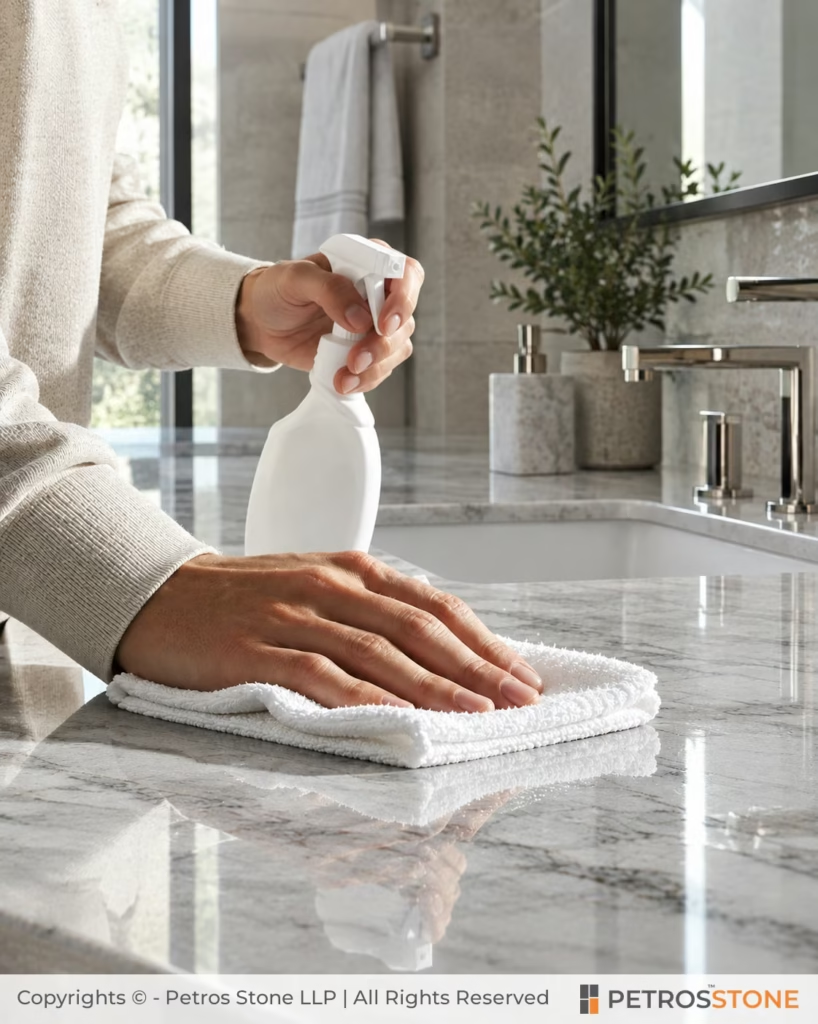
- Safe: warm water with a few drops of pH-neutral soap, or a cleaner labelled for natural stone; dry afterwards with a soft cloth.
- Avoid: vinegar, lemon, most tile and grout cleaners, glass cleaner, ammonia, bleach, abrasive pads, and drain cleaner.
- Soap scum and mould: use a stone-safe soap-scum remover, clean grout with a stone-safe grout cleaner, seal grout lines, and ventilate the room.
- Toiletry rules: keep perfume, hair dye, nail polish remover, toothpaste, and shaving cream off the stone, use a tray, and wipe spills right away.
- Call a restoration pro for: large or rough etched areas, rust stains, cracks, or a dull finish that polishing powder does not fix.
What Does Calacatta Marble Cost, and What Are the Alternatives?
Installed Calacatta marble typically costs $90–$250 per sq. ft. in the US, depending on slab grade, fabrication, and installation. A bathroom vanity usually costs less than a kitchen countertop because it requires less stone.
Ongoing costs: Sealing may cost $1–$3 per sq. ft., minor repairs $200–$600, and professional refinishing $5–$15 per sq. ft.
Carrara Marble vs Quartz vs Porcelain – Cost and Performance Comparison
| Feature | 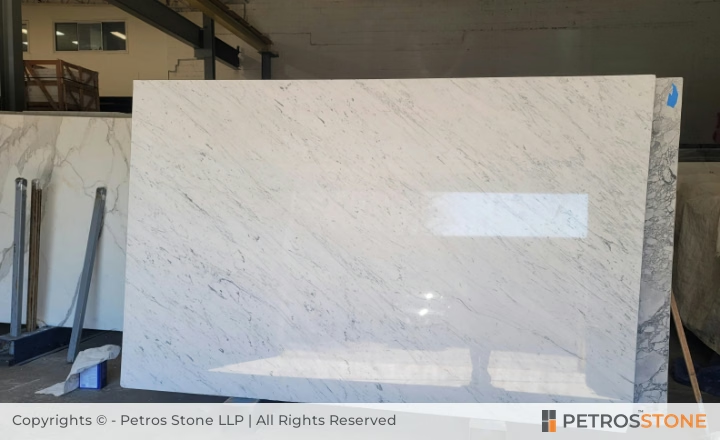 Carrara Marble | 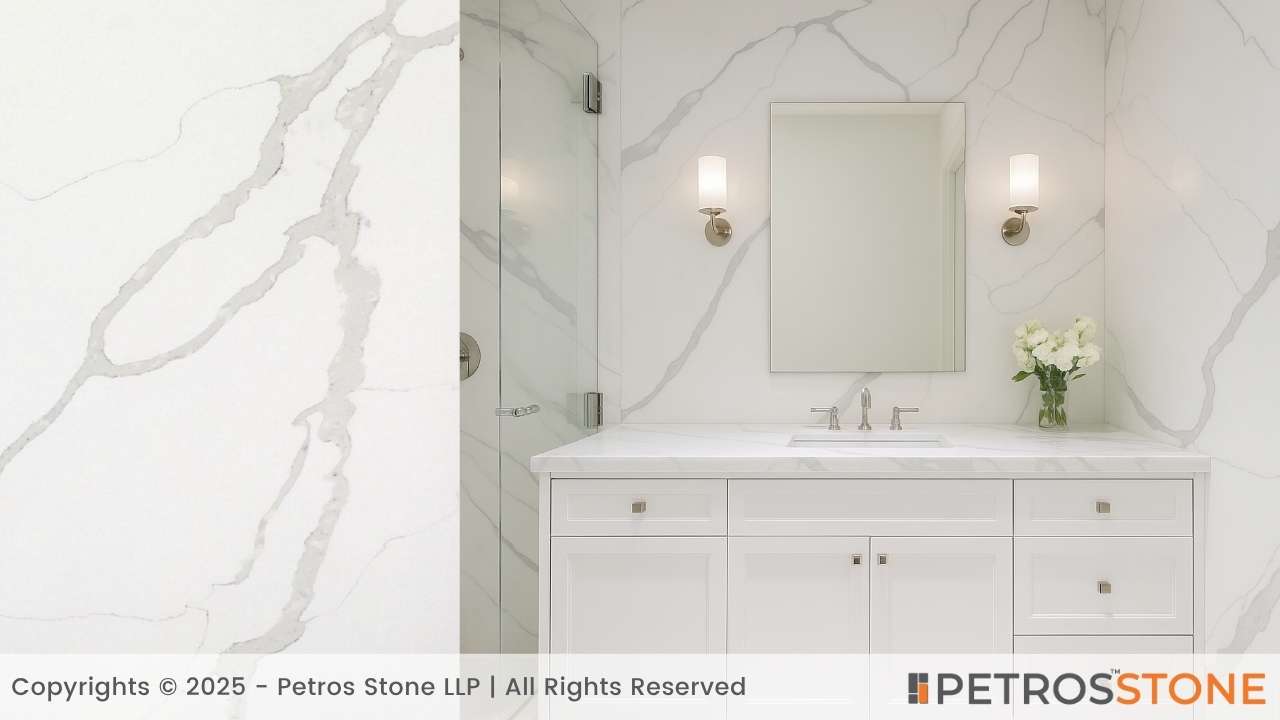 Calacatta-look Quartz |  Calacatta-look Porcelain |
|---|---|---|---|
| Installed cost/sq. ft. | $90–$250 | $60–$150 | $70–$160 |
| Etching | Susceptible | Generally resistant | Highly resistant |
| Stain resistance | Requires care | High | Very high |
| Best bathroom use | Vanities, walls | Vanity tops | Floors, shower walls |
Can You Mix Materials?
Yes. Use natural Calacatta marble on the vanity and backsplash, with marble-look porcelain on shower walls and floors for easier maintenance. Check floor slip resistance and ensure proper waterproofing.
Is Calacatta Marble Right for Your Bathroom?
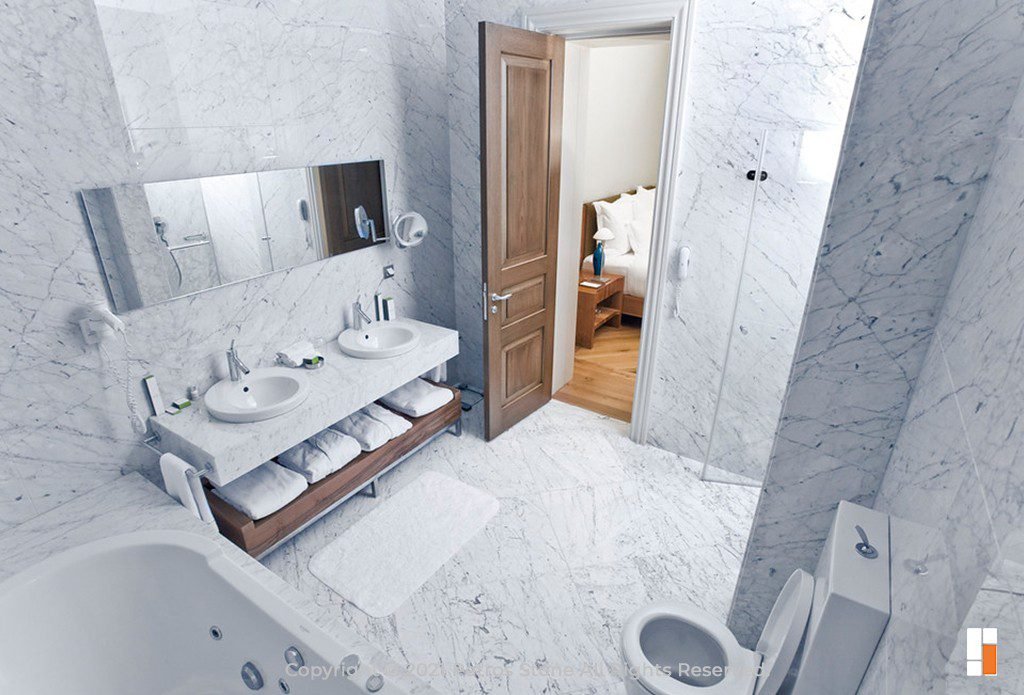
- Primary or guest bath: a good match for the vanity and walls.
- Kids’ bath: choose quartz or porcelain, since toothpaste splashes and rough use wear down marble.
- Acidic or dye-based products: if you use hair dye, perfume, or nail polish remover daily at the vanity, choose another surface.
- Upkeep: if you will not squeegee, wipe spills, and reseal every year or two, choose an engineered look-alike.
Alternatives worth considering:
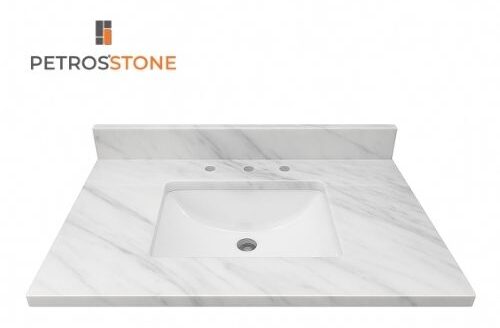
- Calacatta-look quartz for vanities: no sealing and no etching.
- Calacatta-look porcelain for floors and showers: non-porous and available in grip-rated finishes.
- Carrara marble for a cheaper marble look (roughly $40 to $80 per square foot), though it etches the same way.
- Cultured marble for a low-cost shower surround that needs no sealing.
FAQs
Will it stain from makeup or hair dye?
Yes, it can. Hair dye can stain marble, while makeup may dull its polished finish. Sealing helps, but wipe up spills immediately.
Can toothpaste ruin it?
Yes, some toothpastes can dull marble if left on the surface. Rinse it off promptly. Minor etching may be professionally polished out.
Can I clean it with vinegar?
No. Vinegar is acidic and can etch marble. Use a pH-neutral stone cleaner instead.
Is it okay in a steam shower?
Natural marble is not the best choice for a steam shower without a properly designed waterproofing system. Heat, moisture, and installation defects can contribute to staining and other damage. Porcelain is generally a lower-maintenance alternative.
Is cultured marble the same thing?
No. Cultured marble is a manufactured composite of marble dust, polyester resin, and a protective gel coat. It generally needs no sealing but can scratch, and its patterns differ from the natural veining of genuine marble.
Key Takeaways
- Best uses: vanity tops and bathroom walls.
- Showers and floors need sealing, waterproofing, and a wet DCOF of 0.42 or higher (R10 to R11 for floors).
- Avoid steam showers and marble shower floors.
- Sealing stops stains, not etching; acids and toiletries still mark the stone.
- Budget for resealing every 1 to 3 years, or pick a Calacatta-look quartz or porcelain.

Tapas Koul leads editorial direction and content strategy at Petros® Stone, bringing over 15 years of combined experience in e-commerce, publishing, and digital communication. His work spans research, strategy, and communication, with a focus on natural stone, its technical properties, processing, and architectural applications. Collaborating with Petros® Stone’s production team, laboratory experts, and specialists, he translates industry knowledge into clear, engaging content and communication for diverse audiences.
Feel free to get in touch for a free consultation, quote, and get a detailed understanding from our experts here at Petros®. Visit www.petrosstone.com or call +91-8446360361 or WhatsApp

Brown Granite

White Galaxy Granite

Blue Bahia Granite

Silver Cloud Granite

Black Pearl Granite

Dallas White Granite